Event organizers face countless challenges in today’s digital ticketing landscape, but few are as urgent as combating ticket scalping. Ticket scalping has evolved from street-corner deals to sophisticated online schemes, creating serious problems for both organizers and attendees worldwide, forcing organizers to deploy robust festival defense plans against bots and fraud. In recent years, high-profile ticketing fiascos – from the Taylor Swift presale meltdown to World Cup scams – have put scalping in the public and political spotlight. Notably, outrage over the 2022 Swift tour sale even led to congressional hearings and new laws aimed at scalpers, as reported in coverage of Maryland’s concert ticket laws. This updated 2026 guide explores why anti-scalping strategies must be front-and-center in modern event management, and how these measures benefit the entire event ecosystem by ensuring fair access, protecting revenues, and maintaining fan trust.
Understanding Ticket Scalping
Definition and Evolution of Ticket Scalping
Ticket scalping is the practice of buying event tickets – often in bulk – with the intent to resell them at higher prices through unauthorized channels. Scalpers today range from opportunistic individuals to organized broker networks operating at a massive scale. Increasingly, scalpers leverage automated “bot” software to gain unfair advantages during ticket onsales. These bots can flood ticketing systems with purchase requests in milliseconds, scooping up large volumes of tickets before genuine fans have a chance. For instance, the German Football Association revealed that over 160 million bot requests swarmed a 2025 cup final ticket sale, compared to just 1.66 million legitimate human requests, a disparity highlighted by reports on the German Football Association’s ticket struggle – a staggering indicator of how automated scripts create artificial scarcity.
To fully grasp the threat, organizers must understand exactly what a scalper is in the modern context. Historically, a ticket scalper was an individual hustling paper passes outside a venue. Today, when industry professionals ask what are ticket scalpers, they are referring to sophisticated, often syndicated broker operations. These entities treat scalpers tickets as high-yield commodities, utilizing advanced software to bypass queue limits and hoard inventory before genuine fans can even load the checkout page.
Once scalpers secure tickets, they turn around and list them on secondary markets (or via social media and other channels) at inflated prices, exploiting fans’ willingness to pay a premium for high-demand events. The result is an artificial scarcity that drives prices sky-high and makes it difficult for real fans to find affordable tickets. This manipulative practice often leaves die-hard supporters frustrated or priced out altogether. In fact, some broker operations are so large that they can dominate ticket supply for major tours. A recent U.S. Federal Trade Commission lawsuit revealed one scalping ring used thousands of fake accounts and bots to buy 379,000+ tickets (worth $57 million face value) for concerts like Taylor Swift’s tour over a one-year period, according to details from a major FTC lawsuit. This illustrates how industrialized the scalping business has become – and why event organizers must respond with equally sophisticated countermeasures.
Keep Tickets in Fans' Hands
Our secure resale marketplace lets attendees exchange tickets at face value, eliminating scalping while keeping you in control of the secondary market.
Warning Signs of Ticket Scams and Importance of Verification
For fans, purchasing tickets has become a minefield of potential scams and fraudulent sellers. It’s crucial to stay vigilant and verify that tickets are authentic. Common warning signs of a ticket scam include prices that are dramatically below market value (too good to be true), sellers pushing for an unusually quick payment or using pressure tactics, vague details about the ticket (such as no seat or section info), and websites or listings that lack security features or official branding. Scammers often create fake event pages or resale listings that look legitimate at a glance. For example, in 2025, up to 1,000 fraudulent ticket listings appeared online for Radiohead’s European shows before tickets even went on sale, undermining the band’s strict anti-scalping system, with Radiohead defending their ticketing system against these pre-sale listings. This kind of speculative or fake listing preys on fans’ FOMO and can lead to people paying for tickets that don’t actually exist.
Pro Tip: Always double-check the ticket source. Use official ticketing partners or authorized resale platforms whenever possible. If you’re buying from a reseller, read reviews, verify their guarantee policies, and never pay with cash, wire transfer, or gift cards – use payment methods that offer fraud protection. Event organizers should assist by publishing clear guidelines on how to verify tickets and by providing lists of approved resale outlets and making your rules and processes transparent.
To avoid falling victim, fans should confirm the authenticity of tickets and the reputation of sellers. This can involve entering ticket barcodes into the official ticket provider’s verification tool (if available) or contacting the event organizer/venue to confirm a ticket’s validity. Many event organizers and artists are also taking matters into their own hands by educating fans on what to watch out for. Festival teams now regularly monitor social media for fake pages impersonating their events, and swiftly work with platforms to remove them, a crucial step in protecting your festival from fake pages. In one case, a coalition of concert promoters in Singapore held a joint press conference with police to warn fans about a rash of fake ticket pages, pledging cooperation to stamp out fraud, effectively preventing victims who hadn’t yet purchased. All these efforts boil down to the same message: verify before you buy. By staying informed and cautious, fans can protect themselves from bogus tickets, and organizers can uphold trust in the ticketing process.
High-Profile Scalping Examples and Consequences
In recent years, numerous high-profile events have been hit by scalping, underscoring how widespread the problem is across entertainment, sports, and culture. The Super Bowl – one of the biggest sporting events – routinely sees tickets resold for many times their face value. Even with increased supply in 2025, the average resale price for a Super Bowl ticket hovered around $6,900 (down from even higher numbers the year prior), as noted in recent Super Bowl ticket price analysis. Similarly, the Olympics and World Cup have grappled with illicit resales: well before official sales for the 2026 FIFA World Cup began, tickets for marquee matches were already appearing on StubHub and other resale sites at outrageous prices, leading to reports on the 2026 FIFA World Cup secondary market, prompting FIFA to warn fans against buying from unauthorized sources.
Major concert tours by global superstars remain prime targets for scalpers as well. Tickets for artists like Taylor Swift, Beyoncé, and popular K-pop groups often sell out in minutes, only to reappear on secondary markets at eye-watering prices. During the 2022 Taylor Swift Eras Tour sale, ticket resellers listed seats for as high as $20,000-$30,000 each in the chaos that ensued after the primary sale crashed, an event that fueled public outcry over Ticketmaster’s handling. Fans of legendary bands are not immune either – when Oasis announced a 2025 reunion tour, nearly 10 million people registered for tickets, and widespread outrage erupted as many fans ended up paying more than double the expected face value due to dynamic pricing and scalpers. This led to investigations into whether Ticketmaster failed to inform fans adequately, and criticism that Oasis gave in to dynamic pricing greed. These examples highlight the severe impact scalping can have: prices skyrocket beyond affordability, genuine fans get locked out, and the overall event experience suffers. The consequences ripple beyond individual events too – persistent scalping can alienate a core fanbase over time and damage an organizer’s or artist’s reputation. It’s a lose-lose scenario, which is why robust anti-scalping measures are essential to protect the long-term health of events and fan communities.
Understanding Fair Ticket Pricing: The Foundation of Successful Ticketing
Fair ticket pricing and distribution are the cornerstones of a successful event. At its core, fair access means real fans get a reasonable chance to buy tickets at the price an organizer intended, instead of immediately competing with brokers and bots. Modern scalpers have transformed what was once a manual, street-corner hustle into a high-speed, automated operation. With bot networks capable of completing hundreds of purchases per second, scalpers can corner a significant portion of tickets the moment they go on sale. Industry analysis suggests that without protective measures, a large share of tickets (in some cases nearly half of initial inventory) might be snatched up by scalpers within the first hour of a major sale. This creates a crisis of artificial scarcity in the live events industry. When genuine fans repeatedly find “sold out” notices seconds after sales start, it erodes public confidence in the ticketing process.
Turn Fans Into Your Marketing Team
Ticket Fairy's built-in referral rewards system incentivizes attendees to share your event, delivering 15-25% sales boosts and 30x ROI vs paid ads.
Ensuring fair ticket pricing isn’t just about altruism – it directly protects your event’s viability and fan goodwill. Research by touring industry experts indicates that average concert ticket prices have already surged from about $25 in the mid-1990s to roughly $135 today, a trend noted alongside executive orders addressing ticket price gouging due to rising costs and demand. Scalpers piling huge markups on top of those prices pushes live events into luxury territory that many cannot afford. Event organizers who prioritize fair access often see higher customer satisfaction and stronger long-term loyalty. There are several strategies available to achieve this:
- Sophisticated Online Queues: Implement online waiting rooms and randomized queues that make it harder for bots to blitz through. For example, using CAPTCHA challenges and queuing algorithms can slow down or filter out automated attempts, leveling the playing field for human customers.
- Verified Fan Programs: Many major tours now require fans to pre-register and be verified (often via email, phone, or ID checks) to receive a unique code for purchasing tickets. This extra step helps ensure each buyer is an actual fan and not a bot. Tours from Taylor Swift to BTS have used Verified Fan systems to great effect, though they’re not foolproof and can require significant planning and tech support.
- Lottery or Staggered Sales: Instead of a first-come first-served feeding frenzy, high-demand events can use lotteries or phased ticket releases. The Olympics, for instance, often use a lottery system for ticket requests, which can reduce bots and give everyone a fair shot (though it requires transparency to avoid fan frustration). Staggering sales in waves can also help manage demand and catch suspicious purchase patterns in between rounds.
- Dynamic Pricing Strategies: Some organizers employ dynamic pricing (also known as “platinum tickets” or demand-based pricing) where ticket prices adjust according to demand. The idea is to capture more of the true market value upfront, leaving less profit on the table for scalpers. However, dynamic pricing is a double-edged sword – it can backfire if fans feel it’s gouging. For example, when face-value tickets for Bruce Springsteen’s 2023 tour dynamically shot up to $5,000+ for premium seats due to demand, fan backlash was intense, causing disillusionment over the controversy surrounding dynamic pricing. If you use dynamic pricing, communicate clearly about it and perhaps cap the maximum price to avoid PR fallout.
Ultimately, a mix of these approaches can dramatically reduce scalper interference and ensure more equitable ticket distribution. Event creators who invest in fair ticketing processes tend to reap the rewards in goodwill: fans remember that you made the effort to get tickets into their hands at a reasonable price. In an era when frustration with ticket-buying is running high, that fairness is a powerful differentiator for your brand.
Ready to Sell Tickets?
Create professional event pages with built-in payment processing, marketing tools, and real-time analytics.
Pro Tip: Don’t be afraid to hold some inventory for fan-centric distribution. Allotting a batch of tickets for fan club members, local residents, or promo giveaways can ensure your most passionate supporters get access. These true fans are more likely to show up early, buy merchandise, and amplify your event with positive word-of-mouth. Just be transparent about such allocations to avoid perceptions of favoritism or hidden holdbacks.
The Impact of Ticket Scalping on the Purchase Process
How Scalping Affects Ticket Availability and Pricing
Ticket scalping can wreak havoc on the ticket purchasing process, affecting both availability and pricing in real time. When automated bots and resellers blitz an onsale, they vacuum up huge quantities of tickets, leaving far fewer for genuine customers. This is why fans often experience the heartbreak of diligently waiting in an online queue, only to find the event “sold out” within minutes or even seconds. It’s not that tens of thousands of human fans magically beat them to it – it’s that a handful of scalpers’ scripts did. This immediate drain on availability has a domino effect: with primary tickets gone, fans are forced to turn to secondary markets, where scalpers have jacked up the prices. The integrity of the primary market is essentially undermined the moment scalpers succeed in their bulk buys.
From the organizer’s perspective, this dynamic can also mean a significant loss of revenue and control. You might sell out initially (which looks like success on paper), but if 30-40% of those tickets went to resellers, a big chunk of potential profit is now being captured by middlemen. None of the markup on those secondary sales goes to the event’s artists, organizers, or venues – it’s pure profit for scalpers. Moreover, genuine fans facing sky-high resale prices may decide to skip the event altogether, leading to empty seats or reduced ancillary spending (like concessions and merch) at your venue. In some cases, scalpers fail to resell all their hoarded tickets at inflated prices, resulting in unsold seats on the day of the show. Those empty seats are a lose-lose: the fan who wanted to be there misses out, and the organizer misses out on both the ticket revenue and the atmosphere of a full house.
The pricing distortion caused by scalping can be extreme. Tickets that should cost $50 or $100 may end up listed for 5-10 times that amount (or more for VIP experiences) on resale sites. During the Eras Tour fiasco, for example, resale prices ranging from a few hundred dollars to nearly $28,000 were spotted online, suggesting potential abuse of market power, an outrageous range that left many fans feeling exploited and angry. Such scenarios damage the fan experience and can spark significant public outcry. The hashtag #TicketmasterIsOverParty trended on social media after the Swift ticket debacle, showing how quickly frustration can go viral. Fans don’t usually distinguish between scalpers and the event or ticketing platform – when things go wrong, everyone involved in the ticketing process gets blamed. This highlights the urgent need for effective anti-scalping measures. By implementing strong controls (like purchase limits, bot detection, and verified registration) and by monitoring the onsale in real time, organizers can catch abnormal buying and intervene – for instance, by canceling known-bot orders and releasing those tickets back to the pool for fans. Every ticket that is reclaimed from a scalper and sold to a real fan at face value is a small victory that preserves trust in the system.
The Economic Impact of Price Gouging in the Secondary Market
When scalpers drive up ticket prices, the impact goes beyond individual buyers – it becomes a broader economic distortion in the live events market. Price gouging through ticket resales imposes a significant financial burden on consumers and can even reshape the demographics of your audience.
-
Financial Barriers for Core Audiences: Loyal fans – especially younger attendees or those from lower-income backgrounds – often find themselves priced out of events they care about. A concert that might have had a diverse crowd at $75 per ticket can end up filled with only those able to afford $300+ resale prices. This not only alienates portions of your fanbase but can also alter the vibe of the event. For example, if an event intended for college-aged fans gets overtaken by wealthier attendees or corporate resale purchasers, the energy and community feel can suffer. Artists and organizers have started to notice this shift. In late 2025, emerging singer Olivia Dean publicly blasted the practice of inflated resale prices after seeing tickets for her shows (face value around $40) being resold for over $1,000, calling it “a disgusting service” to fans, prompting Olivia Dean to call on other artists to ensure fair resale markets. Many performers share this sentiment – they want the real fans up front, not just those with the deepest pockets. Over the long term, pricing out young or hardcore fans can erode the cultivation of your future audience. If teens can’t afford to see their favorite band today, they might not be invested in that band’s career tomorrow.
Grow Your Events
Leverage referral marketing, social sharing incentives, and audience insights to sell more tickets.
-
Revenue Loss for Event Stakeholders: Every dollar a scalper makes is a dollar the event’s stakeholders did not. While a scalper might pocket a huge markup, the artist, promoter, and venue still only earned the original face value (minus fees) on that ticket. For popular tours and festivals, secondary market sales can represent tens of millions of dollars in diverted revenue. To put a number on it, one major resale platform, StubHub, reported about $1.77 billion in revenue in 2024 alone, as StubHub reportedly explores a sale, driven by fees and markups on ticket resales. That gives a sense of scale – billions of live entertainment dollars each year are going to resale companies and brokers instead of creators and producers. Those lost funds could have been used to improve event production quality, lower official ticket prices (or at least keep them steady), invest in future projects, or simply increase profit margins in a tough industry. Moreover, venues and local economies lose out when fans spend their budget on an overpriced ticket rather than on hotel stays, concessions, or other purchases around the event. It’s a trickle-down effect: scalpers siphon money that could otherwise circulate through the live event ecosystem in a fairer way.
-
Market Distortion Effects: Widespread scalping activity can distort the normal pricing mechanisms for events. Organizers face a dilemma: if they set ticket prices too low relative to demand, scalpers reap a windfall by buying up inventory and selling higher. If they set prices too high to try to preempt scalpers, they risk backlash and unsold tickets. In a healthy market, prices reflect what consumers are willing to pay for the experience, with maybe some events selling out and others not. But in a scalper-influenced market, you often see the paradox of sold-out shows with empty seats because tickets were mispriced and scooped up by resellers. Another distortion is the confusion over pricing – fans see wildly varying prices for the “same” ticket and lose sense of what the true value is. A vivid example was the Oasis 2025 reunion tour: face-value standing tickets were around £150, but many fans ended up paying £300-£350 through official platinum pricing or secondary channels, where regulators determined Ticketmaster failed to inform consumers about pricing structures. The UK authorities concluded that while dynamic pricing (not scalping) caused part of that spike, the lack of transparency made fans feel ripped off. The takeaway is that scalping muddies the waters for pricing strategy. It can pressure organizers either to adopt dynamic pricing themselves (to capture value before scalpers do) or to institute strict controls and potentially leave money on the table in the name of fairness. Neither is an easy choice without upsetting some segment of consumers. Thus, eliminating the extraneous influence of scalpers can help return pricing decisions to a more rational footing – based on rewarding artists and ensuring fans feel they paid a fair price.
Brand Protection and Reputation Management in the Digital Age
In today’s hyper-connected world, an event’s reputation can be made or broken by its ticketing practices. Fans who feel cheated by scalpers – or by opaque ticket policies – don’t stay quiet about it. They take to Twitter/X, Instagram, Reddit, and other platforms to voice their displeasure. Negative experiences with ticket buying can quickly turn into viral stories that damage an event brand or an artist’s image. On the flip side, organizers who are seen to actively combat scalping can earn praise and loyalty from the community. Reputation management has thus become a crucial aspect of any anti-scalping strategy.
One clear way to protect your brand is by building trust through transparent practices:
- Communicate Anti-Scalping Measures: Let your audience know what you’re doing to combat scalpers. Whether it’s posting updates about your bot detection efforts or explaining how your ticket limits work, regular communication helps manage expectations. Fans appreciate when a promoter says, “We’ve put aside 500 tickets for verified fans and implemented purchase limits to give everyone a fair chance.” Transparency disarms potential criticism because it shows you’re proactively addressing the issue. It can be as simple as a pre-sale email outlining the steps you’ve taken, or social media posts reminding fans to avoid unsecured resale sites.
- Educate Fans on Safe Purchasing: Providing educational content is another trust-building move. Many festivals now include blog posts or support FAQs on how to avoid scalpers and buy tickets safely, ensuring you make your rules and processes transparent. By teaching your audience about authorized channels and common scam tactics, you empower them and demonstrate that you’re on their side. Some organizers even share success stories post-onsale (for example, “95% of our tickets went directly to fans, not bots, thanks to our new system”) which can galvanize community support.
- Clear Pricing and Fees: Much of the anger around ticketing comes from feeling “duped” by hidden costs or sudden price jumps. Listing all fees upfront and sticking to advertised prices goes a long way. If you’re using dynamic pricing or platinum tickets, clearly label them and justify why (e.g., “These premium seats fluctuate in price based on demand, similar to airline tickets”). Fans might not love it, but they’ll be less upset if they understand it ahead of time. The goal is no surprises at checkout.
- Publicly Support Fair Ticketing Initiatives: Aligning with industry efforts or legislation that protect fans can boost your authoritativeness. For instance, when major artists like Radiohead, Coldplay, and Dua Lipa petitioned the UK government in 2025 to ban excessive resale profiteering, supporting British government proposals to illegalize resale at inflated prices, festival organizers who voiced support positioned themselves as fan-friendly. Don’t be afraid to say, “We stand against ticket touting and support measures to rein it in.” It’s not just PR fluff – it signals your values.
Clear, honest communication about ticketing builds goodwill and inoculates your brand against some criticism by educating fans about bots and fraud. On the other hand, failing to address scalping can seriously harm your long-term brand value. Fans remember which events consistently sell out to bots or which tours had them paying triple the face value. Those frustrations can accumulate and tarnish an organizer’s reputation. Consider that in 2023, after the Springsteen dynamic pricing controversy, a 43-year-old fan magazine (Backstreets) shut down in protest, and Bruce Springsteen himself acknowledged he “doesn’t like being the face of high ticket costs,” a sentiment echoed when Backstreets magazine announced its closure due to disillusionment over the controversy. That kind of news can cast a shadow over an artist’s legacy or a festival’s image.
Warning: Social media can amplify one bad ticketing experience into a viral PR crisis. A single viral tweet or TikTok video from a disgruntled fan feeling ripped off by scalpers can reach millions, painting your event in a negative light. By being proactive and transparent about anti-scalping measures, you reduce the chances that fans will direct their anger at you. In the digital age, every ticketing decision is effectively public – so make ones you’d be proud to defend openly.
In summary, robust anti-scalping efforts are not just a technical or financial matter, but a brand integrity issue. Organizations that consistently demonstrate fairness in ticketing build a reservoir of trust that can keep fans coming back season after season. This trust also turns attendees into ambassadors – satisfied fans are more likely to post positive reviews, recommend your event to friends, and create the kind of supportive community that money can’t buy. In contrast, events notorious for scalper-laden ticket sales may sell out once, but they risk a deterioration of fan loyalty over time. By treating ticketing as part of your overall reputation management, you protect the long-term value of your brand.
Creating Optimal Event Experiences Through Attendance Management
The quality of an event experience is directly tied to the energy and engagement of the crowd. It’s in every organizer’s interest to have enthusiastic, genuine fans in the audience rather than seat-fillers or disinterested attendees. Anti-scalping measures actually play a big role here: when tickets end up in the hands of true fans (instead of being controlled by scalpers looking to profit), the atmosphere at your event improves markedly.
Enhanced Audience Engagement
Genuine fans typically contribute far more to the event vibe and economy than someone who bought a ticket last-minute at an inflated price (or got a comp from a scalper struggling to offload inventory). Real fans are more likely to:
- Arrive Early and Energized: Fans who were excited to secure a ticket will show up at doors, ready to immerse themselves in the experience. In contrast, someone who paid above face value on a whim might not have the same level of anticipation.
- Participate Actively: You’ll see fans singing along to every song, cheering at key moments, and engaging with any interactive elements of the show. This participation is contagious – a crowd of true enthusiasts can even “teach” casual attendees how to be more involved. The overall enjoyment for all attendees is amplified when the core of the crowd is highly engaged.
- Create Positive Buzz: Fans who had a great experience will likely share it on social media, generating positive word-of-mouth. For instance, a fan who snagged a fairly priced ticket might post, “This festival was awesome – so glad I got a ticket at face value!” Those posts and stories become organic promotion for your event. Compare that to a scenario where the social buzz is “I paid triple the price, and it wasn’t worth it” – which narrative would you rather have circulating?
- Spend More on Merchandise & Concessions: Interestingly, attendees who don’t overpay for tickets often have more budget (and goodwill) to spend on site. They’re the ones buying the band t-shirt, getting the themed cocktail, and picking up a poster or other merch. If someone’s blown their budget on a marked-up ticket, they’re less likely to contribute to these secondary revenue streams. Thus, fair distribution can indirectly boost sales at your event.
- Return for Future Events: An engaged fan is a repeat customer. By ensuring a fair ticket purchase experience, you increase the likelihood that attendees will come back for your next event or tour stop. They’ll remember that your event didn’t take advantage of them, and they had a fantastic time – a potent combination for loyalty.
From the front-of-house perspective, having a happier crowd also tends to make operations smoother. Fans who feel they were treated fairly during ticketing are less likely to be hostile toward staff or cause incidents on-site. There’s a palpable difference in crowd mood when the majority feel like they earned their spot there through legitimate means rather than overpaying or getting lucky at the last second.
Community-Building Benefits
Events that successfully keep scalping to a minimum often develop more robust and positive fan communities. When your audience is primarily made up of genuine supporters, it fosters a sense of community and belonging that can pay dividends in many ways:
- Word-of-Mouth Marketing: Satisfied fans become your ambassadors. They’ll excitedly tell friends, “You have to come with me next year!” If buying a ticket was straightforward and fair, they’re not going to preface that invitation with complaints about price or process. Organic growth of your event often comes from these personal recommendations.
- Stronger Online Communities: Fans who scored tickets will engage more in fan forums, event subreddits, Facebook groups, etc., sharing their anticipation and later their experiences. This peer-to-peer engagement creates a buzz that can keep your event’s profile high year-round. It’s common now for festivals and conventions to have unofficial Discord servers or groups where the most passionate attendees socialize – those groups thrive when the right people are in the room, so to speak, and anti-scalping helps make that happen.
- Pre- and Post-Event Engagement: Enthusiastic attendees drive engagement not just during the event, but before and after. Before the event, they devour line-up announcements, schedule releases, and promotional content (maybe even attending pre-parties or online chats). After the event, they’re more likely to fill out feedback surveys, share photos and videos, and keep the hype alive for next time. All of this extended engagement increases the lifetime value of each attendee and gives you more touchpoints to cultivate loyalty.
- Higher Lifetime Value: A fan who has a great experience at a fairly-priced event will likely become a repeat customer, as mentioned, which increases their lifetime value to the promoter. They may also spend more across the ecosystem (VIP upgrades in the future, merchandise, memberships, etc.). Essentially, by not gouging them on the first sale, you leave room to build a longer-term relationship where both the fan and the organizer benefit.
- Feedback and Improvement: When you have a committed community, they will be eager to give constructive feedback that can help you improve your event. Fans will tell you honestly if certain anti-scalping measures worked for them or if, say, the ticket registration was confusing. This feedback loop is incredibly valuable. It’s much harder to capture if your crowd is mostly disconnected or resentful because they overpaid.
In short, the authenticity of your audience translates directly into the authenticity of the event experience. By using anti-scalping measures to keep tickets in the hands of bona fide fans, you’re not just doing the right thing ethically – you’re actively enhancing the atmosphere and community around your event. As any seasoned event producer will attest, a passionate audience can elevate a show from good to truly unforgettable. And from a strategic standpoint, that passion is the foundation upon which enduring event brands are built.
Pro Tip: To cultivate community and deter scalpers, consider implementing a loyalty or membership program. For example, offer early access to tickets for fans who attended in previous years or who subscribe to your newsletter. This rewards genuine supporters and creates a barrier for scalpers who can’t easily fake a fan history. Just be sure any such program is inclusive enough not to become its own hurdle for new fans.
Legal Compliance and Ethical Considerations in Modern Ticketing
The legal landscape around ticket scalping is tightening across the globe. Governments and regulatory bodies have heard the outcry from consumers and artists, and many are taking action to rein in exploitative ticket resale practices. Event organizers must stay informed and ensure they remain compliant with all relevant laws – not just to avoid penalties, but to position themselves as ethical players in the industry.
Navigating Regulatory Compliance
In the United States, the Better Online Ticket Sales Act (BOTS Act) makes it illegal to use bots to circumvent ticket purchase limits or security measures on online ticketing platforms. This law has been on the books since 2016, but enforcement is increasing. In fact, in early 2025, a U.S. Presidential Executive Order specifically directed the FTC and DOJ to ramp up enforcement of the BOTS Act and related consumer protection laws, following the Presidential Executive Order on ticket price gouging. That order also emphasized price transparency and reminded ticket brokers that they must obey purchase limits and even pay appropriate taxes on resales, as officials gathered at the White House to witness the crackdown. The message from Washington is clear: the government recognizes ticket scalping and price gouging as a consumer rights issue. Already, we’ve seen U.S. authorities prosecute cyber groups for stealing and reselling tickets (one international crew resold hundreds of stolen Taylor Swift tickets, grossing over $600,000, and got busted by New York prosecutors), revealing schemes involving contractors to bypass limits. For event organizers, it’s important to ensure any ticketing platform you use deters bots and complies with the BOTS Act. You don’t want to be the company known for not protecting your fans when the feds come looking.
At the core of these federal crackdowns is the mandate of addressing automated programs used to circumvent entertainment event ticket purchase limits. For event operators, this means ignorance is no longer a viable defense. Regulators expect venues and promoters to actively deploy a robust anti scalping system that detects and blocks these malicious scripts before they drain inventory. Partnering with a dedicated anti scalping service not only shields your ticketing infrastructure from aggressive botnets but also demonstrates a good-faith effort to comply with consumer protection laws, safeguarding your business from potential liability.
Over in the UK and Europe, regulations are also getting stricter. The UK has long had a law requiring resale sites to list seat numbers and other details (to help catch and invalidate resold tickets if against terms). But now they are going even further. In late 2025, the British government announced plans to ban for-profit ticket resale outright, with the UK government poised to act against secondary ticket ripoffs. Under the proposed rules, it would be illegal to resell tickets for above their original price – essentially killing the profit motive for touts (scalpers). The UK’s Competition and Markets Authority (CMA) would enforce this with fines up to 10% of a violating platform’s global revenue, a move supported by artists like Dua Lipa and Coldplay. This came after massive pressure from the music community and artists fed up with seeing their fans exploited, with the Competition and Markets Authority explaining the proposal. While the law is expected to pass in 2026, even the announcement has put resale platforms on notice. Countries like Italy, Ireland, and Singapore have also instituted or strengthened anti-touting laws in recent years, often capping resale markups (Ireland bans resale above face value for certain venues; Singapore requires a license to resell tickets, etc.). As an organizer, if you’re selling tickets internationally, you must be aware of the laws in each market. For instance, a practice acceptable in the U.S. (like transferable mobile tickets) might not fly in a country that requires the original buyer’s name on the ticket. Working closely with your ticketing providers and legal counsel to map out compliance in each territory is now a must.
Meanwhile, Australia offers a case study in aggressive anti-scalping statutes on the state level. Places like Queensland, New South Wales, and Western Australia have enacted laws that make it illegal to resell tickets above a certain markup (often 10% over face value) and explicitly ban the use of ticket-buying bots, putting ticket re-sellers on notice under new scalping laws. In Western Australia, the Ticket Scalping Act 2021 imposes fines up to AU$20,000 for individuals and AU$100,000 for companies who break the resale cap, and up to AU$500,000 for using bots, as detailed in the Ticket Scalping Act penalties. Those are serious penalties that have teeth. As an event manager, if you operate in those regions, you may have to include clauses in your ticket terms and conditions to align with the law (e.g., “Resale of tickets above 10% of face value is prohibited by law”). It’s also wise to coordinate with local consumer protection agencies – many of them actually appreciate when promoters reach out to show compliance, and they might assist in cracking down on illegal sales if you supply evidence.
Beyond anti-scalping specific laws, don’t forget general consumer protection and e-commerce regulations. If you sell tickets online, data privacy laws like GDPR (in Europe) or CCPA (in California) apply. This means any personal data collected for, say, verifying fan identities or monitoring sales must be handled carefully and transparently. If you’re using advanced anti-fraud tools that analyze buyer behavior or location, ensure your privacy policy covers this and that you’re not running afoul of data protection rules. Also, displaying clear refund policies, adhering to ADA (disability access) ticketing rules, and providing accessible customer service all fall under running an above-board ticket operation.
Staying compliant isn’t just about avoiding fines or lawsuits – it’s part of being seen as a trustworthy, ethical organizer. Fans increasingly are aware of ticketing controversies and will reward organizers who “do the right thing” legally. Conversely, if you bend the rules or appear to cozy up to scalpers (for instance, there have been scandals where certain promoters allegedly allocated tickets directly to resale sites), the public and regulators will come down hard.
Ethical Business Practices in Ticketing
Legal requirements aside, there’s a broader ethical imperative in play. At its heart, ethical ticketing is about treating your audience fairly and sustaining a healthy live events industry. Here are some key ethical considerations and practices to adopt:
- Fair Market Practices: This means not intentionally creating conditions that encourage scalping. For example, holding back too many tickets for high-priced VIP packages or industry comps can create unnecessary scarcity in the public sale, which scalpers then exploit. Ethically, it’s better to release as many tickets to the public as you reasonably can (after allotting what you truly need for production and stakeholders). Fair practice also means pricing tickets in good faith – set prices reflecting value and costs, not what you think scalpers could get away with. If you do experiment with dynamic pricing on some seats, monitor it to ensure it doesn’t go into absurd territory and pull it back if it does. The goal is a balanced approach where fans feel the pricing was fair for what they got.
- Consumer Protection Orientation: An ethical organizer proactively protects fans from fraudulent tickets and exorbitant prices. This could involve partnering with ticketing platforms that have integrated fraud detection and guarantees. Some events go as far as checking IDs at entry to ensure the ticket holder is the original purchaser (or an approved transfer) – a strong step that sends the message that unauthorized resale isn’t tolerated. If a fan is duped by a scammer, an ethical stance might be to help them out – perhaps offering a way to buy a legit ticket last-minute or at least guiding them on reporting the fraud. Those gestures, even if they don’t benefit you financially in the short term, build trust and goodwill.
- Industry Sustainability: Scalping is often seen as a symptom of an imbalance in the industry – essentially supply not meeting demand, or pricing not meeting what the market would bear. While no single organizer can solve that, an ethical approach is to constantly seek a better equilibrium. This might involve innovating your event models (e.g., adding second show dates when one sells out instantly, rather than letting demand far outstrip supply and fuel scalpers). It could also mean collaborating with other industry players, like artist management and venue networks, to advocate for more fan-friendly ticketing across the board. Remember, if fans get fed up with the ticket-buying experience in general, the entire live entertainment sector could suffer. By championing fair ticketing, you’re contributing to the sustainability of the industry that we all depend on.
- Social Responsibility: Consider the broader social context. During the pandemic recovery years, for instance, there was heightened scrutiny on how the live events industry dealt with fans (refunds, safety, etc.). In that light, egregious scalping can seem even more tone-deaf. On the contrary, showing that you put fans over profits in ticketing can be a powerful part of your brand identity. Some events explicitly market themselves as “face-value festivals” or pledge that “we fight against ticket touts” – and they attract a loyal following for those values. Additionally, think about accessibility: an ethical ticketing strategy finds ways to let different segments of the community attend. Some festivals offer local residents discounted tickets, or a small allotment of tickets at a lower price for those who couldn’t afford the standard price (first-come or lottery). These initiatives can counteract the exclusivity that scalping exacerbates.
In practical terms, implementing strong anti-scalping measures is a statement that you care about fairness. It demonstrates respect for your audience’s passion and financial limitations. Over time, consistently ethical practices in ticketing become part of your reputation. Fans talk – they will acknowledge the events that always seem to have a scalper circus around them, and those that keep things fan-friendly. By aiming to be in the latter camp, you position your events as fan-centric experiences, not just commerce. And there’s no doubt that trustworthiness is a competitive advantage: in an oversaturated entertainment market, attendees will gravitate to the brands they trust not to take advantage of them.
Technological Solutions to Combat Modern Scalping
As scalpers get more technologically advanced, event organizers have had to turn to cutting-edge tech solutions to fight back. Gone are the days when a simple CAPTCHA on a ticketing site was enough to deter bots. Today, a multi-layered approach leveraging AI, machine learning, and even blockchain tech is becoming the norm for serious anti-scalping efforts. Here’s an overview of some modern tools and what they offer:
When evaluating an anti scalping system, event organizers must look beyond standalone plugins and consider a holistic architectural approach. A true enterprise-grade anti scalping service integrates seamlessly at the API level, analyzing traffic patterns before they even hit the primary ticketing queue. This proactive layer is essential for effectively addressing automated programs used to circumvent entertainment event ticket purchase limits, ensuring that malicious traffic is dropped at the edge network rather than overwhelming your database.
Implementing a dedicated anti scalping tool is often the most effective first line of defense. Rather than piecing together disparate plugins, a unified software solution continuously scans for anomalies in purchasing behavior, device fingerprinting, and IP reputation. This ensures that your primary inventory is shielded from automated hoarding without adding friction to the genuine fan’s checkout experience.
- AI-Powered Bot Detection: Modern ticketing systems often integrate AI algorithms that monitor traffic and purchasing behavior in real time. These systems look for telltale signs of bots – like a single IP address trying to perform hundreds of checkouts, or form-filling speeds that no human can achieve. When suspicious activity is detected, the system can automatically block or throttle those requests, or present tougher challenges (like advanced CAPTCHAs or multi-factor authentication) to verify it’s a real person. Some ticketing providers report blocking millions of bot purchase attempts during major on-sales. It’s an arms race: as bots evolve to mimic humans, AI detectors evolve to spot the subtle patterns. Companies like Distil Networks (now Imperva) and ThreatMetrix, for example, specialize in bot mitigation and are used by ticket sellers to fortify their systems. The English Premier League has leveraged such tech, with clubs like Liverpool FC canceling 145,000 fake accounts in 2025 that were flagged for suspicious ticket activity, where ticket bots were blamed as Liverpool joined other clubs in the crackdown.
- Blockchain-Based Ticketing: Blockchain has become a buzzword in ticketing for its promise of creating an unforgeable, transparent ledger of ticket ownership. With blockchain or NFT tickets, each ticket can be a unique digital token that is nearly impossible to counterfeit. Moreover, the provenance of each ticket (who bought it, who sold it) can be tracked on the ledger. This can enable secure resale within a closed ecosystem: if someone can’t attend, they could transfer the NFT through the official platform, which verifies the transaction and enforces any price cap or royalty back to the organizer. A few high-profile events have experimented with NFT tickets – for instance, Coachella offered lifetime passes as NFTs, and some European soccer matches have trialed blockchain mobile tickets to clamp down on black-market sales. While it’s not yet widespread, blockchain ticketing is gaining traction as a way to ensure a ticket is 100% authentic and can only be transferred in approved ways. It does require educating fans (managing digital wallets, etc.), so adoption is gradual.
- Dynamic QR Codes and Mobile Ticketing: One simpler but effective technological measure is issuing tickets as mobile QR codes that periodically refresh. Many ticketing apps now present a QR code that updates every 15-30 seconds, which makes it futile for a scalper to screenshot a code and sell duplicates – by the time the buyer tries to use it, it’s changed. Tying tickets to mobile devices or apps also allows for better control (the app can require login, can limit one device per ticket, etc.). Some systems use geolocation to ensure the device with the ticket is near the venue, further validating legitimate use. Of course, mobile ticketing has its own challenges (not everyone has a smartphone or reliable connectivity), but it has drastically cut down fraud for many sports leagues and concerts that adopted it.
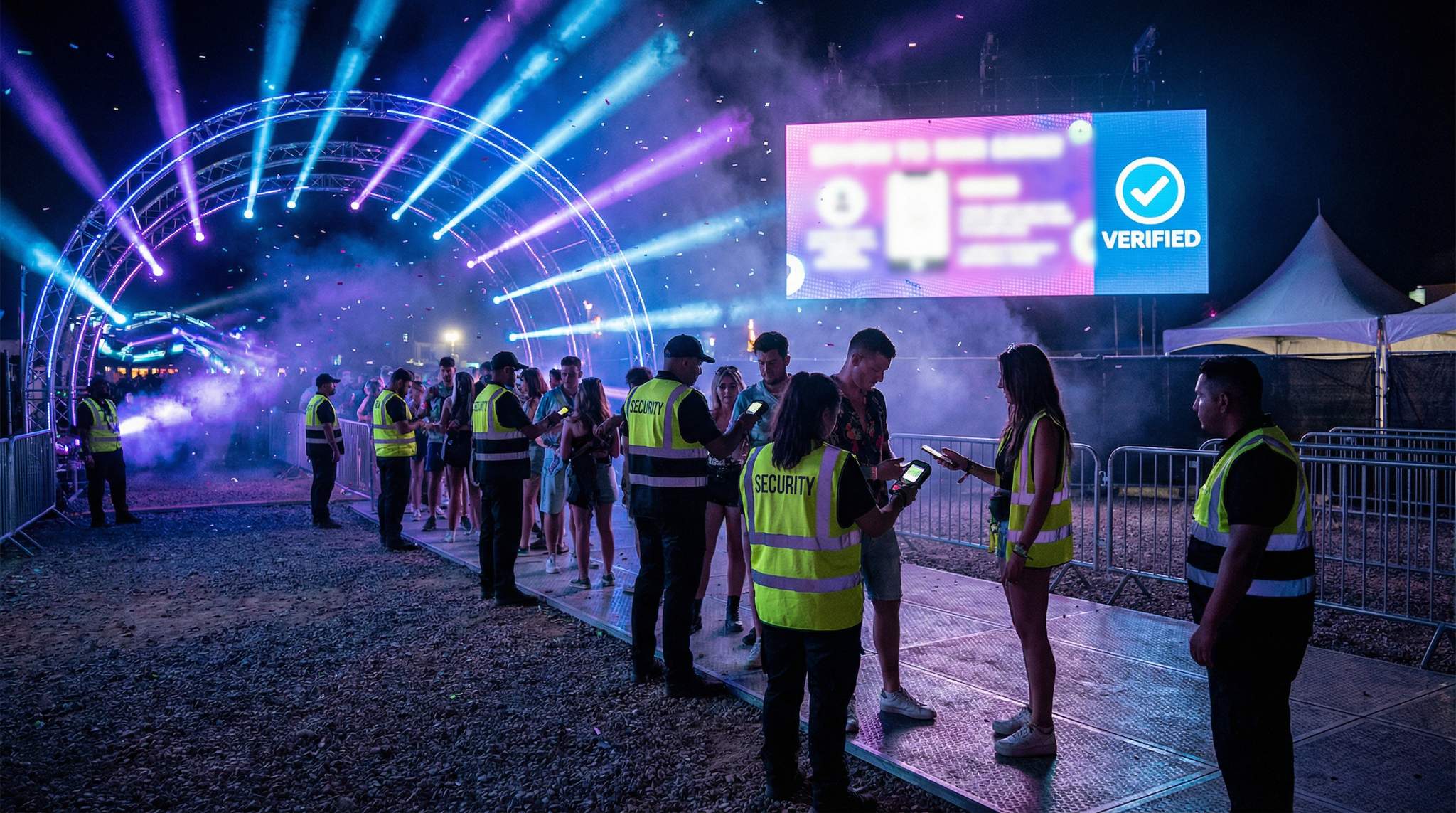
- Digital Identity Verification: Going a step further, some ticket sales now incorporate identity checks at the point of purchase or transfer. This could mean requiring a valid ID number, linking the ticket to the buyer’s name (which is then printed on the ticket), or using verification services like SMS or email codes. The idea is to make tickets personalized. For example, Glastonbury Festival in the UK famously requires photo registration before purchasing, and each ticket has the attendee’s photo ID checked at the gate – virtually eliminating scalping for that event (though it’s logistically intensive). Even without going that far, organizers can use softer identity verification like validating buyers via their existing fan club accounts or past purchase history. Some advanced systems look at a buyer’s data and decide if they seem like a real fan (maybe checking that they’ve bought similar tickets in the past, or scanning for social media links), utilizing ticketing platforms designed for anti-scalping. If the system finds an account that looks like a newly minted shell just buying dozens of tickets, it can flag or block it. While this raises some privacy considerations, it’s a frontier of using data for fraud prevention.
- Real-Time Analytics and Manual Oversight: Technology is essential, but there’s still a role for human monitoring. Many organizers set up a “war room” during a big on-sale with dashboards showing real-time data: tickets sold per minute, number of purchase attempts, queue lengths, etc. If something looks off – e.g., a sudden surge of sales in a category that suggests a bot swarm – they can manually intervene by pausing the sale or canceling suspicious orders. Additionally, analyzing the data post-onsale can help refine strategies. If you see, for instance, a cluster of sales all to similar email addresses or credit card patterns that slipped through, you can adjust rules for next time. Modern ticketing platforms provide robust analytics for this purpose, and some even use machine learning to update their fraud rules automatically based on patterns detected. Advanced platforms allow organizers to analyze sales patterns and adjust their approach accordingly. Continuous improvement is key: scalpers will keep adapting, so your tech and tactics must adapt too.
To summarize the tech landscape, here is a quick reference table of Anti-Scalping Tech Solutions and their benefits:
| Solution | Benefit in Fighting Scalping |
|---|---|
| AI Bot Detection | Identifies and blocks automated bot purchases in real time, preventing bulk ticket hoarding by scalpers. |
| Blockchain Ticketing | Issues tickets as unique digital tokens (NFTs) to verify authenticity and track transfers, making forgery and illicit resale much harder. |
| Dynamic QR Codes | Uses QR codes that refresh periodically on mobile tickets, thwarting screenshot resales and ensuring only authorized users can enter. |
| Identity Verification | Links tickets to buyer identities (name or ID), deterring scalpers by requiring proof of identity for ticket purchase or entry. |
| Official Resale Platform | Provides a controlled fan-to-fan resale marketplace with price caps and secure transfers, keeping resale revenue and trust within the approved system. |
Most successful anti-scalping strategies deploy multiple layers of these technologies. For example, Ticket Fairy (an event platform with a secure resale system) combines bot detection, ticket personalization, and an integrated resale exchange to cover all angles – from initial sale to any later resale. The key is not to rely on one silver bullet, but to create overlapping defenses. If a few bots slip past detection, perhaps they’ll be stopped by identity checks. If someone manages to buy a bulk lot, perhaps the dynamic QR and resale tracking will prevent those tickets from being scalped for profit. And through it all, keep educating your team and your ticket-buyers. Technology is only as effective as its implementation. Staff need training to handle things like monitoring systems or assisting fans with new digital ticket formats. Likewise, fans may need guidance (for instance, instructing them on how to transfer an official mobile ticket if they can’t attend, rather than selling a PDF to a stranger). With the right tech and human support, modern ticketing can stay one step ahead of scalpers.
Evaluating the Best Anti-Scalping Services for Ticketing
When promoters and venue operators begin comparing the best anti-scalping services for ticketing, the decision often comes down to integration depth and real-time mitigation capabilities. A top-tier bot protection vendor doesn’t just offer a generic web application firewall (WAF); they provide specialized threat intelligence tailored to the live events industry. Look for providers that offer machine-learning models trained specifically on ticketing purchase flows, as these can distinguish between a highly anticipated fan rush and a coordinated botnet attack. Furthermore, the ideal service should seamlessly integrate with your existing primary ticketing platform, ensuring that legitimate buyers experience zero friction—such as invisible CAPTCHAs or background device fingerprinting—while malicious scripts are blocked at the edge network.
When deploying an anti scalping solution, scalability is just as critical as security. A robust platform must handle massive traffic spikes during high-demand onsales without degrading the fan experience. Organizers should look for a comprehensive anti-touting framework that combines dynamic inventory management with real-time threat analysis, ensuring that every ticket goes to a legitimate buyer rather than a broker’s automated script.
Implementation Strategies for Tech Solutions
Introducing advanced anti-scalping technology requires thoughtful implementation. Here are some strategies to ensure these solutions deliver the intended results:
- Regular System Updates and Testing: Scalpers are constantly finding new exploits, so it’s vital to keep your ticketing software and anti-bot tools updated. Work closely with your ticketing provider to ensure you’re running the latest security patches. Before major sales, consider “stress testing” the system with simulated high traffic to identify any weaknesses. Some organizers hire ethical hackers or use QA teams to mimic bot attacks and see how well the defenses hold. This proactive testing can reveal configuration issues before real attackers do.
- Staff Training and Drills: Your customer support and IT teams should be well-versed in the anti-scalping tools you’re using. For example, if you have an AI dashboard that flags suspicious orders, your team should know how to interpret those signals and what actions they are authorized to take (Can they cancel an order outright? Do they put it on hold for review?). Train your support staff to handle calls/emails from customers who might be incorrectly flagged as well – false positives can happen, and a fan-friendly approach is to have a swift manual review process to reinstate any legitimate purchases that were blocked in error. Periodic drills – like a mock bot attack scenario – can keep everyone sharp on the response plan.
- Customer Education Initiatives: Whenever you introduce a new ticketing technology (be it mobile-only tickets, identity requirements, or an official resale portal), educate your audience. Use FAQs, email campaigns, and social media to explain how the system works and why it benefits them. For instance, back when Ticketmaster first rolled out Verified Fan, they had to guide users through that registration process and set expectations (“You might get a code, you might be on a waitlist”). If you launch a new official resale exchange on your website, walk fans through how to resell a ticket or buy a verified resold ticket safely. When fans understand that these measures are there to protect them (and not to make their lives difficult), they’re more likely to cooperate and even appreciate the extra steps. Clarity is key: if there’s a purchase limit of 4 tickets, state it prominently; if IDs will be checked at entry, remind ticket holders ahead of the event to bring proper ID. By communicating policies clearly and early, you ensure honest attendees aren’t caught off guard by your security measures, ensuring you make your rules and processes transparent.
- Continuous Monitoring and Adjustment: Implementing anti-scalping tech is not a set-it-and-forget-it task. During the sales cycle, monitor how well your measures are working. After each event, conduct a debrief: Did you notice a drop in secondary market listings for your tickets compared to previous events? Were there any patterns in fraud attempts? Solicit feedback from fans: did anyone have trouble with the new ticketing features? Use all this data to refine your approach. Maybe you discover that requiring SMS verification significantly cut bot purchases, but it also confused some older customers – that might prompt you to improve the instructions or offer an alternative verification method. Aim for continuous improvement. The threat landscape evolves, and so should your defenses. By analyzing sales patterns and transfer data, organizers can refine their tactics. Celebrate the wins (like catching thousands of bot attempts), but also be honest about any breaches and learn from them.
By marrying the right technology with clear policies and responsive human oversight, event organizers can create a ticketing environment that is both secure and user-friendly. There might be an upfront investment – in software, in training, in slightly longer onboarding for fans – but the payoff is a smoother sale process and a protected fan experience. The industry is trending this way inevitably; those who embrace these solutions early will find themselves with fewer scalper headaches and more control over their event’s fate.
When evaluating how to prevent ticket scalping on a practical level, event organizers must configure their ticketing software to act as an active defense mechanism rather than just a passive checkout cart. Knowing how to prevent ticket fraud and scalping using ticketing software involves enabling strict purchase limits, requiring multi-factor authentication during high-demand drops, and cross-referencing buyer data against known fraud databases. These proactive configurations automatically flag suspicious transactions before inventory is depleted, ensuring that genuine fans secure their spots.
For promoters wondering exactly how to stop ticket scalping at scale, the answer lies in this layered defense. Relying on a single chokepoint—like a basic waiting room—is no longer sufficient against modern broker networks. By combining an enterprise-grade anti scalping system with strict identity verification and a controlled resale environment, organizers can effectively neutralize the profit motive that drives unauthorized secondary markets. This comprehensive approach not only blocks malicious traffic but also ensures that your ticketing infrastructure remains resilient during high-demand onsales.
(For a deeper dive into selecting the right ticketing platform features to combat scalping, read our dedicated guide: Ticketing Platforms for Anti-Scalping: A Comprehensive Guide for Live Event Organizers.)
How to Stop Ticket Scalpers: A Strategic Framework for Promoters
For event producers wondering exactly how to stop ticket scalpers, the most effective approach requires moving beyond reactive bans and implementing a proactive, multi-layered defense. Stopping these unauthorized brokers involves a combination of strict purchase limits, dynamic inventory management, and robust identity verification at the point of sale. By requiring multi-factor authentication during high-demand drops and cross-referencing buyer data against known fraud databases, organizers can automatically flag suspicious transactions. Ultimately, neutralizing the threat means making the acquisition and transfer of unauthorized inventory too difficult and unprofitable for broker networks to pursue.
The Future of Secure Ticket Resale Platforms
Completely eliminating the secondary ticket market is probably unrealistic – life happens, and sometimes fans legitimately can’t attend an event and need to sell their tickets. Recognizing this, many event organizers and primary ticketing companies are shifting focus toward creating secure, fan-friendly resale platforms. Instead of driving resale into the shadows, the idea is to bring it into the light where it can be regulated and made fair.
Take Ticket Fairy for example – it’s a ticketing platform that has an inbuilt secure resale system (among other promoter-friendly features). The philosophy is simple: if fans have a safe, official way to resell tickets they can’t use, there’s less demand for sketchy scalper marketplaces. An ideal secure resale platform verifies every ticket’s authenticity (since it’s integrated with the primary ticket issuer’s database) and enforces price caps or face-value exchanges to prevent gouging. Essentially, it allows a ticket to change hands, but on your terms as the event organizer. Many major players have adopted this approach: Ticketmaster has a Verified Resale program in certain markets, and events like the NFL and NCAA games often restrict resale to their official exchanges where they can monitor prices and validity.
Here are some benefits of authorized resale platforms:
- Guaranteed Authenticity: When buyers purchase through the official resale channel, they can trust that the ticket is real. The platform can invalidate the original ticket barcode and reissue a fresh one to the new owner, eliminating the risk of duplicates or fakes. This protects fans from fraud – no more meeting a stranger in a parking lot and hoping that PDF ticket isn’t counterfeit.
- Controlled Pricing (No Gouging): Organizers can set rules like “resale allowed up to 10% above face value” or simply face value only. This prevents outrageous markups. Some artists and events prefer a strict face-value-only resale policy – meaning if you can’t go, you can only sell your ticket for what you paid (sometimes minus a small transfer fee). It keeps tickets affordable and deters those who aim to profit. Even with a modest cap (say 20% above face), it’s worlds better than unchecked secondary markets where prices can skyrocket 10x. Fans appreciate knowing they have a shot at a fairly priced ticket later if they missed the initial sale.
- Transparency in Transactions: Official resale marketplaces usually show clear info about what’s being sold – exact seat locations, original price, fees, etc. This transparency builds trust. Buyers aren’t guessing in the dark or wondering if they’ll be scammed. Sellers also benefit from an easy, legitimate way to recoup their money without resorting to dodgy sites. You can even display how many tickets are available for resale at any time, which can help calm the FOMO and rumor mill among fans.
- Revenue Recapture: While the goal isn’t to profit off fans twice, capturing a small fee on authorized resale transactions can help organizers and artists share in the value, or at least cover costs. More importantly, it means that if tickets are going to be resold anyway, some portion of that stays within the ecosystem rather than all going to third parties. This extra revenue could be used to offset ticket prices, improve the event, or support charitable causes (some promoters have added an optional $1 charity donation to resales, for example).
- Customer Support and Security: When resale happens under your umbrella, you can provide customer service for it. If something goes wrong (like a ticket doesn’t transfer properly), your team can fix it. Fans don’t have that safety net on random resale sites. Additionally, official platforms usually ensure secure payment processing – no cash meetups or risky PayPal friends-and-family transactions. Everything goes through proper channels, which reduces fraud and anxiety for buyers and sellers alike.
The implementation of such platforms does require some thought. Key features of successful resale platforms include:
- Identity Verification Systems: Tying into earlier points, the platform often requires sellers to log in via their original purchase account or otherwise verify identity. This ensures the person reselling actually has a valid ticket to sell. It also prevents people from trying to list fake tickets. Buyers may also need to have an account so the new ticket is properly assigned to them.
- Price Controls: The system enforces whatever price rules you set – whether it’s a fixed price (face value), a capped range, or dynamic market-based pricing within certain limits. Having this baked in technically means fewer arguments or issues later. For example, if your rule is max 110% of face value, the interface simply won’t let a ticket be listed above that. Some platforms even display a “fair price” badge on tickets listed at or below face value to encourage ethical selling.
- Transfer Tracking: Every time a ticket changes hands, the platform logs it. Organizers can see the chain of custody. This can be invaluable data – if one account has sold 20 tickets, maybe that was a broker who somehow slipped through, and you might review their future purchases. It also adds accountability; if any fraudulent activity occurs, you have the trail to investigate it. Additionally, if a ticket is resold through the official system, you typically void any prior copies of that ticket, ensuring only the newest barcode works. This tracking is something open markets can’t do, but a closed loop can.
- Integration with Primary Ticketing: The resale platform should ideally be integrated with your main ticketing system. Ticket Fairy’s resale feature, for instance, is part of its primary platform – so a ticket listed for resale is immediately flagged in the main system, and once bought, it’s reassigned to the new owner seamlessly. Integration avoids situations like double-sold tickets or confusion over which barcode is valid. It also means fans can often use the same mobile app or account they used to buy the ticket in the first place, keeping the user experience consistent.
- Mobile Ticket Delivery: Given that most primary tickets have gone digital, the resale should as well. Successful platforms deliver the resold ticket electronically to the buyer (into their account or app). This ensures there’s no delay or need for physical meeting. The convenience encourages fans to use the official channel rather than, say, selling a screenshot via Instagram. Plus, digital delivery can be near-instant – someone could put a ticket up for resale and another fan could purchase and receive it within minutes, even on event day. That kind of reliability is how you lure people away from scalpels – by being just as fast and far more secure.
Furthermore, establishing a clear protocol for secondary transfers mitigates customer service headaches. When attendees inevitably contact your support team asking how to sell Ticketek tickets, Ticketmaster passes, or inventory from other primary vendors because they can no longer attend, directing them to an official, organizer-sanctioned resale environment is crucial. Providing a definitive, secure answer prevents fans from turning to unregulated black markets out of desperation, thereby keeping the secondary transaction safely within your controlled ecosystem.
The future likely holds an even greater normalization of these controlled resale environments. Some governments pushing anti-scalping laws actually encourage the development of face-value exchanges as part of the solution. We might see industry-standard platforms that multiple ticket vendors plug into, creating a wider exchange network under consistent rules. For organizers, embracing these tools is a way to future-proof your ticketing strategy. It acknowledges that flexibility (i.e., the ability to resell a ticket) can coexist with fairness, if managed correctly. In the end, the goal is to ensure that whether a ticket is sold once or twice, it’s affordable and authentic for whoever ends up in that seat.
Ticket Fairy and similar platforms are leading the charge in showing that secondary markets don’t have to be the Wild West. By taking care of your fans’ needs (maybe someone suddenly can’t go and needs to sell, or someone is desperately searching for a last-minute ticket) in an official capacity, you strengthen that bond with your audience. You’re saying, “We’re here for you at every step – from the moment tickets go on sale to the moment the lights go down at the event.” That kind of comprehensive service is what modern event management is gravitating towards.
(Also Read: Ticket Fairy: An Event Promoter’s Platform – learn how Ticket Fairy’s all-in-one platform empowers promoters with tools for ticketing, marketing, and anti-fraud.)
Benefits at a Glance
To recap, why go through the effort of all these anti-scalping measures? Because the benefits are tangible and significant:
- Fair Access: More tickets end up with real fans, which is the whole point of putting on events – to have an enthusiastic audience enjoying the experience.
- Improved Experience: When your crowd is full of true fans, the energy is unbeatable, driving a positive feedback loop of great shows and loyal attendees.
- Revenue Protection: Less money leaks to scalpers, and you retain the ability to price your event in a way that benefits the event’s growth and the creative talent involved, not opportunists.
- Brand Trust: Fans and artists alike recognize when an organizer “has their back.” This boosts your reputation and can set you apart in a crowded market. It can even be a selling point in artist negotiations, as performers might prefer promoters who promise a scalper-free show for the sake of their fans.
- Legal Safety: By complying with (or exceeding) legal guidelines on ticketing, you avoid fines and litigation. Moreover, you’re prepared for any new laws (like those coming in the UK) because you’re already aligned with fair practice.
The Path Forward for Event Organizers
In the live events industry of 2026 and beyond, prioritizing anti-scalping measures is no longer optional – it’s essential for sustainable success. We’ve seen that these measures aren’t just about blocking “bad guys”; they’re about reshaping the ticketing experience to be more equitable, transparent, and aligned with long-term goals. For event organizers looking to thrive in this environment, here’s the path forward:
First, adopt a comprehensive approach. Combating scalping isn’t solved by one magic tool, but by a convergence of technology, policy, and communication. It means investing in robust ticketing systems and crafting clear terms of sale, educating your audience, and being ready to enforce rules consistently. Organizations that lead in this area often assemble a cross-functional task force for ticketing: IT experts, legal advisors, marketing communications, and customer service all working in sync. By treating ticketing as a core project (and not a back-end afterthought), you put the necessary focus on an area that can make or break your event’s reputation.
Second, keep the fan experience at the heart of your decisions. When evaluating any anti-scalping measure, consider its impact on your genuine customers. Is the extra step of verification going to be seen as a hassle or as assurance? How can you implement it in a fan-friendly way? Often, the difference is in messaging – frame measures as benefits (“Get verified for the presale to guarantee your chance at tickets, weeding out bots”) rather than just restrictions. Many organizers are now actively involving fan feedback when tweaking their ticketing processes. Some do soft launches or beta tests of new systems with a small group of fans to identify pain points. This kind of fan-centric design thinking ensures that your solutions work with your audience, not against them. Remember, happy fans are your best allies in the fight against scalpers – they will report suspicious activity, they will support face-value communities, and they will reward you with loyalty.
Third, stay informed and agile. The landscape is continuously shifting – new technologies emerge (who knows, maybe biometric entry or entirely new ticketing paradigms will be next), and scalpers will adapt to whatever countermeasures are mainstream. Being part of industry groups or forums can help; for example, ticketing professionals often share insights at conferences like INTIX or in online communities. Keep an eye on case studies from other events. If a festival in another country successfully piloted a new anti-touting method, consider if it could apply to your context. Likewise, stay updated on legal developments. Laws can change quickly, and you might need to pivot from allowing limited resale to zero resale or vice versa depending on jurisdiction. Having a nimble strategy – perhaps a Plan A, Plan B, Plan C for ticket distribution – will let you adjust without panic when circumstances demand it.
Finally, don’t underestimate the power of peer collaboration. Scalpers don’t operate in silos; they often target multiple events and even have networks sharing tips. Event organizers can benefit from sharing intelligence too. We’re seeing more collaboration across the industry, like regional alliances where promoters jointly pressure resale sites or share blacklists of known scalper accounts. In some cases, it might even make sense to coordinate ticket sale timings or methods with other events (e.g., two festivals in the same city staggering their on-sales to not overwhelm the local audience and create scalper opportunity). As mentioned earlier with the Singapore coalition example, where organizers joined forces to protect festivals from fake pages and scams, unity can be a formidable weapon. Plus, a unified voice carries weight when lobbying for policy changes or platform accountability.
In conclusion, anti-scalping measures represent more than just a defensive tactic – they are part of a broader commitment to fairness, quality, and trust in event management. The effort you put into curbing scalping will be repaid in the form of stronger fan relationships, a better atmosphere at your events, and protection of your financial and brand assets. Yes, it requires vigilance and sometimes extra investment, but the alternative is ceding control of your event’s narrative and revenue to parties who care nothing for your creative vision or your community. As the events industry continues to evolve, those organizers who champion fair ticketing are not only doing right by their fans, they’re also positioning themselves for long-term success. They’re building an ecosystem where fans can believe the mantra, “Tickets are going to the fans who deserve them,” and that builds an incredible foundation of goodwill to carry forward.
By leading on anti-scalping initiatives today, you’re helping shape a future where live events remain accessible, exciting, and fair for all participants. That’s a legacy any promoter or event manager can be proud of.
(For practical tips on implementing anti-scalping strategies, check out Anti-Scalping for Event Success: 7 Practices To Boost Your Success. And to stay ahead of other ticketing trends, you might explore related topics like embracing NFTs in ticketing or using tracking pixels to optimize sales.)
You May Also Like:
– Music Event Technology Trends 2025: Innovations Shaping the Future of Live Music Experiences
– Token Gated Events: NFTs And Being On The Cutting Edge Of Ticketing And Branding
– Boost Event Sales: Master Pixel Tracking for Ticket Conversions
Frequently Asked Questions
What is ticket scalping in event management?
Ticket scalping involves buying event tickets in bulk, often using automated bot software, with the intent to resell them at inflated prices through unauthorized channels. This practice creates artificial scarcity, driving prices sky-high and preventing genuine fans from accessing tickets at the original face value.
How do dynamic QR codes prevent ticket scalping?
Dynamic QR codes combat scalping by automatically refreshing the ticket’s digital barcode every 15 to 30 seconds within a mobile app. This technology renders screenshots of tickets useless for resale because the code expires quickly, ensuring only the authorized ticket holder with the live app can enter.
What are the most effective anti-scalping strategies for 2026?
Effective strategies include implementing AI-powered bot detection to block automated purchases and using Verified Fan programs that require pre-registration. Organizers also utilize sophisticated online queues with CAPTCHA challenges, restrict ticket transferability, and adopt official resale platforms that enforce price caps to remove the profit motive for scalpers.
Why is fair ticket pricing important for event organizers?
Fair pricing ensures genuine fans can afford to attend, which leads to higher engagement, better event atmosphere, and increased spending on merchandise and concessions. Protecting fans from price gouging also builds long-term brand loyalty and prevents the reputational damage associated with high-profile ticketing fiascos.
Are there laws against ticket scalping in the US and UK?
Regulations exist and are tightening globally. The U.S. BOTS Act prohibits using software to bypass ticket purchase limits, while the UK government has proposed banning for-profit ticket resale entirely. Other regions, like Australia, enforce strict caps that make reselling tickets for more than 10% above face value illegal.
How do secure ticket resale platforms benefit fans?
Official resale platforms provide a safe environment where tickets are verified to guarantee authenticity, eliminating the risk of fraud. These systems often enforce price caps, such as face value only, to prevent gouging and allow organizers to invalidate the original barcode and reissue a fresh one to the new buyer.
What does scalping mean for modern event organizers?
While historically referring to street-level ticket touting, modern scalping primarily refers to the industrialized use of automated software to hoard inventory. For promoters, it means facing sophisticated cyber threats that artificially inflate demand, lock out genuine fans, and siphon secondary market revenue away from the event’s creators.
What is the best way to resell concert tickets securely?
For event organizers, the best way to facilitate resale is by integrating an official, face-value (or price-capped) ticket exchange directly into your primary ticketing platform. This ensures that when fans need to resell concert tickets, the transaction is authenticated, the original barcode is voided, and the new buyer receives a secure, legitimate digital ticket.
How do I choose the right anti scalping system for my event?
Selecting an effective anti scalping system requires evaluating your ticketing platform’s native capabilities versus third-party integrations. Look for an anti scalping service that offers real-time bot mitigation, dynamic digital ticket delivery, and a secure, face-value resale exchange. The best systems operate invisibly to genuine fans while aggressively addressing automated programs used to circumvent entertainment event ticket purchase limits.
What features define the best anti-scalping services for ticketing?
The most effective bot mitigation and anti-touting providers offer real-time behavioral analysis, seamless API integration with primary ticketing platforms, and specialized threat intelligence trained on live event purchase patterns. Rather than relying solely on traditional CAPTCHAs, top-tier services utilize invisible device fingerprinting and edge-network blocking to stop automated scripts without adding friction for genuine fans.
What makes an enterprise-grade anti scalping solution effective?
An effective anti scalping solution goes beyond basic CAPTCHAs by integrating directly at the API level to analyze traffic before it hits the ticketing queue. It utilizes machine learning to differentiate between genuine fan surges and coordinated bot attacks, dropping malicious requests at the edge network to protect inventory and ensure fair access.
How to stop ticket scalping effectively at large-scale events?
To stop ticket scalping effectively, event organizers must deploy a multi-layered defense strategy. This includes utilizing AI-driven bot mitigation to block automated purchase scripts, enforcing strict ticket purchase limits, requiring digital identity verification (such as mobile-only dynamic QR codes), and providing an official, price-capped resale exchange to eliminate the secondary market’s profit margins.
How do event organizers prevent ticket scalping and fake tickets?
Organizers prevent unauthorized hoarding and counterfeit passes by deploying enterprise-grade ticketing software equipped with real-time bot mitigation, dynamic mobile QR codes, and strict identity verification. By combining these technological defenses with an official, price-capped resale exchange, promoters can eliminate the profit motive that drives the secondary market while ensuring fans only purchase legitimate inventory.
What features should a dedicated anti scalping tool include?
A robust anti scalping tool should feature real-time bot detection, machine-learning behavioral analysis, and seamless API integration with your primary ticketing platform. It must be capable of identifying and blocking malicious scripts at the edge network before they can hoard inventory, all while maintaining a frictionless checkout process for legitimate buyers.
How should organizers handle fans asking how to sell tickets from major platforms?
When attendees ask how to sell Ticketek tickets or passes from other major primary vendors, organizers should immediately direct them to an official, price-capped resale exchange. Providing a clear, sanctioned pathway for secondary transfers prevents fans from resorting to unregulated black markets and keeps the transaction secure.
What is a ticket scalper in the modern live events industry?
A modern ticket scalper is typically a sophisticated broker or syndicated operation that uses automated software (bots) to bypass purchase limits and hoard event inventory. Unlike the street-level touts of the past, today’s unauthorized resellers operate at scale, treating event admission as a high-yield commodity to be flipped on secondary markets for massive profit.
What are ticket scalpers looking for when targeting an event?
Unauthorized brokers look for high-demand events with significant hype, limited inventory, and weak primary ticketing defenses. They specifically target onsales that lack bot mitigation, identity verification, or strict transfer limits, as these vulnerabilities allow them to easily acquire and flip passes for maximum profit.