Synopsis: In an increasingly digital 2026, festival scam artists are more sophisticated than ever – creating fake event pages, selling counterfeit tickets, and preying on eager fans. This in-depth guide arms festival producers with a playbook to combat online fraudsters. From monitoring social media impersonators to shutting down bogus ticket listings and educating attendees, learn proven strategies (with real examples) to safeguard your festival’s reputation and your fans’ wallets.
Introduction: The Digital Scam Surge in 2026
A New Era of Festival Scams
The live events boom of 2026 has a dark side: scam artists are flocking to popular festivals, exploiting the hype with new digital tricks. Online impersonators and counterfeit ticket peddlers have become disturbingly common, targeting festivals big and small across the globe. Studies in the UK found that protecting fans from scams and bot attacks is now an essential part of operations, as one in four event-goers has fallen victim to ticket scams, with fraud losses climbing to record highs. For instance, Action Fraud (the UK’s cybercrime reporting center) revealed ticket fraud losses jumped nearly 50% from 2023 to £9.7 million in 2024, prompting Action Fraud to urge those planning to attend events to be vigilant – a clear warning that scammers are getting bolder.
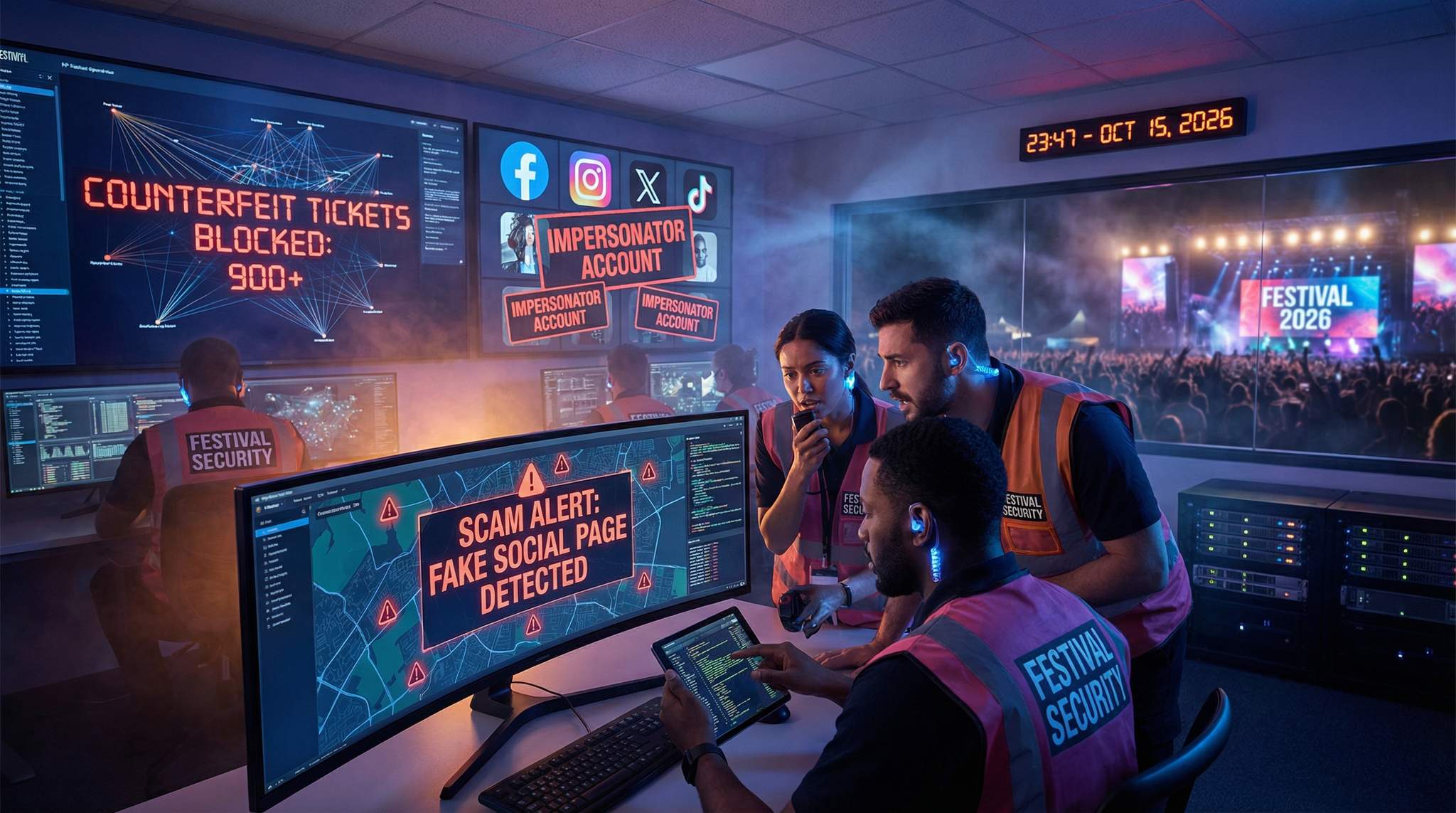
Scam tactics have evolved with technology. Criminals now clone official festival social media pages, create bogus event listings, and even hack ticket reseller platforms to steal genuine tickets. In one high-profile scheme, an international crew stole over 900 digital tickets to superstar concerts by exploiting insider access at a ticket marketplace – netting more than $600,000 before being caught. The cybercrime crew stole the URLs and raked in more than half a million dollars according to prosecutors. If global tours and mega-festivals can be targeted at this level, no event is too “small” to be on a scammer’s radar.
Why Festivals Must Take Fraud Seriously
Fraud isn’t just a financial crime – it’s a direct threat to your festival’s reputation. Few things sour an event’s image faster than excited fans showing up with fake tickets and being denied entry. Every disappointed attendee turned away at the gate due to a scam is a potential PR nightmare and a lost future customer. Scammers profit unjustly while your real fans (and your bottom line) pay the price. Every festival producer knows that spotting and avoiding counterfeit tickets is crucial for maintaining integrity. Moreover, large-scale fraud can strain operations: counterfeit tickets create longer entry lines, overwhelm customer service with disputes, and can even trigger safety issues if crowds of duped ticket-holders gather outside the venue.
Keep Tickets in Fans' Hands
Our secure resale marketplace lets attendees exchange tickets at face value, eliminating scalping while keeping you in control of the secondary market.
Festival producers worldwide are learning that anti-fraud measures are now as important as booking headline acts or securing sponsors. Protecting fans from scams isn’t just altruism – it’s essential for maintaining trust. An angry tweet or viral post about a ticket scam can spread rapidly, especially if fans feel the festival didn’t do enough to warn them. On the flip side, events known for fairness and security build goodwill. (In fact, industry veterans recommend making fraud prevention part of your fan experience strategy – a safe ticket-buying process is the first step in a great festival journey.)
When independent promoters approach me and ask, “how can I prevent ticket fraud at my festival without a massive corporate security budget?” my answer is always the same: proactive infrastructure. You don’t need a hundred-person cyber team; you need a ticketing partner that locks down inventory, a clear communication strategy that educates your attendees, and a zero-tolerance policy for unofficial resale. Implementing these foundational steps early on is the most effective way to safeguard your event’s revenue and reputation.
Planning a Festival?
Ticket Fairy's festival ticketing platform handles multi-day passes, RFID wristbands, and complex festival operations.
Real Wake-Up Calls from Recent Seasons
The past few festival seasons have provided plenty of wake-up calls. Scammers have impersonated events from California to Kuala Lumpur, often using social platforms as their hunting ground. Fake Facebook event pages and bogus Instagram accounts posing as official festivals have duped fans into “buying” tickets that don’t exist. Whether it’s setting up fake Facebook pages or bogus Instagram accounts, the goal is to deceive. In New Zealand, Rhythm and Vines festival organizers had to issue warnings about imposter social pages selling fraudulent tickets, while in Mexico, Corona Capital attendees reported scam listings on resale sites that took their money and ran. Even smaller community festivals aren’t immune – local police in parts of the U.S. and Europe have busted fraud rings targeting regional music fests and cultural events.
The lesson is clear: no festival is too large or too boutique to be targeted. The good news is that the live events industry is fighting back. From Glastonbury’s famously strict ticket controls to Coachella’s verified wristband systems, leading festivals are deploying smart strategies to outwit scammers. The rest of this guide details those strategies – practical steps any festival producer can take to protect their event in 2026’s digital landscape. It’s a battle of wits against the scammers, but with preparation and vigilance, you can make sure your festival stays one step ahead.
Fake Festival Pages on Social Media
Impersonation Red Flags on Facebook, Instagram, and Beyond
One of the most insidious threats in 2026 is the fake festival page – a fraudulent social media account or event listing that impersonates your festival. Scammers can whip up a Facebook page or Instagram profile in hours, lifting your festival’s logo and photos to appear legit. These fakes often have names nearly identical to your event (adding a subtle misspelling or extra word like “2026 Official”) and may even pay for ads to reach your fans. The red flags? Check the creation date and follower count – a brand-new page with a small, generic following is suspect if it claims to be a long-running festival. Lack of a verified badge (the blue checkmark on Facebook/Instagram) is another giveaway, especially for major festivals that typically have verification.
Fraudulent pages will often push urgent ticket deals or giveaways to create FOMO and prompt hasty purchases. Fans might see posts like “??Official Resale – 50 tickets available now, comment to buy??” when the festival itself is sold out. Scammers count on the buzz and urgency to override people’s caution. Poor grammar, odd URLs (like a ticket link that isn’t on your official site or Ticket Fairy page), and requests to “DM for tickets” are all warning signs. Legitimate festivals rarely ask buyers to private message an individual for tickets – sales are directed to official outlets, not personal chats. Table 1 below highlights common traits of real vs. fake festival pages:
Go Cashless With RFID Technology
Enable contactless payments, faster entry, and real-time spending analytics with cashless RFID wristbands for your events.
| Aspect | Official Festival Page | Fake/Scam Page |
|---|---|---|
| Page Name & URL | Matches the festival’s exact name (often verified with a blue check). Links go to the official website or authorized ticket vendor. | Slight misspellings or extra words in name (e.g., “FestivalX 2026 Tickets”). URL might use a confusing domain or URL shortener. No verified badge. |
| History & Followers | Established long-term with consistent posts, tens of thousands of genuine followers, and linked from the festival’s official site. | Recently created (often weeks before the event) with few followers or obviously bot accounts. Not linked from the real festival website. |
| Posted Content | Professional updates: lineup announcements, schedules, behind-the-scenes content, and clear ticket information with links to official sales. | Sparse posts focusing only on ticket sales or giveaways. May steal images/flyers from the official page. Typos or unusual phrasing are common. |
| Communication | Will direct fans to buy through known channels (official site or trusted ticketing partner). Never asks for direct payment via DM. Official emails come from the festival domain. | Often urges fans to message privately for a “deal” or directs to a sketchy third-party payment. Might use personal accounts or Gmail/Yahoo emails rather than official channels. |
Monitoring for Copycats and Clones
Early detection is your best weapon against fake pages. Assign someone on your team the role of social media sleuth starting as soon as tickets go on sale (if not earlier). This person (or team) should regularly search Facebook, Instagram, Twitter (X), TikTok, and even platforms like Reddit for any pages or posts impersonating your festival. Set up Google Alerts for your festival name plus words like “tickets” or “official” to catch any suspicious new sites. Some festivals also use social media monitoring tools (like Mention, Hootsuite, or Brandwatch) to scan for unofficial pages using their name.
Keep an eye on your event’s official Facebook event listing too – scammers often create clone Facebook events with the same name/date, hoping people confuse it with the real one. They might invite thousands of users and post fraudulent ticket sale links in the discussion. By routinely checking for duplicate events or groups, you can nip these in the bud. For example, the team behind Australia’s Splendour in the Grass festival makes a habit of searching for “Splendour tickets” on Facebook weekly leading up to the event, quickly discovering and reporting imposter pages before they gain traction.
Need Festival Funding?
Get the capital you need to book headliners, secure venues, and scale your festival production.
When you do find a fake page, act fast but methodically. Document everything – take screenshots of the profile, URL, and any communications (these could be evidence later). Then, report the page to the platform as an impersonation or scam. Facebook, Instagram, and Twitter all have reporting mechanisms for fake accounts impersonating a business or brand. Provide the official page link and assert that this copycat is fraudulent. The faster you report, the sooner the platform’s trust & safety team can investigate and hopefully take it down. In many cases, pages clearly violating terms (especially if they’re blatantly selling fake tickets) can be removed within a day or two.
Securing and Verifying Your Official Presence
To make it harder for scammers to fool your fans, establish a rock-solid official presence on all major channels. That starts with verification: apply for that blue checkmark (or its equivalent) on Facebook, Instagram, Twitter, etc., well before your ticket sales begin. In 2026, platform verification has become more accessible (often via subscription services like Meta Verified or Twitter for Professionals), so even mid-sized festivals can get the badge. A verified icon instantly signals to most users, “this is the real deal.” It won’t stop a scam page from popping up, but it will make fans more likely to doubt an unverified imposter.
Consistent branding is key. Use the same handle across platforms if possible (e.g., @YourFestivalName), and promote these official handles in all communications. On your website and ticket pages, explicitly list your official social media profiles so fans can double-check. When you create an official Facebook event for your festival, link it to your Facebook Page as the host – this way, it shows up as “Hosted by [Your Festival]” which is a good authenticity marker. Scammers can create an event with your name, but they can’t link it to your real page.
Also consider preemptively registering obvious variations of your festival name on social platforms, even if you don’t intend to actively use them. Owning those accounts prevents scammers from doing so. Many seasoned festival producers do a quick sweep of new platforms or known channels each year to secure their brand name (for example, grabbing “FestivalXOfficial” on any trending new app). It’s a simple step to cut off some avenues of impersonation.
Smooth Entry With Mobile Check-In
Scan tickets and manage entry with our mobile check-in app. Supports photo ID verification, real-time capacity tracking, and multi-gate coordination.
Shutting Down the Frauds – Collaboration is Key
Despite your best efforts, you may still encounter fake pages that slip through. Building relationships with platform representatives can expedite removals during critical times. If you have a marketing or advertising contact at Facebook/Meta or other platforms (often available if you run significant ad spend), keep them informed about impersonation issues. Platforms have become faster at shutting down clear scams, but persistent fraudsters might reopen pages under new names. In serious cases, don’t hesitate to involve law enforcement or cybersecurity authorities, especially if scammers are defrauding people out of large sums. Festival organizers have successfully worked with local police cyber units to track down prolific ticket scammers. This collaboration helps identify major ticket scammers operating nearby, leading to arrests and deterrence.
Some festivals also take a public stance as part of shutting down scams. For example, when a rash of fake pages hit Southeast Asian music festivals in recent years, a coalition of event organizers in Singapore held a joint press conference with the police to warn fans and pledge cooperation in stamping out fraud. This not only alerted more fans (possibly preventing victims who hadn’t heard the warnings yet) but also signaled to scammers that the community was united against them. While you might not need a press conference for every fake Facebook page, being vocal – through your website, social posts, and emails – that you will pursue scammers can have a chilling effect. At minimum, publicize the removal of any fake pages with statements like, “We’ve taken down a fraudulent page this week – thank you to the fans who reported it. Remember, our official channels are ___.” This reinforces the message and enlists your fan community in vigilance.
Ticket Scams and Counterfeit Tickets: Old Tricks, New Tech
The Many Faces of Ticket Fraud
Ticket scams aren’t limited to fake social pages – fraudsters have a whole arsenal of schemes to sell people bogus tickets. On secondary markets and classified sites, counterfeit PDF tickets and QR codes have become a major problem. Scammers take a real digital ticket (perhaps bought legitimately or stolen) and resell the same QR code dozens of times to unsuspecting buyers. Only the first copy to be scanned at the gate will work, leaving everyone else stuck outside. Others go a more old-school route: creating phony physical tickets or wristbands that look real enough to fool a quick glance (sometimes using high-quality printers or even hacking ticket templates). With today’s design and printing tech, it’s frighteningly easy to produce a realistic-looking ticket – unless you’ve built in strong anti-counterfeit features (more on that shortly).
If you need to explain the problem of counterfeit tickets to your stakeholders or investors, frame it as a multi-layered operational threat. It isn’t just about a fan losing money; it’s about the cascading effect on your festival’s infrastructure. Fake passes create bottlenecks at the gates, require dedicated customer service resources to de-escalate angry attendees, and ultimately erode the lifetime value of your customer base. Effective festival ticket scam prevention online must start long before the gates open, treating digital fraud as a core risk management priority.
A third common grift involves “ phantom” tickets – listings for tickets the seller doesn’t actually have at all. You’ll see posts on social media or resale sites saying “Selling 2 VIP passes, can’t attend” with convincing details. A desperate fan sends the money, and the seller disappears. No ticket ever existed. These scams often peak after a festival sells out or in the final weeks before the event, when authentic tickets are scarce and fans are frantic. In 2026, we’re also seeing scammers attempt more high-tech cons: from phishing emails that mimic official ticket vendors to attempts at hacking user accounts (to steal legitimate PDF tickets stored there). The arms race is on.
How bad is the problem? Unfortunately, very bad – and growing. Industry research indicates that ticket fraud incidents jumped by 38% in just two years. Counterfeit tickets have become an increasingly common issue recently, due to the surge in online resale activity. Another report estimated that nearly 5 million people buy fake tickets each year. Amidst the excitement, legitimate attendees face millions in losses worldwide, translating to hundreds of millions in losses for fans and event organizers. Hot events become prime targets: if your festival is gaining national or international attention, assume scammers are watching your on-sale dates. Even community festivals might see local Craigslist or Facebook scams pop up if tickets are in demand.
Grow Your Social Following With Every Sale
Require social media follows, shares, or playlist adds to unlock presale access or special pricing. Turn every ticket purchase into audience growth.
Real-world case study: After Belgium’s Tomorrowland sold out in 2025, authorities reported thousands of counterfeit PDFs in circulation—fraudsters had simply Photoshopped screenshots of genuine tickets, changing the names. Many victims only discovered the scam at the festival gates. Tomorrowland’s promoters responded by widely publicizing their official resale platform and warning that any ticket not purchased through it “will be invalid.” The result? In 2026, the number of attempted fake tickets at the gate dropped significantly, as more fans stuck to the approved channels. The takeaway: when fans understand the risks and have a safe alternative, scams become less profitable.
Spotting a Fake: Telltale Signs for Staff and Fans
How can you tell a real ticket from a fraud? Sometimes it’s very difficult – which is why prevention is better than detection at the door. However, there are still common telltale signs of bogus tickets that your team and your audience should know.
For physical tickets or wristbands (for festivals that still issue them): look for missing security features. Legit tickets may have holograms, UV-sensitive ink, microtext, or unique die-cut shapes. Counterfeits often lack these or have low-quality imitations (e.g., a “hologram” that’s just a shiny sticker). The print quality might be fuzzier, colors slightly off, or the cardstock thinner. Teach your door staff what a genuine wristband/ticket looks and feels like. Major festivals like Lollapalooza and Glastonbury distribute reference images of real tickets to their entry crew each year so they can compare.
For digital tickets (QR codes, PDFs, mobile app tickets): the danger is duplication, so the visual might look perfectly fine. Here, context and behavior are clues. Fans should be cautious of anyone selling a PDF via social media DMs or email. If a seller provides a screenshot instead of transferring the ticket through an official app or system, that’s a red flag – they might be sending the same screenshot to 10 people. The file metadata can even tip you off; if the PDF shows it was created months ago for an event not yet fully sold out, that’s odd (resale PDFs are typically from original on-sale dates). Also, check names and codes: a ticket where the buyer’s name doesn’t match the ID of the person who bought it from a stranger is suspicious (though not always definitive if transfers are allowed).
Train your support staff on some simple verification steps when someone contacts you to “verify if a ticket is real.” While you can’t authenticate every ticket inquiry manually (especially for big festivals), you can provide guidance: for instance, advise fans to only trust the barcode if it’s issued by your official ticketing partner. If you use Ticket Fairy or another platform, the ticket should have a unique order ID or watermark. Some festivals set up a “Verify My Ticket” page on their official site where buyers can enter a code or email to confirm their ticket status – an extra step to give peace of mind (and dissuade scammers, who know their fakes won’t pass such a check).
From the fans’ perspective, education is paramount. We’ll cover fan education in detail later, but one quick tip: encourage your ticket buyers not to post pictures of their tickets or QR codes publicly. It sounds obvious, yet every year numerous fans excitedly share photos of their festival ticket on Instagram, inadvertently exposing the barcode to scammers. Posting their tickets or QR codes gives fraudsters a chance to copy them. Fraudsters have been known to grab those images and print counterfeits from real fans’ tickets! A quick social media reminder from your official accounts (“Heads up: Don’t post your ticket QR code online – scammers might steal it!”) can curtail this risky behavior.
Automated Waiting Lists for Sold-Out Events
Capture demand when tickets sell out and automatically notify waitlisted buyers when tickets become available through cancellations or resale.
Strengthening Ticket Security: Smart Design and Tech
The best way to stop counterfeit tickets is to make them incredibly hard to counterfeit in the first place. This means working closely with your ticketing provider on security features and validation processes. If you issue physical tickets or wristbands, invest in professional printing with modern anti-fraud tech. Holographic foils, custom embossing, secure QR code stickers, and other features can go a long way. Many veteran festival producers collaborate with security printing experts (like the Hague Group or similar firms) to design tickets that are as tough to forge as currency. It might cost a bit more per ticket, but consider it insurance against hundreds of fake clones showing up on event day.
For digital tickets, unique barcodes/QR codes are a must (nearly all modern systems do this). But beyond uniqueness, think about dynamic and one-time use codes. Some festivals use rotating barcodes in their mobile apps that refresh every 30 seconds – making a screenshot useless after a short period. Others tie the QR code to a specific entry gate or time window; for example, a code might only be valid on Day 1 at the East Gate, thwarting someone who copied it for use at another entrance. Discuss with your ticketing platform what advanced options they offer. At the very least, ensure that every ticket will be scanned and verified electronically at entry. Rigorous scanning (with good internet or offline validation sync) will catch duplicate use of the same ticket instantly. As one industry security expert puts it, “a duplicated QR code means the second person gets denied at the gate – as they should, if we’re scanning properly.” In other words, scanning isn’t just for convenience; it’s a frontline fraud defense. Modern solutions like Ticket Fairy provide mobile apps for on-site scanning that flag any duplicate or invalid tickets in real time. Choosing the right system for your festival is part of a comprehensive defense.
It’s also wise to limit how easily tickets can be transferred or resold outside approved channels. We’ll dive deeper into official resale platforms in a moment, but if your ticketing system offers an integrated ticket transfer function, consider restricting transfers to within that system. Many festivals now make tickets “named” – the attendee’s name is on the ticket and checked against ID – or require a simple transfer approval where the new owner’s email is noted in the system. While name-checking every ticket at the gate can slow entry (and may not be feasible for massive events), doing it for VIP or high-tier tickets can deter scammers who often target those pricier passes. At minimum, clearly forbid resale on unofficial platforms in your terms and actually enforce it where possible (e.g., cancel tickets identified as resold illicitly). Glastonbury Festival is famous for this: any ticket not bought through their registration and resale process is void, and they’ve cancelled tickets of scalpers when necessary – a tough stance that significantly reduces fraud and touting. Since resale is, by definition, fraudulent outside the main sale, strict policies help keep tickets at face value or with controlled markups.
Official Resale Marketplaces: Cutting Off the Black Market
One of the most proactive moves a festival can take is to provide a safe, official resale or exchange platform for tickets. Why? Because if fans who can’t attend have no legitimate way to resell their ticket, they’ll turn to unofficial channels – which is where scammers thrive. By offering an authorized resale, you undercut the black market and keep control. Many forward-thinking festivals partner with an established resale marketplace (or build one into their ticketing system) where tickets can be resold at face value (or with a capped markup). For example, Burning Man has a well-publicized Secure Ticket Exchange Program (STEP) that allows those who can’t go to return their ticket, which is then sold to someone on the official waiting list. The Coachella festival similarly offers a verified resale through their ticket provider in the run-up to the event.
When fans know there’s a trusted way to buy second-hand tickets, they’re far less likely to gamble on a sketchy Facebook seller. A verified resale platform — essentially an official fan-to-fan exchange — keeps transactions under your oversight and ensures authenticity. This keeps tickets at face value or with capped fees and prevents the chaos of setting up fake Facebook events. In practical terms, this might mean using a feature from your ticketing partner. (The Ticket Fairy platform, for instance, includes an integrated resale system that allows fans to securely sell tickets they can’t use, with the new buyer getting a fresh, valid ticket issued in their name. This prevents the issue of setting up fake Facebook pages and ensures festival ticketing that feels fair.) By promoting this option heavily to your audience, you not only reduce fraud risks but also build goodwill – fans appreciate knowing the festival is helping them trade tickets safely rather than leaving them at the mercy of scalpers.
Implementing a system for fan-to-fan resale tickets with buyer protection is arguably your strongest countermeasure. When your ticketing partner facilitates the exchange, the original barcode is invalidated and a newly generated, secure ticket is issued to the buyer. This closed-loop ecosystem completely removes the anxiety of peer-to-peer transfers. Furthermore, when attendees inevitably search online to verify if your chosen platform is safe—often typing queries like “is Ticket Fairy legit” into search engines—they will find a transparent, secure infrastructure that reinforces your festival’s credibility and commitment to their protection.
Free Tool: When Should You Announce?
Pick your event date and genre — the free planner outputs a recommended announce, presale, on-sale and reminder schedule anchored to how your audience actually buys.
Some tips for running an effective official resale:
– Set clear rules – e.g., tickets can only be resold at face value plus fees (to prevent price gouging), and cut-off dates for resale (perhaps no transfers allowed 1-2 days before event to prevent last-minute chaos).
– Integrate waitlists if possible – let fans sign up to be notified when a ticket becomes available. This keeps eager buyers from stalking social media for offers (and encountering scammers).
– Communicate availability – if you do an official resale drop (say, a month before the festival), announce it loudly. Many festivals treat the resale like a second on-sale event, making sure everyone knows that “if you missed out on tickets, here’s your safe second chance!”.
Real example: In 2022, Japan’s Fuji Rock Festival introduced a structured ticket exchange forum on their site for the first time, due to increasing counterfeit problems. By 2025, they reported a sharp decline in fraud cases. Fans had grown to trust the official exchange, and scammers found fewer takers for their fake offers. This kind of success story is echoed elsewhere — verified resale helps combat fraud by removing buyers’ desperation. Beyond pricing fairness, a verified resale system protects those who might otherwise fall victim to a ticket scam. When fans have an authorized outlet, scam attempts start to stick out like a sore thumb (e.g., “Why is this person on Twitter selling a ticket when the festival app has a waitlist of people ready to buy any returned tickets?”). Essentially, you’re cutting off the scammer’s market.
Monitoring and Early Detection of Fraudulent Activity
Patrolling Secondary Markets and Ticket Forums
Monitoring isn’t just for your official channels – you need eyes on the secondary market where scammers lurk. Assign a small “fraud watch” team to regularly scan resale platforms for any suspicious activity related to your festival. This means checking sites like StubHub, Viagogo, SeatGeek, TicketSwap, Live Nation’s resale, and even local classified listings (Craigslist, Gumtree, Facebook Marketplace, etc., depending on your region). What are you looking for? Red flags include: a single seller listing an unusually large number of tickets, tickets being offered far below market price (a lure for quick victim snatch), or listings for VIP passes that don’t exist (scammers sometimes sell “VIP upgrades” that your event isn’t actually offering separately).
It’s worth building a simple spreadsheet or log to track what your team sees. If one pseudonymous seller name or account keeps popping up across platforms, that’s likely a scalper or scammer you’ll want to call out or report. Make screenshots of questionable listings because if you later pursue action (legal or platform complaints), you’ll need evidence. Some festivals coordinate with each other on this front: an alliance of European fest organizers shares a private Slack channel where they alert each other about emerging scams or scalper networks, since often the same bad actors target multiple events. Consider reaching out to other promoters in your region to compare notes on scam patterns.
When you spot outright fraud (like someone selling tickets that you know are fake or not yet on sale), you have a few options. If it’s an open marketplace (e.g., StubHub) and you’re the event organizer, contact them with proof and ask for the listing to be removed. Many major resale sites don’t want fraudulent tickets on their platform either – it’s bad for their business – so they will typically comply, especially if you provide specifics (ticket numbers, etc.). In some jurisdictions, reselling tickets without permission is illegal, which gives you additional leverage – citing those laws in your request can prompt faster action. For peer-to-peer forums like Facebook groups, enlist your community: a quick post from your official account, “We’ve been alerted to fake tickets circulating – remember, only buy via our site or trusted resellers,” can spur fans to flag the shady posts en masse, leading to their removal.
Train your community managers to recognize the psychological scripts fraudsters use. For example, you might need to help fans identify why this might be a scam: “my kid brother is no longer able to go to the game since he just went into the hospital. we want to make sure the tickets don’t go to waste.” This classic emotional manipulation tactic creates a false sense of urgency and sympathy, bypassing a buyer’s normal critical thinking. By highlighting these specific sob-story templates in your fan education materials, you empower your audience to spot a festival scam instantly, no matter how convincing the narrative seems.
Beyond tickets, keep an eye on merchandise and parking scams too. Scam artists sometimes pop up selling “official festival merch” online that’s counterfeit, or bogus “VIP parking passes.” While less common than ticket fraud, these can still annoy fans and hurt your brand. A comprehensive monitoring effort looks at all aspects of the festival experience that could be spoofed for profit.
Social Listening for Scam Alerts
Your own fans can be the best early-warning system if you make it easy for them to report suspicious activity. Encourage attendees to tag your official account or email your support team if they come across something that “doesn’t smell right.” Savvy festival-goers often spot fake ticket offers in fan groups or fishy DMs and will alert organizers when prompted. Be sure to respond gratefully and promptly to such tips – a quick “Thanks, we’re on it!” message makes people feel heard and part of the solution.
Use social listening tools to catch mentions of your festival alongside words like “tickets for sale,” “extra ticket,” or “need tickets.” For example, set up a Twitter search or utilize a tool that flags when someone tweets “YourFestivalName tickets.” This can lead you to posts where scams might be happening (e.g., replies like “I have 2 tickets, message me”). Some festivals create official fan groups on Facebook or Discord and actively moderate them, both to foster community and to weed out scam posts. If you have an official group, make clear rules: no ticket resales unless through verified channels, and designate moderators to delete and ban anyone posting suspicious offers.
Stay vigilant as the event draws nearer. In the final days before the festival, scammers get desperate too – they know time is running out to make a buck. This is when you’ll often see a frenzy of “urgent” posts claiming to have last-minute tickets. A common ploy: a scammer will drop a message in comments or forums like “Can’t go anymore, selling my ticket at a discount, DM me.” By now, many fans might know to beware, but someone late to the party could fall for it. If your monitoring team sees a spike in such posts, consider a last-minute fraud alert blast on your channels: “Final reminder: ONLY purchase tickets through our official resale (or box office at the venue). We’ve seen fake offers circulating – don’t risk it!” Frequency matters – people need to hear warnings multiple times for them to stick. This helps ensure no fakes are allowed, preventing ticket fraud and keeping your event secure.
Also, coordinate with your ticketing provider’s fraud team if they have one. Some platforms have automated fraud detection (flagging multiple ticket sales from the same account, etc.). They might alert you if suspicious activities occur in your event’s ticket ecosystem. For instance, if someone is attempting to resell barcodes illegally, a smart system might catch duplicate scans or unusual transfer patterns and notify you. Embrace any such tools – it’s like having an extra set of eyes.
Responding Decisively to Early Warning Signs
Early detection only helps if it’s paired with quick action. That means the moment you confirm a scam or fake page, move to shut it down and inform your audience. We discussed how to report fake social pages and get listings removed; here we focus on internal response and communication.
Have a clear escalation plan in your team for fraud. For example, your social media manager finds a fake Instagram profile – they immediately alert your festival director or security head, who then coordinates the takedown request and any public warning. Time is of the essence. If even a handful of fans buy from a scam link before it’s stopped, that’s damage done. In the lead-up to the event, consider daily check-ins on fraud status. A short stand-up meeting or Slack update like “All clear today” or “Found 2 suspicious listings, reporting in progress” keeps everyone in the loop. This also mentally prepares your front-of-house staff for possible issues (“we’ve seen fake VIP tickets out there, heads up at the gate”).
When you catch a scam early, decide how to message it publicly. Not every scam needs a front-page announcement – you don’t want to unduly alarm fans or give scammers publicity. But for anything that’s spreading noticeably (say, a fake Facebook event with hundreds of RSVPs), it’s wise to get in front of it. Use a calm, factual tone: “We are aware of an unofficial event page claiming to sell tickets. Please note this is fraudulent – the only official ticket link is [your website]. We’ve reported the page to Facebook.” Pin similar notices on your Facebook event and other channels. Transparency goes a long way to maintaining trust, even when acknowledging a scam incident.
Finally, make sure to follow through. It’s not enough to report a fake and forget it. Check back – did the platform remove the fake page? If not, escalate: file another report or find a contact. If a scam seller is still active, involve law enforcement if appropriate (especially if victims have lost money). Your diligence in seeing an issue through sends a message to scammers that your festival is not an easy target. As a bonus, if you do catch and publicly expose a scam (for example, working with police to arrest a counterfeiter or simply getting a notorious fake ticket seller banned), consider sharing that outcome after the festival: “We’re pleased to report that with the help of authorities, a major source of fake tickets was shut down.” It’s a confidence boost to your community that you have their back.
Educating Your Audience to Outsmart Scammers
Communicate Official Channels Early and Often
The simplest way to prevent fans from buying fake tickets is to make sure they know exactly how to get real tickets – and where not to go. From the moment you announce your festival dates and ticket sale details, hammer home the message of official channels. Every piece of marketing – posters, emails, social media, press releases – should include a line like “Tickets available only at [official URL].” On your website’s ticket info page, add a prominent note about avoiding unauthorised sellers. Many seasoned festival organizers put a big disclaimer in FAQs: “Warning: Tickets purchased from third-party websites or individuals may be invalid. Always buy through approved vendors.” By being explicit, you leave little room for confusion.
As tickets sell out or tiers close, update your messaging. For example, when you announce “All GA tickets are sold out,” it’s a good chance to add “…and we want to remind everyone that the only safe way to get a ticket now is via our official resale or waiting list. Beware of anyone offering tickets on social media or unofficial sites.” If your festival doesn’t have a resale option, you might instead say, “No additional tickets will be released. Be cautious of scalpers – fake tickets are rampant for sold-out events.” Repetition is key: the more you reiterate where to buy (and where not to), the more it sinks in. You must educate attendees and communicate policies clearly to prevent fans from falling victim to fraud, keeping your event safe. Fans actually appreciate this candor; it shows you care about their experience beyond just selling out the event.
Don’t neglect less tech-savvy communication channels either. Not all fans follow social media closely. If you have local radio partnerships or flyer campaigns, consider including a brief scam warning there too (“Authorized tickets at X outlet only”). Some festivals partner with consumer protection agencies or city authorities to amplify official messages about ticketing. For example, ahead of the 2025 World Cup events in the US/Mexico/Canada, some cities’ consumer affairs offices worked with concert and festival organizers to publish PSA-style warnings about ticket fraud in newspapers and community bulletins. While the scale may differ, the principle for your festival is the same: push out the info wherever your potential attendees are looking.
This proactive communication is especially vital for multi-genre promoters. For instance, if you run a mixed-arts event and fans message your social accounts asking, “I want to buy real comedy tickets for the stand-up tent, which app should I avoid?”, your team must have a standardized response ready. Instruct staff to explicitly warn against unregulated peer-to-peer payment apps (like Venmo or CashApp for strangers) and direct buyers solely to your verified primary ticketing link or official fan-to-fan exchange.
Fan Education Campaigns and Content
Educating your audience goes beyond a warning blurb. Think of it as a mini-campaign embedded in your overall marketing. You might create a series of social media posts or stories with “How to Spot a Ticket Scam” tips. Keep the tone friendly but informative – even a bit entertaining if possible (people share content that’s engaging). For instance, a short video skit of two festival-goers where one almost buys a ticket from a sketchy source and the other intervenes with “No, dude, that’s obviously fake because…”. End it with a reminder of the official site. Visual infographics work too: a simple image listing 5 red flags of ticket scams can be shared on Twitter, Insta, etc. Encourage fans to tag friends who might be looking for tickets in these posts – extending the reach of your educational content.
You can also use email blasts to ticket purchasers and waitlisters. Include a section in your confirmation emails: “Protect Yourself from Scams – Never Buy Tickets from Unofficial Sources” with a link to a blog article or help page on your site that details how to verify tickets. Since these emails go to confirmed buyers, the info helps them if they later seek extra tickets for friends, etc., and it may discourage them from turning to scalpers.
Real-world example: EDC Las Vegas (a massive EDM festival) often sends safety emails pre-event, which in recent years have included paragraphs on avoiding fake tickets. They highlight how official tickets are RFID wristbands mailed in advance, and any e-ticket being sold online is a scam because EDC doesn’t issue printable tickets. This kind of specific detail is invaluable. Think about what unique aspects your festival’s tickets have, and tell fans: “If someone offers you a PDF ticket, and we only use hologram wristbands – that’s a fake!” Give them the tools to be their own detectives. By educating your audience on the rules, you empower them to spot fakes.
Another approach is to share success stories and cautionary tales. If a fan reports a scam attempt to you and you shut it down, consider (with their permission) sharing that story: “Shout out to one of our fans who spotted a fake ticket page and alerted us – we’ve taken it down. Stay vigilant, everyone!” Conversely, if you hear of someone unfortunately being scammed, you might anonymously recount it as a lesson: “We learned that a few people paid a fraudster for tickets that turned out fake. We’re assisting the police in investigating. Please remember only tickets from us or our partner X are valid.” There’s a balance here – you don’t want to induce panic or too much negative buzz, but a real story can jolt people into caution more than abstract advice. It humanizes the issue: “this could happen to you if you’re not careful.”
Engaging the Community in Policing Scams
Your fan community isn’t just the target of scammers – they can be your allies in the fight. Encourage a culture where fans look out for one another regarding ticket purchases. One way is to empower your official fan groups or street team with information. If you have brand ambassadors or super-fans who help promote the festival, loop them in on the anti-fraud effort. Give them pointers on what to watch for and ask them to gently correct anyone they see asking “Where can I get tickets now?” with the proper info. Often, a fan will trust advice from a fellow fan even more than from the festival itself.
Some festivals actually designate a form of “community moderators” in their online forums solely to watch for fraud. These might be volunteers or part-time staff who, under guidelines from you, keep discussion spaces clean of scammers. They’ll delete suspicious posts and warn others promptly, taking some load off your core team. Recognize these contributions – a simple thank-you shoutout or a free t-shirt can motivate community moderators to stay sharp.
Consider hosting a short live Q&A (Instagram Live, Twitter Spaces, etc.) focused on safe ticket buying. Your ticketing manager or a spokesperson could go on video to talk about the dos and don’ts. Let fans ask questions (“How do I verify a reseller is legit?” “What if I bought a ticket and now can’t go?”) and answer in real time. This not only spreads knowledge, it also shows transparency – you’re willing to talk openly about these concerns. A live session can then be saved and shared for those who missed it.
Finally, involve artists or influencers if possible. If a headlining artist at your festival tweets “Don’t get scammed – only buy tickets from the official source, guys!” it carries a lot of weight with fans. Some artists regularly promote anti-scalping messages, as they want their true fans to get in at fair prices. You could supply your major performers with a suggested blurb about ticket safety to share. Many will be happy to support it, as it reflects well on them too (nobody wants their show associated with fans getting ripped off). In 2026, even a short TikTok video from a performer saying “See you at [Festival]! BTW, be smart and avoid those fake ticket links – get them through the festival’s site. Can’t wait to play for you!” can work wonders reaching younger, online-savvy audiences.
Honesty, Transparency, and Fan Trust
At the heart of education is trust. Be honest with your audience about what you’re doing to combat scams and what you expect from them. If something goes wrong – say a batch of counterfeit tickets does slip through – own up to it and explain how you’ll prevent it next time. Most fans are reasonable; they understand scammers operate in shadows beyond your control. What they want to see is that you’re not shrugging it off. By communicating your anti-fraud stance clearly, you build a reputation as a festival that genuinely cares about its patrons’ experience from purchase to post-show.
An informed fanbase is a powerful deterrent to scammers. Fraudsters generally target the uninformed and the unwary. If your audience is frequently reminded, well-informed on the common schemes, and has easy access to official info, scammers will have a much harder time pulling off their cons. In the end, investing effort in fan education and open communication pays dividends in loyalty. Fans remember that you looked out for them, which reinforces their decision to attend (and return next year). As the old saying goes, knowledge is power – here, it’s the power to stop a would-be scammer in their tracks because your fan simply says, “No thanks, I know better.” Strong fan education works to ensure maximum trust from your community.
Working with Platforms, Police, and Payment Providers
Partnering with Social Media and Ticket Platforms
Festival producers don’t have to (and shouldn’t) fight scammers alone. The big tech platforms have a vested interest in stopping fraud on their services, and many have teams dedicated to it. If your event has significant size or verification, see if you can get a direct line to those teams. For example, Facebook/Meta offers a “Media Partnerships” support channel for large events and public figures – having access means you can report imposter pages and get faster responses than the general public reporting flow. Even if you’re not Coachella-sized, you might be surprised: regional reps often like to help local cultural events under their portfolio. It’s worth reaching out proactively: shoot an email to Facebook’s support or LinkedIn message to a trust & safety manager, briefly explaining your festival and asking how they can assist if fraud issues arise.
The same goes for your ticketing platform. A quality ticketing provider will have anti-fraud measures and should be eager to collaborate because scams ultimately hurt their brand too. Ask your ticketing account manager what they do when someone reports a fake ticket or if they monitor sites for counterfeit copies of their tickets. Some ticketing companies can invalidate a ticket’s barcode the moment it’s reported stolen/scammed – essentially canceling the bad ticket and issuing a new one to the legitimate buyer. Ensure you know those procedures before the festival. If your provider supports features like 2FA (two-factor authentication) for buyer accounts, encourage its use or even require it for large purchases, to prevent account takeover attacks. Action Fraud recommends using 2-step verification (2SV) to secure accounts.
Another partnership angle is with classifieds and resale sites directly. It may seem counter-intuitive (these sites can be seen as enabling scalpers), but many such platforms don’t want outright fraud any more than you do. Some festivals have formal agreements with resale platforms to verify and badge legitimate tickets – for example, “Fan-to-Fan resale guaranteed by [Fest]” tags on SeeTickets or Ticketmaster Resale. While your stance might be “no resale allowed,” if that ship has sailed, it’s better to have a working relationship where these companies will quickly yank fraudulent listings related to your event. Provide them with a point of contact on your end for fraud issues, and get one for theirs. If a fake ticket seller is active, a direct call or email to a known contact at the resale site can lead to a ban of that user within hours, much faster than any public complaint might.
Involving Law Enforcement and Legal Avenues
When does a ticket scam become a police matter? Potentially sooner than you think. If you have evidence of a scammer defrauding multiple people (especially if it crosses a certain monetary threshold), authorities may take interest. Many countries have cybercrime units or at least fraud divisions that handle online scams, and festival ticket scams are on their radar. For example, UK’s Action Fraud often coordinates with local police to crack down on big concert ticket con operations, and in the U.S., state attorneys general have prosecuted Craigslist ticket scammers under consumer protection laws.
Your role isn’t to play detective, but you can collect and hand over valuable evidence. Keep records of any reports you receive: screenshots of fake pages, email addresses or phone numbers used by scammers, transaction receipts if victims share them. If multiple fans report the same Zelle or Venmo account that took their money, that’s golden info to pass to law enforcement. Often, festival scams involve interstate or international elements (wire fraud), which can elevate the priority for law enforcement. Don’t be afraid to file a police report for the festival itself if a significant scam comes to light – not only could it help catch the perpetrator, but having an official case number also reassures your customers that the issue is being taken seriously.
Legal tools can extend beyond criminal law. As an event organizer, you have intellectual property (IP) rights in your festival’s name and logo. If someone is impersonating your brand to commit fraud, that’s trademark infringement, among other things. A firmly worded cease-and-desist letter from your attorney to the scammer (if you have their contact) or to a web host can sometimes get a fake site taken down quickly. Also, filing a DMCA takedown for unauthorized use of your images or content (like if a scam site is using your official photos or text) is another swift action – web hosts and platforms respond to those because of legal obligation.
One case study: a major U.S. music festival in 2019 noticed a website selling “festival tickets” that was actually a phishing front. They had their lawyers send a cease-and-desist for trademark infringement to the domain registrar and hosting provider. Within 48 hours, the site was suspended, cutting off the scam before too many people got caught. The festival also worked with the FBI since financial info was being stolen – an investigation was launched and eventually the perpetrators (operating overseas) were identified, if not immediately apprehended. The moral: use every tool in the box – civil, criminal, etc. – to disrupt scams.
Engaging Payment Processors and Banks
Another ally in the fight: the payment companies. Scammers ultimately want to get paid, and often that trail can be their undoing. If fraudsters ask fans to pay by credit card or payment services, those transactions leave a trace. Major credit card companies (Visa, Mastercard) and payment platforms like PayPal have fraud departments that can work with event organizers and authorities. For example, if dozens of festival-goers initiate chargebacks on their credit card because the tickets they bought were fake, those patterns are analyzed by the card networks. They might identify that all the victims paid a certain merchant or account – information they can share with investigators.
Encourage victims to report the fraud to their payment provider (bank, PayPal, etc.) as well as to you. It’s painful to hear someone got scammed, but let them know reporting it might help recover their money or stop the scammer. Some payments can be reversed: PayPal Goods & Services payments often have buyer protection (if fans used the correct payment option – scammers often ask for Friends & Family to avoid this). If they paid by credit card and it was a fraudulent sale, a chargeback can return their funds. While these financial remedies are more about helping the individual fan than directly protecting your festival, a customer who gets their money back is far less likely to harbor resentment towards the event.
In some cases, payment companies will reach out to event organizers if they see a trend. For instance, if a bank notices 20 people disputing “Festival X tickets” charges, they might alert you through your ticketing partner or directly, to check if your systems were compromised. It’s usually scams, but they want to rule out a breach on your side. Work with them – confirm if those purchases were not through your official channels, and provide any details you have. The more data shared among all parties fighting fraud, the better.
Finally, if fans do unfortunately get scammed, show empathy. While it’s not the festival’s fault when an attendee buys from an unauthorised seller, how you respond matters. Many festivals provide a scam victim with a small token – maybe a discount code for next year or some merch – purely as goodwill. This isn’t an admission of responsibility; it’s a customer service gesture that can turn a negative experience into at least a neutral one. It says, “We’re sorry this happened to you, and while we couldn’t prevent it, we care about you as a fan.” That person is then more likely to share the story of how the festival treated them kindly rather than just how they got ripped off by a scammer.
Fortifying Your Ticketing and Admissions System
Anti-Bot Measures to Protect On-Sales
Many ticket scams originate at the very start: when bots or scalpers snag a large portion of tickets during the initial sale. These then filter into the secondary market, where scammers can mix fake tickets among real overpriced ones. Defending your ticket on-sale from bots and hoarders not only helps genuine fans get tickets at face value, it also shrinks the pool of supply that scammers manipulate. In 2026, top festivals use a mix of tech tools to do this. Queueing systems (that virtual waiting room that fans might gripe about) can actually foil many basic bots. Device fingerprinting and rate-limiting – which monitor if one user is trying to buy an unrealistic number of tickets or making hundreds of purchase attempts in milliseconds – will block suspicious activity. According to one industry report, Ticketmaster’s Verified Fan pre-registration (used for superstar tours and some festival presales) has been able to block around 90% of bot attempts in high-demand sales. Programs like the Verified Fan program help mitigate bots. The principle can apply to festivals via your own ticketing provider’s tools: things like CAPTCHA challenges, requiring an account log-in to purchase, or two-step email verification for buyers can weed out a lot of automated abuse.
The technology landscape supporting these defenses is also shifting rapidly. For instance, when a prominent cybersecurity firm divests its virtual waiting room product or a CEO announces a strategic pivot, it often signals that standalone queueing tools are being absorbed into comprehensive, all-in-one ticketing ecosystems. As an organizer, you should look for ticketing partners that natively integrate these advanced anti-bot features rather than relying on fragmented, third-party add-ons.
Work closely with your ticketing platform on this front. Ask them what bot detection measures they have in place for your sale. If your event is highly anticipated, emphasize that you expect heavy bot interest and need maximum mitigation. Some platforms can throttle how many tickets go into a cart at once, or flag duplicate orders going to the same address. Setting reasonable ticket purchase limits (e.g., no more than 4-6 tickets per customer) also minimizes bulk buying for resale. Yes, ticket bots are getting more sophisticated – using AI and distributed IP addresses – but so are defenses. In a recent TechRadar report, cybersecurity experts noted that criminals are even using AI to craft more convincing scam messages and impersonations, meaning you should equally leverage advanced tech in your defenses. Experts warn about scams in Australia and how to protect against AI voices and other emerging threats.
Organizers frequently ask, “how do event platforms handle spammers or fake guests?” The answer lies in multi-layered digital defense. Enterprise-grade ticketing systems utilize advanced identity verification, device fingerprinting, and velocity checks to identify non-human behavior. If a single IP address attempts to register dozens of fake guest accounts or spam the waitlist, the platform’s automated security protocols will shadowban or block those requests in real time, ensuring your attendee data remains clean and your inventory stays in the hands of real fans.
Be transparent with fans about any queue or anti-bot measures you implement. While some fans might grumble about jumping through hoops (like “Why do I have to pre-register my email for a ticket lottery?”), framing it as “to ensure real fans get tickets, not scalper bots” usually wins their support. Festivals like San Francisco’s Outside Lands have openly communicated when they introduced new anti-bot tech, and fans generally applauded those efforts, even if it meant a more controlled buying process. It also signals to scammers that you’re not a soft target technically.
Secure Ticket Delivery and Verification
The admissions process at the venue is your last line of defense. By the time festival day arrives, ideally most fraud has been filtered out – but inevitably a few fake tickets may slip through into people’s hands. How you handle them on-site matters for both security and customer experience.
Firstly, ensure your entry systems are secure and up-to-date. That means testing those barcode scanners or RFID readers before gates open. If you’re using a mobile entry app, have backup devices and a redundancy plan (like an offline mode) in case of connectivity issues. A failure in scanning tech can create a loophole where fraudsters might try to rush people through in the confusion. Well-trained door staff should be instructed never to let unverified tickets in “just because the line is backing up.” Better to pause entry for a minute than to open the floodgates and potentially let a bunch of fakes slip past, which could lead to overcrowding or safety issues inside.
Consider a dedicated customer service lane or window at the entrance for ticket problems. This is where you direct anyone who shows up with a ticket that scans invalid. Instead of turning them away with no recourse (and having an angry person broadcasting live on Instagram about it), have a protocol: the ticket gets checked more closely, possibly against an issue list. If you’ve compiled known fraudulent ticket numbers (for example, if victims reported their fake tickets to you in advance), have that list handy so staff can confirm “Yes, this is unfortunately a counterfeit.” It softens the blow when you can explain it with authority. Staff at this lane should be empathetic – these attendees are victims of crime, after all, even if it’s not your fault. A little compassion goes a long way to preventing a scene at the gate.
If your festival is using RFID wristbands, remind staff to verify the integrity of each wristband – scammers sometimes attempt to reuse wristbands from earlier days or forge the RFID chips. Simple device checks (tapping the band on a reader to ensure it’s active and not reported lost/stolen) will catch those. Some events color-code wristbands by day or type, which can quickly visually flag someone wearing the wrong color band in the wrong area (a potential sign of tampering).
When promoters ask me how to prevent ticket fraud with event wristbands, I always emphasize that technology must be paired with physical gate protocols. What works at the gate is a combination of visual, tactile, and electronic checks. Train your security personnel to perform the “tug test” to ensure the locking toggles haven’t been compromised or loosened with a straw—a classic scalper trick. Additionally, incorporating UV-reactive threads, custom holographic stitching, or proprietary foil stamping into the fabric makes physical duplication nearly impossible for counterfeiters. If a patron arrives with a band that looks frayed, lacks the UV watermark under a blacklight, or has a tampered clasp, your gate staff must be empowered to direct them immediately to the customer service lane for a deeper credential review.
After the festival, conduct a brief analysis of any fraud incidents. How many fake tickets were caught at the door? Were there clusters of them from a particular source? If you identify a pattern (e.g., lots of people with fake Saturday day-pass QR codes bought via the same Facebook group), compile that info and consider sharing it with law enforcement or using it to improve next year’s strategy. Also, if feasible, reach out to those victims post-event (through the contact info they gave when their ticket was confiscated) – not only to perhaps offer a consolation, but to gather intel on how they were scammed. That intel – “bought on XYZ website,” “the seller used this phone number” – is fuel for stopping the next scam.
Exploring Cutting-Edge Solutions (Blockchain, Watermarks, and Beyond)
No discussion of ticket scam prevention in 2026 would be complete without mentioning the buzzwords: blockchain tickets, NFT passes, and digital watermarks. These technologies promise tamper-proof, traceable tickets. Some festivals have experimented with NFT ticketing, where each ticket is a unique token on a blockchain that can be verified for authenticity. In theory, this could eliminate fakes – a counterfeit PDF wouldn’t have the matching token in the blockchain ledger. However, in practice, adoption is still nascent and not without its challenges (digital wallets, gas fees, and user unfamiliarity, to name a few). If you’re an innovative festival with a tech-savvy audience, keeping an eye on these developments or piloting them in a small capacity (like VIP tickets) could set you ahead of the curve. Just be cautious about overhyping it – the tech is only as good as the user experience. If it complicates buying or entry, it might introduce new problems even as it solves others.
Another frontier is using AI for fraud detection. Large ticket platforms and social networks are increasingly deploying machine learning models to identify scam patterns – for instance, accounts that message lots of people about ticket sales or posts that resemble past scam content. While as a festival organizer you might not build these AI tools yourself, be aware that they exist. When evaluating ticketing partners or third-party security tools, ask if they use AI-driven fraud monitoring. For example, some services can scan images circulating on social media and detect if your ticket PDFs or codes are being shared publicly, alerting you to take action (kind of like a copyright ContentID system, but for tickets!).
Finally, data privacy and compliance come into play. Protecting your attendees’ personal data (names, emails, payment info) is also protecting them from scams like identity theft or targeted phishing. Adhering to regulations like GDPR and using secure systems means there’s less chance a hacker can steal a list of your ticket buyers and then send them phishing emails (“Hey, it’s Festival X, there was an issue with your ticket, click here to re-enter your payment info”). Ensure your ticketing platform follows strict data protection standards and encourage fans to use strong passwords and two-factor authentication for their ticket accounts. This reduces the chance of recovering money from unbelievably good deals that turn out to be scams. These steps might not be as flashy as holographic wristbands, but they add layers to the defense.
In sum, fortifying your ticketing and admissions system isn’t a one-time task – it’s an evolving practice. Each year, review what new tools are available and what new tricks scammers have tried. Learn from other events: industry conferences (like INTIX or the Association of Independent Festivals meetings) often have sessions where producers share war stories and solutions regarding ticket fraud. By staying informed and being proactive, you’ll keep your festival on the cutting edge of fraud prevention, which means more genuine fans in the door and fewer headaches all around.
Frequently Asked Questions About Festival Scam Prevention
How should organizers explain the problem of counterfeit tickets to local authorities or investors?
When briefing stakeholders, frame fake passes as a comprehensive operational vulnerability rather than just a consumer grievance. You must explain the problem of counterfeit tickets as a catalyst for severe gate bottlenecks, increased staffing costs for conflict resolution, and physical security risks when denied attendees congregate outside the venue. Articulating this clearly helps secure the necessary budget for enterprise-grade ticketing infrastructure.
How do modern event platforms handle spammers or fake guests during on-sales?
Promoters often ask how do event platforms handle spammers or fake guests when demand spikes. Enterprise ticketing solutions combat automated attacks through multi-layered digital defenses, including real-time device fingerprinting, velocity checks, and advanced identity verification. If a network of bots attempts to hoard inventory or register fraudulent accounts, the system automatically throttles or shadowbans those requests.
Why is offering fan-to-fan resale tickets with buyer protection so critical?
Creating a closed-loop, official exchange is the most effective way to starve the secondary black market. When a promoter facilitates fan-to-fan resale tickets with buyer protection, the original barcode is permanently invalidated, and a newly minted digital pass is issued to the buyer. This infrastructure reassures attendees who might otherwise search online to verify if a third-party seller is safe or ask “is Ticket Fairy legit,” keeping all transactions securely within your official ecosystem.
How can community managers identify why a specific post might be a scam?
Fraudsters frequently rely on emotional manipulation to bypass a buyer’s critical thinking. A classic red flag is the fabricated emergency. Your team must identify why this might be a scam: “my kid brother is no longer able to go to the game since he just went into the hospital. we want to make sure the tickets don’t go to waste.” Training your social media moderators to recognize these specific psychological scripts allows them to swiftly delete predatory posts and protect your audience from a devastating festival scam.
What are the most effective steps to prevent ticket fraud at my festival?
To effectively prevent ticket fraud at your festival, you must transition from reactive damage control to proactive digital infrastructure. Start by partnering with a primary ticketing platform that utilizes dynamic, rotating QR codes and strict device fingerprinting. Next, establish a closed-loop, official fan-to-fan resale exchange to eliminate the gray market. Finally, run aggressive pre-event educational campaigns so your attendees know exactly where to buy and how to spot predatory secondary listings.
How can organizers prevent ticket fraud with event wristbands, and what works best at the gate?
To effectively prevent ticket fraud with event wristbands, organizers must combine electronic validation with rigorous physical inspections. What works best at the gate includes training staff to check for tampered locking toggles (the “tug test”), utilizing UV blacklights to verify hidden reactive threads, and ensuring every RFID or barcode is actively scanned rather than just visually inspected. Layering these physical security features makes it exponentially harder for scammers to duplicate or transfer credentials.