As we move into 2026, the landscape of live music events is rapidly evolving with cutting-edge on-site technologies. These innovations are redefining how concerts are planned, executed, and enjoyed, deepening the connection between artists and fans. From enhancing the attendee experience to improving operational efficiency and safety, tech tools are now pivotal at every stage of a concert. Below, we explore ten exciting on-site event technologies to know about in 2026 and how they’re transforming music concerts.
1. Secure Ticketing Solutions for Fair Access
Imagine a concert where every ticket is virtually fraud-proof. In 2026, secure digital ticketing has advanced to make that a reality. Blockchain-based ticketing systems, often issuing tickets as unique NFTs, are revolutionizing how events handle sales and distribution. These platforms create an immutable record for each ticket, ensuring transparent transactions and virtually eliminating counterfeit tickets, a topic explored in discussions on NFT ticketing for festivals and admissions. Major ticket providers are piloting these technologies to fight scalpers and keep prices fair. For example, Ticketmaster’s partnership with the Flow blockchain in 2023 enabled organizers to issue NFT-linked tickets that fans could verify on the spot, as detailed in reports about Ticketmaster selecting Flow blockchain for events.
Beyond blockchain, event organizers are implementing dynamic pricing models that adjust ticket costs based on real-time demand. This can help maximize revenue and prevent instant sell-outs, though it requires careful use to avoid alienating fans with price spikes. Personalized ticketing is also on the rise: many digital tickets now embed the buyer’s name or ID directly onto the QR code or RFID chip, making unauthorized resale harder. At entry gates, biometric authentication is gaining traction – from fingerprint scans to facial recognition – to verify that each ticket holder is genuine. Some venues have tested palm-scanning entry systems (like Amazon One) and facial recognition gates for VIPs, drastically cutting down queue times. However, there’s ongoing debate about privacy; organizations like the ACLU have raised concerns that face recognition at events could become invasive if misused, with organizations noting that face recognition threatens to replace tickets. Concert organizers must balance enhanced security with respect for attendee privacy.
Why It Matters for Music Concerts in 2026:
– Ensures fair access and significantly reduces ticket fraud or scalping incidents.
– Provides organizers with valuable data on attendee behavior (via verified digital identities).
– Streamlines entry – biometric scans can validate tickets in seconds – improving security without lengthy waits.
Keep Tickets in Fans' Hands
Our secure resale marketplace lets attendees exchange tickets at face value, eliminating scalping while keeping you in control of the secondary market.
Pro Tip: If you implement blockchain or personalized ticketing, educate fans early. Explain how to transfer tickets legitimately (if allowed) and what IDs are required at the gate. Clear communication helps build trust in high-tech ticketing and deters scammers. Always have a low-tech backup plan (e.g. a will-call list) in case digital systems encounter glitches.
To ensure you choose the right system for your needs, it is worth comparing the top event ticketing platforms for 2024.
Ready to Sell Tickets?
Create professional event pages with built-in payment processing, marketing tools, and real-time analytics.
2. RFID Technology for Seamless Entry and Cashless Payments
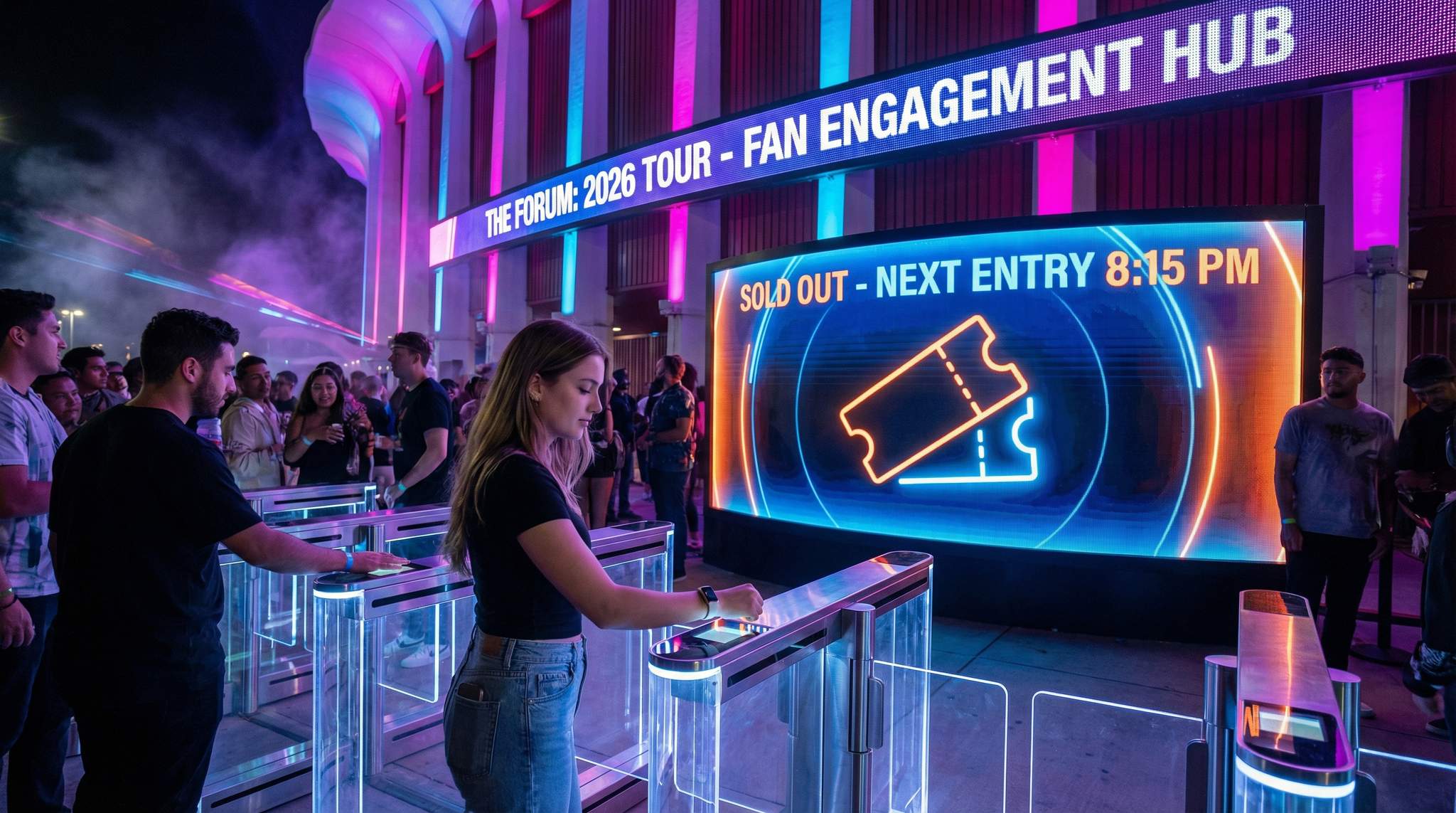
RFID (Radio Frequency Identification) has become a standard at music festivals and is now making its way into concert venues of all sizes. In 2026, expect RFID wristbands or smart cards to be common for ticket scanning, crowd management, and cashless payments at shows. Upon arriving, attendees simply tap or scan their RFID wristband at the entrance – no fumbling with paper tickets or barcodes. Entry throughput speeds up dramatically; several stadiums report that touchless RFID entry cuts gate wait times by over 50% compared to manual checks. Once inside, that same wristband becomes a digital wallet. Fans can buy a t-shirt, grab a drink, or upgrade their seat by tapping their wristband, with charges linked to their pre-loaded account or credit card. This tap-and-go convenience keeps lines moving at merch booths and concession stands, while also reducing theft and cash handling errors.
RFID technology isn’t just about convenience – it’s a powerful safety and analytics tool. Each scan of a wristband provides real-time data on crowd flow. Organizers can monitor how fans move between stages or floors and use that data to prevent bottlenecks. Some events even display live counts of zone capacity to avoid overcrowding. In an emergency, RFID data helps pinpoint how many people are in each area. On the experience side, interactive RFID integrations can trigger special effects: for instance, an RFID badge could cue personalized lighting or sound when VIP guests enter a suite.
For detailed implementation strategies, read our guide on how to use RFID for payments and access.
Why It Matters for Music Concerts in 2026:
– Faster Entry & Exit: Touchless scans greatly reduce queuing, getting fans to the music sooner.
– Cashless Convenience: Eliminates the need for cash or token systems, improving hygiene and transaction speed. One case study saw a 119% spike in the number of on-site transactions after switching to cashless payments, along with a significant boost in total sales revenue.
– Real-Time Crowd Insights: Organizers can track attendee movements to manage crowd density and deploy security or services exactly where needed.
Data-Driven Event Marketing
Track ticket sales, demographics, marketing ROI, and social reach in real time. Exportable reports give you the insights to make smarter decisions.
3. Augmented Reality (AR) for Immersive Experiences
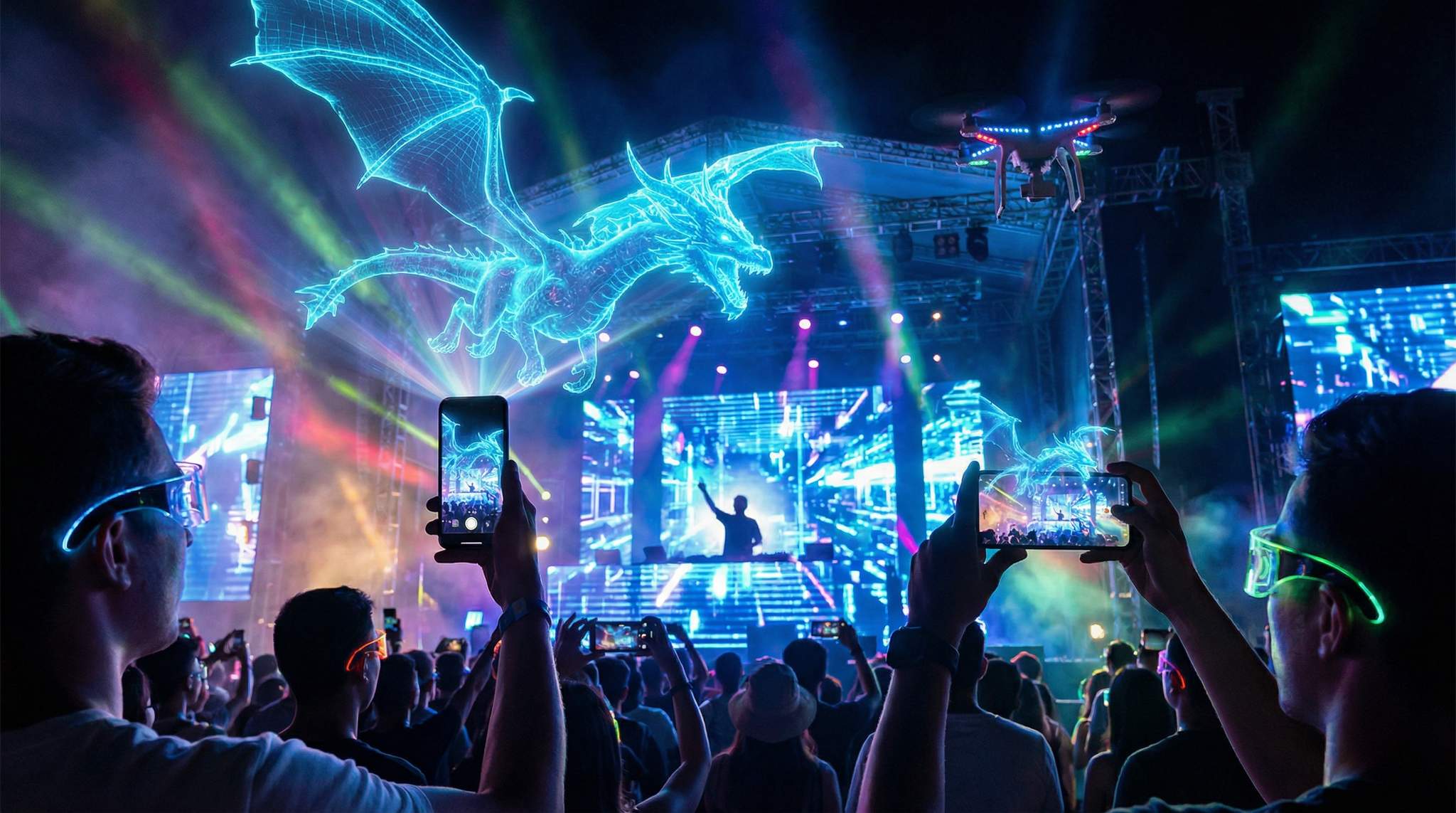
Augmented Reality is no longer just a buzzword – it’s showing up at concerts to create mind-blowing visuals and interactive fan experiences. With AR, digital content is overlaid onto the physical world through smartphones, AR glasses, or venue screens. Concert organizers in 2026 are leveraging AR via dedicated event apps that attendees can download. Point your phone at the stage, and you might see 3D dragons flying around the guitarist, or lyrics appearing in neon animations around the singer. Some shows have experimented with AR activations where fans unlock hidden content by aiming their camera at a poster or a special marker at the venue. For example, at Coachella’s 2023 festival, multiple headlining artists like Blackpink and Gorillaz incorporated broadcast-grade AR into their performances, adding a new digital dimension for both in-person and livestream viewers, as seen when Coachella 2023 utilized broadcast-grade AR.
AR also enables virtual meet-and-greets and scavenger hunts. Attendees can hunt for AR objects around the venue to win merch or upgrades – all through their phone screen. This year we’ve seen AR used for crowd games (imagine a virtual beach ball bouncing across a stadium full of phones) and even for AR-enhanced stages. At some high-tech venues, giant LED screens or mixed-reality stages blend performers with AR visuals so convincingly that the entire concert feels part of a story. These immersive touches give fans extra reason to be in the venue rather than just watching at home – it’s literally a concert experience you have to be there to fully appreciate (and Instagram).
Grow Your Events
Leverage referral marketing, social sharing incentives, and audience insights to sell more tickets.
If you are considering these immersive tools, make sure to learn what you need to know about AR and VR.
Why It Matters for Music Concerts in 2026:
– Unforgettable Visuals: AR overlays turn a standard performance into a multi-sensory spectacle, giving fans jaw-dropping moments to share on social media.
– Interactive Engagement: Audiences become participants, not just spectators – using phones or AR wearables to interact with the show or each other.
– Added Value for Tickets: AR experiences, from exclusive content to virtual rewards, make concertgoers feel they’re getting a bonus experience beyond just the live music.
4. AI-Powered Personalization for Concert-Goers
Artificial Intelligence (AI) is helping shape more personalized and smoother experiences for concert attendees. In 2026, AI-driven platforms analyze data from ticket purchases, music streaming habits, and social media to deliver tailored recommendations. Before the show, an AI-enabled app might suggest which merch items a fan would love (based on their past purchases or even their band t-shirt in profile photos!). When fans arrive, AI can predict peak congestion times for bathrooms or exits and proactively direct attendees to less crowded facilities via push notification. Major promoters are also using AI to optimize setlists and show flow by analyzing which songs get the strongest crowd reactions in real time.
On the customer service side, expect to encounter friendly AI chatbots on venue apps or messaging platforms. These bots can answer FAQs (“What time does the opening act start?”), help locate lost and found items, or even give personalized directions inside a massive arena (“Head left for Section 102, and the nearest beverage stand is 20 feet ahead”). Such bots work 24/7 and handle basic queries instantly, freeing up staff for on-ground assistance. AI can also boost engagement: some artists are beginning to use AI on social media during concerts, where an algorithm might generate unique digital art or memes from live show moments and share them with fans in real time. And behind the scenes, AI systems help with crowd management by analyzing video feeds to detect unusual patterns – flagging if a section is getting too dense or if someone might need medical help (via behavior recognition).
Why It Matters for Music Concerts in 2026:
– Customized Fan Experience: AI curates content and recommendations so each fan feels the event is catering to their tastes – from personalized setlist alerts (“Here comes your favorite song!”) to suggesting the shortest drink lines.
– Reduced Friction: By predicting and smoothing out pain points (lines, entry, navigation), AI helps eliminate the little hassles that frustrate concert-goers.
– Operational Efficiency: Organizers can deploy staff and resources smarter. For instance, if AI predicts a surge at Merch Stand A after the headliner’s set, they can prepare additional staff and inventory in advance.
5. Drones for Aerial Filming and Crowd Safety
Camera drones have taken flight at concerts – literally – and by 2026 they’re an integral part of event production and security. Equipped with ultra-HD cameras, drones can capture breathtaking aerial footage of concerts, giving fans angles that were impossible in the past. Live shows now often include drone-shot clips on the venue’s big screens or in livestreams, treating audiences to sweeping crowd shots and dynamic fly-overs of the stage, with camera drones elevating event production standards. Artists also use these drone views in post-event videos and social media – think of those epic recap videos of festivals with aerial shots of thousands of fans dancing under the night sky.
Beyond amplifying the spectacle, drones significantly enhance crowd management and safety. Overhead, they act as roving sentries: drones equipped with AI-based object detection and thermal imaging cameras can monitor crowd density in real time to enhance security and crowd management. If one area of the pit or stands is getting too congested, security teams can get an early warning and intervene before it becomes a hazard. Drones also patrol perimeters of large outdoor venues, spotting fence jumpers or identifying unsafe crowd flow outside entrances. In emergency situations, they’re invaluable. For example, if someone is lost or there’s a medical issue in a dense crowd, a drone overhead can spot the incident faster than ground staff and direct responders to the exact location. Some advanced models can even carry small first-aid packages or flotation devices (at festivals near water) to drop to people in need, utilizing thermal imaging to monitor crowd density. On the entertainment side, coordinated drone light shows are emerging as a greener alternative to fireworks. Hundreds of illuminated drones can dance in the sky in sync with music, forming shapes or spellings – a trend seen at several major festivals in 2025 and continuing to wow crowds at concerts in 2026.
Why It Matters for Music Concerts in 2026:
– New Perspectives: Drones give fans and filmmakers cinematic views of concerts, often in real time. Aerial shots capture the energy of the crowd and scale of the show, adding excitement for both onsite and remote viewers.
– Enhanced Safety: Live drone surveillance helps prevent dangerous overcrowding and can speed up emergency response by providing eyes in the sky. Organizers get instant data to make crowd control decisions.
– Innovative Entertainment: Drone light shows and special effects add an extra “wow” factor to concerts, and do so with less noise and environmental impact than traditional pyrotechnics.
To further upgrade your production, consider these 5 technological innovations for better event experiences.
6. Wearable Technology for Health & Safety
In the post-pandemic era, health and safety wearables have become a promising tool to keep concert crowds safe. These aren’t sci-fi gadgets, but practical devices like smart wristbands, lanyards, or even sensor stickers that attendees wear. By 2026, several event organizers are exploring wearables that track vital signs and environmental factors in real time. For instance, a smart wristband could continuously monitor a fan’s heart rate, temperature, and hydration level. If the system notices signs of heat exhaustion – say a spike in heart rate coupled with rising body temp – it can instantly alert medical teams. This is not theoretical: the need is very real. In November 2023, a tragic incident saw a 23-year-old fan collapse and die from heatstroke during an outdoor Taylor Swift concert in Rio de Janeiro amid record heat waves, a tragedy that highlighted extreme heat dangers at live events. The outcry from that event prompted new regulations in Brazil (dubbed the “Taylor Swift effect”) requiring concert organizers to provide free water and cooling measures during extreme heat, leading to new federal regulations for water access. Wearable health tech aims to avert such tragedies by catching danger signs early.
Organizations are testing systems where crowd health data flows into a command center dashboard. If multiple wristbands in Section B trigger high body-temperature alerts, officials can proactively send misting fans or water vendors there. Some wearables can vibrate or flash to signal the wearer to take a break or hydrate if their vitals trend dangerously. Privacy is respected by anonymizing data – staff see device IDs, not personal names, unless intervention is needed. These technologies were originally designed for workers in high-heat or high-risk jobs, but 2025 saw pilot programs adapting them for festivals and concerts with extreme conditions. For example, a few summer festivals in desert climates are reportedly planning trials where volunteer attendees wear smart hydration patches on their skin. The patches sync to a mobile app and alert both the user and medics if dehydration signs appear. While still early-stage, such measures could become mainstream as fans and artists place greater emphasis on well-being at shows. And it’s not just heat: other wearables might monitor decibel exposure for hearing safety or detect if someone falls unconscious in a crowd (triggering an alert). The goal is that everyone goes home as safe and healthy as they arrived.
For specific applications in high-heat environments, explore the benefits of wearable health tech at festivals.
Why It Matters for Music Concerts in 2026:
– Proactive Safety: Instead of reacting to emergencies, organizers can prevent them – identifying attendees in distress (overheating, overexertion, etc.) and responding immediately, often before the person even realizes they need help.
– Boosts Confidence: Knowing that there’s an added layer of health monitoring can reassure fans (and performers) that safety is a priority, particularly at large festivals or extreme-weather shows.
– Data-Driven Improvements: Collecting anonymized health data helps identify problem hotspots (literally and figuratively). If a certain venue area consistently sees more issues, organizers can improve shade, ventilation, or staff presence there in the future.
7. Mobile Technology for Enhanced Fan Engagement
Our ever-present smartphones have become part of the concert experience. Mobile technology – especially event-specific apps – is transforming how fans interact with live music events. By 2026, most major concerts and festivals offer a dedicated app or mobile web portal that serves as a digital companion for attendees. These apps pack a ton of features: interactive maps of the venue, personalized schedules (with push alerts so you don’t miss your favorite act), artist info, and even trivia or scavenger hunt games to play on-site. One powerful use of mobile tech is high-quality live streaming and content access. If a venue has multiple stages (say at a mini-festival or multi-act concert), fans can pull up a live feed of the other stage during a break – so you never truly “miss” a performance. Some apps provide exclusive angles or backstage cams accessible only to attendees or digital ticket holders.
Social media integration is seamless. Attendees can snap photos or videos in the app with special event-themed AR filters or frames, then share to Instagram/TikTok with the concert’s hashtag in one click. This not only amplifies the event’s online buzz, but also lets fans feel connected to a larger community of viewers. In fact, a concert in 2025 saw tens of thousands of fans using a custom Snapchat AR lens that superimposed the band’s mascot dancing on stage – those videos collectively garnered millions of views, doubling as viral marketing. Beyond social sharing, mobile apps enhance the practical side of concerts. Many venues now enable in-app food and drink ordering straight to your seat or a fast-track pickup lane, so you don’t miss half the show standing in line. You might order a drink on the app and get a notification to pick it up when ready at a nearby kiosk. Some arenas have even started offering merchandise pre-ordering via app, with pick-up points to grab your shirt without waiting in a post-show crowd.
If you are broadcasting your concert, ensure you follow the definitive checklist for setting up online events.
Venues are also using mobile platforms to deliver real-time updates and surprises. If an opening act’s start time shifts or a pop-up guest performance is about to happen, an alert on your phone will let you know. At a 2024 arena show, fans got a surprise message through the app that a meet-and-greet lottery was starting; hundreds entered within minutes and a few lucky winners got pulled backstage – all via their phones. These kinds of interactive polls and rewards keep audiences engaged beyond just watching the stage. It’s like a two-way communication channel during the live event. As 5G and advanced Wi-Fi become standard in large venues, the reliability of these app services has improved immensely, even with thousands of people online at once. The bottom line: mobile tech, when done right, adds layers of engagement and convenience that can make a concert feel like a curated experience just for you.
Why It Matters for Music Concerts in 2026:
– Deepened Engagement: Fans aren’t just at the show – they’re participants. Through apps, they access bonus content, play games, vote on encores, and more, which drives a deeper emotional investment in the event.
– Seamless Experience: Little conveniences like skipping concession lines or easily finding your friend in a crowd (thanks to friend-finder features) add up to a significantly more enjoyable night out. Happy fans are more likely to return (and spend more on upgrades or goodies).
– Global Sharing: Mobile tech bridges the gap between the physical venue and the global audience. Attendees become ambassadors, sharing their perspectives in real time, which can amplify the concert’s reach and hype. In 2023, Blackpink’s Coachella performance saw over 3 million concurrent online viewers largely driven by fan shares, contributing to Blackpink’s Coachella 2023 viewership records – a testament to how on-site fans now co-create the worldwide event narrative.
8. Advanced Connectivity and Smart Venue Solutions
Behind all these high-tech experiences is the need for robust connectivity. The rollout of 5G networks and dedicated high-density Wi-Fi in 2024–2025 means that, in 2026, concert venues are more connected than ever. This is crucial: thousands of fans posting videos or using AR features require serious bandwidth. Telecom companies and governments alike have invested in upgrading infrastructure at event sites. For instance, Hong Kong’s Communications Authority recently oversaw the installation of 5G base stations at major venues like AsiaWorld-Expo and Hong Kong Coliseum to provide seamless, high-capacity coverage for concerts, as evidenced by the activation of 5G base stations to ensure secure and efficient communication services. Similarly, many US and European arenas now boast enhanced in-building 5G so that apps, livestreams, and cashless payments all work without a hitch, even in a sold-out show.
Better connectivity unlocks new possibilities. Biometric entry systems, which we mentioned earlier, rely on instant data verification – something far more feasible with near-zero network lag. High-speed connections also enable real-time fan interactions like live polls or multi-angle video streams in apps without delay. In 2026, we’re seeing the rise of IoT (Internet of Things) in venues. Tiny sensors around the venue connect to central systems: smart lighting that adjusts based on crowd mood, climate control that responds to body heat levels, and even bathrooms that send an alert when supplies are low or lines are getting long. All these IoT devices communicate over the venue’s network to optimize the environment in real time.
Concert merchandise and wearable tech have also gotten smarter. Smart fabrics are making an appearance – literally. Imagine wearing a band T-shirt that lights up or changes color in response to the music’s beat. This is happening on a small scale with LED-embedded clothing and accessories. In fact, Coldplay’s tours famously hand out LED wristbands that sync to the music; those are a form of wearable IoT, creating immersive waves of color in the crowd. The company PixMob, which provides Coldplay’s wristbands, reported that across one recent world tour, over 5 million wristbands helped turn audiences into part of the light show, prompting many to ask how these light-up wristbands work. Beyond lights, haptic feedback wearables are making concerts more inclusive. In 2022, Coldplay began offering vibrating vests to deaf and hard-of-hearing fans so they could feel the music’s bass and rhythms on their bodies, utilizing a high-tech vest for the hearing impaired. Now in 2026, such haptic wearables are being tested at other events (even a country music festival in Australia tried them) to expand accessibility. This technology lets fans physically sense the peaks and drops of the performance, adding a “feel the music” dimension like never before.
Why It Matters for Music Concerts in 2026:
– Always Connected Fans: With rock-solid 5G/Wi-Fi, fans can share experiences without frustration (no more “no signal” icons when you try to post that amazing encore moment). It also means event apps and digital services work reliably, which in turn means fans actually use them.
– Smarter Venues: IoT and connectivity make the venue itself responsive. The concert environment (lighting, sound, climate) can adjust dynamically to crowd energy and comfort, creating a better overall atmosphere.
– Tech-Enhanced Atmosphere: From synchronized LED wristbands for every attendee to interactive projection mappings, high bandwidth lets organizers incorporate dazzling tech features that involve the whole audience. Everyone becomes part of the show in a high-tech way – whether through a sea of connected lights or by contributing data that shapes the live experience.
9. Virtual and Hybrid Concert Experiences
Not long ago, a “concert” meant you had to be in the venue or you missed it entirely. That’s no longer true. The rise of virtual concerts and hybrid events – accelerated by the pandemic – has permanently expanded how we experience live music. In 2026, many concerts are designed to be hybrid: they have a live in-person audience, but also a simultaneous livestream or virtual attendance option reaching fans globally. This isn’t an afterthought or grainy one-camera feed; we’re talking professional multi-camera productions, often with interactive features for remote viewers. Major festivals like Lollapalooza, Glastonbury, and Coachella now routinely stream performances online. Coachella’s 2023 stream (with multiple channels covering different stages) drew millions of viewers worldwide, and that trend continues to grow, following the success of Blackpink’s massive live viewership numbers. Artists have noticed that a virtual audience can be enormous – for instance, pop star Billie Eilish’s global livestream in 2020 had ~virtual attendance~ from fans in over 150 countries, and many artists have followed suit by integrating virtual ticket tiers on their tours.
What does a 2026 virtual concert experience look like? Viewers at home might don VR headsets to get a 360° view from the center of the crowd, or toggle between camera angles on a regular screen. Some streams incorporate live chat where remote fans’ messages or emojis appear on screens at the venue, so the artist can actually see the digital crowd’s reactions. There have even been concerts where remote fans appeared via video walls in the venue (a trend first seen in sporting events during 2020). While that specific gimmick isn’t at every show, the notion is clear: the physical and virtual audiences are merging. On the flip side, in-person attendees benefit from the virtual element too. How? Some events offer instant replays or AR extras on the venue app – essentially using the same tech that powers the livestream to let attendees catch angles they missed or view a live AR overlay (like song lyrics or attendee comments) on their phone as the show happens.
Plus, virtual tickets open up accessibility. Someone across the world who can’t fly to London to see a sold-out show can still join the experience virtually for a fraction of the cost. It expands the artist’s reach (and revenue) without exceeding venue capacity. We also see more concert films and live cinema broadcasts – Taylor Swift’s 2023 “Eras Tour” film in cinemas, for example, turned a live concert into a global movie event. Going forward, more tours might incorporate a planned livestream night or a digital deluxe ticket that includes post-show video downloads, etc. Crucially, artists and organizers are learning how to blend these formats so that one doesn’t diminish the other. The aim is to make the remote viewers feel included with interactive elements, while still making the live show so immersive and engaging that fans will always crave being there in person if they can.
Before committing to this format, review important considerations for hybrid events.
Why It Matters for Music Concerts in 2026:
– Global Reach: A concert is no longer confined to the venue’s walls. Hybrid concerts can reach tens or hundreds of thousands of fans globally in real time, amplifying cultural impact and revenue. This inclusivity builds worldwide communities around live events.
– New Revenue Streams: Virtual tickets, sponsorships on streams, and concert films provide additional income for organizers and artists. Importantly, these don’t cannibalize in-person ticket sales – they often target those who couldn’t attend physically.
– Resilience and Flexibility: Hybrid capabilities mean the show can go on even if unforeseen events limit in-person attendance (be it travel issues, weather, or public health situations). Artists can also do creative things like pop-up virtual-only shows between tour stops, keeping fans engaged year-round.
10. Sustainable Tech and Green Solutions
Live concerts can be spectacular – but they’ve also traditionally left a big environmental footprint. In 2026, the music industry is under more pressure (and showing more commitment) to make concerts eco-friendly. Thankfully, technology is helping drive a sustainability revolution in event production. One major focus is energy. Instead of diesel generators belching fumes to power stages, we’re seeing a surge in solar-powered stages and battery systems. In 2023, Willie Nelson’s Luck Reunion festival in Texas made history by running its main stage entirely on solar energy and battery storage – the largest 100% renewably powered festival stage in the U.S., a milestone highlighted in Luck Reunion’s sustainability reports. Likewise, a festival in Scotland (Party at the Palace 2025) introduced a solar-equipped stage that demonstrated you can throw a party using sunshine instead of fuel, cutting about 20kg of CO? in one weekend, demonstrating how much carbon is saved by solar power. While 20kg is a modest start, it’s proof of concept that will only scale up. Many tours are now employing hybrid generators or biodiesel fuel, and some venues are even installing on-site solar panels to help power shows and charge all those wristbands and phones sustainably.
Another key tech is smart power management. Organizers use software to monitor power usage in real time, optimizing it so that no lights or speakers are drawing more electricity than needed at any moment. This kind of efficiency, often aided by AI, reduces waste and can slash energy use by an impressive percentage (some events report 15-20% energy savings after implementing smart grids). Beyond power, sustainable materials are trending. Those RFID wristbands we discussed? Many are now made of recycled or biodegradable materials instead of virgin plastic. It’s increasingly common to see compostable foodware, digital-only ticketing (to eliminate paper), and stage effects that are less harmful (for instance, laser or drone shows instead of fireworks, which produce fallout).
Waste reduction tech is also in play. Apps help with carpooling and transit coordination to cut down on attendees driving separately. On-site, smart trash bins with sensors ensure that recycling is sorted properly (some bins even alert staff when they’re full, preventing overflow litter). Some festivals introduced digital “smart cups” with RFID chips: you pay a small deposit for your reusable cup and each beverage purchase is tracked – return the cup and you get your deposit back. The RFID ensures the system isn’t cheated and helps calculate how many single-use cups were avoided. Even water refill stations now often come with counters displaying how many plastic bottles have been averted by fans refilling.
Crucially, these eco-innovations resonate with audiences. Many concertgoers in 2026 expect events to take sustainability seriously. Artists like Billie Eilish, Coldplay, and Shawn Mendes have been vocal about green touring, from planting trees to offset emissions to using energy-efficient touring rigs. Coldplay’s current world tour features kinetic dance floors and stationary bikes that allow fans to literally power parts of the show with their own energy – a fun and symbolic initiative that got over 10 million concert-goers actively thinking about energy use, showing how Coldplay turned fans into energy sources. Of course, not every venue can install solar panels or high-tech floors immediately. But even steps like using apps instead of paper programs, or LED stage lighting (which uses far less power and lasts longer), contribute to the greener concert effort. The industry is sharing knowledge through groups like Music Sustainability Alliance and platforms like MUSE (Members United for Sustainable Events) to spread tech solutions that work. The direction is set: the concerts of the future aim to be just as thrilling for fans, but gentler on the planet.
For actionable steps, check out these 5 key tips for organizing sustainable festivals.
Why It Matters for Music Concerts in 2026:
– Reduced Environmental Impact: Implementing green tech – from solar stages to biodegradable wristbands – directly cuts down the carbon emissions and waste generated by large shows. This is critical as more data highlights the carbon footprint of tours and festivals (a multi-day festival can consume as much electricity as a small town, as noted in studies on how music festivals operate like cities).
– Meeting Audience Expectations: Today’s audiences (and artists) are environmentally conscious. Fans feel better about attending a concert that aligns with their values, and many are more likely to support events that show concrete sustainability efforts.
– Long-Term Viability: Embracing sustainable tech is also about future-proofing the live music industry. Regulations are tightening around noise, waste, and emissions. Concerts that innovate now – say, adopting silent disco headphones in noise-sensitive areas or battery-powered amps – will be ahead of the curve in complying with future laws and avoiding logistical headaches. Plus, green innovations can often save money in the long run (think solar power reducing energy bills or reusable staging cutting material costs for tours).
Conclusion: The Tech-Enhanced Future of Live Music
The future of music concerts is undeniably tech-enhanced – and it’s already here. From the moment fans buy a ticket to the final encore, technology is enriching the experience in ways we couldn’t imagine a decade ago. A concert in 2026 is safer, smoother, and more immersive: you breeze through facial-recognition entry with a secure digital ticket, tap an RFID wristband to buy merch without missing a song, marvel at AR effects that bring the stage to life, and know that the effort you put into dancing might even help power the lights. All the while, drones watch over for safety and capture epic footage, and an AI-driven app in your pocket serves as your personal concert concierge. And when the show ends, you leave not just with memories, but perhaps with data-driven insights the organizers will use to make next year’s show even better.
Yet, for all these high-tech developments, the heart of live music remains human. The goal of any concert technology is to deepen the connection – between performer and audience, and among the fans themselves – without getting in the way of it. The artists play and sing with the same emotion; the crowd still dances and sings along under the same sky. The tech just amplifies the magic when used thoughtfully. Organizers should embrace innovation but also remain mindful: technology should elevate the live music experience, not distract from it. Privacy, security, and inclusivity need to stay front and center when deploying new tools.
Warning: Even with advanced tech, always have contingency plans. Networks can go down and batteries can fail at the worst moment. Savvy event producers keep backup ticket lists, cash on hand for sales, and analog safety protocols as a fail-safe. The best concerts blend the cutting-edge with the time-tested – high-tech wristbands and staff with radios – ensuring the show will go on no matter what.
As we look beyond 2026, one thing is clear: concerts will continue to be pioneering grounds for technology, and each innovation – whether it’s holographic performers, AI-curated setlists, or something we haven’t dreamed of yet – will aim to make the live music experience more extraordinary. So whether you’re an organizer planning the next tour or a fan buying tickets, get ready. The present and future of concerts are filled with innovation, and the show has never been more exciting.
As the industry evolves, staying ahead of music event technology trends for 2025 is crucial. Furthermore, protecting your revenue requires understanding anti-scalping measures for event management. Finally, you can boost your event’s profile by mastering essential elements for brand partnership strategies.
Frequently Asked Questions
How does blockchain technology improve concert ticketing?
Blockchain ticketing systems create an immutable record for each ticket, often issuing them as unique NFTs to ensure transparent transactions. This technology virtually eliminates counterfeit tickets and allows organizers to fight scalpers by verifying fan identities on the spot, ensuring fair access and pricing for attendees.
What are the benefits of using RFID wristbands at music festivals?
RFID wristbands streamline entry processes by cutting gate wait times by over 50% compared to manual checks. They also function as digital wallets for cashless payments, improving transaction speeds at concession stands while providing organizers with real-time crowd flow data to prevent bottlenecks and enhance safety.
How are drones used for security at large concert venues?
Drones equipped with AI-based object detection and thermal imaging cameras monitor crowd density in real time to prevent overcrowding. These aerial devices act as roving sentries to spot fence jumpers, identify unsafe crowd flow, and direct emergency responders to specific locations faster than ground staff can.
How do haptic wearables enhance the concert experience for hearing-impaired fans?
Haptic wearables, such as vibrating vests, allow deaf and hard-of-hearing fans to physically feel the music’s bass and rhythms on their bodies. This technology creates a more inclusive environment by translating audio frequencies into tactile sensations, enabling attendees to sense the peaks and drops of a live performance.
What sustainable technologies are reducing the environmental impact of concerts?
Concerts are increasingly utilizing solar-powered stages and battery storage systems to replace diesel generators, significantly cutting carbon emissions. Smart power management software optimizes energy usage in real time, while venues adopt biodegradable RFID wristbands and digital ticketing to minimize waste and eliminate single-use plastics.
How is augmented reality changing live music performances?
Augmented Reality (AR) overlays digital content onto the physical world through smartphones or venue screens, creating immersive visual spectacles. Fans can point phones at the stage to see 3D animations interacting with performers, unlock hidden content via event apps, or participate in interactive crowd games during the show.