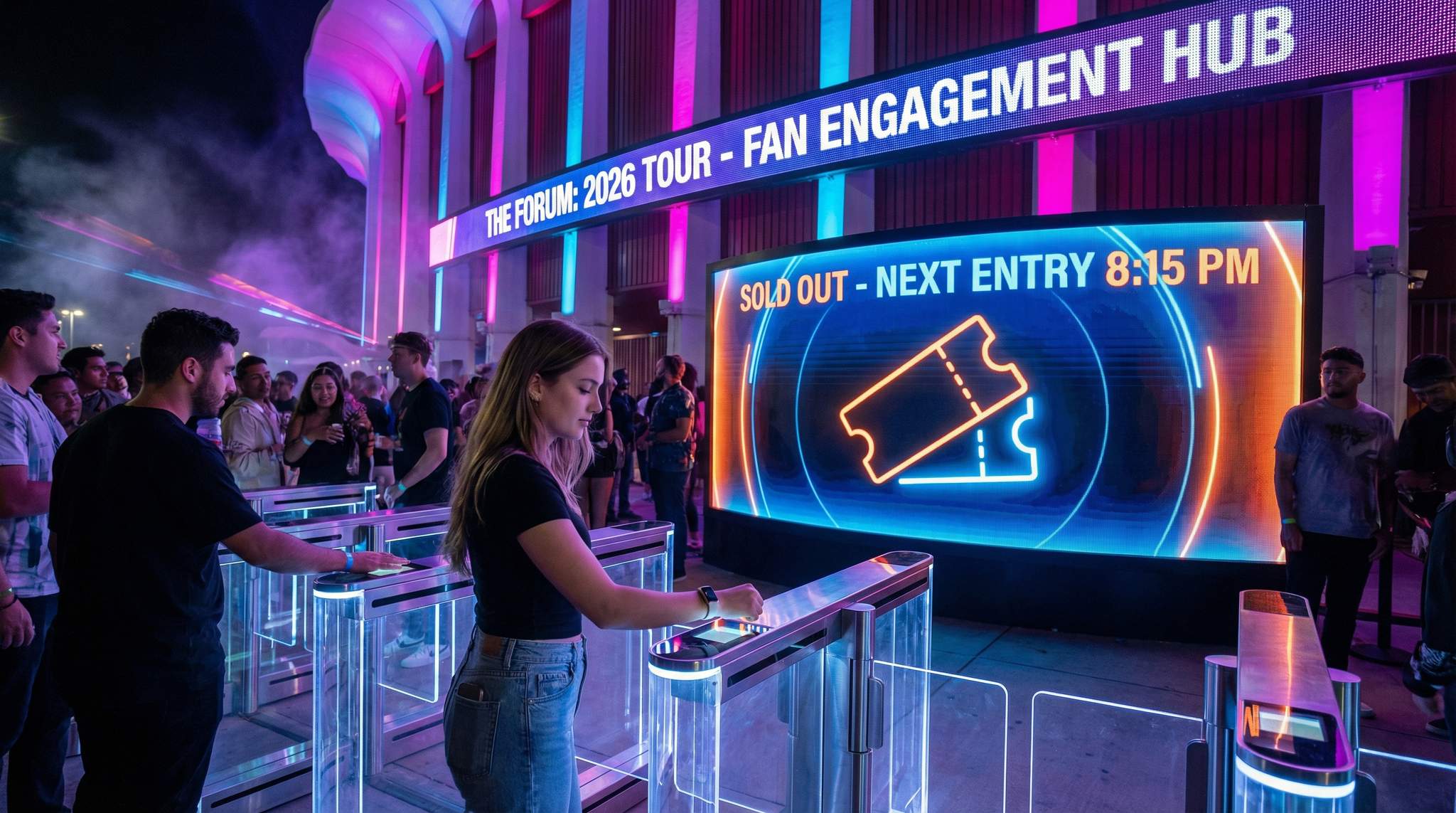
Behind every sold-out show and standing ovation lies a complex network of relationships — none more critical than the collaboration between concert venues, artists, and talent agents. Whether you’re booking a rising indie act at a 500-capacity club or hosting a major arena tour, the success of the event hinges on how well these partnerships are managed from start to finish. In an era when live music is booming (the global live music market is projected to reach $31.9 billion by 2026 according to ticketing strategies managing demand and pricing), fans have sky-high expectations. Artists bring the energy, venues provide the stage, and agents bridge the two worlds — when everyone is aligned, the result is seamless execution and a show that resonates with audiences and talent alike.
But smooth collaboration doesn’t happen by accident. It’s built on trust, clear communication, and a shared commitment to delivering a memorable experience. In today’s competitive landscape (where one superstar tour grossed an unprecedented $2.2 billion as noted in reports on the Eras Tour’s economic impact), effective partnerships aren’t just nice-to-have — they’re essential for survival. From first contact with an agent to the encore on show night, every step matters. Below, we break down how to navigate the venue–artist–agent relationship for concert planning that’s not just successful, but truly exceptional.
Understanding the Value of Strategic Partnerships with Talent Agencies
In the entertainment industry, strategic partnerships with talent agencies are invaluable for concert venues and promoters. A strong agent relationship can open doors to coveted bookings and provide insider knowledge that gives your venue an edge. Talent agencies bring a wealth of industry expertise, a vast roster of artists, and critical market insights. In turn, venues offer agents and artists opportunities for career growth, exposure to new fanbases, and reliable revenue streams. When a venue and an agency work well together, it’s a win-win that drives success for both parties and fosters growth over the long term.
Expert Insight: Leading booking agents often act as the linchpins of the live music business, bridging artists and venues. They use their connections to match the right talent with the right stages, a crucial part of selecting venues for touring artists. Cultivating goodwill with agents ensures your venue is on the radar for upcoming tours. As veteran agent Sam Kirby Yoh put it in a 2025 panel, “When a venue consistently delivers great experiences for my artists, I’m eager to route more shows there.” In an industry that still runs on personal relationships where technology complements human connection, those partnerships are pivotal.
Strong relationships with talent agencies are built on trust and mutual respect. An agent needs to trust that your venue will take care of their artist and audience; you need to trust that the agent will be fair in negotiations and transparent about needs. This mutual respect grows from doing your homework and following through on promises. It also means understanding each other’s goals. For example, an agent might be focused on building an artist’s profile in a new market, while you as a venue manager might prioritize selling out shows sustainably. By recognizing these objectives, you can find the sweet spot where both goals align.
Crucially, understand that today’s talent landscape is fiercely competitive. Top agencies like CAA, WME, and UTA collectively represent thousands of artists vying for touring slots. Many headline performers now command fees in the seven figures for a single show, and overall artist fees have jumped 30–40% on average since 2020, forcing festivals and venues to cope with soaring artist fees and fierce competition. In this climate of talent wars and soaring costs, venues that forge genuine partnerships with agents stand out. Agents will often go to bat for venues that prove their professionalism. Conversely, if a venue gains a reputation for disorganization or broken agreements, word spreads quickly in the agent community.
Ready to Sell Tickets?
Create professional event pages with built-in payment processing, marketing tools, and real-time analytics.
Warning: The live music circuit is tight-knit. If your venue develops a reputation for disorganization, unsafe conditions, or not honoring agreements, agents will hear about it. Many agents share intel informally, and a bad review from one tour manager can lead others to steer their artists away. Protect your reputation by treating every show — big or small — with professionalism and integrity.
Finally, communication and collaboration are the bedrock of any strategic partnership with a talent agency. Research and identify agencies (and specific agents) that align with your venue’s genre focus and values. If you run an indie rock venue, find agents known for developing indie artists; if you’re a regional promoter for Latin music, build relationships with agencies active in that scene. Attend industry conferences (like ILMC or IEBA) and local showcases to meet agents in person. When you connect, be transparent about what your venue offers (capacity, production quality, audience demographics) and what types of shows you’re looking to book. Setting realistic expectations from day one establishes a positive tone. When both parties are aligned, the booking collaboration becomes much smoother, leading to successful outcomes and repeat business for years to come.
The Core Steps of Booking an Artist for a Concert
For independent promoters and venue operators, the actual process of booking an artist for a concert involves a specific sequence of industry-standard steps. Before any contracts are drafted, the talent buyer typically requests a “hold” on a specific date or range of dates with the booking agency. Because routing a tour is a complex puzzle, agents often juggle multiple holds across competing venues in the same market. Once the routing solidifies, the agent will ask you to confirm the date by submitting a formal offer sheet. This document outlines your proposed financial terms, ticket scaling, and basic production provisions. If another promoter challenges your hold, you may be forced to either confirm the date immediately (often by paying a deposit) or release it. Mastering this delicate dance of placing holds, submitting competitive offers, and clearing market exclusivity is the foundational skill of any successful live music producer.
Start with Clear, Collaborative Communication
Every successful partnership begins with transparent, timely communication. Booking agents are busy professionals who might manage dozens of artists and field hundreds of inquiries each month. Getting on their radar — and earning a response — means being clear, professional, and value-driven from the start. Approach that initial outreach like a pitch and an invitation to collaborate, not just a booking request. It’s often said that “the advance work makes or breaks the show,” and that advance starts with your very first email or call.
Free Tool: When Should You Announce?
Pick your event date and genre — the free planner outputs a recommended announce, presale, on-sale and reminder schedule anchored to how your audience actually buys.
Best practices when first reaching out to an agent:
* Present essential details upfront: In your initial email, concisely cover the basics — date(s) you’re proposing, venue capacity, city/location, offer amount or compensation structure, and any relevant technical specs. Agents shouldn’t have to dig for key info. A clear one-sheet of the offer saves everyone time.
* Show you’ve done your homework: Demonstrate understanding of the artist’s brand, genre, and fanbase. Reference their recent album or a sold-out show they had in your city (if applicable). This signals respect and that you’re not just carpet-bombing form letters. In fact, an artist’s history with your local community can directly impact an event’s success, as detailed in our guide on how an artist’s history impacts event success.
* Be transparent about expectations: Clearly outline what you’re expecting in terms of set length (e.g. a 90-minute headline set + encore), ticket price range, age restrictions, and whether there are support acts or a festival bill. If you’re proposing a ticket revenue split or bonus structure, spell that out. Surprises later can sour the relationship.
* Offer flexibility where possible: If you have some wiggle room on dates or production, mention it. For example, you might say, “We prefer Saturday but Friday is possible,” or “We have an in-house lighting rig, but we can accommodate your touring package if needed.” Agents appreciate venues that can adapt to artist needs, as touring schedules are often jigsaw puzzles of routing.
Once a show is confirmed and contracted, maintain communication momentum. Don’t disappear after the offer is accepted. Immediately introduce the artist’s team to the relevant venue contacts. For instance, loop in your production manager or talent buyer on an email with the artist’s tour manager to begin the “advance” process (discussing all the show-day details). Create a shared timeline or checklist for milestones: when the deposit is due, when marketing announcements go live, when the artist’s media assets are needed, etc. Keeping all parties informed as details evolve builds confidence. Many venues use collaborative tools like shared Google Docs or project management apps to track these details in one place. The key is to keep information flowing: it prevents small issues from festering and reinforces that everyone is on the same page.
Grow Your Events
Leverage referral marketing, social sharing incentives, and audience insights to sell more tickets.
Pro Tip: Ask the agent early on how they prefer to communicate. Some agents live in email, while others might respond faster to a quick text or WhatsApp for urgent needs. Adapting to an agent’s communication style (within reason) shows professionalism. Always follow up any verbal agreements with a quick email summary to confirm details in writing — this creates a paper trail and avoids misunderstandings down the line.
Contracts That Protect Everyone
A contract isn’t just a formality — it’s a roadmap that protects both the venue and the artist (and by extension, the agent’s interests). In the live music world, a well-crafted contract ensures everyone knows their obligations, rights, and remedies if things don’t go as planned. It forces clarity on important details that a friendly phone call might gloss over. Given the high stakes of modern touring (many top tours gross millions per night), it’s essential to get the deal in writing and airtight.
A solid artist contract should be comprehensive yet fair, outlining key terms in plain language. Here are core elements to include in every artist agreement:
* Performance details: Specify the date of the performance (or dates, if multiple shows), the exact venue name and address, set duration (e.g. 8:00–9:30 PM), and time slots if it’s a multi-artist bill (e.g. opener at 7:00, headliner at 8:00). This sets clear expectations for the schedule.
* Payment structure: Outline the compensation arrangement — is it a flat guarantee, a versus deal (guarantee vs. a percentage of ticket sales, whichever is higher), a straight door split, or some other formula? Note the currency and when payments will be made. Most deals involve a deposit (often 50%) paid upfront or at least a few weeks before the show, with the balance settled on show night. Include the method of payment (check, wire, etc.) and who to issue payment to (some artists require payment to the agency or a business entity). Clarify any bonus structure (e.g. bonus if sellout, or over X tickets sold) in writing.
* Technical and hospitality riders: Include the artist’s rider documents as part of the contract by reference or attachment. The contract can state that the venue will provide production and hospitality per the attached rider, and note any specific deviations you’ve agreed on. (More on managing riders in the next section.)
* Marketing and promotion obligations: It’s wise to spell out what each party is responsible for in promoting the show. For example, the contract might state the venue will invest a certain amount in paid digital ads, or that the artist will do at least one social media post and an on-air radio spot if feasible. Outline any deliverables like posting the show on the artist’s website tour page, etc. This way, everyone is accountable for drawing the crowd.
* Cancellation policy / force majeure: Define what happens if the show is canceled or postponed, whether due to artist illness, venue issues, or force majeure (acts of God, government shutdowns, pandemics, etc.). Post-2020, most contracts now explicitly include health pandemics and similar emergencies in force majeure clauses. Common practice is that if the artist cancels without cause, the deposit is returned (often forfeited if last-minute); if the venue or an external event forces cancellation, both parties negotiate in good faith to reschedule and the deposit might be returned or applied to a new date. Having this agreed in writing avoids ugly disputes later.
* Merchandise and ancillary revenues: If your venue typically takes a percentage of artist merchandise sales, this must be outlined (e.g. “Venue to receive 15% of gross merch sales net of taxes”). Be aware that the trend in 2025–26 is moving away from merch cuts — many independent venues are pledging to drop merch fees to support artists, a commitment formalized by the Music Venue Trust and Association of Independent Promoters. Decide your stance and put it in the contract. (For more on smoothly managing merch on-site, review our tips on managing artist merchandise sales at events, which offers tips relevant to concerts as well.) Also note if the artist is doing a VIP meet-and-greet or afterparty that affects revenue or logistics.
* Guest list and comps: Specify how many complimentary tickets the artist is allowed (and whether they include any +1s or just individual tickets). Clearly state if those comps are coming out of capacity or if the venue can oversell slightly to account for them. Also outline any industry or promoter guest list limits to avoid last-minute surprises at the door.
* Production specifics and schedule: Detail critical day-of-show info like load-in time, soundcheck time, door time, performance curfew, and load-out deadline. If your venue has a hard curfew (e.g. noise ordinances or union labor rules requiring a 11 PM stop), write that down. Also note who provides key production elements (e.g. venue provides PA, lights, and monitors; artist provides backline instruments; etc.). This overlaps with the tech rider but it helps to summarize in the main contract.
* Insurance and liability: Many contracts require the artist to carry liability insurance (and vice versa) and to indemnify the venue for certain things. If your venue has specific insurance requirements (like $1 million in general liability coverage naming the venue as additional insured), include that clause. It’s boilerplate in larger contracts, but important.
Mastering these standard contract clauses for talent booking is the most effective way to prevent day-of-show disputes. While independent venues might use simplified deal memos, ensuring that your boilerplate agreements cover these fundamental areas—especially force majeure, liability, and payment terms—safeguards your business against unpredictable touring variables.
Free Tool: Guarantee, Door Deal or Versus?
Compare a flat guarantee, a door deal, a versus deal and a guarantee plus bonus. See what the artist earns and what you keep at every attendance.
When structuring these deals, understanding the standard breakdown of concert gross ticket sales between the promoter, staff, and the artist is crucial. Typically, after deducting taxes and facility fees from the gross, the remaining net ticket revenue covers show expenses—including venue staff, marketing, production, and support acts. Once expenses are recouped, the remaining profit is split. In standard club and theater deals, the artist often takes 85% to 90% of this net profit, while the promoter or venue retains the remaining 10% to 15%. For larger arena tours, as detailed in foundational industry texts like The Business of Live Concert Touring: From the Artist to the Fans, these margins can be even tighter, making accurate expense projections vital for the venue’s bottom line.
For promoters looking to deepen their understanding of these financial models, many universities and industry associations now offer resources to read The Business of Live Concert Touring: From the Artist to the Fans online or access similar digital course materials, providing invaluable context for high-stakes negotiations.
Collaborating on these terms with the agent early in the process prevents friction later. A good agent will appreciate a venue that sends a draft deal memo or contract quickly, so there’s time to negotiate any points before ticket sales begin. Be prepared that agents will negotiate – they might strike a clause or request changes. Make space for negotiation, but stay firm on any non-negotiables tied to safety, legal compliance, or your financial viability. If your liquor license or local law prohibits minors past 10 PM, that’s non-negotiable. If your venue absolutely cannot exceed 800 people due to fire code, don’t let an agent pressure you into selling 900 tickets. Stand your ground on these critical points, while remaining fair on the more flexible ones (like hospitality details or reasonable marketing requests).
Finally, once the contract is fully executed by both parties, honor it to the letter. Small breaches of contract (failing to provide an agreed hot meal, or delaying payment settlement) can erode trust. On the flip side, when an artist and agent see that you fulfill all your promises — and even go beyond the contract in a positive way — you set the stage for a long-term relationship. A thorough contract, honored by all sides, becomes the platform upon which great shows are built.
Rider Management: Meeting Needs Without Overcommitting
Nearly every artist comes with a rider — a set of technical and hospitality requirements that accompany the main contract. Think of the rider as the artist’s playbook for what they need to deliver their best performance. It can range from stage layout diagrams and sound equipment specs to requests for certain food, drinks, or amenities backstage. Far from being diva-like demands, most rider items have practical purposes: the specific brand of guitar strings that prevent breakage, the throat coat tea that keeps a vocalist in top shape, or the particular mixer needed for the DJ’s laptop setup.
However, as a venue manager, it’s important to balance meeting the artist’s needs with the realities of your resources. Not every item on a rider may be feasible, especially for smaller venues — and that’s okay if you handle it proactively. The key is early discussion and transparency. Most agents and artists are flexible if you communicate well in advance. A hospitality rider asking for a gourmet hot meal doesn’t mean the show will cancel if you can’t provide a five-star chef; it means you should either arrange a quality catering alternative or negotiate a buyout (paying the artist a meal stipend) ahead of time. The worst approach is to ignore a rider or promise everything and under-deliver.
Automated Waiting Lists for Sold-Out Events
Capture demand when tickets sell out and automatically notify waitlisted buyers when tickets become available through cancellations or resale.
Let’s break down rider types and how to tackle them:
* Hospitality rider – This covers food, drinks, and comfort items for the artist and crew. It might specify catering for a certain number of people, snacks, beverages, towels, a clean dressing room, transportation, or hotel rooms in some cases. As a venue, aim to provide healthy, quality catering options and a variety of beverages (both alcoholic and non, as many artists are health-conscious on tour). Accommodate dietary needs (vegetarian, vegan, gluten-free, halal, etc.) with care and ask in advance if you’re unsure. For example, if an artist is vegan and your usual caterer isn’t, find a local vegan-friendly eatery for catering — it shows you’re paying attention. Also, ensure the backstage area is clean, private, secure, and comfortable: adequate seating, mirrors, clean restroom, and any requested amenities like a steamer or phone chargers.
* Technical rider – This includes the stage plot (diagram of how the band will set up on stage), input list (what instruments/mics plug into the sound board), lighting needs, sound requirements, backline (instruments/amps), and crew requests. Go through the tech rider line by line with your production team. Match the backline requests to your inventory or local rentals, and if something isn’t available, let the tour know ASAP and suggest a substitution. Confirm you have sufficient power, the right hookups, and that your PA and lighting can achieve what the artist needs (e.g. the bass drop in EDM hitting hard, or spotlights for each band member). If the rider calls for specific personnel (like a monitor engineer or a rigger), arrange for qualified in-house staff or hired technicians to be there. Technical details are mission-critical — failing to provide a required drum kit or not having enough stage hands for load-in can derail a show.
To help visualize how to address rider requirements, here’s a quick-reference table:
| Rider Aspect | Examples | How to Accommodate |
|---|---|---|
| Hospitality Needs | Hot meals (vegan option), snacks, clean towels; Private dressing room with mirrors; Specific drinks (e.g. herbal tea, sports drinks) | Partner with a reputable local caterer or restaurant for quality meals. Stock the green room with requested beverages (or suitable alternatives if brands aren’t available). Ensure the dressing room is clean, secure, and comfortable, with items like towels and toiletries ready. Communicate any swaps (local brand vs. specified brand) well before show day. |
| Technical Requests | Backline gear (e.g. Fender Twin amp, drum kit); Sound requirements (32-channel mixer, 4 monitor wedges); Lighting (follow spot, LED par cans); Crew (monitor engineer, guitar tech) | Advance the show with the tour’s production contact weeks in advance. Provide an inventory of in-house gear and note any shortfalls. If something is missing, arrange a rental or discuss alternatives (different amp model, etc.). Have competent tech staff on deck or hire freelancers for special roles. Do a site walk-through or tech call with the tour manager to address concerns before they arrive. |
Notice that meeting a rider is about effort and communication, not necessarily always saying “yes” to everything. If an item on the rider is truly impossible, be honest and early about it. Perhaps your venue doesn’t have a grand piano that a singer-songwriter requests; reach out to the agent well before the show and discuss options — maybe the artist can bring a keyboard instead, or you can rent a piano if the budget allows, or agree that they’ll adjust their set. By addressing it upfront, you turn a potential deal-breaker into a collaborative problem-solve.
Also, don’t overlook the small personal touches. If an artist requests something quirky like a local craft beer or a particular snack, and you can get it, do it — those little efforts can really endear your venue to the artist. There are legendary stories of artists remembering venues that went the extra mile (for example, sourcing a birthday cake for a band member’s birthday or setting up a quiet “zen” room for an artist who meditates). These gestures aren’t officially in the contract, but they create the kind of artist experience that agents and artists deeply appreciate. It might even get a shout-out on social media or in industry circles that your venue is exceptionally accommodating.
A final note on riders: Don’t be afraid to push back politely on excessive requests, especially if they could impact safety or violate laws. For instance, if an artist’s rider asked for pyrotechnics in a small 300-cap room, you’d need to say no for safety and permit reasons. Agents understand that every venue has limitations. By the same token, if you agree to a modified plan (like “no open flame, but we can do CO2 jets or confetti instead”), put that in writing as part of the advanced agreement so everyone remembers come show day. Managing expectations without compromising artist comfort is an art, but when done right, even the biggest stars will be flexible and work within your venue’s constraints — as long as they feel taken care of.
Building Strong Day-of-Show Logistics
After weeks or months of planning, show day is where all those plans meet reality — and the pressure is highest. A well-run production schedule, led by experienced venue staff, can mean the difference between a frazzled tour and a flawless concert. By the day of the event, every party (venue team, artist crew, and agent) should be on the same page about the timeline and responsibilities. Still, hiccups happen, and how you handle the minute-by-minute logistics will define the artist’s lasting impression of your venue.
Free Tool: Model Promoter Payouts
Flat-percentage, flat-per-ticket, or tiered-bonus commission structures — get per-promoter payouts and total commission as % of gross. Free calculator.
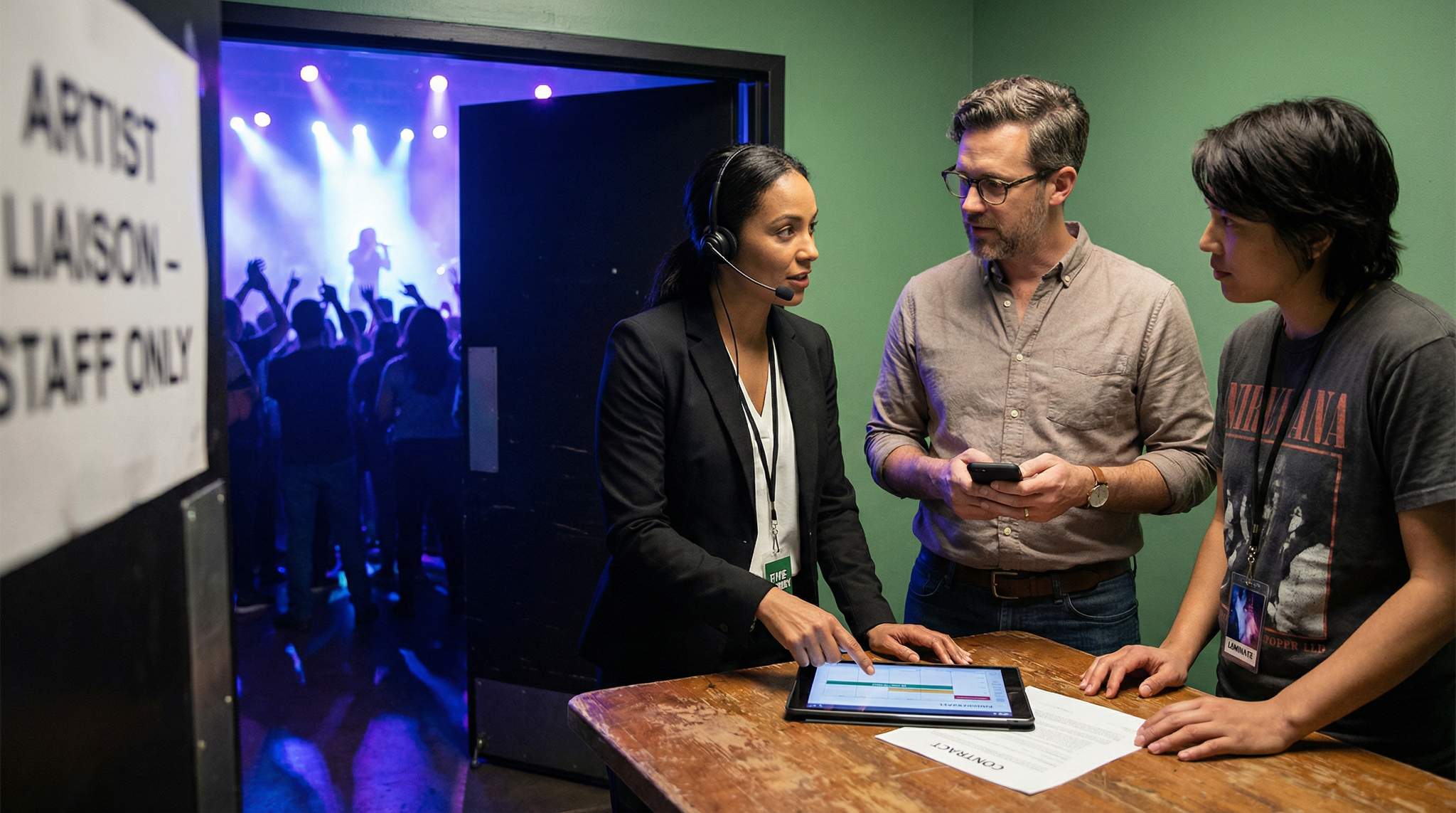
Start by assigning a dedicated artist liaison or production lead from your side. This is the point person who will greet the artist and tour manager when they arrive and be their go-to contact for any needs throughout the day. Often, it’s your production manager, stage manager, or even yourself (for smaller venues, the venue owner might double as the artist handler). This person should have a copy of the day’s schedule and the authority to make quick decisions or call in reinforcements if needed.
Tips for efficient day-of coordination:
* Provide clear load-in instructions: Before the artist even arrives, ensure they have advance info on parking, load-in docks, or any tricky navigation details. On the day, have signage or staff ready to direct the tour van/truck to the right spot. If your venue is downtown with limited unloading space, consider reserving a curb spot or having security hold a space. A smooth load-in (no angry parking officials or confusion) starts the day off right.
* Enforce credential and access protocols: If it’s a larger show with many crew, make sure everyone has the appropriate laminates or wristbands for backstage access. Your security team should know who is allowed where. This prevents random people wandering into the green room and shows the tour that you run a tight ship.
* Do a venue walkthrough with the tour manager: As soon as the artist’s team is settled, offer to walk the tour manager or production lead through the venue. Point out where the merch table is, where the emergency exits are, how to reach the sound booth, and introduce them to key staff (like the sound engineer, lighting tech, etc.). This personal orientation builds trust and catches any last-minute needs (e.g., “We need a power outlet here for our projector”) early in the day.
* Execute a thorough soundcheck: Ensure a quick, well-organized soundcheck with all necessary tech staff on hand. For example, if the artist is a band, have the monitor engineer and front-of-house engineer present (even if they’re house staff doubling roles). Line-check all microphones and DI lines before the band arrives on stage to save time. It’s wise to build in buffer time for soundcheck in case there’s feedback to troubleshoot or an instrument issue. If doors open at 7 PM, don’t schedule soundcheck to end at 6:59 — aim for 6:30 to allow breathing room and a proper clear-out of the audience area.
* Keep the schedule on track, but flexible: As you walk the artist and tour manager through the run-of-show schedule, emphasize key moments: “Doors at 7, opener at 8, your set at 9 sharp, curfew at 11.” However, also mention that you’ve built in some flexibility (“We have a 15-minute buffer if we need to slide times, no problem”). This reassures them that minor delays won’t throw the whole night into chaos.
* Ensure a comfortable backstage setup: While the artist is performing, or during downtime, your team should be keeping an eye on backstage needs. Is the green room stocked and at a comfortable temperature? Is there a quiet, private space for the artist to warm up or decompress before the show? Little things matter: for instance, if it’s a hot day, have cold water and maybe a fan or AC; if it’s winter, make sure heating works and offer warm drinks. Coordinate with the artist liaison to handle any real-time requests (“Could we get a couple of extra towels on stage?”) promptly.
* Prepare for load-out and settlement: Even as the show is happening, your production team should be prepping for a smooth load-out (clear paths for loading gear back into vehicles, etc.), and your finance/booking person should be ready for the settlement (the final reconciliation of ticket sales, payment, etc.). Let the tour manager know when and where settlement will take place (often in the production office or a quiet corner of the merch area) and have all paperwork, the final ticket audit, and payment ready to go. This efficiency at night’s end leaves a great final impression.
To ensure this financial reconciliation goes off without a hitch, always prepare a detailed artist settlement sheet in advance. This document serves as the definitive financial record of the night, tallying the final ticket audit (gross box office receipts) against applicable taxes, facility fees, and documented show expenses. A transparent settlement sheet will clearly display the agreed-upon split point, showing exactly how the net profit is divided once the promoter’s expenses and the artist’s guarantee are satisfied. Having this paperwork organized, with receipts for any day-of-show cash outlays (like a catering buyout or runner expenses) attached, builds immense trust with the tour manager and guarantees a professional close to the evening.
Most importantly, build in buffer time at every critical juncture of the day. Delays are common — maybe the headliner arrives an hour late due to traffic, or an opening act’s soundcheck runs over. Those delays don’t have to become disasters if your schedule isn’t razor-thin. For example, if doors are at 7, consider having everything ready by 6:45 so you have a 15-minute cushion. If curfew is 11, aim to end live music by 10:50 in case of a slightly late start or an encore. Buffer time is the unsung hero of live events; it’s rarely noticed by the audience or artist when things go right, but it’s a lifesaver when things go wrong.
Pro Tip: Create a day-of-show worksheet or run of show document and share it with all key players (your staff, the tour manager, etc.) the day before the show. This document might include a timeline (load-in, soundcheck, meet & greet, doors, set times, curfew, load-out), contact numbers for essential personnel (production manager, venue manager, tour manager, security lead), and any special notes (e.g. “city noise ordinance: no sound after 11 PM”). Having this in writing and distributed means everyone can refer to the plan without hunting you down for basic info in the middle of a busy show day.
Navigating Creative Differences
Creative differences are an inherent part of the collaborative process when planning events, especially if multiple stakeholders have strong visions. An artist might have a unique idea for their performance or staging that doesn’t immediately align with the venue’s usual setup; a promoter might envision a certain show flow that the artist isn’t keen on. These differences don’t have to be stumbling blocks — in fact, when handled well, they can lead to innovative solutions and an even better show. The key is to approach disagreements with active listening, flexibility, and a commitment to the shared goal of a great concert.
Free Tool: Will the Room Actually Be Full?
Forecasts expected attendance from ticket type, event type and day of week. Calculates safe over-book count for free-RSVP events. Free estimator.
First, create an environment where open discussions are encouraged. If an artist or their agent feels strongly about a certain element — say, extending the set by 15 minutes, or using a local choir on one song, or changing the stage layout — give them the space to explain their perspective. Likewise, explain your venue’s perspective or limitations clearly, without instantly shooting the idea down. Maybe the artist wants to bring a surprise guest on stage which would push past curfew; instead of a hard “no,” discuss alternatives: could you start the show 15 minutes earlier to accommodate it? Could you get a one-time city permission to go late by 10 minutes? By exploring alternatives that align with both the creative vision and the venue’s operational or regulatory constraints, you often can find common ground.
One helpful tactic is to use “feedback loops” and test runs during planning. For instance, if the artist has a bold idea for an elaborate stage prop or visual that you worry might not work in your space, suggest doing a site visit or sharing stage dimensions and photos for them to mock it up. Go back and forth with pictures or small trials. This collaborative problem-solving not only refines the creative product but also strengthens the trust between the artist/agent and the venue. They see you’re trying to make their vision work, not just saying “No, we can’t.”
Example: In 2025, a mid-sized venue in Seattle faced a dilemma when an electronic artist wanted to debut a new high-powered laser light show as part of his set, but the venue was concerned about safety and legal permits for the lasers. Instead of nixing the idea outright, the venue management consulted with a local special effects company to understand what was feasible. They discovered they could rent a less powerful, variance-free laser system that met safety standards and still achieved 80% of the desired effect. The artist was thrilled to still incorporate a version of the idea, and the show went on within legal guidelines. This kind of compromise is only possible when both sides are willing to listen and adapt.
Of course, not every idea can be accommodated. Prioritize the non-negotiables: safety, legality, and core audience experience. If an artist’s creative request jeopardizes any of those, you must politely stand firm. For example, if a metal band wants to implode a car on stage as a stunt — probably not going to happen in your venue due to obvious hazards! In such cases, explain the why behind the refusal (“Our insurance would never allow it and we don’t want to risk anyone’s safety”). Most reasonable artists and agents will understand when you frame it around shared values (nobody wants an unsafe show). Often, you can steer the conversation toward a safer substitute (maybe pyro effects on a video screen rather than real fire, etc.).
It’s also smart to loop the agent into these creative discussions early, especially if negotiations are happening between a tour manager and the venue. Agents often have a broader industry perspective and can mediate expectations. They might say, “Actually, Venue X had a similar issue and solved it this way,” or they might help the artist understand the venue’s constraints. Keeping the agent informed ensures they won’t be blindsided if their artist voices a frustration — you’ll already have communicated the venue’s stance to the agent, ideally enlisting their support.
Remember that at the end of the day, everyone shares a common goal: a successful, impactful concert. When creative differences arise, reaffirm that goal. Statements like, “We all want this to be an amazing show for the fans and the artist, so let’s figure out the best way together,” can shift the tone from adversarial to cooperative. This mindset turns a potential clash into an opportunity for growth and innovation. In fact, some of the most memorable concert moments come from creative problem-solving born out of constraints. By navigating these differences constructively, you not only improve the show but also forge a stronger artist–agent–venue relationship for future projects.
Free Tool: Split Tickets for Max Gross
Given capacity and a target price, the optimizer proposes Early Bird / GA / VIP allocations and prices — with projected gross at 100%, 80% and 60% sell-through.
(For further reading on maintaining artistic integrity while meeting business goals, check out Ticket Fairy’s guide on booking underground music while staying profitable, which, while focused on underground music, offers insights into respecting creative vision without sacrificing the bottom line.)
Marketing and Ticketing: A Shared Responsibility
Once a show is confirmed and the ink on the contract is dry, the real work begins: filling the room with fans. Marketing an event is traditionally a promoter or venue’s job, but the best outcomes occur when agents, artists, and venues collaborate on promotion. In 2026, selling tickets is truly a team effort. With the concert landscape more crowded than ever (major tours and festivals often overlapping on the calendar—a trend seen in festivals versus stadium tours), cutting through the noise requires coordination and creativity. The good news is that each party brings unique strengths to the table: venues know the local market, agents have access to fan data and marketing resources, and artists have a direct line to their loyal followers.
Create a unified marketing plan that involves everyone: Early in the timeline — often as soon as contracts are signed — have a kickoff call or email thread about marketing strategy. Key elements to align on include:
* Announcement strategy and timing: Decide on the on-sale date and work backward to when the show will be announced. It’s ideal to coordinate a simultaneous announcement across the venue’s channels, the artist’s social media and website, and any local media partners. A unified social media rollout ensures fans hear about the show from all angles. For example, the venue posts at 10 AM with the on-sale link, the artist posts at the same time tagging the venue, and the agent’s agency account might even retweet or share if they do that. Consistency prevents confusion.
* Branding and media assets: Use shared media kits. Get high-quality photos, a bio, and branding elements from the artist’s team (agents can usually provide these via an EPK – Electronic Press Kit). Agree on promotional language and artwork. Nothing looks more disjointed than the artist using one tour poster while the venue designed a completely different one. Share assets so that the visuals on the Facebook event, the venue’s website, and the artist’s Instagram story all match and look professional.
* Targeted advertising and fan data: Agents can often provide insight into where an artist’s fans are concentrated or which demographics to target. For instance, an agent might share that “this artist’s top streaming cities in your region are X, Y, Z” or provide a Bandsintown or Spotify For Artists heatmap of fan locations. Venues can use that data to run targeted digital ads on Facebook, Instagram, or local media sites, focusing on those likely ticket buyers. If the artist has an email newsletter or a fan club, coordinate on a presale code or special offer for those core fans — the agent can facilitate that on the artist’s behalf.
* Ticketing strategies: Work together on any presales or special ticket promotions. Perhaps the artist wants to offer a VIP meet-and-greet package (which might include early entry or swag). The venue can set this up in the ticketing system, but it needs the artist’s input on pricing and what’s included. Conversely, venues might have subscriber lists or past buyer data that can boost sales — for example, sending an email blast to fans who attended similar genre shows. Consider strategies like timed ticket price increases (to incentivize early purchase) or group deals, and make sure the artist’s team is aware so they can help amplify those offers. (For a broader look at ticketing tactics, the article “Ticketing Strategies for Concert Venues in 2025” covers modern approaches venues use to manage demand and pricing in the digital age.)
* Press and PR efforts: Coordinate any outreach to local press, radio, or blogs. Sometimes an agent or artist’s manager will handle national press, but local media often falls to the promoter/venue. It’s worth discussing: will the artist be available for a radio interview or a quick plug on the local TV morning show? Agents can help schedule these if asked early. Shared press releases listing both the venue and agent contact info (and quotes from both sides) can present a united front. Also, if the artist has interesting backstory with the city (e.g. “first time back since selling out a small club two years ago”), highlight that in press materials — those human-interest angles can get more coverage.
* Engagement campaigns: Everyone should brainstorm on fan engagement ideas. Artists can drive engagement with personal storytelling — maybe posting a throwback video from a past show at your venue, or a quick shoutout video like “Hey [City] fans! Can’t wait to see you at [Venue] on [Date]!” Such a video posted by the artist and shared by the venue can hype the show. Venues might organize contests (e.g. win meet-and-greet passes by sharing a post), and artists can amplify those by mentioning them on socials. Agents sometimes have access to tour-wide initiatives (like a tour hashtag or challenges) that you can localize.
A critical component of this collaborative ticketing strategy is deciding between a venue presale vs artist presale—or strategically utilizing both. An artist presale rewards the performer’s most dedicated fan club members and mailing list subscribers, guaranteeing early momentum and rewarding core loyalty. Conversely, a venue presale targets your local buyer database, incentivizing fans who frequently attend your room regardless of the genre. Coordinating these presales on staggered days (e.g., artist presale on Tuesday, venue presale on Thursday, general on-sale Friday) maximizes early revenue capture and provides valuable early data on overall demand.
When marketing becomes a shared mission, everyone wins. The artist wants a packed, energetic crowd; the venue wants a sellout; the agent wants a happy client and strong ticket sales on their record. Working together, you can often reach more people than any one party could alone. For example, Bandsintown reported that independent venues saw 38 million ticket clicks and 2 million RSVPs in 2025 on their platform, as concert travel surged significantly – a reminder that artist–venue coordination in the digital space can drive massive fan response. An artist posting the official ticket link (which the agent provides) on their profiles can spike those click-throughs. Meanwhile, the venue tagging the artist can bring new eyeballs to the venue’s pages. It’s a symbiotic relationship.
Finally, don’t forget that ticketing is part of the fan experience, and thus part of the artist’s brand experience too. If the on-sale goes smoothly, fans are happy; if there are heaps of confusion or if a show is under-promoted and half-empty, everyone’s image suffers a bit. Many top venues now debrief with agents after a show about what marketing worked or didn’t, sharing insights like “Snapchat ads actually outsold Facebook for this show” or “We noticed a lot of fans came from the neighboring city, maybe next time we target that area more.” These little data points help agents better plan future tours and show that you, as a venue, are invested in the show’s success beyond just your four walls. In essence: see marketing and ticketing as a team sport with the artist’s camp. When you all row in the same direction, the show will not only sell out but create the kind of buzz that benefits everyone involved.
Respecting the Artist Experience
Amidst all the logistics and business, it’s critical to remember that artists are people — people who might be far from home, running on little sleep, and under enormous pressure to deliver a great performance every night. Concert day is just one in a string of many for a touring artist, but you have the power to make your stop a highlight of the tour (or at least a welcome oasis). Little gestures and thoughtful touches can set your venue apart in an artist’s mind. In an industry where word of mouth among tour managers and agents is powerful, cultivating a reputation as a venue that truly cares for artists can pay dividends in loyalty and goodwill.
Start by considering the artist’s journey from their perspective the day of the show. They might have woken up at 6 AM to catch a flight, driven four hours from the last city, or been doing press interviews all morning. By soundcheck, they may already be drained. So, what would make your venue feel comfortable and welcoming to them?
Small touches that go a long way:
* Personalized welcome: Some venues leave a little welcome note or gift basket in the green room, especially if it’s a milestone show (first time headlining that venue, a birthday, etc.). A note could simply say, “Welcome to [Your Venue]! We’re excited to host you tonight — let us know if you need anything. – [Your Name], Venue Manager.” It’s a tiny effort but can start things on a warm note. A locally curated gift basket with snacks or souvenirs (local coffee, local snacks, a postcard of the city) also shows thoughtfulness and gives the artist a memento. One real-world example: a venue in Austin once gave every performing band a poster from the show signed by the venue staff and openers — artists often kept these as keepsakes.
* Comfort and privacy: Ensure the artist has space to rest, clean up, or decompress. If your venue has a shower, make sure it’s clean and stocked with soap and towels (a post-show shower can be a godsend for a touring musician). If no shower, at least a private restroom. Provide a quiet area where they can do vocal warm-ups or just chill without fans or openers intruding. If you have multiple acts sharing a green room, consider partitioning a section or arranging a private area for the headliner. Also, manage backstage access tightly — artists appreciate when random people (even local VIPs or friends-of-friends) aren’t wandering into their space uninvited.
* Informed and friendly staff: It’s incredibly appreciated when every staff member, from security to sound tech, treats the artist with respect and courtesy. In pre-show meetings, remind your team to be welcoming and professional. Little things count — the security guard at the stage door greeting the tour with “Hey, glad you’re here, need any help with those cases?” or the bartender who hands the drummer a sports drink right after the set because she knew they’d be thirsty. Also, staff should know the artist’s name (and how to pronounce it correctly!). If the marquee says a band’s name, everyone backstage should know it and not refer to them as “the act” or “the guy with the guitar.” Using names humanizes the interaction.
* Local recommendations and help: Artists often have downtime or might want to explore or dine out. Providing a short list of trusted local restaurants, cafes, or amenities can be a pleasant surprise. For example, “If you want a great coffee, the café next door is open until 6,” or “We’ve arranged a 10% discount for you at the diner across the street, just show your laminate.” If an artist has an off-day in your city, sometimes venue staff even offer to arrange a short excursion or give them a tour — though that depends on relationships and is more common in festival settings. The point is to show you care about their whole experience, not just the two hours they’re on your stage.
* Meet-and-greet management: If a fan meet-and-greet is part of the event (whether a formal VIP package or an informal post-show signing), help manage it so it’s smooth and safe. This is part of respecting the artist’s experience too — poorly run meet-and-greets can exhaust or frustrate artists. Ensure there’s a clear plan (time, location, security present, a hard cutoff so the artist isn’t stuck for an hour longer than promised). Communicate the plan to the artist or tour manager in advance so they know what to expect. For more on this topic, see our guide on the do’s and don’ts of artist meet-and-greets, which offers detailed tips on handling these fan interactions without a hitch.
All these efforts contribute to a welcoming environment that artists will remember. A singer might not recall the exact details of the contract, but they’ll remember that your staff had hot ginger tea ready for their strained voice, or how the venue owner personally thanked them after the show and handed them a cool poster. These positive experiences build your reputation among tour managers, agents, and artists themselves. Word travels fast in the live music world — especially among artists of similar genres or within an agency’s roster. You want that word to be, “That venue is fantastic to work with. You’ll be in good hands there.” Such a reputation can even become a competitive advantage when agents are deciding between two markets or venues for a tour stop.
Finally, respecting the artist means acknowledging their humanity and limits. If an artist is feeling ill, help find a local doctor or pharmacy if needed. If they just played an intense 90-minute set, maybe give them 15 minutes alone to decompress before bringing a bunch of people backstage for photos. Pay attention to cues — some artists are extroverts who love hanging out with the crew, others might be introverted or tired and just need a quiet corner. By being attuned to these needs and adjusting accordingly, you demonstrate empathy and professionalism. And an artist who feels genuinely cared for will likely give an even better performance (and want to come back next tour!).
Handling Last-Minute Changes and Challenges
No matter how meticulous the planning, the live event world is full of surprises. Last-minute changes are not an “if” but a “when” — what matters is how you respond. It could be a delayed flight, a sudden illness, a piece of gear breaking, unexpected weather, a support act no-show, a power outage in the neighborhood – the list is endless. Your goal isn’t to achieve perfection (that’s impossible), but to display professionalism under pressure. How you handle crises will speak volumes to artists, agents, and fans, and can actually strengthen those relationships when done right (shared adversity can build trust!).
When facing last-minute changes:
* Stay calm and solution-focused: As the saying goes, “Don’t panic — it’s just rock and roll.” If a major issue arises, take a breath and assess. Panicking venue staff can agitate artists and crew. Instead, exude a calm, can-do attitude. This sets the tone that “We’ve got this.” Immediately begin brainstorming solutions rather than dwelling on the problem. For instance, if the opening band’s van broke down and they’ll miss doors, can you push their set later or have the headliner extend theirs? If the headliner’s projector isn’t working, can you rent or borrow one locally within an hour? Show that your first instinct is problem-solving, not finger-pointing.
* Be transparent with all parties: The worst thing you can do is hide a problem or delay communication. If something goes awry, loop in the agent and artist’s team early — especially the agent. The golden rule: never let an agent hear bad news from their artist before they hear it from you. If a complication arises, call the agent (or tour manager, as appropriate) immediately and explain the issue along with what you’re already doing to address it. People appreciate honesty and prompt communication. Likewise, keep your own team and any co-promoters informed so everyone has a unified message.
* Offer contingency options: Ideally, always have a Plan B (or C). If weather threatens an outdoor gig, be ready with an alternate indoor site or a rain date; if the main PA fails, have a smaller backup system you can activate. When presenting the problem to the agent/artist, come with solutions in hand: “The mixer just died, but we have a replacement on the way that will be here in 30 minutes,” or “The power is out on the whole block — we have a generator truck on standby and city officials estimate power back by 9 PM, so we’re looking at a 30-minute delay to showtime.” Even if the solution isn’t fully formed, showing that you’ve thought of options makes a huge difference. Agents and artists are far more forgiving when they see you’re actively mitigating the issue.
* Put safety and well-being first: In any scramble, ensure that nobody is cutting corners on safety. For example, if a barricade breaks from a crowd surge, you might be tempted to press on — but the right call is to pause the show and fix it (and communicate that clearly to the audience). Most artists will back you up on safety-related delays if you explain. Similarly, if an artist is physically unwell, have a plan: know the nearest medical facility, or have a recommended doctor on call. In summer 2025, several festivals credited their backstage medical teams and flexibility for handling a wave of heat-related artist illnesses, adjusting schedules on the fly so artists could perform later after recovering. Professionalism under pressure means prioritizing people’s safety and health above the schedule.
* Document everything: As you’re juggling the crisis, have someone take notes of decisions made, expenses incurred, and communications sent. This “paper trail” is useful later to avoid disputes. For example, if the show had to be delayed an hour, you might incur extra staff overtime or the artist might play an shortened set; having a log of what happened and agreed remedies (e.g. you negotiated that the artist will still be paid in full despite a shorter set due to city curfew) will prevent he-said/she-said later. After the dust settles, send a follow-up email to the agent recapping what happened and thanking the artist for their flexibility, etc., which also doubles as written documentation.
* Maintain a positive fan experience: While handling things backstage, don’t forget the audience out front. If doors are delayed or the show order shifts, keep the crowd informed (in general terms) and taken care of. Use the MC or venue social media to post updates like “Doors opening 30 minutes late – hang tight!” or have the bar run a special or house music going to keep vibes okay. A frustrated crowd can become its own problem (remember, the audience doesn’t know why something’s off unless you tell them). It often falls to the venue to communicate these hiccups, as the artist’s team is busy troubleshooting with you. Fans will be more patient if you’re honest (“the storm caused some technical issues we’re fixing now”) and if they see staff actively managing the situation.
Ultimately, the goal is not to assign blame but to find a path forward. When everyone (venue, agent, artist) sees that approach, it builds trust. Many agents say that how a venue handles a nightmare scenario is what earns their loyalty long-term. For example, if an artist’s flight is cancelled and they arrive late, a venue that still manages to accommodate a late start and works with local officials to extend curfew (or swiftly communicates a rescheduled show) will win major points. It shows that when things go wrong — which in live music, they eventually will — your venue has the professionalism and resilience to handle it.
And as always, after action, debrief and learn. Once the show is over (and everyone’s heart rates return to normal), quickly huddle with your team and even solicit feedback from the tour manager: What went well in our response? What could we do differently next time? Then, update your internal “emergency playbook” so that each challenge becomes a learning experience. This continuous improvement mindset will make you even more prepared for the next curveball — and there will be a next one!
Project Management Best Practices
Concert planning might not immediately bring to mind Gantt charts or Scrum meetings, but in reality, effective project management is at the heart of successful event execution. Treating an event – especially one with significant production elements or multiple stakeholders – as a project with defined phases, tasks, and owners can vastly improve clarity and outcomes. Embracing some formal project management practices doesn’t make the process bureaucratic; done right, it makes collaboration with clients (artists/agents) more transparent and reliable.
Start with clear goals, roles, and timelines. At the outset of booking an artist, establish the key milestones (e.g., announce date, on-sale date, production advance date, show date, follow-up date). Working backward from the show date, set internal deadlines: when does the contract need to be signed, when should tickets be on sale, when will you finalize the stage plot with the tour, etc. Share a timeline of these milestones with the agent/artist’s team. For example, you might tell the agent, “We’d like to have all marketing materials approved and the Facebook event live by X date, and the radio spots running by Y date.” By putting these expectations in writing up front, everyone can plan accordingly.
Define who is responsible for what in the planning process. If you’re a solo venue operator you might wear all hats, but if you have a team, assign ownership: one person handles the hospitality advance, another the technical advance, another the marketing. Then make sure the agent or artist’s team knows who to talk to for each area. Many experienced promoters create a contact sheet at the start of the process listing all key players from both sides (venue marketing manager, venue production manager, agent, tour manager, publicist, etc.) with emails and phone numbers. This simple document ensures that if someone has a question about merch or press or sound, they go directly to the right person rather than a roundabout chain.
Use collaborative tools to keep everyone on the same page. In 2026, there’s no excuse for endless email threads where critical details get lost. Many promoters and agents use cloud-based event management platforms or even shared Google Sheets/Docs to track progress. For instance, you could share a Google Sheet with the agent that lists all the tasks (contract signed, deposit paid, flights booked if you’re handling travel, hotel booked, backline arranged, etc.) with status updates. Or create a Google Doc itinerary that both the tour manager and your team can edit in real-time as things evolve. There are also purpose-built tools and apps for advancing shows that some agencies use — ask the agent if they have a preferred system. The goal is a single source of truth for show details, accessible to relevant parties, which reduces the chances of miscommunication. It’s much better than ten versions of an Excel spreadsheet flying around in email attachments.
Staying current with the latest artist event management software and digital workflows is no longer optional for high-volume venues. Modern platforms now integrate real-time rider updates, automated settlement calculations, and secure document sharing directly into a centralized dashboard. By adopting these cutting-edge tools, promoters can reduce human error during the advance process and ensure that both the venue staff and the touring crew have instant access to the most up-to-date schedules and technical requirements.
Regular check-ins and updates are a hallmark of strong project management. In the client-agency world, these might be weekly status calls; in concert planning, the cadence might be different, but the concept applies. For a show booked far in advance (say 6+ months out), you might do a check-in call 2–3 months ahead just to touch base on how ticket sales are going and any preliminary production needs. As show day nears (final two weeks), the venue’s production head might be in contact with the tour manager every few days to finalize details. The agent might appreciate a quick update email if tickets are selling fast (or slow) – they can then relay that to the artist or adjust marketing as needed. Don’t assume “no news is good news.” Instead, proactively communicate progress: “We’ve sold 70% of tickets, on track for a sellout, great job team!” or “Noticing slower sales in the last two weeks, we’re adding an extra radio push.” This level of communication builds trust, because everyone feels informed and no one is left wondering.
Clarity in communication also means clarifying the feedback process. Let’s say you need the artist to approve poster artwork or the press release quote – be clear about deadlines (“Please return any edits by Friday, so we can send to print Monday”). If you’re sending over a proposed schedule or hospitality menu for approval, highlight if anything requires urgent feedback. One common friction point is misunderstanding each other’s turnaround times; agents might be juggling many shows and could miss an email unless you flag it. Don’t hesitate to politely ping again if you need an answer – it’s better than an assumption that leads to conflict later. A quick phone call can also resolve what five emails might not.
Pro Tip: Use a “day-of-event” checklist as a project management tool for yourself and your team. This is a one-pager that lists every critical item that must happen or be confirmed on the day: “Confirm all signage up, test credit card machines, meet artist on arrival, have stage crew on standby at set change, prepare final settlement sheet, etc.” Checklists might seem basic, but in the heat of an event they ensure nothing is overlooked. Pilots use checklists for a reason – event pros should too. You can even share a portion of this with the tour manager (“Here’s our internal show day checklist”) which can impress them with your thoroughness and help identify any missed details.
Beyond the day-of-show details, maintaining a comprehensive checklist for planning a concert tour stop ensures no long-lead items slip through the cracks. This master checklist should cover everything from initial offer drafting and marketing asset collection to advancing backline rentals and securing local permits. By standardizing this workflow, your venue team can handle multiple complex shows simultaneously without burning out.
Scaling Event Management for Music Concerts
As your venue grows or you begin co-promoting larger outdoor shows, standard event management for music concerts requires a shift from ad-hoc planning to institutionalized workflows. Dedicated concert management involves coordinating not just the artist and agent, but also municipal stakeholders, external security firms, and specialized vendors. For independent promoters stepping up to 2,000+ capacity rooms or boutique festivals, investing in specialized concert management training or hiring a dedicated production director becomes essential to maintain the high standards that top-tier agencies expect.
Embracing project management practices isn’t about formality for its own sake — it’s about building trust through reliability. When an agent sees that you hit your deadlines, communicate proactively, and run your show planning like a well-oiled machine, it enhances your authoritativeness in their eyes. You’re not just another venue; you’re a professional operation. This trust means they’re more likely to send artists your way, more likely to listen when you make requests, and more likely to forgive the occasional hiccup because they see the overall rigor in your approach.
In summary, treat concert planning as you would any important project: plan it, track it, communicate it, and debrief it. By doing so, you turn what could be a stressful, ad-hoc scramble into a structured process that consistently delivers great shows. Both your team and your industry partners (agents, artists) will thank you for it.
Ultimately, mastering event planning for concerts requires balancing these rigid project management frameworks with the fluid, creative nature of live entertainment. Whether you are organizing a one-off club gig or coordinating a multi-city run, applying structured event planning methodologies to your concerts ensures that no technical rider, marketing asset, or hospitality request falls through the cracks.
Building Long-Term Relationships, Not Just One-Off Gigs
The best venue–artist–agent relationships are not transactional or one-night-only flings — they’re collaborative partnerships built for the long haul. When an artist and agent know they can count on a venue to consistently deliver, that venue moves to the top of the list for future tours. Similarly, when a venue knows an agent is fair and brings quality talent, the venue will prioritize offers to that agent’s roster. This reciprocal goodwill is the holy grail of the live music business: it leads to smoother bookings, better deals, and sometimes even exclusive opportunities (like being the go-to venue for secret shows or tour kick-offs). So how do you turn a successful one-off gig into a durable relationship?
Delivering on promises (as discussed throughout this article) is step one. Assuming you’ve done that and the show was a success, the relationship-building continues immediately after the show and beyond. Don’t let the end of the concert be the end of the conversation. Here are some strategies to foster long-term partnerships with artists and their agents:
* Post-show thank-you and follow-up: A day or two after the event, send a personal thank-you email to the agent and, if you have their contact, to the tour manager or artist. Express genuine appreciation for a great show and the cooperation. Mention something specific (e.g. “The fans absolutely loved the new song in the encore — it was a highlight!” or “Our staff was blown away by how gracious the band was to everyone”). Specifics show it’s not a form letter. This follow-up isn’t just polite; it reinforces that you care about the artist’s experience, not just ticket sales. It leaves a positive final impression. If there were any notable issues, you can acknowledge and thank them for their patience (“…and thank you for working with us when the power flickered; we’ve already addressed that with the city for future”).
* Share data and insights: Agents and artists love to know how the show went by the numbers and fan response. Within a week after the show, share a show recap: final ticket count (sold out? hit capacity of 1,000, with 50 walk-ups, etc.), demographic insights if you have them (“Interestingly, we saw a lot of college student purchases – 30% of buyers were under 24.”), merchandise sales numbers if you handled merch, and any notable social media buzz or press clippings. You might say, “Here’s a quick recap of last Thursday: We ended at 985 tickets sold (99% of capacity). Huge walk-up crowd! The local review in the City Times was glowing (see attached pdf). Also, our Instagram post from show night got the highest engagement of any show this year – fans are still commenting about the great sound quality.” This kind of info is gold to agents/managers, as it helps them demonstrate their value to the artist and plan future tours. It also shows that you’re invested in the artist’s success, not just your own.
* Discuss future opportunities (early): If the show was a hit, capitalize on that momentum. While it’s fresh, float the idea of the artist’s return. For example, in your thank-you email you might add, “We’d be thrilled to have Artist back next time they’re touring – perhaps even in our outdoor summer series? Let’s stay in touch on future opportunities.” If it’s a smaller artist who sold out your room, suggest holding a date for a bigger show next time (“They’ve outgrown our 500 cap – maybe next tour we collaborate on a theatre show in town, we’d love to co-promote if you’re game.”). For agents, knowing a venue already wants the artist back (and potentially in a bigger way) is great news. It may even influence their routing to include your city on the next run. Be proactive: many agents start booking summer 2026 tours in late 2025, for example, so if you express interest early, you might get first dibs.
* Extend hospitality beyond the show: Relationships are personal. If an agent or artist’s team is coming through town on a tour even when they’re not playing your venue (maybe they’re opening for a big arena act that skips your club), extend a courtesy: invite them to visit your venue for a tour or a meal on the house, or simply go out to grab a coffee. This isn’t always feasible, but it leaves a mark when it happens. It shows you see them as colleagues and friends, not just business. Similarly, if you visit a conference or festival (like SXSW, or an industry meetup in another city) and you know an agent you work with is there, seek them out and say hello in person. These human moments deepen bonds.
* Network on their behalf: One way to become truly valuable to agents and artists is to open your network to them. For example, if you host a lot of great indie bands, you likely know other festival promoters or venue bookers in neighboring cities. If an agent’s artist performed well at your place, you might offer, “By the way, if you’re looking to play in [Nearby City], let me know — I’m friends with the promoter of Venue XYZ there and can put in a good word.” Or if you have a good relationship with a local radio DJ or journalist who loved the show, offer to connect them to the artist’s publicist. These gestures cost you nothing but can massively benefit the artist/agent. In essence, you become more than a venue — you’re a partner in growing the artist’s career. That doesn’t go unnoticed.
When artists enjoy your venue and agents trust your professionalism, you stop being just another stop on the tour — you become a destination and a valued partner. Some venues have stories of artists who made a point to include them on every tour, or who chose their venue to film a live DVD or kick off an album release, all because of the relationship built over time. Those are the kinds of opportunities that come only from going beyond the transactional.
Finally, maintain a long-term perspective. Not every show will be a blockbuster, but if you treat even the modest ones with care, you’ll watch artists grow and remember that you helped in that journey. An act that drew 100 people on their first tour might draw 1,000 two years later — and if you were good to them at 100, you can bet their agent will take your call at 1,000. Building these relationships is one of the most rewarding parts of being in the live music business. It’s a thrill to see “your” artists succeed and know your venue played a role, however small, in that rise.
Great concerts don’t just happen. They are built on a foundation of collaboration, where artists, agents, and venues move in sync with a shared vision and a solid plan. When these relationships are strong and nurtured for the long term, the results shine on stage: the music flows, the production hits its mark, and the crowd feels the unmistakable magic of a well-orchestrated event. In an industry where so much rides on timing, trust, and teamwork, your ability to foster smooth, respectful, and strategic partnerships is one of your greatest assets as a venue professional. Keep learning from each show, stay attuned to the human element, and approach each collaboration as an opportunity to build something lasting — because when everyone backstage is aligned, the magic on stage truly takes care of itself.
You May Also Like:
* Knowing The Nuances Of Venue Booking: How An Artist’s History With A Community Impacts An Event’s Success – read our guide on how an artist’s history impacts event success.
* The Do’s and Don’ts Of A Smooth Artist Meet-And-Greet – learn more about the do’s and don’ts of artist meet-and-greets.
* Booking Underground Music: Balancing Club Profits and Artistic Integrity – discover strategies for booking underground music while staying profitable.
Frequently Asked Questions
Why are strategic partnerships with talent agencies important for concert venues?
Strategic partnerships with talent agencies open doors to coveted bookings and provide critical market insights. Strong agent relationships help venues secure rising talent and ensure reliable revenue streams. In a competitive market where artist fees have risen 30–40%, these partnerships are essential for securing routing and fostering long-term growth.
What key elements should be included in a concert artist contract?
A comprehensive artist contract must outline performance details, payment structures including deposits, and technical or hospitality riders. It should also define cancellation policies, force majeure clauses covering pandemics, and merchandise terms. Clearly specifying these obligations protects both the venue and artist, serving as a roadmap to prevent disputes.
How should concert venues manage difficult artist rider requirements?
Venues should address rider requirements through early communication and transparency rather than ignoring them. If a specific request is unfeasible, venue managers must negotiate alternatives or buyouts well in advance. Successful rider management involves balancing artist needs with venue resources while maintaining safety and legal compliance.
How can venues and agents collaborate on concert marketing strategies?
Venues and agents should create a unified marketing plan that coordinates announcement timing, shares branding assets, and utilizes fan data for targeted advertising. Collaboration includes synchronizing social media rollouts and leveraging the artist’s direct line to fans. This shared responsibility maximizes ticket sales and ensures consistent messaging across all channels.
What are the best practices for managing day-of-show concert logistics?
Efficient day-of-show management requires assigning a dedicated artist liaison and conducting a thorough venue walkthrough with the tour manager. Venues should enforce clear load-in instructions, execute organized soundchecks, and build buffer time into the schedule. Maintaining flexibility while adhering to safety protocols ensures a smooth event execution.
How can venues build long-term relationships with touring artists and agents?
Venues foster long-term partnerships by delivering on promises and following up immediately after the show with a personal thank-you note. Sharing data insights like ticket sales and audience demographics demonstrates investment in the artist’s success. Discussing future booking opportunities early and extending hospitality beyond the stage solidifies trust and loyalty.
How are concert gross ticket sales typically broken down between promoters, staff, and artists?
The breakdown of concert gross ticket sales usually starts by deducting taxes and facility fees to determine the net gross. From this net, the promoter covers all documented show expenses, including venue staff, production, and marketing. The remaining profit is then split, with the headline artist typically receiving 85% to 90%, and the promoter or venue retaining 10% to 15%.
What is the difference between a venue presale vs artist presale?
An artist presale targets the performer’s core fanbase, usually via their mailing list or fan club, to build early momentum. A venue presale targets the local promoter or venue’s subscriber database, rewarding frequent local attendees. Staggering both presales before the general on-sale helps maximize early ticket revenue and gauge overall market demand.
What are the latest trends in artist event management for concert venues?
The latest artist event management trends focus on cloud-based collaboration tools, automated settlement software, and real-time digital advancing. Venues are increasingly adopting centralized platforms that allow promoters, agents, and tour managers to track rider updates, share stage plots, and manage day-of-show logistics from a single dashboard, reducing miscommunication and streamlining operations.
What is an artist settlement sheet and why is it important?
An artist settlement sheet is the official financial document used at the end of a concert to reconcile ticket sales, deduct documented expenses, and calculate the final payout. It details the gross box office receipts, taxes, facility fees, and the agreed-upon profit split. Providing a clear, accurate settlement sheet builds trust with tour managers and ensures both the venue and the artist are compensated fairly according to the contract.
What are the core phases of event planning for concerts?
Event planning for concerts typically breaks down into four core phases: talent buying and contracting, pre-show advance (coordinating technical and hospitality riders), marketing and ticketing rollout, and day-of-show execution. Successful concert event planning requires rigorous project management across all these stages to ensure seamless collaboration between the venue, the artist, and the booking agent.
What are the standard steps for booking an artist for a concert?
The process of booking an artist for a concert typically begins with a venue or promoter placing a “hold” on a specific date with the talent agent. Once the tour routing is established, the promoter submits a formal offer sheet detailing the financial guarantee, ticket pricing, and production terms. If the agent and artist accept the offer, the date is confirmed, and the agency issues a binding performance contract and technical rider for execution.
What does event management for music concerts entail at a professional level?
How can venues build long-term relationships with touring artists and agents?
Venues foster long-term partnerships by delivering on promises and following up immediately after the show with a personal thank-you note. Sharing data insights like ticket sales and audience demographics demonstrates investment in the artist’s success. Discussing future booking opportunities early and extending hospitality beyond the stage solidifies trust and loyalty.
How are concert gross ticket sales typically broken down between promoters, staff, and artists?
The breakdown of concert gross ticket sales usually starts by deducting taxes and facility fees to determine the net gross. From this net, the promoter covers all documented show expenses, including venue staff, production, and marketing. The remaining profit is then split, with the headline artist typically receiving 85% to 90%, and the promoter or venue retaining 10% to 15%.
What is the difference between a venue presale vs artist presale?
An artist presale targets the performer’s core fanbase, usually via their mailing list or fan club, to build early momentum. A venue presale targets the local promoter or venue’s subscriber database, rewarding frequent local attendees. Staggering both presales before the general on-sale helps maximize early ticket revenue and gauge overall market demand.
What are the latest trends in artist event management for concert venues?
The latest artist event management trends focus on cloud-based collaboration tools, automated settlement software, and real-time digital advancing. Venues are increasingly adopting centralized platforms that allow promoters, agents, and tour managers to track rider updates, share stage plots, and manage day-of-show logistics from a single dashboard, reducing miscommunication and streamlining operations.
What is an artist settlement sheet and why is it important?
An artist settlement sheet is the official financial document used at the end of a concert to reconcile ticket sales, deduct documented expenses, and calculate the final payout. It details the gross box office receipts, taxes, facility fees, and the agreed-upon profit split. Providing a clear, accurate settlement sheet builds trust with tour managers and ensures both the venue and the artist are compensated fairly according to the contract.
What are the core phases of event planning for concerts?
Event planning for concerts typically breaks down into four core phases: talent buying and contracting, pre-show advance (coordinating technical and hospitality riders), marketing and managing the ticketing rollout, and day-of-show execution. Successful concert event planning requires rigorous project management across all these stages to ensure seamless collaboration between the venue, the artist, and the booking agent.
What are the standard steps for booking an artist for a concert?
The process of booking an artist for a concert typically begins with a venue or promoter placing a “hold” on a specific date with the talent agent. Once the tour routing is established, the promoter submits a formal offer sheet detailing the financial guarantee, ticket pricing, and production terms. If the agent and artist accept the offer, the date is confirmed, and the agency issues a binding performance contract and technical rider for execution.
What does event management for music concerts entail at a professional level?
At a professional level, event management for music concerts encompasses the end-to-end coordination of live music productions. This includes talent buying, contract negotiation, advancing technical and hospitality riders, marketing, effective concert ticketing, and day-of-show logistics. Effective concert management requires aligning the venue’s operational capabilities with the touring artist’s creative vision while ensuring safety, legal compliance, and financial profitability.