2026 Convention Trends: Hybrid Engagement Goes Mainstream
Blending In-Person and Virtual Audiences
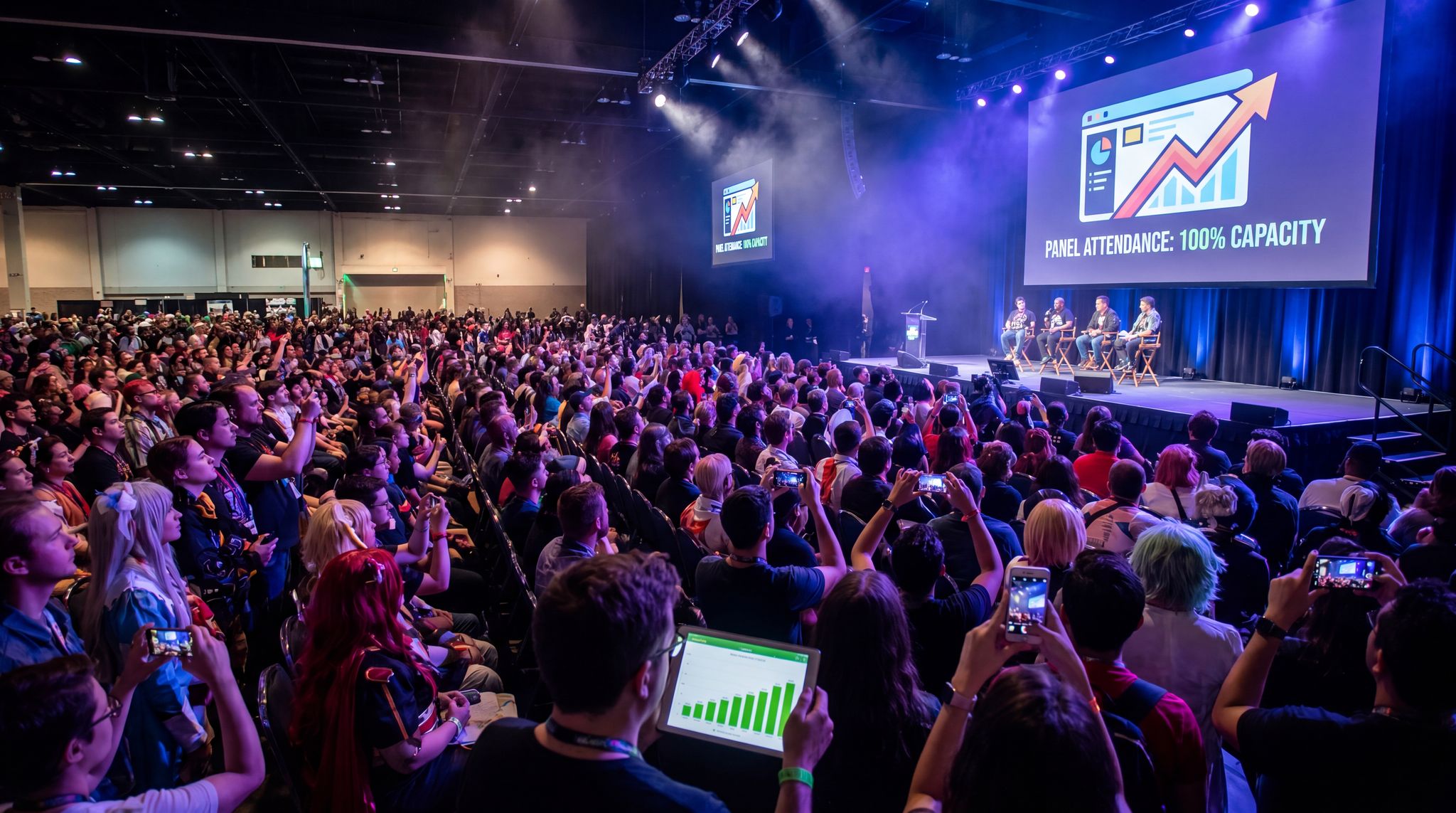
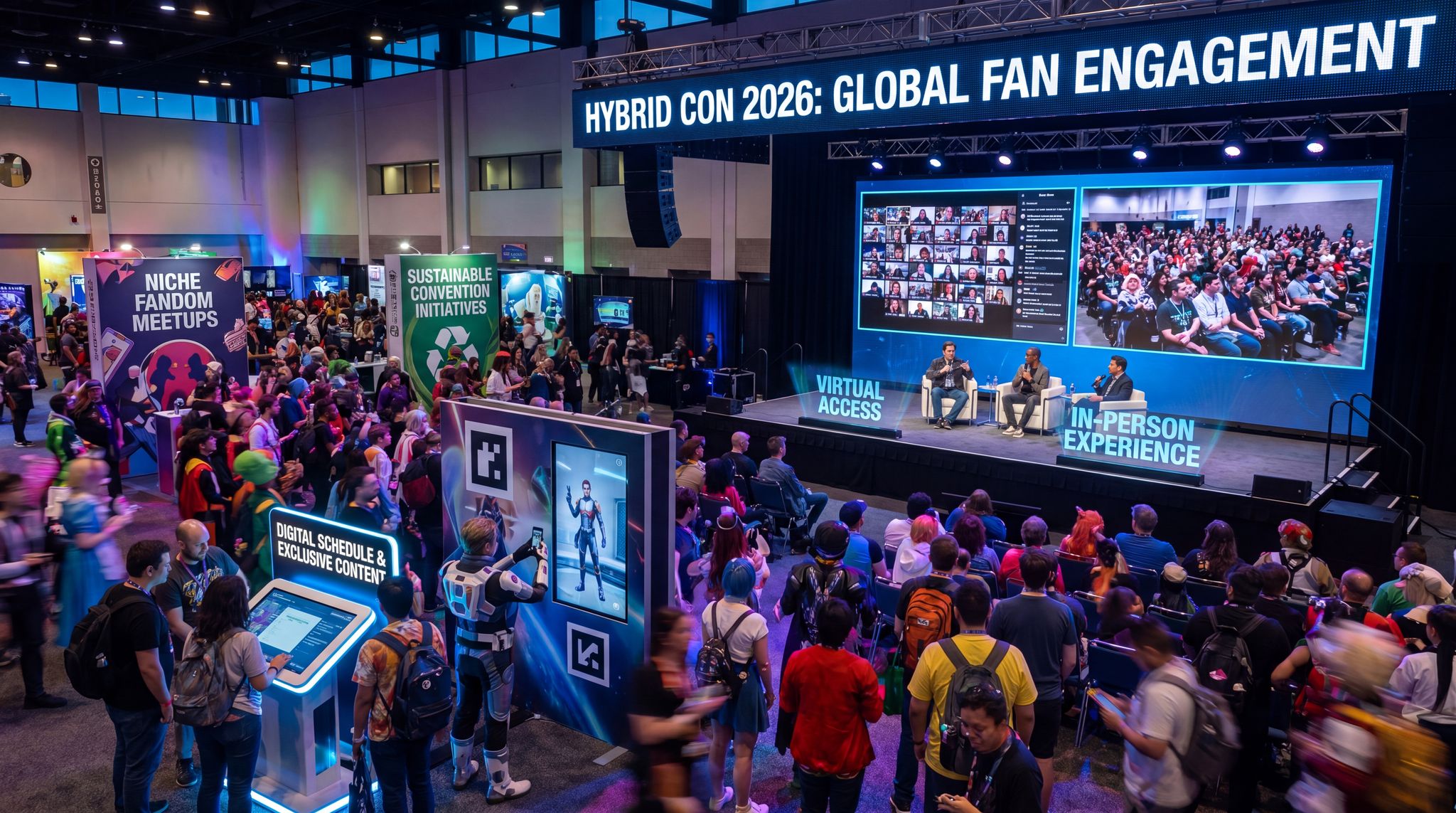
Hybrid engagement has become a cornerstone of modern convention planning. In 2026, offering both physical and virtual access is no longer optional – it’s expected. Organizers discovered during the pandemic that going hybrid dramatically expands reach without cannibalizing the in-person experience. By 2025 there were an estimated 123 million hybrid events hosted globally, and 83% of organizers reported higher total attendance with a hybrid format compared to in-person only. A multi-format approach lets fans participate regardless of location or travel constraints. For example, major fan expos now routinely live-stream marquee panels and keynotes to global audiences, often selling virtual access passes. Even traditionally in-person events like gaming expos and comic cons are integrating digital components – from live online Q&A sessions to virtual exhibit hall tours – to engage fans worldwide.
Organizers should invest in reliable streaming infrastructure and interactive digital platforms to support remote attendees. Features like real-time chat, live polls, and virtual meet-and-greets help online viewers feel like part of the action. Some events employ dedicated “virtual moderators” to funnel questions from remote fans to on-site panelists. The payoff is greater fan inclusivity and buzz far beyond the venue. By embracing hybrid models, conventions can dramatically extend their reach – often with minimal added cost. In fact, many report that online content draws new international attendees who later decide to attend in person. The key is finding the right balance: deliver a rich online experience without diluting the atmosphere that makes on-site attendance special. According to a late-2023 survey on event trends, nearly three-quarters of event goers still prefer attending in-person over virtual when they can. That means the live experience must offer unique value – atmosphere, community energy, exclusive activities – while hybrid elements complement rather than compete with the physical event.
Extending Reach and Revenue Through Hybrid Formats
Beyond engagement, hybrid conventions open fresh business models. Organizers are learning how to monetize virtual audiences rather than treating online access as a free add-on. Many fan conventions now offer tiered digital tickets or streaming packages, generating new income from viewers at home. For example, BlizzCon’s long-running virtual ticket model (pioneered years ago by Blizzard Entertainment) sells access to live streams plus exclusive digital collectibles, bringing in significant revenue from fans worldwide. In 2026 this approach is spreading to general fandom events – from anime expos to comic cons – enabling participation from fans who cannot travel while adding to the bottom line. According to industry research on virtual and hybrid events, the global virtual events market reached $416 billion in 2025, and hybrid events in 2026 are seen as profit powerhouses when executed strategically. Convention organizers are packaging virtual content in creative ways: pay-per-view access to celebrity panels, online-exclusive merchandise sales, or post-event video-on-demand libraries for a fee.
Importantly, sponsors are eager to tap into hybrid audiences. A panel streamed to tens of thousands online can include sponsored graphics or commercials, extending sponsor reach beyond the convention center walls. Likewise, interactive digital fan experiences offer new inventory for sponsorship – think virtual fan art contests or online cosplay spotlights presented by a brand. Some conventions are now crafting sponsorship packages that bundle on-site exposure with digital impressions from stream viewers and social media buzz. In short, hybrid engagement isn’t just a technical trend; it’s a revenue and marketing opportunity. Organizers who master selling online tickets, integrating remote sponsors, and serving both audiences seamlessly will have a strong advantage in hybrid event monetization. This may require upgrading platforms – using an event ticketing system that supports hybrid events and integrated streaming. Choosing the right event technology (from ticketing to streaming provider) is crucial. Many organizers leverage robust event ticketing platforms that handle both in-person and virtual ticket types, ensuring smooth access control for attendees on-site and online. With the proper tools and planning, hybrid conventions can deliver wider reach, higher attendance, and new income without compromising the live magic.
Turn Fans Into Your Marketing Team
Ticket Fairy's built-in referral rewards system incentivizes attendees to share your event, delivering 15-25% sales boosts and 30x ROI vs paid ads.
Elevated On-Site Experiences and Attendee Expectations
Immersive and Interactive Fan Experiences
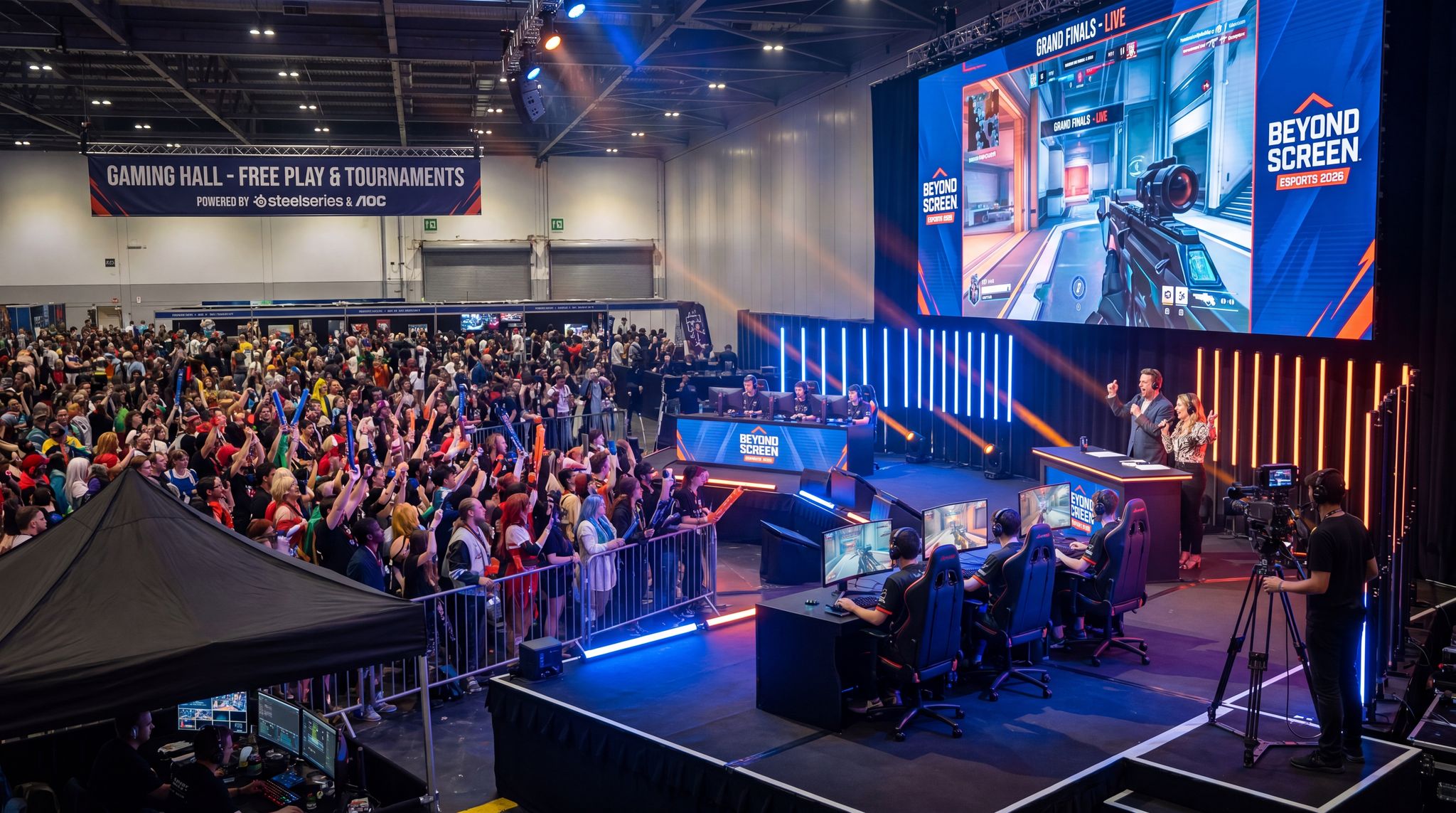
Today’s convention attendees demand more than rows of booths and basic Q&A panels. The era of passive fandom is over – fans now crave immersive, participatory experiences that make them part of the show. In 2026, fan convention industry trends point toward hands-on activities, thematic installations, and gamification on the show floor. For instance, pop culture conventions are creating interactive zones where fans can step into scenes from their favorite shows or games – whether it’s a photo-op throne to claim or a mini escape-room challenge tied to a movie franchise. At anime conventions, art workshops, karaoke rooms, and cosplay craftsmanship demos let attendees actively engage with content rather than just observe. Cosplay competitions have become marquee events, drawing huge crowds and online viewers. Organizers have responded by leveling up these contests with professional staging, LED screens, and experienced judges. Running a cosplay contest now involves not just encouraging craftsmanship but also managing safety – leading cons have implemented strict prop weapon policies and fair cosplay rules to keep the fun safe and inclusive. Veteran convention runners know that well-run fan events like cosplay masquerades, gaming tournaments, and fan art showcases can become signature experiences that set an event apart.
Another big trend is gamified convention apps and scavenger hunts. Many 2026 events use mobile apps that turn the entire venue into an interactive game board. Attendees might earn points for checking in at booths, answering trivia, or finding hidden QR codes, redeemable for prizes or badges. This not only entertains attendees between panels but also drives traffic to exhibitors and sponsors in a fun way. For example, Dragon Con in Atlanta pioneered an app-based scavenger hunt that saw thousands of fans participating and sharing their progress on social media, amplifying the event’s reach. Similarly, comic cons have introduced AR (augmented reality) experiences – imagine using your phone camera at the con to see 3D monsters or characters pop up for a photo-op or to unlock exclusive content. These interactive flourishes meet attendee expectations for novelty and personalization. Engagement is the name of the game: surveys show that attendees who participate in interactive activities report significantly higher satisfaction and are more likely to return the next year. Convention organizers should brainstorm creative ways to weave fandom into physical spaces, whether through immersive set pieces, fan-driven content (like community vote panels), or technology-enhanced adventures. The goal is to transform attendees from spectators into active contributors to the event’s story.
Ready to Sell Tickets?
Create professional event pages with built-in payment processing, marketing tools, and real-time analytics.
Convenience, Speed, and Personalization
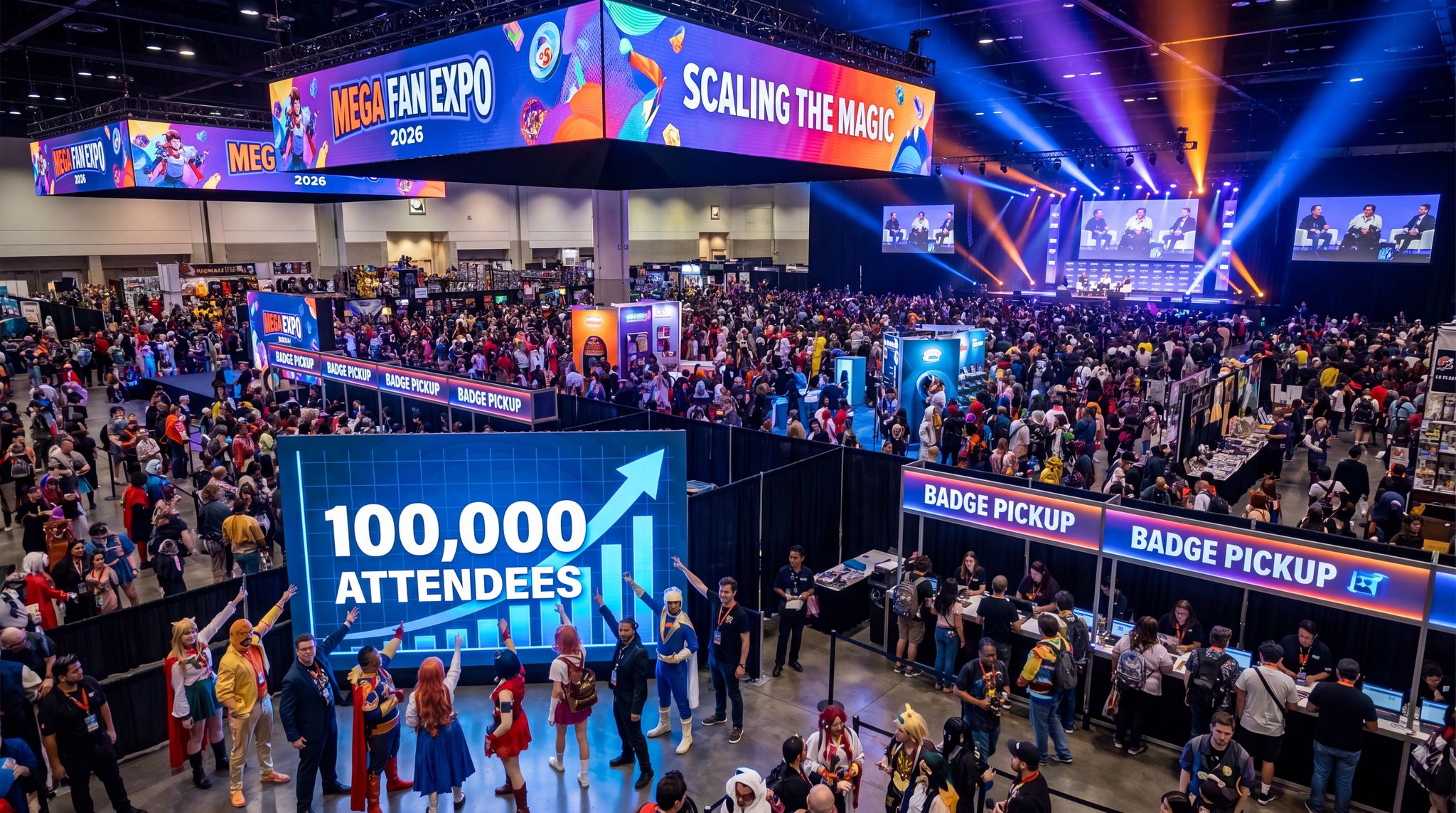
Modern fans also expect the logistics of attending a convention to be smooth and hassle-free. Long gone are the days of chaotic badge pickup lines wrapping around the building for hours – in 2026, fast, tech-enabled check-in is a must. Organizers are adopting strategies like mailed-out badges, QR code e-tickets, and on-demand badge printing kiosks to eliminate bottlenecks at registration. Many events enable attendees to scan their ticket barcode at a self-service kiosk or turnstile and walk right in without human intervention. This dramatically increases entry throughput and improves first impressions. For instance, conventions using RFID badges or turnstile systems have processed thousands of attendees per hour, where older manual methods would max out far lower. One large fan expo reported processing over 5,000 guests per hour by deploying a swarm of wireless scan stations at entrances – keeping wait times minimal even during the morning rush. Adopting modern access control technologies like RFID wristbands and robust scanning apps is now standard practice. Planners evaluating entry systems often compare options like smartphone ticket scanning vs. dedicated badge scanners vs. turnstiles to optimize speed and reliability for their specific crowd size using a robust ticket scanning app with multiple scanners. The consensus among experienced organisers is that efficient entry and crowd flow aren’t just operational perks – they actively shape attendee sentiment. A fan who breezes through check-in and never has to endure a marathon queue is going to be in a much better mindset to enjoy (and spend money at) the event.
Crowd management inside the venue is also evolving. Big conventions have faced infamous lines for celebrity autographs or Hall H-style panels, and attendee patience for all-day queuing is wearing thin. In 2026, advanced line management tactics are being adopted from theme parks and festivals. Many cons now use virtual queue systems or text alert apps that let attendees reserve a spot in line digitally, freeing them to explore until their turn. Some, like San Diego Comic-Con’s wristband system for Hall H, issue colour-coded bands early in the day to organize who gets into the blockbuster panels. Others set up overflow stages where popular panels are simulcast to additional seating areas or streaming lounges, so more fans can participate in big moments. The message is clear – minimize the frustration of waiting. Leading events even hire dedicated “queue entertainment” staff or bring in cosplayers and DJs to amuse fans waiting in line, turning a downside into part of the fun. As one crowd management director quipped, “a bored line is an angry line, but a entertained line is just another attraction.” Convention veterans put significant planning into how to move and occupy crowds. For more ideas, organizers are looking at advanced convention crowd management strategies from recent events, which include tactics like segmented entry times, one-way traffic flows on show floors, and better signage to prevent bottlenecks.
Personalization is another expectation in 2026. Attendees are used to on-demand, tailored experiences in their digital lives, and now they expect it at events. Conventions are responding by offering personalization in schedules and content. Mobile event apps allow fans to create custom schedules, get recommendations (“You liked the Star Wars panel, you may enjoy the Star Trek meetup at 3 PM”), and receive alerts for the specific programs or guest sessions they favorited. Some cons send targeted push notifications – for example, a nudge about an upcoming anime screening to attendees who indicated interest in anime content. The data to fuel this comes from registration info and in-app interactions. Data analytics is quietly improving convention programming behind the scenes. Organizers analyze which sessions had the highest interest, which exhibitors got the most traffic, and even dwell times in different areas using heatmap data from badge scans. These insights help curate better lineups each year (e.g. knowing that the indie comics workshop had a high satisfaction rating might lead to more of that content). It’s a page from the playbook of theme parks and digital platforms, applied to fan events. The takeaway: fans appreciate when a massive convention feels tailored to them. Little touches like a personalised welcome message on the app or a digital badge of the attendee’s favorite franchise can delight attendees and set your event apart. In an increasingly competitive market, those conventions that deliver seamless, personalized, and hassle-free experiences are earning stronger loyalty from fans – and ensuring they come back in 2027.
Niche Fandom Growth and Community Building
Rise of Specialized Fan Conventions
One of the most fascinating convention planning trends 2026 has put in the spotlight is the explosive growth of niche fan events. While mega-cons like Comic-Con and Dragon Con grab headlines, smaller specialized conventions are flourishing worldwide as organizers adapt their strategies. These events cater to focused fandoms – whether it’s a single franchise, a specific genre, or a distinct subculture – and their popularity underscores fans’ desire for more personalized, tight-knit experiences. Over the past few years, hundreds of niche cons have sprung up, from K-pop fan fests to board game expos to fan conventions for a single TV series. Organizers have realized that you don’t need 100,000 attendees to be successful; a passionate crowd of 2,000 can create an electric atmosphere (and a profitable event) if the content is laser-targeted to their interests. Focused content is king. For example, the US convention Supernatural (dedicated entirely to the TV show) ran for many years as a touring fan event drawing die-hard devotees. Similarly, BronyCon (celebrating My Little Pony fans) grew from a small meetup to over 10,000 attendees at its peak, simply by serving a community that wasn’t being catered to by broader cons.
Smooth Entry With Mobile Check-In
Scan tickets and manage entry with our mobile check-in app. Supports photo ID verification, real-time capacity tracking, and multi-gate coordination.
Several factors are fueling this niche fandom growth. First, fans increasingly seek meaningful connection over size. A huge general comic-con can be impersonal, whereas a niche event guarantees common ground with everyone you meet. Every conversation in the halls is about that shared passion, whether it’s a specific anime series, a particular game, or a subgenre of sci-fi. This sense of community and belonging is a major draw. Second, social media has made it easier to mobilize niche communities into real-world gatherings. Online fan groups on Reddit, Facebook, or Discord often spark the creation of a convention when they realize “we have thousands of members worldwide – why not hold an event?” Many of today’s successful niche cons started as fan meetups fueled by online communities. Third, big conventions have limits to growth and sometimes leave demand unsatisfied. For instance, San Diego Comic-Con’s tickets sell out instantly, which indirectly boosts regional and niche events as alternatives for fans who couldn’t attend SDCC or prefer a more focused experience. Organizers should take note: there is opportunity in the long tail of fandom. A well-run niche convention can quickly gain traction if it authentically serves a community. In fact, some of today’s largest conventions began as intimate niche events that expanded over time. Case in point – Anime NYC launched in 2017 as a mid-sized anime convention in New York; by 2024 it drew over 100,000 unique attendees, and in 2025 it welcomed a record 148,000 attendees over four days, vaulting it into the top tier of fan events. That kind of growth is possible when an event taps into an underserved fandom and delivers an experience fans love.
Community Engagement Year-Round
With niche conventions especially, success hinges on community building. Organizers can no longer think of their event as a once-a-year affair – it’s now common to engage attendees year-round through digital channels. Convention veterans have found that fostering an online community keeps fans enthusiastic, drives word-of-mouth, and boosts repeat attendance. For example, many cons maintain an official Discord server or Facebook group where attendees and newcomers mingle, share fan art, discuss next year’s guests, and even provide feedback. Keeping the conversation going between events means your con isn’t just a date on the calendar, but an ongoing part of fans’ lives. It also creates built-in ambassadors: a satisfied niche audience tends to be vocal and active online, recruiting friends to join the fun next time, driving rapid growth for niche meetups. Organizers can encourage this by launching referral programs and ambassador incentives that reward fans for bringing others. In fact, some conventions have reported a 15–25% boost in attendance through word-of-mouth campaigns that turn attendees into promoters. Implementing a structured system – for instance, providing each fan a unique referral code for discounted tickets – makes it easy to track and reward these efforts. As one case study, a North American anime con introduced a referral scheme where fans could earn exclusive merchandise and even free VIP upgrades for getting friends to buy tickets. The result was a double-digit percentage increase in pre-sales, largely from new attendees introduced via referrals. If you’re looking to tap this strategy, check out how a fan convention referral program can boost attendance with real-world examples of referral incentives and their ROI.
Another year-round engagement tactic is content creation. Organizers have started producing podcasts, YouTube series, or blog posts in the off-season to keep fans engaged. For example, a tabletop gaming convention might host a monthly livestream where game designers preview new content or a comic con might run a podcast interviewing artists slated for the next event. These not only maintain interest but also act as marketing teasers. Some conventions run smaller regional meet-ups or sponsor fan club gatherings during the year as a lead-up to the main event. The idea is to cultivate loyalty and community so that when tickets go on sale, you have an eager base ready to buy – and to create an event experience that feels like a family reunion for that fandom. Experienced organizers note that nurturing a tight community can also be a double-edged sword: passionate fans have high expectations and will hold you accountable for delivering the niche experience you promise. Transparency, listening to feedback, and even involving community members in planning (through advisory boards or surveys) can harness that passion positively. Ultimately, those conventions that authentically engage their fandoms year-round are the ones best positioned to thrive in 2026 and beyond. They won’t need to rely solely on expensive advertising because their community itself becomes the marketing engine, generating buzz through genuine enthusiasm.
Sustainable and Inclusive Convention Practices
Eco-Friendly and Sustainable Operations
As the events industry at large prioritises sustainability, fan conventions are following suit with green initiatives. Sustainable convention practices have evolved from a “nice to have” to a core expectation in 2026. Attendees – especially younger fans – are increasingly eco-conscious and want the events they love to reflect those values. In fact, surveys indicate that over 57% of live event attendees consider environmental sustainability important when deciding to attend. Fans notice everything from the piles of trash after a big expo day to whether the venue offers recycling, and they’re vocal about it on social media. Forward-thinking convention organisers are taking proactive steps to reduce environmental impact, often in creative ways that don’t diminish the fan experience. For example, many cons have gone paperless by switching to digital schedules, event apps, and QR codes in place of printed program books. San Diego Comic-Con (USA) notably curbed its once-massive program printing, encouraging fans to use a mobile app – a move that fans embraced, and which significantly cut paper waste. European events are even further ahead: Comic Con Stockholm in Sweden uses 100% renewable energy at its venue, has eliminated single-use plastics on site, and provides smart badges that digitally share exhibitor info to reduce paper flyers. These efforts led to an estimated 80%+ reduction in paper usage at Comic Con Stockholm.
Moving beyond paper, conventions are tackling waste management and energy use. Major cons like Emerald City Comic Con (Seattle, USA) have implemented comprehensive recycling and composting programs in partnership with their convention centers. In 2025 Emerald City Comic Con achieved an estimated 85% waste diversion rate at Emerald City Comic Con (meaning only 15% of waste went to landfill), by requiring all vendors to use compostable food service items and setting up clearly marked sorting bins staffed by volunteers. They even ran a “Leave No Trace” campaign in cosplay repair areas to encourage cosplayers to clean up materials and recycle scraps. In Germany, Gamescom – one of the world’s largest gaming conventions – introduced a “Green Ticket” that bundled free public transit passes with each event ticket, incentivizing tens of thousands of attendees to use trains and buses instead of cars. The result: about 70% of attendees took advantage of the transit offer, drastically cutting the event’s transportation carbon footprint. Gamescom also implemented a deposit system for reusable cups and plates in dining areas, virtually eliminating single-use foodware waste. These examples show that large-scale fan events can go green without sacrificing fun or incurring huge costs. Often it’s about upfront planning and choosing the right partners – many convention centers now have sustainability programs, and vendors are offering greener products (like badge holders made of recycled material or digital swag bags instead of plastic goodies).
To illustrate how conventions are putting sustainability into practice, here are a few real examples of green initiatives and their impact:
Data-Driven Event Marketing
Track ticket sales, demographics, marketing ROI, and social reach in real time. Exportable reports give you the insights to make smarter decisions.
| Convention & Year | Key Sustainability Measures Implemented | Impact on Event |
|---|---|---|
| Comic Con Stockholm (2025) | 100% green electricity at venue; LED lighting and smart badge (paperless info); no single-use plastics; local/vegetarian catering options | Achieved ~80% reduction in paper use; significantly lowered event carbon footprint |
| Emerald City Comic Con (2025) | 100% compostable food containers and full recycling program; “Leave No Trace” cosplay cleanup; leftover merch donated to charity | Diverted an estimated 85% of waste from landfill; boosted green credibility with attendees and press |
| Gamescom Cologne (2023) | “Green Mobile Ticket” – free public transit pass for attendees; deposit/refund system for reusable cups & dishes on-site | ~70% of attendees used public transit, cutting transportation emissions; greatly reduced single-use waste on-site |
Such initiatives not only reduce environmental impact but can enhance a convention’s brand and appeal. Fans notice when events walk the talk on sustainability. Cons that genuinely integrate green practices often see positive feedback on forums and social channels, and even gain media coverage for their efforts (which can attract environmentally-minded sponsors as well). On the flip side, organisers should be careful of greenwashing. Savvy attendees will call out token gestures that are more PR than substance. It’s better to start with a few meaningful targets – for example, aim to eliminate single-use plastic bottles by providing water refill stations and selling branded reusable bottles. Communicate your goals to attendees (e.g. “help us recycle 90% of waste this year”) and report results afterward. Transparency goes a long way in building trust, especially when publishing progress on sustainability targets. The bottom line: embracing sustainability is quickly becoming standard operating procedure. As one convention ops manager put it, “eco-friendly practices are just part of good event management now – like safety or crowd control – it’s expected we will plan for them.” In 2026, the savviest fan conventions are proving you can level up your event’s green game without dimming the fan experience, proving that a cleaner, greener con benefits everyone. In many cases, eco-friendly measures like going digital or reducing waste also save money (printing less, hauling less trash) – so it truly benefits everyone.
Inclusivity, Diversity, and Fan Well-Being
Hand-in-hand with sustainability is a heightened focus on inclusivity and attendee well-being. Fan conventions are embracing their role as welcoming spaces for diverse communities. In 2026, organisers are more attentive than ever to accessibility for people with disabilities, representation in programming, and robust anti-harassment policies. Attendee expectations have evolved: fans not only want an event where they feel safe and included, they also proactively choose events aligned with their values of diversity and respect. In practice, this means conventions are investing in things like ADA-compliant venues and services (wheelchair-accessible routes, sign language interpreters for major panels, quiet rooms for neurodivergent or anxious attendees, etc.). Many large cons now have dedicated accessibility departments or consultants. For example, New York Comic Con offers pre-show tours for fans with sensory sensitivities so they can familiarize themselves with the venue at a quiet time, as well as a cellphone-based system to request assistance or report issues during the show. In the Middle East, the upcoming MEFCC 2026 in Abu Dhabi has publicly committed to extensive accessibility accommodations, including onsite aides for attendees with mobility challenges and offering special quiet lounges for those needing breaks, demonstrating a commitment to supporting people of determination.
Grow Your Events
Leverage referral marketing, social sharing incentives, and audience insights to sell more tickets.
Diversity in programming and guests is another growing priority. Fan convention industry trends in 2026 strongly favour showcasing a wide range of voices. Attendees notice if all your celebrity guests or panelists look the same; they want to see creators and experts who reflect the fan base’s diversity. Many conventions have responded by curating panels on diversity in comics, LGBTQ+ representation in anime, women in gaming, and so on – and by inviting guests from historically underrepresented groups. This not only appeals to those demographics but enriches the experience for everyone and future-proofs the event’s relevance. On the attendee side, cosplay culture in particular has driven inclusivity forward, with the mantra “cosplay is for everyone” helping to break down barriers of body type, race, gender, or ability. Organizers encourage this with clear messaging that discrimination or harassment won’t be tolerated. It’s now standard for cons to have a published code of conduct and visible on-site campaigns promoting respectful behavior. Many have adopted what used to be seen only at specialist cons: pronoun stickers on badges, gender-neutral restrooms, and “cosplay is not consent” signage reminding attendees that they must ask before photographing or touching cosplayers. These steps create a safer environment and have become expected at reputable events. In 2025, several high-profile incidents at conventions (from harassment claims to involuntary outting of LGBTQ attendees in unsafe regions) underscored how crucial diligent inclusivity practices are. Trustworthiness and safety are part of a convention’s brand. Thus, planners are working closely with security teams, diversity consultants, and fan community leaders to continuously improve inclusion.
Another aspect of fan well-being is mental and physical health support. Long days at a crowded con can be exhausting, so some conventions now provide quiet wellness rooms, hydration stations, and even basic medical support beyond the usual first aid – such as mental health professionals or designated “safe spaces” for anyone feeling overwhelmed. A few innovative events introduced “diversity lounges” or community rooms where fans from marginalized groups can meet and find resources (for instance, a room for BIPOC creators or LGBTQ+ meetups). While these efforts were once rare, they are becoming more common as organizers recognize that fostering an inclusive community is not just morally right but also good business – it expands your audience and builds loyalty. Fans who feel truly welcome will return year after year and become your best promoters. In 2026, expect the bar to keep rising: inclusion is an ongoing journey, not a one-time checklist. Convention planners who stay ahead of the curve will actively listen to attendee feedback, consult with advocacy groups, and perhaps most importantly, ensure their staff and volunteer teams reflect a diversity of perspectives as well. The conventions thriving in this era are those that create a sense of belonging for all their fans, making the magic of the event accessible to everyone who wants to be there.
New Business Models and Fan-Centric Monetization
Beyond Badges: Diverse Revenue Streams
The traditional business model for fan conventions – primarily badge sales, vendor booth fees, and maybe a few sponsorships – is expanding in 2026. Facing rising costs and a competitive entertainment landscape, organizers are innovating new revenue streams and partnerships to keep their events financially sustainable. One major shift is the integration of digital content monetization, as touched on earlier with hybrid events. Conventions are realizing that their content (panels, performances, exclusive reveals) has value beyond the attendees in the seats. Many are filming high-quality video of panels and selling access to an on-demand library after the show, or even partnering with streaming platforms to host this content. For example, a comic convention might film all celebrity Q&As and offer a digital “season pass” for fans worldwide to watch the entire panel series online for a fee. Some have turned to pay-per-view style live streams for major events (akin to a sports event model). This not only brings in revenue but also markets the convention to potential future attendees, as thousands might pay to watch virtually and then decide to attend in person next year. Sponsorship models are evolving too – beyond banners and booths, sponsors now want year-round exposure through the con’s digital channels and branded content. It’s common for a tech company to sponsor a convention’s mobile app or for a brand to back the streaming studio that broadcasts live interviews from the show floor. These integrated sponsorships can command higher fees than a simple expo hall booth, supporting the event’s bottom line.
Fan conventions are also borrowing ideas from the broader live events industry by offering premium experiences and upgrades. VIP tiers have been around for a while, but 2026 will see even more creative premium offerings. We’re talking ultra-limited “platinum passes” that might include a private dinner with a celebrity guest, early access to the exhibitor hall before crowds, or a concierge service during the event. While a standard 3-day pass might be $80, some fans are willing to pay $500 or more for these VIP extras, providing the event with a higher-margin product. Conventions are carefully balancing these VIP programs to avoid backlash – the perks must feel truly special and not take away from general attendees’ experience. When done right, premium packages can significantly boost revenue and fund improvements that benefit everyone. Another innovative model is subscription-based fan communities associated with events. A few conventions have launched membership programs where, for a monthly or annual fee, fans get exclusive digital content, early access to tickets, merchandise discounts, and a community forum. Essentially, the convention brand extends beyond the event itself and becomes a club. This provides steady income year-round and deepens engagement with the most dedicated fans.
Go Cashless With RFID Technology
Enable contactless payments, faster entry, and real-time spending analytics with RFID wristbands and NFC-enabled ticketing for your events.
Also notable is the trend of IP owners and media companies hosting their own conventions or fan events, which creates new business dynamics. Companies like Disney (with D23 Expo) or Crunchyroll (with Crunchyroll Expo) have leveraged their content to run extremely successful events, sometimes in partnership with experienced convention organizers. This indicates that for certain brands, the convention itself becomes a direct revenue generator and marketing vehicle rolled into one. Independent fan conventions might feel the competitive pressure, but many are responding by focusing on what independent events do best – authenticity and community. They might collaborate with these companies for content while retaining their own unique vibe. From a business perspective, any convention organizer should be open to strategic partnerships – whether with streaming services, entertainment brands, or other events. For example, two mid-sized conventions focusing on related fandoms might team up for a joint ticket bundle, encouraging cross-attendance. Or a convention could partner with a festival or concert series to add a fan event component, thus tapping into new audience segments. The playbook is expanding, and organisers who think outside the box with revenue models can generate fresh income streams that strengthen their event’s financial foundation.
Fan-First Pricing and Financial Planning
Even as new revenue flows in, cost pressures are mounting. Venue rentals, insurance, staffing, and especially guest appearance fees have all climbed in recent years. Top-tier celebrity guests can now command eye-watering fees – it’s not uncommon for A-list film stars or showrunners to ask $100,000 or more for a single weekend appearance at a convention. Even B and C-list actors often earn tens of thousands from convention signings and photo ops. This means organizers must budget shrewdly and sometimes make tough calls on which guests provide a true draw for their fee. It has also given rise to creative deal structures, like profit-sharing on autograph sales (where a guest might accept a lower upfront guarantee in exchange for a cut of every autograph ticket sold). Organizers are advised to analyze historical data: which guests actually drove badge sales or up-sells? It’s easy to assume a big name will attract crowds, but veteran convention organizers know the ROI can vary greatly. Sometimes a niche voice actor with a fervent following might spark more ticket purchases than a more expensive mainstream celebrity who is doing the convention circuit frequently. By paying attention to fan sentiment and pre-sales analytics, you can allocate appearance budgets more effectively.
Amid these costs, there’s a renewed focus on fan-friendly pricing and policies. With inflation and travel costs, fans are very price conscious. Events seen as nickel-and-diming attendees with high fees or constant up-charges face backlash. For instance, the practice of dynamic pricing (popular in concert ticketing, where prices surge based on demand) is almost universally loathed by fan convention communities. Organizers in 2026 are largely avoiding such tactics, positioning their ticket pricing as transparent and fair. In fact, many top conventions are shifting to fan-first ticketing platforms that prioritise transparent fees and anti-scalping measures. Fans appreciate when the price they see is the price they pay, and when resale is controlled to prevent gouging (for example, by using official resale exchanges at face value). Emphasizing a fan-first approach builds goodwill and can become a selling point in marketing. Some events have even instituted refund or rollover policies for tickets to give buyers confidence despite uncertain times – a practice born out of pandemic cancellations that is continuing as a customer-service differentiator. On the flip side, conventions are finding ways to offer installment payment plans or “buy now, pay later” options for higher-priced packages, to make attendance accessible to more fans. This has been common in bigger music festivals and is now trickling into the fan con space, especially for deluxe VIP tickets or multi-event passes.
Innovative financing solutions are also helping organizers handle cash flow needs. Mounting large events requires significant upfront investment (venue deposits, guest guarantees, marketing) long before ticket revenue comes in. To bridge that gap, some convention organizers are turning to new financing tools. For example, The Ticket Fairy’s Capital program provides advanced payouts based on projected ticket sales, essentially giving event organizers an upfront lump sum to cover early expenses without waiting for all the tickets to sell. This kind of program can be a lifeline if you need to secure a venue or a headline guest now but your revenue won’t fully materialize until the event. It’s worth exploring such event financing options as part of your planning for 2026, especially if you plan to scale up your event or face significantly higher costs. In addition, astute organizers are diversifying their budget plans: seeking more sponsors (even local businesses or fan-run companies), adding paid fan experiences (workshops, VIP lounges) that justify a separate fee, and carefully controlling expenses that don’t impact the attendee experience.
Finally, conventions are increasingly data-driven businesses. Using data analytics, organizers can identify which revenue streams have untapped potential. Perhaps merchandise sales are lower than average – could you introduce exclusive limited-edition collectibles only available at the event to drive urgency? Or maybe panel attendance data shows an underserved interest (e.g., consistently packed indie manga panels, indicating you could attract a sponsor or expand content there). Data also highlights where to cut costs or invest more. Professional associations and consultants in the exhibitions industry provide benchmarks on expense ratios (for example, what percentage of budget should go to venue vs. programming vs. marketing for an event of your size). Armed with this info, 2026 convention organisers are running their events more like agile startups – continuously iterating their “product” and revenue model to adapt to market feedback. The fan convention industry is professionalizing quickly, with expertise drawn from not just fellow con-runners but also the wider event industry. That’s why you’ll see conventions applying best practices from trade shows, music festivals, and sporting events to improve their financial performance while keeping fan experience front and center. After all, a convention’s success in the long run depends on building a loyal fan base that feels valued – and that means balancing business savvy with fan-centric decision making.
Global Expansion and New Markets
worldwide Growth of Fan Events
Fan conventions have truly become a global phenomenon, and 2026 will see further expansion into new regions and markets. What started as a primarily North American and European trend has spread across Asia, Latin America, the Middle East, and beyond. Organizers in emerging markets are launching events to meet local fan demand – and international producers are also bringing established brands abroad. For example, the Middle East has seen rapid growth in pop culture conventions: the UAE’s Middle East Film & Comic Con (MEFCC) set record attendance with over 35,000 visitors in 2023 and is gearing up for even larger numbers with its 2026 edition in Abu Dhabi. Saudi Arabia hosted its first large-scale anime and cosplay expo in recent years, tapping into a huge youth population passionate about Japanese media. In Africa, Comic Con Africa in Johannesburg drew around 70,000 fans in 2024, making it one of the continent’s biggest pop culture events and signaling the strong appetite for such gatherings. Meanwhile, South America continues to host some of the world’s largest fan conventions – Brazil’s CCXP (Comic Con Experience) regularly sees quarter-million plus attendance figures, rivaling the biggest US cons. Even smaller countries have entered the fray; for instance, New Zealand launched an anime and gaming expo that sold out its first year, and India has growing Comic Con events in multiple cities. This global growth means organizers need to be aware of international trends and competition. A fan in 2026 might have choices like never before – should they spend their budget to fly to San Diego, or attend a local comic con in their country that brings similar guest stars? Increasingly, local events are keeping fans closer to home by delivering quality experiences.
For convention businesses, global expansion presents both opportunities and challenges. Some established convention brands are franchising or partnering to enter new markets. ReedPop (organizers of NYCC, ECCC, etc.) has launched events in Europe and Asia through partnerships, bringing their expertise to local audiences. We also see Japanese anime convention styles influencing cons abroad – like fan-run doujinshi markets and cosplay-centered events popping up in the West. Conversely, Western IPs are headlining events in Asia and the Middle East. There’s a cultural exchange at play, and fans benefit by getting a taste of global fandom closer to home. Organizers considering international expansion must do thorough homework on each region’s fan culture, holidays, pricing norms, and even legal considerations. For instance, running a convention in Japan is very different from the U.S. in terms of venue union rules, fan expectations (Comic Market Japan is free entry and fan-comic focused, which differs greatly from a paid-ticket celebrity con), and regulations for things like cosplay prop weapons. Similarly, what works marketing-wise in one country may not in another – local social media platforms, languages, and celebrity popularity can vary widely. Partnering with local teams or consultants is often the key to success. We’ve seen examples where a top-notch U.S. convention tried to enter a foreign market solo and stumbled due to misreading local fan priorities. On the other hand, collaborative ventures that blend international standards with local insight usually thrive. The overarching trend is that fan conventions are becoming a global network, with fans traveling for “destination conventions” and guests touring the world’s events, nearly year-round. In 2026, a savvy organizer keeps one eye on the global scene: who’s running events when and where, and what new ideas are being tried elsewhere that could be applied to their own event.
Cultural Adaptation and Localisation
With global expansion comes the necessity of cultural adaptation. A successful convention in one region might flop in another if cultural nuances aren’t respected. Organizers are paying close attention to local fan customs, tastes, and norms. Take something as simple as how lines are managed or how people ask questions in panels – these can differ internationally. In some countries, fans are very comfortable queueing early and camping overnight for a big panel; in others, that would be frowned upon or impractical due to climate or safety, so a different system is expected. Content preferences also vary: a European sci-fi con might need strong literary and art programming because those fandoms are robust there, whereas a similar event in Asia might lean more into gaming and cosplay features. Localisation of programming is critical. This could mean featuring regional creators and influencers, incorporating local pop culture phenomena, or even adjusting the language used on stage (e.g., providing translation for international guests, or having bilingual emcees). For example, when a major U.S. comic con brand expanded to India, they quickly learned to include popular local comic artists and Bollywood crossovers, rather than just importing Western superheroes. The result was a much more engaged local audience.
Cultural adaptation also extends to hospitality and operations. Convention organisers in 2026 are adapting their operations to cultural differences just as venue managers are doing worldwide. This can cover everything from food offerings at the venue (respecting dietary preferences or restrictions common in the region) to prayer room accommodations for attendees in countries where that’s expected. Understanding local holidays and work weeks is vital too – for instance, in many Middle Eastern countries the weekend is Friday-Saturday, so a convention there might run those days instead of the Western Saturday-Sunday norm. Marketing strategies must align with local communication styles; in some markets, direct WhatsApp or Telegram marketing to fan communities can be more effective than Facebook ads (as explored in event marketing guides for regions like the Middle East). Organizers who succeed abroad often immerse themselves in the local fan community first – attending other local events, engaging with fan club leaders, and hiring local staff or volunteers for on-ground expertise.
Even homegrown conventions benefit from cultural sensitivity as they attract more international attendees. Large cons in the US and Europe are seeing increasing numbers of fans flying in from overseas. This has prompted measures like multilingual signage, currency exchange services on-site, and guides for foreigners on how to navigate the event. A great example is Japan’s Anime Japan expo, which in recent years added an “International” hospitality booth with English-speaking staff and materials to help the surge of foreign visitors. Similarly, some North American cons now have a “global attendee” concierge to assist those who travel from abroad with questions about the city, transportation, and customs. All these efforts boil down to one thing: make every fan feel at home, even if home is half a world away. In a globalized 2026 convention scene, attendees will gravitate to events that embrace diversity not just in principle but in practical execution. The sharing of best practices across borders is likely to increase. Industry associations and expo organizers talk more frequently now – an organizer in Singapore might swap notes with one in London on crowd flow, or an anime con team in Sydney might learn from a counterpart in Los Angeles about managing high-profile guest autograph lotteries.
The cross-pollination of ideas ultimately raises the game for all. We’re moving towards a world where a fan in Brazil, Germany, or Dubai can expect a top-notch convention experience tailored to their culture yet equal in quality and excitement to any other around the globe. For organizers, that means continuously learning and networking internationally. Tapping into global resources – whether attending IAEE or UFI conferences for exhibition industry trends, or simply reading case studies of other conventions – can provide valuable insight into improving one’s own event. Even checking out local insights on adapting event operations to cultural differences can spark ideas on how to refine your convention’s approach to hospitality. In summary, global expansion isn’t just about geography; it’s about mindset. The trend is toward conventions without borders, and those who embrace that ethos will find enthusiastic audiences awaiting them in every corner of the world.
Frequently Asked Questions
What is a hybrid fan convention?
A hybrid fan convention is an event that blends physical attendance with virtual access through live-streamed panels and interactive digital platforms. This format dramatically expands global reach, with 83% of organizers reporting higher total attendance by accommodating fans regardless of travel constraints.
How can event organizers speed up convention registration?
Organizers speed up convention registration by implementing fast, tech-enabled check-in systems like QR code e-tickets, mailed-out badges, and self-service RFID turnstiles. Deploying wireless scan stations at entrances eliminates bottlenecks, allowing large fan expos to process over 5,000 guests per hour efficiently.
Why are niche fan conventions growing in popularity?
Niche fan conventions are growing rapidly because attendees increasingly seek meaningful connections and personalized experiences over massive, generalized events. Specialized conventions guarantee common ground among fans of specific franchises or genres, fostering tight-knit communities that often interact year-round through digital channels.
How do hybrid events make money from virtual attendees?
Hybrid events monetize virtual audiences by selling tiered digital tickets, pay-per-view access to celebrity panels, and post-event video-on-demand libraries. Organizers also generate revenue by integrating remote sponsors through branded live streams and interactive digital fan experiences like online cosplay spotlights.
What are sustainable practices for fan conventions?
Sustainable convention practices include eliminating single-use plastics, utilizing renewable venue energy, and replacing printed programs with digital event apps. Major events achieve high eco-friendly standards by implementing comprehensive composting programs and reusable dishware deposits, which can divert up to 85% of waste from landfills.
How do modern conventions manage large crowds and panel lines?
Modern conventions manage large crowds by utilizing virtual queue systems and text alert apps that allow attendees to reserve spots digitally. Organizers also deploy color-coded wristbands for blockbuster panels and set up overflow streaming lounges to minimize waiting frustration and improve traffic flow.
How do fan conventions improve accessibility and inclusivity?
Fan conventions improve accessibility by providing ADA-compliant routes, sign language interpreters, and dedicated quiet rooms for neurodivergent attendees. Organizers also enforce strict codes of conduct, offer pre-show sensory tours, and curate diverse programming to ensure a safe, welcoming environment for all fans.
Why is cultural adaptation important for global convention expansion?
Cultural adaptation ensures international conventions succeed by aligning event operations, programming, and marketing with local customs and norms. Adjusting panel queueing systems, respecting regional dietary preferences, and featuring local creators prevents cultural missteps and makes diverse attendees feel comfortable and valued.