Synopsis: Festival permitting and licensing processes vary dramatically between countries. This comprehensive guide compares how the UK’s council licenses and Safety Advisory Groups, the US’s city and county special event permits, and continental Europe’s municipal permits differ – with real examples and tips. Learn how to get a permit for a music festival in each region, avoid common pitfalls, and plan for local regulations without costly surprises.
Festival Permits: One Size Doesn’t Fit All
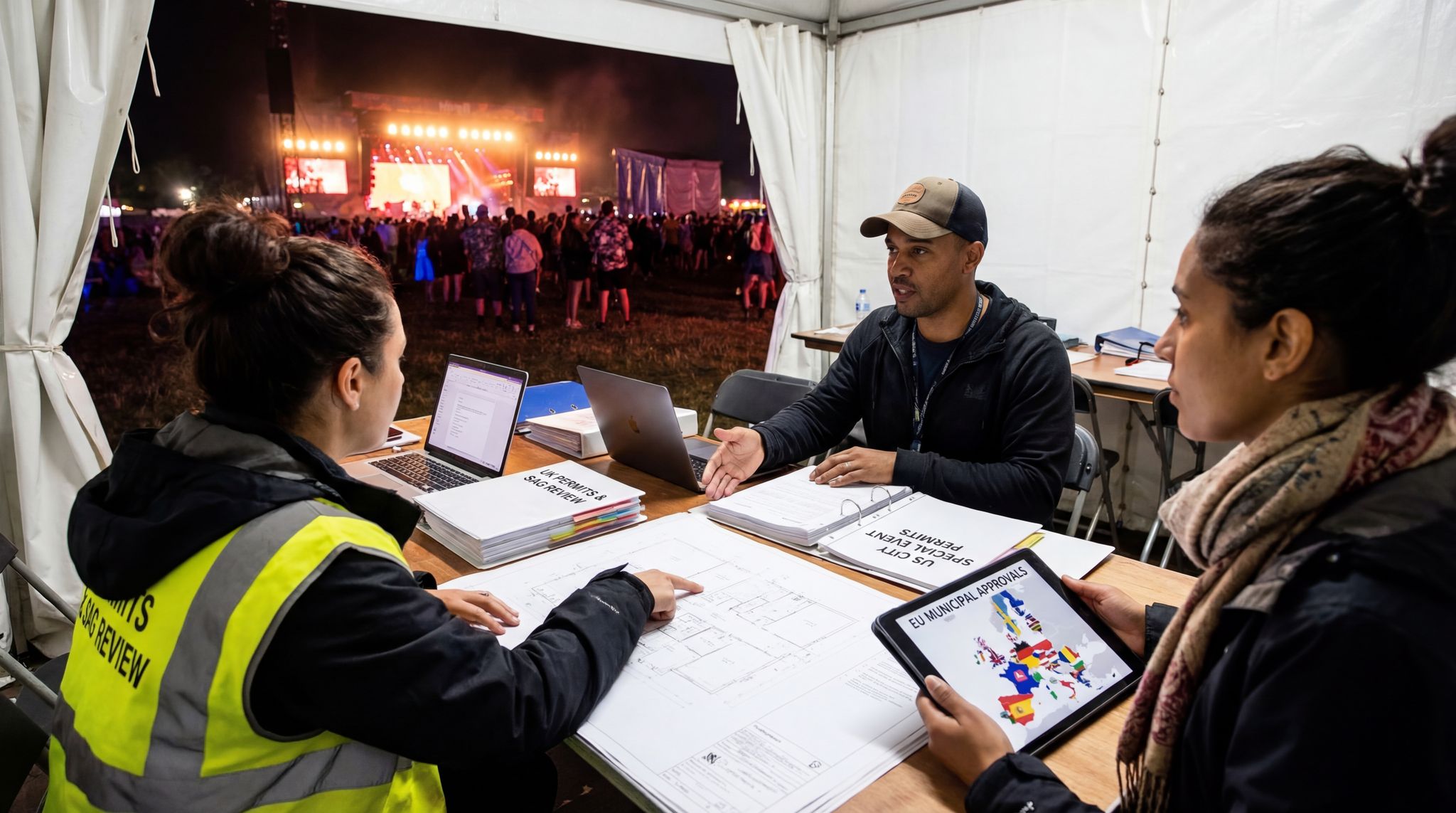
When expanding a festival internationally or drawing inspiration from abroad, producers quickly discover that festival permits are not one-size-fits-all. What flies in one country might falter in another due to different laws, agencies, and community expectations. In the UK, a festival organizer faces detailed licensing hearings and multi-agency safety reviews. In the US, the process of securing a special event permit for festivals means navigating city or county departments, each with their own requirements. Across continental Europe, every nation (and city) brings unique bureaucracy – yet common themes emerge.
Understanding these differences in festival licensing requirements is essential for smooth operations. A veteran production team knows that failing to grasp local rules can lead to compliance mistakes that delay or even derail an event. For example, a noise curfew that’s flexible in one country may be strictly enforced in another, or an alcohol law might require different age checks. This section-by-section breakdown will compare UK, US, and EU permitting systems so you can better prepare for local regulations wherever your festival journey leads. By navigating each system’s nuances – from UK council meetings to US special event applications to EU municipal approvals – you’ll avoid surprises and earn the trust of authorities and communities.
United Kingdom: Council Licensing & Safety Advisory Groups
The UK has one of the world’s more formal festival licensing frameworks, rooted in national law but executed by local authorities. Any large music festival in England, Wales, or Scotland typically needs a Premises Licence (or occasionally a temporary event notice for very small events) from the local council. UK festival license application processes involve detailed documentation and public scrutiny. This means producers must present an exhaustive Event Management Plan covering site layouts, security, medical, noise control, and more. Local residents and agencies can review and object, so being thorough and transparent is key.
Free Tool: Size Your Festival Site
Zoned capacity planning for arena, campsite, parking and entry lanes — against UK Purple Guide and NFPA density standards. Finds your bottleneck zone.
UK Festival Licensing Basics
Under the Licensing Act 2003 (in England & Wales), any event with regulated entertainment (like live music) and alcohol sales generally requires a Premises Licence if attendance exceeds 499 people or it runs beyond certain hours. The application is submitted to the local council’s licensing committee, which posts a public notice to allow objections. Seasoned UK festival producers advise starting this process 6–12+ months in advance to ensure responsibility and make future permitting easier. For major festivals like Glastonbury or Reading Festival, organisers often file applications nearly a year ahead to allow time for revisions and hearings. Even smaller events should file at least several months early – technically a 28-day consultation period is the minimum, but practical planning demands much longer.
Local authorities will scrutinize plans for safety, noise, crowd management, and community impact before granting a licence. They can attach strict conditions to address concerns. For instance, councils often set noise limits at the nearest residences (e.g. maximum decibel levels at night) and define exact closing times (curfews) in the licence. It’s common for UK festival licences to mandate specific security measures, medical provisions, and even welfare services. Liquor licensing is typically integrated into the same festival permit – requiring age-verification measures and safe alcohol service policies. (Notably, Temporary Event Notices can cover one-off small events up to 499 people for a short duration, but larger festivals must go through the full Premises Licence route.)
Planning a Festival?
Ticket Fairy's festival ticketing platform handles multi-day passes, RFID wristbands, and complex festival operations.
One real-world example is Parklife Festival in Manchester. As a large urban festival, Parklife works hand-in-hand with Manchester City Council under strict licensing conditions, especially since the park borders multiple residential areas. The organisers coordinate closely with the council (and even neighboring boroughs) to address residents’ concerns about noise, traffic, and park cleanup. By actively demonstrating community benefits and robust safety plans, this festival has continued to secure its permits year after year by effectively managing its multi-borough park borders. The lesson: UK councils expect festivals to not just apply for permission, but to earn it by minimizing disruption and maximizing local benefit.
For specialized cultural events, securing a festival licence may also involve diplomatic or international cultural organizations. If your event features international showcases or is part of a bilateral cultural exchange, you might need to coordinate with entities like the British Council or a visiting High Commissioner. These stakeholders can provide essential backing for your event, helping to validate the cultural significance of the festival to local councils during the licensing process.
Safety Advisory Groups (SAG): Collaboration, Not Red Tape
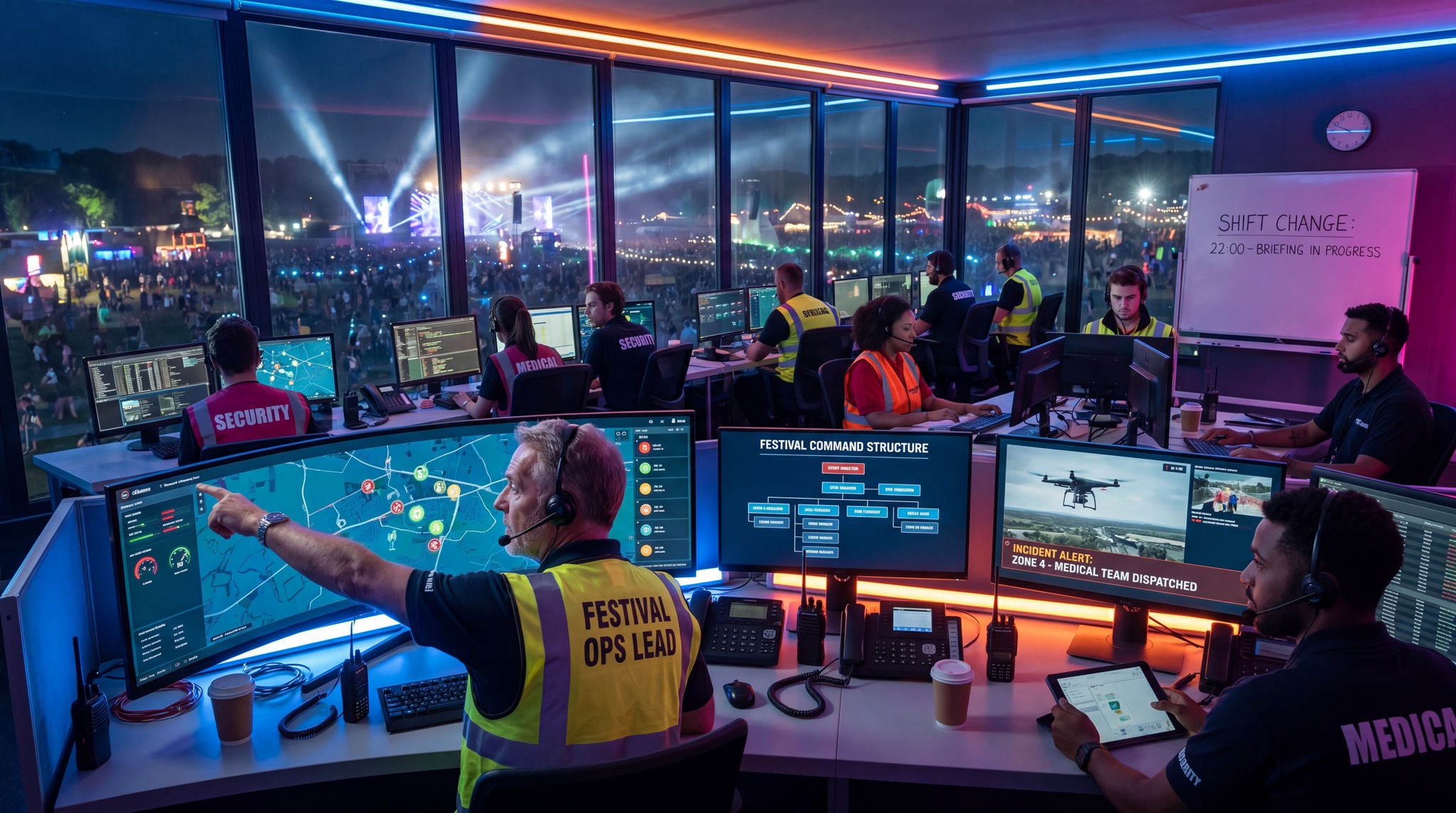
A unique aspect of UK festival permitting is the Safety Advisory Group (SAG) process. A SAG is a multi-agency committee – usually coordinated by the local council and including representatives from the council’s events team, police, fire brigade, ambulance service, health & environment, and sometimes the venue or landowner. SAGs provide a forum for discussing and advising on public safety at an event, fulfilling the core purpose and scope of a SAG, encouraging cooperation between all relevant agencies. While a SAG itself doesn’t issue permits (it’s an advisory body, not a licensing authority), its support (or concern) weighs heavily on the council’s licensing decisions.
In practice, when planning a UK festival, organizers are advised to engage the SAG early – often even before formally submitting the licence application. By presenting your initial plans to the SAG 9–12 months out, you can get valuable feedback from emergency services and address any red flags proactively. For example, a SAG might advise adding more fire exits, increasing water stations in hot weather, or beefing up security in certain areas. Taking this advice on board and updating your Event Management Plan not only improves safety but also shows the council you’re acting responsibly. As the UK’s Health and Safety Executive notes, SAG meetings encourage organisers to refine plans and demonstrate they can safely run the event and fulfill their statutory duties for ensuring public safety. Importantly, attending SAG meetings is usually voluntary but strongly encouraged – a council might even make SAG consultation a condition for using public land or getting final sign-off as a mandatory condition of using their public land.
Free Tool: Project Your Bar Revenue
Per-head spend benchmarks by event type turned into projected bar and food revenue, with a stock-mix estimate and gross-margin line. Free calculator.
UK festival veterans recall that strong SAG relationships can be lifesavers. For instance, when severe weather threatened a 40,000-capacity festival, the SAG’s joint emergency planning enabled a smooth evacuation and later restart once conditions improved. Conversely, ignoring SAG advice can jeopardize your licence – if police or fire representatives on the SAG feel critical safety issues aren’t resolved, they may formally object to the license or even exercise independent powers to restrict the event, as their statutory duties must be discharged separately. The takeaway: treat SAG members as partners. Invite them for site visits, keep them updated on changes, and show professionalism. A cooperative approach can turn authorities from skeptical overseers into supportive allies when navigating complex local noise ordinances and making the review process easier on local authorities.
UK Permitting Tip: Document everything. UK councils love clear paper trails. Submit detailed site plans, risk assessments, and certifications (e.g. structural safety sign-offs for stages). Being thorough and organized not only speeds up approvals but also builds trust by maintaining a visible correction log for reviewers. Don’t forget community relations either – inform local residents early about your festival plans, traffic management, and noise schedules. Many UK festivals mail letters or host community meetings months ahead, which helps avert objections during the licence review. By showing you’re accountable (for example, setting up a community hotline for complaints and offering residents free or discounted tickets as goodwill), you improve your chances of a smooth permitting process.
Need Festival Funding?
Get the capital you need to book headliners, secure venues, and scale your festival production.
Building Your UK Event Planning Safety Checklist
If you read through top industry resources or event planning safety checklist UK blogs, you will quickly notice a recurring theme: a meticulous safety document is the absolute backbone of your Event Management Plan. When preparing for your SAG meetings and applying for your festival licence, your checklist must cover several non-negotiable areas. First, ensure you have a dynamic risk assessment that identifies potential hazards, from severe weather to crowd surges. Second, verify your medical and first aid provisions strictly match the expected capacity and audience demographic. Third, confirm that fire safety measures, including emergency exits, structural sign-offs, and suppression equipment, meet local fire authority standards. Finally, document your communication protocols for staff, security, and emergency services. Having this structured safety checklist not only streamlines your operational planning but also proves to the council that you are a highly responsible producer.
United States: Special Event Permits & Multi-Agency Approvals
In the United States, festival permitting is a decentralized patchwork. There’s no single national “festival licence” – instead, organizers must comply with a web of city, county, and state regulations. Almost every city or county has its own special event permit process for festivals, especially if using public spaces or large gatherings that impact public services. The scale of the event and the venue location (public land, private property, or purpose-built venue) will determine the exact requirements. Navigating it requires knowing the local rules cold (or hiring someone who does), because regulations varies widely by jurisdiction to cater to their unique community needs. Each city or county may impose specific provisions to cater to its community’s needs – affecting everything from noise limits to required police presence based on specific special event permit guidelines.
City and County Permitting Processes
How to get a permit for a music festival in the US? Start by identifying the relevant local authority. If the festival is inside city limits, you usually apply through the city’s events department or a City Clerk’s office. Outside city limits on county land, you might go through a county commissioners’ office or sheriff’s department. Many large US cities have dedicated event coordination offices – for example, New York City’s Office of Citywide Event Coordination & Management provides a comprehensive event permitting guide detailing guidelines for primary permitting agencies covering parks permits, street closures, health permits, etc. On the West Coast, Los Angeles requires special event permit applications to be submitted at least 45 days before the event date as outlined in their application overview (and that’s a minimum; big festivals often start the process many months earlier). In fact, some jurisdictions set 60- or 90-day deadlines for permit applications, especially for events over a certain size.
US special event permit applications tend to be very comprehensive. Expect to provide a detailed site map, an operations plan (covering security, crowd control, first aid, emergency evacuation, communications), a waste management plan, and often a noise mitigation plan. You’ll also need to show proof of liability insurance naming the city/county as additional insured, and sometimes performance bonds or cash deposits for cleanup and potential damages. In many cases, you must also arrange (and budget) to pay for off-duty police officers, fire marshals, or EMTs to staff your event as required by the permit—these costs can be significant, so plan ahead. For example, Ultra Music Festival in Miami pays the city for dozens of police and fire personnel on-site, and Electric Daisy Carnival in Las Vegas works with county officials to fund extensive traffic control and medical teams as part of its permit obligations. These measures increase safety but also underscore how closely intertwined US festivals are with local public services during events.
Accept Payments Across 13 Countries
Local currency processing via Stripe, Razorpay, Xendit, Paystack, and OXXO across 13 countries with region-specific payment methods.
A critical difference from the UK is that formal public hearings are less common for permits in the US (unless your event is especially controversial or requires city council approval for road closures or park use). Instead, the process is more administrative – you file an application, then work with various departments on revisions and conditions. It’s very much a multi-agency approval choreography: the city’s events office might route your application to the police department (for security plan review), fire department (for site safety and any pyrotechnics permits), health department (for food vendors and sanitation), building department (for stage and tent structure safety), and so on. You often need each sign-off before a final permit is issued. Some cities hold inter-departmental meetings with the organizer present (similar to a SAG, but not always formalized) – others handle it on paper and only reach out if there are issues. Smart organizers engage each agency proactively: meeting with the fire marshal to walk through your festival map, or discussing your traffic plan with the police well in advance. By showing respect for each department’s concerns and engaging officials as partners, you pave the way for smoother approvals by making the process easy on reviewers.
Regional differences are huge. In Austin, Texas, for example, a large festival must navigate both city permits and state laws like the Texas Mass Gatherings Act. Texas law requires a state/county Mass Gathering Permit for any event over 2,500 people (or smaller events with a majority under age 21) that lasts more than 5 hours, which legally requires a Mass Gathering Permit. The application goes to the county government and must be submitted at least 45 days in advance per Texas Health and Safety Code requirements. This process involves a public hearing with the county judge and input from health, fire, and law enforcement. On the other hand, a festival in California might deal with a city’s process plus additional state fire codes or Coastal Commission approvals if on a beach. The key is: know your locale’s rules cold. Read the city’s event permit guide, consult local event producers, and when in doubt, pick up the phone and ask the permitting office directly. Showing that you’re informed and cooperative can even win you some flexibility; for instance, some cities can expedite a permit or grant a noise variance if they see the organizer has done their homework and prepared a strong case.
Liability, Safety, and “American Style” Compliance
It’s often said that the US is a more litigious environment, and this is reflected in festival permitting. Authorities tend to be risk-averse and very explicit about safety protocols because if something goes wrong, lawsuits fly. For organizers, this means strict compliance is not optional – it’s life or death for your event (and potentially your business). Many U.S. permits come with detailed stipulations: e.g. maximum crowd capacity for each area, mandated ratio of security guards to attendees, emergency exit spacing per fire code (often referencing standards like NFPA 101 Life Safety Code), and required on-site medical resources. The National Fire Protection Association (NFPA) codes and International Building Code are commonly enforced at festivals (for tents, stages, electrical safety, etc.), and local fire marshals will inspect stages and structures before gates open. In fact, U.S. festivals rely on NFPA and building codes, while other regions follow their own stringent codes – but all must be respected to ensure safe crowd flow and solid emergency protocols.
Noise and neighborhood impact is another area of focus. Most American cities have noise ordinances with set quiet hours. If your festival plans to go late, you may need a special variance for sound – and these can be politically sensitive. For example, Chicago enforces a strict 11:00 PM music curfew at festival sites (as Lollapalooza knows well), and getting an exception is nearly impossible due to residents’ rights. Meanwhile, some rural counties might not have specific decibel limits, but sheriffs can shut down music if they deem it a nuisance. Always check local noise regulations and include mitigation plans (like directional speaker setups or scheduled quiet hours) in your permit application. Some festivals even offer free earplugs to nearby residents or pay for overnight security patrols in adjacent neighborhoods as goodwill measures.
Lastly, insurance is non-negotiable. A U.S. festival permit will virtually always require general liability insurance (often $1–5 million coverage) and sometimes additional policies like liquor liability if alcohol is served to protect against liabilities you do not wish to have. The government wants to see that if an attendee or neighbor is injured or property is damaged, the organizer has financial backing to cover it. It’s wise to work with an insurance broker experienced in events to get the right coverage; failing to maintain the insurance can void your permit. (For more detail on insurance types and recommended coverage levels, see our guide on insurance and liability coverage for festival operations which delves into what policies festival producers should have in place.)
US Permitting Tip: Treat each authority’s approval as a step on a checklist. Keep a permit matrix or tracker (a simple table will do) of all required sign-offs, fees, and deadlines – from the fire department’s tent inspection to the health permits for food vendors. This is where dedicated festival planning software can be invaluable. For example, you might list: Submit City Special Event Permit application (Deadline: 90 days out); Apply for state alcohol license (Deadline: 60 days out); Schedule building inspection for stages (Date: 2 days before opening). By mapping it out, you ensure nothing slips through the cracks. And remember, start early – experienced U.S. festival organizers often begin permit talks a year in advance for major events, even if formal applications open later. Rushing a complex permit in the last month is a recipe for panic. As one guide puts it, the permitting process can be complex and time-consuming, so early planning and understanding local requirements are crucial to success to promote responsible event management and ensure all necessary information is included.
Continental Europe: Municipal Permits & Local Regulations
Continental Europe presents a diverse mosaic of permitting systems. Unlike the U.S. or UK, where one language and legal framework cover many regions, Europe spans dozens of countries – each with its own laws (though EU members share some broader regulations). The upside is that many European countries have well-established processes for large festivals, given Europe’s rich festival culture. The challenge for organizers is learning the nuances of each locale. Festival licensing requirements in Europe often involve both a municipal permit (from the city or town where the event is held) and compliance with national “mass gathering” or safety regulations. Let’s break down common patterns and notable differences.
Local Authorities and National Laws
In most European countries, the primary festival permit comes from the city or municipal authority. This could be the mayor’s office, a city events unit, or the local police prefecture, depending on the country. For example, in Spain, a major festival like Primavera Sound in Barcelona must work closely with the Barcelona City Council to secure permits that even regulate nearby convenience stores and bars. The city imposes strict conditions on noise levels, operating hours, and crowd management. In fact, local officials even coordinate measures like limiting the operating hours of nearby convenience stores and bars during Primavera to manage crowd dispersal by restricting nearby convenience stores and bars – an example of how deeply authorities get involved. In France, large events require coordinating with the prefecture (the state’s representative in the region) and often the mairie (town hall) for local permits; security plans might need sign-off by the gendarmerie (police) and the fire brigade (Service Départemental d’Incendie et de Secours).
Many European countries have national legislation on mass events or public safety that festivals must heed. For instance, Poland’s Mass Events Act sets specific requirements for security staff numbers, medical services, and even defines what constitutes a “mass event” by attendance and event type based on specific mass event regulations. Germany historically had each state’s Venue Safety regulations (Versammlungsstättenverordnung) which cover technical standards for stages, tents, electrical installations, etc., similar to building codes. After incidents like the 2010 Love Parade tragedy, German authorities became even more vigilant – some cities now demand detailed crowd security concepts and employ independent experts to review festival plans. Italy likewise has stringent rules following a 2017 crowd panic incident; their authorities now often require video surveillance and real-time people counting for large gatherings.
What does this mean for an international producer? Essentially, do your homework for each country. Do not assume that a safety plan from your last festival will automatically satisfy a new country’s rules without tweaks. Language can be a barrier – documents might need translating, and you may need a local representative to submit applications. In non-English-speaking countries, it’s immensely helpful to hire a local event consultant or partner promoter who is familiar with the permitting labyrinth. Many festivals expanding to Europe team up with local production companies who know the officials personally and speak the language, smoothing over cultural differences and bureaucratic processes. This local knowledge can alert you to things like religious or cultural holidays that might affect public services, or a requirement to notify neighborhood committees formally (a practice in parts of the Netherlands and Belgium).
A prime example of specialized European permitting is the autorisation Fête de la Musique in France. While the annual nationwide music celebration encourages public performances, professional organizers hosting large-scale stages or branded events during the festival must still secure specific municipal authorizations. This process requires submitting detailed technical dossiers to the local mairie and prefecture, proving that even during a decentralized national event, formal festival licence protocols and crowd safety measures are strictly followed.
Case Studies: Adapting to European Environments
Real examples highlight how European permitting can differ city by city:
-
Sziget Festival (Budapest, Hungary): Sziget takes place on an island in the Danube River. Even with a somewhat isolated site, it still falls under Budapest city regulations. Organizers coordinate with the city council, local police, and environmental agencies for permits requiring robust plans for safety and noise control. They must demonstrate robust plans for public safety, waste management, and noise control that protect residents across the water. Budapest authorities review details annually like maximum daily attendance and sound levels reaching residential districts across the Danube to make permitting smoother. Over the years, Sziget’s team has learned to negotiate workable limits (e.g., ending main stage shows by a certain hour) and to offer community benefits, such as free local resident passes and significant post-event park restoration, to maintain goodwill.
-
Lollapalooza Berlin (Germany): When Lolla expanded to Berlin, they discovered how strict the city can be. The first edition in 2015 was at Tempelhof Airport (a disused airfield) and succeeded logistically. But when they tried a new site (Treptower Park) in 2016, it brought permit challenges and neighborhood pushback that eventually forced a move to a track outside the city’s center. Locals worried about noise and park damage. The festival did receive a permit after intense negotiations, with stipulations like fencing to protect green areas and limited hours. Even so, protests over the park’s ecology meant Lolla was not allowed to return to that site due to the intense permit challenges and neighborhood pushback. In 2017 they shifted to a venue outside the city center. This saga taught a key lesson: remain flexible with venue selection and engage early with both regulators and residents. Berlin authorities pay very close attention to event impact – permits come with detailed stipulations, and going forward without community support can be a deal-breaker. (Notably, Berlin is famously strict on noise curfews – officials have even cut the power on performances that ran past the 10 or 11 PM cutoff at other events where big stars were silenced mid-performance due to stipulated curfew times. Festival organizers in Germany know that these rules are truly enforced!)
-
Tomorrowland (Boom, Belgium): One of Europe’s largest festivals, Tomorrowland works under the watch of the local town (Boom) and the province of Antwerp. Belgium’s permitting involves extensive collaboration with local government – including police, medical, and transit authorities – through a unified command. Tomorrowland provides a very detailed dossier each year to officials, covering everything from sound management (they use multiple stages oriented strategically to contain noise) to transportation plans for tens of thousands of visitors arriving from abroad. Belgian authorities require robust crowd control measures and emergency plans; Tomorrowland’s team even runs a full simulation exercise with police and emergency services each year before the festival. The result is a strong trust relationship – but one built on consistently meeting strict permit conditions. Noise curfews are imposed (music ends by around 1 AM on main stages), and the festival invests heavily in community relations (funding local projects, offering residents perks) to maintain its “social license” to operate in Boom.
Balancing Sound and Social Harmony — Implementing technical solutions and strict schedules to respect local noise ordinances and neighborhood peace.
Beyond Europe, managing the immediate perimeter is a universal challenge for urban events. In Latin America, for example, major festivals often coordinate with local police to enforce temporary alcohol sales bans or even mandate an “Oxxo shutdown” (referring to the ubiquitous convenience store chain) in the blocks surrounding the venue. By restricting nearby off-site alcohol sales, organizers mitigate rogue street parties, reduce neighborhood litter, and ensure attendees enter the festival grounds safely. This level of perimeter control is increasingly becoming a standard condition for securing a comprehensive festival licence in densely populated cities worldwide.
Across Europe, a recurring theme is the importance of community and context. Many European festivals occur near towns or villages that have a say in their continuation. Gaining local support can be just as crucial as satisfying official regulators. Some countries actually require evidence of community consultation as part of the permit application for large events. For example, parts of Scandinavia encourage festival organizers to hold town hall meetings with residents during planning. In the Netherlands, organizers often sign agreements with municipalities that include commitments to limit sound bleed and ensure all trash is cleaned up, which helps assuage public concerns.
Europe Permitting Tip: Just as in the UK and US – start early and be meticulous – but additionally, be culturally aware. Learn the local expectations around events. In some European cities, a festival is seen as a citywide endeavor (with government more directly involved in support and funding), whereas in others it’s viewed with caution until trust is earned. Tailor your approach: in bureaucratic cultures, submit every paper properly stamped; in more informal ones, still follow the rules but building personal relationships with officials can go a long way. Always respect environmental and safety regulations to the letter – many European authorities view festivals through the lens of social responsibility and sustainability. Show that you care about noise, waste, and local impact (e.g., outline your recycling and noise monitoring programs). Not only will this help get your permits, it also signals that your festival is a positive presence.
Avoiding Common Pitfalls in UK, US, and EU Permitting
While each region has its quirks, some universal strategies will help you avoid permitting pitfalls anywhere in the world:
- Start the Process Early: We’ve stressed this, but it bears repeating. Early engagement can save your event. Whether it’s initiating a UK licence application 12 months out or meeting a US city events office the moment your dates are penciled in, time is your friend. Permitting often involves back-and-forth adjustments – you’ll need buffer time to adjust plans or appeal decisions. Rushing last-minute is a top mistake new producers make (and a theme in many hard-won festival lessons learned) – a mistake you can avoid with proactive planning.
- Research Local Requirements Thoroughly: Never assume what worked in one region will meet regulations in another. Read local laws, permit application guidelines, and even past cases. For instance, if you’re eyeing a site in a new city, check news archives for how previous events there fared. Did they face complaints or strict conditions? Learn from those examples. If possible, talk to other festival or event organizers in that area – their insights on how the system really works are gold. Networking at industry conferences (like IFEA or regional events forums) can connect you to people who’ve navigated those waters.
- Engage Stakeholders and the Community: Permitting is not just box-ticking; it’s about getting buy-in from all stakeholders. Especially in sensitive locations, building local support can be as important as satisfying officials. Attend or host community meetings (or at least send out informative notices) to address resident concerns. When authorities see that you have community support – or at least that you’re taking resident complaints seriously – your permitting process gets smoother and turns final sign-offs into a collaborative process rather than an adversarial one. This is often called achieving a “social license” to operate, beyond the legal permit. Festivals that ignore local sentiment risk objections, appeals, or a hostile atmosphere that regulators will certainly notice.
- Prepare for Multiple Scenarios: Permitting isn’t just an application, it’s an ongoing negotiation. Be ready to adapt. What will you do if the council only licenses 8,000 attendees but you hoped for 10,000? If the city says “music must stop by 10 PM” but you planned midnight, can you adjust your schedule or add silent disco after-hours? Have contingency budgets for extra mitigations if required (like more toilets, soundproofing, or shuttle buses). By considering these ‘what-ifs’ in advance, you can respond calmly and flexibly if regulators throw a curveball requirement at you like unexpected trash mitigation, which experienced producers always plan for. Experienced producers often have plan B (and C) ready – whether it’s an alternate site, different stage orientation to reduce noise, or additional security measures – to satisfy any last-minute conditions.
- Keep Detailed Documentation and Compliance Records: When you get permit approvals, you’ll often receive a list of conditions. Treat this like your event bible. Make a checklist of every condition and ensure your team understands them. Some will require action (e.g., “Sound checks not before 10 AM” – you must inform your audio crew; or “Inspection by fire marshal required before opening” – you schedule it). Non-compliance can lead to permits being revoked on the spot. In some EU cities, officials will do on-site monitoring – if they find you violated a noise limit or a crowd number, they might shut down the stage until fixed. Similarly, many US cities send inspectors during the event. Compliance isn’t just pre-event paperwork; it’s live. Designate a compliance manager on your staff to liaise with officials during the festival and keep everything on track.
- Leverage Technology and Professional Help: Simplify permit compliance by using modern tools. For example, specialized festival planning software can send automatic reminders for permit deadlines and renewal dates. Digital mapping tools can help you create precise site plans to submit. On the ticketing side, platforms like Ticket Fairy’s festival ticketing software support compliance efforts – for instance, by enforcing age verification at ticket purchase and entry (useful for alcohol licensing rules) and allowing capacity caps on different ticket categories (so you don’t oversell beyond what your permit allows). Invest in a solid radio communication system and emergency alert tech – some jurisdictions now expect real-time crowd monitoring, and having the tech in place can impress safety officials by meeting the country’s fire, life safety, and environmental sanitation requirements. Also, don’t hesitate to hire consultants where needed: a local permitting lawyer or off-duty fire marshal consultant can review your plans and preempt issues. The cost is often minor compared to a permit denial or a shutdown incident.
Aligning Marketing Essentials with Permitting: A frequently overlooked pitfall is the disconnect between a festival’s promotional team and its compliance officers. Your marketing essentials—such as announcing the venue, publishing site maps, and launching ticket sales—must be tightly synchronized with your permit status. Advertising a specific capacity or late-night curfew before your festival licence is officially granted can antagonize local authorities and jeopardize the final approval. Always ensure your public-facing communications reflect the actual, approved parameters of your event.
By combining all these approaches, you build a foundation of trust. Regulators anywhere appreciate an organizer who is proactive, knowledgeable, and responsive. That positive reputation pays off: once you’ve run a festival that hits all the right notes (safety, community, compliance), future permits tend to get easier. As seen in multiple case studies, building a reputation for responsibility will make authorities more comfortable and sometimes even streamline your next application since establishing a reputation for responsibility will make future permitting easier.
Finally, remember that permits and licences are there for a reason – to ensure events are safe and community-friendly. Embracing the spirit behind the regulations, rather than viewing them as a hurdle, sets the tone for collaboration. In the end, getting that permit stamp of approval is not just a legal checkbox, but a vote of confidence from your host community that your festival is welcome there.
Frequently Asked Questions
What is a Safety Advisory Group (SAG) for events?
A Safety Advisory Group is a multi-agency committee in the UK that advises on public safety for events. Coordinated by local councils, it includes representatives from police, fire, ambulance, and health services to review festival plans and encourage inter-agency cooperation.
How do you get a music festival permit in the US?
Securing a US music festival permit requires applying through a city or county events department, usually 45 to 90 days in advance. Organizers must submit comprehensive operations, security, and waste plans, secure multi-agency approvals, and provide proof of general liability insurance.
When does a UK festival require a Premises Licence?
A UK festival requires a Premises Licence under the Licensing Act 2003 if it features regulated entertainment, sells alcohol, and expects an attendance exceeding 499 people. Smaller events under 499 attendees can typically operate using a simpler Temporary Event Notice.
What insurance is required for a US festival permit?
US festival permits almost universally require general liability insurance, typically demanding $1 million to $5 million in coverage. Organizers must name the host city or county as an additional insured party, and events serving alcohol must also secure specific liquor liability policies.
How far in advance should you apply for a festival permit?
Festival organizers should begin the permitting process 6 to 12 months in advance for large events. While legal minimums might only require 45 to 90 days depending on the jurisdiction, starting a year early allows sufficient time for multi-agency reviews and community consultations.
What is a Texas Mass Gathering Permit?
A Texas Mass Gathering Permit is a state-mandated authorization required for events exceeding 2,500 attendees, or smaller events where the majority are under 21, lasting over five hours. Applications must be submitted to county governments at least 45 days before the event.
Why is community engagement important for European festival permits?
Community engagement is critical in Europe because local municipalities often require resident support to issue municipal permits. Festivals that proactively address neighborhood noise, waste, and environmental concerns earn a social license to operate, preventing costly resident objections and strict operational restrictions.
How do festivals comply with local noise ordinances?
Festivals comply with local noise ordinances by submitting detailed noise mitigation plans during the permit application process. Organizers utilize directional speaker setups, enforce strict music curfews, schedule quiet hours, and sometimes offer free earplugs or neighborhood security patrols to appease local residents.
What role do international organizations play in securing a festival licence?
For cross-border cultural events, coordinating with entities like a High Commissioner or the British Council can validate the event’s cultural importance, often assisting organizers in demonstrating community value to local councils during the festival licence application process.
What is an autorisation Fête de la Musique?
It is a specific municipal approval required in France for professional organizers hosting large-scale or branded stages during the annual Fête de la Musique, ensuring that formal safety and crowd control measures are met despite the event’s decentralized nature.
What should be included in a UK event planning safety checklist?
A robust UK event planning safety checklist should include a comprehensive risk assessment, detailed crowd management and evacuation plans, verified medical and first aid provisions, fire safety protocols, and clear communication strategies for emergency services. Compiling these elements is essential for securing your festival licence and satisfying Safety Advisory Group (SAG) requirements.