At summer festivals, few issues can turn attendee satisfaction sour as quickly as overheated, foul-smelling restrooms. A sweltering portable toilet or a poorly maintained restroom area isn’t just uncomfortable – it can also pose health risks and tarnish the festival experience. Festival organizers who prioritize clean, cool, and odor-free facilities not only keep guests happy but also uphold the event’s reputation. This comprehensive guide shares veteran strategies to ensure your festival’s restrooms remain fresh, safe, and comfortable, even under the challenges of summer heat and large crowds.
Shade Units to Prevent Overheating
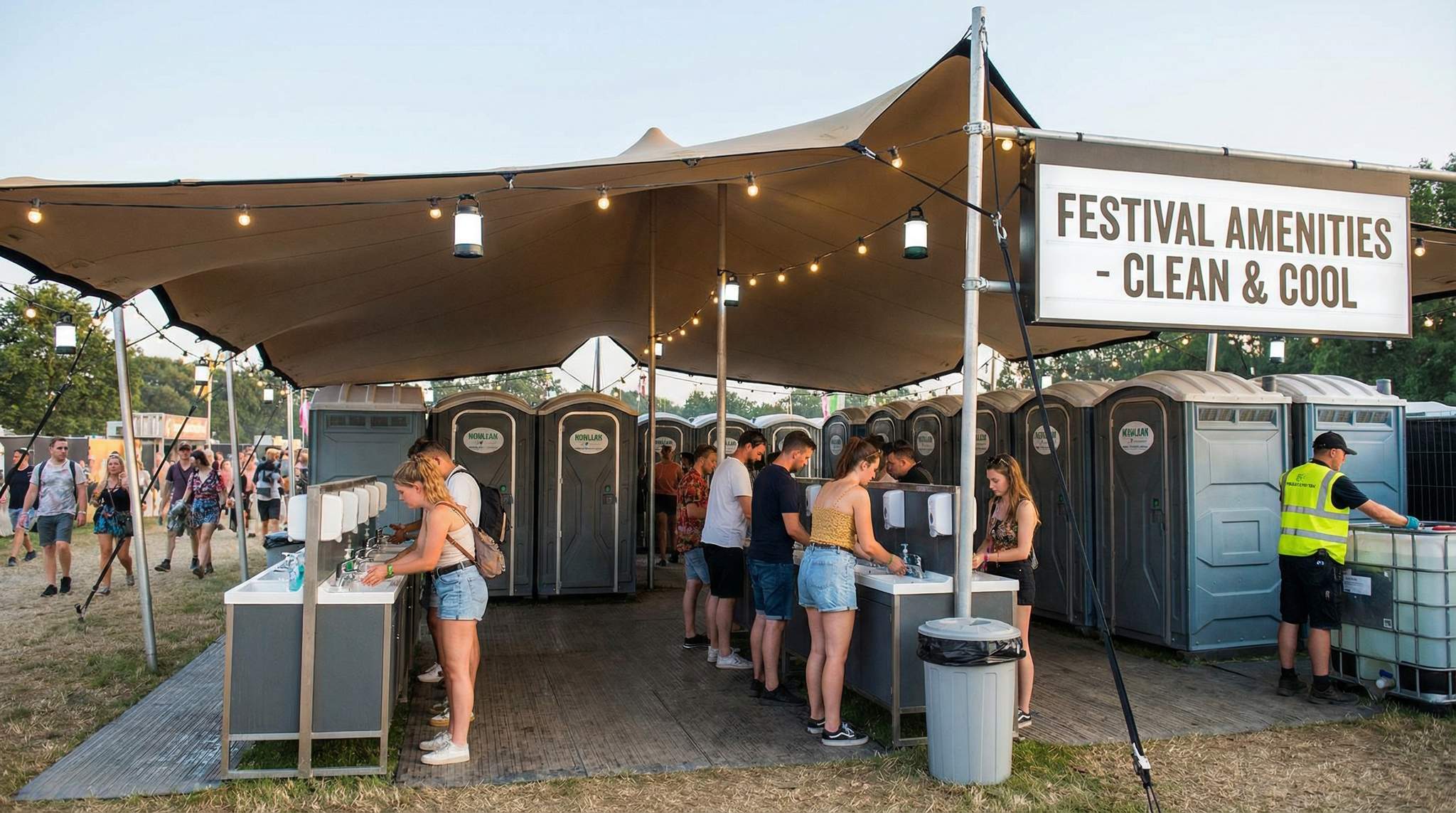
One of the simplest ways to combat heat (and the odors it exacerbates) is to provide shade for all portable restrooms. Direct sun can turn a plastic porta-potty into an oven by midday, with interior temperatures far exceeding the outside heat, as explained in reports on why porta potties overheat. Placing toilet units under natural shade – such as trees or alongside buildings – or erecting shade structures (tents, canopies or shade sails) above them can lower the internal temperature significantly. In fact, keeping units out of direct sunlight can make them up to 15°F (8°C) cooler, reducing the intensity of odors and making them far more bearable for users, according to tips for managing porta potties in hot weather. If your event site lacks trees or existing shade, invest in simple open-air tenting or reflective covers for the toilet areas. Protecting restrooms from direct sun not only prevents the “sauna effect” but also helps preserve the effectiveness of the chemical deodorizers inside, which can break down faster in extreme heat.
Additionally, consider the ground surface when placing restrooms. Units placed on asphalt or concrete will absorb and radiate more heat. Whenever possible, set up portable toilets on grass or cooler ground and avoid heat-trapping locations. By thoughtfully placing facilities in shaded, stable areas with firm ground and good drainage, you keep them comfortable and accessible throughout the event.
Improve Airflow and Ventilation
Even with shade, ventilation is key to keeping restrooms cool and minimizing smells. Most portable toilets come with built-in vents, but these can only do so much in stagnant summer air or when units are tightly packed together. To boost airflow:
Free Tool: Size Your Festival Site
Zoned capacity planning for arena, campsite, parking and entry lanes — against UK Purple Guide and NFPA density standards. Finds your bottleneck zone.
- Space out your toilet units a bit instead of clumping them in one solid block. A little gap between units allows air to circulate around each cubicle, dissipating heat. Large clusters can trap heat, making the whole block feel like a humid sauna.
- Orient units to catch the breeze if there’s a predominant wind direction. For example, face door openings or vent stacks toward open areas and away from barriers so that natural airflow carries odors up and away. Also try to position toilets downwind of main event areas, so any odors flow away from crowds.
- Use ventilated models or add-on fans. When renting toilets, ask if there are high-ventilation options available – some units have additional roof vents or even solar-powered exhaust fans. For high-end festivals or VIP sections, you might even consider trailer restrooms or modular units that include air conditioning or mechanical ventilation to keep air fresh.
- Periodic airing out: If feasible, propping doors open during low-traffic times (for example, early morning before the festival day begins) can flush out stale, hot air. Even a few minutes of open-door time (with staff supervision) can replace funk-laden air with fresh air. Just remember to close and secure doors again before crowds arrive.
Better ventilation not only cools the space but also helps odors dissipate instead of concentrating. By literally giving bad smells an escape route, you prevent that overwhelming stench that can develop in sealed, unventilated boxes.
Increase Cleaning Frequency and Maintenance
Nothing keeps a restroom pleasant like frequent cleaning and waste removal. In hot weather, waste breaks down faster and produces stronger odors, so it’s critical to step up the cleaning schedule at summer festivals. Don’t wait until the end of each day to service the toilets. Instead:
Planning a Festival?
Ticket Fairy's festival ticketing platform handles multi-day passes, RFID wristbands, and complex festival operations.
- Clean and pump out waste multiple times a day for large or multi-day events. For example, schedule a pumping service or deep clean during a lull (perhaps mid-afternoon, and again overnight). Regular waste removal prevents toilets from ever reaching capacity and stewing in the heat.
- Have attendants or cleaning staff on rotation. A dedicated sanitation team can lightly clean high-traffic restrooms every hour or two – wiping down surfaces, replacing toilet paper, and spraying disinfectant or deodorizer. Quick attention to spills or messes can hugely improve conditions before they escalate.
- Use strong, heat-resistant deodorizers and chemicals in the holding tanks. Standard blue porta-potty fluid can lose effectiveness in extreme heat, so consult with your toilet supplier on summer-grade deodorizers that continue neutralizing smells at high temperatures. These should supplement, not replace, regular cleaning.
- Restock supplies often – toilet paper, hand sanitizer (if provided inside), and rubbish bins if present. Empty trash bins near restrooms frequently to avoid overflow odors.
For single-day events with smaller crowds, at minimum ensure a thorough cleaning and waste pump-out right before the event starts and again immediately after it ends. For multi-day festivals, daily deep cleaning is a must, with spot checks throughout the day. Prompt maintenance not only controls smells but also signals to attendees that the organizers care about hygiene, encouraging them to treat the facilities with more respect in return.
Finally, plan for emergencies: have a few spare units on standby and a contingency for extra servicing if one area ends up busier than expected. It’s far better to have more capacity and cleaning than needed than to face a preventable sanitation crisis.
Provide Hand-Wash Stations with Water and Soap
Providing adequate hand-washing facilities goes hand-in-hand with good restroom management. Many festival producers focus on the toilets but forget that clean hands are crucial for attendee health and comfort – especially at food and drink heavy events. Include plenty of hand-wash stations next to each bank of restrooms so people can properly wash up with soap and running water after using the toilet.
Portable sink units (foot-pump operated or plumbed to water tanks) typically offer soap dispensers, paper towels, and a grey-water collection tank. Ensure these stations are kept filled and functional:
Free Tool: Project Your Bar Revenue
Per-head spend benchmarks by event type turned into projected bar and food revenue, with a stock-mix estimate and gross-margin line. Free calculator.
- Stock ample water and soap, checking levels periodically and refilling as needed. On a hot summer day, attendees will use lots of water; running dry defeats the purpose, so assign staff to monitor water tanks and soap dispensers.
- Position hand-wash stations in visible, convenient spots right by the restroom exits. This reminds people to use them and prevents traffic from wandering off without cleaning up. If the festival is likely to run short on water, at least provide alcohol-based hand sanitizer dispensers, but running water is preferred for effectiveness.
- Consider hygiene signage – gentle prompts like “Wash your hands – keep the festival healthy!” can encourage use. During health-conscious times, some events even employ roving “hand-wash ambassadors” reminding attendees to sanitize.
Hand-wash stations not only improve attendee comfort (nothing is worse than eating food with unwashed hands after a restroom visit), but they also help keep the restrooms cleaner. When people can wash off dirt and avoid bringing food grease or mud into the stalls, it reduces overall grime and odor. Emphasizing hygiene creates a virtuous cycle: cleaner hands, cleaner facilities, happier festival-goers.
Keep Restroom Areas Well-Lit for Night Use
Festivals often continue after sundown, and a safe, well-lit restroom area is essential for nighttime usability. Imagine fumbling in the dark inside a porta-potty or tripping near the toilet area – it’s a recipe for discomfort and accidents. To avoid this:
Need Festival Funding?
Get the capital you need to book headliners, secure venues, and scale your festival production.
- Install adequate lighting around and inside restroom areas. Use generator-powered floodlights, solar tower lights, or even strings of LED lights to illuminate the path to the toilets and the exterior area where lines form. Lighting should be sufficient for people to see and move safely, but it doesn’t have to be harsh – aim for a diffused, ambient glow that doesn’t blind or annoy neighboring campsites or stages.
- Light the interior of restrooms if possible. Many modern portable units have translucent roofs or built-in lighting, but if not, consider battery-operated tap lights or motion-activated LEDs inside each unit. Even a modest light will help users navigate inside the stall and do what they need to do hygienically. Ensure any temporary lights are waterproof and secured (no one wants a flashlight falling into the tank!).
- Check power sources and wiring. If running cables for lights, secure them neatly and keep them away from foot traffic to prevent trip hazards. Use waterproof connectors and elevate cords off wet ground. For an eco-friendly option or where power is scarce, solar-powered lights can charge during the day and automatically turn on at dusk.
- Signage and reflectors: Mark the restroom area with reflective signs or tape so it’s easily found at night. This reduces the chance of people wandering into restricted areas looking for toilets in the dark.
By lighting your restrooms well, you enhance safety and encourage their use. Attendees are far more likely to use a facility that feels secure and visible at night, rather than hold it in (or resort to inappropriate spots) because the toilets are in a scary dark corner. Thoughtful illumination shows that the organizers anticipated attendees’ needs at all hours.
Place Toilet Banks Strategically (Queues and Egress)
Physical placement of restroom facilities can make or break the crowd flow. Strategic placement means positioning toilets for convenience without creating new problems like congestion or blocked exits. Here are key placement considerations:
- Avoid blocking egress or emergency paths. Never place a bank of toilets where the natural queue would spill into an emergency exit route or main thoroughfare. For instance, don’t line up restrooms right next to stage exits or narrow vendor corridors. Instead, position them in alcoves or off to the side of high-traffic areas, where people can line up without impeding others. If space is tight, use barriers or signage to guide how lines form, keeping them orderly and clear of important paths.
- Disperse clusters around the venue. One huge toilet area will draw massive queues and foot traffic, potentially creating a choke point. It’s often better to have multiple medium-sized restroom zones logically placed around the event (near stages, campgrounds, food courts, etc.). This way, no single area becomes overwhelmed and attendees are never too far from facilities. Spreading out the restrooms also distributes wear-and-tear, making maintenance easier.
- Plan for cleaning vehicle access. Position toilets near access roads or edges of the site so that pump trucks and service vehicles can reach them for waste removal without driving through dense crowds. For example, at large European festivals, organizers often line toilets along the perimeter fence of the main arena – close enough for attendees, but also accessible from the outside for servicing and far enough from the core action to keep odors down.
- Allow space for queues. Anticipate that at peak times (e.g., set breaks, mealtimes), lines will form. Leave an open area in front of each toilet bank for people to queue without feeling cramped or spilling into walkways. A rule of thumb is to allow at least 5-10 feet of clearance per row of toilets for lining up. You can even mark queuing lanes on the ground or with fencing in case of very large crowds. This not only keeps egress routes clear but also makes the wait experience more orderly and less stressful for attendees.
- Mind wind and neighbors. If your festival is in a tight urban space or near residential areas, be mindful of placing toilets too close to neighbors or upwind of populated zones – the smell can carry. Use the site’s geography to your advantage by placing toilets downwind or downhill from where people gather. Also, keep them a decent distance from food vendors to avoid mingling of aromas.
By thinking through placement and crowd flow, you ensure that restrooms are easy to find and use, without creating bottlenecks or safety hazards. A well-placed restroom is almost “invisible” – attendees use it when needed and move on, with minimal disruption to the event’s flow.
Upgrading to Modular Restrooms for VIP and High-Traffic Areas
As attendee expectations evolve, many organizers ask if modular restrooms are suitable for festival use. The answer is a resounding yes, particularly for VIP zones, glamping areas, or boutique events where standard portable toilets might fall short. Modular units—often delivered as multi-stall restroom trailers or scalable pod systems—provide a premium experience with flushable toilets, running water sinks, and built-in climate control. Because these upgraded festival bathrooms feature dedicated air conditioning and robust exhaust systems, they virtually eliminate the overheating and odor issues common in basic plastic units. While they require a larger footprint, access to power, and sometimes direct water or sewer hookups, investing in modular facilities can significantly elevate your event’s production value and justify higher-tier ticket prices.
Bonus: Tailoring Facilities to Your Audience
While cool, clean toilets are universally appreciated, consider any special needs of your festival audience:
- Accessibility: Always include wheelchair-accessible units (at least 5% of your total, or more if you expect many attendees with disabilities) and place them on level ground with clear paths. Accessible restrooms tend to be roomier and often ventilate better due to their size – a bonus for comfort.
- Gender balance: If your crowd is likely majority female (or an event like a women’s festival), plan for more units as women typically take longer on average. You might designate certain banks as women-only vs. men’s urinals to help reduce queue times for women. Some festivals provide female urinal systems or disposable urinal devices to speed up lines, but these need careful introduction and amenities for privacy.
- Cultural expectations: International or multicultural events might need to accommodate different restroom customs. In some countries, squat-style toilets or water sprayers (bidet hoses) are preferred. If you have a large contingent from regions with these norms, providing a few squat portable toilets or at least a water jug inside for cleansing can make those attendees feel more at home.
- Family-friendly facilities: If families or kids are present, consider adding a portable toilet with a baby changing table, or a family restroom trailer. Ensure hand-wash stations are at heights that children can reach or provide stepping stools.
These additions go beyond just controlling heat and smell, but they contribute to an overall positive restroom experience that respects your attendees’ diverse needs. A truly festival-experienced organizer anticipates these details and creates an inclusive, comfortable environment for all.
Establishing Best Practices for Event Sanitation at Music Festivals
Implementing comprehensive best practices for event sanitation at music festivals requires a proactive approach to managing your site’s infrastructure. When planning the layout and capacity of festival bathrooms, organizers must calculate the exact ratio of attendees to available stalls, factoring in peak usage times like set breaks and headliner transitions. Beyond simply renting enough units, a robust sanitation strategy involves coordinating dedicated waste management teams, securing reliable water sources for hand-washing stations, and establishing clear communication channels with your portable sanitation vendors. By treating your temporary bathroom facilities as a critical pillar of the overall event operations, producers can prevent minor logistical hiccups from escalating into major health and safety concerns.
Vendor Coordination for Festival Bathrooms
When sourcing festival bathrooms, experienced producers know that the contract must go beyond simple delivery and pickup. Establish clear service level agreements (SLAs) with your portable sanitation providers to guarantee rapid response times during peak hours. A comprehensive event sanitation plan should include dedicated on-site technicians who can troubleshoot plumbing issues in modular units or handle emergency pump-outs for standard portable toilets. By integrating your sanitation vendors directly into the event’s central communications hub, you ensure that any issues with the restroom facilities are resolved before they impact the attendee experience.
Frequently Asked Questions
How can festival organizers keep portable toilets cool in the summer?
Providing shade is the most effective method, as direct sunlight can raise interior temperatures significantly. Placing units under trees, tents, or shade sails can lower the internal temperature by up to 15°F (8°C). Additionally, positioning restrooms on grass rather than heat-absorbing asphalt helps prevent the sauna effect and preserves the effectiveness of chemical deodorizers.
What is the best way to reduce odors in festival restrooms?
Improving airflow and ventilation is crucial for minimizing smells in hot weather. Organizers should space out toilet units rather than clustering them to allow air circulation and orient vents toward the prevailing wind. Using ventilated models with exhaust fans and scheduling frequent waste removal prevents odors from concentrating inside the stalls.
How often should portable toilets be cleaned at a festival?
Restrooms at large or multi-day events require cleaning and waste pumping multiple times a day, often during mid-afternoon lulls and overnight. A dedicated sanitation team should rotate hourly to wipe surfaces, restock supplies, and manage spills. Daily deep cleaning is mandatory for multi-day festivals to prevent waste from breaking down rapidly in the heat.
Where should restrooms be placed at a music festival?
Restrooms should be dispersed in medium-sized clusters around the venue to prevent bottlenecks, rather than in one massive block. Locations must allow access for service vehicles without crossing dense crowds and should be downwind of food areas. Organizers must also avoid blocking emergency exits and allow at least 5-10 feet of clearance for queue lines.
Why is lighting important for portable restroom areas?
Adequate lighting ensures attendee safety and hygiene during nighttime hours. Illuminating the exterior path and interior stalls prevents accidents and encourages proper use of facilities. Organizers should use generator-powered floodlights for queues and battery-operated or solar lights inside units to help users navigate safely and avoid tripping hazards in dark areas.
What hand-washing facilities are needed at outdoor events?
Hand-wash stations should be positioned immediately next to restroom exits to encourage hygiene and reduce grime inside the stalls. These units must be stocked with ample water, soap, and paper towels, as running water is preferred over sanitizer. Regular monitoring is necessary to refill tanks and prevent stations from running dry during the event.
Are modular restrooms suitable for festival use?
Yes, modular restrooms are highly suitable for festivals, especially in VIP, glamping, or premium admission areas. These units, which often come as multi-stall trailers or scalable pods, offer flushable toilets, running water, and built-in climate control. While they require access to power and water hookups, their superior ventilation and air conditioning make them an excellent solution for preventing heat and odor buildup, significantly elevating the attendee experience.
What are the best practices for event sanitation at music festivals?
The most effective approach involves a combination of strategic placement, continuous maintenance, and climate control. Key best practices include placing festival bathrooms in shaded, well-ventilated areas, scheduling multiple daily pump-outs, providing dedicated hand-washing stations with running water, and utilizing modular units for high-traffic or VIP zones to ensure a safe and comfortable experience for all attendees.
How do organizers calculate the number of festival bathrooms needed?
Industry standards generally recommend at least one portable toilet for every 75 to 100 attendees for a standard event, but this ratio changes based on duration and alcohol consumption. If the event lasts longer than four hours or serves alcohol, producers should increase the number of festival bathrooms by 15 to 20 percent to maintain optimal event sanitation and reduce queue times.