Introduction
Managing waste in the summer heat presents unique challenges for festival organisers. High temperatures speed up the decomposition of food scraps and other organic waste, leading to stronger odours and pest issues if not addressed, as hot weather makes waste management significantly more difficult. No attendee wants a whiff of rotting garbage distracting from the fun, and poor waste control can tarnish a festival’s reputation. Compostable waste (“organics”) is often the smelliest culprit in hot weather, so controlling those waste streams is essential for a pleasant and sustainable event. This article draws on decades of festival production experience to offer practical strategies for compost management and odour control during scorching summer festivals.
Organisers around the world – from massive music festivals in the USA to boutique food fairs in Australia – have learned that proactive waste management in heat is a must. Strategies like more frequent waste pickups, shading of bins, odour-neutralising treatments, on-site sorting staff, and continuous vendor education can make all the difference. In the sections below, each of these tactics is explored in detail, highlighting real festival examples and lessons learned. The goal is to help the next generation of festival producers keep their events clean, green, and stink-free, even under the summer sun.
Heat Challenges for Compost at Festivals
Summer festivals often take place in open fields or city parks under blazing sun, which can turn a simple trash bin into a breeding ground for odour. The science is straightforward: heat and humidity cause bacteria to multiply faster, meaning food waste and compostables start to smell much sooner than they would on a cool day, given that hot weather accelerates decomposition effects. In fact, when the temperature soars above ~27°C (80°F), decomposition rates jump significantly, and foul smells can develop within hours. These odours not only discomfort festival-goers, but also attract flies, wasps, and even rodents – unwelcome guests at any event.
For example, outdoor summer concerts in humid climates have reported that garbage can start reeking by midday unless special precautions are taken. Many event teams find themselves increasing the frequency of waste pickups during heat waves to combat this issue. Hot weather can also lead to overflowing bins and even fire risks (due to dry, combustible trash), so there’s a genuine health and safety imperative to manage organic waste diligently. The bottom line: at summer festivals, waste management needs extra attention and adaptive tactics to beat the heat.
Free Tool: Size Your Festival Site
Zoned capacity planning for arena, campsite, parking and entry lanes — against UK Purple Guide and NFPA density standards. Finds your bottleneck zone.
Frequent Collections and Shaded Bins
One of the simplest yet most effective adjustments for hot-weather events is increasing the waste pickup frequency, especially for organic waste bins. During summer festivals, waiting until a bin is completely full is a recipe for odour problems – instead, smart organisers empty compost and trash bins regularly throughout the day. Many large festivals schedule additional mid-day waste collections in hot months. For instance, it’s not uncommon for a food festival to arrange compost bin emptying every few hours during peak dining times, rather than just at day’s end. This prevents food waste from sitting and stewing in the heat. As waste industry experts note, businesses and events often increase their service frequency in summer to avoid overpowering odours and overflows. A festival can take a similar approach by coordinating with waste haulers for extra pickups or by deploying its own crew to swap out full compost bin liners frequently.
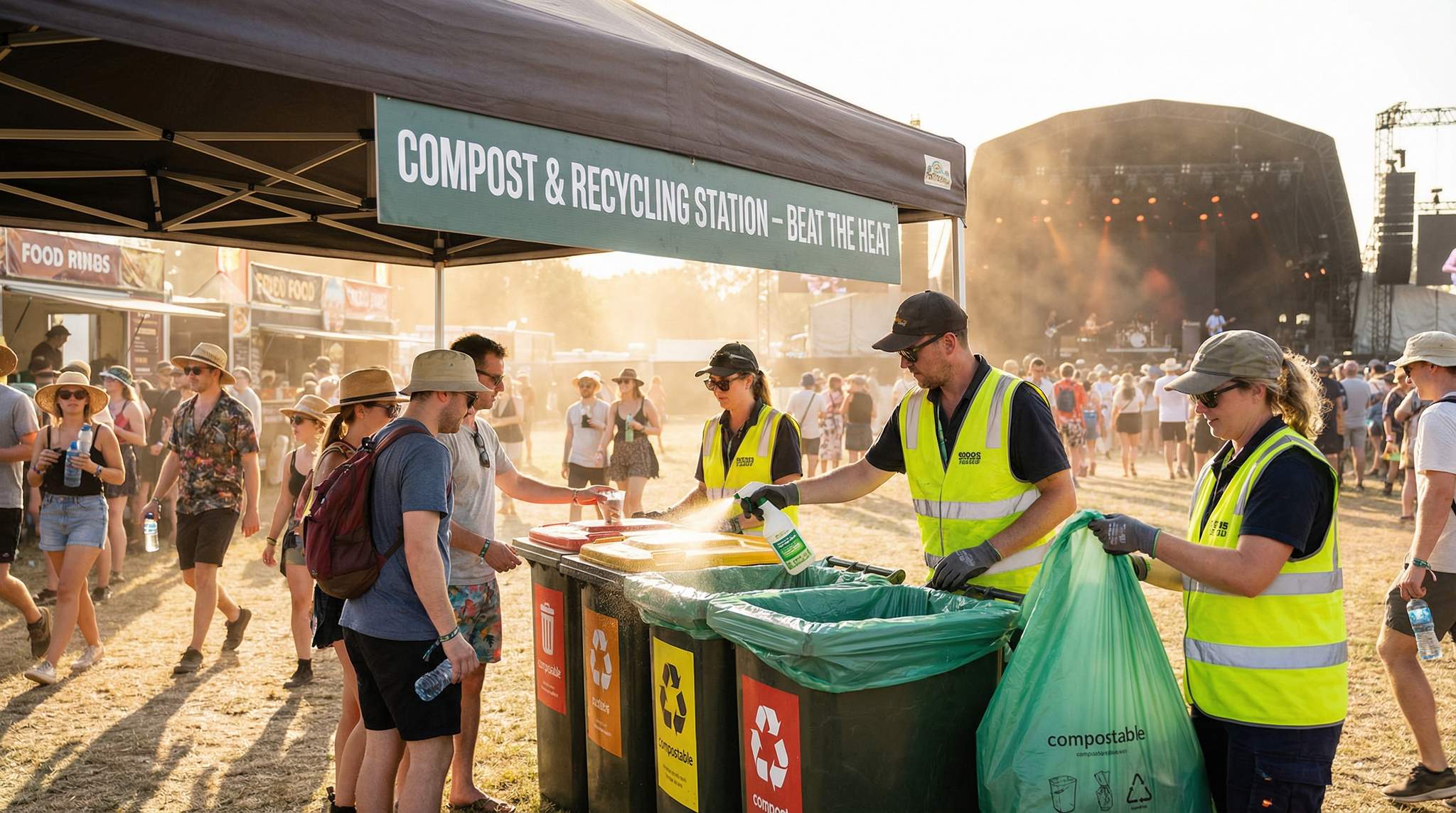
Hand-in-hand with frequent collection is the idea of shading your waste containers. A baking sun on a dumpster or compost bin will accelerate decomposition like an oven. Simply moving bins under shade or providing tented covers can keep them significantly cooler. According to event waste professionals, placing dumpsters in shaded areas (or under shade structures) can lower the internal bin temperature by 10–15 degrees and reduce smell intensity by up to 50%, according to dumpster odor control strategies for festivals. That’s a huge improvement for such a low-tech solution. Many festivals set up “waste stations” under canopy tents both to make them visible and to shield the bins from direct sun. For example, at California’s Lightning in a Bottle festival – which often sees high temperatures – the organisers use shade tents over their central waste sorting stations. Similarly, Glastonbury Festival in the UK positions many of its waste collection points near existing hedges or structures for some natural shade, helping to keep odours down even on warm afternoons.
Planning a Festival?
Ticket Fairy's festival ticketing platform handles multi-day passes, RFID wristbands, and complex festival operations.
Beyond shading, consider bin placement and design to mitigate odours. Position organics bins slightly downwind and away from dense attendee areas when possible, so any smell is carried away from the crowd. Keep lids on compost bins and make sure they stay closed – an open bin not only lets smells escape but invites insects. Pair each compost bin with a landfill bin (and recycling bin) to discourage attendees from tossing food waste into random trash cans that might not get emptied as often. These logistical tweaks can greatly reduce the olfactory footprint of your festival’s waste.
Liners and Enzymatic Odour Control
Even with rapid pickups and shade, odour control treatments are a wise addition in hot weather. One best practice is using compostable liners in organic waste bins. Heavy-duty compostable bag liners (made of plant-based plastics or paper) help contain food waste juices and smells, making each pickup cleaner. Bins with liners are quicker to empty – crews can simply pull out the bag and tie it off – which means the smelly material spends less time sitting exposed. The liner also protects the bin itself from residue, reducing the need for intensive washing on site. Just be sure to use certified compostable liners if the waste is headed to a compost facility, so you’re not introducing contamination. Many green festivals provide their vendors with compostable bin liners for back-of-house food scrap buckets, and use them in front-of-house bins as well for efficiency.
Another powerful tool in the odour-fighting arsenal is enzyme-based and microbial treatments. Enzymatic odour neutralisers are typically sprayed or sprinkled in waste receptacles to break down the organic compounds that cause bad smells. These products use non-pathogenic bacteria or enzymes to effectively digest odorous waste residues. In practice, it’s like harnessing beneficial microbes to counteract the stink. Festivals have had success by treating dumpsters and compost bins with such solutions during the event. For example, bio-enzymatic deodoriser sprays can be applied each time a dumpster is emptied or washed. Some crews also sprinkle odor-eating powder or add odor-neutralising packets into the bins each morning. A waste management team at a large summer music festival noted that using these treatments dramatically cut down on complaints about smell near the food court.
In addition to enzymes, consider other natural odour control methods. A layer of carbon-rich material like sawdust or wood chips at the bottom of a compost dumpster can absorb liquids and smells (this technique is used in many compost facilities). Citrus-based or essential oil deodorisers can provide a more pleasant scent around bins without harsh chemicals – just be sure any product you use is environmentally friendly. The key is to treat odours at the source. As soon as waste is collected, a quick spray of an enzyme treatment inside the bin can neutralise smells for hours. By combining frequent emptying with liners and odour treatments, your dumpsters and your festival grounds will stay much fresher.
Free Tool: Project Your Bar Revenue
Per-head spend benchmarks by event type turned into projected bar and food revenue, with a stock-mix estimate and gross-margin line. Free calculator.
Staff-Guided Waste Separation Stations
Successful composting at festivals isn’t just about infrastructure – it’s about people. Even the best-placed, well-shaded bins won’t help if attendees are tossing trash in the compost or vice versa. That’s where having staff or volunteers guiding waste disposal becomes invaluable. Many experienced festival organisers set up manned “eco-stations” or waste sorting stations, especially at larger events. Here, trained staff or volunteer “Green Teams” stand by to help attendees sort their rubbish into the correct bins and educate them on what goes where. This personal touch dramatically improves the quality of the compost stream by keeping contaminants out. It also engages festival-goers, making them more aware of the event’s eco efforts.
For example, at Canada’s Shambhala Music Festival, volunteers are stationed at waste areas coaching attendees on separating recyclables and compostables. Similarly, Bali Spirit Festival in Indonesia (held in a tropical climate) places staff at central waste points to ensure food scraps and biodegradable plates end up in the compost bin, not the trash. These staff often wear bright green or orange vests and are armed with a smile and knowledge. Having human guides results in far cleaner compost streams, because people are less likely to mistakenly throw a plastic bottle in “organics” when someone is right there helping them. In fact, providing sorting instruction and public engagement on-site is known to be crucial for better separation, particularly when volunteers are trained in raising awareness.
Need Festival Funding?
Get the capital you need to book headliners, secure venues, and scale your festival production.
To implement this, recruit an eco-volunteer team or assign part of your crew to waste education duty. Train them on what is compostable at your event (for instance, which food containers or cutlery are certified compostable) so they can confidently advise guests. Make sure they are positioned at the busiest food courts or common areas where waste is generated. You can even gamify it – some festivals reward attendees who properly sort waste with a small token or just enthusiastic thanks. The presence of staff also deters laziness like throwing everything in one bin. These staffed eco-stations don’t just keep the bins clean – they also create teachable moments for attendees. People can see up close how to sort their waste and learn that food scraps and biodegradable containers are being turned into compost, which boosts awareness and participation in the festival’s eco-initiatives. Over time, festival communities develop a culture of responsible waste disposal, which makes each year easier.
For events that can’t staff every bin, consider at least covering key high-traffic stations. Some organisers deploy volunteers only during meal hours or only at major food areas, and use clear signage elsewhere. But if you have the capacity (perhaps exchange a free ticket for volunteer hours), having consistent coverage throughout the venue can hugely increase your compost diversion rate and reduce contamination.
Monitoring Contamination and Vendor Training
Even with great front-of-house sorting by attendees, a significant portion of festival organic waste comes from back-of-house – the food vendors, caterers, and staff areas. To achieve optimal composting in the heat, festival producers must work closely with vendors and continuously monitor waste streams for contamination. This means checking how well vendors are sorting their kitchen scraps and whether any non-compostable items are sneaking into the organics bins. Summer heat will amplify problems like a plastic fork in the compost (it will smell as it sits there and obviously contaminate the pile). So, a proactive approach is needed: track contamination and retrain vendors as necessary, even during the event.
A useful tactic is to assign part of your sustainability or waste management team to act as vendor liaisons. They can visit each food stall or caterer periodically (say, at the end of each day or during shift breaks) to inspect their waste setup. If they find, for example, that a vendor’s compost bin is full of trash or that staff are tossing food waste in the general garbage, they can intervene with a friendly correction and guidance. At the 2008 Marin County Fair in California, organisers checked in with each food vendor twice daily about waste separation, and this hands-on coaching led to a steady increase in compostables captured each day of the event (from 600 lbs on day one to 1,300 lbs on day five). The lesson is that vigilance and on-the-spot training can pay off quickly in better results.
Many festivals also implement clear vendor policies well in advance to minimise contamination from the start. Major events like Bonnaroo (USA) and Splendour in the Grass (Australia) require all food vendors to use only approved compostable serving ware and packaging. Bonnaroo’s organisers, for instance, communicate their compostable product guidelines months before the festival and even set up an online ordering system with their contracted supplier so vendors stock the right items, ensuring music festivals keep beat with composting standards. During the show, Bonnaroo’s sustainability team and “zone managers” keep an eye on vendor booths – any vendor caught using non-compliant materials (e.g. Styrofoam or regular plastic) can face penalties or even ejection, a strict policy detailed in reports on how festivals manage compostable food serviceware. This strict approach, championed by Sustainability Director Laura Sohn, is backed up by strong vendor relationships and a shared understanding that being part of the festival means embracing its green practices, as required compostable food serviceware policies demonstrate. The result is an impressively clean compost stream; in one year Bonnaroo processed 120+ tons of organic waste on-site with minimal contamination, thanks largely to vendor cooperation and oversight.
For smaller festivals, you might not wield Bonnaroo-level clout, but you can still set expectations and follow up. Include waste separation rules in vendor contracts and talk through them during pre-festival vendor meetings. Provide each vendor with labelled bins (including compost bins) behind their booth and make it easy for them to do the right thing – for example, supply them compostable liners or a quick-reference list of what goes in which bin. During the event, if you spot problems like trash in their compost bin or vice versa, have a staff member kindly educate them again. Sometimes it’s simply a new staffer at the food stall who wasn’t at the training – a five-minute chat can fix the issue going forward.
Importantly, track the contamination levels in your compost waste each day and identify patterns. If certain non-compostable items (like plastic wrap or foil) keep appearing in the organic waste, trace it back to the source if possible. It could be a particular vendor using a problematic item. Your waste hauling partner or on-site sorting team can help flag these issues. Use that data to inform your vendor outreach: perhaps all vendors need a reminder to remove plastic labels from compostable cups, or maybe one caterer needs extra coaching on what “compostable” really means. By monitoring and acting in real time, you’ll prevent small contamination issues from snowballing into big headaches (like a whole compost dumpster being rejected by the composting facility).
Finally, don’t forget to debrief and retrain vendors post-event as part of continuous improvement. Share contamination audit results with them: for example, “We achieved a 90% clean compost stream, but found some plastic in the mix – next year we’ll require X change.” Vendors generally appreciate that you’re trying to make the festival greener (many will be proud to participate in a zero-waste initiative if you communicate the vision). Recognise and praise the vendors who did well – maybe give a shout-out or a “Green Vendor” award to those with excellent compliance. For those who struggled, offer help or resources for next time. Over the years, this collaboration builds a culture among your vendors that aligns with your waste goals. At the end of the day, festival waste management is a team sport involving not just the organisers, but vendors, staff, attendees, and contractors all playing their part.
Frequently Asked Questions
Why do festival waste bins smell worse in hot weather?
High temperatures and humidity cause bacteria to multiply rapidly, significantly accelerating the decomposition of food scraps and organic waste. When temperatures rise above 27°C (80°F), foul odors develop within hours rather than days. This rapid breakdown creates stronger smells and attracts pests like flies and wasps much sooner than in cooler conditions.
How does shading dumpsters help with festival odor control?
Placing dumpsters or compost bins under shade structures, tents, or trees lowers internal bin temperatures by 10–15 degrees. This simple adjustment slows down the decomposition process and can reduce smell intensity by up to 50%. Shielding waste containers from direct sunlight prevents them from baking like ovens and amplifying odors.
What treatments neutralize compost odors at outdoor events?
Enzymatic and microbial treatments are highly effective for neutralizing odors by digesting the organic compounds that cause smells. Organizers can use bio-enzymatic sprays or powders inside bins during emptying or washing. Additionally, placing carbon-rich materials like sawdust or wood chips at the bottom of dumpsters helps absorb smelly liquids.
How can festivals reduce contamination in compost streams?
Deploying trained staff or volunteer Green Teams at waste stations is the most effective method for reducing contamination. These guides assist attendees in sorting waste into the correct bins, ensuring non-compostable items like plastic bottles stay out of the organic stream. Active supervision and face-to-face education dramatically improve compost quality.
How often should organic waste be collected during summer festivals?
Organic waste bins require frequent emptying throughout the day in hot weather, rather than waiting until they are full at night. Scheduling additional mid-day collections prevents food scraps from stewing in the heat. Many festivals arrange pickups every few hours during peak dining times to avoid overpowering odors and bin overflows.
How do festivals ensure food vendors use compostable packaging?
Organizers must include strict requirements for approved compostable serving ware in vendor contracts and provide pre-event training. During the festival, sustainability teams should monitor vendor stalls and waste streams for compliance. Events like Bonnaroo enforce these policies by checking for non-compliant materials and offering immediate retraining or penalties for violations.