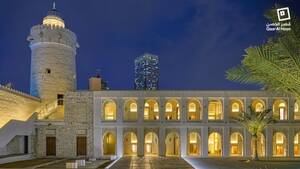
About Qasr Al Hosn
Qasr Al Hosn is a historic fort, palace and museum in central Abu Dhabi, rather than a conventional concert hall. It contains the city’s first permanent structure: a watchtower raised in the 1760s to protect the growing coastal settlement, its freshwater source and nearby maritime routes. The complex later became the ancestral home of the Al Nahyan family, the seat of government, a consultative council and a national archive.
The surviving complex has two principal parts. The Inner Fort developed around 1795, when Sheikh Shakhbut bin Dhiyab moved Abu Dhabi’s seat of power from Liwa to the island. The Outer Palace was constructed between 1939 and 1945, creating the form visitors recognise today. Qasr Al Hosn remained associated with the ruling family and government until 1966.
Modern interventions during the late twentieth century inadvertently trapped damaging moisture within the coral and sea-stone walls. A comprehensive conservation programme began in 2007 and culminated in the site reopening as a museum in December 2018. Conservators removed incompatible cement, stabilised foundations, repaired traditional masonry, treated historic timber and restored carved gypsum details.
The fort itself covers approximately 14,000 square metres. It sits within the much larger Al Hosn cultural landscape, a roughly 140,000-square-metre urban park that also includes the House of Artisans, Bait Al Gahwa, the Cultural Foundation and Al Hosn Musalla. The site remains open and active under the Qasr Al Hosn name.
Events and Programming
Programming focuses on Emirati history, traditional performing arts, oral heritage, poetry, crafts, coffee culture and family learning. Regular experiences have included Al Ayyala performances, gahwa preparation demonstrations, craft courses, guided tours and workshops covering Al Sadu weaving, khoos palm-frond work, embroidery and traditional construction. The permanent museum uses films, projections, soundscapes, oral histories and interactive displays alongside original objects.
The annual Al Hosn Festival is the site’s signature event. Its 2021 Golden Jubilee edition combined heritage performances, films, installations, culinary experiences and a 50-car classic parade. In 2023, the programme expanded to include an Emirati wedding presentation, Ayyala, jazz and big-band music, maker spaces, screenings and live craft demonstrations. The 2024 edition again created a traditional village environment with food, customs, workshops and folk performance.
The 2025 festival presented the family play Sanad Al Sanaa , Gahwa Championships, the Al Teeb perfumery experience, desert-and-oasis maker zones and a main performance using shadow projections, poetry and Al Tcholeeb horseback traditions. In 2026, nightly projection and live-performance sequences told the story of water and Abu Dhabi’s growth, while Jalasat sessions brought together Emirati musicians and poets. The wider programme included coffee ceremonies, falconry, salukis, camels, traditional games, an escape-room experience, 18 artisan demonstrations and seven workshops.
This track record shows that Qasr Al Hosn generally books culturally rooted productions rather than international touring pop concerts. Music, poetry and theatrical storytelling are usually integrated into a larger heritage event. The adjacent Cultural Foundation has a separate 900-seat indoor theatre for conventional performing arts; its programme and tickets should not be confused with admission to the fort.
No confirmed named programme for 2027 or later was found in the material available by August 2026. The annual festival’s long history makes further heritage programming likely, but future editions, dates and performers should not be treated as confirmed until formally announced.
Tickets and Booking
General admission has recently started at approximately AED30 for an adult. Access to the House of Artisans, Cultural Foundation and public landscape is normally complimentary, while entry to the fort, selected workshops and special events requires a ticket. Festival pricing in both 2025 and 2026 was AED35 for ages 13–59 and AED15 for children aged 5–12, with free admission for younger children, seniors and People of Determination.
Tickets can be reserved through the venue’s official online booking system or purchased at the onsite ticketing desk. Book ahead for major winter festivals, limited-capacity workshops, school holidays and evening projection shows. Tickets are generally date-specific, non-transferable and non-refundable; some events also impose a last-admission time before the advertised closing time.
Seating, Capacity and Layout
Qasr Al Hosn does not publish a single standing capacity or permanent public seating plan because it operates primarily as a museum and adaptable outdoor cultural site. Festival infrastructure is arranged differently each year across temporary stages, majlis-style areas, souqs, workshop zones and open courtyards. Attendance figures are cumulative rather than simultaneous capacities: the 16-day 2026 festival welcomed 221,019 visitors.
For projections on the fort, a central position facing the illuminated façade gives the most complete view. Arrive before the performance area fills, particularly if you need a chair or unobstructed wheelchair space. Traditional music and poetry sessions are more intimate, so positions near the front offer a stronger connection with the performers. Outdoor sightlines can be affected by temporary structures and standing spectators.
No permanent sound-system model, lighting inventory or fixed production specification is publicly listed for Qasr Al Hosn. Large festivals bring in event-specific equipment. Recent technical delivery has included multi-zone audio, a site-wide public-address network, video projection, truss-mounted theatrical lighting, illuminated walkways, centralised control and extensive secondary power distribution supplementing the site’s mains supply. Preservation rules prevent production cables from being buried beside the historic fabric.
Getting There and Parking
Qasr Al Hosn is on Sheikh Rashid Bin Saeed Al Maktoum Street in Al Hosn, central Abu Dhabi. The cultural block lies between Zayed the First Street, Khaled Bin Al Waleed Street, Hamdan Bin Mohammed Street and Sheikh Rashid Bin Saeed Street, commonly called Old Airport Road. The World Trade Centre complex is a useful nearby landmark.
Two underground car parks associated with the wider site provide approximately 500 spaces. Published information does not establish a dependable standard visitor parking charge, so do not assume that parking will always be free. During Al Hosn Festival and major ceremonies, road controls, special entrances and overflow arrangements may apply; allow additional time rather than circling the surrounding downtown streets.
Taxis and ride-hailing vehicles can use Hamdan Bin Mohammed Street and surrounding roads for collection and drop-off. The journey from Zayed International Airport is roughly 30 minutes in light traffic but can take longer during weekday peaks. Several city buses serve stops around the block. Published schedules have included routes 34 and 161 at Zayed the First Street/Qasr Al Hosn, with additional services stopping near the Cultural Foundation and the Hamdan Street junction.
Inside the Venue
Allow 90 minutes for the fort alone or three to four hours if you want to explore the House of Artisans, attend a demonstration and study the exhibitions carefully. Displays cover the Bani Yas, Abu Dhabi’s early settlement, the ruling family, palace life and the city’s transformation. Highlights include historic documents, weapons, jewellery, photographs, maps, household objects and personal possessions associated with Sheikh Shakhbut bin Sultan Al Nahyan.
Security searches and ticket checks may take place. Food, drinks, selfie sticks, portable seating and professional recording equipment can be restricted, especially during programmed events. There are no public lockers, so visitors arriving from the airport must keep luggage and personal belongings with them. Complimentary Wi-Fi is available across the cultural site.
Facilities include toilets, a souvenir shop, cafés, shaded areas and a striking prayer hall near the restaurant zone. Bait Al Gahwa explains every stage of Emirati coffee preparation, from roasting and grinding to brewing, serving and etiquette. An onsite Emirati restaurant provides a convenient option for a full meal, while festival editions install much larger temporary food and beverage areas.
Nearby Amenities
The World Trade Centre’s shops, cafés and restaurants are around five to ten minutes away on foot. Khalidiya and the surrounding downtown streets offer casual Lebanese, Indian, Filipino, café and international dining. For a meal that complements the visit, the Emirati restaurant within Al Hosn is the most convenient choice. Alcohol is not a normal feature of the heritage site; licensed hotel venues are a better option for visitors seeking a bar.
Nearby accommodation includes a hotel connected to the World Trade Centre, approximately 550 metres away, as well as Cristal Hotel Abu Dhabi and Sheraton Khalidiya within roughly one kilometre. These central locations are practical for visitors combining Qasr Al Hosn with the Corniche, downtown souqs and other city attractions.
Architecture and Conservation
The original builders used coral and sea stone hardened in the sun, then covered the masonry with breathable sea mortar made from burned and crushed coral, shells and stone. Mangrove poles, ghaf trunks, palm materials and wooden lintels supported roofs and upper floors. Thick walls, compact rooms, shaded courtyards and natural ventilation helped moderate heat long before mechanical air conditioning.
Restoration was deliberately conservative. Specialists removed damaging modern render, filled internal voids with compatible lime-based grout, repaired rising damp and salt damage, treated termite-affected timber and reconstructed missing elements using traditional materials. The Outer Palace demonstrates how vernacular architecture could respond to Abu Dhabi’s climate without air conditioning.
The surrounding landscape creates a visual conversation between old Abu Dhabi and the modern city. Sand-coloured surfaces evoke coastal flats and cracked sabkha, while water channels recall the freshwater source around which the settlement grew. Indigenous planting reduces irrigation demand, shaded pockets provide relief from the sun, and the low-lying restaurants and Musalla appear to rise from the landscape itself.
Accessibility and Inclusive Facilities
The museum is described as wheelchair accessible, and visitor-experience staff can assist at ticketing points. The wider site has lifts, step-free public routes, accessible facilities and shaded rest areas, although temporary festival layouts may alter the most convenient route. People of Determination have received free entry to recent festival editions, with accessibility maps and assistance integrated into event information.
ADA is a United States standard and is not the applicable legal designation in the UAE. Visitors should instead ask about provisions for People of Determination. Historic rooms can have thresholds, narrow approaches or uneven transitions, so anyone needing a completely step-free itinerary should speak to staff before entering the fort.
What Makes Qasr Al Hosn Special
Few places express Abu Dhabi’s transformation as clearly. From the courtyards, visitors can look over walls built from local marine materials towards glass towers that represent the city those walls helped establish. Qasr Al Hosn is not preserved as an isolated monument: coffee, poetry, dance, craft and oral history keep it connected to everyday Emirati culture.
Its community impact is substantial. The 2026 festival involved 1,311 local practitioners and 40 cultural partners while attracting more than 221,000 visits. It also created opportunities for productive families, farmers, artisans, musicians, designers, restaurants and approximately 50 souq vendors. This combination of employment, cultural transmission and public participation explains why Al Hosn remains both a heritage landmark and an active creative platform.
Recent visitors frequently praise the peaceful courtyards, interactive displays, knowledgeable staff and striking contrast between the fort and surrounding skyline. Families report that the childhood stories, craft activities and visual timelines help younger visitors engage with the history. Recurring cautions concern summer heat, occasional restrictions within the oldest tower and private-event closures, making advance confirmation worthwhile.
Visitor Tips and Information
Visit soon after opening for quieter galleries, or in the late afternoon when the exterior light is softer and the open spaces become more comfortable. Between May and September, minimise midday walking and carry sun protection. Wear comfortable shoes and culturally respectful clothing. No universal detailed dress code is published, but event-specific age or clothing restrictions can be imposed.
Do not bring large luggage, portable chairs, selfie sticks or professional camera equipment unless the event rules expressly allow them. Retain your ticket throughout the visit and arrive before the stated last-admission time. If a coffee ceremony, workshop or performance is central to your plans, check its session time when you arrive rather than assuming demonstrations operate continuously.
Frequently Asked Questions
Is Qasr Al Hosn still open?
Yes. Qasr Al Hosn continues to operate as a museum and cultural site under its historic name. Standard published hours are Saturday to Thursday from 9am to 8pm and Friday from 2pm to 8pm. Ramadan, public holidays, festivals and private ceremonies can produce different hours or temporary closures.
How much does Qasr Al Hosn cost?
Adult museum admission has recently started from approximately AED30. The surrounding landscape, House of Artisans and Cultural Foundation are generally free to enter, while workshops and special events may cost extra. Major festival tickets have recently ranged from AED15 for children to AED35 for adults.
Can I buy a ticket at the door?
Yes, tickets are normally sold at the onsite ticketing desk as well as through advance online booking. Door sales remain subject to availability. Advance purchase is advisable for winter festivals, evening heritage shows and workshops, particularly because tickets are commonly issued for a specific date or session.
Is Qasr Al Hosn an indoor or outdoor venue?
It is both. Museum galleries occupy rooms within the Inner Fort and Outer Palace, but movement between sections includes open courtyards and outdoor paths. Festivals use the extensive surrounding landscape for stages, souqs, demonstrations and dining. Heat, wind or rain may therefore affect the outdoor portion of an event.
Does Qasr Al Hosn have a fixed capacity?
No official single capacity is published. The fort is a museum, while the surrounding event landscape is reconfigured for each festival. Visitor totals should not be interpreted as simultaneous capacity: the 2026 festival’s 221,019 visitors were spread over 16 days and numerous separate activity zones.
Are there permanent seats for performances?
Not across the main Qasr Al Hosn grounds. Seating is temporary and varies between projection shows, poetry sessions, majlis areas and workshop spaces. Some activities may be standing-room or informal. The separate Cultural Foundation theatre nearby has 900 permanent seats, but it is a distinct performance venue with separate programming.
Where should I stand for the fort projection shows?
Choose a central position facing the principal projected façade and avoid standing immediately behind lighting or sound-control structures. Arriving early improves your chance of an unobstructed view. Visitors who require seating or wheelchair space should ask event staff to identify the designated viewing area before the audience gathers.
Is there parking at Qasr Al Hosn?
Yes. The wider Al Hosn development includes two underground car parks with approximately 500 spaces. Parking access and charges can vary, particularly during festivals or official events. Follow temporary signage on arrival and allow extra time during busy evening programmes, when surrounding downtown traffic can be heavy.
Which bus goes to Qasr Al Hosn?
Several Abu Dhabi city buses stop around the Al Hosn block. Published timetables have included routes 34 and 161 at the Zayed the First Street/Qasr Al Hosn stop. Other services use stops beside the Cultural Foundation and near Hamdan Street. Routes can change, so confirm your journey shortly before travelling.
Is Qasr Al Hosn suitable for wheelchair users?
Yes. The museum is described as wheelchair accessible, with visitor staff available to assist. Step-free routes, lifts and accessible amenities serve the modern visitor areas, although some historic thresholds and temporary festival layouts may require an alternative route. Ask at ticketing for the easiest itinerary through the fort.
Are wheelchairs and pushchairs allowed?
Wheelchairs and pushchairs are generally permitted around the site and have been expressly allowed during recent festival editions. Crowded evening periods can make movement slower, particularly around temporary stages and souqs. Families may find a compact pushchair easier to handle than a large travel system.
Can I leave luggage at Qasr Al Hosn?
No public lockers or luggage-storage service is advertised. Visitors must retain their personal belongings throughout the visit. If arriving directly from the airport, arrange storage through your accommodation or transport provider rather than bringing large suitcases, which can be inconvenient and may face entry restrictions.
Can I take photographs inside?
Photography rules can vary by gallery and event. Personal cameras may be permitted in general visitor areas, but security can restrict cameras, video equipment, audio recorders and selfie sticks. Coffee ceremonies and certain displays may prohibit recording. Check signage and ask before photographing performers, artisans or sensitive objects.
Is there food available at Qasr Al Hosn?
Yes. The cultural site has restaurants and cafés, including an Emirati restaurant within the complex. Bait Al Gahwa provides a cultural coffee experience rather than functioning simply as a café. During Al Hosn Festival, temporary dining choices expand significantly; the 2026 edition featured around 60 participating restaurants.
Are there prayer facilities?
Yes. Al Hosn Musalla is located near the restaurant area. Its contemporary design forms part of the landscaped cultural campus, with geometric surfaces and water features connecting it visually to the surrounding park. Visitors should maintain respectful behaviour and dress when entering the prayer space.
How long should I spend at Qasr Al Hosn?
Allow at least 90 minutes for the fort. Two to four hours is more realistic if you plan to read the displays, explore the House of Artisans, attend a gahwa presentation and stop for food. Festival visits can occupy an entire evening because performances and workshops are distributed across the site.
Is Qasr Al Hosn good for children?
Yes. Interactive timelines, family stories, craft displays and workshops make the history approachable for younger visitors. Festival programmes add traditional games, demonstrations, escape-room activities and child-focused heritage sessions. Supervise children around steps, open courtyards, water features and crowded performance areas.
What is the best time to visit?
October to April offers the most comfortable conditions for outdoor exploration, with the annual heritage festival generally scheduled during the cooler season. For a quieter museum visit, choose a weekday morning. For illuminated architecture and performances, late afternoon or evening is better, but expect larger crowds during festivals.