About Ink Bar
Ink Bar is permanently closed. The nightclub’s final night was 24 May 2025, when its lease at 268 Karangahape Road ended. It has not announced events for 2026 or beyond, and any venue directory still describing Ink as open should be treated as out of date. The former club cannot currently be visited, booked or contacted as an operating entertainment venue.
During its 25-year life, Ink was a basement nightclub specialising in underground house, techno, deep house, progressive house, acid and related electronic styles. It was repeatedly billed as one of New Zealand’s longest-running homes of house and techno. Rather than chasing mainstream nightclub trends, it concentrated on serious selectors, extended DJ sets, affordable entry and a dancefloor where regulars, touring artists and first-time visitors mixed without VIP barriers.
The best-supported capacity figure is approximately 150 people , although a private-hire listing marketed it as a “100 plus” venue. Ink occupied a 105.5-square-metre basement within a three-level building, making it intimate even before the dancefloor filled. Its small scale, low lighting, close DJ position and heavy sound created the feeling of a private underground party rather than a large commercial club.
History of Ink Bar
Ink began with an invitation-only opening party on 27 July 2000 and opened to the public on 2 August 2000. Owner Andy Meek conceived the venue with original partner John Collie. The club remained at the same K’ Road address for almost 25 years, an unusually long run in a nightlife sector where leases, licensing pressures, redevelopment and changing audiences regularly end venues.
The club occupied the basement of a 1930s commercial building on the southern side of Karangahape Road, between Mercury Lane and East Street. The property’s structure was described in a 2018 sale campaign as reinforced concrete framing with brick infill panels, timber floors and a lean-to galvanised roof. The entire building measured 383.5 square metres across its basement, ground-floor retail premises and upper apartment, on a 164-square-metre freehold site.
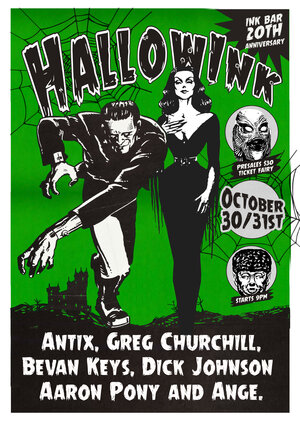
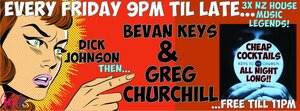
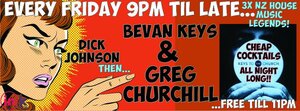
Ink’s longevity helped it bridge several generations of Auckland club culture. Long-established DJs such as Greg Churchill, Bevan Keys, Andy Vann, Matt Drake and Andrew Harley shared its booth with emerging collectives and younger selectors. Earlier international guests associated with the venue included Derrick Carter, Ian Pooley, DJ Pierre, Gene Farris, Miguel Migs, DJ Hell, Nick Warren, Soul Clap, Tiger Stripes, Mr C and Inland Knights.
The confirmed reason for the closing date was the expiry of Ink’s lease. Farewell-event material also referred to an increasingly difficult landlord relationship, but the clearest documented fact is that the club reached the end of its tenancy and held its final event on 24 May 2025. Its 25th-birthday gathering subsequently took place elsewhere in August 2025, celebrating what organisers called 298 months of Ink.
Events and Programming
Ink generally came alive on Friday and Saturday nights, with many events running from about 9 or 10pm until 4am. The core format was an all-night electronic club session rather than a conventional concert: one to four DJs, extended sets, minimal stage production and a strong emphasis on musical progression across the night. Some international events ran until 5am, while earlier Friday promotions encouraged guests to arrive before the usual post-midnight peak.
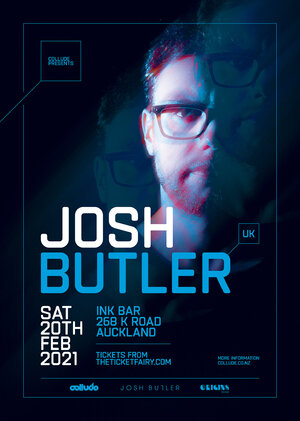
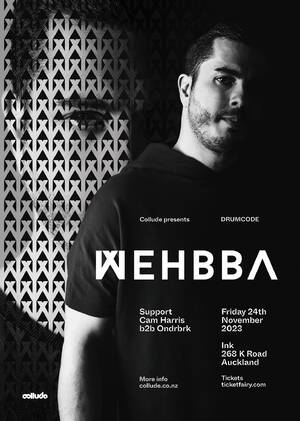
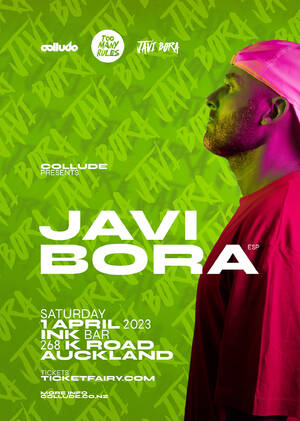
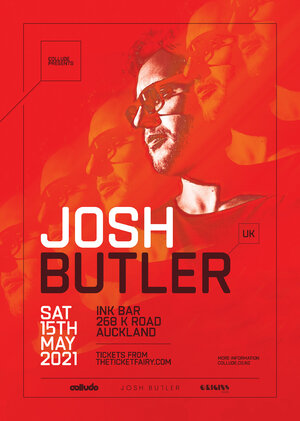
Public event archives are incomplete, particularly for smaller door-only parties, but documented programming from 2021 to 2025 shows the club’s range. Josh Butler and Human Movement appeared in 2021, while clubbers continued to identify Ink as a regular weekend destination for house and techno during 2022. The 2023 calendar included DJ Heartstring, Guy Contact, local-support nights and a fundraiser for former radio DJ Bodge.
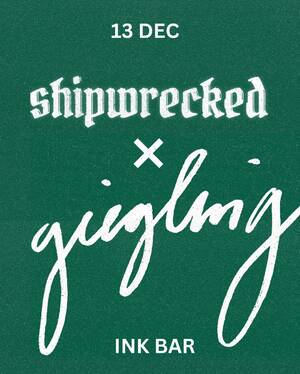
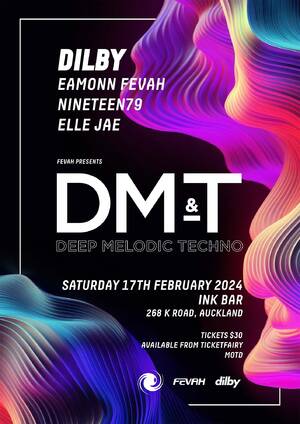
During 2024, Ink hosted Dilby, Bliss Inc., Burnout, Compute, Paradise Alley, High Frequency, Tropical Jungle, Communicate, Club Control and the Giegling label tour. Its 24th-birthday weekend deliberately mixed venue veterans with rising Auckland crews, pairing Greg Churchill, Bevan Keys and Matt Drake with Lucid Underground, Andrew Harley and Tek On Toast. Genres ranged from deep and progressive house to trance, minimal, acid and harder techno.
The final 2025 programme operated partly as a season of farewells. It included Wattsson, Club Control, Shimmy, Cosmora and Pepper record-label launches, Paradise Alley with Nice’n’Urlich, The Dose, Natural Rhythms, Under Grooves and Stereophonic, and Last Resort. These events illustrate Ink’s role as both a stage for established names and an incubator where local labels, promoters and younger DJs could build audiences.
Tickets and Booking
There are no current Ink Bar tickets or bookings because the venue is closed. Historically, admission was usually sold through an event’s advance booking arrangement or paid at the door. Ink did not operate like a seated theatre with a permanent box office, subscriptions or standardised pricing tiers; each promoter set its own release schedule, presales and door price. Popular international appearances and farewell parties were the occasions most likely to reach capacity.
Recent standard events commonly cost around NZ$10 to NZ$20 , with some label launches and guest nights reaching approximately NZ$23 to NZ$30. Early-entry offers could be cheaper, including NZ$10 before a specified time, while the Cheap Thrills Friday series offered free admission before 10pm. Touring international artists occasionally commanded higher prices, historically reaching roughly NZ$25 to NZ$40.
Seating and Layout
Ink was overwhelmingly a general-admission, standing and dancing venue. It did not have theatre seats, a balcony, numbered tables or a permanent VIP enclosure. Archived hire material describes a comfortable lounge, compact dancefloor and rear courtyard with a retractable awning. Couches and limited casual seating offered somewhere to pause, but the basement’s principal purpose was dancing.
The narrow plan was both part of Ink’s character and its main practical weakness. Visitors described the dancefloor as a circulation route between the bar, toilets and courtyard, meaning people regularly crossed through dancers on busy nights. At peak capacity the venue could feel crowded and overwhelming. For the best historical listening experience, regulars tended to favour the central floor without standing directly beside the main speakers or in the through-route.
No reliable public floorplan or exact room dimensions survives in current listings. The verified measurement is the basement’s overall 105.5-square-metre floor area. Consequently, claims about the precise width of the dancefloor, number of stools or seating capacity should be treated as anecdotal rather than official.
Architecture, Sound and Production
Ink’s visual identity came from adaptation rather than grand architecture. A simple door on K’ Road led down into a low-lit basement with a close-set bar, lounge, DJ area and courtyard. The surrounding Karangahape Road precinct is recognised for its concentration of Victorian, Edwardian, interwar and later commercial buildings, although 268 Karangahape Road should not be confused with the individually listed landmark properties elsewhere on the street.
Sound was the venue’s defining technical feature. Artists, promoters and visitors repeatedly praised its powerful, carefully balanced system, particularly for bass-driven electronic music. Ink itself promoted the rig as among the best in the city. However, no dependable archived technical rider identifies the speaker manufacturer, amplifier models, mixer inventory, wattage or acoustic treatment, so those details should not be guessed.
Lighting was functional rather than arena-style. Promoters sometimes supplemented the standard installation with stronger lighting or an audiovisual screen behind the booth. The club also advertised air conditioning on the dancefloor and at the entrance, although visitor experiences varied when the room was full. No verified documentation was found for permanent lasers, moving-head specifications, rigging loads, livestream equipment or a dedicated performance stage.
Getting There and Parking
The former Ink Bar address is 268 Karangahape Road, Newton, Auckland 1010 . It sits on the southern side of K’ Road, close to Mercury Lane and approximately midway between the Queen Street end of the precinct and East Street. The location remains easy to reach, but travelling there now takes visitors only to the former premises, not an operating nightclub.
CityLink and InnerLink buses travel through or near Karangahape Road, supplemented by other city and western routes. As of 23 August 2026, the new Karanga-a-Hape railway station is not yet carrying passengers; it is scheduled to open on 13 September 2026 . Its Mercury Lane entrance will be the most convenient station access for this section of K’ Road.
Street parking is limited and is generally a poor choice for a long evening. Current precinct information indicates that much of the surrounding metered parking costs around NZ$4.50 per hour, although restrictions and rates vary by street and time. A commercial car park at 24 Mercury Lane is nearby. Visitors should read current signs carefully, particularly around bus lanes, cycleways, loading zones and overnight-access restrictions.
For taxis or rideshare vehicles, choose a legal pickup point on a nearby side street if Karangahape Road is busy. Do not wait in a bus lane or protected cycleway. Late at night, travel with friends where possible and confirm the vehicle and registration before getting in.
Inside the Former Venue
When operating, Ink offered a licensed bar, compact lounge, dancefloor and private rear courtyard. The courtyard’s retractable awning made it useful as a smoking area and as a quieter place to cool down or talk. Ink was primarily a drinks-and-dancing venue; there is no dependable evidence of a regular kitchen, restaurant menu, permanent merchandise counter or formal staffed cloakroom.
Events were normally R18. Door staff checked eligibility for entry, and guests needed acceptable identification. A published 2024 event policy described the dancefloor as a safe space and directed anyone experiencing harassment or discomfort to security, bar staff or DJs. The atmosphere was generally remembered as friendly and community-minded, but crowded conditions, toilet queues and the narrow circulation path attracted occasional criticism.
Nearby Amenities
K’ Road remains one of Auckland’s strongest dining and nightlife precincts even though Ink has gone. Nearby choices include French-leaning food and wine at Apéro, Italian dining around St Kevin’s Arcade, Latin American flavours at Tempero, Filipino-inspired food at Bar Magda and casual late-night takeaway options farther along the road. Opening hours change frequently, so avoid assuming that every restaurant serves food after midnight.
Accommodation within walking distance includes Abstract Hotel near Upper Queen Street and the larger Cordis Auckland near the eastern end of K’ Road. The central-city hotels around Mayoral Drive and Queen Street provide additional options within approximately 10 to 20 minutes on foot. For a late-night stay, prioritise a staffed reception and check its overnight entry procedure before going out.
What Made Ink Bar Special
Ink mattered because it offered continuity. Across nearly a quarter-century, it gave Auckland DJs a regular room in which to develop long sets, test new music, launch labels and earn paid bookings. Promoters called it a backbone for local artists, while younger crews credited their Ink events with helping them flourish. Its inexpensive covers also kept specialist electronic music relatively accessible compared with larger touring shows.
Its cultural impact cannot be reduced to an attendance figure. Ink connected veteran selectors with new generations, hosted fundraisers and record launches, and preserved an unpolished form of club culture on a street closely associated with Auckland’s creative, migrant and LGBTQIA+ communities. No venue-specific economic impact study has been published, so claims about total spending, employment or tourism revenue would be speculative.
The spirit of Ink was carried into The Mothership, a larger Shortland Street venue co-owned by Andy Meek. Ink’s 25th-birthday reunion took place there in August 2025 with Tek On Toast, Tina Mairi, Greg Churchill, Communicate, Andrew Harley and other artists connected with the former club. That continuation is the closest present-day link to Ink, but it is a separate venue rather than a renamed Ink Bar.
Accessibility and Inclusive Facilities
No trustworthy official accessibility plan for the former Ink Bar could be located. Archived third-party listings conflict: one labels the premises not wheelchair accessible, while another claims an accessible entrance and toilet. Given that discrepancy, it would be unsafe to state that Ink met a particular accessibility standard. The club is now closed, so staff cannot provide access assistance or confirm the former internal route.
“ADA compliance” is not the applicable term in New Zealand; the ADA is United States legislation. New Zealand buildings are governed by local building and human-rights requirements concerning accessible routes and facilities. Those general rules do not prove what was available in this particular 1930s basement at any given time.
Visitor Tips and Information
The most important tip is not to travel to 268 Karangahape Road expecting a club night. Ink has been closed since May 2025, and there are no 2026 events, door sales or reopening plans under that name. The exterior can be viewed from the public footpath, but access to the former basement depends on the property’s current lawful use and is not available as a heritage attraction.
People exploring Ink’s legacy can combine the former address with a walk through St Kevin’s Arcade, the Karanga-a-Hape station precinct and K’ Road’s surviving independent venues. Once the new station opens on 13 September 2026, rail will become the simplest option for many visitors. For an electronic-music night, check the programme of currently operating venues rather than relying on old Ink event pages.
Frequently Asked Questions
Is Ink Bar in Auckland still open?
No. Ink Bar closed permanently after its final night on 24 May 2025. The closure coincided with the end of its lease at 268 Karangahape Road. Some older maps, tourism pages and event directories still describe the club in the present tense, but they are outdated. There is no operating bar, box office or public nightclub entrance under the Ink name.
Does Ink Bar have any events announced for 2026?
No Ink Bar events have been announced for 2026 or later because the venue ceased operating in 2025. Search pages displaying “2026–2027 events” currently show no upcoming performances and should not be interpreted as evidence of reopening. Ink-themed reunion events may occur elsewhere, but those are commemorations at separate venues rather than events at the former K’ Road basement.
Why did Ink Bar close?
The confirmed immediate reason was the expiry of its lease. The final night took place on 24 May 2025 as the tenancy ended. Farewell promotions also referred to serious landlord difficulties, but no single public record provides a complete legal or financial account. It is therefore most accurate to say that Ink closed at the end of its lease following a difficult tenancy period.
When did Ink Bar first open?
Ink held an invitation-only opening on 27 July 2000 and welcomed the general public on 2 August 2000. It operated for 298 months, finishing two months short of a full 25 years. A 25th-birthday reunion was held at another Auckland venue in August 2025, bringing together DJs and promoters associated with different periods of Ink’s history.
What was Ink Bar’s capacity?
The most credible published capacity was approximately 150 people. A private-event advertisement used the looser description “100 plus”, which may have reflected a more comfortable function setup. The club occupied a 105.5-square-metre basement, so even a crowd below maximum capacity could feel dense once space for the bar, lounge, DJ equipment, circulation and access to the courtyard was considered.
Was Ink Bar a seated venue?
No. Ink was primarily a standing dance club with a compact general-admission floor. It had couches, a small lounge and courtyard seating, but no numbered seats, auditorium rows, balcony or standard VIP section. Seating was intended for short breaks rather than watching an entire performance. Guests attending busy events generally expected to stand or dance for most of the night.
What music did Ink Bar play?
Ink’s identity centred on underground house and techno. Its programmes also covered deep house, tech house, progressive house, minimal, acid, trance, disco, electronica and occasional breaks or drum and bass. The programming favoured DJs and extended sets rather than live pop concerts. Local selectors appeared every week, supplemented by touring artists and specialist label or promoter takeovers.
How much did entry usually cost?
Most late-period events cost approximately NZ$10 to NZ$20, with selected guests, label nights and farewell events reaching NZ$23 to NZ$30. Early arrival could reduce the price, and some Friday sessions were free before 10pm. International headliners occasionally cost more. These are historical ranges only: there are no current Ink tickets or door charges because the club is closed.
Where exactly was Ink Bar?
Ink occupied the basement of 268 Karangahape Road, Newton, Auckland 1010. The building is on the southern side of K’ Road between Mercury Lane and East Street. Its entrance was intentionally understated, consisting principally of a street-level doorway leading down to the club. The address remains, but it no longer functions as the public entrance to Ink Bar.
What bus services reach the former Ink Bar address?
CityLink and InnerLink buses serve or pass close to Karangahape Road, with additional services connecting the precinct to central and western Auckland. Stops around Pitt Street, Queen Street and K’ Road provide several walking approaches. Routes and stop locations can change, particularly as the City Rail Link network begins operating, so travellers should use current journey information on the day.
What is the nearest railway station?
Karanga-a-Hape station will be the nearest station when it opens for passengers on Sunday, 13 September 2026. The Mercury Lane entrance is closest to 268 Karangahape Road, while a second entrance serves Beresford Square. Until opening day, the station is not a usable transport option, despite completed entrances and preview events taking place during August 2026.
Is there parking near the former venue?
There is limited metered parking on K’ Road and surrounding streets, with much of the precinct charging around NZ$4.50 per hour. A paid car park operates at 24 Mercury Lane. Restrictions differ by location, and some facilities limit overnight access, so check signage before leaving a vehicle. Public transport or a legal rideshare drop-off is generally easier than searching for a late-night kerbside space.
Was Ink Bar wheelchair accessible?
Available historical information is contradictory. One archived directory marks the venue as inaccessible, while another claims it had wheelchair entry and an accessible toilet. No official access plan or dependable venue statement was found to resolve the conflict. Visitors should therefore not rely on either claim. In practical terms, the question is now historical because Ink is closed and offers no public access.
Was Ink Bar an R18 venue?
Yes. Its publicly listed club nights were generally restricted to people aged 18 and over. Guests needed acceptable identification when requested by door staff. Ink did not operate as an all-ages concert hall, and its late-night bar service made adult entry the norm. Individual promoters could publish additional conditions, but R18 was the consistent requirement across documented events from 2021 to 2025.
Did Ink Bar serve food?
Ink was a licensed drinks and dance venue rather than a restaurant. No reliable evidence shows a permanent public food menu or regular kitchen service. Private-event material indicated that outside catering could sometimes be arranged for functions. Most clubbers ate elsewhere on K’ Road before arriving or used the precinct’s late-night takeaway businesses after the event.
Did Ink Bar have a cloakroom or coat check?
No dependable archived policy confirms a formal staffed cloakroom. Given the basement’s limited space, regulars generally travelled light and kept personal belongings with them. Any temporary coat storage would have depended on the promoter and event setup. Visitors should not assume that an unattended rack or lounge area amounted to secure storage, particularly on a crowded night.
Can visitors tour the former Ink Bar interior?
No public tour or heritage-access programme has been announced. Ink’s former basement is part of a privately controlled commercial property, not a museum or preserved visitor attraction. People may view the building from the public footpath, but should not enter unless the premises’ current lawful occupant expressly permits access. Old event photographs and recorded DJ sets are now the principal ways to experience its interior history.
What venue continues Ink Bar’s musical legacy?
The strongest direct continuation is The Mothership, a separate Shortland Street venue co-owned by Ink’s Andy Meek. It hosted Ink’s 25th-birthday reunion in August 2025 and retains the former club’s music-first approach while offering a larger room, broader programming and more developed production. It should not, however, be described as Ink’s new address or as a simple renaming of the old club.


![Collude: A Friend Of Marcus [Last Night on Earth]](/uploaded/thumbnails/db_file_img_21492_300xauto.jpg)