Events and Programming
The Old Fire Station remains open and active as Bournemouth University Students’ Union’s nightclub and live music venue. Its programme combines public concerts with student-only parties, touring electronic events, tribute productions, album-launch performances, society showcases, comedy, bingo-style entertainment and private hires. The building can operate as one large venue or as several contrasting rooms, allowing a live band downstairs while DJs, themed music or a smaller performance occupies another space.
Weekly student programming is central to its identity. Lollipop, billed by the venue as the UK’s longest-running student-only club night, normally fills three rooms with chart and pop in the Main Room, throwback and retro music in the Engine Rooms, and hip-hop or R&B in The Loft. BU and AUB students can usually bring up to two ticketed guests, although every attendee needs the identification specified for that event. Freshers’ season adds icebreakers, welcome parties, themed socials, bingo, society events and occasional performances by nationally recognised artists.
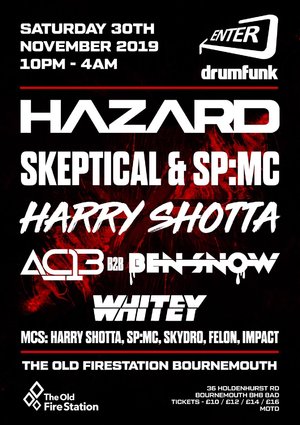
Beyond student nights, the venue books particularly strongly in drum and bass, jungle, UK garage, house, hard house, hardcore and reggae sound-system culture. Regular or returning promoters have presented Andy C, Shy FX, Darren Styles, SHERELLE, Fish56Octagon, Conducta, Channel One Sound System, 4am Kru and numerous emerging DJs. Enter and Drumfunk, Religion and Left Handed events illustrate the type of established regional club brand that can return for anniversary parties, bank-holiday events and full-venue takeovers.
Live music is equally varied. Recent post-pandemic programmes have included punk, indie, alternative rock, metal, country, folk and heritage artists. Verified appearances since 2022 include Therapy?, Boston Manor, As December Falls, Tom Walker, Sleeper, The Bluetones and Old Mervs. The 2025 programme ranged from Inspiral Carpets, Dreadzone, Those Damn Crows and Hayseed Dixie to The Undertones, Peat & Diesel and tribute productions celebrating Prince, Pearl Jam, Foo Fighters and The Stone Roses.
The 2026 calendar reinforced that breadth with Gary Numan, Marmozets, Turin Brakes, Channel One Sound System, Andy C, Darren Styles, reggae, country, hardcore and underground dance events. Programming announced for late 2026 includes The Selecter, freshers’ parties, house and garage takeovers, reggae and Bob Marley-themed performances, Born on Road, Shy FX and indie tribute shows. A multi-act indie tribute event has also been listed for 2027, suggesting that tribute festivals, nostalgia tours and specialist dance nights will remain part of the booking mix.
Publicly indexed information for 2021 is less complete because of pandemic disruption, but touring and club activity was clearly re-established by 2022. Since then, the pattern has been consistent: affordable weekly student events during term, larger specialist dance nights at weekends, touring bands in the 550-capacity live configuration and occasional intimate record-store or local-artist performances.
Tickets and Booking
Tickets are normally sold online through the venue’s event listings or an authorised promoter’s allocation. Because different promoters use different sales arrangements, visitors should use the purchase option attached to the specific event rather than assuming that every show follows the same system. A permanent walk-up box-office schedule is not published, and admission on the door should never be assumed for a popular concert or rave.
Standard student nights commonly start around £2 to £5, with freshers’ events and larger parties often falling between approximately £5 and £15. Specialist dance events commonly use staged releases, beginning around £12 to £20 and rising towards £25 or more as allocations sell. Large tribute festivals, premium packages and multi-room events can cost more. Prices, booking fees, last-entry rules and student eligibility vary by promoter.
For high-demand shows, buy during the first release rather than waiting for the final tier. Andy C, Fish56Octagon, Gary Numan and other limited-capacity events have generated sold-out notices or requests for spare tickets. Reselling above face value can lead to cancellation, and the venue advises customers to use only its approved resale route. Standard tickets are generally non-refundable unless an event is cancelled; postponement and material-change terms are set by the relevant promoter.
Customers needing reserved access space or a personal assistant pass should buy the standard attendee ticket and submit their access requirements as early as possible. The venue offers one complimentary personal-assistant admission to eligible customers, subject to confirmation, but reserved spaces are limited.
About The Old Fire Station
The Old Fire Station stands at 36 Holdenhurst Road, Bournemouth, BH8 8AD, in the Lansdowne district between the railway station and the main town centre. It is operated by the Students’ Union at Bournemouth University but is not exclusively a student venue: all live music and many club nights are open to the public, while events such as Lollipop and Fishies may require current student identification.
Its published maximum is 1,200 people as a nightclub and 550 for live music. For hires, the Main Room can accommodate up to approximately 800, The Loft up to 400 and the Engine Room about 150, subject to layout, production requirements and licensing. These figures are not additive for every event; safe capacity changes when staging, barriers, equipment, reserved areas or furniture occupy the floor.
The venue opened in its present entertainment role in 1995 after Bournemouth University converted the former central fire station. The conversion created multiple dancefloors, bars, DJ positions, a live stage and numerous smaller corners within the old station. That unconventional floor plan gives it more personality than a purpose-built rectangular nightclub and lets promoters create noticeably different atmospheres from room to room.
Seating, Layout and Production
Most ticketed concerts and club nights are general admission and predominantly standing. The Main Room places the stage at the end of the dancefloor, with ramped raised areas on both sides. These side areas can provide a clearer view over the crowd and contain some bench or booth seating, although fixed furniture, steps and limited manoeuvring space mean they are not suitable for every visitor. Reserved access seating may be arranged on either side when requested beforehand.
For the most energetic concert experience, stand centrally a few rows behind the front rather than directly beside the loudspeakers. The rear half of the room offers easier access to the bar and exits, while the raised sides are useful for anyone prioritising sightlines over the centre-floor atmosphere. Sightlines can vary with production, and no seat number or permanent seated plan applies to ordinary gigs.
The live stage is approximately five metres deep, 6.2 metres wide at the rear and 7.6 metres wide at the front, standing 0.75 metres above the dancefloor. Available production infrastructure includes a house PA and lighting system, control desks, microphones, stands, cabling, DI boxes and risers. Current manufacturer and model details are not publicly listed, so touring crews should obtain the full technical specification directly during advancing rather than relying on historic equipment information.
Most productions use high sound levels, and strobe lighting or theatrical smoke is common. Foam earplugs are available from the bar, but regular gig-goers may prefer reusable hearing protection. Recent visitors frequently praise the intimate scale, energetic acoustics, lighting and elevated side seating, although personal reactions to volume naturally differ between live bands and bass-heavy club events.
The Loft was developed as a more intimate first-floor performance and club space, with an L-shaped room, two bars, a DJ booth, dancefloor, seating and a small live stage. Its 2026 launch programme placed an emphasis on local musicians, giving Bournemouth artists a useful step between pub-sized shows and the larger Main Room.
Getting There and Parking
Bournemouth railway station is less than half a mile from the venue. Leave towards the town centre, pass through the pedestrian underpass and follow Holdenhurst Road towards Lansdowne. The walk generally takes around ten minutes. Taxis are available at the station, while local bus stops around Holdenhurst Road, Lansdowne and Station Roundabout connect the area with the town centre, Poole, Boscombe, Christchurch and residential districts.
Drivers may use the paid university car park behind the venue when it is made available to customers. Access is from the Cotlands Road side, and the correct vehicle registration must be entered when paying. It is a shared surface car park without dedicated Blue Badge bays, although marked on-street Blue Badge spaces are available on Cotlands Road. There is no formal venue drop-off bay.
Cotlands Road public car park is the most practical larger alternative. It has approximately 492 spaces, operates 24 hours and has a 2.1-metre height restriction. At the time researched, ordinary car charges ranged from roughly £2 for a short stay to around £6.50 for up to 24 hours. Parking tariffs can change, so allow for a full-evening rate rather than carrying only enough for one or two hours.
For taxis or private-hire vehicles, Holdenhurst Road or Cotlands Road is more practical than waiting directly across an entrance. Arrange a precise collection point before the show ends, especially after club nights when surrounding pavements and roads become busy. The main entrance is commonly used for live shows, while some student events direct customers to the rear entrance.
Inside the Venue
Expect ticket scanning, age or student-status checks where applicable, and possible security searches. Entry may be refused to anyone who appears intoxicated or possesses prohibited items. Pass-outs and re-entry are not normally permitted unless management expressly authorises them, so collect anything needed from a vehicle before joining the queue.
The venue has several bars across its event spaces. Free tap water is available, but customers cannot bring outside food or drink unless it is required for medical reasons and declared to security. Food service should not be assumed at concerts; the surrounding Lansdowne area has numerous restaurants and late-night takeaways. Merchandise depends on the artist and is usually positioned near the entrance or Main Room when offered.
For club nights, the cloakroom is generally on the second floor; at live shows it may be positioned near the entrance. Published charges are £2 per item for students and £3 for non-students. Lost items should be reported to bar or security staff before leaving, as post-event recovery is handled separately during working hours.
Accessibility and Visitor Policies
The approach and principal entrances are step-free, with level access from the box office into the venue. A lift links the ground, first and second floors, and most public facilities can be reached without stairs. Two adapted toilets are provided, including one close to the ground-floor entrance and another behind the first-floor bar. A portable hearing-assistance system is available on request.
There are limitations. The stage itself has no wheelchair access, there is no fixed dedicated viewing platform, the bars do not have lowered sections, and some booths or seating areas involve steps or steep ramps. Reserved raised spaces may be arranged on either side of the Main Room, but these should be requested in advance because numbers are limited. Assistance dogs can be accommodated in suitable areas.
Live music is usually open to ages eight and over unless stated otherwise, with under-16s accompanied by an adult aged 18 or over. Club nights are normally 18+. Original passports, driving licences, accepted national identity cards or approved proof-of-age cards are required where ID checks apply; photographs and photocopies are not accepted. Public events use Challenge 25 for alcohol sales, while student-only events use Challenge 21.
Professional cameras, detachable lenses and video-recording equipment are prohibited unless authorised. Phones and compact cameras are normally allowed, subject to artist rules. Smoking and vaping are banned indoors, with a designated outdoor area provided. The venue also operates a zero-tolerance drugs policy and may conduct searches.
Nearby Food, Drink and Accommodation
Lansdowne is one of Bournemouth’s main student and late-night districts. Nearby pre-show choices include La Piccola Italia for Italian food, Kala Thai, Agora for Mediterranean grills and The Coconut Tree for Sri Lankan dishes. The Anvil, directly along Holdenhurst Road, suits rock and alternative audiences looking for a drink before a gig. Fast-food, pizza, noodle and chicken takeaways remain concentrated around Holdenhurst Road for post-event food.
Several budget and mid-range hotels are within a short walk, including Premier Inn Bournemouth East Cliff and Holiday Inn Bournemouth. Staying around Lansdowne is convenient for the station and venue, while accommodation nearer the seafront gives easier daytime access to the beach but involves a longer uphill walk after the show.
For a live gig, arriving 30 to 45 minutes before the first act is usually sufficient unless you want a front-floor position. Allow longer for sold-out club nights, freshers’ events or shows with strict last-entry times. Those relying on public transport should check their final connection before entering, as headline sets and club nights can continue beyond normal evening rail services.
History, Architecture and Cultural Importance
The building was constructed around 1902 to designs by borough surveyor F. W. Lacey. Its Free Renaissance exterior combines red brick, ashlar stone and a tiled roof, with former engine doorways, arched windows, a coat of arms and a distinctive turret crowned by a cupola, lantern and weather vane. Inside, surviving glazed tiles include a frieze depicting firefighters at work. Its architectural and historic interest is recognised through Grade II listing.
The station once accommodated fire appliances on the ground floor, canteen and residential facilities above, firefighters’ sleeping and locker areas, and recreation space higher in the building. Local lore centres on its exceptionally long fireman’s pole, which descended through much of the tall structure and survives as a feature within the converted venue. The old central station was eventually replaced by a modern fire-service facility in Springbourne.
When the venue opened in 1995, the conversion retained the building’s recognisable civic exterior while inserting the stages, bars and dancefloors required for modern entertainment. Recent work has included upgraded building services and the development of The Loft as a smaller performance room, but the fundamental appeal remains the contrast between an ornate Edwardian fire station and contemporary club production.
Culturally, The Old Fire Station occupies Bournemouth’s important middle tier: larger than independent pub venues but more intimate than the town’s academy and arena-scale halls. It has given students early exposure to touring music, employed and trained student bar and technical staff, provided local promoters with a multi-room base and helped visiting bands build audiences on the South Coast. Former programmers have also linked its 1990s bookings with the development of Black British hip-hop audiences outside major cities.
Its commercial activity forms part of the Students’ Union’s wider trading operation, helping fund student services while bringing audiences to Lansdowne’s bars, restaurants, hotels and late-night food businesses. Just as importantly, it preserves a landmark civic building through active use rather than treating it solely as a historic monument.
Visitor Tips and Recent Experiences
Recent visitors often describe the venue as intimate, atmospheric and well suited to both bands and dance events. Positive comments repeatedly mention efficient bars, friendly staff, quick entry, elevated side seating and strong acoustics. The principal caution is that student nights naturally attract a predominantly university-age crowd; public touring concerts and nostalgia events usually draw a much broader age range.
Wear practical footwear for standing and moving between rooms, bring physical photo ID even if you are clearly over 18, and use hearing protection. Check whether your ticket is student-only, note the final-entry time and do not leave coats or medication in a vehicle once admitted. Visitors with mobility, sensory or medical requirements should make arrangements before the event rather than waiting until the door.
Frequently Asked Questions
Is The Old Fire Station Bournemouth still open?
Yes. As of August 2026, The Old Fire Station is operating under that name as a Bournemouth University Students’ Union nightclub and live music venue. It continues to advertise weekly student events, touring concerts and public club nights, with programming announced through late 2026 and at least one event listed for 2027.
What is the capacity of The Old Fire Station?
The published maximum is 1,200 for nightclub use and 550 for live music. Hire information gives approximate individual capacities of 800 in the Main Room, 400 in The Loft and 150 in the Engine Room. The number admitted to a particular event can be lower because staging, barriers, seating and production equipment occupy space.
Are all events open to the public?
No. Live gigs and many specialist club nights are public, but Lollipop, Fishies and selected university events require valid student identification. Student-only listings may permit each BU or AUB student to bring a limited number of ticketed non-student guests. Read the eligibility conditions before buying because a ticket alone does not override a student-ID requirement.
Can I buy tickets at the door?
Door sales may be offered when capacity remains, but they are not guaranteed and can cost more than an advance release. Popular touring gigs, freshers’ events and headline dance nights frequently sell out. Buying in advance also confirms age rules, final entry and whether the event is public or restricted to students and their permitted guests.
Is there permanent allocated seating?
No. Most concerts and club nights use general-admission standing layouts. There are benches, booths and raised side areas in parts of the building, but ordinary tickets do not reserve them. Limited accessible seating can be arranged beside the Main Room when requested in advance. Seated private events may use different layouts negotiated by the organiser.
Where is the best place to stand for a concert?
The centre of the Main Room gives the most direct view and strongest crowd atmosphere. Standing farther back provides easier bar and exit access, while the ramped side areas offer elevation above the dancefloor. Anyone sensitive to volume should avoid positions immediately beside the loudspeakers and bring hearing protection for amplified shows.
Does the venue have a dress code?
No universal formal dress code is published. Practical casual clothing is normal for gigs, raves and student parties, although themed events may encourage costumes. Entry can still be refused for unsafe items, extreme intoxication or inappropriate behaviour. Avoid carrying unnecessary accessories that may delay searches or cannot be stored securely inside the venue.
What forms of identification are accepted?
Accepted proof of age includes an original valid passport, driving licence, qualifying foreign national identity card or approved card carrying the PASS hologram. Photographs and photocopies are not accepted. Physical ID is compulsory at club nights, and student-only events also require the relevant university card even when the ticket has already been purchased.
Can under-18s attend live music?
Live music is generally open to customers aged eight and above unless the listing states otherwise. Anyone under 16 must be accompanied by an adult aged at least 18. Club nights, comedy and certain special events are normally restricted to adults. The conditions printed for the individual performance always take priority over the venue’s general rule.
Is The Old Fire Station wheelchair accessible?
The entrances, box office, Main Room and most public facilities have step-free access, and a lift serves the venue’s principal floors. Adapted toilets and limited reserved viewing spaces are available. However, the stage is inaccessible to wheelchairs, bars lack lowered counters and some booths involve steps or steep ramps, so advance access arrangements are strongly recommended.
Are complimentary companion tickets available?
Eligible deaf or disabled customers who could not attend without assistance may request one complimentary personal-assistant admission. The attendee should purchase a standard ticket first and then provide the booking details and access requirements to the venue. Approval is not automatic, and supporting evidence may be requested before the pass is confirmed.
Does The Old Fire Station have a cloakroom?
Yes. At club nights the cloakroom is normally on the second floor, while live shows may use a position near the entrance. Published charges are £2 per item for students and £3 for non-students. Space can fill during winter or sold-out events, so avoid bringing oversized bags or belongings that are difficult to store.
Can I take photographs or record the show?
Phones and small personal cameras are usually permitted unless an artist or promoter imposes stricter rules. Professional cameras with large or detachable lenses, video cameras and dedicated recording equipment require prior authorisation. Flash photography and prolonged filming may be challenged if they obstruct other visitors or conflict with the performer’s conditions.
Can I leave and come back inside?
Normally not. The venue’s standard terms state that there are no pass-outs or readmissions unless management specifically permits them. Use the designated smoking area rather than leaving the event boundary, and make sure you have medication, your cloakroom money and anything else required for the night before your ticket is scanned.
Is food available inside the venue?
Food should not be assumed at an ordinary concert or club night, although catering can form part of private and themed events. Outside food and drink are prohibited, except where medically required and declared to security. Free drinking water is available from the bars, and Holdenhurst Road has numerous restaurants and late-night takeaways nearby.
How far is The Old Fire Station from Bournemouth station?
The venue is less than half a mile from Bournemouth railway station, normally about a ten-minute walk. Follow the town-centre exit and pedestrian underpass, then continue along Holdenhurst Road towards Lansdowne. The building’s red-brick façade and turret are easy to identify. Taxis wait at the station for visitors who cannot manage the walk.
Where should I park for an event?
The paid shared university car park behind the venue may be available, with access from Cotlands Road. The larger Cotlands Road public car park is a dependable alternative, offering approximately 492 spaces and 24-hour opening. Blue Badge bays are on Cotlands Road rather than within the shared rear car park. Always check signs and register the correct vehicle.
What happens if an event is cancelled or postponed?
Cancelled-event refunds are normally processed through the original point of purchase. Existing tickets generally remain valid when a show is rescheduled, while refunds for postponements or major changes depend on the promoter’s terms. Ordinary purchases cannot usually be exchanged or refunded simply because the customer can no longer attend.