Events and Programming
Important current update: Flux is no longer operating as an events venue. The club announced its closure in August 2025 after five years in the Boxed Quarter. Its final documented event was The Final Dance, a multi-stage closing party held on 23 August 2025. The company behind the venue was placed into liquidation on 2 October 2025. There are no verified Flux events on sale for 2026 or beyond.
Flux’s surviving event record shows a venue built around electronic music and independent nightlife rather than mainstream club programming. House, techno, drum and bass, jungle, breaks, garage, dubstep, disco, footwork and bass music appeared regularly, alongside live bands, noise rock, indie covers, fundraisers, queer dance parties and festival after-parties.
The venue opened in early 2020, just before New Zealand’s first COVID-19 lockdown, and became particularly visible during the periods when outdoor and semi-outdoor events were possible. Its owners, Zak Cooper and Finn McCall, came from Christchurch’s dance-music and promotion communities and used Flux to bring touring artists into a smaller, locally focused room.
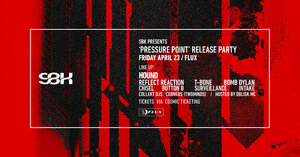
The documented 2021 programme included the SBK Recordings Pressure Point release party, with HOUND, Reflect Reaction, T-Bone, Bomb Dylan, Chisel and other drum-and-bass artists, priced at NZ$10 for early tickets and NZ$15 for general admission. The venue also hosted Alix Perez’s Keep Hush event, later remembered as one of Flux’s defining nights. ticketfairy.com
In 2022, the programme included alternative club nights such as Haven, featuring Keepsakes, Keanu Raves, Liam K. Swiggs, Anima and Chrome Platez. The event promoted a zero-tolerance approach to racism, sexism, homophobia, transphobia and other prejudice, reflecting the venue’s wider emphasis on respectful dancefloor culture.
The 2023 record shows the breadth of Flux’s bookings. Footmahi for Tāmaki Makaurau used an all-star Christchurch DJ line-up to raise money for Auckland flood relief, while Yin Yang introduced a deep, organic, progressive, melodic house and techno concept. Queer Horizons Turaua brought Indigenous, queer and queer-allied DJs into a deliberately restorative space for queer and BIPOC communities.
During 2024, documented bookings included Aloka with Kravis and Patella, DjRUM with support from Grass Fed Sound System, a local-headlined Paige Julia show, a 103 Soundsystem residency and Sister Zo from New York. Flux also hosted Tender Buttons events, which centred queer dancefloor culture, and touring bookings that moved between UK bass, techno, house and experimental electronic music.
The 2025 calendar continued to move beyond one genre. Club Noise paired members of The Dead C with industrial electronica, dark-wave punk and DJs; Parallels brought three groups of Ōtautahi promoters together across multiple zones; and the venue presented both an indie-rock covers night and electronic bookings. The final party featured Alix Perez, Paige Julia, Kate.Land, Patella, 103 Soundsystem and a large local line-up.
There is no complete public archive containing every Flux booking from 2021 to 2025. The indexed record does, however, show a clear pattern: regular local showcases, carefully selected touring DJs, bass-heavy nights, queer programming, occasional live music and collaborations with Christchurch collectives. Flux was more a promoter-friendly club and community room than a conventional concert hall.
Tickets and Booking
Flux no longer sells tickets, and there is no current box office or confirmed reopening plan. Historically, event promoters announced individual shows separately, with advance tickets normally available before the night and some events offering door sales. The most reliable strategy for popular bookings was to buy during the early-release period, particularly for international DJs, limited-capacity parties and multi-stage takeovers.
Archived prices show a relatively accessible range. Local and emerging-artist nights commonly sat around NZ$10–$20, while larger touring or specialist bookings reached approximately NZ$25. Queer Horizons listed early, general and door prices of NZ$15, NZ$20 and NZ$25; DjRUM was listed at NZ$25; and some local events were free. Prices varied by promoter and could include or exclude booking fees.
There was no permanent Flux membership scheme or published venue-wide presale programme in the surviving records. Ticket conditions, age limits, door times and refund rules were normally attached to the individual event. Because the venue has closed, old tickets should not be treated as valid for any future performance unless a promoter separately confirms a replacement arrangement.
About Flux Bar Christchurch
Flux was a nightclub, bar and live-music room at 270 St Asaph Street, within Christchurch’s Boxed Quarter precinct. It opened in January 2020 under Zak Cooper and Finn McCall and operated for roughly five years. The venue’s short life began at one of the most difficult moments possible for hospitality and nightlife: it opened only weeks before the COVID-19 shutdowns.
Its significance came from its focus. Flux was not designed around chart music, large commercial crowds or conventional table service. It gave Christchurch promoters a room for independent electronic music, emerging DJs, touring underground artists and communities that did not always feel represented in the city’s traditional nightlife.
Rolling Stone’s Christchurch music-scene coverage positioned Flux alongside venues such as Space Academy and Darkroom as part of the city’s post-earthquake musical renewal. Local commentary after the closure described Flux as an entry point for young promoters, artists and DJs, while the New Zealand Music Commission listed it among recipients of its Music Venue Infrastructure Fund.
No official capacity, room dimensions or permanent seating plan has been published in the sources reviewed. Descriptions consistently point to a compact, standing-oriented venue rather than a theatre or seated concert hall. It was large enough for busy club nights and multi-stage events but intimate enough to keep audiences close to the performers.
Seating and Layout
Flux’s normal configuration centred on a standing dancefloor and DJ or performance area. Most guests experienced the venue from the floor, with the bar and circulation spaces around the edge. The outdoor courtyard provided a change of atmosphere and a place to pause between sets, rather than functioning as a conventional balcony or reserved viewing area.
There is no verified record of fixed theatre seating, numbered seats, a balcony, permanent VIP boxes or a formal hospitality suite. Some event listings described seating in the venue, particularly for community-focused nights, but this appears to have been moveable or event-specific rather than a fixed layout. The Queer Horizons listing specifically referred to “lots of seating” for that event.
For the best dancefloor view at a historical Flux event, arriving near doors opening would have helped guests choose between a close position near the DJ, a less crowded edge position or the courtyard. The room’s appeal was proximity and atmosphere rather than sightline engineering. No published acoustic plan or audience-viewing survey exists.
Architecture, Design and Technical Capabilities
Flux occupied part of the Boxed Quarter, a post-earthquake mixed-use development designed by Field Studio. The wider complex grew from the ArtBox and BeatBox projects, using modular construction and combining studios, hospitality, offices, rehearsal spaces, retail and shared outdoor areas. Its design was intentionally porous, with multiple levels, visible circulation routes and spaces that encouraged people to move between creative and social uses.
The setting helped define the venue. Boxed Quarter was not a sealed entertainment complex; it was a creative precinct with street art, studios, cafés, radio and rehearsal activity. Flux’s courtyard and green astro-turf became a recognisable part of the visitor experience, giving the club an outdoor breathing space that was unusual among Christchurch dance venues.
Public descriptions and visitor reviews consistently praise Flux’s lighting, atmosphere and sound. The venue was also used for events powered by 103 Soundsystem, including the final multi-stage party. A local music writer described the sound system as a major strength, but no authoritative source publishes amplifier models, loudspeaker brands, wattage, lighting fixtures, stage dimensions, rigging limits or technical input lists.
That lack of published technical data matters. Flux should not be described as having a particular capacity, PA specification or lighting inventory unless a future archive or former operator publishes those details. The reliable description is a compact, club-scale room with a strong bass-music identity, a dedicated dancefloor, courtyard relief and production capable of hosting multi-stage takeovers.
Getting There and Parking
The historical venue address was 270 St Asaph Street, Christchurch Central, within the Boxed Quarter. Because Flux is closed, these are archival location details rather than instructions for attending a current event.
The Christchurch Bus Interchange is on the corner of Lichfield and Colombo Streets and is the main central-city hub for Metro services. From there, the Boxed Quarter was a short walk through the central-city street grid towards St Asaph and Madras Streets. The Interchange provides route information, real-time departure screens, tactile paving and a free bicycle park.
Parking was not operated by Flux itself. Nearby published options have included on-street council parking and privately operated car parks around St Asaph Street. Christchurch City Council lists a $5-per-hour rate for most central-city parking meters, while a nearby car park at 255 St Asaph Street publishes a $4.90 hourly rate and $10 overnight rate. Rates, hours and restrictions can change, so these should not be treated as historical Flux-event prices.
No dedicated Flux rideshare bay or official late-night drop-off point was published. Historically, a legal kerbside drop-off on the St Asaph Street side of the precinct would have been more practical than stopping inside a courtyard or access lane. Visitors attending late events would also have needed to check the final Metro departure rather than assume normal daytime frequency.
Inside the Venue
Historical visitors generally encountered a door check, ticket or guest-list verification, bar service and a standing club environment. Event listings frequently showed doors opening around 8pm or 9pm, with music continuing until approximately 1am. Exact times varied by promoter, licence conditions and the type of show.
Flux’s visitor experience was strongly shaped by its social tone. Reviews describe friendly staff, approachable security, a diverse crowd, strong music selection and a welcoming atmosphere. One review praised the venue’s outdoor astro-turf area as a useful place to get fresh air, while another highlighted the lighting and the friendliness of the door team.
Safety was treated as part of the venue’s operating culture. In coverage following Christchurch’s drink-spiking trial, Zak Cooper said Flux staff used a conversation at the door to explain expected behaviour and tried to identify antisocial conduct before it escalated. He also discussed clearing glasses as an important safety practice.
Flux was primarily a bar rather than a dining venue. Public reviews mention beer, drinks and occasional light food, but there is no enduring menu or confirmed price list that remains useful after closure. No authoritative permanent information was found for coat check, merchandise, Wi-Fi, phone-charging facilities, photography rules or a venue-wide bag policy.
Accessibility and Inclusive Facilities
The strongest published accessibility information comes from the Queer Horizons event listing, which described Flux as having wheelchair access, all-gender wharepaku and plentiful seating for that event. It also advised guests needing a wheelchair escort or other support to arrange assistance in advance. This is useful evidence of the venue’s accessibility practice, but it is not the same as a formal building-accessibility audit or a permanent facilities schedule.
No published room measurements, accessible viewing-platform plan, hearing-assistance system, tactile wayfinding plan or formal compliance statement was found. New Zealand accessibility requirements, rather than US ADA certification, would have been the relevant framework. Since the venue has closed, there is no current access service to verify for visitors.
Inclusivity was more clearly documented as a programming and conduct principle. Queer Horizons, Tender Buttons and related events were built around queer, trans, BIPOC and allied communities, while Flux’s public safety messaging rejected racism, sexism, homophobia, transphobia and other unsafe behaviour.
Nearby Amenities
Flux’s location placed it inside one of Christchurch’s more distinctive creative precincts. The wider Boxed Quarter has included food and hospitality businesses, artist studios, music rehearsal spaces, offices, retail and radio facilities. Field Studio describes the development as a mixed-use environment intended to support smaller owner-operated and start-up businesses, while current property listings continue to describe cafés, galleries, music studios and courtyard seating around the complex.
For a historical visit, the practical advantage was that food and drinks could be arranged around the central city rather than at a remote festival site. The main Bus Interchange, city-centre restaurants and other nightlife venues were within walking distance. There is no reliable current Flux-specific recommendation for hotels, late-night food or post-event transport because the venue and its surrounding tenancy mix have changed.
What Made Flux Special
Flux’s distinctiveness came from the combination of place, programming and scale. It sat inside a creative development born from Christchurch’s post-earthquake rebuilding, but operated as an independent club with a strong underground identity. The room was intimate, the music policy was adventurous and the courtyard connected a high-energy dancefloor with the more informal social character of the Boxed Quarter.
Artists and promoters valued the venue because it could accommodate both a recognised touring act and a first-time local organiser. Its calendar moved comfortably from Alix Perez and DjRUM to Christchurch DJs, queer collectives, experimental live acts, community fundraisers and local-headlined nights. That range made Flux a useful development space for artists who did not fit neatly into a commercial bar or a conventional live-music room.
The venue also became associated with a particular kind of Christchurch crowd: musically curious, independent, socially aware and willing to support genre-specific nights. Rolling Stone described Flux as part of the city’s progressive music scene, while local reporting after the closure said its loss would leave a significant gap in Ōtautahi’s underground nightlife.
Its economic impact was not quantified in public studies. The more defensible conclusion is cultural: Flux employed hospitality, security and production workers; paid local artists and promoters; attracted touring acts; and contributed to the visibility of the Boxed Quarter as a creative destination. Its closure also illustrates the financial pressure facing small nightlife businesses after COVID-19, amid rising costs and competition for audiences.
Visitor Tips and Information
There is no current visit to plan, but historical visitors would have been best served by checking the individual event’s age limit, door time, ticket conditions and finish time. Most archived club listings were R18, although age rules were event-specific rather than universal. Photo identification would have been sensible for any licensed event.
Flux had no published formal dress code. Practical clothing, comfortable footwear, ear protection and a light layer for the courtyard would have suited the environment. The outdoor area offered a break from the sound and crowd, but weather could affect comfort because part of the venue experience was semi-outdoor.
Arriving early was useful for popular bookings, especially when the programme involved a well-known international guest, multiple stages or a limited-capacity local showcase. Visitors should not assume archived ticket prices, door times, menus, accessibility arrangements or parking conditions remain valid for the Boxed Quarter today.
The most important mistake to avoid now is searching for a 2026 Flux ticket or travelling to 270 St Asaph Street expecting the former club to be open. The venue’s final party took place on 23 August 2025, and no verified reopening, relocation or successor Flux programme has been announced.
Frequently Asked Questions
Is Flux Bar Christchurch open in 2026?
No. Flux closed after its final documented event in August 2025. The venue announced that it was coming to a close after five years in the Boxed Quarter, and the company behind Flux entered liquidation on 2 October 2025. Archived event databases show no upcoming Flux concerts, so visitors should not plan a 2026 night there.
What was the last event held at Flux?
The final documented event was The Final Dance, a multi-stage closing party on Saturday 23 August 2025. It used the wider Boxed Quarter with three stages and included Alix Perez, Paige Julia, Kate.Land, Patella, 103 Soundsystem and numerous Christchurch selectors. The event was presented as a celebration of Flux’s community, energy and underground sound.
Are there any Flux Christchurch events announced for 2026?
No verified 2026 Flux event or reopening announcement was found. Later 2026 coverage refers to Flux as a closed venue and discusses its influence through stages and artists carrying its legacy into other events. Existing listings that display a 2026 or 2027 Flux search page do not show upcoming concerts and should not be read as evidence of a reopening.
When did Flux Christchurch open?
Flux opened in early 2020, with sources identifying January 2020 as the opening period. It launched just before New Zealand’s nationwide COVID-19 lockdown, making its first years unusually difficult for a hospitality and nightlife business. The venue was founded by Christchurch promoters Zak Cooper and Finn McCall within the Boxed Quarter development.
Where was Flux Bar Christchurch located?
Flux was located at 270 St Asaph Street in Christchurch Central, within the Boxed Quarter precinct. The development sits in the south-eastern part of the central city near the St Asaph and Madras Street area. The address remains useful for understanding the venue’s historical setting, but it should not be treated as a current Flux entrance or ticketed event location.
What kind of music did Flux usually book?
Flux was best known for electronic and club music, including house, techno, drum and bass, jungle, breaks, garage, dubstep, disco and bass-heavy experimental styles. It also booked queer dance parties, live bands, noise rock, indie covers, charity events and festival after-parties. The programme was independent and promoter-led rather than focused on one fixed genre.
Did Flux host queer and inclusive events?
Yes. Queer Horizons and Tender Buttons were among the most visible recurring or associated programmes. Queer Horizons described its nights as safe, restorative spaces for queer and BIPOC communities, with zero tolerance for racism, sexism, homophobia and transphobia. Reporting also identifies Flux as a place where queer and marginalised audiences were deliberately welcomed onto the dancefloor.
How much did Flux tickets usually cost?
Historical ticket prices varied by promoter and artist. Local nights were often around NZ$10–$20, while larger or specialist touring events reached approximately NZ$25. Examples include NZ$10–$15 for the 2021 Pressure Point release party, NZ$15–$25 for Queer Horizons and NZ$25 for DjRUM. Some events, including a 2025 indie-rock covers night, were free. ticketfairy.com
Did Flux sell tickets at the door?
Door sales existed for at least some historical events, although arrangements depended on the promoter. Yin Yang listed a NZ$20 cash door price after advance tickets, while other events encouraged advance purchase or had limited early releases. There is no current door sale because Flux has closed, and old tickets cannot be assumed to transfer to another venue. ticketfairy.com
What was Flux’s capacity?
No official public capacity figure was found. Flux was consistently described as a compact club-scale room rather than an arena, with a standing dancefloor and an outdoor courtyard. Some event pages refer to crowded or multi-stage nights, but those descriptions are not a substitute for a certified maximum occupancy. It is safer not to quote an estimated capacity as fact.
Did Flux have seated areas?
Flux was primarily a standing and dancing venue, but seating could be added or arranged for particular events. The Queer Horizons listing specifically described lots of seating, suggesting that the configuration was flexible. There is no evidence of permanent numbered seating, theatre rows, balconies or fixed VIP boxes. The courtyard also provided a less crowded place to pause.
Was Flux wheelchair accessible?
An event-specific accessibility note for Queer Horizons stated that Flux had wheelchair access, all-gender wharepaku and seating, and asked guests with additional needs to arrange support in advance. No formal accessibility audit, platform plan, hearing-assistance information or compliance certificate was found. Since the venue is closed, those historical details should not be treated as current access information.
Did Flux have an outdoor area?
Yes. The venue was associated with a courtyard or outdoor deck, including a distinctive green astro-turf area. It served as a place to get fresh air, take a break from the dancefloor and continue socialising at a lower intensity. Some events, including DjRUM’s 2024 booking and the final party, made the courtyard or wider precinct part of the production.
What was the sound system like at Flux?
Flux developed a reputation for strong, bass-focused sound. Local writing praised the venue’s sound system, and 103 Soundsystem powered several events, including the closing party. However, no verified public specification lists speaker models, amplifier power, subwoofer quantity, sound-pressure limits or technical rider. The reliable description is a club-scale system suited to electronic and bass music, not a published equipment inventory.
What were Flux’s age restrictions?
Many archived events were listed as R18, including club nights, queer events and electronic bookings. Age requirements were set by the individual promoter and licensed event, so they were not necessarily identical for every show. Visitors historically needed to check the specific listing and carry acceptable identification. There is no current age policy because the venue no longer admits audiences.
How did visitors describe Flux?
Visitor reviews commonly praised friendly staff, relaxed security, inclusive crowds, good music, lighting and a safe atmosphere. Reviews also highlighted the astro-turf outdoor area and the venue’s suitability for techno and house. These are user experiences rather than audited performance measures, but they align with reporting that Flux tried to establish respectful behaviour at the door.
How did Flux approach safety?
Flux’s operators described a door conversation explaining expected behaviour, early intervention with people showing antisocial conduct and attention to unattended or cleared glasses. Event organisers also published explicit zero-tolerance statements covering racism, sexism, homophobia, transphobia and related prejudice. These practices were part of the venue’s identity, although no complete permanent venue handbook has been published.
How could people reach Flux by bus?
The nearest major central-city transport hub was the Christchurch Bus Interchange at Lichfield and Colombo Streets. From there, visitors could walk through the CBD towards the Boxed Quarter and St Asaph Street. Metro publishes route maps, timetables, real-time information and Interchange opening hours, but late-night services vary, so historical event-goers needed to check their return journey before the show.
What was the Boxed Quarter’s connection to Flux?
Boxed Quarter was more than a building containing a club. It was a post-earthquake mixed-use creative development incorporating art, rehearsal spaces, offices, hospitality, studios, radio and retail. Flux benefited from that setting and helped extend it into nightlife. The precinct’s modular architecture, shared circulation and street-art character contributed significantly to the venue’s identity.
Did Flux have a measurable economic impact?
No published study provides a Flux-specific figure for jobs, visitor spending or economic output. Its cultural contribution is better documented: the venue paid local performers and staff, supported promoters, brought touring acts to Christchurch and provided a platform for emerging artists. The venue was also recognised through New Zealand music-sector infrastructure funding and wider coverage of Christchurch’s recovering music scene.