Events and Programming
Gloucester Green is no longer a current concert venue. As at 16 September 2026, the former open-air event site is being replaced by Gloucester Green, a residential development within One Central. Current property listings describe homes at 205–263 Madras and Gloucester Streets, with some residences ready now and others scheduled for completion or move-in during 2026. No authoritative 2026 or later concert programme has been published for the former event space.
During its event life, Gloucester Green was a large, flexible outdoor space rather than a conventional theatre, club or arena. The most reliable description gives its area as approximately 9,000 square metres. It was hired for commercial events partly to help subsidise free and community-led activities in the surrounding One Central regeneration area.
The programming leaned heavily towards contemporary music, particularly electronic, drum-and-bass and dance events. The site hosted Fatboy Slim, Shihad and Katchafire, as well as Zirka Circus, Cirque Grande, the Canterbury Kings cricket-season launch, a Kombi motor show and a family play area connected with the Santa Parade. This mixture of touring entertainment, local culture, family activity and commercial events was central to its identity.
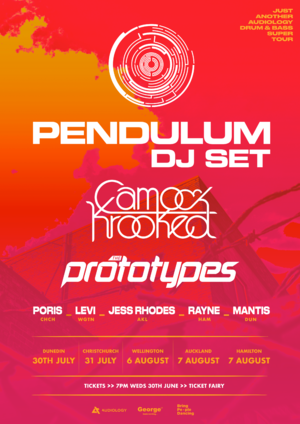
Notable music events included Fatboy Slim’s Christchurch show on 30 January 2019, a sold-out R18 event with doors opening at 6pm. In 2020, a special-licence application recorded a Basement Jaxx DJ-set event at the Gloucester Street site. Other event records identify the venue with drum-and-bass and electronic artists including Wilkinson, Hybrid Minds, Pendulum, Dimension and A.M.C.
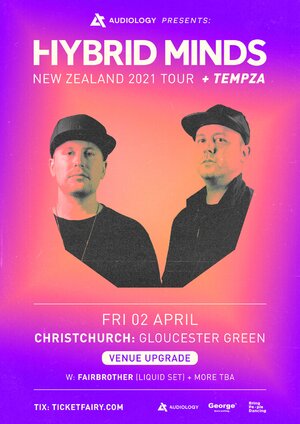
The verifiable 2021 programme was especially concentrated in electronic music. It included Summer Send Off, Urban Jungle/Sub 180, Hybrid Minds, A Night of Drum & Bass, Wilkinson, Dimension’s Organ Album NZ Tour and Pendulum. An event-staffing document lists approximate attendances of 1,800 for Summer Send Off, 2,800 for Urban Jungle, 3,000 for Hybrid Minds, 5,000 for Wilkinson and 3,000 for Pendulum; a licensing application for Dimension recorded an expected attendance of about 4,000. These figures are event estimates, not a permanent venue capacity.
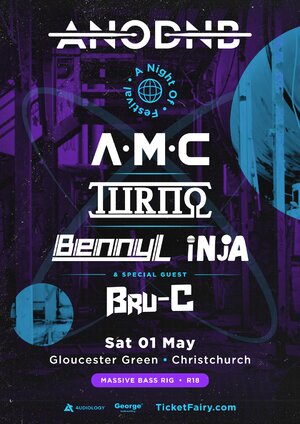
A Night of Drum & Bass on 1 May 2021 featured A.M.C, Turno, Benny L, Inja and Bru-C. Its listing promoted large-scale production and substantial sound systems, which helps explain why Gloucester Green became associated with high-energy dance events rather than seated concerts or theatrical shows. ticketfairy.com
There is no reliable evidence of a continuing Gloucester Green event series in 2022, 2023, 2024, 2025 or 2026. Later records instead track the site’s conversion into a 120-home residential development across 10 buildings. That change is important for anyone searching for current tickets: historic listings may remain indexed, but they do not represent an active venue calendar.
Tickets and Booking
There are no current Gloucester Green event tickets to buy because the former event space is not operating as a public performance venue. Historic tickets were sold on an event-by-event basis by individual promoters, with no permanent Gloucester Green box office or season-ticket system identified in the available records.
Historical pricing varied by production. Hybrid Minds’ 2021 Christchurch show listed a final release price of NZ$79 plus fees, while A Night of Drum & Bass listed releases from NZ$89 to NZ$99 plus fees. Wilkinson’s Christchurch date was reported as sold out, and Fatboy Slim’s 2019 Christchurch show was also advertised as sold out. These prices are useful only as historical examples, not as current ticket guidance. ticketfairy.com
For historic events, the best strategy was to buy early because the venue’s larger electronic shows could sell out before the performance date. Release tiers, age limits, door times, alcohol arrangements and resale rules were set by the promoter for each show. There was no published universal Gloucester Green presale or venue-wide pricing structure.
About Gloucester Green
Gloucester Green was a temporary, open-air central-city event space created as part of Christchurch’s post-earthquake placemaking and regeneration activity. The wider One Central programme began in December 2016 and occupied several city blocks between Lichfield and Armagh Streets. Gloucester Green itself was described as a bookable 9,000-square-metre site suitable for commercial and community events.
The site was not a purpose-built auditorium. It had no permanent theatre shell, fixed concert bowl or standard seating capacity. Its appeal came from scale, central-city access and the ability to install temporary stages, crowd barriers, bars, production systems and activity zones for individual events.
The addresses associated with the event space vary in historic records. Licensing documents identify Gloucester Green at 205 Gloucester Street and 221 Gloucester Street, while descriptions often place it near the corner of Gloucester and Madras Streets. This reflects the large development block and the way event boundaries were configured for particular productions rather than a conventional single-building venue address.
Part of the underlying city-block history is tied to Securities House at 221 Gloucester Street. That building was damaged in the 22 February 2011 earthquake and later demolished, leaving redevelopment land that could be used for temporary public activity before the residential build-out.
Seating and Layout
Gloucester Green was generally configured as an outdoor, standing, general-admission event site. The available evidence does not identify a permanent seating plan, numbered rows, balconies or fixed VIP sections. Any stage position, front-of-stage barrier, hospitality area, accessible viewing zone or temporary seating would have depended on the individual promoter and event design.
The approximate attendance figures show how dramatically the layout could change. A smaller community activation could use only part of the open site, while a major electronic concert could accommodate several thousand people within a fenced event footprint. Because there was no permanent auditorium, the best viewing position, crowd density and sightlines varied from show to show.
Visitors seeking a less crowded experience would historically have needed to check the individual event plan rather than rely on a venue seating chart. No current layout applies now that residential construction occupies the former event land.
Architecture, Design and Technical Production
Gloucester Green’s character came from temporary urbanism rather than permanent venue architecture. The wider One Central placemaking programme added public installations and activity areas, including a basketball half-court, outdoor table tennis and bouldering features. The event site could be adapted for concerts, circus, sport launches, family activities and motorsport displays.
No authoritative technical specification has been found for a house PA, lighting rig, stage dimensions, production power, rigging points, projection system or back-of-house facilities. Those elements were hired or installed for individual events. A 2021 drum-and-bass listing referred to “next level production” and “huge sound systems”, but that describes the promoter’s show rather than permanent Gloucester Green equipment. ticketfairy.com
The current Gloucester Green development has a completely different design brief. It comprises residential terraces and apartments designed by local architects, with features including lifts in the apartment buildings, secure access, balconies, heat-pump or ducted climate systems, heat-recovery ventilation and Homestar 6 design claims in development material. These are residential specifications, not visitor facilities for a concert venue.
Accessibility and Inclusive Facilities
There is no verified venue-specific accessibility guide for the former Gloucester Green event site. The available public records do not establish the location of accessible viewing platforms, mobility seating, hearing assistance, tactile guidance, sign-language services, accessible toilets or sensory facilities. Accessibility arrangements therefore appear to have been event-specific rather than part of a permanent venue standard.
Because Gloucester Green was an outdoor site, ground conditions, temporary cable covers, crowd barriers, weather and the promoter’s site plan would have affected access. Anyone researching a past event should treat accessibility information in the individual event notice as more reliable than general venue listings. The former concert site should not be confused with the present residential development, which has its own building-access arrangements.
Getting There and Parking
The historic event site was in central Christchurch around Gloucester Street, Madras Street and the former One Central land near Latimer Square. It was within walking distance of the central city’s library, retail area, restaurants, the Avon River, New Regent Street and the Bus Interchange.
For public transport, Christchurch’s Bus Interchange is at the corner of Lichfield and Colombo Streets. Single- and double-digit bus routes generally travel through the central city and serve the Interchange. From there, visitors could walk north-east through the central grid towards Gloucester and Madras Streets; the exact route depended on which portion of the temporary event boundary was being used.
Christchurch central-city on-street parking is charged by the Council. The published 2025/26 rate for metered on-street parking is NZ$5 per hour. The Council’s Lichfield Street car park lists a 2025/26 daytime rate of NZ$4.50 per hour, a night rate of NZ$4 per hour up to a NZ$10 maximum, and an all-day rate of NZ$16.50. These are current city parking reference points, not historic Gloucester Green event rates, and conditions can change.
Christchurch is also well suited to walking and cycling in the central city. The Council’s bike map identifies central-city routes, bike parking at the Bus Interchange and connections around Rauora Park, Latimer Square and the Avon River. There is no current rideshare drop-off point or event-day traffic plan for Gloucester Green because the venue no longer has a concert operation.
Inside the Venue
Historic visitors should have expected an outdoor festival-style environment rather than a conventional foyer, auditorium and bar complex. Entry gates, security screening, toilets, food vendors, bars, merchandise stalls, medical support, lighting and shelter were installed or arranged for individual productions. No permanent Gloucester Green guest-services policy has been published.
Alcohol service was controlled through event-specific special licences. The 2019 Fatboy Slim licence allowed alcohol sales during defined event hours and required drinking water to be available. A 2021 licensing decision similarly recorded a special licence for the Dimension event. These documents demonstrate event-level regulation, not a standing venue policy.
Nearby Amenities
The former site sat within Christchurch’s central-city hospitality and cultural district. Nearby destinations identified in One Central material include Latimer Square, Rauora Park, Tūranga Central Library, New Regent Street, Riverside Market, Te Pae Christchurch Convention Centre, the Avon River, the Margaret Mahy Playground and the new One New Zealand Stadium.
For a historic event, arriving early would have been sensible because larger dance shows could sell out and temporary queues, road restrictions and security checks could slow entry. Current visitors should treat Gloucester Green as a residential development and use the surrounding central-city amenities rather than expect concert bars, merchandise or event facilities.
What Made This Venue Special
Gloucester Green mattered because it turned post-earthquake vacant land into a place where Christchurch residents could gather for both major entertainment and low-cost community activity. It was large enough for international dance acts but informal enough for a family play area, cricket launch, circus performance or local activation. That versatility gave it a different role from the city’s permanent theatres and arenas.
The wider One Central programme is credited with producing 27 community installations, 113 small events and 50 larger events between 2016 and 2023. Its organisers described the work as a way to bring activity, play and connection back into central Christchurch while the city was being rebuilt. Gloucester Green’s commercial concerts helped support that broader public-space programme.
Its legacy is now closely tied to the city’s next phase of regeneration. The former temporary-event landscape is being replaced by permanent homes, with Gloucester Green planned as 120 residences across 10 buildings. The change reflects a shift from transitional activation to long-term inner-city living, while the site’s best-known concerts remain part of Christchurch’s post-quake cultural memory.
Visitor Tips and Information
Do not travel to Gloucester Green expecting a current event, ticket office or concert entrance. Check the exact venue name carefully when searching Christchurch listings, because historic event pages can remain visible after a site has been redeveloped.
Use historic ticket prices only as background; there is no current Gloucester Green ticket range.
Do not rely on an old address without checking the event date, because records refer to both 205 and 221 Gloucester Street.
Historic dance events were commonly R18, but age restrictions were set by the promoter.
There was no permanent dress code, seating chart or universal bag policy.
Outdoor conditions, temporary flooring, weather and crowd density would have varied by event.
For accessibility, rely on the individual event’s arrangements rather than assuming the former site had permanent inclusive facilities.
For current visits, use central-city parking, buses, walking and cycling information; the former event footprint is now associated with One Central housing.
Frequently Asked Questions
Is Gloucester Green in Christchurch still a concert venue?
No. Gloucester Green is no longer operating as the former open-air concert and event site. The land is being redeveloped as a residential community within One Central, with current listings covering townhouses and apartments. Historic event pages may still appear in search results, but they should not be treated as evidence of a current venue programme or ticket supply.
Are there any Gloucester Green events in 2026?
No authoritative 2026 event calendar has been found for the former Christchurch venue. Current 2026 references concern residential construction and home move-in dates rather than concerts, festivals or performances. Some apartments are advertised for move-in during June or winter 2026, showing that the site’s present use is residential rather than event-based.
Where was Gloucester Green located?
Historic records place Gloucester Green around Gloucester Street and Madras Street in central Christchurch, with licensing documents using both 205 and 221 Gloucester Street. The temporary event footprint formed part of the larger One Central area near Latimer Square. Current development addresses include 205 Gloucester Street and 261–263 Madras Street, reflecting the residential replacement of the former site.
How large was Gloucester Green?
The most reliable published description gives Gloucester Green an area of approximately 9,000 square metres. That measurement refers to the bookable open-air event space, not a fixed audience bowl or permanent building. The usable footprint could change depending on fencing, stage placement, bars, production compounds, toilets and other temporary infrastructure installed for each event.
What was Gloucester Green’s capacity?
There was no single permanent venue capacity published for Gloucester Green. Historic documents list approximate event attendances ranging from about 1,800 to 5,000, while a separate licensing application expected approximately 4,000 people. These figures describe particular event plans and should not be presented as an official maximum capacity for the site.
Was Gloucester Green indoors or outdoors?
Gloucester Green was an outdoor event space on redevelopment land. It did not have a permanent roof, auditorium or enclosed concert hall. Event organisers had to provide temporary infrastructure such as stages, barriers, weather protection, toilets, bars and technical production. Weather, ground conditions and the event layout were therefore more significant than at Christchurch’s permanent indoor theatres and arenas.
Which famous artists played Gloucester Green?
Documented performers include Fatboy Slim, Shihad, Katchafire, Wilkinson, Hybrid Minds, Pendulum, Dimension and A.M.C. The venue was particularly associated with electronic and drum-and-bass programming, although its wider event history also included circus, sport launches, family activities and automotive displays. The list should be read as a verified selection rather than a complete archive of every act.
What did tickets cost at Gloucester Green?
Historic prices varied by event and release stage. Hybrid Minds listed a final release price of NZ$79 plus fees in 2021, while A Night of Drum & Bass listed release prices from NZ$89 to NZ$99 plus fees. Larger shows such as Wilkinson and Fatboy Slim were reported as sold out. There are no current Gloucester Green ticket prices because the concert venue has ended. ticketfairy.com
Did Gloucester Green have reserved seating?
No permanent reserved-seating arrangement has been documented. Historic descriptions identify Gloucester Green as a flexible outdoor event site, and its music programming was generally suited to standing general admission. Promoters could have added temporary seats, VIP areas or hospitality zones, but those details would have been specific to each event rather than part of a standard Gloucester Green seating plan.
Did Gloucester Green have a permanent sound system?
No permanent house sound system or published equipment list has been found. Promoters supplied production for individual events. A 2021 drum-and-bass listing referred to large sound systems and substantial production, but that wording describes the event presentation rather than installed venue equipment. No verified information identifies a permanent PA brand, console, lighting rig or stage specification. ticketfairy.com
Was Gloucester Green suitable for families?
Yes, at some points in its history. The wider placemaking programme included family-oriented installations, a Santa Parade play area and informal recreational features. However, individual concerts could be R18 or otherwise unsuitable for children. Family access, alcohol controls, noise levels and operating hours depended on the particular event, so no universal family policy applied across the site.
Were Gloucester Green events age-restricted?
Some were. Fatboy Slim’s 2019 Christchurch performance and Wilkinson’s 2021 show were listed as R18, while the drum-and-bass festival was also advertised for adults aged 18 and over. Age limits were event-specific rather than a permanent venue rule. Visitors needed to check the individual event conditions, particularly where alcohol service or late-night electronic programming was involved.
Was there accessible seating at Gloucester Green?
No permanent accessible-seating arrangement has been verified. Because the site was temporary and outdoors, accessible viewing areas, paths, toilets and assistance would have depended on the promoter’s site plan. The available venue history does not confirm hearing loops, tactile routes, sensory facilities or sign-language services. Visitors with access requirements should not assume that a historic event layout provided these features.
What public transport served Gloucester Green?
The site was in central Christchurch, within walking distance of the Bus Interchange at Lichfield and Colombo Streets. Christchurch’s central-city routes generally serve the Interchange, and visitors could then walk towards Gloucester and Madras Streets. Exact walking routes varied because the former event site covered a large block and temporary event entrances changed between productions.
Was parking available at Gloucester Green?
The former event site did not have a permanent venue car park documented in the available records. Historic visitors used central-city street parking and nearby public car parks. For 2025/26, Christchurch’s published on-street meter rate is NZ$5 per hour, while the Lichfield Street car park lists NZ$4.50 per hour during the day and NZ$16.50 all day. These current city rates are not historic event charges.
What replaced Gloucester Green?
The former event land is being developed as Gloucester Green, a residential project within One Central. The development is planned as 120 homes across 10 buildings, including terraces and apartments. Current listings show a mixture of completed or ready homes and residences scheduled for 2026 move-in, confirming that the site’s long-term use is housing rather than a concert venue.
Why was Gloucester Green important to Christchurch?
It gave post-earthquake Christchurch a large, central place for concerts, circus, sport, community events and recreation while permanent city blocks were being rebuilt. Commercial bookings helped support wider placemaking activity, and the One Central programme later recorded 113 small events and 50 larger events between 2016 and 2023. Its importance was cultural and transitional rather than architectural.
Can I visit Gloucester Green as a public event space now?
You should not plan a visit expecting the former event space to remain open as a public concert ground. Construction and residential occupation have changed the site’s function. The surrounding central city, Rauora Park and Latimer Square remain useful destinations, but concert entry, event toilets, temporary bars, merchandise stalls and production facilities associated with historic Gloucester Green shows are no longer available.