Events and Programming
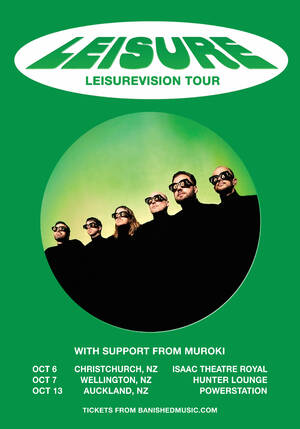
Isaac Theatre Royal is Christchurch’s principal large-scale heritage theatre, presenting a broad programme of musicals, opera, ballet, orchestral concerts, touring music, comedy, talks, family theatre, film screenings and community performances. The auditorium is also used for festivals, gala events, school-holiday workshops, cultural showcases and occasional unusual productions that take advantage of its stage, fly tower and flexible technical infrastructure.
The programming mix is unusually varied for a seated theatre. Recent seasons from 2021 to 2026 have included local musical theatre, Shakespeare, New Zealand opera, Royal New Zealand Ballet seasons, Christchurch Symphony Orchestra and New Zealand Symphony Orchestra performances, comedy tours, tribute concerts, international singer-songwriters, jazz, film-festival screenings, children’s theatre and contemporary works incorporating New Zealand Sign Language.
Recent examples include Showbiz Christchurch productions such as Kinky Boots , Mamma Mia! , Matilda the Musical , Blood Brothers and Charlie and the Chocolate Factory ; Royal New Zealand Ballet productions including Home, Land and Sea , Macbeth , Winter Season and The Sleeping Beauty ; and New Zealand Opera presentations including The Monster in the Maze and The Pearl Fishers .
Popular touring entertainment has included comedy by performers such as Dylan Moran, Danny Bhoy, Sarah Millican and Dara Ó Briain, alongside music from artists and touring shows including Macy Gray, Courtney Barnett, Shapeshifter, Ryan Adams, Tina Turner tribute productions, Beatlemania and big-band concerts. Film programming has also been part of the venue’s recent identity, particularly through the New Zealand International Film Festival.
The published late-2026 programme continues that pattern: large local musicals, opera, ballet, family and school-holiday activity, international music, literary talks, comedy, tribute shows and jazz. Announced programming beyond 2026 includes touring productions such as WOBIL and Menopause the Musical , although future dates and availability can change.
Typical ticket prices vary substantially by promoter and production. Published 2026 examples show student tickets from about NZ$21, lower reserved sections commonly in the NZ$34–$95 range, mainstream A-reserve or premium seats often around NZ$100–$200, and VIP or meet-and-greet packages ranging from roughly NZ$236 to NZ$600. Booking fees may be added, and local productions, festivals and family shows can be considerably less expensive than major touring acts.
Tickets and Booking
Tickets are sold through the official event listing and the venue’s foyer box office. The onsite box office is generally open Tuesday to Friday from 10am to 5pm, with event-day collection and opening times varying by performance. For many shows, the box office opens about one hour before the performance and auditorium doors open approximately 30 minutes beforehand, but the event’s own information takes precedence.
Popular musicals, ballet seasons and well-known touring artists are best booked as soon as seats are released. Check the seating map before paying, compare reserve categories rather than choosing only by price, and look for early-booking, concession, student or family allocations where offered. The venue’s Royal Friends programme is used for presales, competitions and special offers on selected events.
Ticket conditions are event-specific. Some shows have strict late-entry or lockout arrangements, while others admit latecomers only during a suitable pause. Refunds and exchanges are generally governed by the event’s ticketing terms and applicable New Zealand consumer law rather than by a universal theatre-wide policy.
About Isaac Theatre Royal
Isaac Theatre Royal is an indoor, three-level performing arts venue at 145 Gloucester Street in Christchurch Central City. Its main auditorium is currently described in official venue information as holding approximately 1,274 to 1,292 people, depending on the page and configuration. The promoter information quotes a 1,274-seat house, while the venue’s spaces page describes seating for up to 1,292 guests.
The difference reflects the fact that seating can change for technical areas, orchestra use, staging, accessibility spaces, house seats and special layouts. The auditorium includes stalls, dress circle and gallery levels, with royal boxes and a restored decorative interior. The theatre’s principal attraction is the combination of Edwardian character and modern performance infrastructure rather than a standard contemporary black-box design.
The building is registered as a Category 1 historic place and is recognised as one of the country’s most important surviving theatre buildings. It is also commonly described as New Zealand’s only surviving operational Edwardian-style theatre. Its ornate façade, painted dome, decorative plasterwork, marble staircase, leaded glass and theatrical boxes are key heritage features.
Seating and Layout
The auditorium is arranged in three principal audience levels: the ground-floor stalls, the first-floor dress circle and the upper gallery or grand circle. The stalls are generally the easiest level for step-free access and are usually the safest choice for patrons who prefer proximity to the stage, simpler navigation or the strongest sense of scale. The dress circle offers a raised, more panoramic view, while the gallery provides a higher perspective and can be attractive for seeing full-stage choreography or large scenic pictures.
For musicals, opera and ballet, central seats in the stalls or front-to-middle dress circle usually provide the most balanced combination of sightline and sound. For orchestral performances, a slightly elevated central position can make the overall ensemble easier to see. For comedy and spoken-word events, central stalls or dress-circle seats tend to give the clearest view of facial expression. Exact recommendations depend on the production’s set, lighting and stage thrust.
Most auditorium events are reserved seating. The Gloucester Room is different: it is a flexible studio and event space where many presentations use general admission, and layouts and capacities vary. The Stagehouse is a 16m by 18m flat-floor space designed for concerts, parties, launches, functions and contemporary live music.
The current seating plans identify wheelchair spaces, companion seats, easy-access transfer seats, bariatric seating and house seats. Check the plan for the particular performance because rows can be added or removed according to staging and production requirements.
Architecture, Design and Technical Capabilities
The present theatre is the third Christchurch building to carry the Theatre Royal name. The first Gloucester Street venue opened in 1863, followed by a larger timber theatre in 1876. Construction of the current Luttrell-designed building began in November 1906, and the third Theatre Royal opened in February 1908 with The Blue Moon . Its original French Renaissance-influenced design included a horseshoe dress circle, gallery, elaborate fibrous plaster decoration and a painted auditorium dome.
A major internal reconstruction in 1928 adapted the building partly for film presentation. The dome was retained, including its Italianate scenes from Shakespeare’s A Midsummer Night’s Dream . Further improvements between 1998 and 2000 expanded and refurbished the circle foyer, relocated facilities and strengthened the building against earthquakes and fire. A 2004–05 redevelopment created a larger concrete fly tower, deeper and wider stage facilities, improved dressing rooms, additional toilets, greater seating capacity and upgraded front-of-house areas.
The 2011 earthquakes severely damaged the 1908 auditorium and 1928 foyer spaces. The stage house and backstage areas built in 2004–05 suffered less damage, but the auditorium and foyers required extensive rebuilding. Heritage fabric was salvaged, restored or reinstated, while the façade was strengthened and the interior reconstructed behind it. The theatre reopened on 17 November 2014 after a project reported at approximately NZ$40 million.
Public technical information confirms a full lighting rig, surround-sound capability, digital audiovisual equipment, flexible staging, a full orchestra pit, optional stage thrust and a hydraulic pit lift. A public theatre benchmark lists an approximately 8.1m proscenium width, 16.6m stage depth to the back wall from the setting line, 6.5m side-stage wings and an orchestra pit of about 27 square metres. Specific equipment brands, console models and fixture counts are not part of the venue information published for audiences.
Getting There and Parking
The theatre is at 145 Gloucester Street, in the central city’s Performing Arts Precinct. It is a short walk from Cathedral Square, New Regent Street, Te Pae Christchurch Convention Centre, The Court Theatre and The Piano. The central location makes walking practical from hotels, restaurants and the Bus Interchange.
A new Performing Arts Precinct car park on Gloucester Street opened in January 2026. It has 61 spaces, including five accessible parks, and is operated for public use with payment at onsite machines or by app. Special evening rates are available for patrons attending events in the precinct, although the exact rate can change and should be checked at the car park.
Other listed options include The Crossing Carpark on Lichfield Street, the council car park at Lichfield and Madras Streets, parking near 160 Gloucester Street, 185 Hereford Street and Victoria Square, plus limited on-street parking subject to signs, time limits and charges. The venue also advertises a NZ$15 valet arrangement at a nearby city hotel for patrons, with limited spaces and advance booking required.
The closest regular bus connections are on Manchester Street, with additional routes serving the central Bus Interchange. The venue is also accessible by taxi, rideshare, bicycle and e-scooter. For a mobility drop-off, the theatre publishes a drop-off zone outside the building and one dedicated accessibility parking space; the newer precinct car park adds five accessible spaces nearby.
Inside the Venue
Expect a formal theatre atmosphere rather than a club-style entry. Allow at least 30 minutes before a performance for ticket checks, finding the correct level, using the bar and locating your seat. If collecting tickets, allow longer, particularly for a sold-out show. Late arrivals may be held outside the auditorium until a suitable break.
Three theatre bars serve light snacks and beverages across the venue’s levels. The Royal Hamper is an optional pre-ordered food package featuring local produce, cheeses, cured meats and other treats; vegetarian hampers are available. The Royal Box Experience provides hosted pre-show refreshments, a drink, canapés and interval treats for a small group, subject to availability and event arrangements.
Main bathrooms are on the dress-circle level, with additional facilities, including accessible toilets, on every floor. The accessibility information identifies two accessible toilets in the stalls foyer, one in the dress-circle foyer and two in the grand-circle foyer.
Outside bottles or drink containers, flasks, thermoses and commercial takeaway food such as fish and chips are generally not permitted inside, apart from baby bottles. Event-specific conditions can be stricter, particularly where haze, smoke, strobe lighting, amplified sound or age-sensitive content is involved.
Nearby Amenities
New Regent Street is the most convenient pre-show area for restaurants, cafés and bars, while the surrounding central city provides a wider choice of dining. The venue also identifies a nearby hotel with set-menu dining. For a short stay, hotels listed in the precinct include options beside Cathedral Square, across Gloucester Street, near Colombo Street and along Manchester Street.
For evening performances, book dinner ahead on busy musical, opera and ballet nights. A practical arrival target is 30 to 45 minutes before curtain, or earlier if parking, accessibility assistance, ticket collection or a pre-show food package is involved. After a late performance, rideshare or taxi may be more dependable than assuming a convenient bus departure.
What Makes This Venue Special
Isaac Theatre Royal’s cultural importance comes from continuity. The site has hosted live theatre, vaudeville, cinema, wrestling, boxing, ballet, opera, orchestral music, comedy and popular concerts across more than a century. Historic performers associated with the venue include Anna Pavlova, Louis Armstrong, Dame Kiri Te Kanawa, Dame Malvina Major and the Rolling Stones.
Its survival has also become part of Christchurch’s modern civic story. The theatre was threatened with demolition in the 1970s before supporters formed a trust to save it. After the earthquakes, public fundraising and major charitable and institutional support helped make the rebuild possible. The return of a major entertainment venue to the central city was treated as an important sign of cultural recovery.
Sir Ian McKellen’s connection is one of the venue’s most distinctive recent traditions. He performed Waiting for Godot there in 2010, helped raise funds for the earthquake recovery, and returned in August 2026 to visit the restored theatre. A royal box has been named in his honour, and the theatre recognised him as a patron during that return visit.
The theatre’s cultural and economic impact is best understood through its role as an anchor venue rather than through a single published visitor-spend figure. Its rebuild restored a major employer, performance platform and heritage attraction to the central city, supports local producers and technical workers, and brings national and international audiences into the Performing Arts Precinct. Public project documentation specifically links the restoration with Christchurch’s identity, tourism, urban environment and economic recovery.
Visitor Tips and Information
All three theatre levels are accessible by lift. The lift is approximately 1,500mm by 1,400mm, with a 900mm-wide door. Wheelchair spaces are available in the stalls and dress circle, companion seats are provided, four transfer-friendly aisle seats are identified in the stalls, and three bariatric seating positions are available in the stalls. Courtesy wheelchairs can be requested from front-of-house staff.
The auditorium has a hearing-loop system on each level. The theatre also offers Auracast wireless listening assistance for compatible hearing devices and has four loan receivers. A receiver can be collected from the box office or an usher, with identification held temporarily until it is returned. The Gloucester Room does not currently have a hearing-loop system.
Guide dogs are welcome, and the venue recommends arranging suitable seating in advance. Accessible seating is generally available online until one week before a performance; later requests should be made through the box office or in person. Wheelchairs, walkers and crutches may need to be moved away from aisles during the show for safety.
Recent visitor feedback consistently highlights the restored interior, easy central-city location, friendly staff and strong acoustics. Some reviewers praise the tiered sightlines and well-maintained facilities, while a minority mention that seating can feel compact or that sound clarity varies from the highest or farthest positions. For the safest all-round experience, choose central stalls or dress-circle seats and study the event seating map before booking.
Frequently Asked Questions
Where is Isaac Theatre Royal located?
Isaac Theatre Royal is at 145 Gloucester Street in Christchurch Central City, Ōtautahi. It sits within the Performing Arts Precinct near The Court Theatre, The Piano, Te Pae Christchurch Convention Centre and New Regent Street. Cathedral Square and the central Bus Interchange are both within walking distance, making the venue practical for visitors staying in the central city.
How many people does Isaac Theatre Royal seat?
The official published figures vary slightly by configuration. The venue-hire information describes a 1,274-seat house, while the spaces page states that the auditorium can seat up to 1,292 guests. Seating can change when technical areas, staging, orchestra positions, house seats or accessibility spaces are included, so use the seating plan for the specific performance rather than relying on one headline capacity.
What types of events are held at Isaac Theatre Royal?
The programme includes musicals, opera, ballet, orchestral concerts, touring music, comedy, talks, film festivals, family theatre, community productions and cultural events. Recent seasons have included productions by Showbiz Christchurch, Royal New Zealand Ballet, New Zealand Opera, Christchurch Symphony Orchestra and touring international artists. The smaller Gloucester Room and Stagehouse also support intimate, flexible and flat-floor events.
What are the best seats at Isaac Theatre Royal?
Central stalls seats are usually the most versatile choice for musicals, comedy and spoken-word shows. The front or middle dress circle provides a raised view that can work particularly well for ballet, opera and large ensembles. Higher gallery seats can offer a complete view of choreography and scenery but are farther from performers. The best choice still depends on the production’s set and stage extension.
Does Isaac Theatre Royal have general admission seating?
The main auditorium is normally reserved seating, with stalls, dress circle and gallery positions allocated by the event organiser. General admission is more common in the Gloucester Room, a flexible studio space whose layout and capacity change by event. Some contemporary music or special events may alter the normal arrangement, so check the individual event description before assuming that every show uses fixed theatre seating.
Is the theatre wheelchair accessible?
Yes. All three levels are accessible by lift, and wheelchair spaces are provided in both the stalls and dress circle. The venue also lists companion seats, transfer-friendly aisle seats, accessible toilets on each level and courtesy wheelchairs. Accessible seating should be selected during booking where possible, because availability and the number of spaces can vary with the production layout.
Are there hearing assistance services?
The auditorium has a hearing loop on each level. The venue also supports Auracast wireless audio for compatible hearing aids, earbuds and other devices, and has four loan receivers. Receivers are collected from the box office or an usher and returned after the performance. The Gloucester Room currently does not have a hearing-loop system, so ask about assistance before booking that space.
Can guide dogs enter Isaac Theatre Royal?
Guide dogs are welcome. The venue asks patrons to advise the team in advance so suitable seating can be arranged for both the patron and the dog. This is particularly important for reserved theatre seating, where an aisle position or a wheelchair and companion configuration may provide more space. Event-specific arrangements can still affect the best location.
How early should I arrive?
Arrive at least 30 minutes before the advertised start time if you already have your ticket. Allow 45 minutes or more if you need to park, collect tickets, use accessible assistance, buy refreshments or find a particular level. The box office commonly opens about one hour before a performance and auditorium doors about 30 minutes before, although individual events can differ.
What happens if I arrive late?
Latecomers may not be seated immediately. The venue can hold late arrivals outside the auditorium until a suitable pause, and some productions admit people only between songs, scenes or acts. This is especially common for opera, ballet, comedy and tightly timed theatrical productions. Check the event information and plan to arrive early rather than relying on late entry.
Can I bring food or drinks inside?
Outside bottles and drink containers, flasks, thermoses and commercial takeaway food are generally not permitted, except for baby bottles. The venue operates bars on all levels with snacks and beverages, and selected events offer pre-ordered hampers or hosted Royal Box refreshments. Rules can be adjusted for individual productions, so avoid bringing takeaway food unless the event information specifically allows it.
Is there parking near the theatre?
Yes. Options include the 61-space Performing Arts Precinct car park on Gloucester Street, which has five accessible spaces, plus nearby council and commercial car parks on Lichfield, Madras, Hereford, Gloucester Street and around Victoria Square. On-street parking is limited and subject to signs and time restrictions. A nearby hotel also advertises limited NZ$15 valet parking for theatre patrons.
What public transport is closest?
Manchester Street has the closest regular bus connections, while the Bus Interchange provides wider route coverage and is walkable from the theatre. Central-city buses serve many suburbs and regional connections, but evening schedules can vary. If attending a late performance, check the return journey before the show and consider arranging a rideshare or taxi if the final bus is inconvenient.
Does the theatre have bars or restaurants?
The theatre has three bars across its levels serving light snacks and beverages. New Regent Street, just nearby, offers restaurants, cafés and bars for pre- or post-show dining, and the venue identifies a nearby hotel with set-menu dining. On popular musical and ballet nights, booking dinner ahead is sensible because the surrounding central-city venues can become busy before curtain time.
Is Isaac Theatre Royal a heritage building?
Yes. The building is a Category 1 historic place and retains a heritage façade, painted auditorium dome, decorative plasterwork, leaded-glass details, marble staircase and theatrical boxes. Much of the interior was reconstructed after the 2011 earthquakes, but the restoration retained, repaired or reinstated important heritage elements while adding modern seismic, access and production systems.
When did the current theatre open?
The current Theatre Royal opened in February 1908 after approximately 15 months of construction. It underwent a major interior reconstruction in 1928, further upgrades in 1998–2000 and a stage-and-fly-tower redevelopment in 2004–05. Following severe earthquake damage in 2011, the restored Isaac Theatre Royal reopened to audiences on 17 November 2014.
Why is the theatre called Isaac Theatre Royal?
The Isaac name recognises Lady Diana Isaac, a prominent Canterbury philanthropist, conservationist and supporter of the arts. The name distinguishes the present venue from the earlier Christchurch Theatre Royals while reflecting the contribution of the Isaac family and foundation to the theatre’s development and continuing role in the community.
Does the venue offer unusual or non-theatre events?
It does. The theatre has hosted film festivals, cultural exchange performances, talks, community showcases and unusual staging experiments. A recent example was a New Zealand Squash Open match played on a glass court installed inside the auditorium. The Stagehouse and Gloucester Room also allow events that do not suit a conventional proscenium presentation, including flat-floor music and flexible studio work.
What should I know about accessibility in the Gloucester Room?
The Gloucester Room is lift-accessible and has wheelchair spaces for its general-admission-style events, but capacities and layouts vary. It currently does not have a hearing-loop system, unlike the main auditorium. Patrons with mobility, hearing or seating requirements should arrange assistance before the event, particularly where the performance uses an unusual floor plan or limited seating.