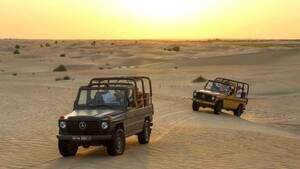
About Al Marmoom Desert Reserve
Al Marmoom Desert Conservation Reserve is not a conventional concert hall, stadium or ticketed attraction. It is Dubai’s largest protected area: an approximately 949.35-square-kilometre landscape in Saih Al Salam containing dunes, gravel plains, sabkhas, ghaf woodland and artificial wetlands, including the Al Qudra lakes. Current municipal information says it covers almost 23% of Dubai. Earlier launch material described roughly 10%, reflecting the reserve’s evolving boundaries and measurement.
The land received protected status under Dubai’s 2014 protected-area decree, while the expanded environmental and tourism destination was publicly launched on 16 January 2018. It was conceived as the UAE’s first unfenced desert conservation reserve, combining wildlife protection with carefully managed recreation, education, heritage and sport. Arabian oryx, sand gazelles, mountain gazelles, reptiles, invertebrates and hundreds of resident or migratory bird species inhabit the reserve. The Saruq Al Hadid archaeological landscape also connects Al Marmoom with more than three millennia of human activity.
There is no single building, auditorium or universal capacity. Visitors move among dispersed destinations such as Love Lake, Al Qudra Lakes, birdwatching structures, cycling routes, event sites and heritage facilities. Capacity, opening arrangements and amenities therefore depend on the exact location and occasion. Eight birdwatching hides have been installed, while the completed Nest observation tower is a two-level, shaded structure measuring approximately six metres square and seven metres high. A separate desert amphitheatre was designed for about 350 to 400 people, but published architectural information identifies it as a completed design rather than confirming it as a permanently operating performance venue.
Events and Programming
Al Marmoom’s programming is seasonal and site-specific. The reserve hosts open-air cinema, running, cycling, wildlife education, stargazing, heritage activities and guided commercial desert experiences. Major productions normally create temporary audience areas, stages, screens, workshops, food markets and family zones. There is no nightly entertainment calendar or resident company, and organisers do not publish one complete archive covering every private tour, community gathering or race.
The first Al Marmoom: Film in the Desert ran from 4 to 7 March 2020, presenting films beneath the stars, workshops, masterclasses and discussions. It included a transportable 28-seat cinema showing non-dialogue shorts, making part of the programme accessible across languages and to deaf visitors. November 2020 brought the inaugural community Dune Run. In 2021, the reserve hosted 50-kilometre, 10-kilometre and five-kilometre desert races, alongside continuing camel-racing festivals at the separate Al Marmoom Camel Racetrack.
During 2022, the Al Marmoom Ultramarathon returned with a 50-kilometre race and community dune run. The second film festival, held from 9 to 11 December, screened 27 films and concluded with its short-film competition awards. In February 2023, timed ultrarunning challenges covered 24, 12 and six hours, with shorter desert races also offered. The April 2023 Al Marmoom Heritage Festival combined daily camel racing at the racetrack with concerts, international dance shows and Emirati cultural activities.
The third film festival ran from 12 to 21 January 2024, screening more than 70 films and opening with the Emirates Youth Symphony Orchestra. Its programme included over 30 workshops, talks, food pop-ups and industry sessions. The Al Marmoom Heritage Festival for Camel Racing concluded on 27 March, while five-kilometre and 10-kilometre dune races took place on 8 December. The fourth film festival followed from 4 to 12 January 2025 with more than 80 films, musical and heritage performances, public art, a planetarium, safari tours, artificial-intelligence activities and over 30 workshops. The 2025 Al Salam Cycling Championship used Al Marmoom for an elite finish, a desert race on 9 February and women’s races on 16 February.
Tickets and Booking
Ordinary access to public recreation areas is generally free, and no reserve-wide admission ticket or central box office exists. Individual festivals, races, safaris, workshops and camps establish their own booking arrangements. The 2024 film festival offered free public admission, whereas competitive races charged registration fees. Historic 2023 ultramarathon prices ranged from AED150 for the five-kilometre Dune Run to AED1,450 for the 24-hour challenge; these are examples, not current quotations.
Reserve early for limited workshops, organised safaris, overnight camps and popular sporting events. Registration may close when capacity is reached, even before the advertised deadline. Camel races are commonly free for spectators, but schedules can change because of racing decisions, weather or official ceremonies. For any organised event, use the booking instructions published by its responsible government body or organiser rather than assuming entry will be available at the gate. Confirm whether the booking includes transport, meals, equipment, insurance or access to restricted sections.
Seating and Layout
Al Marmoom has no permanent seating bowl, numbered blocks, standard VIP section or fixed general-admission plan. Film festivals and performances use temporary screens, stages, chairs, terraces and standing zones positioned on prepared desert ground. Event layouts can change annually; the 2025 film festival, for example, used a ghaf-tree concept, with a central pathway branching towards screenings, art, activities and emerging-talent displays.
For outdoor cinema, central seats facing the screen usually provide the most balanced picture and amplified sound. Side positions make movement easier but can create angled viewing. Front rows may feel immersive yet place viewers close to speakers or screens. Rear areas provide broader views and faster exits, although wind, conversation and ambient activity can become more noticeable. Arrive early when admission is unreserved.
Bird hides and observation platforms should be treated as quiet wildlife facilities, not performance seating. The Nest tower uses an open lattice envelope to provide shade, minimise reflections and blend into the habitat. No permanent acoustic specification has been published for the reserve. Likewise, no verified inventory exists for house loudspeakers, mixing consoles, lighting rigs, projectors or backline equipment; major events bring temporary production systems designed for that programme.
Getting There and Parking
Al Marmoom lies in Saih Al Salam, southeast of central Dubai. There is no single visitor entrance or street address suitable for every trip, so navigation should target the precise destination: Love Lake, Al Qudra Lakes, the cycling track, an event village, a safari camp or Al Marmoom Camel Racetrack. The usual city approach follows Al Qudra Road, designated D63. Driving time is commonly 35 to 60 minutes from central districts, depending on the destination and traffic.
Public parking is available at prominent lake and cycling areas and is normally free. Love Lake has an established parking area, while major races and festivals create separate signed car parks. Surfaces may be tarmac, compacted gravel or sand. Stay within marked areas because illegal parking, habitat damage and blocked emergency access can attract enforcement action. A standard two-wheel-drive car can reach principal public sites when firm approaches are used; unmarked dunes require suitable vehicles, experience and recovery equipment.
No Dubai Metro station serves the reserve, and there is no dependable direct public-transport connection to its principal visitor attractions. Some buses travel through outlying communities, but they do not provide a practical walkable connection to most lakes or event grounds. Private car, prearranged taxi, rideshare or an organised transfer is therefore recommended. Taxis may be difficult to find for the return journey, so schedule collection before travelling. The 2024 film festival operated a temporary shuttle from Gold and Diamond Park 2, illustrating that special-event transport may be provided but should never be assumed for another date.
Inside the Venue
On an ordinary day, there is no enclosed foyer, turnstile, cloakroom, merchandise counter or central security checkpoint. The experience is an open desert landscape with lakes, paths, hides and distant facilities. Organised events add security screening, ticket checks, medical teams, temporary toilets, catering and information desks. Bag restrictions, photography rules and opening times consequently belong to each event rather than the reserve as a whole.
Permanent food service is limited. Bring adequate drinking water and essential supplies, especially when visiting remote lakes, but do not leave food or rubbish accessible to wildlife. Toilets are concentrated around established areas such as Love Lake, Expo Lake and commercial stopping points; visitors repeatedly report that facilities are sparse compared with the reserve’s enormous size. There is no reserve-wide coat check, cash machine or guaranteed public Wi-Fi. Mobile reception is often usable near developed roads but can become inconsistent farther into the landscape.
The atmosphere changes sharply with the time of day. Sunrise brings cooler temperatures, cyclists and active birdlife; sunset attracts photographers, picnickers and families; after dark, low urban glare supports stargazing. Winter weekends can become busy around famous lakes, while weekdays and less prominent areas feel remarkably quiet.
Nearby Amenities
The reserve is intentionally less serviced than urban Dubai. The main concentration of convenient refreshments, toilets and parking is near the D63 approach and Al Qudra cycling facilities, where food trucks, cafés, a bicycle shop, petrol and basic supplies are available. Desert cafés operate elsewhere around Al Qudra, but hours can be seasonal and late-night service should not be assumed.
Bab Al Shams is the best-known nearby full-service resort, offering restaurants, accommodation and a polished desert setting. Commercial camps within or around Al Marmoom provide meals, heritage demonstrations, camel rides and overnight stays, but they are independent businesses rather than municipal visitor facilities. Visitors wanting city hotels, broad restaurant choice or nightlife should stay closer to Motor City, Arabian Ranches or other western Dubai communities.
Eat before departing or carry a picnic if visiting independently. Arrive 60 to 90 minutes before sunset to park, orient yourself and enjoy changing light. Late at night, rely on your own vehicle or a confirmed transfer rather than expecting passing taxis.
What Makes This Venue Special
Al Marmoom’s distinction comes from the meeting of ecological protection, Emirati heritage and contemporary public culture. Artificial lakes support birds within an otherwise arid system, while dunes, ghaf woodland and open plains remain habitat for oryx, gazelles and desert specialists. The reserve also contains major conservation work, including Arabian oryx monitoring, more than 60 feeding stations and an important houbara reintroduction programme.
Architecture is deliberately restrained. The Nest observation tower resembles woven nesting material, casts patterned shade and uses wildlife-sensitive lighting. Film festivals transform the desert temporarily rather than imposing a permanent urban auditorium. Watching independent cinema, orchestral music or heritage performance beneath an open sky creates an intimacy unavailable in a conventional theatre.
Saruq Al Hadid gives the landscape deeper historical meaning. The archaeological site reveals extensive ancient metalworking and long human occupation, demonstrating that this apparently empty desert was connected to trade, craft and settlement. Modern camel racing, trekking, cycling and endurance running continue the relationship between people, movement and the desert.
Economically, no reliable reserve-specific annual impact figure has been published. Its influence is nevertheless visible through ecotourism, sporting travel, guided experiences, hospitality, filmmaking workshops and markets for Dubai businesses. Nineteen home-grown food operators appeared at the 2024 film festival, while the event’s competitions and workshops support regional filmmakers and creative careers.
Visitor Tips and Information
Visit between October and March for the most comfortable conditions. Summer access remains possible, but extreme heat makes midday walking, cycling and exposed viewing hazardous. Sunrise and the final two hours before sunset offer better temperatures, wildlife activity and photography. Carry water, sun protection, closed footwear, a charged telephone, offline navigation and warm layers for winter evenings.
Dubai’s protected-area rules prohibit pollution, disturbing or harming wildlife, damaging vegetation or geological features, collecting plants or animals, hunting, trapping and unauthorised noisy activity. Obey barriers and no-entry signs, drive only on accepted routes, park in designated areas and never feed wildlife. Keep fires off the ground in permitted recreation areas, remove charcoal and take every item of rubbish home. Event restrictions may be stricter.
The US Americans with Disabilities Act does not apply in the UAE. Dubai instead uses People of Determination terminology and local accessibility standards. No published evidence confirms reserve-wide step-free compliance. Prepared parking areas and firm paths may suit some wheelchairs, while loose sand, dunes and long distances create substantial barriers. Ask an event organiser about accessible parking, toilets, viewing positions, transport and companion arrangements before booking.
Modest, practical clothing is appropriate. There is no general age restriction, although races, tours and workshops impose their own limits. Avoid loud music, drones without the relevant permission, swimming in lakes, off-road shortcuts and close approaches to animals. The most common planning mistakes are selecting the wrong map pin, arriving without water, expecting extensive toilets, relying on an unconfirmed return taxi and underestimating darkness or temperature changes.
Frequently Asked Questions
Is Al Marmoom Desert Conservation Reserve free to enter?
General access to established public recreation areas is normally free, with no reserve-wide entrance ticket. Charges apply to independently operated safaris, camps, workshops, races and special experiences. A free visit can still involve transport, food or equipment costs. Confirm arrangements whenever attending a festival because registration may be required even when admission itself costs nothing.
What are Al Marmoom’s official opening hours?
The reserve is described by Dubai Municipality as open to the public throughout the year, but it does not operate like one gated park. Individual lakes, hides, commercial camps, heritage facilities and events can maintain different hours. Darkness, maintenance, weather or conservation work may limit access. Plan daylight arrival unless visiting a supervised evening programme or established camping location.
Is Al Marmoom the same place as Al Qudra Lakes?
Not exactly. Al Marmoom is the much larger protected reserve, while the Al Qudra lakes form one recognisable group of artificial wetlands within it. Love Lake, Expo Lake, cycling routes and other recreation points are also associated with the wider Al Qudra and Al Marmoom landscape. Always navigate to a precise attraction instead of entering only the reserve’s name.
Do visitors need a four-wheel-drive vehicle?
A four-wheel drive is unnecessary for main parking areas reached by tarmac or firm gravel, including commonly used approaches to Love Lake and cycling facilities. Never follow an unsuitable map shortcut through loose sand. Dune driving requires the correct vehicle, tyre preparation, recovery equipment and experience. Book a qualified guide if the planned activity leaves established roads.
Can visitors camp overnight inside Al Marmoom?
Camping occurs around designated Al Qudra recreation areas and through licensed commercial camps, but visitors should not assume that every lakeshore or protected habitat permits tents. Follow posted instructions and seasonal municipal rules. Camp on durable ground, avoid wildlife zones, use raised cooking equipment, control noise and lighting, carry fire-safety equipment and remove all waste, food and charcoal.
Are barbecues and campfires allowed?
Use barbecues only where local signs allow them and keep flames or hot charcoal inside a raised grill or fire tray. Lighting a fire directly on sand can damage habitat and leave dangerous debris. Bring an extinguisher or sufficient water, supervise flames continuously and take cooled charcoal away. Restrictions may tighten during dry, windy or officially controlled periods.
Can people swim, paddle or fish in the lakes?
Treat the lakes as wildlife habitat rather than recreational swimming water. Swimming, boating, paddling and fishing should not be attempted without explicit authorisation. Water depth, quality and submerged conditions are not managed as they would be at a public beach or pool. Remain on established banks and paths, supervise children closely and avoid disturbing nesting or feeding birds.
What wildlife might visitors see?
Possible sightings include Arabian oryx, sand gazelles, mountain gazelles, hares, lizards and numerous waterbirds, raptors, passerines and migratory species. Flamingos may appear around suitable wetlands, but no animal sighting is guaranteed. Dawn and quieter weekdays offer favourable conditions. Watch through binoculars, remain well back, never chase animals for photographs and do not provide food.
Are dogs and other pets permitted?
Pets can frighten wildlife, introduce disease and disturb nesting areas, so visitors should not bring them into protected habitats or birdwatching facilities. Municipal protected-area guidance prohibits introducing pets or alien species in sensitive sanctuary settings. Rules may differ at particular commercial properties. People travelling with an assistance animal should obtain specific advice before visiting because terrain and conservation restrictions complicate access.
Can visitors fly drones at Al Marmoom?
Do not fly a drone without every required aviation, filming, land-management and event permission. Protected wildlife, nearby infrastructure and temporary event restrictions make casual operation inappropriate. Even an authorised drone must avoid animals, crowds and restricted airspace. Handheld photography is the safer choice, although professional shoots, commercial filming and race coverage may still require advance accreditation or separate permits.
Is Al Marmoom suitable for wheelchair users?
Accessibility varies significantly. Some established car parks, festival pathways and firm lakeside sections may be manageable, while loose sand, gravel, dunes and long distances are not independently wheelchair-friendly. There is no verified reserve-wide accessibility certification. Before attending an event, request details about step-free routes, accessible toilets, viewing spaces, shuttle boarding, ground surfaces and assistance for People of Determination.
Where are the toilets at Al Marmoom?
Toilets are available near several developed points, including prominent parking and commercial areas around Love Lake, Expo Lake and the D63 cycling approach. They are not distributed evenly across the reserve, and remote lakes may have none nearby. Use facilities before exploring, carry personal hygiene supplies and never rely on a temporary event toilet remaining after the event ends.
What is the best time for birdwatching?
Arrive around sunrise during the cooler months, particularly from October through March. Birds are often more active before temperatures rise, and winter brings additional migratory species. Use binoculars or a long lens, speak quietly and avoid blocking hides. Sunset can also be productive, although famous lakes become busier then. Summer birdwatching demands exceptional heat precautions and shorter outings.
Does Al Marmoom have mobile coverage and Wi-Fi?
Mobile coverage is commonly available near major roads and developed visitor points, but signal quality can fluctuate across such a large desert area. Public Wi-Fi is not a dependable reserve-wide amenity. Download maps, tickets and meeting instructions before leaving the city. Carry a charged power bank, share your destination with someone and save the precise parking position for your return.
How early should visitors arrive for a festival or race?
For a public festival, arrive 45 to 60 minutes before the desired screening or performance, allowing time for remote driving, parking and security. Race participants should follow their published check-in schedule, which may require arrival 60 to 90 minutes before starting. Add more time on winter weekends, during camel festivals or when road controls separate public traffic from competitors.
Is the Al Marmoom Camel Racetrack inside the reserve?
The racetrack belongs to the broader Al Marmoom and Saih Al Salam destination and is closely associated with the reserve, but it is a distinct sporting complex with its own programme, access arrangements and spectator facilities. Searching only for the conservation reserve may lead to the lakes instead. Use the racetrack’s exact destination when attending camel races or heritage-festival activities.
What should visitors bring for an evening film screening?
Bring the booking confirmation if required, a warm layer, closed shoes, water and a compact power bank. Desert temperatures can fall quickly after sunset, and walking surfaces may be sandy or uneven. Avoid oversized bags unless the event expressly allows them. A small cushion can improve temporary seating, but chairs, food, professional cameras and tripods remain subject to event-specific rules.
Is Al Marmoom safe for children?
Families regularly visit the lakes and festivals, but the reserve remains an exposed natural environment rather than a controlled theme park. Keep children beside adults near water, roads, wildlife and event equipment. Carry ample water and sun protection, avoid midday heat and do not allow climbing on hides or barriers. Choose organised family zones when attending large cultural events.