About Al Marmoom Oasis
Al Marmoom Oasis is not a conventional theatre, arena or concert hall. It is an open-air desert hospitality and cultural venue within the Al Marmoom Desert Conservation Reserve, offering Bedouin-style dining, heritage safaris, animal encounters, live performances, stargazing and overnight accommodation. Current experience listings and 2026 accommodation inventory confirm that it remains open and trading under the Al Marmoom Oasis name, with OceanAir operating the visitor experiences.
The setting is a major part of its identity. Al Marmoom Desert Conservation Reserve covers 949.35 square kilometres and almost 23% of Dubai, according to current municipal information. It supports Arabian oryx, sand gazelles, Arabian gazelles and hundreds of recorded bird, reptile, plant and invertebrate species. It is classified as a Category II protected area and is among the UAE’s first unfenced desert sanctuaries open for sustainable recreation.
The wider reserve was formally protected under a 2014 decree and publicly launched as a major environmental and tourism destination in January 2018. A government-supported Al Marmoom Bedouin Experience opened in March 2019 under a different operator, with an oasis-centred village, Bait Al Sha’ar tents, an Al Hathira guest building, storytelling circles, craft demonstrations, a goat enclosure and falconry. Public reviews show OceanAir-branded Al Marmoom Oasis experiences operating by February 2021, but available records do not document the precise date or terms of the operator transition.
The destination expanded again in 2024–2025 with Al Marmoom Domes. Accommodation records list a 2024 opening, while the wider public launch was reported in January 2025. The elevated glass-fronted domes combine 360-degree desert views with air conditioning, private plunge pools and contemporary interiors influenced by Emirati colours and materials. Individual dome accommodation is listed at approximately 60 square metres, while traditional and signature tent rooms are approximately 41–42 square metres.
Events and Programming
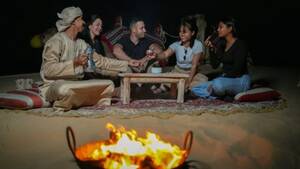
Programming centres on immersive, small-to-medium-scale desert experiences rather than touring bands or headline concerts. The recurring programme includes morning wildlife and heritage safaris, evening camel caravans, Arabic coffee-making, falcon encounters, henna, Emirati breakfast or dinner, horse riding, storytelling and telescope-led stargazing. Evening packages commonly add Arabian horse displays, fire performances, traditional dance or live music.
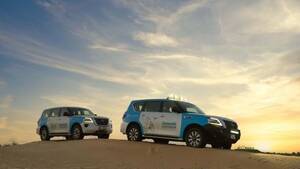
Reviews from 2021–2023 describe vintage-vehicle safaris, sunset stops, traditional coffee, camel rides, dinner, dancers, fire shows and overnight tent experiences. By 2024 and 2025, the programme had broadened to include luxury dome stays, sunrise meditation, private pools, equestrian visits and more elaborate food-led experiences. A returning visitor in January 2026 reported upgraded seating, additional activities and a wider selection of shows, although the operator has not published a formal renovation record.
Seasonal programming has included Ramadan iftars with live oud, Ayala dance, horse displays, cooking stations and family activities; UAE National Day celebrations with camel processions, cultural performances and desert dinners; and a New Year’s Eve event welcoming 2026 with live barbecue stations, camp activities and midnight fireworks. The 2026 programme also includes afternoon high tea, hands-on Emirati cooking classes and horse-riding packages alongside the established heritage safaris.
No specific 2027 event season or permanent concert series had been publicly announced in the material reviewed. The venue instead presents its future as a gradual expansion of cultural hospitality, nature-based activities and experiential accommodation. Wider government plans for the Al Marmoom area include a cultural experience station, traditional majlis, entertainment theatre and improved visitor services, but these are regional projects and should not be treated as confirmed additions to this particular camp.
Tickets and Booking
Admission is normally sold as a timed package rather than a simple venue-entry ticket. Visitors should book through the operator or an authorised seller and check whether the price includes hotel transfers, meals, animal activities and optional additions. There is no confirmed conventional walk-up box office, and door availability should not be assumed.
Observed prices vary widely by format. Shared heritage safaris generally fall around AED 390–690 per adult, with children’s rates often lower. Shorter activities such as high tea or cooking classes can begin below that range, while private vehicle experiences may exceed AED 4,000 per group. Luxury dome packages have been advertised from approximately AED 5,800–6,000, depending on meals, transfers and included activities.
Some standard experiences accept reservations until roughly six hours before departure, but weekends, Ramadan, National Day and New Year celebrations should be booked well ahead. A 24-hour cancellation deadline is common, although the applicable terms depend on the selected package.
Seating, Capacity and Layout
No verified permanent venue capacity, overall site dimensions, architectural floor plan or fixed seating chart is publicly available. A standard safari listing allows up to 150 participants, while a New Year package listed a 100-person group maximum; these are booking limits for particular products, not the venue’s licensed capacity.
Expect flexible Bedouin-style seating rather than numbered theatre seats. Depending on the package, guests may sit at low majlis-style arrangements, dining tables, private cabanas or inside individual tents surrounding an outdoor performance space. Private-tent packages provide the most personal dining environment, while central tables offer the clearest view of dance, horse and fire performances.
Sound and sightlines change with each temporary layout. Visitors sensitive to volume should request a position away from the loudspeakers and main performance edge; one past guest found the music uncomfortably loud. For stargazing, the quieter outer areas become preferable after the camp lighting is lowered.
Architecture and Production Facilities
The design combines a landscaped oasis, dunes and traditional architectural references. Current visitor descriptions mention Bedouin tents, a restored well, cooking stations, farm animals, outdoor fireplaces and softly illuminated gathering areas. The newer dome accommodation introduces glazed panoramic walls, elevated positions, private pools and modern climate-controlled interiors without replacing the camp’s heritage-focused spaces.
No public technical pack identifies the stage dimensions, rigging loads, electrical distribution, speaker brands, mixing consoles, lighting fixtures or acoustic specifications. The installed or temporary production is sufficient for amplified music, spoken storytelling, dance, fire performances, equestrian displays and special-event fireworks, but professional event organisers should not assume arena-grade production capabilities without obtaining a project-specific technical assessment.
Getting There and Parking
Al Marmoom Oasis is commonly mapped at plus code V82W+395 in Al Lisaili, within the Al Qudra and Saih Al Salam desert area of Dubai. Central Dubai hotels are usually around 45–60 minutes away by road, depending on the pickup district and traffic. Al Qudra Road is the principal approach, but the final section can feel remote and at least one recent guest noted that part of the access road needed paving.
Hotel pickup in an air-conditioned vehicle is included in many safari packages, but not all dinner, Ramadan or self-drive options include transport. Confirm this before paying. Self-parking is available for dome guests, and seasonal event information has advertised on-site parking without publishing a separate parking charge.
There is no confirmed direct Dubai Metro or regular public bus service to the camp. A taxi, pre-booked private car, rideshare or included tour transfer is the practical choice. Self-drive guests should navigate to the named OceanAir camp rather than simply “Al Marmoom”, which can refer to the enormous reserve, camel-racing area or heritage village. Arrange the return journey before the programme ends, especially after evening events.
Inside the Venue
Arrival procedures are organised around the booked experience. Guests are welcomed with gahwa, dates and often luqaimat before being guided to their activities or seating area. Photography is actively incorporated through sunset stops, falcon encounters, Arabian clothing and camel rides. Large luggage is normally prohibited, and there is no published coat-check service, so bring only a small day bag.
Dining ranges from breakfast and high tea to multi-course Bedouin dinners and large seasonal buffets. Common dishes include breads prepared at live stations, majboos, grilled meats, mezze, lamb ouzi or madfoon, luqaimat and Arabic sweets. Vegetarian options are offered on several programmes, but allergies and medically necessary diets should be declared when booking. Water and soft drinks are commonly included.
Restrooms are available, although their exact locations and accessible specifications are not published. The dome resort provides private bathrooms, Wi-Fi and air conditioning; camp-wide connectivity should not be assumed. Accommodation safety information identifies fire extinguishers, security systems and outdoor lighting. Alcohol is not included in standard experiences, guests may not bring it, and the accommodation property states that alcohol is not permitted.
Nearby Amenities
This is a desert location, so do not expect a walkable restaurant or nightlife district. Last Exit Al Qudra, a casual roadside food destination, is approximately four minutes away by car. The restaurants at Bab Al Shams are roughly seven to ten minutes away, with options ranging from informal meals to destination dining. The same resort is one of the nearest full-service hotels, approximately 12 kilometres from the oasis.
Staying at Al Marmoom’s own tents or domes is the simplest option after a late event. Other desert-area accommodation includes Bab Al Shams and Terra Solis, while hotels around Dubai South, Expo City, DAMAC Hills and Motor City offer a broader range of price points at a greater driving distance.
What Makes Al Marmoom Oasis Special
The defining quality is the combination of cultural interpretation and a functioning desert ecosystem. Performances are not isolated on a black-box stage: they unfold beside dunes, water, camels, Arabian horses and wildlife habitat. When the lights are lowered for stargazing, the absence of the city skyline becomes part of the production.
The venue also helps present coffee preparation, falconry, camel travel, Emirati cooking, traditional clothing, poetry, music and hospitality as connected parts of desert life rather than unrelated tourist demonstrations. This supports the wider public goal of linking conservation, recreation and cultural education in Al Marmoom.
No venue-specific economic impact study has been published. Its contribution can nevertheless be understood as part of Dubai’s investment in rural tourism: it creates demand for guides, drivers, cooks, performers, animal handlers, accommodation and local food services while drawing visitors beyond the urban core. That interpretation aligns with government plans to expand desert tourism, support local projects and create investment opportunities while protecting the area’s natural identity.
Visitor Tips and Accessibility
Standard shared safaris are not wheelchair accessible. Sand, low seating, vintage vehicles, camels and uneven outdoor surfaces create significant barriers, although private customised visits may be possible when arranged in advance. Dubai applies its own People of Determination laws and Universal Design Code rather than the United States’ ADA framework; the venue does not publish certification under Dubai’s accessible-building assessment system.
Pregnant visitors and people with serious back, neck, heart or mobility conditions should avoid dune-based or animal-riding components unless medically cleared. Children under five may attend many experiences but are not permitted on the standard camel ride, while children under 12 generally need an accompanying adult. Child seats are available on relevant transfers.
Wear breathable, modest clothing and closed shoes suitable for sand. Bring sun protection for daytime visits and a light jacket between November and March. Horse riders need full-length trousers, sturdy closed shoes and secured clothing without scarves, dangling jewellery or loose fabric. Helmets are required and may be provided.
Avoid large bags, pets, alcohol and drugs. Carry a charged phone, essential medication and only the equipment needed for photography. Weather can change operating times, particularly during summer heat, and outdoor experiences may be rescheduled for safety. Visitors consistently praise the staff, food, calm atmosphere and family activities; less common criticisms mention heat, loud music, pickup communication, unpaved access and occasional seating or accommodation issues.
Frequently Asked Questions
Is Al Marmoom Oasis still open?
Yes. Current 2026 experience pages, accommodation availability and recent verified guest reviews confirm that Al Marmoom Oasis and its associated dome and tent stays remain operational. It functions primarily through pre-booked experiences rather than unrestricted general admission, so visitors should reserve a safari, meal, activity or overnight package before travelling into the desert.
Is Al Marmoom Oasis the same as Al Marmoom Desert Conservation Reserve?
No. The conservation reserve is a protected area covering 949.35 square kilometres, while Al Marmoom Oasis is a privately operated visitor camp and accommodation destination inside the wider desert landscape. The terms are sometimes used interchangeably in tour descriptions, which can cause confusion. Use the full venue name when arranging a taxi or following navigation directions.
What is the capacity of Al Marmoom Oasis?
No official permanent capacity has been published. Individual experiences have advertised maximum groups ranging from about 100 to 150 participants, but these figures are product limits rather than a fire-code or licensed venue capacity. Private dinners and cooking activities may use much smaller groups. Event planners should obtain a written capacity for their intended layout and production.
What is the exact location?
The camp is in the Al Lisaili and Al Qudra desert area of Dubai and is commonly mapped using plus code V82W+395. It lies within the broader Al Marmoom environment, away from central neighbourhoods. Search for the OceanAir-operated oasis specifically, because searches for “Al Marmoom” alone may lead to the reserve, camel racetrack, lakes or heritage village.
Is parking available and does it cost anything?
Self-parking is available for overnight dome guests, and special-event information has advertised on-site parking. No standard parking fee has been published, so parking appears to be complimentary where included with a booking, but this should be confirmed for private or seasonal events. Follow staff directions because vehicles may be kept away from animal, dining and performance areas.
Can I reach Al Marmoom Oasis by Metro or bus?
There is no confirmed direct Metro or scheduled public bus connection to the camp. Most visitors use an included hotel transfer, taxi, rideshare or private car. The final journey is through a sparsely developed desert area, making public transport impractical. Pre-arrange your return rather than relying on finding an available vehicle after a late dinner or stargazing session.
Are hotel transfers included?
Many morning and evening safari packages include shared pickup and return transport from central Dubai hotels. Other products, including some Ramadan meals and self-drive experiences, treat transport as an optional extra. Pickup times can change with traffic, hotel location and seasonal heat, so be ready in the lobby at the confirmed time rather than relying solely on the advertised departure.
How much do tickets normally cost?
Shared heritage safaris commonly cost approximately AED 390–690 per adult. Shorter high-tea, cooking or riding activities may begin lower, while private vehicle packages can exceed AED 4,000 per group. Dome stays are a separate luxury product and have been advertised from roughly AED 5,800–6,000, with meals, transfers and activities affecting the final price.
Can I buy tickets when I arrive?
Walk-up entry is not recommended. The venue operates through timed experiences that coordinate vehicles, guides, meals, animals and seating. Some standard tours may accept a reservation several hours before departure, but popular evenings and seasonal celebrations can sell out. Booking in advance also ensures that dietary requirements, child seats, mobility needs and hotel pickup details can be arranged correctly.
Is Al Marmoom Oasis indoors or outdoors?
It is predominantly an outdoor desert venue with covered Bedouin tents, dining shelters and climate-controlled overnight accommodation. Camel rides, animal encounters, shows and stargazing take place outside. Summer heat, wind, dust or unusual rain can affect the programme. Operators may move timings earlier or later seasonally, and activities can be postponed when weather conditions create a safety concern.
What is the best time of year to visit?
November through March offers the most comfortable conditions for outdoor dining and longer desert activities, although evenings can become cool. April, May, September and October can still work if the programme is timed around sunset. Summer experiences operate, but expect intense daytime heat and possible schedule adjustments. Morning winter safaris are particularly suitable for wildlife viewing and photography.
Is the venue wheelchair accessible?
Standard shared experiences are explicitly described as not wheelchair accessible. Loose sand, low traditional seating, uneven paths and step-up access to vintage vehicles create substantial obstacles. The operator indicates that a private customised visit may sometimes be arranged, but no complete list of ramps, accessible toilets or transfer equipment is published. Discuss every requirement before booking and obtain written confirmation.
Are children allowed?
Most programmes are family-friendly and accept young children, with child seats available for vehicle transfers. Children under five generally cannot join the standard camel ride and must remain with an adult at the village. Children under 12 normally need an adult riding with them. Horse-riding, sandboarding and quad-bike activities have separate safety, height or age conditions.
What should I wear?
Choose lightweight, modest clothing and closed shoes with enough grip for sand. A hat and sunscreen are useful during the day; a jacket helps on winter evenings. Avoid high heels and long trailing garments. Horse-riding guests need full-length trousers, sturdy closed footwear and clothing without loose scarves or jewellery that could catch on the saddle or stirrups.
Can I bring a large bag, alcohol or a pet?
Large luggage and pets are prohibited on standard experiences. Alcohol and drugs may not be brought into the venue, and the overnight property states that it does not allow alcohol. A small day bag containing medication, sun protection, a jacket and camera equipment is more practical. There is no published luggage storage or coat check, so leave unnecessary belongings at your hotel.
Is photography allowed?
Yes. Photography is a central part of the experience, with designated opportunities during sunsets, camel rides, falcon encounters, Arabian costume sessions and around the oasis. Use flash cautiously around animals and follow handler instructions. Commercial filming, drones or extensive professional equipment may require separate permission because the camp is within a protected desert environment and close to wildlife habitat.
Are vegetarian meals available?
Vegetarian choices are offered in several high-tea, cooking-class, buffet and Ramadan programmes. Standard set-menu dinners may be less flexible, so dietary requirements should be submitted when booking rather than mentioned after arrival. Guests with severe allergies should request ingredient and cross-contamination information in writing, as meals can involve shared cooking stations, buffets and traditional dishes containing nuts, dairy or gluten.
Can I stay overnight at Al Marmoom Oasis?
Yes. Visitors can book traditional or signature tents, or the newer luxury domes with air conditioning, private bathrooms and plunge pools. Dome packages may include meals, heritage safaris, stargazing, horse-related activities and sunrise experiences. Overnight accommodation is substantially more expensive than a dinner safari, but it avoids a late return drive and provides the quietest desert experience.