About Al Sahra Desert Fortress by Tour Dubai
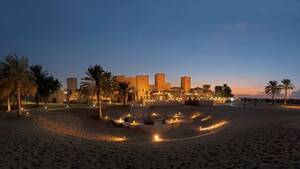
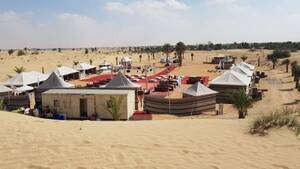
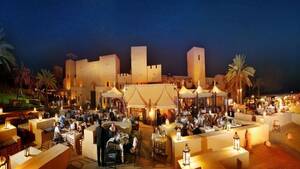
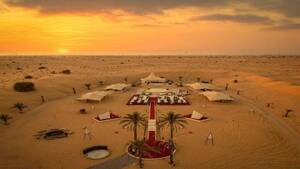
Al Sahra Desert Fortress (often called “Sahara Desert Fortress”) is a themed desert camp in Dubai designed to look and feel like a traditional Arabian fortress. It’s a purpose-built venue deep in the Red Dunes of Al Lisaili, southeast of the city, at Exit 29 of Sheikh Mohammed Bin Zayed Road . Tour Dubai markets it as a “luxurious retreat in the heart of the Dubai desert” blending ancient Middle Eastern appeal with modern comfort . The camp’s architecture is inspired by old fortresses: think sand-colored stone walls, watchtowers and courtyards laid out like a royal palace . It was built recently as part of Dubai’s effort to showcase Emirati heritage (for example, as part of the “Heritage Vision” initiative) and immediately stood out on the desert safari scene. The venue has spacious open-air courtyards, tents and lounge areas arranged around a central dining/entertainment plaza. This fortress-themed camp is notable for its scale and design in the desert setting, aiming to transport visitors to an old-world Arabian castle – complete with luxury seating, private Majlis lounges, an on-site souq (market) and banquet halls under the sky . It’s also one of the few Sahara-themed venues marketed by a major operator (Tour Dubai) that combines adventure (dune bashing, camel rides) with high-end dining and live shows in one evening.
Events and Programming
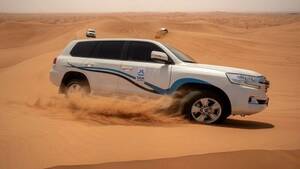
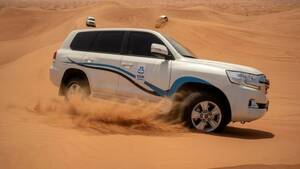
Al Sahra Desert Fortress hosts primarily evening dinners and safari excursions rather than concerts or day shows. The signature experience is a luxury desert safari: guests are picked up at dusk, enjoy dune-bashing in 4x4s through the golden dunes, and then head to the Sahara Desert Fortress camp for a themed dinner show. Main events include a “Luxury Desert Dinner” (with or without dune-bashing) and the “Royal Sahara Desert Fortress Safari.” These cover about 4–6 hours of activities: desert rides, followed by a five-star buffet dinner under the stars with live cooking stations , cultural performances (fire shows, Sufi drummers, belly dancing, falconry displays, etc.) and traditional activities (camel and horse rides, henna painting, Arabic coffee, etc.) . In short, guests feel like they’re attending a regal Arabian night. Programming runs formulaically most nights (especially in cooler months, roughly September–April). Operator Trip.com and local ticket sites show ongoing dinner events (e.g. a luxury dinner from late September through December) . Performers are typically local Arabic musicians, dabke and tanoura (spinning) dancers, sword- and fire-dancers, and sometimes Sufi dervishes . Corporate groups or tourists attend regularly; private tours by Land Cruiser are offered every night. There’s no fixed “stage” seating; instead diners are arranged around the camp’s central plaza, facing open performance areas – basically, the best views tend to be near the stage pit or on slightly elevated platforms. Overall, events at this venue blend adrenaline (dune bashing, quad biking, etc.) with cultural entertainment and dining, making it unique compared with a simple outdoor restaurant or a standard desert camp.
Tickets and Booking
Tickets for the Sahara Desert Fortress events are sold through Tour Dubai’s booking channels and various online travel-activity sites. You can book through Tour Dubai’s website, local tour operators or third-party booking platforms (e.g. Trip.com, Platinumlist, or GetYourGuide) – but avoid unofficial scalpers. Prices vary by package: basic shared-safari dinner tickets start around USD 100 per person (about AED 367) . Private or premium experiences cost much more: for example, “Royal Safari” private bookings can be several thousand AED (one advertised family package was ~6,384 AED) www.ticketfairy.com . Tours often list lower rates for children (often age 3–11) and infants ride free . In general, book at least a few weeks ahead during high season, and consider if you want extras (no-dune-bashing dinner vs. full dune-bash safari, private 4×4 vs. shared SUV, premium open bar, etc.). Pay attention to cancellation policies (most allow refunds up to 24–48 hours before). Tickets are typically digital (no physical box office on site), so make sure to get the assignment confirmation into your phone or printout. When picking up tickets from your hotel (if booked with transfers), expect to meet your driver in the late afternoon (usual pickup windows are ~4:30–5:00 PM in Dubai) . On arrival to the camp, staff will check your ticket/barcode – no additional box office is available at the venue itself.
Seating and Layout
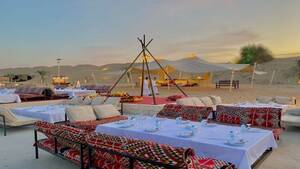
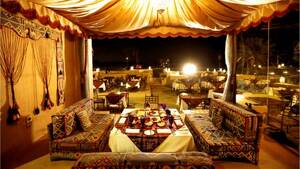
The Sahara Desert Fortress camp is laid out roughly like a traditional fortress courtyard. There is a central open-air dining arena flanked by raised platform seating and private Majlis lounges. No fixed theatre seats exist; instead, tables and floor-cushion seats are set up in semicircles facing the performance areas. Best spots are usually on the outer edges of the camp plaza near the main stage – these have a clear view of performances (fire shows, dancers, etc.) and the buffet grills. General admission areas are open-tent zones or carpeted Majlis seating, where groups can sit around low tables. VIP/covered sections (often booked by tour organizers) may be closer to the back under shade, but the layout is walkable so you can mingle. The camp is about the size of a small outdoor plaza – large enough to accommodate hundreds of guests on a busy night. Acoustic and lighting: the venue provides professional sound systems and stage lighting for the performances (so music and shows are audible across the camp) even though it’s in the middle of the desert. Because it’s open-air, sound carries well across the still night air. Note that at night the camp is fully illuminated with spotlights on performers and lanterns or uplighting on the fortress walls, creating a festive atmosphere.
Getting There and Parking
The fortress camp is very remote. Exact location: Al Yufrah 1 (south Dubai), on Sheikh Mohammed Bin Zayed Road (E311) at Jebel Ali-Lehbab exit – in coordinates roughly 24.9910°N, 55.4163°E . If driving, take the Lehbab Road/Exit 29 turnoff about 40 km from central Dubai. Signage says “Dubai Heritage Vision” near the turn. There isn’t a public parking lot as at a city venue, since most guests arrive via tour transfers. If you do drive yourself, park near the main tent camp (your tour guide will direct you). Rideshare drop-off should be at the given coordinates or “Dubai Heritage Vision,” and taxis from the city center take roughly 40–60 minutes. Public transit is very limited: technically one could take Dubai Metro to Union or Ibn Battuta then catch multiple RTA buses toward Al Lisaili/Lehbab, but such a journey takes 2–3+ hours and requires several transfers . For example, one route via metro and bus might take over 3 hours . In practice, nearly all visitors use private 4×4 transfers or taxis, not public buses. In summary: plan to go by tour shuttle, pre-booked 4×4 transfer or taxi (there is no convenient metro or shuttle to the site).
Inside the Venue
Upon entry, guests walk into a themed desert courtyard. Staff in traditional attire often greet visitors with Arabic coffee and dates as you arrive (a classic hospitality gesture) . Security is light – you may be scanned or your bags briefly checked, since it’s a tourist venue. The atmosphere is festive and relaxed. The main area is ringed by floor-cushioned seating (Majlis) and long banquet tables; performers have open space in the center or at one end. Look for street-food style stalls or buffet lines on the periphery – these serve grilled foods and salads during dinner. Facilities: there are barbecue pits and tables around the camp, plus an “Arabian souq” style side area selling souvenirs (pashminas, lanterns, small crafts) . There are outdoor portable restrooms discreetly located near the back – larger events often have flush toilets in nearby tents. A small stage space is set up for the live shows (fire-eating, folk dances, belly dancers). If booked, you’ll enjoy unlimited non-alcoholic beverages (tea, coffee, soft drinks) with dinner – some tours include ‘house beverages’ (basic juices or mocktails) but note that alcoholic drinks are generally not served in such tours unless explicitly arranged. There is no coat check and little mobile phone coverage (though some guests report spotty signal from major carriers). Overall it feels rustic but well-organized: your guides handle show schedules and call times for activities like camel rides, while staff keep the buffet replenished.
Nearby Amenities
This area is as remote as it sounds – you’ll find no restaurants, shops or hotels within walking distance of the camp. The nearest “town” is Al Lisaili or Hatta, but they’re still far. Visitors should plan to have pre-dinner meals in Dubai before departure. If you arrive in Dubai a day early, stay at a hotel near the Mall of the Emirates or Jumeirah Lakes Towers area; you’ll get picked up from those zones. Late-night conveniences: after the show ends around 9–10 PM, rides back to Dubai are arranged by your tour (taxis are scarce in the desert). If driving yourself, note that most services (gas stations, eateries) are closed late – fill up and grab snacks in Jebel Ali or MediaCity on the way. In essence, come prepared: there are no nearby bars or diners, so use what’s in the camp or carry what you need.
What Makes This Venue Special
Al Sahra Desert Fortress stands out for its scale, theming and combination of desert adventure with luxury. Unlike a simple campfire dinner or rented tent, this camp is explicitly designed as a “fortress” – complete with crenellated walls, towers and ornate decor . It’s part of Dubai’s recent push to create cultural-heritage attractions in the desert, so it has a bit of a storyline: you’re dining in an “ancient desert castle” run by friendly Bedouin hosts. The quality of the experience is high – for example, Tour Dubai and partners advertise a five-star buffet with live grills and gourmet dishes (an uncommon feature in ordinary safaris). High-end touches – such as carved wooden dhow boats serving as salad bars, luxurious tents for VIP lounges, and hotel-style service – give it a premium feel. Famous or regal guests have booked private fortunes (as “Royal Sahara” packages) here, and its 5.0 TripAdvisor rating on safari tours suggests travelers love it. Every element – from the traditional Dhow-boat buffet setup to the stylized camel stables – is meant to immerse you fully. In short, travelers and artists love this venue because it mixes adrenaline (dune bashing) with culture and comfort in a visually striking setting that feels “royal,” making for memorable desert nights www.ticketfairy.com .
Visitor Tips and Information
Accessibility: The fortress camp isn’t fully wheelchair-friendly due to uneven sand and steps in areas. The main dining area is mostly flat, but if you need assistance, notify the tour operator in advance (they can help with seating arrangements). Expect short walks on sand and gravel. Keep in mind that small children should stay close, and those with mobility issues may have trouble with activities like camel rides. What to Bring: Dress is casual mega-conservative: daytime desert can still be warm, but nights can cool off, so bring a light jacket. Wear flat, closed shoes (sand shoes, trainers or sandals - heels and flip-flops are not recommended on sand). A hat, sunglasses and sunscreen are wise; sunscreen by itself is okay since dinner is after dark. Personal medications (e.g., for motion sickness or antacids) are helpful. Phones and cameras are welcome – this camp is very photo-friendly. Small bags/purses are fine, but large backpacks may not fit under your table. Restrictions: No outside food or alcohol, and no weapons or large drones (for obvious safety). Smoking is usually allowed only in designated outdoor areas. Photography is allowed, but of course respect performers and others’ privacy. Age/Dress: All ages are welcome (child pricing 3–11 years old , under 3 free). Children should be supervised around corners and animals. There’s no strict dress code, but this is a cultural experience – modest clothing is appreciated (avoid overly skimpy outfits). Common Mistakes: Don’t underestimate desert driving times – always err early for pickup. Many visitors forget to arrange transport back to hotel; confirm your return timing. Also, drinks are often included, but tipping your server (10–15%) at the end shows appreciation. Finally, ask about cancellation backup plans: rare downpours or sandstorms could postpone events, so check with your tour provider if weather is uncertain. Overall, come with an open mind and appetite: this venue is all about enjoying an immersive Arabian-night vibe under the stars.
Frequently Asked Questions
What are the ticket prices for Sahara Desert Fortress events?
Ticket prices vary. Basic shared-safari dinners run around USD 100 per adult (roughly AED 370) . Private or “Royal” package tours cost much more (several thousand AED for a family, e.g. ~6,384 AED for a premium family booking www.ticketfairy.com ). Child tickets (usually ages 3–11) are discounted or free under 3 . Book well in advance for busy weekends.
How do I get to Al Sahra Desert Fortress? Is there parking?
The fortress is outside city limits. The address is Exit 29 on Sheikh M. Bin Zayed Road (Lehbab Road) near Al Lisaili . Most guests arrive by arranged 4×4 transfers or taxi. A few RTA buses do run toward Al Lisaili/Lehbab, but routes are indirect (3+ hour journey with transfers ). If you drive, follow GPS to “Dubai Heritage Vision – Desert Fortress.” Parking is informal (park near the camp tents). There’s no paid lot or official valet, so coordinate with your tour company. Shared taxis/Ubers should drop you at the camp’s entrance coordinates.
What is the seating and viewing like at the camp?
Seating is open-plan. Dining tables and Majlis-style cushions are arranged around a central performance area. There are no fixed seats – it’s all on carpets and floor cushions or low communal benches. Best views are usually around the plaza’s edges closest to the stage/pit. VIP or cover sections (if booked) may be under shade canopies at the back. Being an open desert camp, sound/lighting ensures visibility from most spots. If you prefer a specific area (e.g. closer to performers), arrive early in the evening to grab a good spot.
Are there any age or dress-code restrictions?
All ages are welcome. Children under 3 are usually free and 3–11 pay child rates . Dress is casual but modest: sturdy shoes/sandals for walking on sand, and light layers for cooler nights. No formal dress is needed – people wear everything from jeans and t-shirts to traditional clothing. Keep in mind it’s a respectful cultural setting, so avoid overly revealing outfits.
Can I use public transport to get there?
Public transport is possible but impractical. One could take the Dubai Metro to Union or Ibn Battuta Metro, then catch buses (e.g. E102/E163 toward Habab/Lehbab), but the trip takes 2–4 hours with transfers . There is no direct metro to the desert. Almost everyone uses a tour coach or taxi. If you prefer mass transit, note the long travel time and schedule carefully; otherwise, arrange a private transfer for convenience.
What food and drinks are provided?
Dinner is buffet-style. Expect a mix of Middle Eastern and international dishes: grilled kebabs, barbecue stations, salads, rice and flatbreads, desserts, etc. Live cooking (like BBQ or shawarma stations) is common . Unlimited soft drinks, juices and Arabic coffee are usually included. (Tours may offer a “house beverage” option, but alcohol is not typically served unless explicitly arranged.) The setting is mid- to high-end, so you get a hot international buffet under the stars. Eating utensils, napkins and staff service are provided; you won’t need to bring food or cutlery.
Are wheelchairs and strollers allowed, is it accessible?
Because this is a desert camp with sand and uneven terrain, full wheelchair access is limited. The main dining areas are flat but getting around involves some sandy paths. Strollers can be used on the flat areas but not on dunes or soft sand. If you or someone in your party needs accessibility assistance (ramps, transfers), discuss it beforehand with the tour operator. There are no elevators or special aids on-site; plan accordingly.
What should I not bring or do at the venue?
Guests should not bring outside food or alcohol. Avoid large backpacks or hard coolers (there’s no place to store them). Open flames (lighters, candles, etc.) are not allowed except under supervision. Do not wander into non-guest areas behind the stage. It’s an outdoor event, so no drone flying without permission (wires from lights and heat make it unsafe). Smoking is only in designated zones. Finally, respect local customs: public displays of affection or conservative attire choices (covering shoulders/knees) will keep peace; this is an Emirati cultural show after all.
Is photography or video allowed?
Photography and video are generally allowed. Travelers commonly take photos during the dinner and shows. Just be courteous to performers (ask before close-ups) and other guests. Flash won’t work well for night scenes, so adjust your camera accordingly. There is an on-site souvenir shop where you can purchase professional photos if offered. Feel free to snap shots of the fortress walls, camp decor and sunset — these are encouraged mementos of the night.
Is the Sahara Desert Fortress venue the same as Bab al-Sahra or other desert camps?
No. The Al Sahra Desert Fortress by Tour Dubai is a specific themed camp located off Lehbab Road. It is not the same as Bab Al Shams Resort or the Bab al-Sahra (which is a safari company/landmark). It’s its own venue with its own branding. To avoid confusion: look for the Tour Dubai “Sahara Desert Fortress” when booking. Other desert camps like “Caravanserai” or “Platinum Heritage” offer different experiences and locations.
Why is it sometimes called Sahara Desert Fortress?
The venue’s official name includes “Al Sahra,” which means “the desert” in Arabic. English-language travel sites often call it “Sahara Desert Fortress” (mixing Arabic and English) www.ticketfairy.com . In practice the terms “Al Sahra Desert Fortress” and “Sahara Desert Fortress” refer to the same place by Tour Dubai. Both names may appear on maps or tickets, as seen in listings www.ticketfairy.com .
Does this venue have a historical significance or is it newly built?
The desert fortress is newly built (opened in 2023) as an entertainment venue, not an actual historic fort. It’s designed to look ancient, to give the feel of Arabian heritage. So while it feels “classic,” it’s really a modern construction by Tour Dubai for cultural tourism. Any “history” here is part of the theme and storytelling, not an actual historical site.
What time should I arrive and how long does it last?
Tours typically pick you up in late afternoon (~4:30–5:00 PM) from Dubai. The camp “opens” around 7:00–7:30 PM when you arrive. Dinner and shows run roughly from 7:30 until about 10:00 PM. It’s about a 3–4 hour program overall (some hotel-transfer packages add dune-bashing beforehand, making it 6–7 hours total). Check your booking for exact pickup and drop-off times, but plan on being back in Dubai by about 10:30–11:00 PM.
Where can I stay if I want to be close to the desert camp?
There are no hotels immediately next to the venue. The nearest actual hotels are in Dubai city, so guests usually stay in Dubai. If you want a desert-resort experience, consider Bab Al Shams or Qasr Al Sarab (Abu Dhabi) – though both are still a drive away. In any case, the fortress camp is only used on tour (you don’t camp there overnight). For convenience, stay in central or Media city Dubai and use the tour transfer service.
Is there any refund or cancel policy for tours here?
Most tours (including those to the desert fortress) allow cancellations up to 24–48 hours before the event for a full refund. Last-minute cancellations (less than 24 hours) are usually non-refundable. Always confirm the policy when you book. In case of extreme weather, your tour operator may offer a different date or a refund. If you booked via a travel agency or website, check their terms.