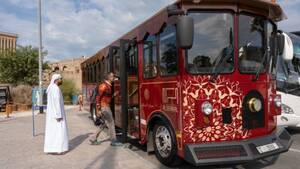
About Heritage Express
Heritage Express is not a conventional theatre, concert hall or fixed entertainment venue. It is a mobile cultural attraction based in Al Fahidi Historical Neighbourhood, using distinctive red trolley buses to connect important sites across Old Dubai and Jumeirah. Guests travel with an Emirati Cultural Ambassador, hear stories about the city’s development and can combine the journey with mosque visits, museum admission, souk walks, an abra crossing or an Emirati meal. As of 13 August 2026, Heritage Express remains open and trading under its original name.
The concept was launched in 2020 through the Sheikh Mohammed bin Rashid Al Maktoum Centre for Cultural Understanding. Its purpose was to take cultural interpretation beyond a single heritage house by carrying visitors through the places where Dubai’s trading, religious and civic history developed. Heritage Express now operates as a private Dubai company while continuing to deliver programmes in partnership with the cultural centre.
Its most important distinction is the role of the guide. Rather than relying mainly on prerecorded commentary, tours are led by Emirati hosts who encourage open questions about local customs, family life, religion, clothing, food and the UAE’s rapid transformation. This makes the experience closer to a travelling cultural conversation than a standard sightseeing-bus circuit.
History and Design
The first Heritage Express vehicles were conceived several years before the 2020 launch. Three custom trolleys were manufactured in Wisconsin in the United States and shipped to Dubai in early 2020. Their decorative treatment included medallion graphics, Arabic script, hand-painted seat ends and exterior mahogany elements shaped around bespoke motifs. Once in Dubai, the vehicles were to receive Arabian lanterns, cushions and textiles, creating the sensory character of a traditional majlis rather than an ordinary coach.
During its early operating period, Heritage Express developed the core Culture on Wheels format and a seasonal Ride and Iftar experience. By 2022, published visitor feedback was already praising the guides, smooth journey and ability to hold the attention of families. During the 2022–2024 period, the operator expanded educational work and hospitality partnerships, including cultural orientation for hotel employees and tours that hotels could offer to guests.
In 2024, collaborations included hotel cultural programmes, an Emirati Women’s Day activity and connections with World Art Dubai tourism programming. The 2025 season continued the Ramadan cultural iftar and regular public tours. In 2026, Heritage Express added a separate 12-seat executive vehicle for corporate delegations, business events and private cultural journeys. It also promoted workplace cultural activations, a Moving Majlis on Campus programme and a curated Ramadan journey concluding with suhoor at Etihad Museum.
Events and Programming
Heritage Express does not book concerts, touring productions or artist performances. Its recurring “events” are guided cultural experiences. The principal public formats are Culture on Wheels, the Emirati Hospitality Experience and Story of Dubai. Routes commonly reference Al Fahidi, Al Seef, Al Fahidi Fort, Dubai Creek, Al Shindagha, Union House at Etihad Museum and Jumeirah Mosque Majlis. The exact balance of driving, walking and stopping depends on the package.
Culture on Wheels is normally the shortest public option, lasting approximately two and a half hours. The Emirati Hospitality Experience lasts around four hours and adds a buffet and extended cultural discussion in a renovated heritage house. Story of Dubai adds deeper exploration of the Gold and Spice Souqs, a traditional abra crossing and, on selected versions, an Emirati lunch. A three-hour option incorporating Al Shindagha Museum has also been offered.
Seasonal programming centres on Ramadan, when the journey is adapted around iftar, mosque traditions and the meaning of the holy month. Educational programmes include nursery and school outings, university cultural exchange and teacher induction. Corporate offerings range from staff orientation to the two-hour Emirati Moving Meeting Majlis, which turns the trolley into a mobile meeting room with hospitality and presentation equipment. Private trolley hire is also marketed for culturally themed celebrations and special occasions.
As of August 2026, the publicly announced direction for 2026 and beyond is broader educational, corporate and business-events work rather than a dated performance season. No verified 2027 event calendar or artist line-up has been published. The continuing programme is built around year-round heritage tours, seasonal Ramadan experiences, private itineraries and mobile cultural activations.
Tickets and Booking
Standard public tours generally cost about AED150–AED250 per adult before VAT, depending on duration and whether a meal is included. Story of Dubai has been listed from approximately AED180, while the private VIP hospitality experience has been listed around AED350 per adult before VAT. Children aged six to 12 are commonly charged about half the adult rate, while infants up to five and People of Determination are admitted free on the principal public programmes. Private, corporate and trolley-only bookings are priced separately.
Advance booking is strongly recommended because each departure depends on vehicle space, guide availability, meal preparation and admission arrangements at partner locations. There is no conventional theatre box office or dependable door-sale system. Payment must be completed before the experience, and a booking is confirmed only after payment and the issue of a confirmation. Guests should check whether VAT, transfers, meals and museum admission are included in their selected package.
Current terms require amendment or cancellation requests at least 72 hours before departure. Cancellations within 72 hours and no-shows are normally non-refundable. Popular Ramadan experiences, school dates and private group slots should be reserved earlier than an ordinary weekday tour.
Seating, Capacity and Technical Facilities
There is no tiered auditorium, stage or numbered seating plan. Guests sit inside a customised, air-conditioned trolley designed to suggest a majlis. Seating is close to the guide, encouraging conversation rather than separating visitors into distant rows. For corporate Moving Majlis configurations, published details describe bench seating, small surfaces for devices and presentation equipment. The associated heritage meal uses traditional floor seating, with stacked cushions and some conventional chairs available for guests who require a higher seat.
The operator has not published a reliable universal passenger capacity or confirmed external dimensions for its heritage trolleys. Capacity may also change when wheelchair positions, presentation equipment or private-event layouts are required. The only separately verified 2026 capacity announcement concerns the new executive van, which has 12 seats. Groups should therefore treat the capacity stated on their individual confirmation as authoritative rather than relying on generic trolley specifications.
For the best view, choose a window position near the guide and board promptly. The experience is designed around live narration, so proximity to the Cultural Ambassador is more valuable than finding a supposed “best row”. There are no documented restricted-view seats, VIP balconies or standing areas.
A 2024 hospitality-partner report described the trolley fleet as having air conditioning, seatbelts, CCTV monitoring, GPS tracking, first-aid equipment, fire extinguishers and drivers trained in first aid and firefighting. Selected corporate configurations include a 4K display, wireless laptop connection and a head-worn microphone. On-board Wi-Fi has also been advertised for some public products. Exact lighting fixtures, loudspeaker models, power loads and production dimensions have not been made public.
Getting There and Parking
The normal meeting area is on Al Mussallah Road in Al Fahidi Historical Neighbourhood, beside the Sheikh Mohammed bin Rashid Al Maktoum Centre for Cultural Understanding. The trolley commonly waits near the centre’s valet point. This tour meeting place should not be confused with the company’s administrative office in Deira. Guests are instructed to arrive at least 15 minutes before departure.
The nearest practical Dubai Metro stop is Sharaf DG, station G25 on the Green Line. Older directions may call it Al Fahidi station, its name before November 2020. From the station, follow Al Mussallah Road towards Al Fahidi Historical Neighbourhood and allow additional time for the walk and for finding the correct heritage house. BurJuman provides interchange between the Red and Green Lines.
RTA feeder bus F70 serves the Al Fahidi area. Al Ghubaiba is another useful transport hub, connecting buses, the Green Line and marine transport. Visitors coming from Deira can incorporate a traditional Creek crossing and continue through the old souq area, although this is better attempted when travelling light and allowing generous time.
There is no verified dedicated Heritage Express car park or fixed parking charge. Nearby options include paid public parking and valet arrangements around the cultural centre, subject to availability. Do not assume that a space will be waiting. A taxi or app-based car can drop passengers near the valet meeting point, but narrow streets and busy heritage-area traffic make arriving early advisable.
Inside the Experience
Guests normally present their booking confirmation at reception before boarding. The atmosphere is informal and conversational, but safety directions and cultural etiquette must be followed. Depending on the tour, refreshments may include bottled water, Arabic coffee, dates, tea or a full Emirati buffet. Vegetarian and vegan choices are available on the main hospitality programmes when requested in advance. Alcohol is not part of the experience.
The full hospitality experience concludes in a restored Emirati house, where food is shared in a majlis-style setting and guests can ask questions. At Jumeirah Mosque Majlis, some itineraries include admission to the Once Upon a Time Museum and access to a souvenir shop. Heritage Express does not publish a permanent coat-check service, fixed merchandise counter, comprehensive restroom map or formal bag-size policy. Bring only what can be carried comfortably during vehicle stops and walking sections.
Photography is part of the appeal, but visitors should follow instructions at mosques, museums and private cultural spaces. Heritage Express may also take promotional photographs or video. Guests who do not want to appear in this material must tell the team before the experience starts. Personal belongings remain the guest’s responsibility.
Accessibility and Inclusive Facilities
Heritage Express uses the UAE term People of Determination rather than the American ADA framework. The operator states that its trolleys can accommodate up to two wheelchairs and that the Emirati houses used for hospitality have ramp access. A partner report also describes a dedicated accessible door. People of Determination are admitted free on the main public experiences. Mobility assistance should nevertheless be declared when booking because vehicle configuration and individual stops can vary.
Al Fahidi contains narrow lanes, uneven historic surfaces and periods of outdoor walking. Story of Dubai may add souqs and an abra crossing, while other packages remain more vehicle-based. Guests who cannot manage steps, low seating or extended walking should request conventional chairs, wheelchair space and a route-specific accessibility explanation before confirming.
Nearby Amenities
Al Fahidi is one of Dubai’s best areas for extending the cultural theme before or after the tour. Nearby dining includes Arabian Tea House, Al Khayma Heritage Restaurant, XVA Café and Local House, with menus ranging from Emirati breakfasts and grilled dishes to vegetarian café food and camel specialities. The Creek waterfront and Al Seef provide additional cafés and restaurants within walking distance.
Atmospheric nearby accommodation includes XVA Art Hotel within the heritage quarter and Al Seef Heritage Hotel along the Creek. Arabian Courtyard Hotel is convenient for the Al Fahidi Fort side of the district. Al Fahidi itself is better known for tea, coffee and traditional dining than nightlife; visitors seeking alcohol should use licensed hotel venues.
For a relaxed visit, arrive 30–45 minutes early and explore the lanes rather than planning a tight connection. The district becomes hotter and less comfortable around midday in summer, while evenings and cooler-season mornings suit walking. Taxis remain the simplest late-night option after seasonal Ramadan or private events.
What Makes Heritage Express Special
The trolley’s visual appeal is memorable, but the programme’s real value is access to Emirati voices. Guests are invited to ask questions that can feel difficult to raise in a museum or conventional group tour. The journey links restored houses, mosques, trading districts, the Creek and Union House, presenting Dubai’s modern success as part of a longer story rather than an isolated skyline.
Visitor feedback is limited in volume but consistently positive. Recent reviewers have praised knowledgeable, welcoming guides, family-friendly meals and the opportunity to speak directly with Emiratis. Jumeirah Mosque Majlis and the shared meal are frequently identified as highlights. One reviewer noted that some driving sections between landmarks contain less to see, a useful reminder that storytelling—not continuous sightseeing—is the central attraction.
No audited economic-impact figure has been published. Its visible contribution is cultural: employing and showcasing Emirati ambassadors, supporting educational programmes and directing visitors towards heritage houses, museums, souqs and hospitality businesses outside Dubai’s major malls and resorts. Partnerships with hotels, schools and corporate organisations extend that work to residents and employees as well as tourists.
Visitor Tips and Information
- Wear lightweight, modest clothing suitable for cultural and mosque-related stops.
- Choose comfortable footwear; several packages include walking on historic lanes or through souqs.
- Bring water, sun protection and a charged phone, especially between October and May when outdoor stops are more common.
- Do not expect camel encounters from June through September; these are seasonal and may change for animal welfare or operational reasons.
- Declare food allergies, vegetarian or vegan requirements and mobility needs when booking.
- Allow more than the advertised duration before another reservation because road traffic and group discussions can affect the finish time.
- Ask questions. The open cultural conversation is a central part of the programme, not an interruption to it.
Frequently Asked Questions
Is Heritage Express a venue or a sightseeing tour?
It is primarily a mobile cultural tour rather than a fixed venue. The experience begins in Al Fahidi, continues aboard a customised trolley and may include Jumeirah Mosque Majlis, museums, souqs, an abra ride and a meal in a heritage house. Private trolley hire allows it to function as a small moving event space, but it has no permanent stage or auditorium.
Where does Heritage Express depart from?
Most public tours depart from Al Mussallah Road in Al Fahidi Historical Neighbourhood, near the Sheikh Mohammed bin Rashid Al Maktoum Centre for Cultural Understanding. The usual boarding point is close to the centre’s valet area. Private and VIP packages may include pickup elsewhere in Dubai, so use the location printed on the booking confirmation.
How long does a Heritage Express tour take?
Public experiences generally last between two and a half and five and a half hours. Culture on Wheels is approximately two and a half hours, while the core hospitality tour lasts around four hours. Longer Story of Dubai versions add souq exploration, an abra crossing or lunch. Allow extra time after the scheduled finish for traffic and questions.
How much are Heritage Express tickets?
Typical public adult prices fall around AED150–AED250 before VAT. A private VIP hospitality option has been listed around AED350 per adult, while bespoke trolley, corporate and celebration bookings vary. Children aged six to 12 commonly pay about half the standard adult rate. Always check whether the quoted amount includes VAT, transfers, food and attraction admission.
Do I need to book Heritage Express in advance?
Yes. Advance booking is recommended and may be required because departures depend on available trolley seats, an Emirati guide, partner-site access and meal preparation. Walk-up admission should not be relied upon. Seasonal iftar programmes, school visits and private tours can fill earlier than ordinary weekday departures, so reserve these as soon as the date is known.
What is the cancellation policy?
Current individual-booking terms require cancellation or amendment requests more than 72 hours before the scheduled experience. Requests inside that period may be non-refundable, and no-shows normally lose the full payment. Approved changes remain subject to availability and may carry an additional charge. Road closures or other force-majeure conditions may lead to alternative arrangements or rescheduling.
What is the capacity of the Heritage Express trolley?
No verified standard passenger capacity has been publicly specified for the heritage trolley fleet. Capacity can also change when two wheelchair spaces, corporate presentation equipment or private-event layouts are needed. The separate executive vehicle introduced in 2026 has 12 seats. Groups should obtain written confirmation of the usable capacity for their selected vehicle and date.
Is Heritage Express wheelchair accessible?
The operator states that a Heritage Express trolley can carry up to two wheelchairs and that the heritage houses used for meals have ramp access. People of Determination receive free admission on the main public programmes. Accessibility varies between souqs, abras and individual historic stops, so explain all mobility requirements during booking rather than waiting until arrival.
What language are the tours conducted in?
Public tours are conducted primarily in English, and the Cultural Ambassadors are native Arabic speakers. Private groups may be able to request tailored arrangements, but additional languages should not be assumed without confirmation. The tour relies heavily on live conversation, so guests should mention communication requirements, hearing needs or preferred language before payment.
Are children allowed on Heritage Express?
Yes. The main experiences are advertised as suitable for all ages. Infants up to five are normally free, while children aged six to 12 receive reduced pricing on standard public tours. Educational versions use visual aids, games, traditional clothing activities and age-appropriate storytelling. Parents should consider the duration and walking involved before choosing a longer souq itinerary.
Is food included with every ticket?
No. The Emirati Hospitality Experience includes a buffet, while Culture on Wheels is primarily a sightseeing and cultural programme. Story of Dubai may be sold with or without lunch. Hospitality meals can include breakfast, brunch, lunch or dinner depending on the departure. Vegetarian and vegan options are available when requested, but allergies should be disclosed in advance.
What should I wear?
Choose modest, comfortable clothing suitable for visiting cultural and mosque-related sites. Lightweight fabrics are practical for Dubai’s climate, but avoid revealing outfits. Comfortable walking shoes are more useful than formal footwear because routes may include historic lanes, courtyards and souqs. Carry a light layer for the air-conditioned trolley and follow any additional guidance given at religious locations.
Can visitors take photographs?
Personal photography is generally part of the experience, particularly around the trolley and outdoor landmarks, but instructions at mosques, museums and private spaces must be respected. The operator may take promotional photographs or video during the programme. Anyone who does not want to be recorded should notify staff before the tour begins.
Does the tour include camels and falcons?
Some Culture on Wheels and hospitality itineraries include encounters with camels or falcons, but these are seasonal and package-dependent. The operator states that camels are unavailable from June through September. Do not book solely for an animal encounter without checking the exact inclusion, particularly during summer or when animal-welfare and weather considerations affect operations.
Is Wi-Fi available aboard the trolley?
On-board Wi-Fi has been listed for at least some Heritage Express products. Corporate Moving Majlis configurations can also include a 4K display, wireless laptop connection and a head-worn microphone. These facilities may not be identical on every vehicle, so visitors who need connectivity for a meeting or presentation should include the requirement in the written booking arrangements.
Where can I park for Heritage Express?
No dedicated Heritage Express car park or guaranteed parking price has been published. Paid public spaces and valet arrangements are available around Al Fahidi and the cultural centre, but availability varies. Driving can be slower in the narrow heritage district, so a taxi or the Green Line to Sharaf DG station is often more convenient than searching for a space.
What is the best time of year to take the tour?
October through April offers the most comfortable conditions for outdoor stops and walking. The air-conditioned trolley operates during warmer months, but souq walks and heritage courtyards can still be hot. Ramadan brings a distinctive seasonal iftar programme, while summer visitors should choose shorter routes, carry water and remember that camel encounters are normally suspended from June through September.