About Museum of the Future
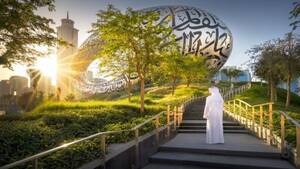
The Museum of the Future in Dubai is a government-run innovation exhibition space and “immersive theatre” dedicated to science, technology and the year 2071 . Opened on 22 February 2022 by Sheikh Mohammed bin Rashid, the 77-metre-tall torus-shaped building is instantly recognisable on Sheikh Zayed Road . Its exterior is clad in 1,024 stainless-steel panels carved with Arabic calligraphy – quotes from the UAE’s ruler about hope and the future . The result is widely hailed as an architectural marvel and a new icon in Dubai’s skyline . Rather than dusty artifacts, the Museum of the Future offers a high-tech journey into what life might be like in 2071 .
The building has seven floors and over 30,000 m² of exhibition space . Five of those floors are devoted to themed experiences (space travel, ecology, wellness, tomorrow’s technologies, and a children’s zone) . GDV Killa Design (architect Shaun Killa) used advanced parametric algorithms to create the smooth, pillar-free shape . Inside, state-of-the-art production (lighting, sound and projection) and interactive displays immerse visitors in future scenarios. The Dubai Future Foundation runs the museum as part of the Emirates’ vision to inspire innovation and a knowledge-based economy .
Events and Programming
While primarily an exhibition museum, the Museum of the Future also hosts special events, conferences and launch ceremonies. For example, in 2022 it debuted the TIME100 Impact Awards (a global gala honouring leaders shaping the future) on its seventh-floor event space . In 2024 it hosted the TIME100 AI Impact Awards gala, featuring speakers and musical performances . These invite-only gatherings (typically a few hundred guests) show how the Museum plus its top-level hall can stage major programs.
Exhibitions (everyday programming): The core “programming” is the museum’s own exhibits, organized into five “chapters.” The journey starts on the fifth floor (Orbital Space Station HOPE – life in space, circa 2071) and works downward through the HEAL Institute (future ecology) and Al Waha (“oasis” wellness) on the third floor , then the “Tomorrow Today” tech lab (2nd floor) and finally the children’s Future Heroes zone (1st floor) . These floors contain hands-on displays, simulations, educational games and prototype technologies aimed at inspiring creativity and global problem-solving. The exhibit entirely avoids “the past” – everything shown is a future-inspired concept, envisioned for the centenary year 2071.Special talks and programs: In addition to its core galleries, the Museum runs speaker series, panel discussions and school workshops. Innovators, scientists and business leaders are regularly invited to present “visions of the future” on-site . Examples include tech expos, career fairs, educational outreach and sustainability forums. (The museum’s website advertises ongoing “talks and events where innovators … share visions of the future” .)Recurring events: Large-scale recurring events include the annual TIME100 Impact Awards gala in Dubai (held at the Museum starting in 2022) , and the TIME100 AI-impact summit each year . Various UAE or Expo legacy projects may also use the space for launches. Smaller demo-days or technology pilots (robotics shows, drone exhibitions, etc.) occasionally take place in the lobby or outdoor garden. While it isn’t a concert or sports arena, its event calendar revolves around education, innovation and community programs rather than live music or theater.
Tickets and Booking
All visitors (age 4 and up) must have a date/time‒specific entry ticket . Tickets cost AED 169 (approximately USD 46) per person . Entry is free for children under 4 and for “people of determination” (persons with disabilities) plus one accompanying caregiver , upon presentation of an Emirates ID or disability ID on arrival . You should reserve your tickets online via the official Museum of the Future website well in advance. The museum strictly enforces timed entry: you book a 10:00, 12:00, etc. slot and arrive then. Walk-in tickets are usually not available, and peak slots sell out far ahead of time . In fact, guides report that tickets often sell out 2–3 weeks in advance at popular times , so plan early.
How to buy: Purchase through the official site or approved ticket providers. After booking, you will receive a QR code or e-ticket. On arrival, present this at the turnstile. All entry tickets are digital and time-stamped ; there is no cash ticket booth selling day-of tickets given the strict capacity limits .
Ticketing tips: Aim for a morning or weekday slot to avoid crowds (midday/weekend slots fill up). Visitors advise booking 2–3 weeks ahead, especially for weekends . Dress comfortably and arrive 15–30 minutes early, since entry requires security screening. Late arrivals may miss their slot – staff may try to reassign you to the next available time if lists allow , but this is not guaranteed. If you can’t make your slot, ask at the customer desk immediately, and keep your wristband on if you plan to re-enter later .
Pricing tiers and discounts: There are no tiered sections (all tickets are standard entry). The museum does run occasional promotions with partners (Dubai ID, resident deals, group rates), but otherwise ticket price is fixed. Children under 4 and people of determination (with one carer) enter free . Keep any ID proof handy– when you arrive, free entry visitors must check in at the desk to receive a complimentary pass (still time-stamped). No discounts are available for students or senior citizens beyond these categories.
Seating and Layout
The Museum of the Future is not a fixed-seat performance hall but a freely accessible exhibit complex. Its interior is laid out as a series of open galleries connected by a gently climbing central ramp. The visitor journey is strictly one-way: you start at the top (5th floor) and work back down through each floor to the ground. This single-path layout means you cannot backtrack or skip floors; plan extra time if you want to linger (the total route takes around 2–3 hours ). Because of this linear plan, consider starting with key highlights first if you have limited time (for example, visiting the top-level observation deck immediately, since that area is small and can queue up ).
Floor plan: There are seven levels, including a lofty ground-level lobby and an upper observation space. Five floors (1st through 5th) contain the main exhibits, each themed as described above . Between floors, a spiraling ramp and glass elevators carry visitors. The rooftop/uppermost floor has a small outdoor viewing deck with panoramic city views . (Tour guides note this deck is “tight” and can get crowded, so it’s best to visit it as soon as you arrive at that level .)
Best viewing spots: If photography or views are your goal, the upper observation deck is a must-see . It gives unique sightlines between the calligraphy wall and Dubai’s skyline. Inside exhibits, viewing is primarily up close on interactive installations rather than stage-style, so there are no “good seats” per se. However, the ramp walkway means you have 180° sightlines on many displays, especially the large space-station simulator and the Amazon forest projection. Sound design is immersive, so expect ambient audio and lighting that guide you through each display.
Accessibility of floors: All floors and displays are wheelchair-accessible via ramp and elevator – there are no steps in the main path. Seniors or visitors with mobility needs can simply stay on the elevator if needed to visit each floor. Notably, the first elevator ride from the ground is a special experience: it simulates a rocket launch with vibration and sound effects , so those sensitive to motion or loud noise should prepare (or skip this portion if necessary).
Areas to avoid: There are no restricted viewing areas (general admission is open-plan). Just note that tall installations or low-light art may make central walkways narrower. Also, the children’s level can be noisy; if preferring a quieter experience, you might linger on the upper floors first. Finally, photography flashes and tripods are forbidden , so plan shots in daylight zones only.
Getting There and Parking
Exact location: The Museum of the Future sits on Sheikh Zayed Road (Trade Centre 2 area) immediately adjacent to the Jumeirah Emirates Towers complex . Its official address is on the financial-district stretch of SZR. Because it’s on the metro line and a major highway, it’s easy to reach from anywhere in Dubai.
By Metro: Take the Dubai Metro Red Line to Emirates Towers Station. A covered, climate-controlled pedestrian bridge from that station leads directly to the museum entrance . The walk from train to door takes about 10–15 minutes . (Bring your own Metro card or Nol card; the station is typically between Al Jafiliya and Financial Centre stops.)
By Bus: Many RTA buses run along Sheikh Zayed Road. For example, routes 27 and 29 stop near Emirates Towers on SZR, and route 21 stops at Dubai Mall (one stop over, walk or transfer to metro). Use the RTA app or journey planner to route via the Emirates Towers bus stops. Plan for modest walking from the bus stops to the main entrance (around 5–10 min on foot after alighting).
By Car: It’s possible to drive, but note the museum’s on-site parking is very limited. There are two options: self-parking in the adjacent lot or valet curbside . Both options are chargeable(AED 3+/hour by RTA meter typically){/*See note*】. (Official FAQs confirm “limited self-parking…present (subject to availability) or use valet, both chargeable” . In practice, the on-site lot fills up early on busy days.) Given this, many visitors prefer to take the Metro or taxi. If you do drive, enter via Trade Centre 1 or 2 roundabout and follow signs to “Museum – Paid Parking.” Have some dirhams or Nol ready for the parking metre.
By Taxi/Rideshare: Taxis (white cabs or app-based vehicles) can be dropped off/picked up directly in front of the museum entrance on Sheikh Zayed Road. The curbside drop is clearly marked and very near the lobby. Rideshare services (Careem/Uber) also drop here. If parking, use the customer parking areas nearby rather than street parking.
Walking/Cycling: For nearby residents or long-stay hotel guests, the museum is approachable on foot via the footbridge from Emirates Towers. There are bike racks outside, but note Dubai’s extreme heat — these are only convenient in cooler months or early mornings.
Inside the Venue
Expect a high-tech, futuristic experience from edge to edge. The lobby has an open atrium under the torus (you’ll see large hanging sculptures in the entrance hall). Exhibit areas have dimmed, atmospheric lighting with bright digital screens and holographic installations. The mood is intentionally immersive. While there is ambient music and narration in some halls, at any time you can step aside to quiet corners and read informational displays.
Entry security: All visitors pass through a security checkpoint at the entrance. Lightweight bag checks and metal detectors are standard. The museum does impose bag-size limits: any bag larger than 14 x 10 inches must be checked and is not allowed in the galleries . Oversized items (backpacks, suitcases) must be stowed at the desk, so only carry a small purse or tote. Arrive with minimal baggage for a faster entry. Ticket scanning and wristbands: At the turnstile, your QR code ticket is scanned. You will receive a wristband if you need to re-enter later. Keep the wristband visible – removing it will prevent you from returning to exhibition spaces . If you leave the building briefly (to the lobby garden or back to your car), re-entry to the paid galleries is allowed only on the same day of ticket and only if the wristband is intact .Food and drink: There is a modern café in the lobby (reports mention a “robotic barista”) and a ground-floor restaurant serving full meals . Visitors may eat and drink only in those designated areas (lobby, garden and café) . No food or open drinks are permitted inside the main exhibit galleries for safety . You can bring bottled water or a snack but must consume it in the lobby/lawn or the family (Future Heroes) area. (Tip: Eat before or after your visit if possible, or use the museum café.)Restrooms and services: There are clean restroom facilities on every floor , including wheelchair-accessible restrooms on each level. All floors have changing tables and convenient parental areas. Free drinking water fountains (or bottle fill stations) can be found periodically. Expect the air-conditioning to keep the climate cool (Dubai being hot outside).Wi-Fi and connectivity: Free public Wi-Fi is available throughout the venue . Connect to the network and follow on-screen instructions; no password is required. Mobile phone signal is generally good inside, so you can use your phone or the museum’s app. There are charging docks scattered around if you need a top-up for your devices.Cameras and phones: Photography (no flash) is allowed for personal use . This includes still photos and video on your phone or compact camera. (Be considerate of other guests.) Tripods, selfie-sticks or large camera booms are prohibited . Some special exhibits (if any) may briefly disallow photography – if in doubt, staff will post signs or let you know. Expect Instagram-worthy opportunities (the lobby, the calligraphy atrium, and the space/oasis exhibits), but do not use flash lighting. Videotaping for fun is OK, but no professional filming without prior permission.Cloak & belongings: There is no formal coat-check for large items, and lockers are not available. It’s best to wear light clothing (the building is air-conditioned) and keep belongings in hand. Umbrellas can be left in the entrance rack on rainy days (though rain is rare in Dubai).Shops and souvenirs: A museum shop near the lobby sells themed gifts, educational games, and books inspired by the exhibits . You can browse branded apparel, puzzles, and children’s science kits. Other than that, small gift stands may appear by special exhibitions. Keep in mind all purchases must be bagged at exit – again, no large hand-carried items can be brought into exhibits.
Nearby Amenities
After your visit, you’re in one of Dubai’s busiest business and tourist districts – plenty of conveniences are at hand. Immediately adjacent is the Jumeirah Emirates Towers hotel complex, which has fine-dining restaurants and lounges in its lobby and tower level. The Emirates Towers podium (Mall Level) features a food court with international fast food and cafés, and the tower lobby has coffee shops (Starbucks, Shakespeare & Co., etc.). If you want a sit-down meal, there are multiple restaurants in the Towers and the nearby Dusit Thani hotel (just south along SZR). In short, casual and upscale dining are available within a 5–10 minute walk.
Other amenities:
Restaurants and cafés: Besides the museum’s own café, many international and Middle Eastern restaurants are a short walk away. You could have breakfast at a hotel café (Emirates Towers or the Fairmont Hotel), or grab lunch at one of the casual eateries in the Emirates Towers concourse. For pre-show or post-visit drinks, lounges in the nearby hotels (Jumeirah or Dusit) open into the evening. Dubai’s City Walk district (2 km away) and the SMCCU area also have trendy cafes if you’re in the mood for a stroll. Hotels: The closest hotel is the Jumeirah Emirates Towers (literally next door). Just a few hundred metres away are Dusit Thani Dubai and Four Points by Sheraton (Trade Centre 1 area). A 5–10 minute drive or one metro stop gets you to major downtown hotels (Dubai Mall area and Burj Khalifa district). If you plan a multi-day stay, these allow easy returns to the museum on alternate days.Arrival timing: Given the museum’s popularity, plan to arrive at least 30 minutes before your entry time – you might want a photo at the front plaza before the museum opens, and you should prepare for security checks. Traffic near Sheikh Zayed Road can be heavy morning and evening; use the covered walkway to/from Emirates Towers station if possible to avoid road crossings. If arriving by taxi or metro, build in a little extra time just in case.Late-night options: The museum closes by 7 pm, after which most nearby restaurants will still be open until 10–11 pm. Dubai’s night buses or taxis can easily take you onward. Taxi stands are available outside the Emirates Towers metro. There is no late-night nightlife in this immediate area (it’s mostly office towers), so for strictly nightlife you’d head to Downtown (10 min by car) or Dubai Marina. But for a post-visit drink or supper, the hotel bars in this district remain open until midnight.
What Makes This Venue Special
The Museum of the Future stands out for its one-of-a-kind design and mission. Architecturally, it is described as a “shimmering torus” – a hollow oval ring floating on a landscaped mound . Unlike most buildings, it has no internal columns – the entire weight is carried by its curved steel diagrid frame . The polished façade panels are etched with Arabic poetry by the ruler, turning language into art . This fusion of high design and local tradition is rarely seen: Gulf News notes that Emirati artist Mattar Bin Lahej translated Sheikh Mohammed’s wisdom into the building’s skin . International media have praised the structure as an engineering marvel – a streamlined globe in the cityscape .
Culturally, the museum is a symbol of Dubai’s forward-looking vision. It was conceived under the UAE’s long-term strategy (Vision 2071) and serves as a “lab for the future,” showcasing solutions for climate, health and technology challenges. In its first year, it exceeded expectations – drawing over one million visitors from 163 countries (meeting Dubai’s target and underlining global interest). The UAE’s leadership often cites the museum as a “message of hope” and proof of the country’s innovation drive. It has already become a popular landmark: tour companies in Dubai routinely include it alongside the Burj Khalifa and Dubai Opera as bucket-list attractions.
Inside, visitors appreciate the high production values: scenes like an Amazon rainforest habitat, simulated Mars habitat, wellness gardens and space stations are executed with stunning sound and visuals. The whole building is designed to feel “futuristic” at every turn. Many architectural blogs and design awards have highlighted it (e.g. Time Magazine’s coverage) , and it has won praise for sustainability techniques (a high LEED rating, special cooling systems, etc.). For the local community, it anchors Dubai’s growing science and tech sector. For example, its presence helped launch initiatives like the Global Blockchain Council (back in 2016) and future-experience expos. Overall, both artists and audiences love the venue for being unlike any other world museum: it’s eye-catching, educational and emblematic of Dubai’s “city of the future” ethos .
Visitor Tips and Information
Plan early: Because the tour is linear and passes through multiple landscapes, give yourself 2–3 hours inside . Try to schedule a weekday morning if possible; tours advise this to avoid crowds . Book your preferred slot well in advance (weekends sell out) . On busy days, the lobby and elevators can have short waits, so arriving 15–30 minutes early is wise.Travel light: Bring only a small bag or daypack, as large bags are not allowed . Security is thorough: your bags will be screened. Leave backpacks and suitcases at home or in your hotel/car. Carry your ticket (physically or on phone) and some ID for any discounts. Re-entry is permitted same-day but only if you retain your wristband .Dress code: There is no strict uniform or “dress nicely” rule, but do dress modestly in respect of local culture . Shoulders and knees should be covered. As inside is air-conditioned, some visitors wear a light jacket or sweater (while outside it may be very hot). Avoid high heels or flip-flops for a 3–4 hour tour; comfortable shoes are recommended.Prohibited items: No sharp objects or weapons of any kind are allowed. Drones, scooters, hoverboards, and rollerblades are banned. Smoking is not permitted anywhere on the premises (like all indoor public spaces in the UAE). Pets (other than service animals) are not allowed. Refrain from loud phone calls or disruptive behavior; it is a family-friendly educational environment.Accessibility: The entire venue is wheelchair accessible. Wheelchairs are available free of charge at the lobby . Blind or low-vision visitors should request assistance; some staff can guide you through exhibits. All exhibits have English and Arabic signage. If you have any special needs (vision or hearing impairment, etc.), inquire at the desk about guided support (for example, tours are sometimes arranged by school groups).Photography: Personal photography is allowed (just no flash) . Tripods and selfie-sticks are not permitted . Keep your phone on silent or vibrate. Since some displays are in near-darkness, your camera may need low-light settings. Note that copyright protections still apply: do not film commercial content or publish professional videos without permission.Age and children: There is no age restriction. The zone for young children (Future Heroes) is specially designed for kids under 10 . (Facilities like extra seating, simple games and pushchairs are provided at that level). However, all children must be supervised: ages 0–15 must be accompanied by someone 21 or older . The space-themed elevator ride to start includes flashing lights and vibrations , which some toddlers may find intense. If you’re bringing a stroller, you can park it at the entrance or use the stroller bay – the exhibit path itself is stroller-friendly.Weather/season: The building is indoors and air-conditioned. You can visit in summer or winter alike without weather concerns. Dubai’s climate does mean it’s sunny and clear outside, which makes the museum’s roof and gardens pleasant for a short outdoor break. If you have outdoor time tickets, wear sun protection for any outside waiting areas. Otherwise, no special weather preparation is needed.Other tips: Admission covers all exhibits and areas (there are no separate ticketed shows). Arrive on an empty stomach or plan to use the café to maximize enjoyment. NavaMedia suggests pausing for the unique architectural features: don’t forget to look at the stainless-steel calligraphy walls up-close, and take a moment on the roof terrace (the “Sky Garden”) before descending. Finally, be sure to keep an eye on your ticket slot – if you want to leave and return (for example, to rest outside briefly), ask at the welcome desk about re-entry availability. Always retain your wristband for the possibility of coming back later .
What are the opening hours and last admission times?
The museum is open daily from 10:00 AM to 7:00 PM, with final entry at 5:00 PM . It does not close any day of the week, so plan your visit at any time in that range. (Holiday schedules may vary – always check ahead around major UAE holidays.)
How do I purchase tickets, and how much do they cost?
Tickets (age 4+) cost AED 169 each . All tickets must be booked online for a specific date and time – walk-up sales are usually not available. You can buy them from the official Museum of the Future website. Book well in advance, as popular time slots fill up quickly . Children under 4 and people of determination (with one caregiver) enter free .
Can I get discounts or free entry?
Yes. Children under four years and people of determination (plus one caregiver) receive free entry – just visit the ticket desk on arrival with ID for verification. There are no general senior or student discounts advertised, and all other visitors require the standard paid ticket. The museum occasionally has promotions with partners, but for typical visitors AED 169 is the regular price .
What is the best time to visit?
Weekday mornings are least crowded . Try to arrive just at your slot time or a bit earlier. Afternoons and weekends tend to be busy in Dubai’s museums. If crowds are a concern, check the crowd tracker on third-party apps (many note that early weekday slots are calm). Note that the experience is fixed at 2–3 hours long, so factor that into your schedule .
How do I get to the Museum of the Future by public transit?
Take the Dubai Metro Red Line to Emirates Towers Station. A short covered walkway (bridge) connects directly to the museum – allow about 10–15 minutes from Metro platform to the front door. Many RTA buses on Sheikh Zayed Road stop nearby. If you drive, enter via Trade Centre roundabout; paid parking is available (see below). Always follow the “Museum of the Future” road signs in the area.
Is on-site parking available and what does it cost?
Yes, but parking is limited and not free. There are a small number of paid parking spaces on-site, and curbside valet is also offered . All parking is charged by the hour (RTA rates, typically starting around 3–4 AED per hour in that zone). Because of limited space, it’s best to use the Metro or taxi if possible. If you do park, do not forget to pay at the parking metre; otherwise, enforcement vehicles do patrol the Trade Centre car park.
Are strollers or wheelchairs available for visitors who need them?
Yes. Wheelchairs are provided free of charge on request at the lobby , and all floors are fully wheelchair accessible (ramps and elevators) . If you prefer, shopping/dining strollers can be parked near the entrance. The facility is designed to accommodate mobility needs, including elevators to each exhibition level and accessible restrooms. If you need assistance during your visit, staff will be happy to help guide you through the exhibits.
What is the bag and photography policy?
Bags larger than 14 x 10 inches are not allowed inside ; backpacks or suitcases must be checked or left behind. All bags will be screened upon entry for security . You are welcome to take photos and videos for personal use, but no flash photography, tripods or selfie sticks . Eating and drinking are only permitted in the lobby or garden areas , not inside the exhibition halls.
Is there a cafe or restaurant inside the museum?
Yes. The lobby features a modern café (reports mention high-tech features like a “robot barista”) and on the ground floor there is a full-service restaurant offering international cuisine . These are the only places where guests can eat or drink. You may purchase beverages and snacks there before, during or after touring the exhibits, but remember that no food or open drink is allowed inside the main exhibit areas .
Is the Museum of the Future wheelchair accessible?
Yes. The museum is fully accessible. Wheelchairs are available free of charge on request . All floors are linked by ramps and elevators . Restrooms and entryways are equipped for wheelchair users. The staff has confirmed “all our facilities are accessible” . Families with strollers also find it easy to navigate the one-way path.
Are guided tours available?
The museum does not have a permanent audio-guide system for casual visitors, but guided group tours can sometimes be arranged through special booking. If you are visiting as part of a school or organization, you can inquire in advance about an educator-led tour. Otherwise, the museum’s exhibits are designed for self-guiding, with informational panels in English and Arabic at every station. Staff are typically available on the floor if you have questions about the displays.
Can I leave and re-enter the museum on the same day?
Yes, but with restrictions. You may re-enter the public areas (like the lobby or garden) any time on the same day. Re-entry to the ticketed exhibition floors is permitted only on the same day and only if you have your wristband intact . Keep your issued wristband on; if it is removed, you may not re-enter the paid exhibits. Always check with staff for the latest re-entry procedures.
Are there any age restrictions?
There is no minimum age to visit, but children under 15 must be accompanied by an adult (21+) . The museum is family-friendly, and the first floor is a dedicated play-and-learn zone for kids under 10 . Still, note that some exhibits involve motion or flashing lights (especially the elevator ride up), so very young children might find it intense.
Is there free Wi-Fi available at the museum?
Yes. Complimentary Wi-Fi is provided throughout the Museum of the Future . Visitors can connect on any floor by following the on-screen login instructions or signage. This allows guests to use their devices for photos, social media, or the museum's own digital content while inside.
What languages are the exhibits in?
All exhibit text and audio are provided in both Arabic and English. Signage throughout is bilingual, and staff members generally speak both languages. In practice, nearly all information is accessible in English, so international visitors should have no trouble understanding the content. Arrangements can be made for other languages if you are part of a large tour group – inquire ahead if needed.