About Sheikh Mohammed bin Rashid Centre for Cultural Understanding
The Sheikh Mohammed bin Rashid Al Maktoum Centre for Cultural Understanding, usually shortened to SMCCU, is a cultural education centre rather than a theatre, concert hall or conventional museum. It remains open under this name, operating from Houses 26 and 47 in Al Fahidi Historical Neighbourhood, Bur Dubai. Its public experiences centre on Emirati meals, guided heritage walks, cultural discussions, workshops and mosque visits.
Founded in 1998, the centre was created to encourage understanding between Emiratis and the UAE’s many international communities. Its guiding idea, “Open Doors. Open Minds.”, is expressed through relaxed question-and-answer sessions in which visitors can discuss religion, family life, clothing, hospitality, business etiquette and social customs with cultural presenters. In 2015, SMCCU became part of the Mohammed bin Rashid Al Maktoum Global Initiatives.
The main Al Fahidi base occupies a restored traditional wind-tower house. Visitors encounter an internal courtyard, majlis-style gathering areas, low cushions, rooftop spaces and the narrow pedestrian lanes known locally as sikkas. Many buildings in the surrounding district date from the late 19th century, so the neighbourhood itself forms part of the experience rather than merely providing a backdrop.
No verified maximum capacity, room dimensions or permanent seating plan has been published. The booking system’s per-transaction limits should not be mistaken for building capacity. Private organisers should request a site inspection before planning a conference, performance or reception requiring exact audience numbers, access measurements or production drawings.
History and Recent Programming
SMCCU’s core programme has remained remarkably consistent: cultural meals, Al Fahidi tours, Jumeirah Mosque visits, educational sessions and corporate cultural-awareness training. Records from the post-pandemic period show these activities expanding again during 2021 and 2022, with a second daily Jumeirah Mosque visit added in 2022 and visitor numbers rising as travel restrictions eased. That year, 64,741 people participated across its initiatives.
Special 2022 programming included Ramadan iftars, UAE National Day activities, participation in the Sikka arts programme and Arabian Travel Market, workshops with Japanese cultural organisations, Emirati cooking experiences and a winter Open House featuring music, displays, cultural films and audio interpretation. The centre reported 1,889 Ramadan participants and more than 2,825 students at its National Day activities.
The Once Upon a Time Museum opened at the Jumeirah Mosque Majlis in 2023. It uses everyday objects, photographs and stories to explore life in the Emirates before the contemporary skyline. Displays were expanded in 2024 with material relating to the 1950s and 1960s, linking older residents’ memories with educational interpretation for younger visitors.
In 2024, SMCCU delivered 417 public programmes for 4,184 guests, 923 private programmes for 35,776 participants and 245 educational programmes attended by 9,292 people. Events included Emirati Women’s Day, International Day for Older Persons, World Tourism Day, National Day celebrations and 40 Ramadan programmes. The National Day programme incorporated live Harbia performance, cooking demonstrations, henna, calligraphy and children’s activities.
Approximately 74,093 people benefited from SMCCU activities in 2025. Public and private programmes reached 32,205 participants, educational partnerships reached 8,885, and Ramadan Iftar and Open House initiatives attracted about 10,340. Jumeirah Mosque visits accounted for 20,418 visitors.
The 2026 public programme includes cultural breakfast, brunch, lunch, Fuala tea time and dinner; Al Fahidi heritage tours; Culture on Wheels trolley trips; Desert Friends animal sessions; and activities at Jumeirah Mosque Majlis. Seasonal options include calligraphy and craft workshops, Dinner Under the Stars, Open House, Creekside experiences and cultural desert programmes. Coffee & Culture is listed but currently unavailable.
This is not a venue that regularly books touring singers, bands, comedians or theatrical productions. Performances are normally supporting elements within cultural celebrations, such as traditional music or Harbia, rather than separately ticketed shows. The centre has indicated that its Ramadan Iftar programme will return for the next season, but no complete 2027 calendar or major permanent expansion has been announced.
Tickets and Booking
Most experiences are booked through the centre’s own reservation system. Cultural meals require advance booking, as do Culture on Wheels combinations and many private or seasonal programmes. The public Jumeirah Mosque visit and Once Upon a Time Museum generally accept visitors without advance booking, although arriving early remains sensible.
Published adult prices currently range from about AED 25 for the museum and AED 35 for Desert Friends to AED 120 for the heritage walk, AED 130–160 for cultural meals, AED 158 for Culture on Wheels and approximately AED 263 for a combined trolley and hospitality experience. Children aged seven to 12 usually receive reduced rates, while under-sevens are free on several programmes. Prices include 5% VAT but can change by season.
The published cancellation policy allows free cancellation at least seven days before a programme; later cancellations attract a 30% charge. Different conditions may apply to bundled experiences or private functions, so confirm the terms shown for the programme being purchased.
Seating, Layout and Technical Facilities
There is no numbered seating, stalls, balcony or VIP section. Cultural meals generally use traditional floor cushions arranged around the courtyard or majlis, creating a communal rather than front-facing experience. The best position is close enough to hear the presenter and join the conversation; there are no meaningful sightline differences comparable with a theatre. Visitors unable to sit on the floor should request conventional seating support when booking.
The centre advertises flexible event spaces suitable for workshops, seminars, exhibitions, ceremonies and occasional performances. It also states that audiovisual equipment and high-speed internet are available. However, no equipment brands, sound-pressure specifications, lighting inventory, stage dimensions, rigging loads, power distribution, loading arrangements or backstage facilities are publicly documented. Production teams should therefore treat it as a heritage event setting, not a fully specified performing-arts venue.
Rooftop events such as Dinner Under the Stars provide a more atmospheric open-air setting, with views towards Al Fahidi’s barjeel wind towers. Courtyard and rooftop arrangements are weather-dependent, while the historic architecture limits the kind of large-scale staging possible without careful planning.
Getting There and Parking
The main centre is at Houses 26 and 47, Al Musallah Street, Al Fahidi Historical Neighbourhood, Bur Dubai. Do not confuse it with Jumeirah Mosque Majlis, which is a separate SMCCU location on Jumeirah Beach Road. Check the meeting point carefully when booking.
Sharaf DG station on the Dubai Metro Green Line is the nearest practical Metro stop; older directions may call it Al Fahidi station, its former name. Allow roughly ten minutes to walk towards Al Musallah Road and into the heritage quarter. BurJuman provides a Red and Green Line interchange but involves a longer walk.
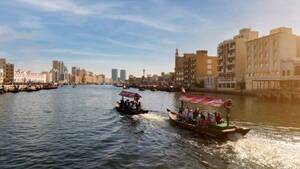
Dubai Creek offers a more memorable approach. Al Fahidi Marine Transport Station is close to the neighbourhood, while traditional abra services connect Bur Dubai with Deira’s souks. Al Ghubaiba is the nearest major bus and marine transport hub. This approach works particularly well when combining SMCCU with the Textile Souk, Spice Souk or an Old Dubai walking itinerary.
Taxis and rideshare vehicles should use Al Musallah Road at the edge of Al Fahidi Historical Neighbourhood. The last section may need to be covered on foot because the sikkas are narrow and largely pedestrian. There is no confirmed dedicated SMCCU visitor car park or published venue parking tariff. Nearby alternatives include parking around Al Seef and the basement car park at Al Fahidi Market, which was built with 300 spaces; availability and charges should be checked on arrival.
Inside the Centre
Expect a hospitable, conversational atmosphere rather than an arena-style arrival. Depending on the programme, check-in may be followed by Arabic coffee and dates, a shared meal, a guided discussion or a walk through the neighbourhood. Visitors using an airline-linked pass must bring valid identification and proof of travel. Arriving about 15 minutes early is prudent.
Meal programmes commonly include Emirati dishes served communally, with the presenter speaking while guests eat and ask questions. Food is central to the interpretation rather than an optional concession. There is no published coat-check service, formal merchandise stand, universal bag-size rule or arena-style security policy at the Al Fahidi house. The Jumeirah Mosque Majlis has a gift shop selling traditional clothing, locally made gifts and souvenirs.
Personal photography is part of many experiences, but organised filming, commercial photography and professional media work require prior approval. During mosque visits, visitors may take photographs in a welcoming setting but must respect instructions and the religious character of the prayer space.
Nearby Amenities
Al Fahidi is best explored before or after the programme. A neighbouring Emirati restaurant provides a convenient traditional meal option, while XVA combines a gallery, café and boutique hotel within the historic district. Al Seef, a short walk towards the creek, offers a wider selection of restaurants, cafés, hotels and waterfront promenades.
There is no bar inside SMCCU. Visitors seeking licensed drinks should look to larger hotels in Bur Dubai or Al Seef rather than the immediate heritage lanes. For an evening programme, pre-arrange the return journey: Metro services do not operate all night, although taxis remain widely available.
What Makes This Centre Special
SMCCU succeeds because the human exchange matters more than displays or technology. Visitors are actively encouraged to ask questions that may feel awkward elsewhere. Recent reviews repeatedly praise the knowledgeable presenters, relaxed humour, quality of the food and opportunity to understand Dubai beyond shopping malls and skyscrapers. A smaller number mention schedule changes or rebooking, making advance confirmation worthwhile. A major visitor-review listing records an overall score of approximately 4.6 from more than 1,300 reviews.
The centre also has measurable cultural reach. Its 2022, 2024 and 2025 participation figures show sustained engagement with tourists, residents, schools, government delegations and businesses. More than 150 regional companies have used its corporate programmes. No venue-specific study quantifies its direct contribution to employment, local spending or Dubai’s GDP, but its role in cultural tourism, workplace integration and heritage education is clearly documented.
Visitor Tips and Accessibility
The United States’ ADA does not apply in the UAE, and SMCCU does not publish an ADA-equivalent certification or complete accessibility audit. Its booking forms invite People of Determination and disabled visitors to describe the support they require. Culture on Wheels vehicles can accommodate two wheelchairs using a hydraulic lift and designated seating.
Remember that Al Fahidi is a restored heritage district. Some lanes have uneven surfaces, narrow passages or thresholds, and rooftop elements may not be step-free. Wheelchair users, visitors with limited mobility and families with large pushchairs should disclose requirements before booking and consider arriving by taxi rather than walking from the Metro.
Casual, respectful clothing is suitable at the Al Fahidi centre. Heritage walks require comfortable shoes, sun protection and water, particularly in warmer months. For Jumeirah Mosque, modest clothing is mandatory: men should avoid shorts and sleeveless tops, while women should cover their arms, legs and hair. Clean kanduras, abayas and headscarves are available to borrow.
Frequently Asked Questions
Is Sheikh Mohammed Centre for Cultural Understanding still open?
Yes. SMCCU remains open and active under its established name, with daily office hours generally published as 8am–8pm. Individual meals, tours and seasonal activities follow their own schedules, so an open office does not mean every programme is available throughout the day.
Is SMCCU a theatre or concert venue?
No. It is primarily a cultural education and heritage centre. Traditional music, Harbia, cooking demonstrations or craft activities may appear during special celebrations, but it does not maintain a regular calendar of touring concerts or plays. Private performance use is possible, subject to the limitations of the heritage building.
How long should I allow for a visit?
Most cultural meals and Al Fahidi heritage tours last about 90 minutes. Desert Friends takes approximately 30 minutes, the Jumeirah Mosque visit about 75 minutes, and Culture on Wheels around two and a half hours. Combined trolley and hospitality programmes can take four hours.
Can I visit the main house without booking a programme?
The office and heritage setting may be accessible during operating hours, but the centre’s most valuable experiences are scheduled and presenter-led. Meals and many tours require reservations. Open House periods offer a more informal format, with displays and staff available for conversation, but these are seasonal rather than guaranteed daily.
Are children welcome?
Yes. The centre serves school groups from kindergarten to university level, and public experiences are designed for adults and children. Several programmes offer half-price tickets for ages seven to 12 and free entry for younger children. Parents should supervise children closely during heritage walks and around animals.
Are vegetarian or allergy-friendly meals available?
Emirati meals typically include several rice, bread, vegetable and dessert dishes, but the centre does not publish a comprehensive allergen or dietary menu. State vegetarian, vegan, gluten-related, allergy or religious dietary requirements when booking. Do not assume a buffet item is free from cross-contact simply because its ingredients appear suitable.
Will I have to sit on the floor?
Traditional meals are normally presented around low tables or serving areas with floor cushions in the courtyard or majlis. This is part of the cultural experience. Visitors who cannot sit comfortably at floor level should request a chair or alternative arrangement in advance through the accessibility-support section of the booking process.
What language are the programmes delivered in?
Public programmes are commonly delivered in English, with presenters able to explain Arabic terminology and local expressions. The team includes speakers with additional language skills, but a specific language should not be assumed for a public session. Private groups can request tailored content and should confirm interpretation requirements before booking.
Is there wheelchair access?
Support is available, but accessibility varies by activity and historic space. The centre asks disabled visitors to identify their requirements when booking, while certain trolley vehicles include a hydraulic lift and space for two wheelchairs. Heritage lanes, thresholds and rooftop areas may present additional barriers, so detailed advance planning is recommended.
What should I wear?
Modest casual clothing is appropriate for the Al Fahidi house, with comfortable footwear for walking. Mosque visitors face stricter requirements: men should cover their shoulders and legs, while women should cover their arms, legs and hair. Suitable traditional garments can be borrowed at Jumeirah Mosque if necessary.
Can non-Muslims join the mosque visit?
Yes. The Jumeirah Mosque programme is specifically designed to welcome non-Muslims and people of different beliefs. It explains Islamic practices, prayer and the mosque’s community role through a guided presentation and open questions. Public visits operate twice daily from Saturday to Thursday and are closed on Fridays.
Can I take photographs?
Personal photography is generally welcomed during cultural and mosque experiences when conducted respectfully. Commercial filming, organised photo shoots, interviews and professional media production require prior approval. Avoid disrupting presenters, photographing other guests without consent or treating the mosque as an unrestricted fashion-shoot location.
Is there parking at the centre?
No dedicated SMCCU visitor car park or fixed parking price is officially published. Drivers generally use public or commercial parking around Al Fahidi, Al Seef or Al Fahidi Market and complete the journey on foot. Allow extra time at weekends and during festivals, when Old Dubai becomes busier.
What is the best time of year to visit?
November to March offers the most comfortable conditions for heritage walks, rooftop dinners and longer explorations around Dubai Creek. Summer visits remain worthwhile, but choose morning programmes, wear sun protection and minimise outdoor walking. Ramadan provides distinctive iftar programming, although schedules change annually with the Islamic calendar.
Are the main centre and Jumeirah Mosque in the same place?
No. The principal SMCCU heritage house is in Al Fahidi, Bur Dubai. Jumeirah Mosque and its majlis, museum and gift shop are on Jumeirah Beach Road in Jumeirah 1. They require separate travel, so always check which location is listed as the meeting point before departing.