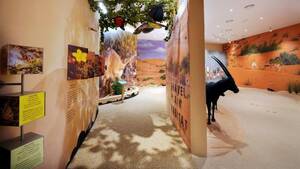
About the Visitor Centre
The venue listed simply as “Visitor Centre” is the Visitor Centre at Al Shindagha Museum, in the Al Shindagha Historical District beside Dubai Creek. It remains open and serves as a museum entrance, information point, orientation space and flexible venue for workshops, exhibitions, receptions and cultural gatherings. It is not primarily a concert hall or conventional theatre.
The centre belongs to a much larger open-air museum of 22 pavilions spread across more than 80 restored houses. These explore subjects including Dubai Creek, the Al Maktoum ruling family, perfumery, poetry, traditional crafts, food, jewellery, healthcare, faith, maritime life and the desert environment. The surrounding historical neighbourhood contains more than 160 heritage buildings.
Al Shindagha Museum’s first phase opened in January 2019 with the Perfume House and Dubai Creek: Birth of a City. Following a much larger conservation and exhibition programme, the expanded museum was inaugurated on 6 March 2023. The Visitor Centre itself was designed as the Expo 2020 Shindagha Welcome Pavilion and subsequently became the principal meeting, ticketing and information point for the museum campus.
This history matters because the centre represents a deliberate bridge between two Dubais. Its modern construction sits among low-rise mud-brick houses in the district where the ruling Al Maktoum family and important trading families once lived. Rather than imitate a historic house, the building uses contemporary engineering, transparency and flexible walls while borrowing materials and proportions from the Creek’s maritime heritage.
Events and Programming
Programming is centred on Emirati heritage rather than mainstream touring entertainment. Visitors are more likely to encounter a coffee ceremony, craft demonstration, family workshop, community meal, design exhibition or cultural reception than a commercial concert. Some activities take place directly in the Visitor Centre; others use it for registration, introductions, prize collection or as the meeting point for events across the museum houses.
The publicly documented programme from 2021 onwards shows this pattern clearly. Expo-era activity in 2021 included exploratory heritage experiences around Al Shindagha. The 2022 summer programme used the Visitor Centre as its daily arrival and collection point for children attending themed museum camps. After the expanded museum opened in 2023, the centre hosted an Eid paper-lantern workshop, while the wider campus offered jewellery, henna, incense, perfume, food and Al Harbiya heritage experiences.
In 2024, the Visitor Centre became a Ramadan gathering space where guests shared Suhoor meals from local food vendors. It was also used as a family meeting point during the Summer Blessings celebration of the date palm. The wider museum’s calendar included storytelling, craft workshops, markets, folk games, guided trails and activities based on Emirati dress, perfume and architecture.
Programming in 2025 included museum workshops during the Sikka Art and Design Festival and an Eid Trail in which children explored the museum before redeeming discoveries for prizes at the Visitor Centre. The museum also continued to operate holiday camps, heritage demonstrations and national celebrations.
Verified 2026 activity included Sikka’s district-wide programme of art, music, talks and hundreds of workshops; Ramadan Nights with an iftar majlis, Emirati cooking, poetry and traditional crafts; a daily 15-to-20-minute Emirati coffee experience at the Visitor Centre; a two-day presentation of fine-watchmaking novelties; and Dubai Dates activities exploring palm culture, date foods and traditional skills.
No complete public archive identifies every private reception or corporate booking held here, and no centre-specific 2027 programme had been publicly confirmed in the material reviewed as of 13 August 2026. Its recurring calendar nevertheless makes its booking profile clear: heritage interpretation, premium exhibitions, workshops, family learning, hospitality-led gatherings and culturally sensitive corporate events.
Most drop-in demonstrations and seasonal workshops are included with museum admission. Camps, specialist courses and invitation-only exhibitions may use separate pricing or registration. The centre does not operate a regular commercial gig calendar, so visitors should not expect conventional concert ticket tiers.
Tickets and Booking
Standard admission covers the operational museum houses rather than only the Visitor Centre. Official admission is presently set at AED 50 for an individual adult, AED 40 per person for groups of five or more and AED 20 for full-time students aged five to 24. Children under five, People of Determination with one companion, senior UAE citizens and valid international museum-card holders receive free admission.
Tickets can be bought in advance through the museum’s digital booking system or from museum ticket desks, including the Visitor Centre. Some vouchers require exchange for a wristband before entering the other houses. Popular festival workshops, camps and limited-capacity sessions should be reserved when registration opens, while normal museum admission is usually straightforward to buy on arrival.
General admission purchases are normally non-refundable. Special-event rules may be different, particularly for private exhibitions and externally organised programmes. Re-entry is not clearly guaranteed in the museum’s main visitor information, so plan to complete the visit before leaving the controlled museum area.
Seating, Capacity and Layout
The Visitor Centre’s published event capacity is 250 people, with an event-space area stated as 583 square metres. An architectural project record separately gives 483 square metres for the original Welcome Pavilion; these figures appear to use different definitions of building and event area. The 583-square-metre figure is therefore best treated as the published hire-space specification rather than a guaranteed unobstructed floor area.
There is no permanent auditorium seating plan. The centre is an adaptable, predominantly open-floor pavilion whose movable glazed walls can contain the room or connect it visually and physically with the surrounding district. Public information does not provide separate theatre-style, classroom, banquet or standing capacities, nor does it identify fixed VIP boxes, balconies or raked seating.
For talks and demonstrations, a central seat with a clear line towards the temporary presentation position will generally provide the most balanced experience. Seating close to the glazed perimeter offers attractive views of the historical houses but may be affected by daylight or movement outside. The final orientation depends on the event organiser’s temporary stage, screen, exhibition or dining arrangement.
The building’s rectangular glazed façade measures approximately 22 by 26 metres. It incorporates 41 pivoting windows, each around 4.3 metres high and 2.2 metres wide. These unusually large moving panels are central to the venue’s character, allowing it to function as an enclosed hall, a shaded plaza or a space flowing into the heritage district.
Architecture and Production Capabilities
X Architects designed the pavilion as a contemporary interpretation of Al Shindagha rather than a replica heritage building. A broad teak roof refers to the wooden dhows that drove Old Dubai’s maritime trade, while transparent pivoting walls preserve views between the centre and the surrounding earthen houses. The design creates a light, low-profile intervention that respects the district’s horizontal scale.
Publicly available venue material does not identify a permanent concert-grade PA, mixing console, microphone inventory, stage size, rigging capacity, lighting desk, projection specification, power distribution, loading bay or dressing rooms. Those details should be treated as event-specific. The museum campus uses extensive interactive media and carefully controlled exhibition lighting, but that does not establish that the Visitor Centre carries a fixed touring-performance package.
The glazed, opening envelope makes the room visually distinctive but means acoustic treatment, blackout and amplified-sound requirements should be assessed for each production. Temporary staging, sound reinforcement, exhibition lighting and screens may be brought in for individual events. Visitors attending a ticketed presentation should rely on that event’s announced layout rather than expecting a standard house configuration.
Getting There and Parking
The Visitor Centre is in Al Shindagha Historical District on Al Khaleej Street, Bur Dubai, beside Dubai Creek. Address numbers vary across mapping systems because the museum occupies a large campus; searching for the Al Shindagha Museum Visitor Centre or its designated drop-off point is more reliable than using an isolated building number.
Al Ghubaiba Metro Station on the Green Line is the closest Metro stop. Exit 4 places visitors near the Visitor Centre, generally within a two-to-five-minute walk. Al Ghubaiba Bus Station is also nearby and serves numerous Dubai and inter-emirate routes.
Water transport is an atmospheric alternative. Al Ghubaiba Marine Transport Station is only a few minutes away and is served by selected ferry routes. Abra services connect the Bur Dubai side of the Creek with Deira, making it easy to combine the museum with the Gold and Spice Souks. Schedules and marine routes vary, so they are best treated as part of the day’s itinerary rather than the only return option.
Taxis and rideshare vehicles can use the museum’s marked drop-off points; Drop-off Point A is the most convenient for the Visitor Centre. Drivers unfamiliar with the museum may recognise Al Ghubaiba Metro Station more readily, so keeping the museum name and district available in Arabic or English can prevent confusion.
Paid public parking is available along Al Khaleej Street, but spaces are limited during festivals and evening programmes. The Al Ghubaiba multistorey public car park is approximately an eight-minute walk and is the more dependable choice for major events. Parking tariffs depend on the applicable public zone and duration.
Inside the Venue
The Visitor Centre is where guests obtain tickets, wristbands, maps and orientation. Staff can explain which houses are operating and help visitors plan a route through the extensive district. The atmosphere is brighter and more informal than a traditional museum foyer, with visual connections to the lanes and neighbouring heritage buildings.
The museum campus provides toilets, People of Determination toilets, baby-changing facilities, prayer rooms, a cloakroom, café facilities, shops and complimentary Wi-Fi. Not every amenity is inside the Visitor Centre itself; facilities are distributed among nearby pavilions. Mobility buggies help visitors travel between houses.
Small bags and backpacks are permitted, but larger backpacks must be checked. Bags may be inspected by security. Food, drinks, chewing gum, smoking and vaping are prohibited inside galleries, although sealed items can remain inside a bag. Event catering is possible when specifically programmed, as demonstrated by Ramadan and hospitality events.
Personal photography is allowed, but commercial photography requires prior permission. Visitors may sketch using pencils and erasers; ink pens, markers, crayons and wet art materials are not allowed in the galleries. Children aged 12 and under must remain with an adult.
Accessibility and Inclusive Facilities
American ADA legislation does not apply in Dubai; local accessibility provisions use the term People of Determination. The majority of museum houses have step-free access, and the Visitor Centre event space is listed as People of Determination accessible. Accessible toilets, staff assistance, complimentary wheelchairs and mobility buggies are available, subject to availability.
Al Shindagha Museum received an Autism-Friendly Certificate in June 2023, making it one of the region’s early certified cultural facilities in this category. The open-air campus still involves movement between buildings, changes in temperature and multimedia exhibits, so visitors sensitive to heat, sound or visual effects may prefer a quiet weekday morning and a shorter planned route.
People of Determination receive free museum entry with one companion. The district’s scale means visitors with limited stamina should request a wheelchair or buggy early, particularly during large festivals when demand can increase.
Nearby Amenities
The immediate area is stronger for heritage dining, cafés and Creek views than for late-night nightlife. Restaurants near the waterfront serve Emirati, Arabic, seafood, Indian, Pakistani and Nepalese dishes. Al Fahidi’s courtyard restaurants and Al Seef’s waterfront dining are roughly 10 to 20 minutes away on foot or by a short taxi, depending on the weather.
Allow extra time if dining before a scheduled event: traffic around Al Ghubaiba and Bur Dubai can become congested in the evening. In summer, use the Metro or a taxi even for relatively short distances. For drinks after an event, licensed venues are concentrated in Bur Dubai hotels and around Port Rashid rather than inside the museum district.
Accommodation ranges from budget and mid-range hotels around Al Ghubaiba and Al Fahidi to waterfront properties at Al Seef and the Queen Elizabeth 2 hotel at Port Rashid. Staying near the Green Line is useful for visitors who want to combine Al Shindagha with Deira, the souks and other parts of Old Dubai.
What Makes This Venue Special
The Visitor Centre succeeds because it does not separate visitor services from the story of the place. Its teak roof recalls Creek dhows, its opening glass walls turn an indoor hall into a shaded majlis-like gathering place, and its transparent façade keeps the restored district visible even during contemporary exhibitions and receptions.
The broader restoration retained or reconstructed 162 historical buildings using documentary research, community interviews, traditional materials and historic construction techniques. More than 100 community members contributed objects, stories and memories to the museum. This gives the complex value beyond tourism: it records living memory while providing work and visibility for guides, craftspeople, artists, educators, food businesses and cultural organisations.
Recent visitors consistently praise the hospitality, knowledgeable staff, interactive exhibits, air-conditioned houses and the opportunity to understand the Dubai that existed before the towers. Common cautions are the amount of time required, brief outdoor walks in the heat, limited nearby parking and the restored district’s intentionally curated character. Many visitors discover that two hours is insufficient to see every pavilion.
Visitor Tips and Information
Arrive at opening time for cooler outdoor transfers and quieter galleries, or visit in the late afternoon when the Creek area becomes more atmospheric. Allow at least two to three hours for selected highlights and four hours or more for a broad museum visit. The normal opening schedule is daily from 10:00 to 20:00, with final admission at 19:00; Ramadan and festival hours can differ.
Wear comfortable walking shoes and modest, lightweight clothing. There is no published formal dress code for ordinary admission, but respectful attire suits the cultural setting. Bring sun protection for the walks between houses, even though the pavilions are air-conditioned.
Do not try to see every building without a plan. Begin with Dubai Creek: Birth of a City for historical context, then choose subjects that interest you most. Ask for the day’s activity schedule at the Visitor Centre, as demonstrations and workshops may not be obvious from the outdoor map.
Frequently Asked Questions
Is the Visitor Centre a separate attraction from Al Shindagha Museum?
No. It is the main welcome, orientation and event building within Al Shindagha Museum. You can enter the centre to buy or collect tickets, receive a map and ask about activities before visiting the surrounding houses. Some special events take place inside it, but ordinary admission is intended for the museum complex as a whole.
What is the capacity of the Al Shindagha Visitor Centre?
The published maximum event capacity is 250 people. A museum venue guide lists 583 square metres of event space, although an architectural record gives 483 square metres for the original Welcome Pavilion building. No reliable public breakdown has been issued for theatre, classroom, banquet and standing layouts, so capacity may be reduced by staging or exhibition installations.
Does the Visitor Centre have fixed seats?
No fixed auditorium or raked seating plan is published. The pavilion has a flexible open floor and movable glazed walls, allowing organisers to install chairs, tables, display cases or temporary staging. Your view therefore depends on the particular event layout. For talks, central seating is generally preferable to positions beside entrances or active exhibition areas.
What time does the Visitor Centre open?
Normal museum hours are 10:00 to 20:00 daily, with the final ticket sale or admission at 19:00. The Visitor Centre generally follows those hours. Ramadan, Eid, summer programmes and festivals can introduce shortened or extended schedules. Evening events may continue beyond normal admission hours when they form part of an announced programme.
Can I buy a ticket at the door?
Yes. Tickets are normally available from the Visitor Centre and other designated museum desks. Advance purchase is sensible for school holidays, weekends and festivals, but standard museum admission is not usually dependent on a timed performance seat. Limited workshops, camps and private exhibitions may require separate registration even when the museum itself remains open.
How long should I spend at Al Shindagha Museum?
Allow two to three hours for the main highlights and at least half a day if you want to visit most operational houses. The site is spread across a historical neighbourhood rather than one building. Visitors frequently underestimate walking time, multimedia presentations and conversations with guides. A focused route is more rewarding than rushing through every pavilion.
Which Metro station is closest?
Al Ghubaiba Metro Station on the Green Line is the nearest station. Exit 4 is particularly convenient for the Visitor Centre and its main drop-off area. The walk generally takes only a few minutes and is mostly straightforward. This is usually the easiest transport option during festivals, when nearby street parking fills quickly and road traffic becomes slow.
Can I reach the museum by abra or ferry?
Yes. Al Ghubaiba Marine Transport Station is close to the museum, while local abra services cross Dubai Creek between Bur Dubai and Deira. This makes the Visitor Centre easy to combine with the Gold and Spice Souks. Ferry routes operate less frequently than abras or the Metro, so check the day’s timetable before depending on a particular sailing.
Where should I park?
Paid public spaces are available along Al Khaleej Street but are limited, especially during Sikka, Ramadan evenings and national celebrations. The Al Ghubaiba multistorey public car park is a more dependable alternative and is approximately eight minutes away on foot. Allow additional time to find the museum entrance after parking because the campus covers several blocks.
Is the Visitor Centre wheelchair accessible?
Yes. The event space is identified as accessible for People of Determination, and most museum houses provide step-free access. Accessible toilets, complimentary wheelchairs and mobility buggies are available, subject to demand. Because the museum is spread between buildings, guests with limited mobility should request assistance before beginning their route rather than waiting until they reach a distant pavilion.
Is the museum suitable for autistic visitors?
The museum received an Autism-Friendly Certificate in 2023. Its layout allows visitors to select a shorter route and take breaks between houses, although some pavilions contain projections, audio and interactive media. Weekday mornings are generally quieter. Visitors sensitive to temperature changes should remember that short outdoor sections connect the air-conditioned exhibition houses.
What is the bag policy?
Small backpacks and everyday bags may enter the galleries. Large backpacks must be left at the designated check-in or cloakroom area, and security staff may inspect bags or parcels. Keep drinks and food sealed inside your bag because consuming them in exhibition spaces is prohibited. Travelling light makes the outdoor-to-indoor route through the district considerably easier.
Can I take photographs?
Personal photography is allowed unless temporary signs or event staff indicate otherwise. Commercial photography, professional shoots and organised filming require permission. Flash, tripods and additional equipment may be restricted around sensitive objects or busy installations. If attending a private exhibition or corporate reception, follow that organiser’s policy because it may be stricter than normal museum admission rules.
Are food and drinks available?
The museum campus includes café facilities, while the surrounding district has several restaurants and Creekside cafés. Eating, drinking and chewing gum are not permitted in galleries. Food may be served inside the Visitor Centre during specifically catered programmes, such as Ramadan gatherings, but visitors should not assume ordinary museum admission includes refreshments beyond occasional hospitality demonstrations.
Can children attend events at the Visitor Centre?
Yes. Family education is a major part of the programme, with craft workshops, heritage trails, coffee demonstrations, camps and festival activities. Children aged 12 and under must remain with an adult during a normal museum visit. Individual workshops may set minimum ages because of tools, materials or content, and limited-capacity sessions can fill before the general museum does.
Is the Visitor Centre a good venue for concerts?
It can accommodate small cultural performances and amplified presentations, but it is not a purpose-built concert hall. There is no published permanent stage, concert PA, rigging grid or fixed seating. The glazed movable walls and flexible floor are better suited to receptions, exhibitions, workshops, talks and heritage performances using event-specific temporary production equipment.
What should I wear?
There is no formal dress code for standard museum admission. Comfortable, modest clothing and supportive walking shoes are the practical choice. A light layer can help in strongly air-conditioned galleries, while sunglasses, a hat and sunscreen are useful between buildings. Private receptions, religious-season programmes and corporate events may state a more specific dress expectation.