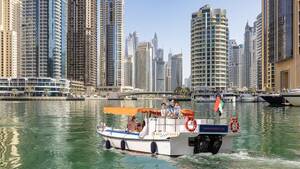
About Dubai Harbour Marina
Dubai Harbour Marina is not a conventional auditorium with one entrance, seating plan or capacity. It is the marina at the heart of Dubai Harbour, a large waterfront district between Palm Jumeirah and Bluewaters Island, beside Dubai Marina and Jumeirah Beach Residence. The destination remains open and operating under the Dubai Harbour name as of 15 August 2026.
The current marina comprises 705 berths divided between Harbour Marina, principally serving charter vessels, and Bay Marina, designed for superyachts and private owners. Purpose-built berths can receive yachts up to 160 metres, with direct access to the Arabian Gulf, ample water depth and no air-draught restriction. Marina services, security and berthing assistance operate around the clock.
For visitors, capacity depends entirely on the event footprint. The marina itself has no fixed public attendance figure. The separate open-air Ushuaïa Dubai Harbour Experience has been publicised as an 18,000-capacity music venue, while boat shows and technology exhibitions spread across temporary halls, pontoons, quays and outdoor display areas. The wider Dubai Harbour development covers approximately 1.85 million square metres. Its twin cruise terminal occupies more than 120,000 square metres and sits on a pier extending over 910 metres.
History and Development
Dubai Harbour was announced on 2 January 2017 as a major economic and tourism project. Early plans proposed a 1,400-berth marina alongside a cruise port, hotels, residences, retail, restaurants and event facilities. The masterplan evolved during construction, with later proposals citing 1,100 berths and the completed marina now advertising 705. This distinction matters when comparing older articles with present-day visitor information.
The development was constructed on reclaimed land over roughly four years. AECOM Middle East was the lead design firm for a complicated infrastructure package involving marine works, underground utilities, roads, bridges, promenades and the cruise facilities. Rather than one monumental building, its architectural identity comes from long waterfront sightlines, low-rise marina structures and an open skyline framed by Ain Dubai, Palm Jumeirah and the towers of Dubai Marina.
The marina launched in 2020, but the pandemic delayed full use of some facilities. Dubai Harbour Cruise Terminal welcomed its first passengers on 25 November 2021, when AIDAbella arrived with approximately 1,200 passengers and 600 crew. Its two terminal buildings were designed to process more than 3,250 passengers per hour and handle two mega cruise ships simultaneously.
Development has continued in phases rather than through a conventional renovation. Recent additions include new dining destinations, an 845-space multi-storey car park and a major access bridge from Sheikh Zayed Road. In 2024, the marina also became the first to receive Five Gold Anchor, Clean Marina and Superyacht Ready accreditation simultaneously. Its environmental programme includes waste collection, pump-out services, a sustainability committee and a floating waste-collection device.
Events and Programming
Dubai Harbour’s programme reflects its flexible waterfront setting. It accommodates yacht exhibitions, technology conferences, automotive festivals, sporting activations, fan zones and electronic music productions rather than a traditional season of theatre, comedy or seated concerts.
The first major events established that pattern. NoFilterDXB transformed the former Dubai motor show into an outdoor automotive festival among the yachts in November 2021. In 2022, the Dubai International Boat Show moved to Dubai Harbour, bringing more than 800 marine and lifestyle brands to its new waterfront home. The same year included harbour running events, an adventure-sports exhibition and a month-long FIFA World Cup fan festival with match screenings, DJs, musicians and other entertainment.
During 2023 and 2024, the programme broadened further. Dubai Harbour served as a finish location for the UAE Tour cycling race and became the home of Expand North Star, a major start-up and investor gathering that attracted 1,800 start-ups from more than 100 countries in 2023. Future Blockchain Summit, financial-technology events and associated business conferences followed in 2024.
Large-scale dance music became a defining part of the destination after the Ushuaïa Dubai Harbour Experience opened in October 2024. Its first season ran into May 2025 and featured festival-scale electronic programming led by artists and concepts including Calvin Harris, Adriatique, Black Coffee, Francis Mercier and Michael Bibi. The venue reported welcoming more than 90,000 music fans during its debut season.
The second season continued from late 2025 into May 2026 with Anyma, Calvin Harris, David Guetta, CamelPhat, Monolink, Francis Mercier, Argy, ARTBAT and a closing performance by Swedish House Mafia. The bookings demonstrate a clear preference for house, melodic techno, Afro house and high-production audiovisual concepts rather than conventional band concerts.
For the remainder of 2026, the principal confirmed marina event is the Dubai International Boat Show from 25 to 29 November. It was moved from April, and organisers have indicated that November will become its permanent annual position. The show includes Superyacht Avenue, marina displays, diving, marine technology, watersports and evening entertainment. No third Ushuaïa season or detailed 2027 marina entertainment calendar had been publicly confirmed by 15 August 2026.
Tickets and Booking
There is no admission charge simply to enter public parts of the wider waterfront district, but exhibitions, concerts and private yacht experiences are separately ticketed. Buy through the event organiser’s authorised sales channel and check that “Dubai Harbour”, “Dubai Harbour Cruise Terminal” or “Ushuaïa Dubai Harbour Experience” appears clearly on the booking; similarly named locations elsewhere in Dubai can cause confusion.
Popular electronic events frequently use presales and release tickets in tiers. The inaugural Calvin Harris presale sold out in under an hour. Historically advertised starting prices have ranged from approximately AED150 for selected festival early-bird tickets to around AED250 for major electronic headliners, but later releases, premium areas and VIP tables can cost substantially more. These figures are useful benchmarks, not guaranteed future prices.
Business exhibitions may be free with advance registration, trade-only or divided into public and professional sessions. Boat-show tickets generally cover the public displays and family activities, while private yacht appointments and hospitality lounges can require separate invitations. Door sales should never be assumed for a high-demand event.
Seating and Layout
Most marina events are built from scratch, so there is no permanent seating chart. Boat shows combine wide outdoor aisles, floating pontoons, temporary exhibition structures, hospitality decks and on-water demonstrations. Technology events use temporary halls with stages, stands and conference seating. Visitors may cover considerable distances, making comfortable footwear important.
Ushuaïa is principally a standing, general-admission experience facing a large outdoor stage. Premium and table areas provide more space and elevated or side-on perspectives, but their exact arrangement changes with the production. For maximum atmosphere, stand centrally within the main crowd; for easier movement and less intense sound, use the rear or outer edges. Waterfront wind can also affect temperature and sound direction.
There is no universally “bad seat”, because there are usually few conventional seats. Possible drawbacks include restricted views behind tall guests, temporary structures or production towers. Arrive before the headline set if a central sightline matters. At marine exhibitions, late-afternoon light gives the best skyline atmosphere, although pontoons can become congested around major yacht launches.
Getting There and Parking
Dubai Harbour is on King Salman Bin Abdulaziz Al Saud Street, reached from the Mina Seyahi and Dubai Marina side of the city. Taxis and app-based private-hire cars are generally the simplest option, particularly for evening events. Use the exact event entrance shown on your booking because marina, cruise-terminal and concert access points can be far apart.
Mina Seyahi is the most useful nearby Dubai Tram stop. Al Khail is a practical Metro connection when an organiser operates a shuttle, although regular event-day transport arrangements vary. Past boat shows have provided buses from Al Khail Metro Station, Mina Seyahi Tram Station, Skydive Dubai and Palm Jumeirah’s gateway parking area. These temporary services should not be assumed for every event.
Harbour West Car Park opened in 2026 with 845 spaces across nine storeys. It uses ticketless number-plate recognition and automatic electronic payment, with a published rate of AED10 per hour or part thereof. The cruise-terminal parking area has separately published a first-hour charge of AED20 followed by AED10 per hour. Charges, validation offers and event arrangements can change, so read the entrance signage before parking.
Traffic is the most common visitor complaint. A new 1,500-metre, four-lane bridge connecting Interchange 5 on Sheikh Zayed Road directly with Dubai Harbour was reported 90 per cent complete in June 2026, with completion scheduled for the third quarter. It is designed to cut the corresponding journey from approximately 12 minutes to three, but road works may still affect access until the route fully opens.
Inside the Venue
Expect an open, contemporary waterfront atmosphere rather than an enclosed arena. Entry procedures depend on the event and may include ticket scanning, identity checks, bag inspection and wristband collection. Permanent marina services include public Wi-Fi, concierge support, buggy transport, waste collection, ice, bunkering, pump-out facilities and 24-hour assistance for authorised boat users.
Food and drink provision ranges from permanent restaurants to temporary festival bars, cafés and food stalls. Public washrooms are available around the principal facilities, with additional temporary units at major events. Merchandise, cloakrooms, charging points and cashless payment options are organiser-dependent. Travel light because large bags can slow security screening and may be refused at music events.
Dubai Harbour does not publish one permanent sound or lighting specification because productions install their own systems. For Adriatique’s 2024 audiovisual show, suppliers deployed approximately 1,000 square metres of outdoor LED screens, an L-Acoustics K1, K2 and KARA II system with KS28 subwoofers, DiGiCo control, a grandMA3 lighting console and moving fixtures from several major manufacturers. The system was engineered for even coverage at 110 dB. This illustrates the venue’s production potential, not a guaranteed specification for every event.
Accessibility and Inclusive Facilities
The American ADA standard does not apply in the UAE. Dubai uses local universal-design requirements and the term “People of Determination”. Dubai Harbour Cruise Terminal is wheelchair accessible and provides seating, washrooms, dedicated parking, taxi areas and step-free passenger routes. Marina buggy service can help with longer distances, but access to pontoons and temporary event structures may vary.
Anyone needing a wheelchair viewing position, companion access, accessible toilet or reduced walking route should confirm arrangements before buying an event ticket. Provide the organiser with details of mobility, visual, hearing or hidden-disability requirements. Taxi drop-off is usually preferable to walking from the tram when heat, crowds or limited stamina are concerns.
Nearby Amenities
L’Amo Bistrò del Mare at Dubai Harbour Yacht Club provides Italian seafood, alfresco seating and direct marina views. Bar du Port offers drinks and dining in a lively Riviera-inspired setting. The planned Anchor dining destination is intended to expand the permanent food-and-beverage offering, but visitors should not assume that every announced outlet is already trading.
Additional restaurants, cafés and hotels are concentrated around Mina Seyahi, Dubai Marina and JBR. Dubai Marriott Harbour Hotel & Suites and Habtoor Grand are among the established nearby accommodation choices. For a late event, staying within Dubai Marina or Mina Seyahi can be worthwhile because walking or taking a short taxi may be faster than crossing the city after closing time.
What Makes Dubai Harbour Marina Special
Few event settings combine superyachts, cruise ships, a major skyline and festival-scale production so closely. The marina can function as an international yacht marketplace during one week, a technology campus during another and an 18,000-person dance venue during winter. Its direct open-sea access also makes the water part of the event space rather than a decorative backdrop.
The venue reconnects modern Dubai with its seafaring identity while presenting that relationship through contemporary tourism, entertainment and engineering. The annual boat show celebrates both global yacht builders and the UAE’s maritime industry; traditional dhow events nearby provide a cultural counterpoint to the superyachts and electronic stages.
Visitor Experiences and Practical Tips
Visitors consistently value the sunsets, yacht views, outdoor atmosphere and sightlines towards Ain Dubai and the surrounding skyline. The strongest criticism concerns road congestion, slow event exits and competition for parking. Residents have also reported sound carrying across the water during late-night concerts. These are anecdotal experiences, but they are frequent enough to justify arriving early and planning a patient departure.
Bring an original photo ID when required, a fully charged phone, comfortable closed footwear and a light layer during cooler winter evenings. Avoid oversized bags, tripods, drones, professional filming equipment and outside food or drink unless the event explicitly permits them. UAE rules also require visitors to respect personal privacy when photographing others and to avoid offensive clothing or behaviour.
Economic and Cultural Impact
No independent public study isolates Dubai Harbour Marina’s total economic contribution. Its influence is nevertheless visible through cruise tourism, yacht servicing, hospitality, transport and major events. The boat show advertises more than 32,000 visitors, 1,000 brands and 200 boats or watercraft, while Expand North Star has brought thousands of founders and investors to the waterfront.
These programmes support Dubai’s wider ambitions in maritime tourism, international business events and winter entertainment. They also bring challenges, particularly traffic, noise and pressure on nearby residential districts. The new car park and access bridge represent practical attempts to balance destination growth with the everyday needs of residents, workers and visitors.
Frequently Asked Questions
Is Dubai Harbour Marina the same place as Dubai Marina?
No. Dubai Harbour is a separate waterfront development beside the northern end of Dubai Marina, between JBR, Palm Jumeirah and Bluewaters Island. Dubai Marina is the larger residential district built around an inland canal. Check your destination carefully because a taxi journey to “Dubai Marina” may leave you some distance from the correct Dubai Harbour event entrance.
Does Dubai Harbour Marina have a fixed visitor capacity?
No single capacity applies to the marina. Its permanent specification is 705 vessel berths, not an audience figure. Temporary exhibitions and festivals receive capacities based on their approved footprint, exits and facilities. The dedicated Ushuaïa open-air venue has been promoted with an 18,000-person capacity, but that number does not apply to boat shows, cruise operations or other harbour events.
Can the public walk around Dubai Harbour without an event ticket?
Publicly accessible waterfront and dining areas can be visited without a concert or exhibition ticket. Access to pontoons, private marinas, cruise processing areas, backstage zones and temporary event compounds is controlled. Security may redirect pedestrians during major events or ship operations, so do not assume every quay or yacht pier is part of a public promenade.
What is the best time to arrive for a concert?
Aim to reach the Dubai Harbour district 60 to 90 minutes before the time you actually want to enter. This allows for traffic, walking from the car park, security and queues. For a major headliner or holiday event, allow longer. Arriving after the advertised headline time risks missing part of the performance because entry and vehicle queues can peak simultaneously.
Are Dubai Harbour music events seated or standing?
Most large music events are standing, with separate premium platforms or table areas. Temporary seating may appear for selected productions, but it should never be assumed. Guests who cannot stand for extended periods should arrange accessible viewing or hospitality seating before purchasing. The outer and rear sections usually provide more personal space than the central dancefloor.
Are children allowed at Dubai Harbour events?
Age rules depend on the programme. The boat show is family-friendly and has previously included children’s activities, while nightclub-style festivals can be restricted to adults or guests aged 21 and over. Never use the marina’s general visitor status as evidence that children may enter a ticketed event. The age printed in the event’s admission conditions takes precedence.
Is identification required?
Carry an original passport, Emirates ID or other accepted government-issued photo identification whenever attending a ticketed event. It may be needed for age verification, ticket-name checks or entry control. A photograph stored on a phone may not be accepted. Cruise passengers and international yacht arrivals face additional immigration and customs documentation requirements.
What should I wear to Dubai Harbour?
For exhibitions and daytime visits, lightweight smart-casual clothing, sun protection and comfortable shoes work best. Evening dance events generally allow fashionable casual clothing, but beachwear, offensive slogans and unsuitable footwear may be rejected. Marina pontoons can move slightly and become slippery, so stable footwear is preferable to narrow heels when visiting on-water displays.
Can I bring a large bag or luggage?
Avoid bringing luggage or large backpacks to concerts. Bag limits vary, and storage or cloakroom facilities are not guaranteed. Small handbags and compact personal bags are easier to inspect. Cruise passengers should follow their operator’s baggage process rather than carrying cases into unrelated public areas. Essential medical equipment should be declared to security on arrival.
Is professional photography allowed?
Casual phone photography is generally expected in public areas, provided other people’s privacy is respected. Professional cameras, tripods, commercial filming and drones may require prior permission from management or the event organiser. Security has previously restricted tripod-based photography. Stage productions may impose additional recording rules to protect artists, guests and copyrighted content.
Is there Wi-Fi at Dubai Harbour Marina?
Public Wi-Fi is included among the marina’s advertised services, and complimentary connectivity is provided in the cruise terminals. Performance can weaken during heavily attended events when thousands of guests use mobile networks simultaneously. Save your ticket, taxi details and meeting point as screenshots before arrival rather than relying entirely on live connectivity.
Can I arrive at Dubai Harbour by boat?
Authorised yacht owners, charter operators and marina guests can use the harbour’s direct access from the Arabian Gulf, subject to reservations, permits and clearance procedures. International arrivals must coordinate customs inspection and keep passengers, crew, pets and goods aboard until clearance is complete. Casual visitors cannot simply berth a private boat without prior marina arrangements.
Does Dubai Harbour have electric buggy transport?
Buggy service is listed among the marina’s permanent facilities and can assist authorised marina users travelling between operational areas. It should not be treated as a guaranteed public shuttle for every concert or exhibition. Large events may introduce their own transport systems, while some routes remain pedestrian-only for safety and crowd-control reasons.
Are outdoor events cancelled in bad weather?
Dubai Harbour’s open-air events can be affected by strong wind, rain, extreme heat or other safety concerns. Organisers may delay, modify or cancel programming according to their own terms. Do not assume a show will be cancelled merely because conditions are uncomfortable. Check the instructions issued with your ticket and retain proof of purchase until the event is completed.
Where should a group meet if mobile service fails?
Choose a fixed landmark before entering, such as the entrance to your named car park, a clearly labelled event gate or a permanent restaurant. Avoid vague meeting points such as “by the marina”, because Dubai Harbour covers a large area with several quays and entrances. Groups should also agree whether to meet inside or outside security, as re-entry may not be allowed.
How long should I allow to leave after a major event?
Allow at least 45 to 90 minutes for a large crowd to disperse, and potentially longer during road works or simultaneous events in JBR and Dubai Marina. Waiting at a restaurant or designated pickup area can be more comfortable than joining the first taxi surge. Never arrange a tightly timed airport transfer immediately after a major harbour concert.