About Las Vegas Motor Speedway
Las Vegas Motor Speedway is an open-air motorsports and entertainment complex at 7000 Las Vegas Boulevard North, approximately 10 miles north of downtown Las Vegas. Rather than one stadium, it is a roughly 1,000-acre campus containing a 1.5-mile NASCAR tri-oval, The Strip dragway, the paved Bullring, a half-mile dirt oval, road courses, an off-road area, infield facilities and large paved event spaces. It remains open and active under the Las Vegas Motor Speedway name.
The main oval has 20-degree banking in its turns, 9- to 12-degree banking on the straightaways, 102 suites, high-speed Wi-Fi, reflective Musco lighting and a 60,000-square-foot media center. Published track specifications list 123,000 seats, although modern reporting has cited a lower usable capacity following seating reductions. Capacity therefore depends on which sections and event configuration are open.
Other permanent capacities include 8,200 seats at the Dirt Track and 5,400 at the Bullring. The Strip’s spectator configuration varies, while its adjacent lighted paddock provides 1.2 million square feet of unobstructed asphalt. Festival attendance should not be confused with stadium capacity: multi-night totals include repeat visits across several days.
History, Architecture and Development
The property’s racing roots reach back to the early 1970s, when a drag strip and road course operated near the present site. A paved short oval followed in 1985. The current superspeedway emerged from a major 1990s development led by Las Vegas racing and casino figures, opening in September 1996 with an Indy Racing League event won by Richie Hearn. NASCAR arrived immediately afterward, and Mark Martin won the first Cup Series race in March 1998.
Speedway Motorsports acquired the complex in December 1998 for approximately $215 million. The Strip opened in 2000, and the short oval was refurbished and renamed the Bullring. A major 2006 redevelopment increased the superspeedway’s banking, relocated pit road and added the interactive Neon Garage and modern media center. The Strip was rebuilt as a four-lane facility in 2017–2018, using an extended tunnel, fiber-optic timing infrastructure, substantial concrete and more than 225,000 pounds of reinforcing steel.
The venue’s history also includes the tragic 2011 IndyCar finale in which two-time Indianapolis 500 winner Dan Wheldon was killed. That event remains a somber part of the speedway’s legacy. More recent milestones include securing a second annual NASCAR Cup weekend in 2018, continued growth of Electric Daisy Carnival and a 2026 plan to repave the Bullring for expanded future programming.
Events and Programming
The annual calendar is anchored by spring and fall NASCAR weekends, traditionally combining the Cup Series with NASCAR’s second-tier national series and, through recent seasons, selected Truck Series racing. The fall Cup race forms part of the championship run. Fan zones, driver appearances, concerts, hauler parades, garage experiences and charity events turn these weekends into multi-day festivals rather than stand-alone races.
The Strip hosts two national NHRA weekends each year: a spring four-wide meeting and a fall championship event. Between them are bracket races, street-legal programs, divisional competition, test sessions and junior drag racing. Top Fuel and Funny Car machines exceed 330 mph, while the Strip’s four-lane configuration is one of only two used for national four-wide competition.
From 2021 through 2026, the campus also programmed Bullring stock-car nights, regional touring series, dirt-track racing, driving schools, corporate rentals, charity laps, automotive events, the Open Wheel Showdown and the winter Glittering Lights drive-through. The 2021 calendar alone encompassed more than 1,400 activities, including two NASCAR tripleheaders, two NHRA national events, local racing, corporate bookings and Electric Daisy Carnival.
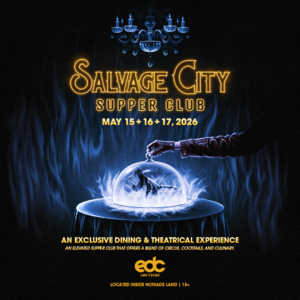
Electric Daisy Carnival has occupied the complex since 2011 and transforms it with temporary stages, art, carnival rides and overnight dance-music production. Recent lineups have included Alesso, Armin van Buuren, Carl Cox, Afrojack, Amelie Lens and Alison Wonderland, while the 2026 anniversary featured Kaskade, John Summit, Martin Garrix, FISHER, Tiësto, Underworld, The Prodigy and Peggy Gou. More than 500,000 cumulative visits were anticipated for the three-night 2026 edition.
Programming will expand further in 2027. Two NASCAR weekends remain scheduled, while Electric Daisy Carnival has announced two separate three-night weekends connected by an extended program of events. The festival’s organizers have said each weekend will use the same production and lineup while operating at a reduced nightly capacity.
Tickets and Booking
Tickets are sold through the speedway’s official box office and digital channels, with mobile delivery standard for NASCAR and many other events. Popular Cup weekends, premium clubs, suites, garage access, camping and festival packages generally go on sale months in advance. Download digital tickets to a mobile wallet before traveling because cellular service can slow when large crowds arrive.
Prices vary widely by program. Local Bullring races have recently cost about $15 in advance or $20 on event day, with selected free community-ticket promotions. Open Wheel Showdown tickets have been approximately $30–$35 per night. National racing tickets typically range from tens of dollars for basic seats to several hundred dollars for premium hospitality, while major festival passes cost several hundred dollars. Youth discounts are common at NASCAR and Bullring events.
Seating and Layout
The main NASCAR grandstands run along the frontstretch. Higher rows provide the clearest overview of the full tri-oval, pit road and developing passes, while lower rows maximize speed, engine noise and proximity. Seats near the start-finish line are best for introductions, pit activity and the finish; sections toward Turns 1 and 4 offer stronger views of corner entry, restarts and side-by-side racing.
Main-grandstand rows include drink rails, legroom and storage beneath the rail. Premium choices include clubs, suites, loge boxes and the Blackjack Club. The Neon Garage is an add-on rather than a conventional seat: it offers close views of crews, cars, driver appearances and Victory Lane. Fans who want to follow strategy should prioritize elevated seating; those seeking atmosphere may prefer lower sections or garage access.
The Bullring creates an intimate short-track experience, and its Stockyard spaces overlook Turns 3 and 4 from a tailgating area. The Dirt Track and The Strip use their own reserved and general-admission layouts. At drag racing, sit near the starting line for staging and the hardest launch impact, or farther downtrack to appreciate acceleration and speed. Hearing protection is strongly recommended everywhere.
Getting There and Parking
Drivers from the Strip, downtown and western Las Vegas generally use Interstate 15 North to Exit 54 at Speedway Boulevard. Visitors approaching from Henderson or southeastern neighborhoods can use US 95 and Las Vegas Boulevard North. Major events employ special traffic patterns, so follow police, signs and parking attendants rather than relying solely on navigation instructions. Arriving early is one of the most effective ways to reduce delays.
General parking for NASCAR is normally free in large surrounding lots, including the Blue and Brown areas. Paid premium lots reduce walking distance. Lot 5 is the designated taxi and rideshare area on the current facility map. Bullring spectators use a separate entrance from Hollywood Boulevard, where 2026 parking is $12 and cashless. Tailgating is allowed in public lots subject to fire-lane, canopy, grilling and conduct rules.
Event-specific, reserved shuttle buses have operated from the Strip and downtown for NASCAR weekends. Regular Route 113 bus service extends into the industrial area north of the speedway, but it is not equivalent to a front-gate event shuttle and service north of Craig Road is less frequent. The sprawling property, desert exposure and controlled traffic routes make ordinary public transit and walking impractical for most major-event visitors.
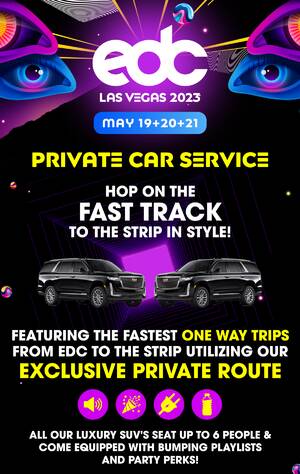
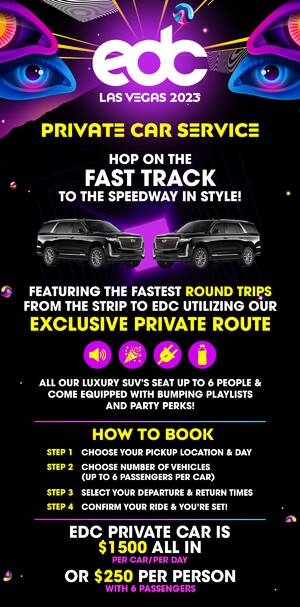
Traffic is the most frequent visitor complaint. Recent attendees describe smooth arrivals when traveling early but waits of an hour or more when leaving with the main crowd, particularly after all-night festivals. Rideshare surge pricing and pickup queues can also be substantial. Camping or an official shuttle may be worth the cost when avoiding the post-event drive is a priority.
Inside the Venue
Entry procedures depend on the event. NASCAR weekends use digital tickets, bag inspection and a cashless system for concessions and merchandise; no ATMs are available in the main speedway operation. The standard main-grandstand policy permits up to two bags per person, each no larger than 18 by 18 by 14 inches. Clear bags are recommended and receive faster screening, but are not mandatory.
Coolers and outside alcohol are prohibited. At the main oval, each guest may generally bring one nonalcoholic drink up to 64 ounces and one small food item. The Bullring, Dirt Track and Strip have published stricter limits, commonly a 20-ounce drink and smaller bags, so use the rules supplied with the specific event rather than assuming NASCAR policies apply campus-wide.
Concessions commonly include burgers, hot dogs, nachos, pizza, barbecue, coffee, soft drinks, water and beer. Specialty choices and merchandise expand during national weekends, particularly around the Fan Zone, Neon Garage and Nitro Mall. Permanent and temporary restrooms are distributed around each event footprint, while mobile medical teams patrol during major programs.
The oval uses Musco reflective lighting and high-speed Wi-Fi; The Strip has broadcast-quality Musco lighting, an available PA system, electricity and fiber-optic timing infrastructure. Public specifications do not identify a permanent arena-style concert audio or touring-lighting package. Large festivals and concerts therefore bring event-specific temporary stages, line arrays, video, lasers and lighting systems.
Accessibility and Inclusive Facilities
Accessible services include designated seating, ADA parking, trams, golf-cart transportation routes and assistance between parking areas, gates and the infield. Accessible parking locations and pickup points appear on major-event maps. Elevators serve enclosed suites at The Strip and Dirt Track, and transportation is available to the Neon Garage during NASCAR weekends. Service animals are permitted, while pets are not.
Guests who need wheelchair locations, companion seating or mobility transportation should arrange accommodations before event weekend. Distances across the campus are considerable, some routes cross asphalt or gravel, and service demand increases near opening and closing times. Festival accessibility programs, including accessible camping, operate separately from the speedway’s racing procedures.
Nearby Amenities
The immediate speedway corridor is industrial and has limited dining. Nearby practical choices include Iron Skillet by the truck stop, Smoking Pig BBQ, Viva Zapatas Mexican Restaurant and Hitchin’ Post Saloon and Steakhouse. For greater variety, eat near Craig Road, downtown or your hotel before leaving for the venue. Major-event traffic makes a quick restaurant trip between sessions unrealistic.
The closest lodging includes the motel beside the speedway and hotels around Nellis Boulevard. Additional options include properties near Craig Road, Cannery Casino and the North Las Vegas Speedway commercial district. Strip hotels provide more entertainment but create a longer race-day commute. Book early for NASCAR, NHRA and Electric Daisy Carnival because nearby rooms are limited and event pricing can rise sharply.
What Makes Las Vegas Motor Speedway Special
Few American venues combine top-level stock-car racing, four-wide drag racing, grassroots short-track competition, dirt racing, driver experiences and one of the world’s largest electronic-music festivals on one property. The desert setting makes the illuminated oval, festival stages and holiday displays especially dramatic after sunset.
The Bullring has helped develop Las Vegas-area racers including Kyle Busch, Kurt Busch, Brendan Gaughan, Noah Gragson and other national competitors. The complex also has a direct community role: its children’s charity chapter distributed nearly $494,000 among 98 Southern Nevada organizations in 2025 and has contributed more than $7 million locally since 1999.
Earlier public studies attributed hundreds of millions of dollars in regional activity to individual NASCAR and Electric Daisy Carnival weekends. While those figures should not be treated as current estimates, the venue clearly supports hotel stays, transportation, hospitality employment, event contractors and tourism during periods that bring tens or hundreds of thousands of visits to northern Las Vegas.
Visitor Tips and Information
Bring hearing protection, sunscreen, sunglasses, a hat and layered clothing. Spring races can be cold and windy, fall afternoons remain hot, and desert temperatures drop quickly after dark. Umbrellas are prohibited, so use permitted rainwear if showers are possible. Comfortable shoes are essential because parking, gates, grandstands and infield attractions can be far apart.
Prohibited items generally include coolers, weapons, drones, fireworks, glass, folding chairs, large stadium seats, laser pointers, noisemakers and motorized scooters. Canopies in parking areas cannot exceed 10 by 10 feet, and open fires are banned. Electric Daisy Carnival maintains separate age, search, hydration-pack and festival policies, so never use a racing-event checklist for EDC.
Frequently Asked Questions
What is the exact address of Las Vegas Motor Speedway?
Las Vegas Motor Speedway is at 7000 Las Vegas Boulevard North, Las Vegas, Nevada 89115. The complex sits between Interstate 15 and Las Vegas Boulevard North, north of Nellis Air Force Base. Because the property has multiple tracks and entrances, follow the parking instructions issued for your particular NASCAR, NHRA, Bullring, Dirt Track or festival ticket.
How far is Las Vegas Motor Speedway from the Strip?
The speedway is roughly 15 miles from the central Strip, depending on the hotel and route. Under ordinary conditions the drive can take around 25–35 minutes, but major-event traffic may multiply that time. Leave substantially earlier than navigation estimates suggest, especially on Friday evenings, Cup race mornings and Electric Daisy Carnival nights.
Is Las Vegas Motor Speedway indoors or outdoors?
All primary spectator venues are outdoors. Some suites, clubs, hospitality rooms and media facilities are enclosed and climate-controlled, but ordinary grandstand seats are exposed to sun, wind, cold and rain. Festival grounds are also open-air. Check the weather before departure and prepare for a larger temperature change than visitors commonly experience around enclosed Strip resorts.
What is the capacity of Las Vegas Motor Speedway?
The speedway’s published specifications list 123,000 seats for the main oval, though later seating removals and event closures mean usable modern capacity may be considerably lower. The Bullring has 5,400 permanent seats and the Dirt Track has 8,200. Drag racing, festivals and special events use independent layouts, so there is no single campus-wide event capacity.
Where are the best seats for a NASCAR race?
Choose a high row near the start-finish line for the best overall view of pit road, restarts and the finish. Turn 1 and Turn 4 sections reveal corner entry and passing lines more clearly. Lower rows feel faster and louder but make it harder to see distant action. A Neon Garage upgrade complements rather than replaces a good grandstand seat.
Do spectators need hearing protection?
Yes. NASCAR engines, sprint cars and especially NHRA Top Fuel and Funny Car runs can reach uncomfortable sound levels. Adults should use earplugs or earmuff-style protection, while children benefit from properly fitted protective earmuffs. At the drag strip, protection should be in place before cars stage rather than after the first launch catches you by surprise.
Is parking free at Las Vegas Motor Speedway?
General NASCAR parking is normally free, with paid premium and VIP lots available closer to gates and hospitality areas. Other events set their own rules: Bullring spectator parking was $12 and cashless in 2026, while festivals may offer separate general, premier, shuttle and camping products. Display or download any required parking pass before joining the arrival queue.
Where do taxis and rideshares pick up?
The current speedway facility map places taxi and rideshare operations in Lot 5, approached from Hollywood Boulevard. Festival transportation plans may assign different zones or walking routes. Save the lot location before entering, expect higher fares after major events and avoid requesting a vehicle until you have reached the designated pickup area and can identify your assigned car safely.
Can I reach the speedway by public bus?
Route 113 serves the northern Las Vegas Boulevard and industrial corridor, but it is not a dedicated speedway express and does not provide the convenience of a front-gate race shuttle. Service north of Craig Road is less frequent, and walking distances can be long. For major events, an official shuttle, private vehicle, taxi or rideshare is usually more practical.
What is the Las Vegas Motor Speedway bag policy?
For main-speedway events, each person may generally carry up to two inspected bags, no larger than 18 by 18 by 14 inches. Clear bags are recommended and may receive expedited screening, but non-clear bags within the limit are accepted. Other campus venues and festivals can impose different dimensions, so check the rules attached to that event before packing.
Can I bring food and water inside?
At the main oval, one nonalcoholic beverage up to 64 ounces and one individual food item—such as a sandwich, fruit, crackers or chips—are normally permitted. Coolers, glass and outside alcohol are prohibited. The Strip, Bullring and Dirt Track commonly use a smaller 20-ounce beverage limit. Family-size food bags do not qualify as one personal item.
Is Las Vegas Motor Speedway cashless?
NASCAR weekends operate cashlessly, with debit and credit cards accepted by concessions and merchandise vendors and no ATMs available in the main venue. Policies can differ at smaller tracks and independently operated events. Bring at least two payment methods and keep them separate; losing a single card can otherwise make purchasing food, merchandise or transportation unnecessarily difficult.
What happens if a NASCAR race is postponed by weather?
Eligible tickets bought through official speedway channels may qualify for a weather guarantee. If a race is postponed and the holder cannot attend the rescheduled date, the program can provide credit toward a future NASCAR event at a participating Speedway Motorsports facility. Conditions and exclusions apply, and hotel, transportation and separately purchased festival expenses are not covered.
Is Las Vegas Motor Speedway accessible for wheelchair users?
The venue provides accessible seating, companion locations, ADA parking, tram or golf-cart assistance and designated pickup points. Elevators serve several premium and suite areas. Arrange seating and mobility assistance in advance, then allow extra time at arrival and departure. The campus is large, and temporary event routes may involve asphalt, ramps, tunnels or substantial distances between facilities.
Are children allowed at speedway events?
Most racing events are family-friendly, with youth discounts or free admission offered for selected companion races and Bullring programs. In 2026, children 12 and younger could attend the Saturday NASCAR race free with a ticketed adult and the Sunday Cup race for $10. Electric Daisy Carnival is different: it is restricted to guests aged 18 and older.
Can visitors camp at Las Vegas Motor Speedway?
Yes. The property offers multiple RV areas for NASCAR and NHRA weekends, including infield, trackside and exterior options with different views and service levels. Major weekends include security and access to restroom or shower facilities. Camping sells separately from race admission, and each lot has detailed generator, vehicle, pet, quiet-hour, fire-safety and arrival requirements.
Will my phone work inside the speedway?
The main oval advertises high-speed Wi-Fi, but both Wi-Fi and cellular networks can slow when tens of thousands of spectators connect simultaneously. Download tickets, maps, parking passes and meeting-point information beforehand. Establish a physical reunion location with your group, particularly at festivals, and carry a charged power bank where the event’s policy permits portable charging equipment.
How early should I arrive?
For NASCAR or NHRA, aim to park at least two to three hours before the headline session so you can clear security, explore displays and reach your seat without rushing. Festival visitors should follow event-specific shuttle or parking windows and avoid peak arrival periods. Leaving immediately after the finish usually produces the longest traffic wait, so consider remaining for post-event activities.