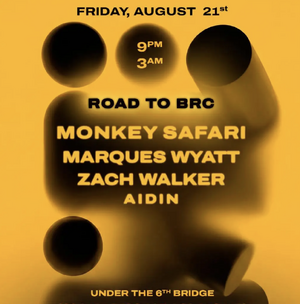
About 630 S Anderson St
630 S Anderson St is a flexible warehouse and open-air event property on the Boyle Heights side of the Los Angeles River, immediately east of Downtown Los Angeles. Current 2026 event listings commonly call it The Bridge , while promoters also use “Under the Bridge,” “under the Sixth Street Bridge,” or simply the street address. It remains active, with programming announced through September 2026. It should not be confused with similarly named venues elsewhere in Los Angeles.
The underlying property is a remodeled industrial building dating to 1939. A 2021 commercial listing described approximately 6,864 square feet of rentable warehouse space, a large gated rear yard and patio, concrete floors, HVAC, three ground-level loading doors, 200-amp 240-volt three-phase power, skylights, and a high wood bow-truss ceiling. Those specifications describe the property rather than a guaranteed event footprint; promoters may use the warehouse, yard, heated patio, or a combination of spaces.
No reliable public source identifies a formal nightclub opening date or fixed licensed capacity. Archived programming confirms regular public music use by June 2023, when Midnight Lovers presented an open-air Omar-S event. Nosaj Thing and Jacques Greene followed with a collaborative set overlooking the viaduct that August, and Sunday Sessions established an early connection to the property in October. Searches did not produce verified public event listings at this address for 2021 or 2022.
During 2024, the address developed into a recurring home for Midnight Lovers, SUNDANCE, Sunday Sessions, Take it Outside, and related independent promoters. Events ranged from open-air daytime parties to an indoor winter configuration with a heated patio. By 2025, listings increasingly treated the property as an established venue, and a May 2025 record-store relaunch was explicitly billed at The Bridge. The Bridge name became much more consistent across 2026 listings.
Events and Programming
The Bridge primarily books independent electronic-music programming rather than conventional touring concerts. House, deep house, minimal, techno, disco, Balearic music, funk, soul, breakbeat, electro, Afrobeats, hip-hop, and R&B all appear, but the venue’s center of gravity is music-led dancing with respected selectors playing long or extended sets. Day-to-night schedules are especially common, making sunset beneath the viaduct part of the experience.
Representative past artists include Omar-S, Nosaj Thing, Jacques Greene, Move D, Marcellus Pittman, Axel Boman, Kornél Kovács, Eli Escobar, Theo Parrish, HAAi, Todd Edwards, DJ Minx, Soul Clap, Raresh, Armen Miran, Anthea, Bradley Zero, Shonky, Stavroz, Andre Power, UNIIQU3, and Mary Droppinz. Recurring organizers have also emphasized Los Angeles residents such as Masha Mar, Stacy Christine, Juliet Mendoza, Heidi Lawden, Lubelski, Teira, Xica Soul, and Marques Wyatt.
Sunday Sessions programs vinyl-only events, while Midnight Lovers favors intimate, carefully curated dance floors. SUNDANCE usually presents daytime and early-evening house and tech-house bills, often with food and vendors. Into the Woods has used the property for marathon sets, and other promoters have staged label showcases, live electronic performances, ambient openings, record sales, and community fundraisers.
Late-summer 2026 programming confirms the same direction: deep-house and open-air events, extended DJ sets, a Studio Barnhus showcase, and lineups mixing international guests with established Los Angeles selectors. One announced Axel Boman residency extends into spring 2027, although its later indoor installment is described only as an intimate warehouse event and should not automatically be assumed to take place at The Bridge.
Tickets and Booking
There is no permanent public box office schedule. Tickets are normally released by the individual promoter, sometimes before the address is widely disclosed. Published examples range from free RSVP or donation-based entry to approximately $50, with many standard advance tiers falling between $15 and $40. Prices rise as lower tiers sell out, while door admission may be limited or unavailable.
Advance purchase is the safest strategy for major guests and smaller-capacity Midnight Lovers events. Read the terms before paying: many organizers make sales final, nonrefundable, and nontransferable. Some require government-issued identification matching the ticket name, and at least one promoter has required the original buyer to accompany guests whose tickets were bought together. Presales, table reservations, free-before-a-certain-time offers, and first-come open-deck sessions are promoter-specific rather than permanent venue services.
Seating and Layout
The Bridge is predominantly a standing, general-admission venue without a published seating chart. No verified fixed capacity, room dimensions, reserved-seat plan, balcony, or permanent VIP section is publicly available. Promoters frequently describe capacity as limited or intentionally limited, but they do not provide a dependable number. Avoid estimating attendance from the building’s square footage because outdoor areas, bars, vendors, exits, production equipment, and temporary facilities change the usable footprint.
Open-air shows usually center the dance floor in the rear yard beneath or beside the viaduct. Indoor configurations use the clear-span warehouse, whose bow-truss roof and skylights give it a brighter, more architectural character than a conventional black-box club. Some events add patio heating, food stalls, record vendors, lounge areas, or a 360-degree DJ setup. Tables occasionally appear on event listings, but there is no permanent premium seating product.
For an immersive experience, arrive early and begin near the center of the dance floor, then adjust once the room fills. Stand farther from the speaker stacks if you want easier conversation and less physical bass. The perimeter and vendor areas offer breathing room, but sightlines can be interrupted by other guests because the floor is flat. Earplugs are strongly recommended for long events.
Architecture, Sound and Production
The property’s signature visual feature is the relationship between a 1939 industrial warehouse and the sweeping concrete Sixth Street Viaduct overhead. Inside, the high wood bow-truss roof, skylights, open floor, loading doors, and concrete surfaces retain the building’s industrial identity. Outside, bridge columns and the elevated roadway create a dramatic urban enclosure that changes noticeably from golden hour to nighttime.
No verified permanent sound-system brand, console inventory, lighting plot, stage size, acoustic specification, or production rider has been published. Production appears to be installed or adapted event by event. Vinyl-focused organizers promote careful attention to sound, while recent events have used live hardware, ambient openings, 360-degree DJ arrangements, and full-band electronic performances. The building’s three-phase electrical service and loading access are practical production assets, but they do not confirm what equipment will be present at a particular show.
Getting There and Parking
The exact address is 630 S Anderson St, Los Angeles, CA 90023 . It sits in an industrial area near East Sixth Street, just east of the Los Angeles River. Drivers can approach from Boyle Heights or cross from the Arts District using the Sixth Street Viaduct. Event notices have occasionally warned of closures near Anderson and Seventh Street, so follow the arrival instructions issued for your particular night rather than relying on an old route.
The most useful rail connection is the Metro E Line at Pico/Aliso station, located along First Street near Anderson Street. From the station, walk south on Anderson toward Sixth Street; allow roughly 15 minutes depending on the entrance, signals, and the event gate. Rail service may finish before very late events end, especially those running until 3 or 6 a.m., so plan the return journey before entering.
The property was marketed with gated rear parking, but there is no evidence that this area operates as public event parking; it is often needed for the dance floor, production, vendors, or staff. No consistent parking price or designated public lot has been verified. Street parking is possible in the surrounding industrial blocks but can disappear quickly. Read every sign, avoid driveways and loading zones, remove valuables, and allow extra time.
Rideshare is generally simpler than driving, although pickup congestion builds at closing. If directed by staff, meet your driver a block away from the entrance rather than stopping in the gate line. Cyclists should bring a strong lock because no permanent attended bicycle facility has been confirmed. The neighborhood’s daytime DASH service can help with local connections, but it ends too early for most late-night departures.
Inside the Venue
Expect an informal warehouse-party atmosphere rather than a polished theater lobby. Entry normally involves a ticket scan and age verification. Depending on the promoter, the site may contain one principal dance floor, a quieter patio or warehouse edge, bars, temporary food service, a vendor village, record sellers, and merchandise. Craft cocktails, coffee, matcha, and food have all appeared in event descriptions, but none should be treated as permanent concessions.
A permanent coat check, public Wi-Fi service, water-filling station, locker system, restroom map, smoking area, and cashless-payment policy have not been reliably published. Bring only essentials and assume amenities may be temporary. Outdoor events can feel warm before sunset and cool later, while indoor configurations may become hot once the floor fills.
Accessibility and Inclusive Facilities
No current public accessibility guide confirms accessible parking quantities, restroom specifications, viewing platforms, hearing assistance, or every route through the property. The warehouse and yard are ground-level spaces with concrete or hard surfaces, but that alone does not guarantee a fully step-free event setup. Guests who require accommodations should request event-specific confirmation before purchasing because gates, cable ramps, temporary bars, restrooms, and crowd barriers can change.
Several recurring promoters explicitly prohibit racism, sexism, homophobia, transphobia, and other hateful behavior. Midnight Lovers describes its dance floor as community-first and discourages VIP posturing, excessive phone use, requests to DJs, and loud conversation near the music. These values shape the atmosphere, although enforcement and facilities remain the responsibility of each event organizer.
Nearby Amenities
The immediate surroundings are industrial and do not function like a dense nightlife district. A café has operated at 622 S Anderson St, very close to the venue, but daytime businesses may be closed before evening doors. For a more dependable meal, consider the Arts District across the river or established Boyle Heights destinations along First Street, including Guisados, Al & Bea’s, and other neighborhood Mexican restaurants.
Downtown Los Angeles, Little Tokyo, and the Arts District offer the nearest broad selection of hotels, bars, and late-night transportation. Staying there generally makes more sense than looking for lodging beside the venue. Build in travel time rather than assuming restaurants or hotels are comfortably walkable, particularly after midnight when the surrounding streets are quiet.
What Makes This Venue Special
The Bridge succeeds because it is neither a conventional nightclub nor an anonymous warehouse. The viaduct supplies a monumental Los Angeles backdrop, while the low-rise industrial building keeps the dance floor close and human in scale. Sunset parties can transition naturally into darker late-night sets without moving locations, and winter events can shift indoors while retaining access to the patio.
Recent visitor comments have described events here as “perfect” and said full days seemed to pass unusually quickly. That response reflects the venue’s programming style: extended sets, fewer interruptions, food and record vendors, and local selectors presented alongside international artists. The address has become a recognizable meeting point for overlapping house, vinyl, queer, underground, and independent creative communities.
No formal economic-impact study is publicly available, so claims about employment or neighborhood spending cannot be quantified. Its visible contribution is cultural: it gives independent promoters a repeatable outdoor and indoor platform, pays visiting and local performers, and creates opportunities for food operators, record dealers, artists, and small vendors. Its adaptive reuse also keeps a 1939 industrial property active without erasing the structure’s original character.
Visitor Tips and Information
Arrive near doors for daytime events if you want space, sunlight, easier entry, and time to browse vendors. Bring government-issued photo identification, earplugs, a charged phone, and a light layer. Wear comfortable shoes suitable for concrete and uneven transitions. Confirm the weather because some productions are rain or shine, and verify transportation home before entering.
Do not assume bags, professional cameras, outside beverages, pets, smoking, reentry, or door sales will be permitted. There is no reliable venue-wide policy for these items. Read the rules attached to your event and keep belongings compact. The most common planning mistakes are driving without a parking backup, arriving after a discounted-entry deadline, expecting theater seating, and assuming late-night rail will still be running.
Frequently Asked Questions
Is 630 S Anderson St still operating as a music venue?
Yes. As of August 2026, the property remains active and is commonly listed as The Bridge. Events have been announced into September 2026. Promoters may still describe it as Under the Bridge, an open-air location, or simply 630 S Anderson St, so apparent differences in venue names do not necessarily indicate a different address.
What is the capacity of The Bridge?
No dependable official capacity has been published. Listings frequently call events limited or intimate, but they do not provide a number. Capacity may also change when the warehouse, rear yard, patio, bars, vendors, or production areas are configured differently. The property’s building square footage should not be converted into an estimated audience capacity.
Is The Bridge indoors or outdoors?
It can be either or both. Warm-weather events normally use an open-air dance floor beneath or near the Sixth Street Viaduct. Some winter and weather-sensitive parties move inside the warehouse while keeping a heated patio open. Always check the event description so you know whether to prepare for sun, cool nighttime air, or an indoor crowd.
Are events seated or general admission?
Most events are standing, general-admission dance parties. The venue has no published permanent seating chart, balcony, or numbered sections. A promoter may add tables, benches, lounge furniture, or a reservation area for one event, but these are temporary features. Guests who cannot stand for long periods should request accommodation details before buying a ticket.
Are all events restricted to guests aged 21 and older?
Nearly every verified dance event at this address has been advertised as 21 and older. Bring valid government-issued photo identification even if your ticket has already been activated. A rare daytime retail or record-store event may use different rules, but visitors should never assume an event is all ages unless its description states that clearly.
How much do tickets usually cost?
Published prices have ranged from free RSVP and $5 donation tiers to approximately $50. Many standard advance tickets fall around $15 to $40. Early-entry and first-release tickets cost less, while final tiers and door admission may be higher. Major artists and intentionally limited events are the most likely to sell out before the event begins.
Can I buy a ticket at the door?
Sometimes, but it is not guaranteed. Sunday Sessions and smaller local events have occasionally advertised limited door tickets, while major Midnight Lovers and touring-artist programs strongly encourage advance purchase. A free RSVP may not guarantee admission once capacity is reached. If the event matters to you, buy ahead and arrive before any stated entry deadline.
Does the venue have its own parking lot?
The property includes a gated rear yard that was once marketed with parking, but that area is frequently required for events and should not be assumed available to guests. No permanent public parking program or fixed rate has been confirmed. Use legal street parking only after reading signs carefully, or choose rideshare when a sellout crowd is expected.
What is the closest Metro rail station?
Pico/Aliso station on the E Line is the most practical rail stop. It lies near Anderson Street on First Street, north of the venue. The walk south along Anderson is roughly 15 minutes. Check the final-train schedule before leaving home because many Bridge events continue several hours beyond normal evening rail frequency.
Where should rideshare drivers drop off and collect passengers?
Use the event’s arrival instructions whenever they specify a gate or street approach. Anderson Street can become congested near closing, and temporary road restrictions have occurred around Seventh Street. For pickup, walking one well-lit block away may help your driver reach you faster. Never wait in a loading entrance or block an active industrial driveway.
Does The Bridge sell food and drinks?
Many events provide bars and rotating food vendors, and some add coffee, matcha, record stalls, or a broader vendor village. These offerings are organized per event rather than maintained as permanent concessions. Eat beforehand if you have dietary restrictions, and do not assume outside food or drinks are allowed unless the event rules explicitly permit them.
What is the bag and camera policy?
No universal public bag-size or photography policy has been verified. Bring the smallest practical bag and leave professional camera equipment at home unless you have approval. Some music-focused promoters ask guests to keep phones off the dance floor even when casual photography is technically permitted. Security procedures and prohibited items can change between organizers.
Is The Bridge wheelchair accessible?
The main warehouse and yard are ground-level spaces, but no comprehensive current access guide verifies every entrance, restroom, parking space, or viewing route. Temporary cables, ramps, bars, and barriers may alter circulation. Guests requiring step-free entry, accessible restrooms, seating, or a companion arrangement should obtain confirmation for the specific event before purchasing.
Is there a coat check or somewhere to store belongings?
A permanent coat check, locker area, or bag-storage service has not been confirmed. Plan to keep everything with you and avoid carrying bulky jackets or valuables. For cool outdoor nights, a lightweight layer that can be tied around your waist is more convenient than a heavy coat. Never leave belongings against warehouse walls or near speaker equipment.
What should I wear to an event at 630 S Anderson St?
There is generally no formal dress code. Comfortable dance shoes, breathable clothing, and a light jacket are practical. Day parties can be hot and exposed to the sun before cooling after dark. The setting includes concrete and industrial surfaces, so delicate footwear is a poor choice. Some themed parties may encourage special attire without making it mandatory.
What are the most important things to bring?
Bring your ticket, valid photo identification, earplugs, a charged phone, a payment method, and a layer for outdoor temperature changes. Confirm your ride home and save the event instructions before arriving. Avoid oversized bags, outside beverages, professional cameras, and anything difficult to carry while dancing, unless the organizer’s rules specifically allow them.