About Historic Virginia Key Beach Park
Historic Virginia Key Beach Park is an operating City of Miami waterfront park, historic site, and flexible outdoor event venue at 4020 Virginia Beach Drive. Its National Register nomination covers 77 acres, although later planning documents describe the broader park as approximately 82 acres. Instead of a permanent amphitheater, it offers beaches, lawns, pavilions, picnic groves, historic structures, and wooded areas that promoters temporarily configure for concerts, festivals, weddings, cultural ceremonies, and community gatherings.
The park began as a direct response to segregation. On May 9, 1945, Black Miamians participated in a “wade-in” at the whites-only Haulover Beach. Dade County subsequently opened Virginia Key Beach as its “Colored Only” beach on August 1, 1945. Initially reached by boat, it became more accessible after the Rickenbacker Causeway connected Virginia Key with the mainland in the late 1940s. Churches, families, civic organizations, and visitors from African American and Caribbean communities made the beach a center for baptisms, reunions, picnics, dancing, and “splashdown” celebrations.
Permanent facilities followed. By 1952, the park had a bathhouse, concession building, improved parking, picnic structures, carousel, cabanas, and rental accommodations. A miniature railway arrived during the 1950s. The surviving 40-foot-diameter concrete dance floor, concession building, train tunnel, historic picnic areas, and mature palms preserve the appearance and social function of a mid-century public beach park. Public beach segregation in Miami-Dade ended in 1959, but Virginia Key remained a cherished Black gathering place.
The county transferred the property to Miami in 1979, and the city closed it in 1982, citing maintenance costs. Community resistance to private development led to a civil rights task force in 1999 and the creation of the Virginia Key Beach Park Trust. The site entered the National Register of Historic Places in 2002 and reopened in February 2008 after shoreline work, utility improvements, road and parking repairs, vegetation restoration, and rehabilitation of recreational features. Later projects added interpretive displays, ecosystem restoration, an accessible playground, replica structures, cabins, and new native planting.
The park celebrated its 80th anniversary in 2025 with oral histories, art, family activities, and a ceremony marking progress toward a civil rights and cultural museum. By 2026, the City and the Trust had begun the design-build procurement process for that long-planned museum, which is intended to interpret Black Miami, civil rights activism, the African diaspora, and the island’s coastal ecology.
Events and Programming
Programming is unusually broad for a beach park. From 2021 through 2026, the site hosted electronic music, reggae, Brazilian and Caribbean music, roots and Americana festivals, food events, immersive art, camping gatherings, environmental projects, Juneteenth celebrations, ancestral remembrance ceremonies, holiday activities, historical tours, and private functions. The natural setting particularly suits dance music, multicultural programming, and festivals that combine performance with art, wellness, food, or environmental themes.
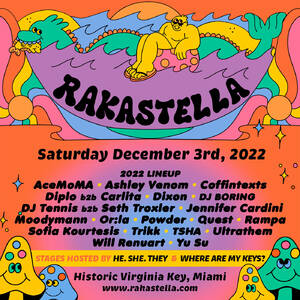
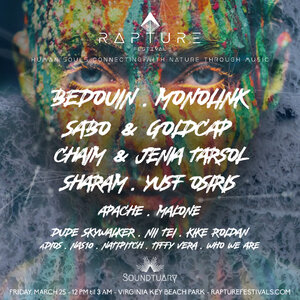
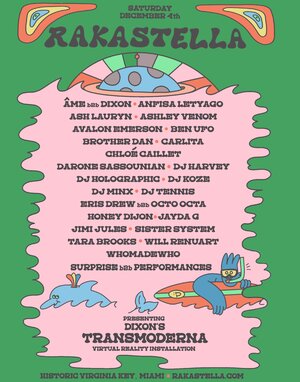
Representative bookings have included Art With Me, We Belong Here, Virginia Key GrassRoots Festival of Music & Dance, Rakastella, Love Burn, Vegandale, Dream Summer, Food, Wine & Fete, Sumfest Mizik, and community-produced Juneteenth Beach Bashes. Recent performers have ranged from Kaskade, Tiësto, Chris Lake, Lane 8, Gorgon City, Underworld, Jamie xx, Moderat, and Lee Burridge to DJ Khaled, Sublime with Rome, Cultura Profética, Locos por Juana, Donna the Buffalo, Ludmilla, Bell Marques, and Maiara & Maraisa.
The park’s own calendar also emphasizes free or affordable public programming: Black history education, Historic Virginia Key Beach Park Day, shoreline planting, cleanups, children’s activities, poetry, family celebrations, and the annual sunrise remembrance of Africans lost during the Middle Passage. Announcements extending beyond 2026 include returns by major recurring events such as We Belong Here and Love Burn, confirming that multi-day experiential festivals remain an important part of the venue’s program.
Tickets and Booking
There is no single year-round concert box office. Each outside promoter controls its own tickets, age limits, presales, upgrades, refund terms, and admission procedure. Recent pricing has ranged from free community events and roughly $30–$45 cultural celebrations to $80–$160 single-day festivals, $199–$349 multi-day art and music passes, and more than $400 for premium or camping-based experiences. Popular events, parking passes, and lower-price tiers can sell out well before the event.
For an ordinary park visit, admission is charged per vehicle rather than per person: currently $5 Monday through Thursday, $10 Friday through Sunday, and $12 on holidays. Ticketed events replace or supplement those rates with promoter-controlled parking charges. Pavilion and private-event reservations are separate from public admission and require advance payment.
Seating and Layout
This is primarily a standing, general-admission outdoor venue. There are no permanent grandstands or numbered concert seats. Promoters install stages, crowd barriers, VIP decks, lounges, tables, tents, and accessible viewing areas according to each event plan. Picnic tables and benches belong to the park but should not be considered guaranteed show seating.
The largest reservable areas are the approximately five-acre Event Meadow and four-acre Front Lawn, each carrying a suggested maximum capacity of 10,000 under the park’s 2021 rental specifications. Chickee Village covers about one acre with a suggested 2,000-person maximum. The half-acre Historic Core and North Party Area are each listed for as many as 5,000, while the 3,600-square-foot concession building has an indicated indoor capacity of 100. These are planning limits, not a single fixed venue capacity; actual attendance depends on the permitted stage, exits, production compound, weather plan, and safety layout.
For beach festivals, areas near a central or 360-degree stage provide energy and proximity, while the outer lawn offers more personal space. Trees can obstruct sightlines from the perimeter, and transitions between stages may involve sand, grass, roots, or long walks. Sound quality changes with stage orientation, wind, crowd density, and temporary speaker placement.
Getting There and Parking
The park is off the Rickenbacker Causeway, east of Brickell and before the Village of Key Biscayne. The causeway is the island’s only road connection, so congestion can become severe when a large festival overlaps with ordinary beach, cycling, marina, or Key Biscayne traffic. A two-axle vehicle currently pays a $3.25 electronic toll with a transponder or $6.50 by plate, in addition to park or event parking.
Regular visitors use the park’s paved parking areas and must park only in designated spaces. Festival parking is event-specific and can be far more expensive: recent large events have charged approximately $25–$60, sometimes using overflow areas and shuttle lots. Buy parking in advance when offered. Reviews consistently praise the setting but warn about slow causeway traffic, parking delays, and lengthy exits after headline performances.
Metrobus Route 26 runs between Brickell Station and Key Biscayne, stopping near Rickenbacker Causeway and Virginia Beach Drive. The stop is roughly a ten-minute walk from the park entrance. For late-night events, verify that service operates after the final performance. Major festivals may provide dedicated shuttles, rideshare zones, or remote parking; use the location in the event instructions rather than requesting a pickup on the causeway itself.
Inside the Venue
During normal park operations, expect picnic tables, grills, pavilions, restrooms, showers, changing facilities, playgrounds, vending machines, shoreline paths, and open recreation space. Food service is limited outside special events, so day visitors commonly bring water and a picnic. At festivals, organizers usually add food vendors, bars, merchandise, portable restrooms, water stations, lockers, and medical facilities. Offerings vary and should never be assumed from a previous event.
The park is not equipped like a permanent concert hall. The Front Lawn and Chickee Village have no built-in electricity, while several other rental zones offer only limited power. Stages, generators, sound systems, lighting, video, Wi-Fi networks, and backstage compounds are therefore brought in by each production. We Belong Here, for example, has used a 360-degree stage, Beach Stage, secluded Lost Village, and production designed to complement the landscape rather than depend on large LED walls.
Security procedures, bag sizes, photography rules, re-entry, cashless payment, and age restrictions are promoter-specific. Park rules require vehicles to remain on paved roads, prohibit gambling, control amplified sound, and require permitted groups to leave no trace. Ordinary private gatherings cannot exceed 150 people, sell admission, operate food sales, or use large sound systems without becoming a permitted special event.
Nearby Amenities
The park is secluded rather than walkable to a nightlife district. Nearby waterfront dining includes Rusty Pelican, while casual options can be found around the Virginia Key marinas and farther east in Key Biscayne. Brickell offers the widest choice of restaurants, bars, late-night transportation, and hotels; commonly used bases include properties around Brickell Station, South Brickell, Downtown Miami, and Brickell Key. Allow extra travel time even when a hotel appears only a few miles away.
What Makes This Venue Special
Few festival grounds carry comparable historical meaning. Virginia Key Beach was created because Black Miamians challenged exclusion from the county’s shoreline. The community then transformed a segregated facility into a place of joy, worship, courtship, music, entrepreneurship, and collective memory. Its carousel, dance floor, picnic groves, bathhouse, and train remnants are not decorative nostalgia; they document how residents created dignity and belonging under Jim Crow.
Today, concerts and community events bring economic activity to vendors, performers, production crews, and the park itself, while heritage programming creates opportunities for Black-owned businesses and cultural organizations. Large events also generate legitimate concerns about traffic, sound, wildlife, litter, and shoreline protection. The venue’s continuing challenge is to welcome contemporary culture without overwhelming the ecological and historical resources that make the site irreplaceable.
Visitor Tips and Information
Wear shoes suitable for sand, grass, uneven paths, and long walks. Bring sunscreen, insect repellent, rain protection, and an empty reusable water bottle if the event permits one. Miami heat remains intense after sunset, while brief heavy rain can turn lawn routes muddy. Do not rely on permanent shade near a stage.
The Boundless Playground was designed for full ADA accessibility, and earlier improvement programs included accessibility work for restrooms, pavilions, pedestrian routes, the concession building, and train platform. Nevertheless, beach sand and temporary festival surfaces can be difficult for mobility devices. Ask the event organizer about accessible parking, entry lanes, viewing platforms, restrooms, charging, and companion policies before attending; current public information does not confirm a permanent beach mat or beach-wheelchair service.
For a normal visit, the park opens daily from 7 a.m. to 5 p.m. November through March and from 7 a.m. to 6 p.m. April through October, with the entrance gate closing 30 minutes earlier. It closes on Thanksgiving and Christmas. The carousel normally operates free on weekends and holidays from noon to 5 p.m.; the historic miniature train is currently out of service. Special-event hours and closures override the regular schedule.
Frequently Asked Questions
Is Historic Virginia Key Beach Park still open?
Yes. Historic Virginia Key Beach Park remains open under that name as a public park, historic site, and special-event venue. Regular hours are seasonal, and the park occasionally closes or restricts access for festivals, construction, severe weather, or private events. Check the current day’s operating status before making a long trip, particularly during major festival weekends.
What is the correct address for Historic Virginia Key Beach Park?
The visitor and event address is 4020 Virginia Beach Drive, Miami, Florida 33149. It is on Virginia Key, reached from the Rickenbacker Causeway between mainland Miami and Key Biscayne. Do not confuse it with Virginia Key Beach North Point Park, a separate recreation area with its own entrance, parking arrangements, trails, and operating information.
What is the capacity of Historic Virginia Key Beach Park?
There is no single fixed capacity because the park contains several independently configured outdoor areas. The Event Meadow and Front Lawn have each been listed with suggested maximums of 10,000. Smaller zones range from approximately 2,000 to 5,000. The permitted capacity for a concert may be lower after stages, exits, bars, production areas, and VIP structures are installed.
Is Historic Virginia Key Beach Park an indoor or outdoor venue?
It is overwhelmingly an outdoor venue. Concerts and festivals take place on lawns, beaches, picnic grounds, and wooded clearings. Pavilions and tents provide partial cover, but they do not create a fully enclosed, climate-controlled venue. The historic concession building offers limited indoor space, yet it is not a substitute for an indoor rain location during a large public event.
How much is regular parking at the park?
Standard vehicle admission is currently $5 Monday through Thursday, $10 Friday through Sunday, and $12 on holidays. That fee applies to ordinary park use and can change for ticketed events. Festivals frequently sell separate parking passes, establish overflow lots, or include remote shuttles. The Rickenbacker Causeway toll is an additional charge and is not included in park admission.
Do I have to pay a toll to reach the park?
Drivers entering Virginia Key from mainland Miami pass through the Rickenbacker Causeway toll facility. Current two-axle rates are $3.25 with a compatible transponder and $6.50 through toll-by-plate billing. The toll is separate from park admission and event parking. Rideshare and taxi fares may reflect the toll automatically, while bicycles and transit follow different arrangements.
Can I take public transportation to Historic Virginia Key Beach Park?
Metrobus Route 26 serves the Rickenbacker Causeway and connects with Brickell Station. The nearest listed stop is at Rickenbacker Causeway and Virginia Beach Drive, approximately a ten-minute walk from the park. Public transit is most practical for daytime visits; late-night festival attendees should confirm the last return service or reserve an event shuttle before leaving.
Where should a rideshare driver drop me off?
For ordinary visits, use the park’s main entrance at Virginia Beach Drive. During festivals, follow the promoter’s designated rideshare location because traffic plans may separate cars, shuttles, taxis, and pedestrians. Never request a roadside pickup on the Rickenbacker Causeway. After a large event, expect a wait and consider walking only to an officially marked pickup zone rather than improvising.
Does the venue have assigned seats?
No. Most public events use standing general admission with temporary VIP lounges, platforms, tables, or viewing decks. Permanent picnic benches are scattered around the park but may sit outside the concert footprint or be removed from circulation. Guests who need a seat should verify whether portable chairs are allowed or whether an accessible viewing area provides seating for the attendee and a companion.
What is the bag policy?
The park does not impose one universal concert bag policy because each promoter develops its own security plan. Major festivals may require clear bags, prohibit large backpacks, or limit hydration packs and camera equipment. Private park visits follow general park rules rather than festival screening rules. Read the instructions issued for your specific event shortly before arrival, as policies can change after tickets go on sale.
Can I bring food and drinks into the park?
Day visitors may generally bring picnic food for personal use and can use designated tables and grills, subject to posted rules. Ticketed events normally restrict outside food and beverages and provide their own vendors. Alcohol is never safe to assume: possession and sales depend on the event permit. Glass containers, commercial food sales, and unapproved catering may be prohibited.
What happens if it rains?
Outdoor events may continue in ordinary rain, while lightning, high winds, flooding, or other unsafe conditions can delay or suspend programming. Most areas offer little protection from severe weather. Wear appropriate shoes and carry permitted rain gear rather than an oversized umbrella. Ticket refunds and rescheduling are controlled by the event organizer; park facility reservations are generally non-refundable but may qualify for rescheduling under specific conditions.
Is Historic Virginia Key Beach Park wheelchair accessible?
The park has an ADA-focused Boundless Playground and has undertaken accessibility work on buildings, pavilions, pedestrian routes, restrooms, and the historic train platform. Conditions are less predictable across sand, grass, and temporary festival flooring. Visitors should not assume direct wheelchair access to the water. For ticketed events, confirm accessible parking, viewing, restrooms, companion admission, and mobility assistance with the organizer.
Are children allowed at events?
The public park is family-friendly, with picnic areas and playgrounds, but age limits vary by event. Community celebrations and roots, food, or cultural festivals may welcome all ages, while several dance-music events are restricted to guests 21 and older. Children should never be brought based solely on the park’s normal policy; the age printed on the specific event admission terms controls entry.
Can visitors swim at Historic Virginia Key Beach Park?
The park has a natural shoreline and a buoyed non-motorized watercraft zone, but swimming conditions can vary with tides, currents, weather, water quality, and event restrictions. Follow posted warnings and instructions from park personnel. Do not assume that a lifeguard is present or that every section of shoreline is intended for swimming, particularly around mangroves, channels, or areas marked for dangerous currents.
Can I camp overnight at the park?
Ordinary overnight camping is not offered to daily park visitors. Camping occurs only as part of specifically permitted events, such as multi-day participatory festivals, and requires the appropriate event credential. The park otherwise closes in the late afternoon or early evening. RVs, trailers, and camping vehicles also require special authorization; the regular parking areas do not function as a public campground.
What is the difference between Historic Virginia Key Beach Park and North Point Park?
Historic Virginia Key Beach Park is the culturally significant former segregated beach with the carousel, dance floor, historic buildings, event lawns, and civil rights interpretation. North Point Park is a separate City of Miami park farther north, known particularly for mountain-bike trails, waterfront recreation, and its own beach facilities. Confirm the entrance name before paying because walking between the two areas can take considerable time.