Events and Programming
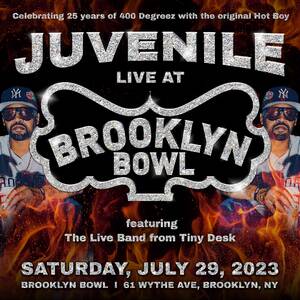
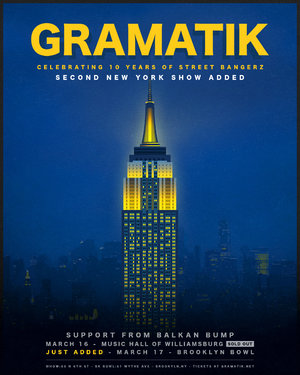
Brooklyn Bowl is best understood as a live-music club with a working 16-lane bowling center, restaurant and bar built into the same large industrial room. Its program is unusually broad for a venue of its size: touring rock, punk, funk, soul, hip-hop, reggae, jazz, jam bands, electronic acts, tribute shows, DJs, dance parties, burlesque, sports screenings and family concerts all appear on the calendar. The venue has also been used for private events, cultural gatherings and themed late-night programming.
The strongest recurring identity is the venue’s connection to improvisational and groove-oriented music. Jam projects, New Orleans brass, funk groups, Dead-related tributes and artist collaborations sit alongside indie, alternative, hip-hop and dance bookings. Questlove’s Bowl Train, Soul Rebels residencies, The Rock and Roll Playhouse family series, Emo Night, country line dancing and themed DJ parties illustrate how Brooklyn Bowl moves between concert, club and social-event formats rather than following one genre lane.
Recent programming shows that pattern clearly. When the venue reopened after its pandemic shutdown on September 8, 2021, the announced run included The Wailers, Ghost-Note, Sungazer, Questlove’s Bowl Train, Dopapod, The Infamous Stringdusters, Tank and the Bangas, Talib Kweli, Antibalas, Drive-By Truckers, Samantha Fish, The New Mastersounds, Robert Randolph and The Hold Steady. That lineup combined established touring acts, local connections, genre communities and late-night themed events.
In 2022 and 2023, the room continued to favor collaborative and repeat bookings. The Soul Rebels eventually staged their postponed collaboration with Robin Thicke in 2022, while the group’s 2023 residency brought Black Thought of The Roots to a sold-out night. Other recent examples include Gogol Bordello, Ibibio Sound Machine, Talib Kweli, Jennifer Hartswick Band and a large Amy Winehouse tribute. The calendar has also included Jewish holiday services, sports watch parties and other nonstandard concert events.
The 2024 15th-anniversary season was particularly representative. It included Lettuce, Questlove, Ibibio Sound Machine, Deep Banana Blackout, Antibalas, Daniel Donato, Melvin Seals & JGB, The Hold Steady, Easy Star All-Stars, The Slackers, Grateful Shred, LaMP, Rival Schools, Aaron Frazer, Little Stranger, burlesque and several late-night dance parties. The anniversary program showed that Brooklyn Bowl’s current audience extends from jam and funk devotees to punk fans, hip-hop listeners, queer-country communities and nostalgic party crowds.
The published 2026 calendar continues that mix. Announced or listed examples include country line dancing, Emo Night Karaoke, Who’s Bad, Mad Caddies, The Ultimate Doors, The Hold Steady, Tab Benoit with Bonerama, Smiths and Oasis tribute programming, Zoso, Henge, the NYC Winter Jazzfest Brooklyn Marathon and collaborative jam-oriented bills. The calendar reviewed for this guide extends into December 2026; no verified 2027 program announcement was identified.
Ticket prices vary substantially by artist, promoter, demand and whether the event is a concert, party, festival-style program or special package. The venue’s own listings should be treated as the authority for current prices, age limits and door times. Bowling is priced separately: walk-in lane rates are currently $30 per lane per half hour Monday through Thursday and $35 Friday through Sunday, with up to eight guests per lane; rental shoes are $5.95 per pair.
Tickets and Booking
Start with the venue’s Brooklyn event calendar, where each listing identifies the performer, supporting acts, age restriction, doors time, show time and any separate bowling-lane or express-entry product. A bowling-lane add-on is not automatically a concert ticket, so read the listing carefully before purchasing. The same separation applies to special event packages, dining reservations and lane reservations.
Popular shows are easiest to attend when tickets are purchased as soon as the public onsale begins. Multi-night runs can be attractive for jam bands, anniversary programming and residencies, but the venue states that multi-night passes stop being sold on the morning of the first night. The box office opens at doors on show days, and tickets bought there may carry a fee of up to $5.
Arrive early for high-demand concerts, especially when you want a good general-admission position, a lane or an accessible viewing arrangement. Security may search every person and every bag, and re-entry can involve another search. The venue also sells gift cards, but they can be used for food, drinks, bowling and merchandise rather than concert tickets.
About Brooklyn Bowl
Brooklyn Bowl occupies a 23,000-square-foot former Hecla Iron Works building at 61 Wythe Avenue in Williamsburg. The industrial structure dates to 1882. Founders Peter Shapiro and Charley Ryan opened the venue on July 7, 2009, following a roughly two-year conversion that preserved the building’s warehouse character while adding bowling, dining, concert production and extensive electrical and plumbing infrastructure.
The venue’s published capacity figures vary by source and configuration. Older descriptions identify a 600-capacity music room, while a 2024 industry profile describes the current venue as having capacity for approximately 900 people. The difference likely reflects changing layouts, event types and whether bowling, dining and circulation areas are included. For practical planning, expect an intimate-to-mid-sized standing concert environment rather than a conventional seated theater.
Its importance comes from the combination itself. Brooklyn Bowl was not simply a bowling alley with occasional music; it was designed from the beginning as a concert venue, restaurant, bar and bowling center operating together. The model later expanded to other cities, but the Williamsburg location remains the original and the one most closely associated with the concept’s early identity.
Seating and Layout
Most concerts use standing-room general admission on the performance floor. The stage sits at one end of the room, while the bowling lanes occupy the adjacent side of the building. The lanes run alongside the concert environment rather than being hidden behind a separate wall, so bowlers can watch the show and concertgoers can see the venue’s signature activity in progress.
The Bowler’s Lounge is the most distinctive alternative to standing on the floor. Lanes are paired with leather Chesterfield couches, tables and food-and-drink service, with a view toward the stage. A lane reservation can therefore function as a social viewing area as well as a bowling booking, but it is a separate purchase from the concert admission and may be offered only for selected shows.
For the most immersive concert experience, the front and center of the general-admission floor are the obvious choice. For a more relaxed evening, a lane offers seating, table service and a distinctive side perspective. The rear and edges of the floor are less crowded but may have more people moving between the bar, dining areas and lanes. Because the room is built around multiple activities, it does not behave like a traditional theater with a single ideal seat.
Getting There and Parking
The address is 61 Wythe Avenue, between North 11th and North 12th Streets, in Williamsburg, Brooklyn. The venue identifies the Bedford Avenue L train station and Nassau Avenue G train station as its two principal subway connections and describes the site as roughly equidistant from both. From Bedford Avenue, walk west toward the waterfront and then north toward North 11th Street. From Nassau Avenue, walk west toward Wythe Avenue and continue south toward the venue.
Additional neighborhood connections include the B32 and B62 buses near Kent or Bedford avenues, the B48 farther east, and the North Williamsburg East River Ferry landing, which is a longer walk. Transit conditions and late-night service can change, so allow extra time after concerts and check the current MTA service status before leaving.
Brooklyn Bowl has no dedicated parking lot. The venue’s production information identifies street parking as the basic option and warns drivers to follow posted restrictions, including loading zones and nighttime no-parking rules. Nearby commercial garages and reserved event parking are available in Williamsburg, but prices vary by night and demand. Driving directly to the block and hoping to find a space is risky on busy concert evenings; public transportation or a prearranged garage is usually more predictable.
Rideshare drop-off is simplest on Wythe Avenue or a nearby cross street rather than directly in front of the entrance during a busy arrival period. After a late show, expect congestion around Wythe, Kent and Bedford avenues, and consider walking several blocks before requesting a car.
Inside the Venue
Inside, expect an energetic warehouse atmosphere with exposed industrial character, bowling lanes, leather lounge furniture, two bars, a Blue Ribbon food operation and concert production integrated into the room. The menu includes fried chicken platters, burgers, French bread pizza, salads, mac and cheese, sandwiches, desserts, cocktails, beer, wine and nonalcoholic drinks. Prices are typical of a full-service New York entertainment venue and change over time.
Food and drinks can be served to bowling lanes, which is one of the venue’s main practical advantages for groups. The room also has a visual system that includes projection surfaces above the pinspotters, a front-of-house projection surface, screens in the Bowler’s Lounge, a stage-centered screen and multiple LCD displays. Sports watch parties have used the venue’s screens and full concert sound rather than treating the room as a basic bar.
The venue is cashless in most areas. Cash remains accepted at the box office and coat check, and the venue says it can load cash onto a debit card for use inside or elsewhere. Merchandise is sold from a dedicated booth on show nights, though its exact location and operating hours can vary with the event.
Sound, Lighting and Production
Brooklyn Bowl’s technical package is unusually detailed for a club. The January 2022 production advance lists a DiGiCo SD12 front-of-house console, an Avid Venue SC48 monitor console, d&b Y-series mains, d&b V-series and J-Infra subwoofers, JBL monitor wedges, Lake processing and multiple d&b and Crown amplifiers. The room’s sound system is designed for full touring bands rather than only DJs or stripped-down club acts.
The lighting inventory includes Martin Mac 101 and Mac 350 fixtures, Martin Rush RGBW pars, Chauvet LED pars, MAC Auras, ellipsoidals and Technobeams, controlled through an MA Lighting GrandMA2 Light console. The venue does not permit haze or atmospheric effects, a restriction that touring productions need to account for during advance work.
Production facilities also include four robotic cameras, video switching, HD projection, multiple screens and options for multitrack audio or HD video capture when arranged in advance. The published technical document lists a 25-foot stage width, a stage approximately 3 feet 4 inches above the floor and a front-of-house projection screen. These details help explain why touring artists can bring a substantial show into what still feels like a club.
Architecture and Environmental Design
The Hecla Iron Works building supplies the venue’s visual foundation: heavy industrial proportions, old masonry, exposed structural elements and a large open interior. The conversion incorporated reclaimed and recycled materials rather than disguising the building as a polished modern theater. The stage floor was made from recycled truck tires, and the Bowler’s Lounge floor used reclaimed Portuguese cork.
Brooklyn Bowl was built as the world’s first bowling alley designed for LEED certification. Its environmental features have included wind-powered electricity, LED stage lighting, reclaimed wood, recycled materials, draft beer service intended to reduce bottle and can waste, and energy-saving bowling equipment. The green design is part of the venue’s identity, not a separate visitor attraction: it is visible in the materials, lighting and reuse of the former factory.
Accessibility and Visitor Policies
Brooklyn Bowl states that its public spaces are wheelchair-friendly and that the venue was built in accordance with the Americans with Disabilities Act and applicable state requirements. Staff are available to assist, and guests who need an accommodation should identify themselves to a manager or venue staff member on arrival. The public accessibility information does not publish a detailed map of accessible viewing positions, restroom layouts or lane-by-lane measurements, so advance confirmation is sensible for a specific concert setup.
The venue is primarily 21 and older, although selected shows are all ages. The age rule is listed on each event page. Accepted identification includes qualifying government-issued driver’s licenses or non-driver IDs, U.S. passports, foreign passports and valid military identification. A New York City municipal identification card is not accepted as proof of age for liquor-law entry.
All guests may be subject to pat-downs, wand screening, metal detectors or other lawful searches. Bags are searched. Weapons, drugs and drug paraphernalia, incendiary devices, laser pointers, outside alcohol, outside food and drinks, large bags, GoPros, video cameras, selfie sticks and professional cameras with removable lenses are prohibited. Show-specific rules can be stricter, so bring only essentials and arrive early.
Nearby Amenities
Brooklyn Bowl is surrounded by Williamsburg’s Northside waterfront district, where visitors can combine a show with restaurants, cocktail bars, breweries, cafes and waterfront walks. The venue itself is often the most convenient pre-show meal because food service, drinks and lane seating are available under one roof. Dining reservations can be useful before popular concerts, but the kitchen and seating operation may change with event schedules.
Hotels listed by the venue include Wythe Hotel directly across Wythe Avenue, The Hoxton nearby, The William Vale on North 12th Street and Arlo Williamsburg on Wythe Avenue. Their proximity makes the venue especially convenient for visitors staying in North Williamsburg, although room rates and availability vary considerably by season and event demand.
For late-night travel, the L train from Bedford Avenue, the G train from Nassau Avenue, buses, the East River Ferry and rideshare services provide the main options. Check the last train and any planned service changes before the show ends; a concert may finish after midnight, particularly when there are multiple support acts or a late dance event.
What Makes This Venue Special
Brooklyn Bowl’s rare achievement is that the novelty does not replace serious concert infrastructure. The bowling lanes are visible, the restaurant is active and the atmosphere can be playful, but the room has a professional sound system, touring-grade lighting, video capability and a stage large enough for full bands and collaborative lineups.
The venue also has a deep performance history. Early events included Roots jams and surprise appearances by major hip-hop and rock figures. Robert Plant, Snoop Dogg, Questlove, The Roots, Soul Rebels, Talib Kweli, The Hold Steady, Lettuce, Antibalas and many others have contributed to its reputation. A recurring theme is collaboration: established performers return, guest musicians appear without much warning, and residencies allow artists to build a relationship with the room rather than simply pass through it.
Culturally, Brooklyn Bowl has helped preserve a form of North Brooklyn nightlife in which music, food and informal socializing overlap. It gives touring acts a substantial Brooklyn stop, creates space for local and emerging artists, and offers family programming during daytime hours. Its environmental reuse of an old industrial building also reflects Williamsburg’s broader transition from manufacturing waterfront to mixed cultural and residential neighborhood. The venue does not publish a specific economic-impact figure, but its recurring concerts, dining, bowling and private events clearly draw audiences who spend time in the surrounding district as well as inside the building.
Visitor Tips and Information
Check the event listing twice: once when buying tickets and again on the day of the show. Age restrictions, door times, support acts, bowling availability and special entry rules can vary. Do not assume that a lane package includes concert admission, or that a concert ticket includes bowling.
For a major show, arrive 30 to 60 minutes before the listed performance time if you want a good floor position, food before the set or a shorter security line. Wear comfortable shoes for standing, and remember that bowling areas may involve slick floors, rental shoes and active movement around the lanes. There is no stated dress code, but casual nightlife clothing is the norm.
Families should target the weekend daytime Family Bowl sessions or a specifically designated all-ages event. Family Bowl admission is free, bowling is first come, first served, and Saturday and Sunday schedules have different end times. Sunday programming may include The Rock and Roll Playhouse, with tickets required during the early performance window.
Frequently Asked Questions
Where is Brooklyn Bowl located?
Brooklyn Bowl is at 61 Wythe Avenue in Williamsburg, Brooklyn, between North 11th and North 12th Streets. It is near the waterfront and the North Williamsburg hotel and restaurant district. The venue identifies Bedford Avenue on the L train and Nassau Avenue on the G train as its main subway connections, with both requiring a walk through the neighborhood to reach the entrance.
Is Brooklyn Bowl mainly a concert venue or a bowling alley?
It is both, with a full concert stage, standing-room performance floor, 16 bowling lanes, restaurant, bars and lounge seating operating within one converted industrial building. Concerts are the main nighttime draw, but bowling is available separately and can continue during selected shows. The unusual overlap is central to the venue’s design rather than an occasional novelty.
How many people does Brooklyn Bowl hold?
Published figures differ. Older references describe a 600-capacity music room, while a 2024 industry profile describes the venue as holding about 900 people. Capacity depends on whether the event includes bowling lanes, dining, lounge areas, standing-room circulation or a different production layout. Treat the event’s ticket inventory and configuration as more reliable than a single headline number.
Does a bowling-lane package include a concert ticket?
Usually, no. Brooklyn Bowl lists lane packages separately and frequently labels them as not being concert tickets. A lane reservation may provide bowling, couch seating, food-and-drink service or a premium viewing position, but every person generally needs the appropriate concert admission as well. Read the individual event description before buying a lane package.
How much does bowling cost at Brooklyn Bowl?
Current walk-in rates are $30 per lane per half hour Monday through Thursday and $35 per lane per half hour Friday through Sunday. Each lane accommodates up to eight guests under the published walk-in policy. Bowling shoes are required and cost $5.95 per pair. Special events, reservations and promotional sessions can use different pricing or conditions.
Is Brooklyn Bowl all ages?
No. The venue is primarily 21 and older after evening hours, although some individual shows are all ages. The age restriction is displayed with each event listing. Weekend daytime Family Bowl sessions welcome children, and Sunday programming may include a ticketed Rock and Roll Playhouse performance. Do not rely on the venue’s general reputation; check the specific event before bringing anyone under 21.
What identification is accepted?
Accepted identification includes qualifying state, federal, District of Columbia, U.S. territory or Canadian provincial driver’s licenses and non-driver IDs, U.S. passports, foreign passports and valid U.S. military IDs. A New York City municipal identification card is not accepted as proof of age under New York liquor-law requirements. Bring a physical, valid photo ID for 21-plus events.
Does Brooklyn Bowl have assigned seating?
Most concerts use standing general admission rather than traditional theater seating. Bowling lanes include leather couches and tables, and some special events may introduce additional tables or reserved areas. The best choice depends on whether you want to stand close to the stage, sit with food and drinks in the Bowler’s Lounge, or move between the performance and bowling areas.
What is the best place to watch a concert?
The front-center general-admission floor is best for immersion and proximity, while a bowling lane is better for a seated, social experience with food and drink service. The rear and side areas allow easier movement but may have more traffic. Because the venue is wide and activity continues around the performance space, there is no universally best location for every show.
Can I bowl during a concert?
Bowling is available for selected shows and may be sold through a separate lane reservation or add-on. When it is offered, bowlers can watch the performance from the lane area while receiving service at their couch or table. Availability, hours, pricing and whether the lanes operate throughout the concert vary by event, so confirm the listing before planning around bowling.
Does Brooklyn Bowl have food?
Yes. The kitchen serves Blue Ribbon food including fried chicken, burgers, French bread pizza, salads, mac and cheese, appetizers, desserts and children’s selections. The bar offers draft beer, cocktails, wine and nonalcoholic drinks. Menu items and prices can change, and the kitchen schedule may be adjusted for private events, early shows or late-night programming.
Is Brooklyn Bowl cashless?
Yes, the venue is cashless in most areas. Cash is still accepted at the box office and coat check. The venue says it can load cash onto a debit card for use inside or at other merchants that accept Mastercard. Bring a payment card or plan to use the venue’s cash-conversion option if needed.
Can I bring a large bag or camera?
Large bags, video cameras, GoPros, selfie sticks and professional cameras with removable lenses are prohibited. All bags may be searched, and security can refuse items considered a risk. Ordinary phone photography may still be limited by the artist or event. Bringing only a small essential bag and avoiding recording equipment is the safest approach.
Does Brooklyn Bowl have accessible facilities?
Brooklyn Bowl states that its public spaces are wheelchair-friendly and that the venue was built in accordance with the ADA and applicable state requirements. Staff are available to assist. Because the published accessibility information does not provide a detailed map for every concert configuration, guests needing a specific viewing position, companion space or other accommodation should confirm arrangements with venue staff before arrival.
Is there parking at Brooklyn Bowl?
There is no dedicated venue parking lot. Street parking is available subject to posted rules, loading zones, nighttime restrictions and alternate-side regulations. Commercial garages and reserved event parking operate nearby, but costs vary. Parking can be difficult during busy shows, so taking the L or G train, using a rideshare drop-off several blocks away, or reserving a garage in advance is more reliable.
How early should I arrive for a show?
Arrive 30 to 60 minutes before the listed show time if you want time for security, food, merchandise or a strong general-admission position. Arriving earlier is especially useful for popular acts, all-ages family programs, sold-out events and shows with lane packages. Doors time is not the same as performance time, and support acts can change the schedule.
Does Brooklyn Bowl offer family programming?
Yes. Family Bowl runs on weekend daytime schedules with free admission and first-come, first-served bowling. Saturday hours run until 5 p.m., while Sunday Family Bowl generally runs from 1 p.m. to 6 p.m.; Sunday may also include an earlier Rock and Roll Playhouse event requiring tickets. Check the current calendar because private events and special programming can change the schedule.
What makes Brooklyn Bowl environmentally notable?
The venue was designed as the world’s first bowling alley built for LEED certification. Its sustainability features have included wind-powered electricity, LED stage lighting, a recycled-truck-tire stage floor, reclaimed Portuguese cork flooring, reclaimed wood and draft-only beer service intended to reduce bottle and can waste. Those details are integrated into the building’s everyday operation and industrial design.
What type of music is Brooklyn Bowl known for?
Its most consistent strengths are funk, soul, jam bands, improvisational projects, New Orleans brass, roots music, hip-hop, reggae and genre-themed dance events. The calendar also books punk, indie rock, electronic music, tribute acts, burlesque and family shows. Repeat residencies and collaborations are common, so the venue’s programming is broader than the bowling-centered image suggests.