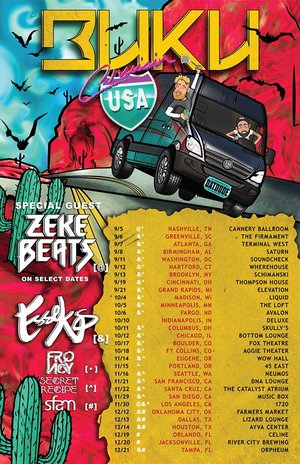
Events and Programming
Schimanski is no longer operating as an event venue. The Williamsburg nightclub announced that it would stop at the end of July 2024 after eight years. Its closing run included a Good Vibrations “Finale Party” on July 27, 2024. The former operator now categorizes Schimanski as a former venue, the building is advertised as a former nightclub, and no Schimanski events have been announced for 2025, 2026 or beyond.
At its peak, Schimanski reportedly hosted more than 225 events a year. Electronic music was central to its identity, particularly house, techno, tech house, disco, bass music and international DJ sets. However, it also booked hip-hop appearances, live performers, comedy, branded parties, yoga, music brunches and daytime gatherings. The smaller Bar Schimmi room broadened the calendar with themed pop, R&B, dancehall and intimate DJ parties.
The 2021 reopening period began with Wax Motif and a large supporting bill in July, followed by Malaa in August. Daft Disko brought French house and disco, while later listings included Harber and local promoter showcases. These bookings established the post-pandemic pattern: touring electronic headliners in the main room, multiple local DJs, themed dance parties and late closing times, usually with a 21-and-over requirement.
The 2022 calendar ranged from James Hype, Kobosil, Robert Parker, Bag Raiders, Matthew Dear, Paul Oakenfold, Victor Ruiz, Luigi Madonna and Coyu to Venus X and Bembona. Andrew VanWyngarden of MGMT appeared at a DJ-oriented night, while recurring concepts included Daft Disko, the 1970s-themed Hustle, Canned Heat’s Jamiroquai celebration and free-before-midnight promotions. Ticketed events typically ran from approximately 10 p.m. until 4 a.m.
Programming in 2023 became notably eclectic. Archived listings include umru with LustSickPuppy, Kranium, Masego, Roberto Capuano, Metro Boomin, Joey Bada$$, AIROD and Vantage. Alongside those names were Good Vibrations, Goodies, Sanctuary, Disco Party, Caribbean nights, Amapiano events, dancehall parties and R&B-focused events. A summer venue calendar advertised Soca vs Reggae, Bashment Lights, Passa Passa and a Vybz Kartel tribute, often at free-to-$30 prices.
During its final 2024 season , Schimanski continued with Good Vibrations, B Series, Disco Party, Amapiano, Afrobeats and dancehall events, plus themed nights such as Footloose and the future-funk party Yoi Toki. Don Toliver made a high-profile appearance in April. The surviving calendar shows the club increasingly balancing touring guests with accessible, nostalgia-driven and international dance parties before its July farewell.
Earlier notable bookings help explain the venue’s reputation. Deadmau5, RÜFÜS DU SOL, Diplo, Charli XCX, Chance the Rapper, Kerri Chandler, Chris Liebing, Marcel Dettmann, Loco Dice and CamelPhat were among the artists associated with the room. Bar Schimmi also hosted guests including A$AP Rocky, A$AP Ferg and JID. Private events were produced for fashion, entertainment and media companies.
Tickets and Booking
There are currently no legitimate Schimanski event tickets to buy because the venue has not operated under that name since July 2024. Old venue pages and automated event databases may remain online, but they should not be treated as evidence of a reopening. No active box office, presale program, door sale or 2026 schedule has been confirmed.
Historically, many recurring parties offered free or reduced admission before a specified time, followed by approximately $15 to $30 general admission. Touring techno and electronic shows commonly reached $20 to $40, while a 2021 Wax Motif event was advertised around $35 to $50. Prices increased by tier as popular nights filled, and complimentary admission generally depended on arriving before the deadline rather than merely holding a reservation.
For sold-out headliners, advance purchase was the safest approach because the 750-person room could become crowded quickly. Buyers also needed to verify the event’s age limit, entry deadline and refund language. These historical ranges illustrate Schimanski’s booking model but should not be interpreted as current prices or proof that the venue is returning.
About Schimanski
Schimanski occupied 54 North 11th Street between Kent and Wythe avenues in Williamsburg, Brooklyn. The operator promoted it as a 10,000-square-foot, 750-capacity music venue, bar and event space. Bar Schimmi, the adjoining smaller room, accommodated approximately 200 people. Current leasing materials describe roughly 9,000 square feet of available built-out nightclub space, so published area figures vary according to what portions of the property were counted.
The building began its nightlife chapter as Verboten, which opened a permanent club there in March 2014 after years as an itinerant party promoter. The address had previously housed a metal shop. Verboten converted it into a two-room industrial club with a reclaimed sprung-wood dance floor, acoustic ceiling treatment, panoramic video surfaces, skylights, multiple performance positions and a restaurant-lounge area.
State authorities seized Verboten in March 2016 over more than $350,000 in unpaid sales taxes. Eddie Dean, previously associated with Pacha NYC, subsequently acquired the lease for $1.2 million. Schimanski held a Halloween pre-opening on October 31, 2016 and an official opening weekend beginning November 4, retaining the basic room plan while introducing new branding, programming and sound equipment.
The unusual name referenced Horst Schimanski, a rough-edged, working-class police character from the German television crime series Tatort . That reference suited the venue’s intentionally unpolished aesthetic: industrial brick, a weathered metal facade, dark interiors and little conventional nightclub luxury. At opening, a fiberglass “Disco Shark” hung over the bar, while the previous club’s giant disco ball had been removed.
Seating and Layout
Schimanski was primarily a standing, general-admission venue. The main DJ booth or performance stage occupied one end of the central dance floor, with raised seating areas along the sides. Those platforms offered somewhere to rest and a slightly elevated view, but they were not conventional reserved theater seats. The strongest experience was usually near the center-front, provided the event was not oversold or congested.
The two-room arrangement allowed patrons to move between the main floor and Bar Schimmi when both were open. The smaller room had its own bar, sound and visuals and often presented a contrasting musical style. The main room’s wide floor generally provided clear views when attendance was moderate, but visitors frequently reported bottlenecks near the bar and difficulty moving forward during crowded headliner sets.
For sound, the center of the dance floor offered the fullest impact. People sensitive to volume often preferred the side or rear areas and commonly recommended earplugs. The raised side seating was useful for breaks, although proximity to other patrons, bars and circulation routes could make those areas busy rather than quiet.
Architecture and Production
Schimanski preserved the building’s warehouse character rather than disguising it. Current property materials describe one-story brick construction, an approximately 18-foot ceiling, a wet sprinkler system and two drive-in entrances. The space’s broad floor, exposed industrial surfaces and minimal decoration made it adaptable for concerts, club nights, fashion events, filming and private rentals.
The principal Schimanski-era upgrade was a Dynacord Alpha sound system. Large speaker stacks flanked and ran beneath the DJ booth, with additional coverage extending toward the bar. Three projection walls—or, as an opening review described them, a wraparound video screen—created an immersive visual field. The venue operator also advertised in-house lighting and video capabilities, although a complete final equipment inventory was never publicly documented.
Audience opinions about the system varied sharply. Some guests praised its physical impact, visuals and room coverage; others described it as excessively loud or harshly tuned. That contrast suggests the experience depended on event production, mixing levels, crowd density and position in the room rather than the installed equipment alone.
Getting There and Parking
The former venue address is 54 North 11th Street, Brooklyn, NY 11249 . Bedford Avenue on the L train is approximately 0.3 miles away. From the station, walk west along North 7th Street, turn north toward North 11th Street and continue toward the block between Wythe and Kent avenues. Nassau Avenue on the G train is roughly 0.4 miles away.
Bedford Avenue is an accessible subway station with elevators, though elevator status should always be checked before travel. The B32 bus serves Kent and Wythe avenues, with stops around North 9th and North 12th streets. The B62 runs along Driggs Avenue, including a stop at North 11th Street.
The North Williamsburg ferry landing at North 6th Street and Kent Avenue is about 0.3 miles from the address. It connects with the East River route and provides a practical option from Wall Street, East 34th Street, Long Island City, DUMBO and Greenpoint. The standard one-way ferry fare is $4.50 as of 2026, with reduced fares for eligible riders.
Schimanski did not have a dedicated public parking lot. Street spaces are limited and controlled by posted meter, loading, cleaning and no-parking rules. Depending on the applicable Brooklyn meter zone, published passenger-vehicle rates range from $1.50 to $2.50 for the first hour and $2.50 to $5 for the second. Drivers must use the rate shown on the specific block rather than relying on a neighborhood-wide assumption.
Inside the Venue
On a typical club night, patrons encountered an outdoor line, ticket and ID checks, a bag inspection and a security pat-down. The majority of late-night events were 21 and older. There was no consistently enforced formal dress code; T-shirts, jeans, shorts, sneakers and clubwear were commonly accepted. Individual promoters could impose different conditions.
The venue contained full bars in both rooms and was marketed with kitchen infrastructure, although most regular nightlife accounts focus on drinks rather than a dependable food menu. Historical visitors frequently described alcohol and bottled water as expensive. A coat check was available and commonly reported at about $4, but that price was never guaranteed for every event.
Reviews were mixed. Positive accounts praised the energetic dance floor, intimate proximity to performers, themed disco nights, side seating and efficient entry staff. Recurring criticisms involved overcrowding, bar bottlenecks, high drink prices, loud audio, intensive searches and restroom condition. These reports are subjective, but their repetition shows why arriving early and protecting one’s hearing and valuables were sensible precautions.
Nearby Amenities
Although there is no longer a Schimanski show to attend, the block remains part of Williamsburg’s nightlife district. Nearby options include Brooklyn Bowl, Gabriela, Desert 5 Spot and Bathhouse Williamsburg. The Hoxton, Arlo Williamsburg, the Wythe Hotel and the William Vale provide nearby lodging, while the Hoxton also houses the rooftop restaurant Laser Wolf. Businesses, operating hours and admission policies should be confirmed independently before visiting.
Late-night subway, bus, rideshare and taxi service remains available, but waiting times can increase after neighboring venues close. The ferry is better suited to arrivals and early departures because service does not run as late or as frequently as the subway. North 11th Street can become congested, so rideshare pickup is generally easier from a nearby avenue where stopping is legal.
Accessibility and Inclusive Facilities
No surviving official Schimanski accessibility guide provides enough detail to verify every former feature. Public listings identified the venue as wheelchair accessible and noted gender-neutral restrooms, while the principal floor was largely level. However, there is no reliable published record of a designated accessible viewing area, hearing-assistance equipment, sensory accommodations or the exact restroom configuration.
Because the venue is closed, there is no active staff team providing accommodations or ADA assistance for events. Any future tenant would establish new accessibility arrangements, entry procedures and restroom provisions. The accessible Bedford Avenue L station and nearby bus and ferry services continue to make the location comparatively reachable, but those transport options should not be interpreted as confirmation of the building’s current interior accessibility.
What Made Schimanski Special
Schimanski sat at the intersection of two eras in Williamsburg nightlife. It inherited the infrastructure and underground-dance associations of Verboten but pursued a broader calendar that placed techno beside hip-hop, Caribbean music, Amapiano, disco tributes, fashion events and branded gatherings. Its 750-person scale was large enough for international names yet small enough to put audiences close to the booth.
Its cultural impact is easier to document than its economic impact. The operator claimed hundreds of annual events, creating regular work for performers, promoters, bartenders, security personnel and production crews while drawing nighttime foot traffic to surrounding businesses. No verified independent study has published Schimanski-specific job, spending or tax figures, so more precise claims would be speculative.
The venue’s legacy is complicated rather than uniformly celebrated. Many patrons remember important early sets, surprising celebrity appearances and joyful themed parties; others remember crowding, uneven operations and a room that could be punishingly loud. That tension was part of Schimanski’s character: a functional, rough-edged club whose success depended heavily on the night, promoter, attendance and people sharing the floor.
Frequently Asked Questions
Is Schimanski still open?
No. Schimanski ended operations at the close of July 2024 after announcing a break following eight years in Williamsburg. The operator now lists it among former venues, while the North 11th Street property is marketed as a former nightclub available for lease. No verified reopening under the Schimanski name has occurred.
Are there any Schimanski events in 2026?
No 2026 events have been announced or placed on sale under the Schimanski name. Current event databases show no upcoming performances, and the former operator does not include Schimanski among its active venues. Any undated or automatically generated listing should be regarded as an old venue page unless a new operator makes a formal announcement.
Can I still buy Schimanski tickets?
There are no current Schimanski tickets because the venue is closed. Historical ticket pages, event photographs and calendar entries remain searchable, but they relate to performances that have already happened. Do not purchase admission merely because an old venue profile appears active; confirm that the event has a future date and identifies a presently operating venue.
What was Schimanski’s capacity?
The operator and contemporary club guides consistently gave the main venue a capacity of approximately 750 people. Bar Schimmi, its smaller adjoining room, was promoted for gatherings of up to 200. Capacity could vary with production layouts, closed sections, equipment and event permits, so those figures describe the normal maximum configuration rather than guaranteed attendance for every night.
Was Schimanski seated or standing?
Schimanski was predominantly a standing, general-admission club. The central floor was designed for dancing, with limited raised seating along the sides rather than rows of reserved chairs. Seating was useful for taking a break or gaining a slightly higher view, but most tickets did not correspond to an assigned seat or fixed viewing position.
What was Bar Schimmi?
Bar Schimmi was the smaller room connected with Schimanski. It held roughly 200 guests and had a separate bar, sound system and visual setup. It hosted intimate parties, hip-hop guests, themed nights and private events and could operate alongside the main room. Its programming sometimes differed substantially from the music playing on the principal dance floor.
What kind of music did Schimanski book?
House, techno and electronic dance music formed its core, but the calendar extended into hip-hop, R&B, disco, dancehall, reggae, soca, Amapiano, Afrobeats, pop tributes and future funk. It also presented live performers, comedy, daytime wellness events and private parties, making it broader than a strictly underground techno club.
How much did Schimanski tickets usually cost?
Historical recurring parties often cost nothing with an early reservation or ranged from approximately $15 to $30. Touring electronic acts commonly reached $20 to $40, while selected popular bookings rose to around $35 to $50 before fees. Pricing changed by demand tier, entry time, promoter and headliner, and free admission frequently required arrival before midnight.
What was the age requirement?
Most Schimanski club nights were strictly 21 and older and required valid government-issued photo identification. This was especially true for late-night events running until 4 a.m. Age policies were controlled event by event, so an occasional differently restricted listing did not change the venue’s general adult-nightlife model. No current age policy exists because the club is closed.
Where exactly was Schimanski?
Schimanski was at 54 North 11th Street, Brooklyn, New York 11249, on the Williamsburg waterfront side of the neighborhood between Wythe and Kent avenues. It stood close to Brooklyn Bowl and several hotels, bars and nightlife businesses. The building remains, but arriving at the address will not lead to an operating Schimanski nightclub or box office.
Which subway station is closest?
Bedford Avenue on the L train is the closest practical subway station, approximately 0.3 miles away. Nassau Avenue on the G train is around 0.4 miles from the address. Bedford Avenue has elevator access, making it the stronger subway option for many travelers with mobility needs, although current elevator status should always be checked before departure.
Can I reach the location by ferry?
Yes. The North Williamsburg ferry landing at North 6th Street and Kent Avenue is approximately 0.3 miles from the former venue. It is served by the East River route, with connections involving Manhattan, Long Island City, Greenpoint and DUMBO. The 2026 standard fare is $4.50 one way, and transfers within the ferry system have time restrictions.
Did Schimanski have parking?
No dedicated public venue parking lot was advertised. Visitors relied on limited street parking or privately operated neighborhood garages. Street regulations vary by individual block and may include meters, loading zones, alternate-side cleaning and nighttime restrictions. Driving was generally less predictable than taking the subway, bus or ferry, particularly when several nearby Williamsburg venues had events simultaneously.
Was there a formal dress code?
There was no consistently reported upscale dress code. Patrons commonly entered in jeans, T-shirts, shorts, sneakers, dresses and practical dance-floor clothing. Promoters could set theme-specific expectations, and security retained discretion over entry, but Schimanski generally presented itself as less formal than a Manhattan bottle-service club. Comfortable shoes and lightweight layers suited the warm, crowded dance floor.
Did Schimanski have a coat check?
Yes. A coat check operated on many late-night events and was commonly reported at approximately $4 per item. Availability and price could change by promoter or season. Using it helped reduce crowding on the floor, although guests were still advised to retain phones, wallets, identification, tickets and other valuables rather than leaving them inside checked coat pockets.
What was Schimanski’s bag policy?
No dependable official dimensions survive for an across-the-board bag policy. Visitor accounts describe detailed bag inspections and pat-downs, making a small purse, clutch or minimal personal bag the practical choice. Weapons, illegal substances and outside alcohol were prohibited. Professional camera equipment generally required authorization, while the exact rules could change according to the artist and event promoter.
Was Schimanski wheelchair accessible?
Public business information identified the venue as wheelchair accessible, and the principal warehouse floor was largely level. However, no detailed official guide confirms the former entrance measurements, restroom features, viewing arrangements or hearing accommodations. Because Schimanski is closed, there is no current venue staff to arrange access. Any future business in the building will need its own accessibility information.
Why was the club called Schimanski?
The name referred to Horst Schimanski, a rule-bending, working-class police character introduced in the German television crime series Tatort . The obscure reference helped distinguish the club from its predecessor and matched its gritty, unconventional branding. Contemporary reviewers noted that the name was memorable once learned, even if many early visitors continued informally referring to the building as Verboten.