About Stewart Island Community Centre
Stewart Island Community Centre is a community-owned, multi-purpose events and recreation complex at 10 Ayr Street in Oban, the main settlement on Stewart Island/Rakiura. Current local information continues to list it as an operating venue for conferences, social functions, school groups, performances and sport. Its facilities include a social and conference room, dance floor, stage, sports stadium, gym, squash court, showers, toilets, commercial kitchen, bar and walk-in chiller.
The centre grew from concerns about the island’s deteriorating County Hall, built in 1906. A 1992 report estimated that making the old building structurally sound would cost about NZ$80,000 before substantial modernisation. At a public meeting attended by roughly 150 residents, the community chose to pursue a completely new facility offering the cultural and sporting opportunities that island children and adults could not easily access elsewhere.
Fundraising became an island-wide exercise in Kiwi ingenuity. Events included a demolition derby at Ryan’s Creek airstrip, spud-growing competitions, fashion parades, talent shows and a rowing race across Foveaux Strait. Residents donated fish, pāua, timber, labour and transport, while grants supported the project. Volunteers operated a portable sawmill in Invercargill for several seasons, and one person contributed approximately 1,700 hours on the building site.
Construction followed the demolition of the old hall in 1998, and the NZ$1.5 million centre opened debt-free in September 1999. Sources differ on the ceremonial date: the current venue description records 19 September, while a first-person project history records 11 September. The enduring point is that the island completed a remarkably ambitious building without an opening debt. Its polished timber flooring, pine framing, heart mataī and rimu finishes are physical reminders of that volunteer effort.
The building is associated with Southland architect John McCulloch, whose community-focused work emphasised accessible, practical civic spaces. Rather than being a formal theatre, it was conceived as a flexible social anchor: one building capable of handling a wedding, touring concert, school activity, public meeting or wet-weather sports session.
Events and Programming
Programming is eclectic and relatively irregular, reflecting the population and logistics of an offshore community. The centre books touring New Zealand music, theatre, comedy, puppetry and cabaret alongside local balls, festivals, conservation hui, government consultations, memorial services, exhibitions, school activities and indoor sport. Touring productions frequently arrive through schemes that take professional artists to rural communities.
Every publicly verifiable performance listing found for 2021 included Dr Ian Chapman and the Cosmic Jive Trio’s David Bowie-themed show and the multi-guitar ensemble Gitbox Rebellion. A planned performance of DUPLEXITY was postponed, while Austen Found was cancelled. In 2022 the schedule included Mundi Trio, the rescheduled DUPLEXITY, Katie Boyle’s cabaret, the New Zealand Guitar Quartet and Mad Doggerel Cabaret, as well as a public seminar about water-services legislation.
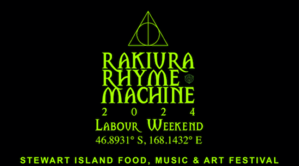
Documented 2023 events included musicians Rob Zielinski and Manuela Centanni, the family puppet production The Boy With Wings, and the Rakiura Rhyme Machine festival. That festival used the room in several ways, including an intimate 360-degree acoustic presentation by Julia Deans and Sam Cullen, a dance party, and a black-tie Gravity Ball.
The 2024 programme demonstrated the venue’s range particularly well. Italian Celtic-harp performer Adriano Sangineto appeared early in the year, followed by a sold-out grassroots concert by Six60. The centre hosted a two-day celebration marking 25 years of predator-free Whenua Hou, with a mihi whakatau, dinner, biodiversity presentations and cultural discussions. Rakiura Rhyme Machine returned with a food-and-music evening and the Gravity Ball.
Publicly documented 2025 bookings concentrated on the centre’s civic function. These included biosecurity discussions, predator-control consultation and a major public announcement concerning Stewart Island’s renewable-energy project, attended by about 90 people. In March 2026, the centre hosted a three-day residency and concert by Irish-Kiwi guitarist and composer Dave Flynn. No reliably verified public announcement for a later 2026 performance or programming beyond 2026 was found, although private, sporting and community bookings are not always published online.
For smaller touring shows, historical adult admission has commonly sat around NZ$20–$25. Festival sessions have ranged roughly from NZ$20 to NZ$50, while multi-event passes have reached about NZ$200. Some family productions use a gold-coin donation, and funded concerts may be free with koha appreciated. Prices, age limits and sales arrangements are set separately for each event.
Tickets and Booking
There is no permanent public box office operating like that of a city theatre. Depending on the promoter, tickets may be sold in advance through the organiser’s chosen sales channel, through a local outlet or at the door. Door sales have been particularly common for touring arts events, while major concerts and festival sessions may use advance-only admission and can sell out.
For a high-profile appearance, buy as soon as the organiser announces sales; Six60’s Stewart Island allocation disappeared quickly during its 2024 grassroots tour. For a small touring show, door sales may remain available, but visitors should not cross Foveaux Strait relying on that possibility. Save proof of purchase before reaching the island because mobile reception can be inconsistent.
Seating, Capacity and Layout
Current conference information gives a maximum of up to 250 people, while an older social-impact assessment lists 200. The difference is likely to reflect room choice and configuration, so 250 should be treated as an indicative whole-event maximum rather than a guaranteed seated capacity for every production. No verified room dimensions, formal seating chart or fixed-seat count is publicly available.
The floor is flexible rather than permanently arranged as a theatre. Events may use conventional chair rows, tables for dinners and conferences, open dance space, sports-court arrangements or an in-the-round stage. For spoken presentations, a central position with a clear view of the stage is the safest choice. At dances and standing concerts, visitors wanting easier movement should remain near the perimeter. There are no documented balconies, permanent VIP boxes or obstructed-view sections.
The centre has a full stage, a sound system and stage lighting, but no public technical rider identifies speaker models, mixing equipment, microphones, lighting fixtures, rigging points, power supply or projection equipment. Touring producers should confirm every production requirement rather than assuming city-theatre specifications. No independent acoustic measurements have been published, and sound will vary with seating, curtains, crowd size and whether the sports or social space is used.
Getting There and Parking
The centre stands on Ayr Street beside the island’s library and council office, close to Halfmoon Bay School and the bowling facilities. From the Halfmoon Bay ferry wharf, it is approximately a five-to-ten-minute walk through central Oban. The township is compact, and walking is normally the simplest option for visitors staying centrally.
Passenger ferries connect Bluff with Oban in about one hour, with coach connections available between Invercargill and Bluff. Scheduled flights from Invercargill take about 20 minutes and include a courtesy transfer from the island airfield into Oban. Ferry and flight schedules vary seasonally and may be affected by weather, so an evening event will usually require an overnight stay.
No dedicated large venue car park is advertised. Ayr Street has regulated on-street areas, including an accessible space, loading area and parks with different time limits. Current road markings also include no-stopping sections. Observe the sign applying to the individual space rather than assuming unrestricted parking. Oban has no conventional urban public-transport network, and app-based rideshare services should not be expected.
Inside the Venue
The atmosphere is closer to a well-equipped community hall than a commercial entertainment complex: informal, adaptable and strongly local. Facilities include toilets, showers, changing areas, a gym, squash court, sports stadium, kitchen, bar, chiller and exhibition space. The commercial kitchen allows organisers to provide substantial catering, but food and drink are not automatically available at every public event.
No permanent merchandise counter, cloakroom or public concession stand is documented. Merchandise tables, licensed bar service, security checks and catering depend on the promoter. Likewise, there is no universal published bag, photography or re-entry policy. Follow the instructions attached to the particular booking, especially for licensed dances, school events and high-demand concerts.
Free public Wi-Fi is available around Ayr Street and the adjoining library area, but it should not be treated as production-grade connectivity. Mobile coverage around Stewart Island can be limited. Download tickets, accommodation details and return-transport information in advance rather than depending on mobile data at the door.
Accessibility and Inclusive Facilities
Published venue information describes the centre as wheelchair accessible, and the flexible floor enables wheelchair spaces to be incorporated without a fixed seating barrier. Ayr Street’s parking plan marks a dedicated disabled-parking space. Toilets are available at the complex. However, no detailed current access audit confirms door widths, gradients, hearing-loop provision, stage access, sensory facilities or adult changing equipment.
The United States’ ADA does not apply in New Zealand; access is governed by New Zealand legislation and building requirements. Anyone needing a companion seat, minimal walking, a particular transfer arrangement or hearing assistance should have the organiser confirm the setup before attending. Flexible events can differ considerably depending on where chairs, tables, stages and technical equipment have been placed.
Nearby Amenities
Central Oban’s dining and accommodation are within walking distance. Nearby choices include the South Sea Hotel Restaurant and Bar, Kai Kart, The Snuggery café and other small seasonal cafés. Accommodation options in or close to the township include the South Sea Hotel, Stewart Island Backpackers and Church Hill Boutique Lodge. Opening days and kitchen hours change with the season, and late-night meals cannot be assumed.
For an evening performance, eat before doors open and arrange accommodation early, particularly during summer, a festival weekend or a major concert. There is generally no late ferry back to Bluff after a show. Pre-arranged accommodation transfers may be available, but many centrally based visitors simply walk.
What Makes This Venue Special
Few New Zealand venues express their community’s history as clearly as this one. Residents did not simply fundraise for a building: they milled its timber, transported materials across Foveaux Strait, cooked for workers and supplied thousands of hours of labour. Later initiatives involving bottled island rainwater and community mussel lines helped support operating costs.
The centre has allowed conferences and sizeable events to take place on Rakiura, bringing accommodation, food and transport spending into Oban. It gives local children all-weather sporting space, creates a stage for touring artists who might otherwise bypass the island, and provides a neutral meeting place for decisions affecting conservation, infrastructure and community life.
Its prominent moments include a community expo attended by Prince Harry in 2015, Six60’s sold-out 2024 concert and island-wide discussions about predator control and renewable energy. Yet its cultural value is equally evident in ordinary badminton nights, school use, weddings, memorials and meetings. It remains less a showpiece than a shared island living room.
Visitor Tips and Information
Arrive 20–30 minutes before an unfamiliar event, or earlier if admission is unallocated. Wear layers and take a rain jacket for the walk; Rakiura weather can change quickly. Comfortable footwear is useful for dances and standing shows. Do not assume food, a staffed bar, EFTPOS, coat storage or strong mobile reception unless the event information specifically confirms it.
Age rules vary. Touring theatre and family shows may be all ages, while festival dances have used R18 or R20 limits and required formal dress for selected balls. There is no everyday dress code. Photography, bags, alcohol service and door-opening times are promoter decisions, so event-specific instructions take precedence over general venue information.
Independent venue-specific reviews are scarce, which is unsurprising for a community-run facility with an irregular public calendar. Sold-out concerts and festival sessions nevertheless show strong demand. Visitors should expect a friendly, unpretentious hall where local volunteers and organisers shape each experience rather than a standardised commercial-theatre operation. ticketfairy.com
Frequently Asked Questions
Is Stewart Island Community Centre still open?
Yes. Current local and council information continues to list the complex at 10 Ayr Street, and it hosted public events during 2025 and 2026. It does not keep standard theatre opening hours: access depends on scheduled events, sports sessions, private bookings and community activities. The adjoining council office and library maintain their own limited weekday hours.
What is the venue’s maximum capacity?
Current conference material advertises room for up to 250 people. An older community assessment used a 200-person figure, indicating that permitted numbers may depend on the room, furniture, stage and event format. Organisers should obtain a confirmed capacity for their proposed layout rather than applying the headline figure to a seated dinner or complex stage production.
Does the venue have fixed seating?
No fixed auditorium seating plan has been published. The social and conference space is arranged to suit individual events, using chairs, tables, dance-floor space or in-the-round staging. General-admission seating is therefore common. Arrive early if you need a front position, wheelchair space, an aisle seat or a clear view for a child.
How much do tickets usually cost?
Smaller touring concerts and theatre productions have commonly charged about NZ$20–$25 for adults. Festival sessions have generally ranged from NZ$20 to NZ$50, with larger multi-event passes costing more. Family shows may request a gold-coin donation, while grant-supported performances can be free or koha entry. Major artists set their own prices.
Can I buy tickets at the door?
Door sales are common for small touring productions, but they are not guaranteed. Festivals and high-profile concerts may sell out during advance sales. If attending from the mainland, secure admission before booking travel whenever possible. Where door sales are advertised, carry an alternative means of payment because payment facilities and mobile connectivity can vary.
How far is the centre from the ferry wharf?
The centre is in central Oban, roughly a five-to-ten-minute walk from the Halfmoon Bay ferry terminal. The usual route runs through the compact township towards Ayr Street. The walk is manageable for most visitors, although rain, luggage or reduced mobility may make a pre-arranged accommodation transfer preferable.
Can I attend an evening show as a day trip?
Usually not. The final ferry and scheduled flight commonly leave before evening performances finish, with exact times changing by season. Plan to stay overnight unless a special sailing or charter has been confirmed. Accommodation can become scarce for festival weekends and major concerts, so reserve a room at the same time as your admission.
Is there parking outside the venue?
Ayr Street has on-street parking rather than a large dedicated venue car park. Spaces carry different time limits, and parts of the street are reserved for loading, accessible parking or no stopping. Parking pressure increases around school times and popular events. Walking from central accommodation is often easier than trying to park beside the entrance.
Is accessible parking available?
Yes. The adopted Ayr Street parking plan marks a disabled-parking space near the community facilities. Availability cannot be guaranteed during a busy event, so allow extra time. Visitors who need the shortest possible route should ask the organiser which entrance will be operating and whether temporary event equipment affects normal access.
Is the community centre wheelchair accessible?
Published venue information describes the building as wheelchair accessible. Its flat, flexible event floor can accommodate wheelchair positions, and toilets are present within the complex. A detailed modern access audit is not publicly available, however. Confirm specific needs such as companion seating, stage access, hearing assistance, transfer space or an unobstructed entrance before travelling.
Are food and drinks sold inside?
Only when the event organiser provides them. The venue has a commercial kitchen, bar and walk-in chiller, making catered dinners and licensed functions possible, but it does not operate as a daily restaurant. Eat beforehand if refreshments are not advertised. Alcohol service, glassware, age checks and closing times depend on the individual event and applicable licensing.
Does the centre have toilets and changing facilities?
Yes. Toilets, showers and sports changing facilities form part of the complex, and a public toilet is listed at the Ayr Street site. Which areas are open may depend on the booking. The presence of sports facilities does not mean showers, the sauna or changing rooms will automatically be available to concert audiences.
Is Wi-Fi available at the venue?
Public Wi-Fi is available around Ayr Street and the adjoining library area, but coverage and performance inside an event can vary. Mobile reception elsewhere on Rakiura is also limited. Download digital tickets and important travel details in advance. Organisers needing streaming, ticket scanning or production connectivity should not rely on ordinary public Wi-Fi without testing it.
What are the bag and photography rules?
No permanent public bag-size or photography policy has been identified. Rules are set by each promoter and may be stricter for concerts, licensed events, children’s performances or private functions. Bring only what you need, avoid bulky luggage and ask before using flash or recording a complete performance. There is no confirmed public cloakroom.
Are children allowed?
That depends on the event. Family puppetry, school activities and many touring concerts welcome children, while late-night festival sessions may be restricted to people aged 18 or 20 and over. Check the stated classification before purchasing. Licensed events may require approved photographic identification even when the ticket holder is clearly an adult.
Can visitors use the gym or sports facilities?
Visitors have historically been welcomed to use the stadium or gym for a small fee, subject to local access arrangements. The complex supports basketball, netball, volleyball, badminton, squash and general fitness. These facilities are not automatically open whenever the library or council office is operating, so availability should be confirmed locally before arrival.
Can the centre be hired for conferences or group meals?
Yes. It is promoted for conferences, educational exchanges, workshops, social functions, school groups, exhibitions, weddings and sports events. Available infrastructure includes a stage, kitchen, bar, chiller and flexible social room. Hire prices, deposits, cleaning duties, alcohol requirements and technical support are not publicly standardised, so organisers need a booking-specific agreement.
What events have been announced beyond 2026?
No reliably verified public performance announcement beyond 2026 was found during current research. This does not mean the centre will be inactive: many local, school, sporting and private bookings are circulated through community channels rather than major event listings. The most recently verified public arts booking was the Dave Flynn residency and concert held in March 2026.