About Suwaidi Pearls
Suwaidi Pearls, now also presented as the House of Pearls by Suwaidi Pearls, remains open and operating in Al Rams, Ras Al Khaimah. It is not a conventional theatre, concert hall or arena. It is a working cultured-pearl farm, maritime heritage attraction and ecotourism experience built around guided storytelling, oyster demonstrations and a boat journey across the Al Rams lagoon. The published maximum capacity is 40 guests at one time, creating a far more intimate experience than the word “venue” may suggest.
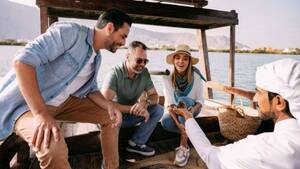
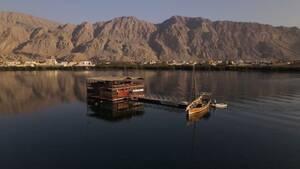
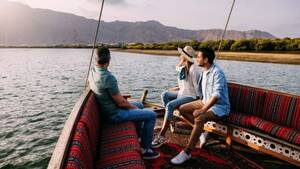
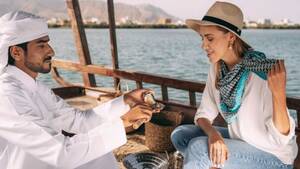
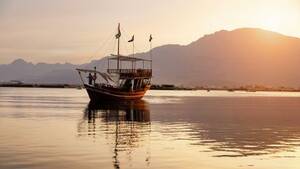
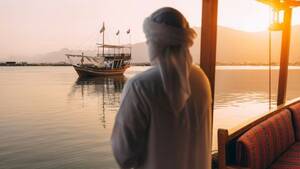
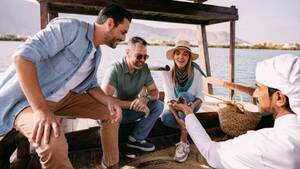
The experience begins on Al Rams Corniche, where visitors board a traditional-style pearling boat. The route passes mangroves, coastal wetlands and shallow lagoon water beneath the Hajar Mountains before reaching a floating pearl farmhouse on a pontoon. Guides explain the lives of pearl divers, the roles performed aboard historic pearling boats, the pearl trade and the modern cultivation process. An oyster-opening demonstration and a display of pearls and trading equipment form the centrepiece of the visit.
History and Development
Founder Abdulla Rashed Al Suwaidi created the farm in memory of his grandfather, Mohammed bin Abdulla Al Suwaidi, one of the family’s last commercial pearl divers. The Al Suwaidi family traces its association with Gulf pearling to the 12th and 13th centuries. Mohammed, who could free-dive for several minutes, died in 1998 at the age of 96 after spending much of his life connected to the sea.
Sources differ slightly over the foundation date. The current House of Pearls presentation dates the initiative to 2004, while government records, tourism fact sheets and several interviews use 2005 for the establishment of the operational farm. The clearest interpretation is that the project began in 2004 and developed into the working cultivation business recorded from 2005. It was the Gulf’s first modern cultured Arabian pearl farm.
In 2006, Al Suwaidi discovered the pearl later known as the Pearl of Arabia. It subsequently became the centre of a white-gold, diamond, enamel and mother-of-pearl ring designed by Sarah Ho. The farm expanded from cultivation and trade into tourism, opening to the general public in 2018. Its pearls have also appeared in jewellery produced by Emirati designers and international luxury houses.
By the 2020s, Suwaidi Pearls had become an established educational and ecotourism attraction. The founder reported in 2024 that the farm had welcomed more than 100,000 tour guests and reached its available production capacity at approximately 32,000 pearls annually. It is also incorporated into local history education, with school visits using the farm to teach pupils about trade, community development and Ras Al Khaimah’s pre-oil economy.
Events and Programming
Suwaidi Pearls does not publish a programme of concerts, theatrical performances or touring artists. Research covering 2021 to August 13, 2026 found that its regular on-site programming remained experience-led: public and private heritage tours, school visits, family packages, oyster-opening sessions, mangrove trips and, when arranged in advance, kayaking, paddleboarding, pearl-diving or scuba-related activities. Traditional meals may be incorporated into selected tours.
The “performance” element is live interpretation rather than stage entertainment. Guides demonstrate historic diving tools, open oysters, explain the biology of pearl formation and unpack the Bish-Takh-Tah, the traditional pearl trader’s chest. The small group format encourages questions and interaction, and educational groups can build a visit around ecology, maritime history, jewellery or sustainable cultivation.
The company’s wider cultural programming provides a useful indication of its priorities. In January and February 2025 it partnered in a Rare Natural Pearls exhibition featuring historic equipment, natural pearls, jewellery design and a discussion of the UAE’s pearling coast. In January 2026, the expanded Sharjah Pearls Exhibition added traditional craft workshops, a reconstructed trading majlis, storytelling, pearl-grading discussions and appearances by divers, traders and gem specialists. These events took place in Sharjah, not at the Al Rams farm.
As of August 13, 2026, no conventional performances, permanent stage programme or specific 2027 event season had been announced for the Al Rams attraction. Its continuing programme is best understood as daily heritage tourism supplemented by educational, ecological and jewellery-focused projects.
Tickets and Booking
Advance booking is strongly recommended because tours leave at fixed times, require boat transport and are limited by the farm’s 40-person capacity. Published schedules currently include individual departures around 10:00, 12:30 and 15:00, with separate family-lunch and private-boat options. Schedules change by season and package, so the time shown on the reservation should take precedence over general opening hours.
A standard adult tour is commonly advertised at approximately AED 250 before any applicable tax, while reduced prices are frequently offered for children, seniors and People of Determination. Lunch, private transport, water activities and additional oyster experiences can increase the total. Because packages and refund conditions differ, compare what is included rather than selecting solely by headline price.
Allow two to three hours from check-in to return. Published descriptions vary from roughly 90 minutes to 2.5 hours, depending on the boat route, group pace, demonstrations, shopping and whether a meal is included. Arriving about 15 minutes before departure reduces the risk of missing the boat.
Layout, Architecture and Technical Facilities
The farm occupies an outdoor marine site reported at approximately 4,000 square metres, but public dimensions for the floating visitor structure, deck or individual rooms have not been released. The principal farmhouse is a two-level, traditional-boat-inspired structure resting on a floating pontoon. Its design uses timber, rugs, majlis-style furnishing and open views rather than formal auditorium architecture.
There is no published seating chart, fixed tiering, general-admission pit, VIP balcony or numbered seating. Guests move between the boat, shaded gathering areas, displays and the live oyster demonstration. With a maximum of 40 visitors, sightlines are generally close. Anyone particularly interested in the demonstration should sit near the guide and trader’s chest; those sensitive to boat movement may prefer a position closer to the centre of the vessel.
The farm is designed for daylight tours and spoken interpretation, not amplified shows. No technical rider or confirmed specifications exist for a concert sound system, theatrical lighting, rigging, projection, backstage rooms or production load-in. Organisers considering a private cultural or corporate gathering should therefore treat any audiovisual equipment, power supply and furniture configuration as bespoke requirements rather than built-in venue infrastructure.
Sustainability is integrated into the physical operation. The floating facility is powered by solar panels, and the cultivation process is described as avoiding machinery in oyster harvesting. Naturally bred oysters are hand-seeded, while the lagoon receives oxygenated water flowing from the mountain environment.
Getting There and Parking
The departure point is on Al Rams Corniche in the fishing village of Al Rams, approximately 12 kilometres north-east of central Ras Al Khaimah. The actual pearl farmhouse is offshore and cannot be reached on foot or by road; admission includes or is linked to the organised boat transfer from the marina or corniche check-in area.
Driving or taking a taxi is the most practical option. Journey time from central Ras Al Khaimah is usually around 20 to 30 minutes, depending on the starting point. From Dubai, allow at least 75 to 90 minutes before adding check-in time. Visitors arriving from another emirate should build in a generous traffic margin because a late arrival may miss the fixed boat departure.
No official parking capacity, reserved-bay inventory or parking charge is published. Recent visitors report that staff direct arriving guests to the appropriate parking area near check-in. There is no clearly documented regular city-bus service delivering visitors directly to the marina, so public transport normally requires a taxi for the final leg. Pre-arranging the return journey is sensible, particularly for smaller groups or late-afternoon tours.
Inside the Experience
Entry is informal compared with a theatre or arena, but guests must check in before boarding. The tour normally includes the boat journey, guided interpretation, historic artefacts, the cultivation presentation and live oyster opening. Water, juice, dates, Arabic coffee or tea and light snacks are commonly included. A fuller Emirati lunch is available only with the relevant package or add-on.
Toilets and washroom facilities are available. There is also a small retail area displaying loose pearls, jewellery and mother-of-pearl items. It functions as the venue’s merchandise space; there is no documented coat check, conventional concession counter or artist-merchandise stand. Mobile reception and guest Wi-Fi specifications have not been published, so visitors should download reservation details before travelling.
Accessibility and Inclusive Facilities
Tourism material describes Suwaidi Pearls as People-of-Determination-friendly, and some current ticket categories offer reduced rates. The farm has also been described as suitable for visitors with limited mobility. However, the experience involves a marina, moving boat, pontoon and transfers between surfaces. Guests using wheelchairs or requiring physical assistance should provide their exact requirements before booking so the operator can confirm the appropriate vessel and boarding arrangements.
The Americans with Disabilities Act is United States legislation and does not define compliance in the UAE. No public technical audit confirms ADA-equivalent ramp gradients, doorway widths, accessible toilet dimensions, hearing loops, tactile navigation or captioning. Visitors needing these specific provisions should not infer them from the general accessibility description.
Nearby Amenities
Al Rams is a quiet local community rather than a nightlife district. Small restaurants, cafeterias and mandi kitchens are available within a short drive, but visitors seeking hotel restaurants, licensed lounges or a wider choice of international food will find more options around Al Mairid and central Ras Al Khaimah, generally 15 to 25 minutes away. A lunch-inclusive farm tour is often the simplest dining arrangement.
Dhayah Fort is an easy heritage pairing, usually about 10 to 15 minutes away by car, while Al Rams Corniche and Al Rams Beach suit a short walk or sunset stop. Most full-service hotels are closer to Ras Al Khaimah city. There is little reason to remain in the immediate area late at night, and the farm’s standard operation is daytime rather than evening entertainment.
What Makes Suwaidi Pearls Special
Suwaidi Pearls matters because it connects an active modern business with a way of life that once sustained Gulf communities. Visitors do not simply examine pearls in a display case: they travel across the same coastal environment, handle the tools associated with trade and see how living oysters are cultivated. The mountain, mangrove and lagoon setting turns local history into a physical landscape rather than an abstract museum narrative.
The farm also contributes to Ras Al Khaimah’s economy through pearl production, jewellery collaborations, tourism employment and educational visits. Its solar-powered operation and emphasis on oyster ecology position pearling as a form of environmental stewardship as well as cultural preservation. The result is one of the UAE’s most distinctive examples of heritage being maintained as a working practice rather than reconstructed solely for display.
Visitor Tips and Policies
Wear modest, lightweight clothing suited to the local community and marine setting. Clothing covering the shoulders, chest and knees is recommended. Closed, secure, flat footwear is safer than flip-flops, heels or loose sandals, while long unsecured scarves and flowing garments can be awkward during boarding. Bring sunscreen, sunglasses and a hat, and consider insect repellent for later tours.
Children are welcome but should remain with an adult, particularly on the boat and pontoon. No official public bag-size, professional-camera or age-limit policy is available. Small day bags are the practical choice, and permission should be requested before photographing staff or operational cultivation work. Carry identification and retain an offline copy of the reservation.
Boat operations can be affected by weather or marine conditions. Refund and cancellation terms vary between packages, with some allowing advance cancellation and others sold as non-refundable. Check the conditions attached to the exact reservation. Summer visitors should select an early departure where possible, while the cooler months generally provide the most comfortable combination of boat travel, outdoor storytelling and wildlife viewing.
Frequently Asked Questions
Is Suwaidi Pearls still open?
Yes. As of August 13, 2026, Suwaidi Pearls remains open in Al Rams and trades under both Suwaidi Pearls and House of Pearls by Suwaidi Pearls. Visits operate as pre-arranged, timed experiences rather than unrestricted access to the offshore farm. Current tourism information continues to list daily heritage tours and boat departures.
Is Suwaidi Pearls a concert or performance venue?
No. It has no published concert stage, auditorium, performance calendar or resident entertainment programme. It is a small working pearl farm and heritage-tour attraction. Its live programming consists of guide-led storytelling, demonstrations, oyster opening and occasional educational or cultural activities. External pearl exhibitions organised by the company should not be confused with events held at the Al Rams farm.
How much does a Suwaidi Pearls tour cost?
A typical public adult tour is advertised at around AED 250 before applicable tax. Children, seniors and People of Determination may qualify for reduced prices, with rates determined by age and package. Lunch, private boats, diving, paddleboarding or extra oysters usually cost more. Treat these figures as a planning range because seasonal packages can change.
Can I arrive without booking?
Advance booking is strongly advised and may be required. The attraction is offshore, boats leave at fixed times and the published capacity is only 40 people at once. Walk-up availability cannot be assumed, particularly on winter weekends, school holidays or during private group visits. Reserve a specific departure and arrive approximately 15 minutes before its check-in time.
Where does the tour actually begin?
The meeting and departure area is on Al Rams Corniche at Al Rams Marina. Guests check in on land and then board an organised traditional-style pearling boat. The floating farmhouse is located across the lagoon among mangroves and coastal wetlands; attempting to navigate directly to the offshore location will not replace the required boat transfer.
How long should I allow for the visit?
Allow two to three hours overall. Some descriptions quote a 90-minute core tour, while fuller packages and visitor reports indicate two to 2.5 hours. Lunch, shopping, wildlife stops and a slower group can extend the experience. Do not schedule another timed attraction immediately afterwards, as the return depends on the group and boat operation.
Is parking available at Suwaidi Pearls?
Visitors arriving by car are directed to parking near the Al Rams check-in point. A formal bay count, parking map and guaranteed parking charge have not been published. Recent guests report receiving parking guidance from staff on arrival. Leave extra time to locate the check-in building rather than assuming the boat will wait for late arrivals.
Can I reach Suwaidi Pearls by public transport?
There is no clearly documented regular city-bus service stopping directly at the tour marina. Inter-emirate buses can bring travellers into Ras Al Khaimah, but the practical final connection is a taxi or pre-arranged transfer. Visitors staying in Dubai or at distant resorts should compare a private transfer with driving, especially when travelling as a family or group.
Is the pearl farm suitable for wheelchair users?
The attraction is promoted as friendly to People of Determination and accessible to visitors with limited mobility. Nevertheless, boarding a boat and moving onto a floating pontoon can present individual challenges. Provide wheelchair dimensions, transfer ability and assistance needs before paying. Published information does not confirm lift specifications, fully independent step-free boarding or detailed accessible-toilet measurements.
Are babies and young children allowed?
Children of all ages are generally welcomed, and many packages include separate rates for ages five to eight and nine to twelve. Very young children may be free on selected packages. Adults must supervise children during boarding, throughout the boat journey and around the pontoon edge. The oyster opening and boat ride are usually the most engaging portions for younger visitors.
What should I wear?
Choose light, modest clothing covering the shoulders and knees, along with secure flat shoes. Avoid heels, flip-flops, loose footwear and garments or scarves likely to catch in the wind. Sunglasses, a hat and regularly reapplied sunscreen are useful throughout the year. The dress guidance reflects both local cultural expectations and the practical requirements of travelling by boat.
Will I find a pearl when an oyster is opened?
The oyster-opening experience offers a genuine possibility rather than a guarantee. Current tourism material states that participating oysters have approximately a 60 per cent chance of containing at least one pearl. Whether the opened oyster and any pearl are included in the base ticket depends on the selected experience, so check the package wording before arrival.
Is food included in the ticket?
Water, juices, dates, Arabic coffee, tea or light snacks are commonly included in standard experiences. A full lunch is package-dependent and may need to be selected separately. Lunch options can include meat, chicken, seafood or vegetarian mains. Guests with allergies or dietary restrictions should declare them during booking rather than waiting until reaching the floating farm.
When is the best time of year to visit?
October through April normally provides the most comfortable conditions for the outdoor and boat portions. In hotter months, choose the earliest available departure, wear strong sun protection and carry water even when refreshments are included. Late-afternoon winter trips can offer attractive light over the mountains and mangroves, although wildlife sightings and weather conditions can never be guaranteed.
Can I take photographs?
No comprehensive public photography policy has been issued. Personal photographs of the scenery, boat and displays are generally part of the visitor experience, but ask before photographing staff, other guests or sensitive cultivation work. Professional shoots, tripods, lighting equipment and commercial filming should be arranged beforehand because space is limited and the farm remains an operational marine facility.
Are there bag restrictions or security checks?
No official maximum bag dimensions or arena-style prohibited-items list is published. Bring only a small, secure day bag that can remain with you on the boat. Avoid bulky luggage, glass containers and valuables that could be damaged by spray. Sharp tools should not be carried; staff provide the equipment required for any supervised oyster-opening activity.
What has Suwaidi Pearls announced for 2027 and beyond?
As of August 13, 2026, no specific 2027 on-site event season, performance series or major redevelopment had been publicly announced. The established direction remains heritage tours, ecological activities, pearl education and exhibitions connected with jewellery and maritime culture. Any future event should be regarded as unconfirmed until it appears as part of a bookable, dated programme.