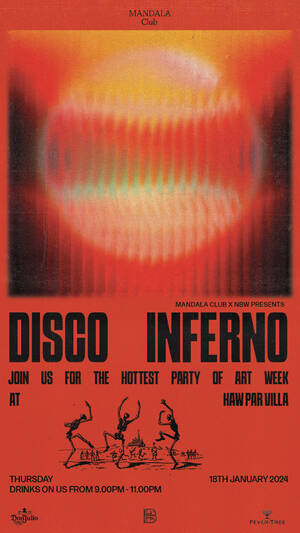
About Haw Par Villa
Haw Par Villa is a one‐of‐a‐kind cultural park in Singapore, originally built in 1937 by Tiger Balm tycoon Aw Boon Haw . Today it bills itself as “Singapore’s largest outdoor art gallery” with over 1,000 statues and 150 giant dioramas depicting stories from Chinese mythology, history and religion . Its brightly painted, sometimes gruesome sculptures (from the Laughing Buddha to the Ten Courts of Hell) teach moral lessons from Taoism, Buddhism and folklore in a fantastical, kitschy way . In its heyday (the 1960s–80s) it drew nearly a million visitors annually , becoming a beloved “park of horrors” for generations of Singaporeans . After decades of decline, major restoration began in the 2010s: the Singapore Tourism Board (STB) ran a heritage festival in 2014, and heritage group Journeys Pte Ltd took over management in 2015, refurbishing the grounds and lighting . Under this revival, attendance rebounded (about 350,000 visitors in 2019 ). Notably, Haw Par Villa is the last remaining “Tiger Balm Garden” in the world; its Hong Kong counterpart closed in 1998 . Today the park remains a unique cultural icon – absurdly charming and educational – consistently winning Tripadvisor’s Travellers’ Choice awards (top 10% attractions worldwide) in recent years .
Events and Programming
Haw Par Villa is used for a surprising variety of events – from music festivals and art shows to cultural fairs. It frequently hosts EDM and pop music parties: for example, the 2024 “Haw Par Thrilla 4” was a day-long electronic music event featuring back-to-back DJ sets and “amped up lighting and production” at the park’s open-air Culture Courtyard . Even international artists have appeared – the 2025 Sundown Festival (also held here) brought K-pop acts like Hwasa and DPR Live . The park also stages recurring community festivals: a multi-ethnic Solar New Year fair (typically in April) celebrates Songkran (Thai New Year) alongside Burmese and Indian traditions with food stalls, live dance and merit-making rituals . During the seventh lunar month (Hungry Ghost season, Aug–Sept), Haw Par Villa runs a “Spirits Festival” of Buddhist-Taoist ceremonies and talks about afterlife folklore . Educational workshops (like writing and art classes) and guided tours (“Journeys to Hell” night tours) are also held in quieter periods. Ticket policies vary: most casual cultural performances are free for park visitors, but admission to organized concerts or Halloween parties usually runs well under S$20 (one 2019 DJ party charged $10–$20 depending on ticket tier ).
Notable past events include noise-music festivals (e.g. 2017’s Noise Invasion Halloween event) and themed parties (Haw Par “Fiesta” nights). Larger events often sell out, so promoters release tickets on social or event platforms months in advance. For example, early-bird deals may start at $10 for local club nights . Performance venues are improvised – stages and sound rigs are erected in the sculpture areas. The promoters of Thrilla 2024 promised “immersive stage design, visuals and lighting” , suggesting a high standard of sound and lighting equipment can be accommodated at the park.
Tickets and Booking
General admission to the park itself is free . (You simply walk in between 9am and 8pm on any day .) However, the Hell’s Museum (the indoor Ten Courts of Hell exhibit) requires a separate ticket: S$20 per adult and S$10 per child (ages 7–12) (kids 6 & under are free, but the museum is very graphic and not advised for young children). When booking, note that Hell’s Museum and guided tours have limited capacity. Tickets can be purchased in advance online or at the park’s Visitor Centre (open daily 10am–6pm ). Starting September 2025, Singaporean visitors can even use SG Culture Pass credits to buy Hell’s Museum tickets , though this must be done through the authorized ticketing partner rather than cash over the counter.
For special events, organizers typically offer tickets through event websites or third-party platforms well ahead of time. It’s wise to buy early if possible, especially for popular concerts or themed nights. For example, a 2019 crowd-drawing EDM dance party at Haw Par Villa sold early-bird tickets for $10 (rising to $20 at the door) . The park itself has no centralized box office for external events, so check each event’s official channel. Walk-up tickets (if available) are usually sold at a booth or the Visitor Centre on-site. In practice, venues often encourage online pre-sale – arriving early on the day of a big show can help secure general admission space.
Seating and Layout
Haw Par Villa has no fixed seating or auditorium – it’s an open sculpture park with winding paths, ponds and display areas. Most performances are held outdoors in lawns or the so-called “Culture Courtyard.” Attendees at concerts generally stand or bring their own mats; a few benches (e.g. near Pagoda Pond) offer rest but are not assigned to any event. There are no obstructed views in general since the grounds are open, but arriving early ensures you can claim the front of the crowd for the best sightlines. In the upland areas (like the Garden of the 12 Zodiac or Tiger Pagoda), some steps or modest slopes give natural viewing points.
For acoustic and technical setup, the park can be transformed by production crews. Promoters often describe expanded lighting rigs, speaker systems and video screens. For instance, the 2024 “Haw Par Thrilla” event cited above boasted “immersive stage design, visuals and lighting” , indicating that concert-grade sound and lighting equipment are brought in. That said, it remains an open-air setting: expect some sound dispersion and, if rain threatens, check event weather policies. During calm weather, audio carries well across the lawns. (If you prefer the exhibitions, note that Hell’s Museum has its own seating inside for the exhibit and any intro talk.) In summary, the park’s layout is flexible – there is no “bad seat” in the audience, only general admission standing.
Getting There and Parking
Haw Par Villa is at 262 Pasir Panjang Road (postal 118628) in the Pasir Panjang/Queenstown district. It’s very near the Haw Par Villa MRT station on the Circle Line (station code CC25) – in fact the park is just a minute’s walk from the station entrance . When exiting the MRT, take Exit A or street-level; you’ll see signage to the park. Several SBS Transit buses also serve the vicinity: for instance, routes 175 and 176 stop along West Coast Highway right outside the park . (Land Transport Guru notes the station runs under the park’s main road , so public transit is straightforward.)
If driving, there is parking available. A dedicated Haw Par Villa car park (at the park address) charges a flat **S$5 per entry** for cars (7:30am–10:30pm) . Alternatively, an adjacent complex known as ORTO West Coast (27 West Coast Hwy) offers parking by the half-hour (approximately S$0.70 per 30 minutes) . (The official Haw Par website even lists ORTO as an option .) ORTO is directly opposite Haw Par Villa and has over 300 parking lots, generally cheaper for longer stays. Taxis and ride-hailing services can drop off at the MRT station curbside, where a taxi stand/pickup point is provided at street level . From either parking or station, signage will direct you to the park entrance. Late-night transportation is available via taxis or the MRT (Circle Line trains run until around midnight).
Inside the Venue
Visitors enter Haw Par Villa freely once the gates are open (no bag searches for casual entry). The first stop is typically the **Visitor Centre**, which sits beside the Hell’s Museum entrance . Here you can buy museum tickets, pick up maps or souvenirs, and ask staff for information. Spread throughout the park are informational plaques explaining each diorama and statue’s story. Photography of the outdoor exhibits is **encouraged** (the gaudy, quirky scenes are very photogenic), but please do not block paths or climb on displays. There are no assigned seats or handicaps – you walk at your own pace on paved paths through the displays. Note that most of the park is open to the sky (even the Hell’s Museum building is at the bottom of a hill), so do protect yourself from sun or rain.
For refreshments, the park has its own cafes. The main outlet is **Cafe 1937**, located by the Pagoda Pond. It serves kopi (local coffee), teh (tea), simple local dishes and even beer – a useful spot to relax with a view of the pond . (Cafe 1937 operates about 9:30am–5:30pm daily .) Another bistro called “The Sixth Milestone” was opened recently but is currently closed (guests are directed to Cafe 1937 instead ). Visitors are welcome to bring their own snacks into the park lawns, but note that **no outside food or drink is allowed inside Hell’s Museum** . Speaking of which, be aware that Hell’s Museum (inside the Tiger Temple area) is a dark, air-conditioned indoor walk-through. If you enter it, you will encounter dim lighting and graphic scenes – it’s recommended only for older children and adults.
Facilities and services: The park accepts electronic payments at its concession outlets (credit cards, NETS, PayNow, etc.), and there is a POSB ATM at the MRT station just outside . Restrooms are located near the Visitor Centre and by the Pagoda Pond. If you need assistance, note that about 60–70% of the park is wheelchair accessible (most main paths and Hell’s Museum ramps are navigable, but some aisles between statues involve stairs). There are no park-wide Wi-Fi networks, so plan to rely on mobile data for directions or event updates. For a bit of park fun, bring some coins: there are “honesty box” ponds where you can buy fish food to feed the koi and turtles , a popular activity especially for families. In summary, expect a casual, self-guided visit: enter through the Visitor Centre, stroll among hundreds of statues, enjoy the odd café, and take in any displays at your leisure.
Nearby Amenities
While Haw Par Villa itself has limited eating and lodging, you’ll find several options just outside. Immediately across Pasir Panjang Road is **ORTO West Coast** (27 West Coast Hwy), a large open-air food and entertainment complex. According to local guides, ORTO “is situated just opposite Haw Par Villa” and offers numerous dining options. For example, the Thai restaurant Kinn Derm (famous for boat noodles and hotpot) and a beer garden style zi-char stall are located there . ORTO also features recreational amenities: a 24/7 prawning pond and live band stage, plus a novelty “Mermaid Bar” cocktail lounge with underwater-themed dining . In short, ORTO serves as a convenient dinner or nightlife spot before/after a park visit.
For budget-friendly local food, head a short drive or walk to **Pasir Panjang Food Centre** (121 Pasir Panjang Rd) . This hawker centre (built in the 1970s) is reachable on foot via Henderson Road, or by taking the same Circle Line MRT one more stop and a quick walk. It has many classic stalls – for example, media reviews highlight a BBQ stingray with sambal and salted-egg prawns as must-try dishes . Nearby eateries on Pasir Panjang and Henderson Road include Chinese kopitiams, zi-char shops and casual restaurants. If you need accommodation, note that there are no large hotels immediately adjacent; the closest hotels are in the Holland Village/Clementi area or one-north business district. (One unique lodging concept being tested is an on-site “container hotel” near the park, but aside from that, visitors typically stay in central Singapore and take MRT out.)
What Makes This Venue Special
Haw Par Villa’s appeal lies entirely in its vivid and eccentric character. There is no other park quite like it – in fact, it is “the only one of its kind left in the world” after the Hong Kong Tiger Balm Garden was demolished. Every corner is full of direct cultural storytelling. Each statue or diorama (whether the Ten Courts of Hell, the 12 Zodiac animals, the Laughing Buddha or the Tiger Pagoda) is crafted to convey folklore and moral lessons in unmistakable fashion. The founders even integrated Tiger Balm advertising into the park, a subtler form of mid-20th-century marketing . Singapore’s media have long called Haw Par Villa quirky and offbeat – Time Out dubbed it “one of Singapore’s quirkiest and more interesting attractions” . Visitors often describe it as equal parts educational and unsettling, and it’s become a nostalgic icon for many locals (many Singaporeans recall school excursions here).
Architecturally and culturally, Haw Par Villa is rich in symbolism. The park covers about 8.5 hectares on a hill, landscaped into thematic sections (Good/Bad Virtues, Mythical Creatures, International Corner, etc.). There are notable structures like the 7-story Tiger Balm Pagoda and stone-boat pagoda, the bright orange Tiger Temple gate, and winding cave tunnels. All the original sculptures have been meticulously conserved or restored under current management, aided by its only surviving craftsman (Teo Veoh Seng, who has restored statues since age 13) . This combination of art, legend and history makes the park an immersive culture lesson – one guided tour notes it “showcases over 1,000 sculptures” from Chinese literature and legend . In short, Haw Par Villa is special because it is a walk-through book of Asian mythology in concrete and paint – bizarre, delightful, and uniquely Singaporean.
Visitor Tips and Information
Accessibility: About 60–70% of the park is wheelchair/pram-friendly . The main paths around Pagoda Pond and Tiger Temple have ramps, but some inner gardens involve steps, so a fully accessible route may be limited. There is no tram or shuttle inside the park. Most venues (Visitor Centre, Hell’s Museum) have ramps or lifts. (If in doubt, use the park’s recommended wheel route on the map.) The nearby Haw Par Villa MRT station is fully accessible. ATMs are not at the park itself – the nearest is a POSB machine at the MRT exit ). Most vendors take credit/debit cards and e-payments .
What to Bring: This is an open-air attraction. Come prepared for sun or rain: sunscreen, a hat and an umbrella/poncho are recommended . Comfortable walking shoes are a must on the uneven paths. It can be hot, so stay hydrated. Many visitors like to bring a small donation to feed the fish – there are honesty-box vending stations for fish pellets and turtle pellets by the ponds . (Tip: carry some loose change.) Feel free to take photos anywhere outside , especially of the more outrageous statues – it’s all allowed as long as you don’t climb on anything. However, **no outside food or drinks are allowed in the Hell’s Museum** , so either finish your snacks first or keep them for outside food areas. Pets (on leash) are welcome in the outdoor park , but not in the museum.
Best Times and Miscellany: Weekday mornings (around 9–11am) or late afternoons are ideal to avoid crowds and heat – many guides note it’s best “just as it opens” or after 5pm when the sun is lower . The park is open daily 9am–8pm (last entry 7:30pm) , and is rarely closed except for occasional renovation (check updates before visiting). It’s family-friendly but keep an eye on kids: the Hell’s Museum is quite terrifying (indeed, it’s “not recommended for kids under 9” , so children should skip that exhibit). Guides also recommend against trying to walk through the park in the worst of the midday heat. In summary – stay cool, wear comfy shoes, and allow at least an hour or two to wander through all the sculptures and exhibits. Enjoy the surreal, educational experience, and maybe grab a drink at the pond café when you need a break.
Frequently Asked Questions
What are Haw Par Villa’s opening days and hours?
Haw Par Villa is open every day of the week. The park gates open at 9:00 AM and close at 8:00 PM, with last admission at 7:30 PM . (The Visitor Centre inside opens at 10:00 AM.) The park typically operates year-round, but it’s wise to check for any special closure notices during major renovations or events.
Is there an admission fee to enter Haw Par Villa?
Entry to the outdoor Haw Par Villa park is completely free . You only pay if you enter the Hell’s Museum exhibit inside the Tiger Temple. That museum admission is S$20 for adults and S$10 for children (7–12 years old) ; kids under 6 enter the museum for free. Note that Hell’s Museum has graphic scenes, so the park recommends it only for older children and adults. All other areas (the gardens, statues and dioramas) cost nothing.
How do I get to Haw Par Villa by public transport?
Take the Circle Line MRT to **Haw Par Villa Station (CC25)**. Exit A of that station leads right up to the park entrance . You can also take SBS buses 175 or 176 to the West Coast Highway stop (Pasir Panjang) just outside the park . Virtually no walking is required from the station or bus stop. This makes public transit the easiest way to reach the park. Late-night trains run until about midnight; after that taxis or rideshares can drop you at the station curb.
Where can I park if I drive, and what does it cost?
There is dedicated parking at Haw Par Villa (at 262 Pasir Panjang Rd) charging a flat **S$5.00 per entry** for cars (from early morning until late evening) . Alternatively, the ORTO West Coast complex (at 27 West Coast Hwy, directly opposite the park) offers public parking by the half-hour – about **S$0.70 per 30 mins** . ORTO has hundreds of spaces and is slightly cheaper for longer visits. After parking, simply walk across the street to the park entrance. Taxi and private-hire drop-offs/pickups are handled at the MRT station exits (there is a taxi stand/pickup point at street level ).
Are there any seats or reserved areas for shows at Haw Par Villa?
Haw Par Villa has no fixed seating anywhere – it’s all open-air grass and walkways. During concerts and events, it’s general admission standing-room or casual seating on the lawn. (Occasionally a few benches near Pagoda Pond may be used informally.) If you want a prime spot, arrive early and stand near the front of the stage area. There are no assigned seats or numbered tickets – even “VIP” spots at these events are typically just roped-off front rows. In other words, choose your spot and stake it out, because everyone stands or sits on the ground.
Can I bring my children and are there age restrictions?
Yes, families are welcome. The outdoor park portion is perfectly child-friendly – kids often love the bright statues and animals. The only caution is the Hell’s Museum inside: it has very graphic depictions of the Ten Courts of Hell. For this reason, it’s not recommended for young children. In fact, guides warn not to take kids under about **9 years old** into Hell’s Museum (parents should use discretion). Outside of that, there are no strict age limits. Strollers can be pushed on paved paths (though some inner strolls have steps). Pets on leash are allowed in the outdoor areas, but of course, no pets are allowed inside any museum building.
What food and drinks are available inside the park?
A café and kiosk operate on-site. The main outlet is Café 1937 by Pagoda Pond, which serves local kopi, tea, simple snacks, light meals and even beer . (Café 1937 is open roughly 9:30am–5:30pm daily .) Another eatery called The Sixth Milestone opened recently but is currently closed , so for now Café 1937 is your on-site refreshment spot. Outside food is generally allowed in park lawns, but remember no outside food or drink is permitted inside the Hell’s Museum (only permanent fountains and vending machines are inside). If you want a bigger meal before or after, the ORTO complex across the street also has nightspots and restaurants.
Is Haw Par Villa wheelchair/pram accessible?
Much of Haw Par Villa is accessible, but not every exhibit. Organizers state that about 60–70% of the park is wheelchair-friendly . The main paths, Visitor Centre, Hell’s Museum and plaza areas are ramped or flat. However, some of the detailed inner gardens and diorama alleys involve steps. There are no park trams, so wheelchair users should use the main paved loop. It’s a good idea to check the official accessibility map or ask staff at the Visitor Centre about the smoothest route. (Pushchairs/prams can usually navigate the main pathways fine.)
Can I photograph the park and its statues?
Absolutely. Photography is explicitly allowed and encouraged in the outdoor sculpture park . The colorful statues and Hell-themed scenes make very popular photo spots – just don’t climb on any of them or block the pathways. (If lighting is low for events, you may need low-light equipment. Inside the Hell’s Museum, photography rules vary; it’s best to check signage – generally, flash or tripods are discouraged there to protect the exhibits.)
Are there any restrictions on bringing pets or bikes?
Dogs and cats on leash are welcome in the park’s outdoor areas – the park is actually quite pet-friendly . Just ensure they stay on leash and you clean up after them. However, pets are not allowed inside the Hell’s Museum itself. As for bicycles, you may carry or wheel a foldable bike around, but you cannot ride bicycles on the paths for safety . There are bicycle racks at the MRT station exit; it’s best to lock your bike there and walk in.
What items should I bring or avoid for my visit?
Bring sun protection (hat, sunscreen) and an umbrella or raincoat, since most of the park is exposed sky . Comfortable walking shoes are important – the terrain is uneven in places. Small change is handy if you want to feed the fish/turtles at the ponds (honesty-box fish food) . Water bottles, hand sanitizer and a camera are also sensible. As for restrictions: no tripods or large video equipment without permission, no smoking in exhibits, and no roller-skates or similar. Outside snacks are fine in the park but not inside Hell’s Museum . Finally, leave valuables secure – although Haw Par Villa is safe, it is a public park, so watch personal belongings during events.
How long does it take to tour Haw Par Villa?
A quick walk through the outdoor park can take as little as 30–60 minutes. However, to really absorb the park’s many exhibits, most visitors spend 1–2 hours strolling the grounds . If you plan to enter Hell’s Museum, add another 1–2 hours (the museum’s guided experience and dioramas are quite detailed). In practice, you could easily spend a whole afternoon here if you explore every statue, visit the museum, and maybe grab a coffee break. (Conversely, a 30-minute stroll can cover the highlights in a single pass.)