Events and Programming
TSB Auditorium – Shed 6 is one of Wellington’s most adaptable event spaces. Its programme moves between touring concerts, electronic and drum-and-bass nights, family entertainment, cultural festivals, exhibitions, conferences, awards functions and large private events. The room can operate as a seated auditorium, a general-admission concert hall, a banquet venue or four separate event rooms, so the atmosphere changes substantially from one booking to the next.
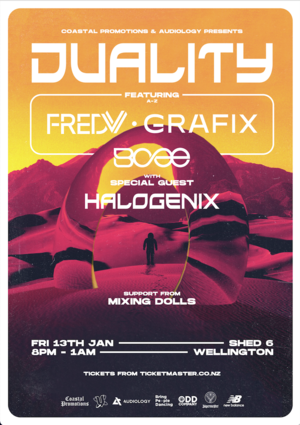
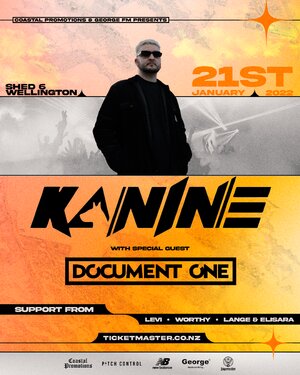
The documented 2021–2026 programme shows a particularly strong relationship with contemporary music. Recent bookings have included the 2021 80s Party, Africa Day, the 2022 Mako Road and Spacey Jane shows, IDLES, Kanine and Document One, the 2023 performances by Fred again.., Fontaines D.C., Ruel, Emma Memma and Blindspott, and electronic events featuring Camo & Krooked, P Money x Whiney, Netsky and K Motionz. Dope Lemon and 2manydjs also played the venue in 2025.
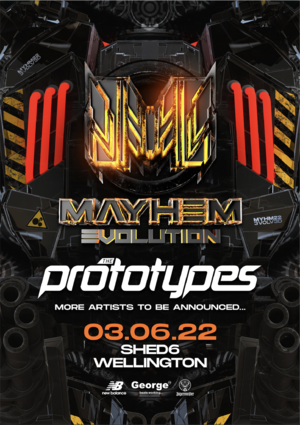
Electronic music is a recurring strand of the venue’s identity. Promoters have used the warehouse-style hall for late-night drum-and-bass and dance events with large lighting rigs, visual effects and standing crowds. Kanine and Document One were promoted as a warehouse rave, while the 2024 Immersion event combined Camo & Krooked, Hospitality and other international drum-and-bass artists with substantial sound and visual production. ticketfairy.com
The space also supports civic and community programming. The 2023 FIFA Women’s World Cup Fan Festival used Shed 6 for match screenings, entertainment, food and cultural activity across multiple days. More recent and announced community-facing uses include the Lunar New Year Festival, Diwali Festival of Lights, the NZ Art Show and other cultural or public events staged across Shed 6 and the adjoining TSB Arena.
Confirmed 2026 music bookings include Leftfield in March, Peach PRC and Salty in March, Luude in July, the Area:51 electronic line-up with Gardna, Holy Goof, Badger and TS7 in July, Lorna Shore with The Acacia Strain and Organectomy in October, and Home Brew in November. The announced mix suggests that Shed 6 continues to attract touring alternative, heavy, hip-hop, pop and electronic acts rather than operating as a conventional seated theatre. The published listings checked for this guide did not show confirmed Shed 6 performances beyond November 2026.
Ticket prices vary by promoter, production scale, age restriction and whether the event is seated or standing. Documented examples include about NZ$67.50 for Mako Road in 2022, NZ$68 for the 80s-themed party in 2021 and NZ$81.46 including fees for the announced Home Brew show in 2026. Premium conferences can be much more expensive: the 2023 SME& Entrepreneur event listed general tickets from NZ$399 and VIP pricing rising substantially higher. These examples indicate a useful working range of roughly NZ$65–85 for many mid-sized concerts, with international headline shows and premium events often above that level.
Tickets and Booking
For ticketed performances, the venue box office opens 60 minutes before the advertised event start. It handles ticket collection, ticketing problems and any tickets available for purchase at the venue. Opening times, age limits, door times and seating arrangements are event-specific, so the information attached to the individual performance takes priority over general venue details.
Popular touring shows can sell quickly. IDLES’ 2022 Wellington performance was reported as sold out, and promoters for several electronic events used advance registration or presales before general release. For high-demand concerts, the most reliable approach is to register for the artist or promoter’s presale, decide in advance whether you are comfortable with general admission, and buy as soon as the public allocation opens. Avoid relying on unauthorised resale tickets, because venue admission is not guaranteed if a ticket cannot be verified.
There is no permanent Shed 6 seating plan that applies to every performance. A concert may use a full standing floor, a reduced standing area with seated sections, or temporary rows of chairs. A conference may use theatre, classroom, cabaret or banquet layouts. If you need a wheelchair position, companion seat or a particular viewing arrangement, request it during booking rather than assuming the layout will match another show at the venue.
About TSB Auditorium – Shed 6
Shed 6 is an indoor, pillarless, flat-floor auditorium on Queens Wharf at 4 Queens Wharf, Jervois Quay. It is connected to the TSB Arena by the light-filled TSB Arcade, creating a linked complex that can host several activities under one roof. The auditorium is contemporary in its event fit-out but retains the practical character of a waterfront warehouse rather than presenting as a traditional proscenium theatre.
The site has hosted a building since the mid-1880s, although the current shed was replaced in 1959. The building was renamed Shed 6 in the 1920s and served as a warehouse before later being used as a sail loft during round-the-world yacht races. In 2013 it was substantially renovated as a temporary performance space while Wellington Town Hall underwent seismic work; its continued popularity turned that temporary solution into a lasting venue.
The 2013 conversion was completed in an exceptionally fast 92-day programme. The project involved seismic work, mechanical and electrical upgrades, a new sprinkler system and the transformation of the previously wet, dark Plimmers Arcade into a brighter lobby and circulation area. The project was delivered in time for the World of Wearable Arts programme and later received a silver award in the tourism and leisure category of the New Zealand Commercial Project Awards.
One of the venue’s more unusual historical features is the display of artefacts and remnants from Inconstant , a three-masted sailing ship grounded at the entrance to Wellington Harbour in 1849. The remains were rediscovered during work on reclaimed land and are now displayed in the foyer area. That maritime connection gives the modern event space a direct link to Wellington’s port history.
Seating and Layout
Published venue figures vary slightly between production documents because capacity depends on stage size, technical equipment and the final floor plan. The current venue information lists 768 square metres for the open auditorium, a 112-square-metre stage area, up to 966 people in theatre layout, 923 for a seated performance configuration and up to 1,400 for general-admission standing events. The main space can also hold approximately 966 for a cocktail event or 440 for a banquet.
Room 1: 255 square metres, with retractable tiered seating and theatre capacity listed at 389.Room 2: 145 square metres, with theatre capacity of 145.Room 3: 137 square metres, with theatre capacity of 130.Room 4: 200 square metres, with theatre capacity of 205.
Three operable sound-resistant walls allow the main hall to divide into four rooms. Room 1 is the principal option for tiered viewing, while the other rooms are flat-floor spaces. For a seated show, the central area aligned with the stage is generally the safest choice for a balanced view and sound. For a standing concert, the best position depends on the production: the front gives proximity and energy, the centre usually offers the most balanced mix, and the rear or side can provide more room and easier access to exits or bars. These are practical tendencies rather than fixed seating rules, because each promoter can alter the layout.
The technical dimensions are substantial for a mid-sized concert room: the published production document gives a maximum width of 16 metres, a minimum width of 13.9 metres, a length of 48.6 metres and a ceiling height of 6.5 metres. Three main structural beams run the length of the room, with lower trim clearance where the dividing walls meet.
Getting There and Parking
Shed 6 is at 4 Queens Wharf, Jervois Quay, on Wellington’s central waterfront. The location is within the CBD and close to the waterfront dining area, Lambton Quay, the railway station and the city’s hotel district. The main public entrance is reached from the Queens Wharf side, while vehicle and production access uses Jervois Quay.
The closest dedicated parking is the car park beneath the Queens Wharf complex, with lift access towards the TSB Arena foyer. Mobility parking spaces are available there and a parking fee applies. The venue’s public information does not give one fixed event-night price, so the cost should be checked at the time of travel. Limited event or production parking may sometimes be arranged separately, but it is not a general audience entitlement.
A drop-off zone is available close to the entrance from Jervois Quay. This is the most practical option for visitors using a taxi or rideshare, particularly when a passenger needs level access. Drivers should allow extra time during major concerts and waterfront festivals, when queues can form around the car park and Jervois Quay.
Metlink bus stops serve the area, with Lambton Quay – ANZ Bank listed as the nearby stop for the TSB Arena and Shed 6 precinct. From Lambton Quay, walk downhill towards the waterfront, cross towards Queens Wharf and follow the waterfront signs to the TSB buildings. Wellington Railway Station and the Lambton interchange are also walkable from the venue. The Airport Express connects Wellington Airport with Wellington Station and central-city stops, generally taking about 25–35 minutes between the airport and station depending on traffic.
Queens Wharf is also a ferry departure point for services across Wellington Harbour to Days Bay and, on some trips, Mātiu/Somes Island. The ferry is useful for daytime waterfront travel but is not a substitute for late-night concert transport because its timetable is event-independent.
Inside the Venue
For a ticketed event, expect a warehouse-scale room with a flexible floor plan, a separate foyer or arcade circulation area, event bars and kiosks. Shed 6 is cashless inside the performance bars and kiosks; contactless card and payWave payments are accepted without an additional surcharge. The box office opens one hour before the event, but door times and entry queues vary by promoter.
Bathrooms, including accessible facilities, are accessed through the Shed 6 Arcade. The facilities are shared with the TSB Arena and can be partitioned when two events are operating at once. The venue’s published information confirms Wi-Fi, heating, cooling, air movement and extensive data connections. It does not publish a universal guarantee of coat check, merchandise availability or food service for every show; those facilities depend on the promoter and event format.
The venue is designed for event production rather than a permanently installed concert package. Production lighting, sound and audiovisual equipment are arranged according to the event, with some infrastructure and waylines permanently installed. The house lighting system comprises 86 individually addressed RGBW LED fixtures with optional DMX control. There are 14 wall panels containing power, Cat6 and XLR connections, plus one 400-amp power-lock supply and thirteen 32-amp three-phase connections.
Concert production can include haze or smoke, but isolation must be arranged in advance to prevent unwanted fire-alarm activation. Pyrotechnics may be possible only with significant advance notice and written approval. Rigging is restricted to the rated structural beams, and touring production rigging plans must be submitted for approval ahead of the event.
Nearby Amenities
Queens Wharf is convenient for pre-show food because several restaurants and bars sit within the same waterfront precinct. Dockside offers harbour-side dining in Shed 3, Foxglove provides a larger bar-and-restaurant setting with waterfront views, Shed 5 focuses on seafood, and The Crab Shack offers a more casual option. These venues can become busy before popular shows, so booking or arriving early is sensible.
The wider waterfront and central-city area provide cafés, bars, shopping, hotels and cultural attractions within walking distance. Wellington’s compact CBD makes it practical to stay near Lambton Quay, the waterfront or Courtenay Place rather than relying on a car. For a late finish, check the last suitable bus or ferry before the show and use the Jervois Quay drop-off area for a pre-arranged taxi or rideshare.
What Makes This Venue Special
Shed 6’s character comes from the contrast between its working-wharf origins and its modern event infrastructure. It is not a restored nineteenth-century theatre; it is a repurposed waterfront shed with a large, open floor, high ceiling, movable walls and a bright connecting arcade. That combination lets the same building host a 1,400-person standing electronic event, a 675-person business celebration, a public festival or a divided conference programme.
The venue has also helped Wellington retain and attract events during periods when other civic buildings were unavailable. Its conversion provided a performance home during Town Hall strengthening, supported World of Wearable Arts production, and helped bring business events that organisers said had previously outgrown Wellington or not considered the city. A 2013 council review recorded 38 business events delivered at Shed 6 or the combined Shed 6–TSB Arena complex after the refit, with more than 160 events in the forward pipeline through 2015.
The wider Venues Wellington portfolio recorded more than 630,000 local and visiting audience members and $52.2 million in out-of-region visitor spend in 2016–17. Those figures cover the portfolio rather than Shed 6 alone, but they illustrate the civic and economic role of Wellington’s performance and conference venues. Shed 6 contributes by bringing concertgoers, conference delegates, exhibitors and festival visitors into the waterfront hospitality and accommodation economy.
Visitor Tips and Information
Shed 6 has ground-floor wheelchair access, internal ramps, accessible toilets and event-specific wheelchair seating. Accessible seating locations can change because the venue is multipurpose, so request the appropriate position during booking. Wheelchairs can be made available with advance notice. Guide dogs are welcome, and some performances may offer audio description or touch tours. The venue does not have an audio loop or routinely provide sign-language-interpreted performances.
There is no single dress code for Shed 6. A daytime conference, family show, seated concert and late-night electronic event can look completely different. Age restrictions are set by the individual event; the announced Lorna Shore show is R18, while the announced Home Brew show is all-ages. Do not assume that a venue you attended previously had the same age policy or floor arrangement.
The published venue information does not provide one universal bag, camera or photography policy. Check the conditions attached to the specific performance and avoid bringing anything unnecessary to a standing show. For loud rock or electronic events, personal hearing protection is a sensible addition even though it is not a venue rule. Audience reports are mixed in the way common to flexible warehouse venues: some praise the scale, staff, fast bar service and soundproofing, while others find certain productions loud or acoustically uneven. The mix and production design make a significant difference.
For general admission, arrive earlier than the headline start if you want a position near the front or need time to orient yourself. For seated events, arrive at least 30 minutes before the advertised start to allow for the waterfront walk, ticket checks and finding the correct room. Bring a payment card or contactless device, as the venue’s bars and kiosks are cashless.
Frequently Asked Questions
Where is TSB Auditorium – Shed 6?
TSB Auditorium – Shed 6 is at 4 Queens Wharf, Jervois Quay, on Wellington’s central waterfront. It sits beside the TSB Arena and is connected to it by the TSB Arcade. The location is walkable from Lambton Quay, Wellington Railway Station and the central hotel district, with nearby bus stops and a car park beneath the Queens Wharf complex.
Is Shed 6 the same venue as TSB Arena?
No. Shed 6 and TSB Arena are adjoining but separate spaces within one waterfront complex. Shed 6 is the smaller, flexible auditorium with four divisible rooms, while TSB Arena is the larger arena space. Some festivals, conferences and public events use both buildings, so check the exact venue printed on your ticket before arriving.
How many people can Shed 6 hold?
The current published figures list up to 966 people in theatre layout, 923 for a seated performance and up to 1,400 for general-admission standing events. Capacities change with stage size, technical equipment, barriers and aisle requirements. A conference or banquet will normally have a lower capacity than a concert using most of the floor.
Does Shed 6 have fixed seats?
Shed 6 is not permanently configured as a seated theatre. Room 1 includes retractable tiered seating, while the main hall can use temporary chairs, theatre rows, cabaret tables or a standing floor. Concert seating is therefore show-specific. If you are buying a ticket for a seated performance, use the seating map attached to that event rather than relying on photographs from another booking.
What is the best place to stand at a Shed 6 concert?
For the clearest overall balance, the centre of the room is usually the safest choice, while the front provides the closest view and most intense crowd atmosphere. The rear or sides are better if you prefer more space, easier access to bars or a quicker route out. The actual best position depends on the stage, mixing desk, barriers and production layout used for that show.
When does the box office open?
For ticketed events, the Shed 6 box office opens 60 minutes before the event start. It can handle ticket collection, ticketing issues and any tickets available for purchase at the venue. This does not necessarily mean the performance doors open at the same time; door and show times are set by the individual promoter.
What do tickets usually cost?
Recent documented examples range from about NZ$67.50–68 for mid-sized 2021 and 2022 music events to NZ$81.46 including fees for the announced Home Brew show. Large international tours, premium seating and special productions can cost more. Business conferences are priced separately and may run into the hundreds or thousands of dollars depending on access and inclusions.
Is Shed 6 cashless?
Yes. The performance bars and kiosks at Shed 6 are cashless. Contactless card and payWave payments are accepted, and the venue states that these transactions do not attract an extra surcharge. Carry a card or suitable contactless device, particularly if you expect to buy drinks or refreshments inside.
Where can I park for Shed 6?
The closest public parking is beneath the Queens Wharf complex, with lift access towards the TSB Arena foyer. Mobility parking spaces are available and a fee applies. Event-night pricing is not given as one fixed amount in the published venue information, so allow for changing rates and possible demand during major concerts or waterfront festivals.
Can rideshares drop passengers near the entrance?
Yes. The venue lists a drop-off zone close to the entrance, accessed from Jervois Quay. This is useful for visitors with mobility requirements or anyone avoiding the walk from Lambton Quay. Drivers should follow local traffic directions rather than stopping on the waterfront access route, especially when a large event is loading or finishing.
Is Shed 6 accessible for wheelchair users?
Shed 6 has ground-floor wheelchair access, internal ramps, accessible toilets and event-specific accessible seating. Wheelchairs may be available at the venue if arranged in advance. Seating locations vary because the room changes between concerts, conferences and festivals, so accessibility needs should be stated during booking rather than handled on arrival.
Does Shed 6 have a hearing loop?
The venue’s published accessibility information says Shed 6 does not have an audio loop and does not provide sign-language-interpreted performances as a standard facility. Some individual shows may offer other access services, such as audio description or touch tours. Ask about the specific event before buying if hearing access is essential to your visit.
Are guide dogs allowed inside?
Guide dogs are welcome at Shed 6. Because the venue can change from a quiet seated room to a crowded standing concert, it is sensible to identify the event format and discuss any assistance needs during booking. Staff are described as trained to help visitors with additional access requirements.
Are there restaurants close to Shed 6?
Yes. Queens Wharf has several nearby dining options, including Dockside, Foxglove, Shed 5 and The Crab Shack. The waterfront location is particularly convenient for a meal before a performance, although popular show nights can make nearby restaurants busy. Allow more time than usual if you are dining immediately before doors open.
How do I get to Shed 6 by public transport?
Metlink bus stops serve the waterfront and Lambton Quay area, with Lambton Quay – ANZ Bank listed as a nearby stop. Wellington Railway Station and the Lambton interchange are also within walking distance. From Wellington Airport, the Airport Express links the airport with Wellington Station and central-city stops, usually taking around 25–35 minutes depending on traffic.
What types of events are held at Shed 6?
The confirmed programme includes touring rock, indie, pop, hip-hop, metal and electronic acts, as well as family shows, cultural festivals, art shows, conferences, exhibitions and corporate celebrations. Its strongest recurring identity is as a flexible mid-sized concert and warehouse-event room, but the divisible layout allows it to handle much more than music.
What is the history of the building?
A building has occupied the site since the mid-1880s, the current shed dates from a 1959 replacement, and the name Shed 6 dates from the 1920s. It served as a warehouse and later a sail loft before a major 2013 conversion created the present event venue. The foyer also displays remnants from the historic ship Inconstant .
Is Shed 6 a good venue for loud concerts?
It is frequently used for rock, metal, drum-and-bass and electronic performances, with production systems arranged for each show. Visitor opinion is mixed: some praise the room’s scale, staff and soundproofing, while others describe certain mixes as loud or uneven. Ear protection is sensible for high-volume events, and your experience can vary according to the touring sound team and where you stand.