5 Essential Pre-Event Promotion Strategies to Engage Your Audience in 2025
An integral part of your overall event marketing strategy, pre-event promotion—if done right—can drive your festival or concert to mainstream success. In fact, savvy organizers know that engaging your audience early is crucial to selling out shows. The live events sector continues to thrive as of 2025, but competition is intense. A recent survey found 71% of European festivals were over 80% sold out in 2024, up from 64% in 2023, according to IQ Magazine’s European Festival Survey. On the flip side, 2024 also saw festival cancellations hit their highest level since 2020, as noted in Pollstar’s 2024 business analysis, underscoring how vital strong pre-event marketing is to an event’s survival. Engaging your audience well before gates open isn’t just a nice-to-have—it’s now a make-or-break component of event planning.
As an event organizer, you likely know that marketing is central to your event’s success. Today, major music festivals generate millions in revenue and galvanize local economies. For example, the new Lovin’ Life Music Festival in Charlotte sold out its inaugural 2024 event (nearly 87,000 attendees) and injected about $32 million into the local economy, as reported by Axios Charlotte. These successes aren’t accidental—they result from strategic promotion that engages fans long before event day. When crafting a marketing plan for your upcoming festival or show, think about all the ways you can generate buzz in advance. A strong pre-event promotion strategy keeps potential attendees excited and invested in your event well before the first act takes the stage.
An effective event marketing plan is comprehensive and covers every phase: pre-event hype, engagement during the event, and post-event follow-ups. In this article, we’ll take you through five essential pre-event marketing strategies that experienced producers recommend. Each strategy is updated with current 2025 insights, real-world examples, and proven tactics to boost your event’s visibility, credibility, and ticket sales.
1. Create Buzz Using Valuable and Relevant Content

Smart Promo Codes & Presale Access
Create percentage or flat-rate discount codes with usage limits, date ranges, and ticket type restrictions. Plus unlock codes for private presales.
Original, fresh, and relatable content is the cornerstone of pre-event promotion. To grab attention in 2025’s media-saturated world, highlight the most attractive, unique aspects of your music event or festival—the elements people can only experience by attending. Is your venue spectacular (a mountain valley, historic grounds, or iconic arena)? Do you have an exclusive lineup or a special theme? Focus your social media and blog content around those one-of-a-kind features. For example, if your festival is set in a scenic desert, produce a teaser video with sweeping drone shots of the landscape and stage build-out. If you’re curating a craft beer and indie music weekend, share behind-the-scenes stories of the brewers and bands. Give potential attendees a vivid taste of the experience that awaits them.
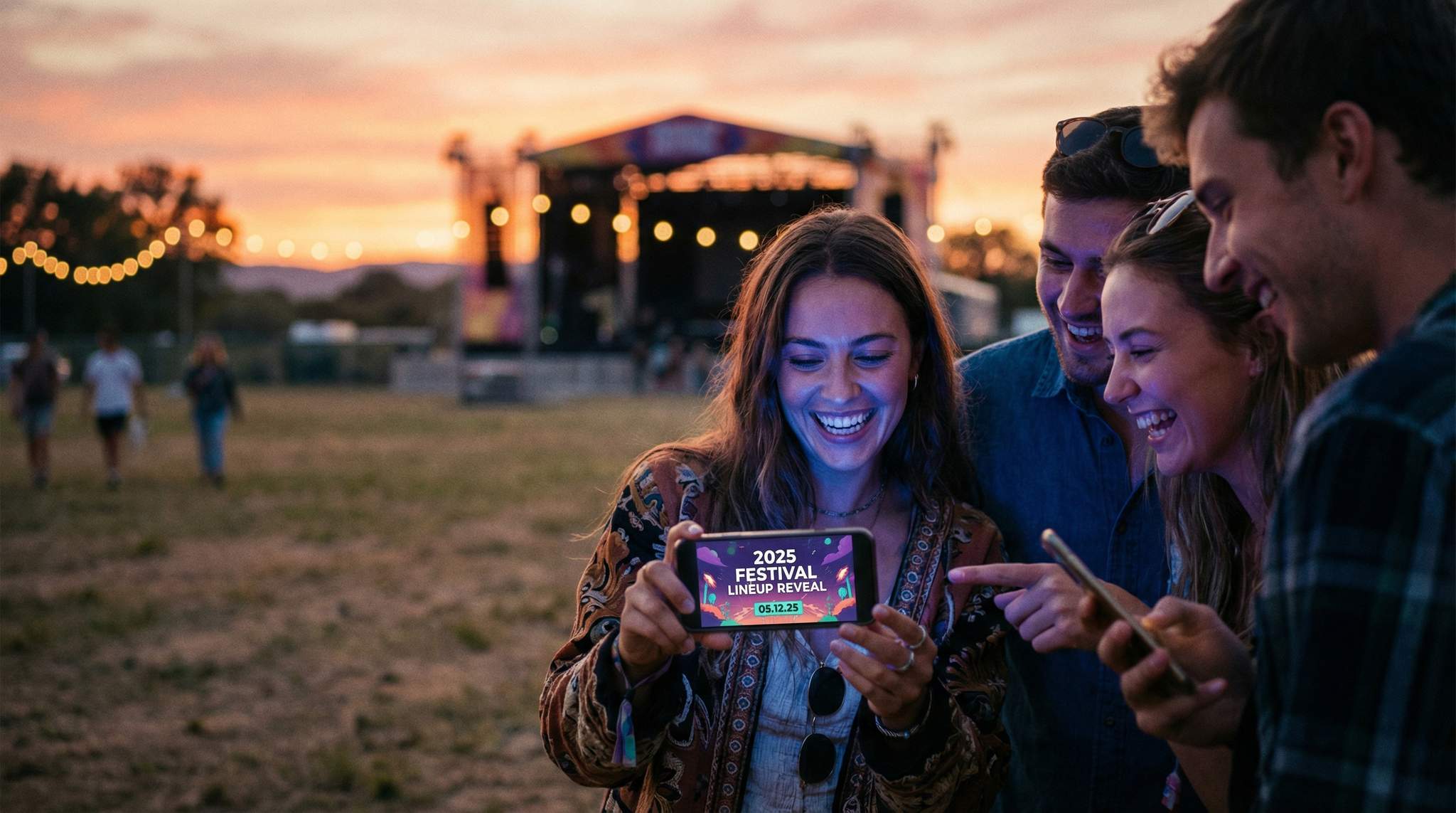
Multimedia content tends to perform especially well. In the months leading up to your event, roll out a mix of short teaser videos, eye-catching photos, and interactive posts. Many top festivals produce cinematic “lineup reveal” videos or themed trailers to build lore and excitement (Tomorrowland’s annual theme trailer, for instance, garners millions of views). Leverage Instagram Reels, TikTok clips, and YouTube teasers to showcase the energy and vibe of your event. According to industry veterans, fans are far more likely to hit “buy” when they’ve seen and felt what your festival is about. In fact, one global festival sold 500,000 tickets in under 20 minutes following a massive online hype campaign. While not every event will hit those numbers, the lesson is clear: compelling content feeds the FOMO (fear of missing out) that drives early ticket purchases.
Ready to Sell Tickets?
Create professional event pages with built-in payment processing, marketing tools, and real-time analytics.
If you are brainstorming promo video ideas for your event, consider formats that serve different stages of your campaign. A “save the date” cinematic trailer works well for early pre-event publicity, while fast-paced, user-generated style reels are highly effective for late-stage music event promotion. The key is to match the visual energy of the video to the specific action you want the viewer to take, whether that is signing up for a presale waitlist or buying a last-minute VIP pass.
If you are wondering how to be creative about an event announcement, look beyond standard static graphics. Organizers can build anticipation by mailing physical cryptic clues to top fans, projecting the festival logo onto local landmarks, or launching an interactive website where users must solve a puzzle to reveal the headliners. These out-of-the-box festival promotion tactics ensure your initial launch cuts through the noise and immediately captures media attention.
When brainstorming pre event promotion ideas, gather your core production team to map out concepts that align with your festival’s unique brand identity. Effective pre-promotion doesn’t always require a massive budget; sometimes, grassroots tactics like partnering with local lifestyle brands or hosting a secret lineup-reveal mixer can generate significant early momentum. By diversifying your promotional concepts, you ensure that your messaging reaches different segments of your target audience before the main advertising push begins.
A dedicated prepromotion phase allows organizers to capture valuable pixel data and email signups before a single dollar is spent on conversion-focused ads. By launching teaser campaigns early, your marketing team can build robust retargeting audiences. This initial prepromotion effort ensures that when you finally announce the lineup and open the ticketing window, your ads are served to a highly qualified, warm audience rather than cold traffic.
Turn Fans Into Your Marketing Team
Ticket Fairy's built-in referral rewards system incentivizes attendees to share your event, delivering 15-25% sales boosts and 30x ROI vs paid ads.
When organizers look for innovative ways to promote a fest, they often turn to experiential marketing and digital gamification. Instead of relying solely on traditional ad spends, forward-thinking promoters are deploying augmented reality (AR) site maps, interactive digital scavenger hunts, and exclusive pop-up teaser events. These creative festival marketing tactics not only capture attention in a crowded market but also generate highly shareable moments that organically expand your event’s reach.
When developing your pre-event marketing strategies, it is crucial to map out a timeline that aligns with your ticketing tiers. Early-phase music event promotion should focus heavily on brand storytelling and lineup teasers, while later stages must pivot to urgency and conversion. By structuring your pre-event marketing around these distinct phases, organizers can sustain momentum and prevent audience fatigue.
A holistic approach to pre event marketing strategies also involves aligning your digital content with offline activations. When organizers blend online teasers with physical street team efforts, they create a multi-channel presence that is impossible for local audiences to ignore.
Beyond owned media, securing targeted pre-event publicity through industry publications and local press can significantly amplify your reach. A well-crafted press release distributed to music blogs, local news outlets, and lifestyle magazines establishes credibility and captures audiences outside your immediate follower base. When pitching to journalists, highlight the unique angles of your festival—such as sustainability initiatives, rare back-to-back DJ sets, or community impact—to make your music event promotion efforts stand out in crowded editorial calendars.
Run with the unique details of your event and create content around them consistently. Think beyond basic posters—consider artist Q&As, venue tours, historical throwbacks, or even AR filters that let fans picture themselves at your venue. By investing in quality content, you’re not only engaging your current audience but also extending your reach as that content gets shared. Tailoring your promotion to the right audience is key as well; make sure your tone and platforms match your target demographic’s interests, effectively building hype and engagement long before the festival begins. This alignment helps establish the festival’s identity and sets expectations. Your initial pre-event marketing efforts set the tone for the entire campaign and can make the difference between a modest turnout and a sold-out show.
For more ideas, check out our guide on 10 essential types of online content to attract ticket buyers to your music festival.
Pro Tip: Engage your fans with interactive content to deepen the connection. Try running polls (e.g., “Which throwback track should our headliner add to the setlist?”) or use Instagram’s Q&A and countdown stickers to build anticipation. Interactive posts not only entertain your followers but also provide feedback you can use to tailor the event experience. By the time ticket sales go live, your audience will feel personally invested—eager to attend because they’ve played a part in shaping the buzz.
2. Consider Paid Advertising (and Budget Wisely)

Grow Your Events
Leverage referral marketing, social sharing incentives, and audience insights to sell more tickets.
Once you’ve created great content, the next step is getting it in front of as many interested eyes as possible. In 2025, paid digital advertising remains a powerful way to amplify your reach—if done strategically. Start by allocating a budget in your marketing plan for promotions on key channels. This can include boosted social media posts, pay-per-click search ads, YouTube pre-roll ads, and even geo-targeted ads (like Spotify or TikTok ads targeted to your region and music genre fans). Monitor which content pieces resonate most organically, then put some ad spend behind the top performers to broadcast them to a broader audience.
Social media platforms offer robust targeting tools to help you spend efficiently. For example, you might dedicate a fixed budget to boosting select Instagram and Facebook posts to users who resemble your ticket buyers (leveraging lookalike audiences based on age, location, and interests). If you have data from previous events, use it: target the followers of similar artists or festivals, or re-market to people who visited your ticket page but didn’t purchase. On search engines, consider running Google Ads for keywords like “[Your Event Name] tickets” or broader terms like “music festivals in [Your City]” to capture active seekers. A small spend here can capture high-intent buyers, especially as your event date nears.
Don’t forget to optimize for search engines organically as well. Ensure your event’s landing page and content incorporate relevant keywords (like genre, city, and “2025 festival”) so that Google surfaces your site for people hunting for events. You could even collaborate with local media or blogs for sponsored articles or event listings that link back to your site, boosting your SEO and referral traffic. In the months before the event, it’s common to see a spike in Google searches for “[City] events this weekend” or “[Genre] festival tickets,” so make sure you’re visible there—either via strong SEO or a well-placed paid search ad.
Keep a close eye on performance metrics to maximize your advertising ROI. Use tracking links and analytics (e.g., Facebook Pixel, Google Analytics, or platform dashboards) to see which ads drive ticket conversions versus just clicks. For instance, if Instagram Stories ads are yielding a $5 cost-per-ticket and Twitter ads are yielding $15, reallocate budget accordingly. Experience has taught event marketers to be nimble and adjust on the fly. By dedicating a portion of your budget to paid promotion and continuously refining it, you substantially increase your event’s visibility beyond your immediate followers.
To dive deeper into social strategies, read about how to promote your event on social media effectively.
Successful event planners also centralize their efforts by using an all-in-one platform like Ticket Fairy for event ticketing to manage marketing and ticketing in one place. A high-quality ticketing and event management platform provides built-in promotional tools — from tracking referral sales to sending automated reminder emails — and consolidates your data. This means you can gather real-time insights about ticket buyers (e.g., where they’re coming from, which promo codes they use) and adjust your strategy accordingly. For example, if you notice a spike in sales after a TikTok campaign, you might decide to double down there. Using technology to your advantage allows you to focus your human efforts where they matter most: crafting creative campaigns and engaging with fans.
As your festival scales, you might also explore outsourcing to specialized marketing agencies to execute more complex music event promotion ideas. If you choose to evaluate an event management company to handle your digital ad spend or PR, ensure they have a proven track record in the live entertainment sector. A strong partner will move beyond basic tactics and integrate seamlessly with your ticketing data to drive measurable ROI.
Warning: Don’t overspend on ads without a clear strategy. It’s easy to burn through budget on broad campaigns that don’t convert. Always define your target audience and goals upfront (e.g., increase website traffic vs. direct ticket sales). Monitor results closely and be prepared to pause underperforming ads. Also, ensure your ads always lead to a user-friendly landing page (fast load, mobile-friendly, clear call-to-action to buy tickets). There’s nothing worse than paying for a click only to lose the customer due to a confusing webpage. Smart, data-driven spending will outperform a brute-force ad blitz every time, building your audience and preserving your budget.
3. Partner with Influencers to Generate User-Generated Buzz

In the era of TikTok and Instagram Reels, user-generated content (UGC) and influencer partnerships can be marketing gold for events. Teaming up with popular content creators in your festival’s niche can expose your event to tens or hundreds of thousands of potential new fans. Identify influential figures whose followers overlap with your target audience: maybe it’s a local DJ with a big YouTube following, a festival vlogger, or a dance crew on TikTok. By having them post about your event, you tap into the trust and excitement they’ve already built with their audience.
There are many ways to structure these partnerships. You could invite a few influencers to be “brand ambassadors” for your festival—granting them VIP access or behind-the-scenes opportunities in exchange for regular posts leading up to the show. For instance, an influencer might do an Instagram Live tour of your venue build-out, or a TikTok challenge from your launch party. If your budget allows, sponsored posts can be arranged where the influencer creates content specifically promoting your event (e.g., a comedic skit about getting ready for the festival, or a montage of past festival highlights). Make sure to provide them with key info (dates, lineup highlights, ticket link) but also give creative freedom—authenticity is crucial. Audiences can tell if a post is too forced; the best influencer content feels organic and enthusiastic.
To maximize impact, offer exclusive perks or discount codes through your influencer partners. For example, you might provide a unique promo code (“INFLUENCERNAME10”) that gives their followers 10% off tickets. This not only drives trackable sales but also makes the influencer’s endorsement more enticing (“Use my code for a special deal!”). Some festivals even create early-bird ticket drops that are only announced via certain influencers or fan communities, rewarding those engaged followers. Remember to encourage the influencer to use your official hashtag and tag your event account in every post—this funnels their audience into your online community where you can continue the engagement.
Your event marketing strategy benefits immensely from the social proof these partnerships generate. When potential attendees see people they admire attending or talking about your festival, it builds credibility and excitement. Younger demographics in particular (Gen Z and Millennials) are heavily influenced by peer content; a 2024 survey found that a significant portion of festival-goers discover new events via social media and friend/influencer recommendations. By curating a network of trusted voices to amplify your message, you turn your promotion into a two-way conversation. Fans will start tagging friends in the comments, dueting the TikToks, and sharing the content—effectively doing word-of-mouth marketing for you on a mass scale.
While influencer partnerships dominate social feeds, traditional pre event publicity still plays a vital role in establishing broader credibility. Coordinating your creator campaigns with official press releases and local radio interviews ensures that your promotional message reaches both digital-native fans and traditional media consumers simultaneously.
You can also learn how to leverage event themes into a cohesive marketing strategy.
While influencer marketing can be powerful, choose your partners carefully to maintain authenticity and trust. Look for influencers who genuinely align with your event’s vibe and values (an EDM festival might partner with a popular music producer on YouTube, whereas a family-friendly fair might work with a parenting blogger or local radio host). Micro-influencers with very engaged followings can sometimes deliver better results than big celebrities, due to their closer-knit fan communities. Always have clear agreements on deliverables (number of posts, key dates, messaging) and ensure they follow disclosure guidelines (using #ad or #sponsored when applicable) to keep the promotion transparent.
Warning: Vet influencers thoroughly before partnering. An influencer with fake followers or a history of controversial behavior can do more harm than good to your brand. Prioritize quality of engagement over quantity of followers. It’s better to partner with someone who has 5,000 passionate, local followers who might actually attend your event than someone with 500,000 random followers. Additionally, set expectations with influencers about the tone and claims in their content—avoid any misleading hype that could set attendees up for disappointment. Maintaining honesty and integrity in these partnerships will enhance your festival’s reputation and ensure the buzz you generate is positive buzz.
4. Actively Involve Your Audience in Pre-Event Campaigns

A fantastic way to build engagement long before your event is to include your fans in the marketing itself. People love to feel like they’re a part of the action. By creating interactive campaigns—such as contests, giveaways, fan voting, and more—you transform potential attendees from passive observers into active participants. Not only does this generate excitement, but it also produces a wealth of user-generated content and peer-to-peer promotion.
Driving meaningful music festival engagement requires moving beyond basic broadcast marketing. When evaluating pre-event marketing ideas, prioritize activations that prompt a direct response from your target demographic. Whether through gamified ticket drops, interactive site maps, or collaborative Spotify playlists, these touchpoints transform passive scrollers into active brand advocates long before the gates open.
Implementing interactive pre-event marketing ideas—such as digital scavenger hunts or exclusive presale lotteries—can dramatically elevate music festival engagement. These activations not only capture attention but also provide organizers with valuable first-party data. When fans actively participate in your music event promotion campaigns, they transition from passive observers to invested stakeholders, making them far more likely to convert when tickets go live.
To accurately measure the success of these interactive campaigns, promoters must track specific music festival engagement metrics. Monitoring save rates on Instagram, waitlist signups, and Discord channel activity provides a clearer picture of actual purchase intent than vanity metrics like passive video views.
If you are looking for fresh pre event hype ideas to add to your marketing mix, consider gamifying the lineup reveal. Organizers can release cryptic clues across social channels or partner with local businesses to hide physical ‘golden tickets’ around the city. These creative hype-building concepts encourage organic sharing and media coverage, significantly amplifying your festival’s visibility without requiring a massive ad budget.
Tailoring these activations to your specific audience is equally important. For instance, executing targeted marketing event ideas for a college fest might involve pitting different dorms or student organizations against each other in a ticket-selling competition, whereas a boutique jazz festival might focus on exclusive listening parties at local record stores.
One popular tactic is to launch social media contests or challenges. For example, you might run a hashtag contest on Instagram: ask fans to post a photo or story of their “ultimate festival outfit” or their favorite memory from a past event using your event hashtag. The best submission could win free tickets, a meet-and-greet with an artist, or VIP upgrades. This kind of contest encourages fans to share personal content tied to your event, spreading awareness to all of their friends in the process. According to expert analysis, pre-festival contests not only generate buzz but also give followers a personal stake in the festival’s story. Social media engagement before the festival ensures the contest rules are clear and turns fans into word-of-mouth ambassadors. Thousands of people can end up engaging if the prize and concept are compelling enough.
Another approach is to involve fans in event decisions through polls or voting. Maybe you let fans vote on one slot of the lineup (e.g., a wildcard local artist), or on which food truck cuisine to add to the festival village. Many festivals have successfully run “fan choice” contests for a local opener band or a DJ slot, turning the voting campaign into weeks of online engagement. Not only does the winner bring their own supporters to the event, but all the contestants likely promote the voting to their circles—earning your festival a ton of extra reach among grassroots communities.
Contests and giveaways can take many creative forms:
* Fan Art Contest: Encourage fans to design a poster, flyer, or even merch item for your festival. The winning artwork could be printed as a limited-edition poster at the event, helping in building hype and engagement long before the gates open, and the artist might win a pair of tickets or backstage passes. This taps into fan creativity and gets people invested in your festival’s branding.
* Trivia and Quiz Challenges: Use Instagram Stories or Twitter to post trivia questions about your festival or the performing artists. First person to answer correctly (or random draw from correct answers) wins a small prize, like a piece of festival merch or a shoutout from the main stage.
* Referral Rewards: Encourage existing ticket holders to invite friends by offering a reward (like a merch bundle or drink tokens) if they refer X new ticket buyers. Platforms like Ticket Fairy have referral tracking built-in, making it easier to implement these fan ambassador programs to boost sales.
By including your target audience in these ways, you gain the unique advantage of getting to know your most enthusiastic supporters before the event. Pay attention to the conversations happening around your hashtags and contests. The feedback and insights from these interactions can help you fine-tune your marketing on the fly. For example, if fans are consistently asking about set times or travel tips, you might publish a blog or infographic addressing those topics to serve that interest.
This collaborative approach extends to your lineup as well. When considering how a major music artist—such as a chart-topping hip-hop star or mainstream pop icon—can use fan feedback to plan a festival, promoters often facilitate direct social media polls hosted by the headliner. By letting the artist’s core fanbase vote on stage aesthetics, exclusive merchandise drops, or regional opening acts, organizers dramatically boost organic reach and ensure the event resonates deeply with the target demographic.
If you plan on hosting artist interactions, review the dos and don’ts of a smooth artist meet-and-greet.
Involving your audience early not only builds hype for your upcoming event but also lays the groundwork for future success. You’re effectively creating a community around your festival. When fans feel heard and invested, they’re more likely to become repeat attendees and loyal advocates. Some events carry this involvement through the festival and beyond: they might have live social media walls showcasing attendee posts during the event, or run post-event photo contests (“share your best moment from the festival”). By spotlighting your attendees’ experiences, you show that the audience is the heart of your festival. This fosters an emotional connection that can turn one-time ticket buyers into a year-round fanbase eagerly waiting for your next announcement.
After your event, keep that inclusion going. Share photos or re-post content of attendees having a blast at your festival (with permission or via your event hashtag). Thank them publicly, do a “fan highlights” reel, and ask for feedback with surveys. This continuous engagement closes the loop and makes people feel like valued members of your festival family, not just customers. It’s a strategy that pays dividends: engaged fans will amplify your marketing for future events, providing social proof and enthusiasm that money can’t buy.
5. Be Timely and Consistent with Your Content Marketing

Last but certainly not least, consistency and timing are everything. A well-timed, steady drumbeat of content will keep your audience on the hook from the day you announce the event until doors open. Start by mapping out a content calendar that covers all the phases of your campaign: initial announcement, lineup drops, on-sale dates, countdowns, and final logistical info. Stick to this schedule as closely as possible so that fans come to anticipate and rely on your updates. Consistency builds trust—if your followers know you post a new artist spotlight every Wednesday, for example, they’ll start looking forward to it and engaging more.
Timing isn’t just about dates on a calendar; it’s also about when and how often you post. Use insights about your audience’s online behavior to guide you—most social platforms provide analytics showing when your followers are active. Perhaps your fans tend to scroll Instagram in the evenings, or maybe you see better engagement for Facebook posts on weekend mornings. Schedule your key posts during those peak times to maximize visibility. And remember to balance frequency: posting too sparsely might make people forget about your event, but posting too often (or at odd hours) could annoy followers. A common approach is to ramp up the frequency as the event draws nearer. Six months out, you might post 1–2 times a week; in the final two weeks, you might post daily across platforms with last-minute reminders and fun countdown content.
One of the best tools for consistency is Stories and Reels on platforms like Instagram, Facebook, and Snapchat. Stories are ephemeral but are great for daily engagement without overcrowding your main feed. Use Stories to post daily countdowns (“? 10 days until the festival!”), interactive polls (“Which stage are you most excited for?”), or behind-the-scenes peeks (“Here’s the stage being built today”). These keep you present in your followers’ feeds every day. Meanwhile, maintain a steady stream of feed posts or tweets for larger announcements. Leading up to the event, consider sending regular email updates as well, especially when major milestones occur (like “1 week to go – here’s your survival guide” or “Set times announced – plan your schedule”). By hitting multiple channels in a coordinated way, you ensure no one misses critical news.
Below is an example timeline of how a festival might structure its pre-event content marketing. Of course, every event’s timeline will differ, but this gives a sense of how consistency and timing play out in practice:
| Time Before Event | Marketing Actions | Main Goals |
|---|---|---|
| 6–8 months out | ? Event Announcement – Launch event website & ticket page; announce dates & location on social media and via press release. Begin teaser campaign about lineup (e.g., blurred names or riddles). Open early-bird ticket sales or waitlist. | Establish presence, save-the-date awareness, start early buzz among core fans. |
| 3–4 months out | ? Lineup Drop – Reveal full lineup with a splash (video trailer, posters). Ramp up content: artist spotlights, interviews, playlist shares. Start influencer partnerships & launch contests (e.g., ticket giveaway for those who share the lineup post). | Drive ticket sales spike, gain media coverage, and grow online community engagement. |
| 1–2 months out | ? Advertising Push – Launch paid ads on social & search targeting undecided fans. Roll out practical info content: venue maps, travel tips, “know before you go” guides. Continue regular social posts (Q&A sessions, user-generated content features). | Maintain momentum, address objections (travel, logistics), capture remaining ticket buyers. |
| Final 2 weeks | ? Countdown & Final Promos – Post daily countdown content (throwback pics, fun facts). Offer last-chance promos (discount codes or bundle deals) if tickets still available. Share set times, food vendor lineups, and on-site experience highlights to boost excitement. | Create urgency for last-minute buyers, ensure attendees are informed and hyped. |
| Festival Week | ? Real-Time Engagement – Share load-in and setup glimpses. Remind attendees of event app download or hashtag use. Prepare content for during-event updates (set highlights, crowd shots) to post each festival day, showing those at home what they’re missing. | Keep energy high, facilitate fan preparations, and amplify the live experience to widen post-event reach. |
Aligning your pre event promotion schedule with your ticketing strategy is another critical factor for maximizing revenue. For instance, your most aggressive pre-promotion efforts should directly precede major price jumps, such as the transition from early-bird to tier-one pricing. By synchronizing these promotional pushes with ticketing milestones, organizers can create authentic urgency that drives immediate conversions.
Transitioning smoothly from early prepromotion to aggressive sales messaging requires careful coordination between your content and ticketing teams. During the initial prepromotion window, the focus remains entirely on brand building and community engagement. As the event date approaches, this strategy must shift seamlessly into conversion-driven music event promotion, utilizing the engagement data gathered during those early months to optimize ad spend.
To keep your festival promotion fresh throughout this timeline, continuously test new messaging formats. Effective festival promotion ideas don’t have to be expensive; sometimes, a simple behind-the-scenes livestream of the stage build or a rapid-fire Q&A with the production crew can drive more organic interest than a highly polished commercial.
This structured cadence ensures your audience hears from you regularly without being overwhelmed. Many top festival producers treat their content schedule as seriously as their production schedule, because in a very real sense, your online presence is the first stage of the event experience. By planning in advance (and using scheduling tools or a dedicated social media team), you can execute a timely campaign and still have bandwidth to address unexpected opportunities or news.
Technology can be a huge ally in staying consistent. Social media management tools (like Hootsuite or Buffer) allow you to queue up posts across platforms days or weeks ahead. Your ticketing platform can send automated reminders (e.g., “50% of tickets sold – get yours while they last!”). Take advantage of these to maintain clockwork consistency. At the same time, stay flexible and responsive; if an important conversation is happening among your fans online, jump into it in real time. Consistency isn’t just about automation—it’s also about reliably being there to interact with your community.
Pro Tip: Designate a content captain or social media lead on your team who’s responsible for monitoring and adjusting the schedule as needed. If you notice a particular type of post is performing exceptionally well (say, backstage TikTok clips get 3x the views of static posts), be ready to pivot and do more of that. Conversely, if you get unexpected news (an artist cancellation or a weather alert), integrate those updates promptly and transparently into your content flow. A consistent strategy doesn’t mean rigid; the most trusted festival brands are those that communicate reliably and adapt to serve their audience’s needs.
By being timely and consistent with your content marketing, you’ll cultivate an audience that is not just passively receiving information but actively anticipating and responding to it. Your followers will start to feel the event’s approach as part of their own calendar (“It’s Tuesday – new artist interview from that festival should drop today!”). This level of engagement is a strong predictor of event success; it means you have an excited crowd who will show up informed, energized, and ready to have an amazing time. And ultimately, delivering a great experience is the best marketing of all, because those attendees will share their excitement with even more people – completing the virtuous cycle of audience engagement.
When choosing your tech stack, consider the top event ticketing platforms in 2024 to find the best fit for your events.
Summary
A strong pre-event marketing strategy is a crucial part of any event plan. Once the core details of your music festival or event are in place (lineup, venue, dates), your next step is to create a cohesive promotion plan to broadcast those details to the world. The five strategies we’ve explored—producing compelling content, smartly using paid ads, leveraging influencers and UGC, involving your audience directly, and maintaining consistent outreach—work together to generate excitement and trust. This blueprint mirrors what top festivals do to ensure that by the time event day arrives, there’s a crowd of enthusiastic fans already emotionally invested in being there.
Pre-event promotion isn’t just about selling tickets (though that is the ultimate goal); it’s about building a relationship with your audience. Every post, email, and promo offer is a touchpoint that can either reinforce why someone should attend or be a missed opportunity. By starting early and staying active, you create a pipeline that funnels potential attendees to your event’s ticketing page. The goal of your online campaign is to guide people seamlessly from discovering your event to purchasing tickets on your landing page. Use the strategies above and you’ll find that come showtime, you’re not just hosting an event—you’re hosting an audience that’s already engaged and excited, primed for a memorable experience.
Remember, audience engagement will ultimately determine the outcome of your event. If you’ve built genuine excitement, your attendees will carry that energy on-site, creating a vibrant atmosphere and positive word-of-mouth. That in turn sets the stage for post-event successes like glowing reviews, returning attendees next year, and a growing reputation. In an age where live events are plentiful but attention spans are short, winning your audience’s hearts early is the key to not only a successful event day but a sustainable, thriving event brand for years to come.
Frequently Asked Questions
What is pre-event promotion and why does my event need it?
Pre-event promotion and marketing is the process of planning, creating, and launching various efforts to publicize your upcoming event before it takes place. It encompasses everything from social media campaigns and email blasts to street team flyering and early press releases. The goal is to generate buzz and awareness so that people are excited to attend by the time tickets go on sale and event day arrives.
Every event—large or small—benefits from pre-event marketing. Without it, even a fantastic festival might go unnoticed. Pre-event promotion is what drives ticket sales by ensuring your target audience knows about the event, understands why it’s appealing, and feels motivated to go. The exact approach will vary depending on your event’s size, scope, and audience. A niche indie music festival might focus on community forums and local influencers, while a large EDM festival will invest heavily in social media, email lists, and ads. The bottom line is that strategic marketing leads to better attendance, and better attendance leads to a successful event that achieves its financial and experiential goals.
What are the different types of pre-event marketing?
Pre-event marketing can be broadly divided into online (digital) and offline (traditional) tactics, and a well-rounded strategy often uses both.
- Online marketing includes social media (Facebook, Instagram, X (Twitter), TikTok, Snapchat), content marketing (blog posts, videos, podcasts), email newsletters, influencer partnerships, and online advertisements (Google Ads, social ads). It also involves using event discovery platforms, engaging on relevant forums or Reddit, and optimizing your event website for search engines. Online marketing lets you reach a global audience instantly and target specific groups based on data.
- Offline marketing involves physical and in-person promotions: putting up posters and billboards, distributing flyers, running radio or TV spots, and hosting teaser events or pop-ups. For example, some festivals hold launch parties or sponsor local concerts ahead of the main event to build local hype. Traditional PR efforts fall here too—press releases to media, listings in newspaper event calendars, etc. Offline methods can be great for reaching local communities or demographics that aren’t as active online.
Most successful campaigns use a mix. For instance, you might announce your lineup online but also send out street teams to put up eye-catching posters in music venues and cafes. Or you might promote a contest on social media and also mention it during a radio interview. The key is consistency across channels—your online and offline efforts should reinforce each other with a cohesive message and branding.
What types of content are best for pre-event digital marketing?
There are many effective content types for pre-event marketing, and the “best” ones depend on where your audience spends their time. Some proven content types include:
- Social media posts and stories: Short, engaging updates with photos, videos, or graphics work well on platforms like Instagram, Facebook, and TikTok. Use Stories and Reels for quick hits of behind-the-scenes action or daily countdown excitement.
- Videos: Videos generate high engagement. Create lineup announcement videos, artist interview clips, venue tours, or hype reels from past events. Even a 30-second montage of what attendees can expect (crowd shots, lights, smiles) can ignite interest.
- Influencer and artist content: Content created or shared by performing artists and influencers can massively extend your reach. Live Q&As with an artist on Instagram, a takeover of your Snapchat by a popular DJ, or an influencer’s “get ready with me for XYZ Festival” TikTok are all powerful.
- Contests and interactive content: As discussed, content that solicits fan participation (like “Comment with your favorite song for a chance to win”) not only spreads your post further but also creates a sense of community. Polls, quizzes, and challenges fall here too.
- Informational content: Don’t overlook blogs or infographics with useful info – “Top 10 Festival Survival Tips” or “Guide to Getting to [Your Event]”. High-value content like this can be shared widely and positions your brand as attendee-friendly and helpful.
All types of digital content can contribute to your campaign, but what matters is how you integrate them. The most effective approach is a customized mix that fits your audience and your event’s personality. If you know your attendees love Twitter humor, get witty on X; if they’re visually driven, focus on Instagram and YouTube. And ensure all this content is organized in a calendar so it rolls out in a timely manner rather than all at once. Variety, creativity, and consistency are your watchwords here.
How can I make my pre-event marketing campaign a success?
Success in pre-event marketing ultimately shows up as strong ticket sales and a vibrant, engaged crowd. Here are a few tips to maximize your campaign’s impact:
- Use data and adjust: During your campaign, track engagement stats for everything you do. Most platforms give real-time insights – use them. If a particular post gets a lot of shares or a certain email subject line has a high open rate, analyze why and replicate that success. Conversely, if something isn’t working (e.g., low click-through on ads), tweak or reallocate resources. A campaign should be dynamic; let your audience’s actual responses guide you.
- Integrate ticket sales tracking: Make sure you’re closely monitoring ticket sales in conjunction with your marketing pushes. Use tools from your ticketing platform to see spikes in sales after certain announcements or ads. If you see a lull, it might be time to inject a special promotion or new content to boost interest. During the final sales phase, consider tactics like limited-time discounts or bundle deals to nudge fence-sitters, as long as they align with your brand.
- Maintain a seamless online experience: Check that every link you share leads to a mobile-friendly, fast-loading page. Your ticket purchase process should be smooth (test it yourself end-to-end). It’s frustrating for a fan to click “Buy Tickets” and hit a slow or broken page – many won’t try again. So polish your landing pages and keep information up-to-date (if VIP tickets sell out, note it on the site and promote General Admission, etc.). A trustworthy, user-friendly website or app experience will instill confidence in buyers and reduce drop-offs.
- Communicate clearly and build trust: Throughout your campaign, be transparent and responsive. Announce things like low ticket warnings (“90% sold out!”) or any changes (venue upgrades, new artists added) promptly across channels. Answer common questions from comments or DMs in public posts or an FAQ update. When people feel that the organizers are communicative and on top of things, they’re more likely to commit their money and time. Trust is a huge factor—especially post-2020, attendees seek assurance that events will be safe, well-organized, and deliver what’s promised. So ensure your marketing doesn’t over-hype beyond what you can deliver, and always follow through on your announcements.
By utilizing the tools available (analytics, ticketing data, social listening) and being willing to fine-tune your strategy in real time, you set your campaign up for success. A successful pre-event campaign means when event day arrives, you aren’t worrying about unsold tickets or unaware locals—you’ll be greeting a crowd of well-informed, excited fans. And that’s the perfect kickoff for an unforgettable event!
How should organizers evaluate an event management company for music event promotion?
When scaling up your festival, you may need to outsource parts of your marketing. To effectively evaluate an event management company or specialized agency for your music event promotion, start by reviewing their past case studies within your specific genre. Look for partners who understand advanced ticketing integrations, data-driven ad spending, and targeted audience segmentation. A capable agency won’t just offer generic music event promotion ideas; they will provide a customized roadmap that aligns with your festival’s unique brand, operational capacity, and revenue goals.
How can you help your audience focus when designing promotional assets with multiple elements?
When your design for a summer music festival needs to showcase performers, set times, and ticket info simultaneously, visual hierarchy is critical. With so many elements in play, you can help your audience focus by using contrasting typography and strategic negative space. Highlight the most urgent call-to-action (like “Buy Tickets”) with a bold, contrasting button or color block. Group related information—such as grouping all artist names by stage or day—and use clear, legible fonts for logistical details like times and dates. Avoid cluttering the primary promotional graphic; instead, use a clean hero image with the main headliners and a clear link to a landing page where the comprehensive schedule and ticketing tiers are fully detailed.
For a comprehensive overview, read our ultimate guide on music festival marketing to boost ticket sales. If budget is a concern, discover 10 smart ways to cut music festival costs without sacrificing quality. Finally, explore innovative ways to boost your festival’s ancillary revenue to maximize your event’s profitability.
What is the difference between pre-event publicity and paid advertising?
While paid advertising guarantees placement through budget allocation, pre-event publicity relies on earned media to build organic credibility. Publicity involves pitching your festival’s narrative to journalists, bloggers, and local news outlets to secure editorial coverage, interviews, or feature articles. For festival organizers, a strong PR strategy complements paid ads by providing third-party validation, which is highly effective for driving early music festival engagement and establishing long-term brand trust.
What are some cost-effective pre event promotion ideas for independent festival organizers?
For independent promoters working with tight budgets, the most effective pre event promotion ideas leverage existing community networks and organic digital reach. Consider launching a localized ambassador program where dedicated fans earn free entry by referring ticket buyers, or collaborate with performing artists to co-host live streams that tap into their established follower bases. Additionally, utilizing grassroots pre-promotion tactics—such as distributing branded merchandise to local venue staff or hosting a low-cost launch party at a partner venue—can build substantial early awareness without the need for heavy ad spend.
What are the most effective pre-event marketing strategies for first-time festival organizers?
For new promoters, the most impactful pre-event marketing strategies focus on building a core community before scaling up ad spend. Start by leveraging grassroots music event promotion, such as partnering with local venues, college street teams, and niche genre influencers. Implementing cost-effective pre-event marketing ideas—like hosting a lineup reveal live stream or offering referral discounts—helps generate initial music festival engagement without requiring a massive upfront budget. Once you establish a baseline of organic interest, you can confidently allocate paid advertising dollars to retarget those early engagers.
What is the ideal timeline for a festival prepromotion campaign?
For large-scale music festivals, an effective prepromotion campaign should begin at least six to eight months before the event date. This early phase focuses on brand awareness, teaser content, and building waitlists without directly pushing ticket sales. By dedicating the first few months strictly to prepromotion, organizers can cultivate a highly engaged community and gather essential first-party data. As the lineup drops and the event draws nearer, this foundational work transitions into direct music event promotion, significantly lowering customer acquisition costs during the active ticketing phase.
What are some proven pre event hype ideas for a new music festival?
For a first-year festival, generating initial momentum is critical. Some of the most effective pre event hype ideas include hosting a localized launch party, partnering with regional lifestyle brands for exclusive giveaways, and releasing a high-quality, cinematic teaser trailer that establishes the event’s unique atmosphere. Additionally, offering a ‘founders club’ tier with lifetime perks for the first 500 ticket buyers can create immediate urgency and transform early adopters into vocal brand ambassadors.
What are some innovative ways to promote a fest in a crowded market?
To stand out, organizers must look beyond standard digital ads and explore innovative ways to promote a fest through experiential and interactive campaigns. Consider deploying augmented reality (AR) filters that allow fans to visualize the stage design, or host secret, location-based pop-up shows featuring local talent from your lineup. Gamifying the ticket-buying process—such as offering hidden discount codes within interactive digital scavenger hunts—can also drive massive organic engagement. These creative festival marketing strategies transform passive audiences into active participants, building stronger brand loyalty and accelerating early ticket sales.
What are some effective marketing event ideas for a college fest?
When organizing a university or student-led event, the most effective marketing event ideas for a college fest revolve around campus-specific networks. Partner with student unions, Greek life organizations, and academic clubs to act as micro-influencers. Hosting pop-up DJ sets in high-traffic quad areas or offering discounted early-bird tiers exclusively for students with a valid .edu email address can rapidly accelerate ticket sales. Additionally, leveraging campus radio stations and student newspapers provides highly targeted, low-cost pre-event publicity tailored directly to the collegiate demographic.
How can organizers and headlining artists use fan feedback to plan a festival?
Artist-curated events are a massive draw, and promoters often explore how a major music artist—whether an indie darling or a chart-topping rapper—can use fan feedback to plan a festival effectively. Organizers should collaborate with headliners to poll their dedicated fanbases on social media regarding preferred supporting acts, ideal food vendors, or VIP perk preferences. By integrating this direct audience input into the operational planning process, promoters ensure the event aligns perfectly with attendee expectations, ultimately driving higher music festival engagement and faster ticket conversions.
How do you brainstorm unique pre-event promotion ideas for niche events?
Developing fresh pre-event promotion ideas for niche or boutique gatherings requires a deep understanding of your specific attendee demographic. Instead of replicating massive mainstream festival tactics, focus on highly targeted activations. For example, a specialized jazz festival might partner with local vinyl record stores for exclusive ticket drops, while an underground electronic music promoter could release hidden lineup clues via encrypted messaging apps. Tailoring your promotional concepts to the unique culture of your audience ensures higher conversion rates and more authentic community building.
How can organizers be creative about an event announcement?
Figuring out how to be creative about an announcement is a common challenge for promoters looking to maximize early festival promotion. Instead of a standard social media post, consider gamifying the reveal. You might partner with local businesses to hide physical tickets around your city, launch a cryptic countdown website, or coordinate a synchronized digital takeover with your headlining artists. These unconventional festival promotion ideas generate immediate word-of-mouth marketing and often secure free local press coverage.