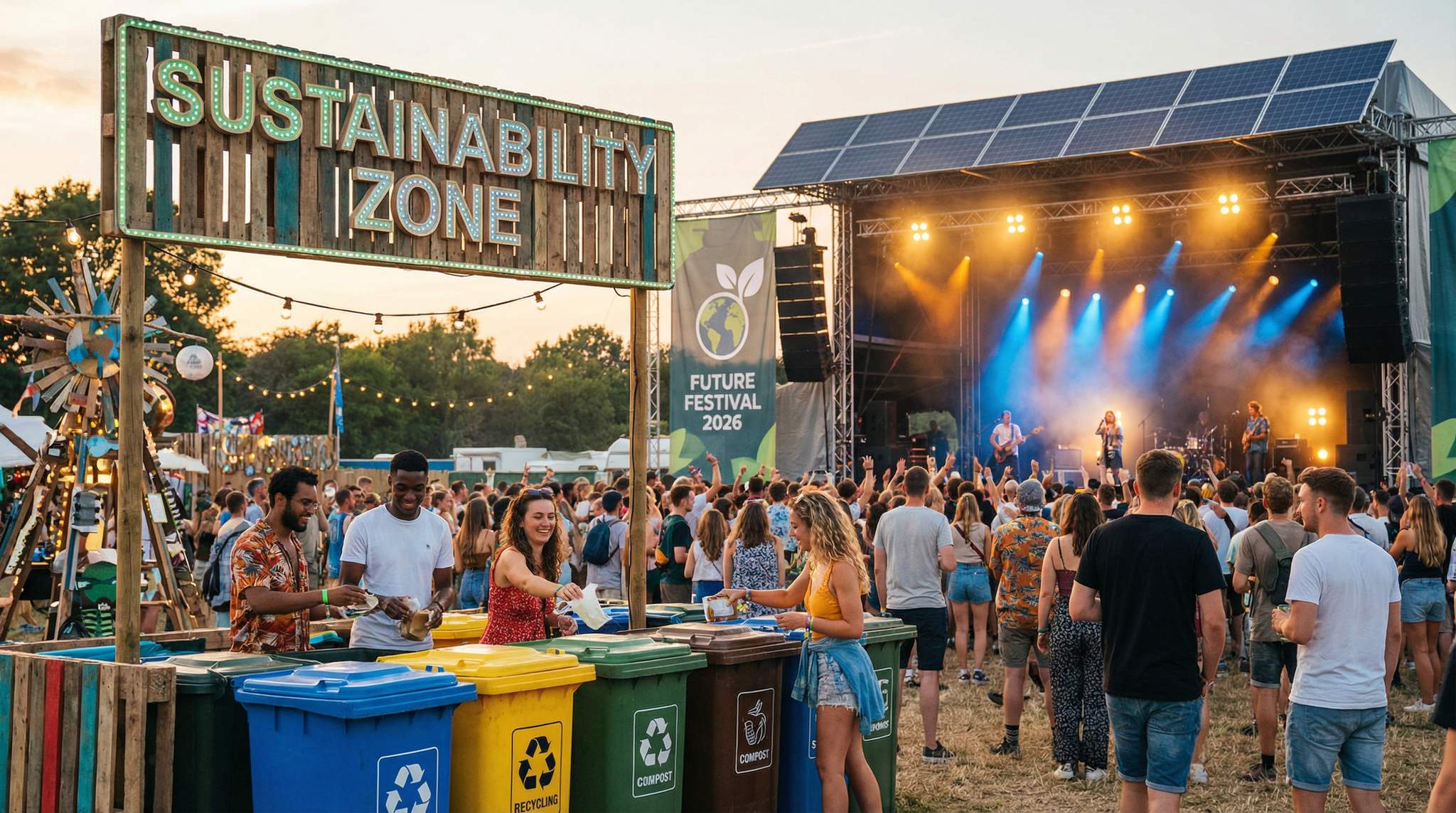
As music festivals continue to draw massive crowds worldwide, their environmental impact is under more scrutiny than ever. A typical multi-day festival can generate an enormous carbon footprint and mountains of waste – one analysis found the average 3-day music festival produces roughly 500 tons of CO2 emissions, a reality check on the carbon footprint of music festivals and tens of tons of trash. With big stages, booming sound systems, food vendors, and thousands of attendees, the ecological toll can be significant. However, the good news is that many event organizers are now taking proactive steps to reduce their environmental impact and make festivals more sustainable. In fact, sustainability is fast becoming a competitive advantage – industry surveys indicate about 70% of festival-goers factor a festival’s environmental practices into their decision to attend, as noted when 2026 festivals team up to cut carbon. Sponsors and even regulators are also pressing for real action, from bans on single-use plastics at events to requirements for detailed waste management plans, moving beyond greenwashing to meet sustainability benchmarks.
Selecting venues that prioritize green practices – such as energy efficiency, waste reduction, and access to public transport – is an important foundation for an eco-friendly event. Choosing a site with on-site recycling facilities or renewable energy infrastructure can jump-start your sustainability efforts. Organizing an environmentally sustainable music festival is not only good for the planet but can also enhance your brand reputation, attract eco-conscious attendees, open up new sponsorship opportunities, and set a positive example for the industry. In many regions, festivals that lead on sustainability receive recognition and even grants for their efforts. The growing awareness and responsibility among organizers and fans alike underscore that going green is no longer optional – it’s imperative for the future of live events, helping organizers win sponsors and satisfy regulators.
In this article, we’ll walk you through five key tips to plan and execute an environmentally sustainable music festival in 2026. From reducing waste and sourcing eco-friendly materials to promoting green behavior among attendees, these tips provide practical steps – backed by real examples and data – to make your festival greener without sacrificing the fan experience.
The Foundation of Organizing a Music Festival with a Green-First Approach
When organizing a music festival from the ground up, integrating eco-friendly frameworks during the initial planning phase is far more effective than retrofitting green initiatives later. Experienced promoters know that the logistics of launching a large-scale live event—from securing permits and drafting site maps to booking talent and managing crowd flow—must all be viewed through a sustainability lens. By establishing environmental KPIs alongside traditional financial metrics, producers ensure that every operational decision supports the overarching goal of hosting a truly sustainable music festival.
Turn Fans Into Your Marketing Team
Ticket Fairy's built-in referral rewards system incentivizes attendees to share your event, delivering 15-25% sales boosts and 30x ROI vs paid ads.
Scaling Solutions to Sustainability Challenges in Music Festivals and Trade Shows
While outdoor concerts often dominate the conversation, the core solutions to sustainability challenges in music festivals and trade shows are remarkably similar. Whether you are organizing a multi-day camping event or a massive indoor B2B expo, the primary hurdles remain waste diversion, energy consumption, and attendee travel. By standardizing your vendor contracts to require compostable materials and transitioning to LED lighting or hybrid power systems, you can apply these same eco-friendly frameworks across your entire event portfolio. Promoters who diversify their operations find that mastering festival sustainability creates a blueprint that easily adapts to conventions, trade fairs, and corporate gatherings.
Transitioning your entire portfolio to focus on environmentally sustainable events not only streamlines your vendor procurement but also strengthens your brand equity across different markets. Whether you are producing a boutique food and wine gathering, a massive tech expo, or a regional cultural fair, the core principles of carbon reduction and waste diversion remain the same. By establishing a baseline of green operations, event producers can confidently market their commitment to eco-conscious sponsors and attendees, regardless of the event format.
Ready to Sell Tickets?
Create professional event pages with built-in payment processing, marketing tools, and real-time analytics.
1. Minimize Waste with Effective Waste Management Strategies
The mantra “reduce, reuse, recycle” is foundational to any sustainable festival. With tens of thousands of people spending days on-site consuming food, drinks, and merchandise, waste can accumulate quickly. If you don’t have a plan, a festival site can end up littered with plastic bottles, food wrappers, abandoned tents, and other debris by the closing day. Festivals worldwide generate staggering amounts of waste – in the UK alone, events produce around 25,800 tonnes of waste annually, prompting the industry to ask what the solution is for festival waste. The most notorious problem? Tents and camping gear left behind – at one point an estimated 250,000 tents were abandoned each year at UK festivals, a number that often ended up in landfill.
To minimize waste and shrink your festival’s environmental footprint, implement a comprehensive waste management plan that tackles waste before, during, and after the event:
Developing a dedicated music festival waste management protocol requires treating your site like a temporary municipality. Successful promoters map out their entire waste stream during the site design phase, ensuring that back-of-house sorting areas are easily accessible for hauling trucks without disrupting the attendee experience. By standardizing bin placement and negotiating contracts with local material recovery facilities (MRFs) well in advance, you can efficiently process music festival waste and hit those crucial diversion targets that define a truly sustainable music festival.
Reduce Single-Use Plastics and Implement Robust Recycling
One of the most effective ways to cut festival waste is by eliminating single-use plastics on-site. Start by working with vendors to switch out plastic cups, straws, bottles, and cutlery for sustainable alternatives. Many festivals have done this successfully – for instance, Glastonbury (population ~200,000 attendees) estimated that in 2017 its fans used 1.3 million plastic bottles, leading to Glastonbury banning plastic bottles; in 2019 Glastonbury banned the sale of single-use plastic bottles, preventing a huge source of trash. You can encourage attendees to bring their own reusable water bottles and set up ample water refill stations throughout the venue (with clear signage to make them easy to find). Offer branded reusable cups or bottles as merchandise – they not only reduce waste but also serve as souvenirs.
Boost Revenue With Smart Upsells
Sell merchandise, VIP upgrades, parking passes, and add-ons during checkout and via post-purchase emails. Increase average order value by up to 220%.
It’s also wise to introduce a reusable cup program at bars and beverage stands. Many European festivals have adopted a cup deposit system: attendees pay a small deposit for a durable cup and can exchange it or get their deposit back when they return the cup. This has proven to drastically reduce disposable cup waste, a key lesson in slashing single-use plastics. According to the Association of Independent Festivals (AIF), 60 independent festivals in the UK even pledged to eliminate single-use plastics as part of the Drastic on Plastic campaign by 2021 – a clear sign of industry commitment. By 2026, fans expect events to be “zero plastic” or close to it, setting new 2026 festival sustainability benchmarks.
Of course, no matter how much you reduce incoming waste, some trash is inevitable – that’s where a strong recycling program comes in. Place clearly marked recycling and compost bins all around the venue, especially near food courts, stages, and camping areas. Use large, color-coded signage (with pictures) so attendees know exactly what goes in each bin (plastic, aluminum, paper, food scraps, etc.). It helps to station volunteers or staff as a “Green Team” at waste stations during peak times – some large events set up staffed sorting stations to achieve very high recycling rates, following a high-throughput waste recycling playbook. Work closely with local waste management companies in advance: arrange for frequent pick-ups and proper off-site sorting so that recyclables actually get recycled. Track your waste output and diversion rate (what percentage of total waste is diverted from landfill). Top festivals are now aiming for 90%+ waste diversion (meaning almost all waste is recycled, composted, or reused), proving that zero waste usually means diverting. If you communicate those stats post-event, it not only builds trust but also gives you targets to beat next year.
Warning: Simply providing recycling bins isn’t enough if they get contaminated with food or non-recyclables. If trash and recyclables mix, the whole batch can end up in landfill. Assign staff or trained volunteers to guide attendees at waste stations and periodically audit the bins. Effective on-site oversight will ensure your recycling program truly makes an impact.
Curb Food Waste and Compost Organic Material
Food waste is another major challenge at festivals. With dozens of food vendors and thousands of meals served, there will inevitably be leftovers and scraps. Without a plan, leftover food and soiled paper plates end up in dumpsters, creating methane emissions as they rot. Instead, tackle food waste head-on:
First, work with vendors on smart planning – encourage smaller portion sizes or menus that allow cooking to order, so they don’t over-prepare large batches that go unsold. Still, it’s better to have extra than to run out, so there will be surplus food. Arrange to donate safe, edible leftovers to local food banks or shelters. Many festivals partner with organizations like Rock and Wrap It Up! (a nonprofit that collects unused catering food at events) or local charities that can pick up excess food right after the event. This not only reduces waste but also helps the community.
For all the food scraps and unavoidable waste (like fruit peels, coffee grounds, and plate scrapings), set up a composting system. Provide clearly labeled compost bins for vendors and in eating areas for attendees. Educate everyone that ONLY organic matter (and approved compostable serveware) goes in those bins. Festival food waste is actually an opportunity – when composted, it can be turned into nutrient-rich soil rather than emitting greenhouse gases in a landfill. This highlights the importance of standardizing on-site food waste handling. Make sure to coordinate with a local composting facility or farm that can process the collected material. Some festivals even use on-site composters or worm farms to handle the volume of organic waste.
If your vendors use compostable plates and cutlery, that’s great – just ensure those items also get composted (commercially, if they require high heat to break down). With a robust composting program, you can dramatically reduce landfill waste. For example, the Shambhala Music Festival in Canada implemented extensive recycling and composting programs (along with offering organic food), striving toward a “zero waste” event model. Many events now report diverting the majority of waste to recycling or compost – hitting 85–90% diversion is challenging but achievable with careful planning to meet sustainability benchmarks.
By implementing a thorough waste management strategy – focusing on reduction, reuse, recycling, and composting – you’ll prevent tons of trash from ending up in landfills. It also leaves your festival grounds much cleaner, making Monday morning teardown far less of a nightmare scenario of littered fields.
Grow Your Events
Leverage referral marketing, social sharing incentives, and audience insights to sell more tickets.
Examples of Sustainable Waste Initiatives at Festivals
| Challenge (Waste) | Typical Impact | Sustainable Solution | Real-World Outcome |
|---|---|---|---|
| Single-use plastic bottles | 1.3 million used at a major festival (e.g. 2017 Glastonbury) as reported by The Guardian | Ban sale of single-use bottles; offer free water stations, reusable cups | Glastonbury eliminated over 1 million bottles by 2019; attendees happily used refill stations |
| Disposable cups & serveware | Mountains of trash, overflowing bins | Reusable cup deposit programs; compostable foodware with on-site composting, effectively slashing single-use waste | Dozens of festivals in Europe now use reusables, cutting cup waste by ~80%+; cleaner grounds, lower disposal costs |
| Abandoned tents and gear | 250,000+ tents left at UK festivals yearly (late 2010s) according to AIF forecast data | “Take Your Tent Home” pledge campaigns; deposit for campers; donation stations for gear | AIF reports many independent fests now see zero tents left behind – e.g. Shambala (20,000 attendees) had 0 tents abandoned, proving no waste at all is possible |
| Food waste and scraps | Tons of organic waste generating methane in landfills | Food donation partnerships; on-site composting for all organics, utilizing standardized back-of-house bins | Major festivals like Boom (Portugal) compost 100% of food waste, eliminating landfill food trash and creating soil for local farms |
Pro Tip: Consider hiring a specialized waste management team or consultant for your event. These professionals can conduct a waste audit before and after the festival, identify the biggest trash sources, and help train your staff and volunteers in proper recycling procedures. Investing in a waste audit can reveal surprising insights (for example, if compostables are often contaminated, or which vendor is generating the most waste) and help you fine-tune your strategy year over year.
2. Embrace Eco-Friendly Energy Sources
Energy consumption is often one of the largest contributors to a festival’s environmental footprint. Stages, sound systems, lighting rigs, food vendors, phone charging stations – everything needs power, typically around the clock for several days. Traditionally, this meant fleets of diesel generators chugging away, consuming thousands of liters of fuel and emitting CO2 and pollutants. To organize a truly sustainable music festival, it’s crucial to transition away from fossil fuels and adopt renewable, low-carbon energy sources.
Tap into Solar, Wind and Other Renewables
Renewable energy technology has advanced to the point that even large festivals can tap into clean power. If your venue has the capability, consider installing solar panels or solar trailers on-site to generate electricity during the day. Solar arrays can be used to run smaller stages, vendor areas, or battery charging stations for attendees’ devices. Some innovative festivals have even powered entire stages via solar: for example, the Shambala Festival (UK) has run 100% on renewable electricity since 2014 – all stages, vendors, and operations use solar, wind, or other green power, eliminating the need for fossil-fuel generators, a prime example of transitioning to renewable energy. This bold move dramatically cut their carbon emissions and proved that it’s possible to go fully renewable.
Even if you can’t run everything on solar alone, hybrid approaches can make a huge difference. Many events are now using a combination of solar plus battery storage and only using backup generators when absolutely necessary. In 2024, Lollapalooza festival in Chicago made headlines by running one of its main stages entirely on battery power (charged from renewables), and the Austin City Limits Festival introduced a stage powered solely by a 1 MWh hybrid battery system, slashing fuel use and emissions from generators, as the Austin City Limits festival powered a stage solely on a hybrid battery system. By incorporating large battery units, you can store energy (from solar or from charging off the grid at off-peak times) and then run silent, emissions-free power at night. These battery systems also allow generators (if used) to run more efficiently – they cover peak loads and eliminate idling. Industry data shows that pairing generators with batteries can save 30–40% on fuel consumption by avoiding running engines at low loads. This strategy is part of using HVO, batteries, and insulation for greener festivals.
For any generators you do need, consider switching to renewable biofuels. One popular option in Europe is HVO (Hydrotreated Vegetable Oil), a renewable diesel made from waste oils that can drop into existing generators. Studies have shown HVO can reduce net CO2 emissions by as much as 90% compared to standard diesel, as shown in studies on greener winter festival power. Major festivals are adopting HVO quickly – Glastonbury now powers all its on-site generators with 100% HVO biofuel, and Shambala (UK) eliminated fossil diesel entirely by using waste vegetable oil fuel plus solar backups, demonstrating how UK festivals now power generators. If HVO or biodiesel is available in your region, it’s a great interim step toward sustainability (just ensure your generators are compatible and plan for fuel supply logistics). The reduction in exhaust smell and smoke is a nice bonus that fans and crew will appreciate!
Promote Energy Efficiency and Smart Power Use
Using green energy is only part of the equation – using less energy overall is equally important. Conduct an energy audit of your festival’s needs: identify where you can use more efficient equipment or eliminate unnecessary power draws. For instance, LED lighting should be a no-brainer: LEDs use up to 75–80% less energy than old incandescent or halogen bulbs, and they last significantly longer. By switching all site lighting (from stage lights to pathway lights) to LED technology, festivals have massively cut their electricity usage. Many large events have retrofitted their lighting and seen immediate benefits in both fuel consumption and brightness control. Similarly, use energy-efficient sound systems and equipment where possible – newer audio gear often has power-saving modes and better output per watt.
Simple operational tweaks can avoid wasteful power use. Instruct vendors and production teams to turn off lights and equipment when not in use (overnight or during prolonged breaks). Use motion sensors or timers for area lighting in staff and backstage zones. If parts of the festival (like certain art installations or secondary stages) shut down at midnight, don’t keep powering them until morning. Smart scheduling can help here: cluster activities so you can power down segments of the site when idle. Some festivals program their most power-intensive performances during the day when solar generation is highest, then rely on stored energy for smaller nighttime needs. Every kilowatt saved is less fuel burned or more battery reserve for when it’s really needed.
In recent years, festival organizers have been sharing knowledge on energy best practices. The Green Touring Alliances initiative, for example, encourages festivals and concerts to coordinate on routing and share equipment to avoid redundant energy use, a core principle of Green Touring Alliances. Communities of practice like Powerful Thinking in the UK publish guides on reducing generator use, promoting grid connections (if available), and properly sizing generators to match demand (oversized generators running at 10% load are highly inefficient). Aim to right-size your power infrastructure: use multiple smaller generators that you can turn on/off as needed, or better yet, invest in smart power distribution that can allocate power where needed and not run everything at full tilt 24/7.
Utilize Battery Storage and Grid Connections
As mentioned above, battery storage can revolutionize how you manage festival power. During daytime, batteries can store excess solar energy or take in grid power when demand is low. Then during peak times or at night, batteries (which produce no emissions or noise) can supply electricity, reducing the run-time of generators. By 2026, we’re seeing battery systems at many festivals – from small events to mega-festivals – often in combination with solar or HVO generators. These setups drastically cut down on fuel. For example, a mid-sized festival that integrated batteries reported saving several thousand liters of fuel and avoiding tons of CO2. Additionally, batteries allow for quieter nights, improving the experience for campers and even for local residents not hearing generator engines at 3 AM.
If your festival site has access to the electric grid, consider using it for a portion of your power needs, especially if the local grid energy is sourced from renewables (as is increasingly the case in many areas). Grid power can often be cleaner than diesel and eliminates the logistics of fuel. In some urban venues, festivals have successfully partnered with utility companies to use temporary grid connections or tie into venue power, supplemented by on-site solar and batteries.
Pro Tip: Do a thorough power assessment well in advance. List out every stage, vendor, and facility that needs power and how much. This allows you to design a power system that’s efficient and sufficient. If you’re bringing in solar panels or battery units from a rental provider, share your power needs so they can tailor the setup (number of panels, battery capacity) to your festival. Planning your power distribution in detail (down to where cables will run and backup contingencies) will help avoid last-minute generator add-ons, saving you money and headaches.
3. Promote Sustainable Travel and Transportation
One often overlooked aspect of festival sustainability is attendee transportation. How your audience (and staff and artists) get to the festival can be the single largest source of carbon emissions for the event. Think about it: tens of thousands of people driving or flying in results in a huge carbon footprint before they even step through the festival gates. Studies show that for destination festivals, attendee travel can account for 60–80% of the event’s total emissions, necessitating greener transportation and travel strategies. To organize a truly eco-friendly music festival, you’ll need to address the impact of transportation and encourage greener travel options for fans.
Provide Shuttles and Incentivize Carpooling
If your festival is outside a city center, many attendees will be driving. You can dramatically cut vehicle count (and emissions) by offering convenient shuttle bus services. Many major festivals provide shuttle buses from key cities, airports, and transit hubs directly to the festival site. For example, events have run successful shuttle programs from nearest train stations or park-and-ride lots, so attendees can leave their cars outside the immediate area. Consider offering free or discounted shuttle passes – perhaps included in the ticket price – to encourage uptake. A well-run shuttle not only reduces traffic and carbon emissions, but also drops people at the gates hassle-free (a selling point you can market!).
Carpooling is another effective way to cut down on single-occupancy vehicles. Promote rideshare by setting up an official carpool forum or partnering with a carpool-matching app for your event. You can designate carpool parking areas near the entrance for cars with 3 or more people, as a perk. Some festivals even incentivize carpooling with fun rewards – Coachella famously runs a “Carpoolchella” contest where cars arriving with 4+ people and decorated with a special slogan have a chance to win VIP tickets for life. While you might not give away lifetime passes, you could offer small rewards like merch discounts or raffle entries for carpools. If parking is limited, explicitly encourage attendees to fill their cars to guarantee a spot. Every car taken off the road counts – fewer cars mean less idling in traffic jams and lower emissions overall.
On the operations side, coordinate with local authorities to manage traffic flow efficiently. Idling cars stuck in long entry lines waste fuel unnecessarily – efficient entry scanning and well-directed parking staff will get cars off the road faster. You could also implement an arrival scheduling system for campers, to spread out the influx and avoid gridlock (some European festivals do this via assigned entry times, which reduces both headaches and emissions from queuing).
Encourage Biking and Alternative Transport
For attendees who live relatively nearby, cycling to the festival can be a fun and eco-friendly option. If feasible, set up infrastructure to welcome bikes: provide ample bike racks or a secure bike parking lot (ideally staffed or monitored for security). Offer a bike valet service where riders can check in their bicycles and gear for safekeeping. You might be surprised by the uptake – events in cities like San Francisco and Amsterdam see hundreds if not thousands of fans arrive by bicycle when facilities are provided. To further encourage it, you could throw in small incentives: for example, a free drink, a merch coupon, or priority entry for attendees who show up on a bicycle. Not only does this cut down car use, it also reduces traffic congestion around your venue.
Beyond bikes, think creatively about other transit modes. Some urban festivals partner with electric scooter or bike-share companies, setting up stations near the venue for attendees to use shared e-scooters/bikes to get that “last mile” from public transit. For longer distances, train travel is one of the lowest-carbon options – if a significant number of attendees are coming from a particular city, see if you can collaborate with the rail service to offer a special festival train or discounted fares. In Belgium, for example, major festivals like Tomorrowland and Pukkelpop work with the national railway to include train tickets with festival passes, making it easy and affordable for attendees to ride the train instead of drive. These kinds of partnerships can massively reduce road traffic and emissions.
Partner with Public Transit and Ride Sharing
If your festival is in or near a city, encourage attendees to use public transit as much as possible. Work with the city’s transit agency to beef up service during the festival – extra late-night buses or trains running past the event’s closing time will help attendees get home without driving. You can arrange combo tickets that include transit passes, or simply provide detailed info on routes, schedules, and maybe a journey planner on your website to show how to reach the venue by bus/train. Advertising “Go Green: take public transit to the festival!” in your marketing can also set expectations from the start.
Some festivals also collaborate with rideshare (taxi/ride-hailing) companies to manage drop-offs and pickups efficiently. If attendees do take Uber/Lyft or taxis, have a clearly identified rideshare zone to avoid cars circling. While rideshares are still car trips, at least it often means multiple people per vehicle and reducing parking demand.
Finally, consider the footprint of artist and crew travel as well. While attendee travel usually dominates emissions, flying in dozens of artists (and all their gear) also adds up. To mitigate this, try routing artist tours efficiently (possibly by coordinating with other festivals to share tour legs – see Green Touring Alliances for ideas) and offsetting necessary travel emissions by investing in credible carbon offset projects. Some festivals now include clauses in artist contracts encouraging sustainable travel or minimal entourage sizes to curb excess flights.
By promoting greener transportation options, you can significantly shrink your festival’s overall carbon footprint. Plus, fewer cars on the road means less local traffic, which is a win for community relations. Many fans will appreciate the convenience of not having to drive, especially if it’s made affordable and easy. Make sustainability part of the journey, not just the destination!
Pro Tip: Highlight the green travel options prominently in your pre-event communications. Create a dedicated “Getting There Sustainably” page on your website and send out an email to ticket-holders about shuttles, transit, and carpool perks. Often, people default to driving because they aren’t aware of alternatives or assume it’s too much hassle. If you make the eco-friendly options clear, convenient (and maybe a little fun, like contests or themed buses), more attendees will opt in. For example, one festival arranged party buses with live DJs from the city center to the venue – riders started the fun early and kept dozens of cars off the road.
4. Support Local and Sustainable Vendors
An easy way to make your music festival more sustainable is by choosing vendors and partners who share your environmental values. Every dollar you spend has power – by hiring vendors with green practices and sourcing products responsibly, you reduce the event’s footprint and set a standard for everyone involved. Additionally, working with local suppliers wherever possible cuts down on transportation emissions and supports the regional economy, creating good will in the community.
Source Locally Grown, Low-Impact Food
Food is a huge part of the festival experience – and it’s also a significant part of the footprint. Shipping exotic foods from across the world or serving meals with heavy meat content can quietly contribute to high carbon emissions. Instead, aim to source food locally and sustainably. Encourage (or require) your food vendors to procure ingredients from local farms and purveyors. This not only reduces “food miles” (the distance food travels to reach your plate) but also tends to ensure fresher, seasonal cuisine for attendees. Many festivals now proudly advertise that their vendors use farm-fresh, local ingredients – it’s a selling point for foodies and the environmentally conscious alike.
Another impactful choice is to offer plenty of plant-based and vegetarian menu options. The production of meat (especially beef) has a far higher carbon footprint and resource use than plant-based foods. By providing delicious vegetarian, vegan, or otherwise low-impact cuisines, you can nudge attendees toward more sustainable eating without forcing it on them. Some events have even gone fully meat-free for sustainability reasons. Even if you don’t ban meat, ensure there are ample non-meat choices. Plant-based “meat” alternatives and inventive veggie dishes have come a long way – highlight these as marquee offerings. According to industry trends, festivals in 2026 are embracing plant-forward menus as part of their eco-initiatives, adopting next-gen festival food trends, knowing that a single beef burger’s footprint is many times that of a veggie burger. If you do serve meats or animal products, try to source those from organic, humane farms close to the venue. This supports local agriculture and can reduce packaging waste (since bulk local supply can come in reusable crates instead of lots of plastic packaging).
Also consider the serveware in which food is sold. Insist that all food vendors use compostable or biodegradable plates, bowls, cups, and cutlery (or durable reusables when practical). Many festivals now include a clause in vendor contracts about this. If you’ve set up the composting system (as discussed earlier), compostable foodware can go straight into the organic waste stream. This prevents thousands of plastic plates and Styrofoam containers from ending up in landfills. Make sure to provide guidance to vendors on approved products (e.g. paper straws, wood/bamboo utensils, plant-based plastic cups that are certified compostable, etc.). Sometimes vendors will need help sourcing these items affordably – consider bulk-buying green packaging with other festivals or through a sponsor partnership, then providing them to vendors on-site.
Offer Eco-Friendly Merchandise and Swag
Festival-goers love to buy merchandise – T-shirts, hoodies, hats, posters, and trinkets that help them remember the experience. When selecting your festival merch, choose eco-friendly options to reinforce your sustainability mission. For apparel, that could mean using organic cotton (which avoids harmful pesticides and often uses less water than conventional cotton) or fabrics made from recycled materials (recycled polyester from plastic bottles, for example). There are also companies that make festival merch from bamboo or hemp blends, which have lower environmental impact. Ensure your merch printers use non-toxic, water-based inks for printing designs, rather than plastisol inks that contain PVC and phthalates.
Avoid cheap plastic gadgets or single-use novelty items that will likely get tossed. Instead, think of items that are reusable and high-quality. Branded reusable water bottles are a perfect example of merch that aligns with your green goals – fans can use them during the event at refill stations and keep using them long after. Other ideas include canvas tote bags (reducing the need for plastic bags), reusable stainless steel cups or straws, and even upcycled goods (some festivals have made things like wallets or wristbands from old banners and tents!). Get creative – perhaps partner with an artisan who can upcycle materials from previous festivals into new products.
Consider also a merchandise take-back or recycling program. For instance, you could offer a discount on new merch if attendees bring back old festival T-shirts for recycling, or have a bin where people can drop off worn-out festival gear that you’ll send to textile recycling. While only a fraction may participate, it sends a message that you care about the full lifecycle of your products. Some festivals have printed their shirts on demand or in limited batches to avoid overstock (which often ends up as waste).
Work with Green-Minded Partners and Sponsors
From vendors and contractors to sponsors, try to partner with companies that prioritize sustainability. This ensures that the various parts of your festival machine are all moving toward the same goal. For example, if you’re hiring an event production company or audio supplier, inquire about their green practices – do they use energy-efficient equipment? Do they offset their travel? If you’re renting generators or lights, is there a supplier that provides solar towers or LED lights? Choosing such partners can significantly reduce your footprint.
When it comes to sponsors, aligning values is key. An oil company or a fast fashion brand as a headline sponsor might send the wrong message when you’re pushing a green agenda. Instead, look for sponsors in sectors like renewable energy, sustainable beverages, electric vehicles, or outdoor gear made from recycled materials. These sponsors could actively enhance your sustainability efforts – for instance, a solar company might sponsor a solar charging station for attendees, or a water filtration company could set up free water refill points (with their branding), effectively reducing single-use plastics at festivals. Such activations directly improve the festival’s sustainability while giving the sponsor positive exposure.
Collaborate with local organizations too. Local environmental nonprofits might want to be involved – they could run an educational booth or co-host a cleanup drive after the event. This enhances your community engagement and provides authenticity to your green initiatives. Many festivals also work with certification bodies or green initiatives: for example, signing onto frameworks like A Greener Festival (an organization that certifies events on sustainability) can guide you and provide external validation. In 2024, over 50 festivals and events worldwide achieved AGF’s stringent sustainability certification, showing who is certified for sustainability – a signal of trustworthiness to attendees and sponsors alike.
Overall, by sourcing and partnering thoughtfully, you create a ripple effect of sustainability. You’re not just a single event; you’re part of a broader movement pushing the live music industry toward greener practices. Supporting local and eco-conscious vendors reinforces that sustainability is a shared responsibility across everyone who makes the festival happen.
5. Engage Attendees in Sustainable Practices
Even with all the behind-the-scenes efforts by staff and vendors, a music festival can’t be truly sustainable without the buy-in of the attendees. The people who attend your festival play a huge role in its environmental impact – their choices (from travel, to waste disposal, to what they consume on-site) collectively determine whether your green initiatives succeed. That’s why it’s vital to educate and incentivize festival-goers to participate in sustainability efforts. The goal is to create a culture of sustainability at your event, where attendees are not just passive consumers but active partners in keeping the festival green.
Spread the Word: Sustainable Festival Culture
Start by communicating your sustainability mission early and often. Use your festival’s website, social media, and ticketing communication to set expectations. For example, you might publish a “Green Festival Guide” for attendees, outlining simple actions they can take: bring a reusable water bottle, use the recycling bins, carpool or use public transit, respect the venue by not littering, etc. Highlight any “green policies” like no single-use plastics or a pack-in/pack-out camping rule. By making this information prominent, you signal to fans that sustainability is a core part of your festival’s identity.
On-site, keep the messaging visible. Install signage that encourages eco-friendly behavior (“Love the festival? Love the Earth – please recycle”), and use stage screens or MC announcements for quick reminders (e.g. a midday shoutout about where the water refill stations are and thanking everyone for using them). Some festivals get creative with this: placing funny, engaging messages on trash bins (“Feed me recyclables!”) or displaying real-time stats like “We’ve diverted 5 tons of waste from landfill so far – let’s hit 10 tons by day’s end!” This makes the crowd feel involved in a collective achievement.
You can also engage attendees through pledges or challenges. For instance, launch a social media campaign where fans can sign a “Green Pledge” before arriving – promising to carpool, bring a refillable bottle, and leave no trace. Those who sign could get a small reward, like a free drink coupon or early access to next year’s tickets. During the event, consider a competition like rewarding the cleanest campsite or the group with the most creative sustainable costumes, etc. The idea is to weave sustainability into the fun of the festival.
Educate and Incentivize: Workshops, Activations & Rewards
Festivals can also be a place of learning and inspiration. Consider dedicating a space or time for eco-education. This could mean hosting short workshops, talks, or interactive installations focused on sustainability. For example, you might have a workshop on DIY upcycling (turning used materials into something cool), a talk from an environmental activist or artist known for eco-projects, or a demonstration of solar technology powering an art piece. At some festivals, organizations set up booths (like a “Eco Village” area) where attendees can learn about local environmental initiatives, join a beach cleanup volunteer list, or even participate in hands-on activities like planting a tree or painting recycling bins for future events. These not only educate but also give attendees a sense of contribution.
Some forward-thinking festivals have implemented “green currency” or reward programs. For instance, attendees who deliver a full bag of recycling might get a token that’s worth $2 off merchandise or a snack. Or if someone refills their water bottle at a station ten times (tracked via a wristband chip or an app), they could unlock a perk like access to a chill-out lounge. Technology can help here – festival apps can feature sustainability “quests” where completing tasks (like visiting the compost booth or answering a sustainability quiz) earns points or badges. It gamifies the process and especially appeals to younger festival-goers.
Beyond side-activations, organizers often ask how sustainable practices can be incorporated into festival programming itself. The answer lies in scheduling and stage curation. For example, programming acoustic or low-production daytime sets reduces power draw during peak sun hours. You can also integrate eco-conscious keynote speakers, indigenous land stewardship panels, or sustainability workshops directly into the main stage lineup between musical acts. In regions with strong environmental cultures—such as Canada, where events like British Columbia’s Shambhala have pioneered green initiatives—weaving these themes into the core programming ensures that sustainability in music festivals feels like a central feature rather than an afterthought.
For event producers looking to localize these efforts—particularly those whose location is Canada—sustainable festival practices often intersect with provincial green initiatives and community partnerships. Canadian promoters frequently collaborate with First Nations groups to open their events with meaningful land acknowledgments that transition directly into environmental education panels. Furthermore, leveraging regional funding—such as sustainability grants from provincial arts councils—can subsidize the cost of booking eco-conscious speakers or installing interactive green-tech art exhibits on the main stage. This localized approach ensures that your programming resonates deeply with regional audiences while meeting stringent national climate goals.
Crucially, make sure your staff and volunteers are trained to model and support sustainable behavior. If a festival-goer is unsure where to throw their compostable plate, any crew member they ask should confidently help them. Your security and cleaning crews should be briefed as well – for example, if they see someone about to toss a recyclable item in general trash, they might kindly intervene. When attendees see staff taking it seriously, they’re more likely to follow suit.
Real-world examples show the power of attendee engagement. The Shambala Festival in the UK (not to be confused with Shambhala in Canada) has become famous for its sustainable culture: they banned single-use plastics and implemented a reusable cup system years ago, and every attendee is on board with it, proving the value of slashing single-use items. Shambala also encouraged all campers to take everything home – resulting in zero tents left behind on the grounds, achieving no waste at all, a feat many festivals struggle with. Another example is Lightning in a Bottle in the U.S., which has “Leave No Trace” teams and encourages attendees to MOOP (Matter Out Of Place) sweep their campsite – it’s almost a badge of honor to leave your spot cleaner than you found it. When your audience embraces these values, it transforms the whole event.
Pro Tip: Create a sense of community ownership of the festival’s sustainability goals. One way is to involve attendees in planning – for example, host an online forum or Q&A asking for fans’ ideas on how to make the festival greener. Not only might you get great suggestions, but those contributors will feel personally invested in making it happen. During the festival, acknowledge the crowd’s efforts: a simple announcement like “Give yourselves a hand – 80% of you took the shuttle or carpooled here!” or “Thanks to you, we’ve composted 5,000 pounds of food scraps this weekend!” reinforces that everyone played a part in the success.
Finally, keep it positive. Festival-goers are there to have fun, and while rules and reminders are necessary, framing sustainability as a collective, positive effort works better than scolding people for bad behavior. Celebrate the wins (big or small), show genuine enthusiasm for the changes, and your attendees will carry that energy with them – maybe even into their daily lives beyond the festival.
Conclusion
Organizing an environmentally sustainable music festival requires dedication, creativity, and a comprehensive approach – touching everything from power and transportation to food and waste. By implementing these strategies – minimizing waste, using eco-friendly energy, promoting sustainable travel, supporting green vendors, and engaging your audience – you can dramatically reduce your event’s environmental impact. Importantly, you’ll be delivering a message that resonates more than ever in 2026: that music festivals can be incredible experiences without harming the planet.
Remember that you don’t have to do it all at once. Sustainability is a journey of continuous improvement. Start with a few key initiatives and build on them each year. Measure your results (How much waste did we divert? How many cars did we take off the road?) and share them transparently. This not only builds trust – showing you walk the talk – but also helps the whole industry learn and progress. Indeed, many festivals are now sharing best practices and even collaborating through alliances to achieve greater impact, as seen with joint efforts to cut carbon in touring via Green Touring Alliances and industry-wide benchmarks like zero plastic and 90% waste diversion by 2026, ensuring events meet sustainability benchmarks.
The momentum is on the side of sustainability. Fans are asking for it, artists are embracing it, and the planet certainly needs it. A greener festival can still deliver unforgettable experiences – in fact, many fans will find it all the more rewarding to know their good time came with a smaller environmental cost. By leading the charge in sustainable festival planning, you’re not only aligning with the values of a growing segment of attendees and sponsors, but you’re also helping to ensure that live music events can thrive for generations to come on a healthy planet. That’s a legacy well worth the effort.
Let’s make the future of music festivals sustainable, together – rocking out and taking care of Mother Earth at the same time. Here’s to greener festivals and a better world in 2026 and beyond!
You May Also Like:
- Navigating the Pain Points: Achieving Profitability and Sustainability for Festival Organizers
- Music Event Technology Trends 2025: Innovations Shaping the Future of Live Music Experiences
- 10 Smart Ways to Cut Music Festival Costs Without Sacrificing Quality
Frequently Asked Questions
Why is sustainability important for music festivals in 2026?
Sustainability has become a competitive advantage, with industry surveys indicating that 70% of festival-goers factor environmental practices into their attendance decisions. Beyond attracting eco-conscious fans, green initiatives help organizers secure sponsorships, satisfy regulators, and mitigate the massive carbon footprint typical of multi-day events.
How can music festivals reduce single-use plastic waste effectively?
Organizers can eliminate single-use plastics by implementing reusable cup deposit systems and banning plastic bottle sales, a strategy used by Glastonbury to prevent over 1 million bottles of waste. Providing ample water refill stations and partnering with vendors to use sustainable alternatives are essential steps toward achieving zero-plastic benchmarks.
What are the benefits of using hybrid battery systems at festivals?
Hybrid battery systems allow festivals to store renewable energy from solar or grid connections, reducing reliance on diesel generators. Industry data shows that pairing generators with batteries can cut fuel consumption by 30–40% by avoiding inefficient engine idling, while also enabling silent, emissions-free power during nighttime hours.
What is the biggest source of carbon emissions at music festivals?
Attendee travel typically accounts for 60–80% of a destination festival’s total carbon emissions. To mitigate this significant environmental impact, organizers can incentivize carpooling, offer shuttle bus services from transit hubs, and partner with public railway systems to include travel options within ticket packages.
How does sourcing local food improve festival sustainability?
Sourcing ingredients from local farms significantly reduces food miles and transportation emissions while supporting the regional economy. Additionally, prioritizing plant-based menu options over meat products drastically lowers the event’s carbon footprint, aligning with 2026 trends where festivals embrace plant-forward menus to meet eco-friendly benchmarks.
How can festivals prevent abandoned tents and camping gear waste?
Festivals can eliminate abandoned camping gear by implementing “take your tent home” pledges and deposit systems for campers. Effective communication and community engagement have proven successful, with events like the Shambala Festival achieving zero abandoned tents by fostering a culture of responsibility and “leave no trace” principles among attendees.
How can sustainable practices be incorporated into festival programming?
Organizers can weave eco-friendly initiatives directly into their event schedules by booking acoustic or low-power daytime sets, integrating environmental keynote speakers between musical acts, and hosting sustainability workshops on main stages. In regions like Canada, leading events successfully blend indigenous land stewardship panels and green education into their core programming, making sustainability a central part of the attendee experience.
Are solutions to sustainability challenges in music festivals applicable to trade shows?
Yes, the foundational strategies for reducing environmental impact—such as mandating compostable vendor materials, utilizing hybrid battery power, and incentivizing public transit—scale seamlessly across different event types. Promoters can apply the same waste diversion and energy efficiency frameworks used for outdoor music events to indoor trade shows, expos, and corporate conventions.
What are the core components of environmentally sustainable events?
The core components of environmentally sustainable events include comprehensive waste diversion (such as composting and eliminating single-use plastics), transitioning to renewable energy sources like solar or hybrid battery systems, and incentivizing low-carbon attendee travel. These foundational practices allow organizers to reduce the ecological footprint of any gathering, from music festivals to corporate trade shows.
How do regional factors in Canada influence sustainable festival programming?
For organizers operating in Canada, sustainable festival practices are heavily influenced by provincial environmental regulations and opportunities for indigenous collaboration. Canadian promoters often incorporate First Nations land stewardship principles directly into their stage programming and utilize regional arts grants to fund eco-educational workshops, ensuring sustainability is culturally and geographically relevant.
How do you develop a waste management plan for a music festival?
Creating a successful music festival waste management protocol involves mapping out all waste streams during the initial site design. Organizers should standardize front-of-house bin stations, establish dedicated back-of-house sorting areas, and negotiate early contracts with local hauling partners to ensure high diversion rates for all event refuse.
How does sustainability impact ticket sales when organizing a music festival?
Data shows a direct correlation between green initiatives and attendee loyalty. Specifically, research indicates that over 70% of festival-goers consider sustainability a key factor when deciding which events to attend. For promoters organizing a music festival, this means that investing in eco-friendly operations is not just an environmental imperative, but a crucial driver for ticket sales and brand equity.
How can sustainable practices be incorporated into festival programming if my location is Canada?
If your location is Canada, you can incorporate sustainable practices into festival programming by collaborating with First Nations groups for land acknowledgments and indigenous stewardship panels. Additionally, Canadian promoters can leverage provincial arts council grants to fund eco-conscious keynote speakers, interactive green-tech art installations, and low-power acoustic daytime sets on the main stage.