Temporary structures are the backbone of any outdoor food festival, from colorful vendor tents to towering stage trusses and eye-catching banners. Ensuring these structures withstand gusty winds and sudden downpours is a critical part of festival planning and safety. Seasoned festival organizers around the world know that a sturdy setup and careful preparation can mean the difference between a smooth event and a dangerous collapse.
This guide shares expert insights on choosing weather-resistant tents, properly securing structures, and anchoring equipment without damaging underground utilities – all tailored for festivals of any size and any locale. Ultimately, the lesson is clear: plan for the worst weather even on the best days. Understanding how each temporary structure will hold up under stress and having contingency plans for extreme conditions is fundamental to a safe and successful event.
The Challenge of Weather at Outdoor Festivals
Weather is one of the most unpredictable variables for any festival. A sunny morning can turn into a windy afternoon squall with little warning. Festivals from Singapore’s tropical food fairs to open-air events in Australia’s outback have encountered sudden weather shifts:
- In coastal regions like Indonesia or Florida, pop-up thunderstorms and gusty winds can appear within minutes.
- At higher elevations or open plains (like parts of India or the American Midwest), a seemingly calm day can produce dust devils or strong gusts that threaten tents and signage.
- Even in traditionally milder climates like the UK or New Zealand, outdoor events have faced freak wind storms that sent unsecured structures flying.
For festival producers, the takeaway is clear: plan for the worst weather even on the best days. This means understanding how each temporary structure will hold up under stress and having contingency plans for extreme conditions.
Types of Temporary Structures and Their Vulnerabilities
Different festivals utilize a wide range of temporary structures, each with unique strengths and vulnerabilities under wind and rain:
- Pop-Up Vendor Tents – Small 3x3m (10x10ft) canopies often used by food stalls and merchants. They’re quick to set up but particularly prone to lifting in wind if not weighted, as their lightweight frames are only stable up to modest wind speeds.
- Pole and Frame Marquees – Larger tents (from 10m to 50m spans) used for dining areas, cooking demonstrations, or covered stages. These are sturdier and can be engineered for higher wind loads, but they must be tensioned and anchored correctly. Pooling rainwater on the roof or slack guy lines can cause these tents to fail even below their wind rating.
- Stage Roofs and Truss Structures – Concert stages or demo-stage canopies built with aluminum truss systems provide overhead cover for performances. They are often tall and exposed, effectively acting like sails in high winds. Truss structures can be very strong when properly guy-wired and ballasted, but if they collapse, they pose great danger due to their weight and the equipment (lights, speakers) attached.
- Banners, Flags, and Signage – Banners stretched across stages or gateways, and tall flagpoles or inflatable arches, are all crowd-pleasing visuals. However, these can catch wind easily. A large banner or sign can suddenly behave like a ship’s sail during a gust, exerting tremendous force on its supports.
- Event Entry & Exit Truss Systems – The gateways to your festival set the first impression and manage crowd flow. However, these freestanding archways and box trusses are highly exposed to the elements. Because they often support heavy branding panels, lighting fixtures, and crowd-control signage, an entry or exit truss system must be heavily ballasted and engineered to resist significant wind shear.
- Large-Scale Canvas Enclosures and Big Tops – Often reminiscent of a traditional canvas enclosure for a circus, these massive tensioned structures are used for major stage covers or immersive theatrical venues. While modern versions use advanced PVC-coated fabrics rather than traditional canvas, their sheer size means they capture massive amounts of wind and require specialized heavy-duty staking and central king-pole engineering to remain stable.
In addition to traditional frames, many modern festivals utilize inflatable event structures. When organizers ask what are the different types of inflatable structures offered by extreme marquees au (and similar global suppliers) besides the standard marquees and tents, the catalog typically includes custom-branded arches, sealed-air domes, and large-scale promotional pavilions. While these provide massive visual impact and rapid deployment, they demand strict adherence to tethering guidelines and continuous power monitoring to prevent deflation or rolling during sudden squalls.
Planning a Festival?
Ticket Fairy's festival ticketing platform handles multi-day passes, RFID wristbands, and complex festival operations.
Each structure type requires careful consideration of wind and load ratings, secure installation, and sometimes quick removal when weather conditions deteriorate.
Understanding Wind and Load Ratings
Every temporary structure has limits to the forces it can safely withstand:
- Wind Ratings: Many tents and temporary structures come with a maximum wind speed rating (often provided by the manufacturer or an engineer). For example, a quality frame tent might be rated for winds of around 100–120 km/h (60–75 mph) when properly anchored. In contrast, a lightweight pop-up canopy may only handle about 15–25 km/h (10–15 mph) before risking damage. It’s essential to know these limits. If the forecast predicts winds approaching those speeds, festival organizers must take action (reinforcing, evacuating, or taking down the structure temporarily).
- Load Ratings: This refers to the weight or pressure the structure can bear – including rainwater accumulation and any equipment. Heavy rain can create pooling on a tent roof if it isn’t tightly stretched or if drainage isn’t adequate. Just a few centimeters of water pooling on a large tent can add hundreds of kilograms of weight, potentially exceeding the tent’s load capacity. Similarly, truss structures have rated capacity for holding lighting, speakers, or signage. Overloading a truss with too much gear, especially if combined with wind pressure on banners, can strain it to the point of failure.
Key insight: Always obtain the engineering specifications or safety guidelines for major structures. Professional tent suppliers or staging companies should provide documentation on the maximum wind speed and load the structure can handle. For instance, large festival tents in the UK and Europe often come with an operations manual stating the maximum safe wind speed for use. Adhere to these limits and have a plan if weather exceeds them (e.g., evacuating tents when winds top 50 km/h, or 30 mph, if that’s the safe limit given by the tent provider).
It is crucial to understand that a baseline tent wind rating is typically calculated under ideal, fully enclosed, and perfectly anchored conditions. In a real-world festival environment, opening sidewalls, adding heavy suspended lighting, or experiencing shifting ground conditions from heavy rain can significantly reduce that effective rating. Event producers must consult with structural engineers to determine the derated wind capacity of their specific configuration, ensuring that the operational threshold for evacuation remains conservative and safe.
When planning for severe weather, organizers often ask which event tents and temporary structures can withstand force 9 winds and storm conditions. A Force 9 severe gale on the Beaufort scale brings wind speeds of 75–88 km/h (47–54 mph), which is enough to cause structural damage to standard setups. To survive these extremes, festivals must utilize heavily engineered clear-span marquees, geodesic domes, or specialized extreme-weather tension tents. These high-rating structures feature reinforced aluminum or steel profiles, integrated cross-bracing, and heavy-duty ground anchoring systems designed specifically to prevent uplift and lateral sway during severe squalls.
Choosing the Right Tents for Windy and Rainy Conditions
Selecting the appropriate tent or marquee for your food festival’s conditions is the first line of defense against weather:
Need Festival Funding?
Get the capital you need to book headliners, secure venues, and scale your festival production.
- Sturdy Construction: Opt for commercial-grade tents from reputable suppliers. These typically use stronger frames (aluminum or steel) and heavier fabric than cheap consumer-grade canopies. For example, a festival in New Delhi chose high-quality frame tents with wind bracing for a monsoon-season food fair, avoiding damage during strong gusts that might have wrecked flimsier tents.
- Proper Tent Design: Consider the shape and design – peaked tents and tensioned fabric structures tend to shed wind and rain better than flat-roofed ones. High peak tents allow rain to run off quickly and reduce water pooling. Geodesic domes or hexayurts (sometimes used at outdoor events in Australia or South Africa) offer excellent wind resistance due to their aerodynamic shapes.
- Weather-Resistant Materials: Ensure the tent fabric is waterproof and fire-retardant (safety first). Water-resistant fabric with sealed seams will prevent drips during rain. Additionally, sidewalls can shield against driving rain and wind – however, note that adding walls also increases wind load on the tent (like turning it into a box kite), so use walls strategically and remove them if winds get very high.
- Vendor Tent Requirements: If a festival hosts dozens of independent food vendors each bringing their own pop-up tents, establish a safety requirement in advance. For example, many outdoor markets globally (from California to Singapore) mandate that each 3x3m vendor canopy must be secured with at least 20–30 kg (40–70 lb) weights on each leg or properly staked if on grass. Providing guidance (or even on-site rental of sandbags or water barrels) can save a lot of headaches when a sudden gust hits – preventing the sight of a taco stand’s tent tumbling into the crowd!
When coordinating culinary zones, specifying the right food pop up tent for your vendors is equally critical. A dedicated catering canopy must feature fire-retardant materials to comply with open-flame cooking codes and heavy-duty frames to resist wind shear. Mandating commercial-grade pop-ups over recreational shades ensures that your food and beverage operators remain safe, compliant, and operational even when the weather turns sour.
Beyond structural integrity, a specialized food pop up tent must also meet local health department regulations. Festival organizers should require vendors to use canopies equipped with mesh sidewalls to prevent pest intrusion while maintaining airflow, as well as easy-to-clean, non-porous roof materials that resist grease buildup. Ensuring that every catering stall utilizes these compliant, heavy-duty shelters not only protects against sudden weather changes but also streamlines the health inspection process on opening day.
Securing Structures: Anchoring and Ballasting
However well-built a tent or truss is, its performance in wind is only as good as its anchoring:
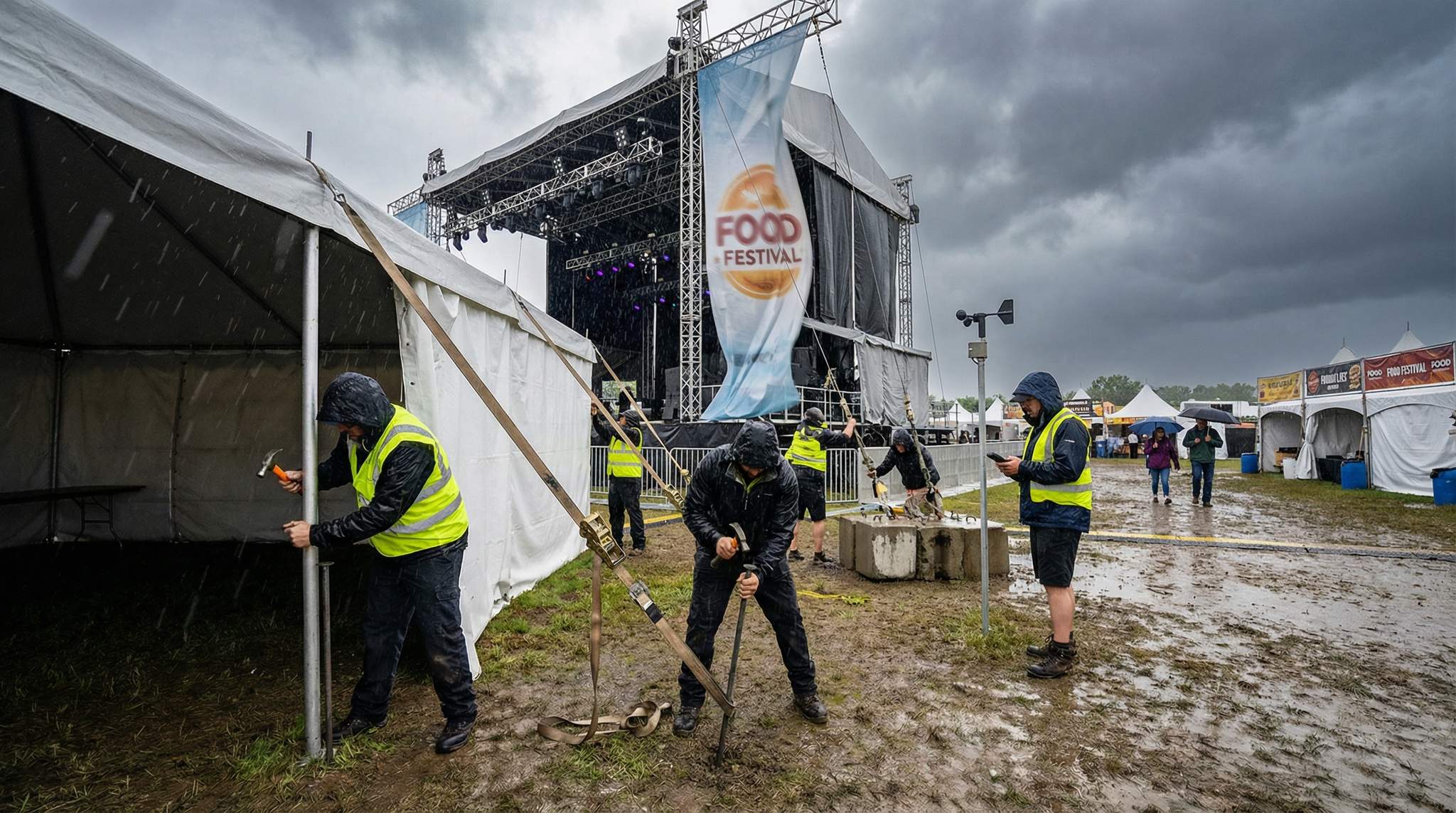
- Staking: Driving stakes into the ground is one of the most secure ways to anchor tents and trusses. Stakes should be long and robust – often 1m (3 ft) or longer steel stakes are used for large tents – and driven at a 45-degree angle for maximum hold. Guy ropes or ratchet straps from the tent frame connect to these stakes, keeping the structure taut. In France, for instance, professional tent crews often double-check each stake’s tension and may even double-stake crucial points (using two stakes at different angles on one strap) when high winds are forecast.
- Ballasting: On surfaces where stakes aren’t possible (like a concrete plaza or an event on city streets in Toronto or Mexico City), heavy weights serve as anchors. Common ballasts include concrete blocks, metal plates, or large water barrels. It’s important to calculate the required weight; for example, a 6x6m tent might require hundreds of kilograms of ballast per leg to safely resist uplift in a strong gust. Simply guessing can be dangerous – consult with tent engineers or use guidelines (some tent manufacturers publish ballast weight tables based on expected wind speeds). Also ensure the weights are securely attached (roped or ratchet-strapped to the tent frame) so they won’t shift or tip over. During Australia’s Melbourne Food & Wine Festival, the festival organizers famously used large water-filled bins as ballast for community kitchen tents, but only after engineers specified the exact volume needed per tent to withstand a forecasted windy day.
- Anchoring Truss and Stages: Stage roofs and truss towers (for lighting or video screens) often use a combination of stakes and ballasts. These structures should be installed by professional staging companies who use engineering calculations for ballast and guy wires. For example, a tall lighting truss might be secured with guide cables anchored outward to stakes or weights at a distance, creating a wide base of support against tipping. Never assume the weight of the structure alone is enough – an empty truss frame can tip in wind unless anchored; add hanging speakers or banners to it and the center of gravity shifts, increasing risk. Many festival stages in Canada and the U.S. employ concrete jersey barriers or steel plates as ballasts at the base of ground-support towers for this reason.
- Regular Inspection: Once everything is up, make periodic rounds to inspect all anchors throughout the event. Stakes can loosen if the ground softens from rain, and ropes can slacken over time. Weights can shift if bumped by vehicles or crowds. A festival organizer should have the production team check tension on tent straps daily (at minimum) and especially after any notable wind. In one case at a UK food festival, staff discovered overnight winds had loosened several stake ropes on a large beer tent; catching it in the morning before guests arrived allowed them to re-tighten and avert a potential collapse later that day.
Avoiding Underground Utilities When Anchoring
A critical but sometimes overlooked aspect of staking down structures is what lies beneath the ground. Driving a stake or drilling into concrete without checking for underground utilities can result in catastrophe:
- Call Before You Dig (or Stake): Many countries have services to locate underground lines – for example, the 811 service in the United States, or “Dial Before You Dig” in Australia and New Zealand. Festival organizers should contact these services weeks before the event to map out any buried utilities (power cables, gas lines, water mains, data cables) in the festival site area. Even in an open field or park, there could be irrigation pipes or electrical conduits for lighting. Knowing where these are helps the team plan where (and where not) to drive stakes.
- Site Maps and Surveys: Obtain site plans from the venue or local authorities. In Europe, many city parks have schematics indicating utility runs. If no map is available and the event is large, consider hiring a utility locating service or using tools like ground-penetrating radar to scan the ground. It’s a worthwhile investment to prevent an accident. A horror story shared among event crews is that of a regional festival where a stake pierced a buried power line – knocking out electricity to half the site and shocking the installer (thankfully not fatally). Such incidents underscore the importance of due diligence.
- Alternative Anchoring Solutions: If an area is too risky to stake (say, directly above known gas lines or over underground heritage sites), plan to use weighted ballasts instead or anchor to surface structures. For instance, at a street food festival in Rome, the festival organizers weren’t allowed to drive stakes into the historic cobblestone plaza. Instead, they brought in massive concrete blocks disguised as planters to secure the tents. Creativity can go a long way when safety is the priority.
- Marking and Communication: Once utilities are identified, clearly mark those zones on your site plan and even physically on the ground (with paint or flags). Communicate to all installation crew members where they can and cannot drive stakes. It’s easy for a hired tent team to not realize a danger if the festival management doesn’t pass on that information. This information should be made obvious – nobody on the crew wants to be the one who punctures a water main, causing an impromptu mud bath in the middle of a food fair!
Managing Banners, Signs, and Decor in Wind
Large banners and festival decor contribute to the festive atmosphere and branding, but they need special care in rough weather:
- Use Wind-Permeable Materials: Whenever possible, print banners on mesh or perforated material that allows some wind to pass through. This reduces the sail effect compared to solid vinyl. Many festivals in windy areas like coastal Spain or Wellington, New Zealand have switched to mesh banners for stage backdrops and fence coverings after experiencing tears or collapses with traditional banners.
- Secure Attachments: Banners should be firmly attached along all edges, not just at a couple of grommets. Use multiple zip ties, clips, or straps distributed evenly, so the force is shared. If one anchor point fails, the others will still hold (and as a backup, consider using tear-away zip ties that will break under extreme stress – sacrificially letting a banner rip free is better than having it pull down an entire truss structure).
- Flagpoles and inflatable elements: These are tall, often flexible structures (like those giant inflatable arches at entrances, or vertical banner flags). Ensure flagpoles are rated for outdoor use and anchored with guy lines if tall. Inflatable arches should be both weighted at the base and secured by additional tethers. Recall the incident at a food festival in Ireland where a large steel archway sign was blown over by a freak gust – injuring guests beneath. Such accidents can be avoided by adding extra support cables and quickly dismantling or deflating decor pieces if winds start shifting structures.
- Take Them Down When Needed: Have a protocol for removing or lowering banners and flags when wind speeds surpass a safe limit. It only takes a few minutes and can prevent bigger problems. For example, festival staff at an outdoor expo in Germany routinely removed overhead banners each evening when forecast called for overnight storms, after an earlier experience where overnight wind tore down signage and damaged booths.
Weather Monitoring and Emergency Action Plans
Even with the best equipment and setup, nature can surprise even a well-prepared team. A professional festival production team doesn’t just set and forget – they actively monitor conditions:
- Weather Tracking: Use reliable weather apps, online radar, and, for larger festivals, consider hiring a meteorologist or subscribing to a weather alert service. In storm-prone regions like parts of the United States and South East Asia, some festivals coordinate with local weather bureaus for up-to-the-minute updates. A sudden squall line or thunderstorm cell can often be spotted on radar 30–60 minutes out, giving just enough time to secure loose items and get people to safety.
- Wind Thresholds and Action Plans: Determine in advance what wind speeds will trigger certain actions. For instance, a festival organizer might decide: at 40 km/h (25 mph) wind, staff should warn vendors to secure loose items and close tent sidewalls; at 60 km/h (37 mph), pause stage performances and consider evacuating large tents; above 80 km/h (50 mph), clear areas under any temporary structures entirely. These numbers will depend on the structures’ rated limits and the advice of engineers. The key is having a plan before the wind hits. Many seasoned festival producers create a wind action chart as part of their Event Safety Plan, so everyone knows the protocol.
- Rain and Drainage: Heavy rain should not be underestimated. Ensure that tents are properly pitched and tighten slack fabric to prevent water pooling. If rain is in the forecast, having extendable poles or extra ropes to re-tension sagging tent roofs can save a structure. Also, check that your festival site has adequate drainage or create gentle trenches to channel water away from tent entrances if necessary – a common practice at muddy festivals in England.
- Evacuation and Safe Shelter: Sometimes the safest move is to evacuate the festival grounds or at least move everyone to safer areas (e.g., solid buildings or away from large structures) until a storm passes. Large-scale festivals from Chicago to Barcelona have successfully evacuated tens of thousands of attendees when severe weather threatened, then resumed once conditions improved. Drills and clear communication (like public address announcements and staff guiding people) make this process smoother. As difficult as it is to pause an event, it’s far better than attempting to push through unsafe conditions.
Learning from Successes and Failures
There’s a trove of hard-earned wisdom in the festival world regarding weather and structures:
- Tragic Lessons: Unfortunately, some safety standards are written in response to disasters. The 2011 stage collapse at the Indiana State Fair in the U.S. (caused by a sudden wind gust ahead of a storm) led to multiple deaths and industry-wide introspection. Similarly, the Pukkelpop music festival in Belgium that same year saw severe winds flatten tents and stages, resulting in casualties. These incidents prompted many festivals worldwide to tighten up their weather monitoring and structural engineering requirements. No food festival organizer wants a repeat of such tragedies on even a smaller scale, so the time to plan is well before the event day.
- Success Stories: There are also many cases where proper precautions saved the day. In 2019, a major open-air food and music festival in Sydney, Australia safely endured a gale because management ordered all large tents evacuated and sound towers lowered when wind speeds hit their pre-set danger level. After the gusts subsided, the event resumed with no injuries and minimal damage, demonstrating the value of quick action. Another example comes from a wine festival in California’s Napa Valley, where the festival organizers invested in high-quality clear-span tents with strong aluminum frames; during an unexpected storm, while nearby events had canopies flying, the Napa tents stood firm thanks to correct installation and vigilant anchoring.
- Local Knowledge: Experienced festival producers also learn from local climate patterns. For instance, teams in New Orleans (USA) know to expect sudden thunderstorms on summer afternoons and plan stage schedules accordingly, while festival organizers in Mumbai, India avoid scheduling major outdoor events in peak monsoon season altogether. Tapping into such local insights or consulting with veteran producers from the area can guide event teams on what structures and preparations are truly needed.
Every success in beating the weather, and every failure or close call, adds to a growing body of knowledge. The next generation of festival organizers can build on this by rigorously applying safety standards, never cutting corners on infrastructure, and fostering a culture that puts guest and crew safety above all else.
Conclusion
Weather-proofing a festival is both an art and a science. On the science side, it’s about materials, engineering specifications, and following rigorous safety protocols. On the art side, it’s about experience, foresight, and sometimes trusting that gut feeling when the skies darken and the wind picks up. A truly seasoned festival producer balances both – using data and past lessons to guide decisions, and being ready to adapt in real time. Whether it’s a local street food fair in a town square or a sprawling international food festival on a farm, the principles remain the same: choose the right structures for the conditions, secure them properly, respect the power of nature, and always have a backup plan.
By taking temporary structures and weather planning seriously, festival organizers ensure that chefs can keep cooking, musicians can keep playing, and attendees can keep enjoying – all while staying safe, rain or shine.
Frequently Asked Questions
What wind speeds can festival tents withstand?
Commercial frame tents are typically rated for winds around 100–120 km/h (60–75 mph) when properly anchored. In contrast, lightweight pop-up canopies used by vendors often only handle 15–25 km/h (10–15 mph). Organizers must check manufacturer specifications and evacuate structures if weather forecasts exceed these safe limits.
How do you secure a tent on concrete without stakes?
Heavy weights or ballasts, such as concrete blocks, metal plates, or water barrels, secure tents on hard surfaces like concrete. The required weight must be calculated based on wind load; for example, a 6x6m tent may need hundreds of kilograms per leg. Weights must be securely strapped to the frame to prevent shifting.
How much weight is needed to secure a 10×10 pop-up tent?
Most outdoor markets and festivals require independent vendors to secure each leg of a standard 3x3m (10x10ft) canopy with at least 20–30 kg (40–70 lb) of weight. Proper weighting prevents lightweight frames from lifting during sudden gusts, ensuring safety for the crowd and protecting the structure from damage.
Why are mesh banners recommended for outdoor stages?
Mesh or perforated banner materials allow wind to pass through, significantly reducing the “sail effect” that solid vinyl creates. This reduces stress on trusses and support structures during high winds. Using mesh prevents tears and minimizes the risk of the banner pulling down the entire stage structure during gusts.
What safety steps are required before staking festival tents?
Organizers must identify underground utilities before driving stakes to avoid hitting power cables, gas lines, or water mains. Contact services like “Call Before You Dig” (811 in the U.S.) to map buried lines. If an area has underground risks, use weighted ballasts instead of staking to prevent dangerous accidents.
When should festival organizers evacuate tents due to wind?
Evacuation protocols depend on specific wind ratings, but general safety plans often suggest pausing performances at 60 km/h (37 mph) and clearing areas entirely if winds top 80 km/h (50 mph). Organizers should establish a wind action chart beforehand and monitor weather radar to enact these plans before conditions become critical.
How do you secure event entry & exit truss systems against high winds?
Event entry and exit truss systems must be secured using heavy base plates combined with substantial concrete or water ballasts. Because these gateway structures often hold large signs and lighting, they act as wind sails. Organizers should use guy wires anchored to ground stakes whenever possible and ensure the total ballast weight meets the engineer’s specifications for the expected wind load.
Which event tents and temporary structures can withstand force 9 winds and storm conditions?
To withstand Force 9 winds (75–88 km/h or 47–54 mph), organizers must use engineered clear-span marquees, geodesic domes, or heavy-duty tensioned structures. Standard pop-up canopies will fail in these conditions. High-wind rated tents require reinforced metal frames, cross-cable bracing, and professional-grade staking or massive concrete ballasting to remain safely grounded during severe storms.
Are modern canvas enclosures for a circus safe in severe festival weather?
Yes, modern large-scale enclosures inspired by traditional circus tents are highly engineered for safety. Today’s big tops use advanced, weather-resistant PVC fabrics rather than standard canvas, supported by heavy-duty king poles and extensive perimeter staking. When installed by specialized rigging professionals, these massive tension structures can be rated to withstand significant wind and rain loads.
What are the different types of inflatable structures offered by suppliers like Extreme Marquees AU besides standard tents?
Besides standard marquees and tents, major suppliers like Extreme Marquees AU offer a variety of inflatable structures including custom-branded arches, sealed-air domes, inflatable pavilions, and promotional columns. These alternatives provide high visual impact and rapid deployment for festival entrances or VIP areas, though they require specialized tethering and ballasting to remain stable in high winds.
What features should a commercial food pop up tent have for festival use?
A professional food pop up tent must feature fire-retardant fabric to comply with cooking safety codes, heavy-duty aluminum or steel frames to withstand wind gusts, and optional reinforced sidewalls to maintain sanitary food preparation areas. Festival organizers should strictly enforce these commercial-grade requirements to ensure both safety and health compliance.
Are mesh sidewalls required for a food vendor canopy at an outdoor festival?
While regulations vary by municipality, most health departments require culinary stalls to have protective screening. These mesh walls keep insects and debris out of food preparation areas while allowing necessary ventilation for cooking equipment. Festival organizers should mandate that all catering operators include properly fitted, fire-retardant mesh panels in their structural setup to ensure compliance and safe operation.
What factors can lower a tent wind rating during an event?
A manufacturer’s tent wind rating is usually based on ideal installation conditions. Factors that can lower this effective rating during a festival include opening or removing sidewalls (which alters internal wind pressure), saturated ground conditions that weaken stake holding power, and adding suspended loads like lighting or audio equipment to the frame. Organizers should always adjust their safety thresholds to account for these real-world variables.