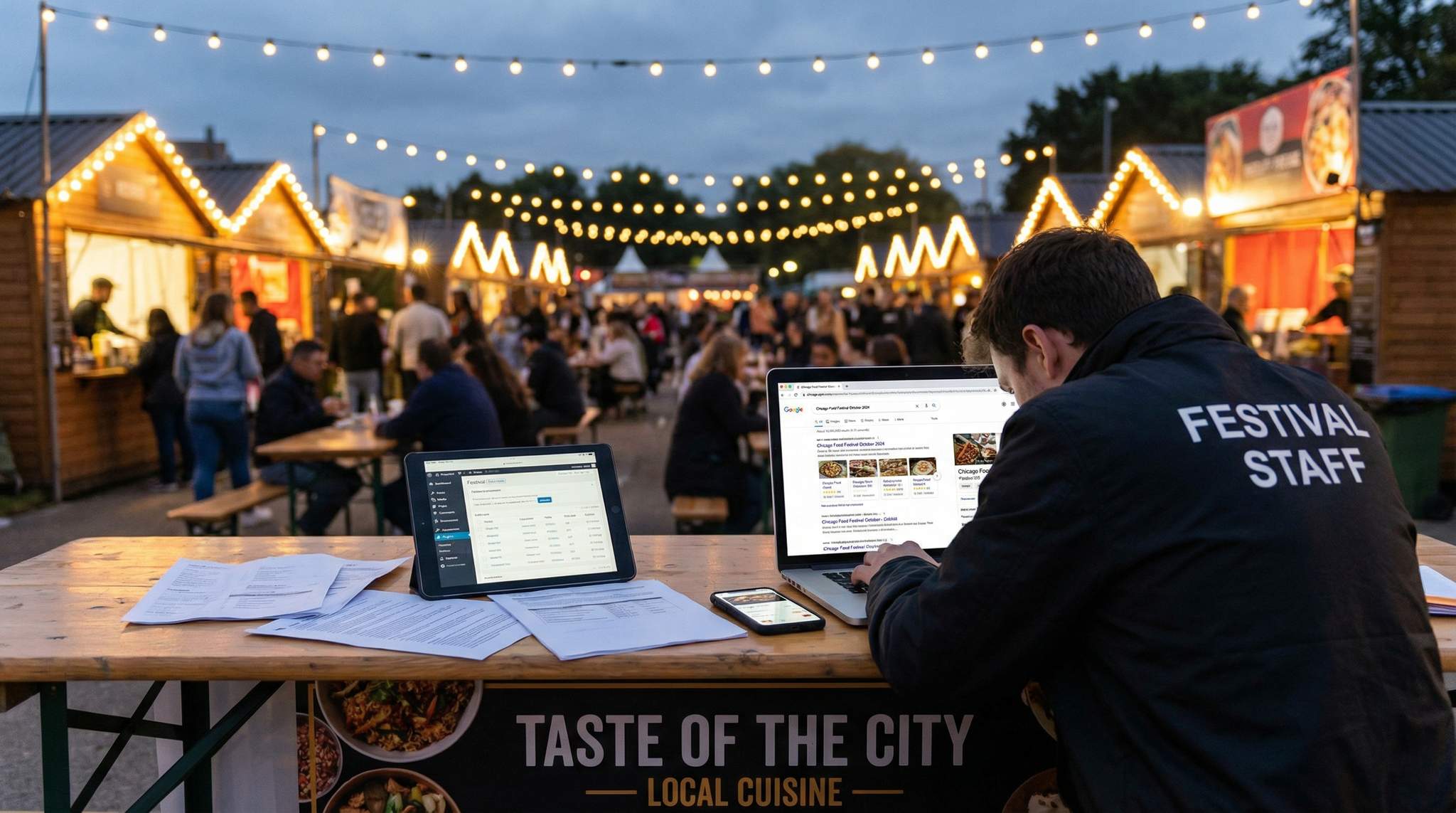
Food festivals thrive on local and tourist attendance, and many potential attendees find events by searching online for terms like “food festival [City]” or “[Cuisine] festival this weekend”. Capturing these high-intent searches is crucial for driving steady traffic to a festival’s website and boosting ticket sales. By strategically using SEO – especially implementing structured data and providing rich menu content – festival organisers can ensure their event is front and centre when eager foodies search for something tasty to do.
In this guide, you’ll learn how festival producers around the world leverage SEO to attract audiences. From optimising for city-specific and date-specific queries to using schema markup for rich Google results, these proven strategies will help any food festival gain visibility. It also looks at real-world examples – from small-town food fairs to internationally renowned gourmet festivals – to illustrate what works.
Whether you’re running a boutique local food fair or a massive international food and wine expo, these tips will help you feed a steady stream of organic traffic to your festival’s website.
Understanding High-Intent “Food Festival” Searches
Not all search traffic is equal. High-intent searches are those made by people ready to act – in this case, ready to attend or buy tickets for a food festival. When someone Googles “Food Festival + [City/Date/Cuisine]”, they’re likely looking for a specific event to visit. For festival organisers, these queries are goldmines – the users already want what you offer!
Data-Driven Event Marketing
Track ticket sales, demographics, marketing ROI, and social reach in real time. Exportable reports give you the insights to make smarter decisions.
Examples of high-intent searches:
– “food festival in Chicago 2024” – indicating someone planning ahead for Chicago’s food events in that year.
– “Mexican street food festival Los Angeles” – indicating interest in a cuisine-specific festival in LA.
– “food festivals this weekend near me” – a local search (often mobile) by someone ready to go out now.
In each case, the searcher has a clear intent to find a relevant event. Your goal is to make sure your festival appears in the results for these queries. Achieving that means speaking the searcher’s language: including the right keywords on your site and using web techniques that help search engines recognise your event.
Planning a Festival?
Ticket Fairy's festival ticketing platform handles multi-day passes, RFID wristbands, and complex festival operations.
Optimising Keywords: City, Date, and Cuisine
To capture these searches, start by identifying and using the keywords that match what people are typing. Generally, food festival searches fall into three key categories: location, time, and theme. Craft your website content to address all three:
Location Keywords: City and Region
Most people include a location when looking for events. Ensure your festival’s website prominently features where it takes place:
– Include the city name (and neighbourhood or region if applicable) in your page titles, headings, and naturally in your text. For example, “Sampleton Food Festival 2025 – The Biggest Food Event in Sampleton, CA.”
– Mention nearby major cities or regions if you attract visitors from outside the immediate area. e.g., “A short drive from New York City” or “the premier food fest of Southern France” – this casts a wider net for searches like “food festivals in France” or “near New York City”.
– Consider adding a map or directions section on your site. Not only is this user-friendly, but mentioning landmarks and the locality can improve local relevance for SEO. For instance, “Held at Riverfront Park overlooking the Melbourne skyline” ties your event to a known location.
Global example: The Singapore Food Festival makes sure “Singapore” is central in its branding and web content. This helps it capture international searchers planning trips who type queries like “food festivals in Singapore”. Similarly, the Mumbai Street Food Festival (India) highlights Mumbai in its title and descriptions, ensuring locals find it when searching their city.
Date Keywords: Year and Season
Including date-related terms helps people find the right year’s event and even seasonal timing:
– Always mention the year of the festival, especially if it’s an annual event. For example, use phrases like “2024 Edition” or “Spring 2024” on your homepage and SEO meta tags. Many users search “[City] food festival 2024” to find the upcoming event, so make sure your site explicitly states it is for 2024 (or the current year).
– If your festival occurs on a specific date or month, mention it frequently: “October 5-7, 2024”, “Fall Harvest Food Fest”, or “winter food festival”. People often search for season + city + food festival (e.g., “summer food festival in Sydney”), so highlighting the seasonal aspect can help capture those queries.
– Update your content every year. Don’t let last year’s dates linger on your homepage. The moment you have new dates, update the site (or create a new page for the new year) and optimise it. If someone searches for this year’s festival but your site still shows 2023 dates, they might assume it’s outdated or the event isn’t happening – and click elsewhere. Festivals like the Taste of Chicago quickly update their websites to reflect new dates, knowing thousands search for “Chicago food festival [year]” as soon as the year begins.
Grow Your Social Following With Every Sale
Require social media follows, shares, or playlist adds to unlock presale access or special pricing. Turn every ticket purchase into audience growth.
Tip: If your festival name doesn’t inherently include the word “festival” or the city, add a tagline that does. For example, “Feast Portland – Portland’s Biggest Annual Food Festival” clearly ties the event to the city and the concept of a food festival, covering multiple search terms. This way, even those who haven’t heard of “Feast Portland” by name will find it when searching “Portland food festival”.
Cuisine and Theme Keywords
Food festivals often have a theme – perhaps a type of cuisine, a specific food item, or a cultural angle. Leverage that in your SEO:
– Include the cuisine or theme in your content and headers. If it’s a BBQ festival, say “barbecue” (and related words like “grill, smoked meats”) often on the page. If it’s focused on vegan cuisine, make sure “vegan”, “plant-based”, etc., are present.
– List out the range of foods or cuisines on offer. Many festivals host multiple cuisines or categories (e.g. Italian, Mexican, street food, desserts). Create a section on your site that names all these – it not only entices food lovers, but also captures long-tail searches like “Italian food festival in X” or “X food festival tacos and sushi”. For example, the Auckland Street Eats Festival might mention “street food from Thai, Chinese, Indian, and Pacific Islander chefs” – covering a variety of cuisine keywords that could pull in diverse search queries.
– If your festival features celebrity chefs or famous restaurants as vendors, mention them by name. People often search for those names plus “festival”. For instance, “Chef Mario Batali food festival”. If Mario Batali (just as an example) cooked at your event, having his name on your site can attract those searchers and lend credibility. The South Beach Wine & Food Festival (SOBEWFF) in Miami does this well – their site lists participating chefs and restaurants, ensuring they appear in searches for those names alongside “food festival”.
Need Festival Funding?
Get the capital you need to book headliners, secure venues, and scale your festival production.
By covering location, date, and theme keywords, you cast a wide net that matches the high-intent searches people are performing. Think about what your potential attendee might type, and make sure that phrase (or a close variation) lives on your website.
Implementing Structured Data for Rich Results
Simply adding the right words to your site is a great start, but you can turbocharge your visibility by adding structured data (schema markup) to your festival’s web pages. Structured data is code (often in JSON-LD format) that you add to your webpage to give search engines detailed information about your event. It’s like giving Google a cheat-sheet about your festival – including the what, where, and when in a structured way.
Why is this important? With structured data for events, Google can create a special listing for your festival in search results – often as part of an Events snippet or carousel. You might have seen a “Events in [City]” box or an events carousel at the top of search results; that’s fueled by structured data. If someone searches “food festivals this weekend” or “[City] events tomorrow”, Google may show a list of events (with dates and times) before the normal search results. You want to be in that pack.
To implement structured data for a food festival, use the Schema.org “Event” markup (or the more specific “Festival” type). Some key details to include in the structured data are:
– Name of the event (e.g., “Denver International Food Festival 2025”).
– Description – a concise summary of the festival highlighting its unique selling points (Google may display this as a snippet).
– Start date and end date/time – when your festival begins and ends. This allows Google to answer queries like “food festivals this weekend” by date.
– Location – the venue name and address (and GPS coordinates if possible). This ties your event to the city/region in Google’s eyes and is crucial for “near me” searches.
– Organiser – the organisation or person running the event (e.g., “XYZ Productions” or “City of Toronto”), which can add credibility.
– Image – at least one image URL showcasing your event (a crowd or food spread). Images can sometimes appear in rich results.
– Offers (tickets) – if tickets are sold, you can mark up pricing and availability. For example, “General Admission – $50 – Available” as an offer. This can make your search result show a “Buy Tickets” link or price info.
– Performer or Attraction – if you have notable entertainment (live music, famous chefs doing demos), include them. It might make your listing more attractive.
Many large search and ticketing platforms use this schema. For example, if you list your event on major ticketing sites or event calendars, they likely add schema markup for you. But having it on your own website is extremely beneficial; it signals Google directly and can give you a richer search result. There have been cases where festival websites with proper event schema see their Google search result showing the event date, location, and even a link like “Get tickets” directly – which helps click-through rates significantly.
Success story: The team behind the El Paso Taco Festival implemented structured data on their site, marking up all the event details. When locals searched “taco festival El Paso” on Google, the festival’s result showed up with the event date and a “Buy Tickets” callout – standing out from regular links. The organisers reported a noticeable increase in organic traffic and ticket purchases directly attributed to that enhanced listing. Getting into Google’s event snippet not only boosted their visibility, but also made their festival look official and popular.
Implementing structured data might sound technical, but it’s becoming easier. If you use a CMS like WordPress, plugins like The Events Calendar or Yoast SEO with an events extension can help generate the schema for you. There are also online generators where you input your event info and get a JSON-LD snippet to paste into your site’s <head> section. Always test the markup using Google’s Rich Results Test or Schema Markup Validator to ensure there are no errors.
Insider tip: The Ticket Fairy platform (a ticketing solution for festivals) automatically includes SEO-friendly structured data on its event pages. This means if you sell tickets through Ticket Fairy, the event page they host for you will already be optimised for Google’s event search results. It’s worth leveraging such features, especially if you’re not technical – let the platform handle some SEO heavy lifting for you.
Showcasing Menus, Vendors, and Food Lineups
Food is the star of your festival, so make sure your website showcases it in a way both humans and search engines love. One common mistake festival organisers make is underestimating the power of their menu content. By “menus”, we mean the lists of food vendors, dishes, breweries/wineries (for wine & beer festivals), and any culinary highlights of your event. This content can be a magnet for search traffic if done right.
Here’s how to leverage menus and vendor information for SEO:
– Create a dedicated Vendors or Food Lineup page. List every food stall, truck, restaurant, or chef that will be at the festival. For each, if possible, include a brief description of what they offer. For example: “Mama Mia Pizzeria – Serving authentic Neapolitan pizza, fresh from a wood-fired oven.” These descriptions naturally incorporate cuisine keywords (like “Neapolitan pizza”) that could match niche searches (someone searching for “pizza festival” might stumble on your page).
– Include menu items or signature dishes. If vendors have specific famous dishes, name them. “Joe’s BBQ – Don’t miss the award-winning Texas-style brisket and pulled pork.” If a food item is popular enough, people might search for it in context (e.g., “brisket food festival Texas”). Plus, it makes your site content rich and mouth-watering, increasing the chance that other websites or blogs will link to your menu page (food bloggers might share “look what will be served at XYZ Fest” – great for SEO authority).
– Use structured formatting for menus. This doesn’t necessarily mean adding special schema (menu schema is more for restaurant websites), but organizing the content clearly. Use headings or bullet points for different categories: e.g. Street Food, Desserts, Drinks, Vegan Options. Clear section headings with keywords (“vegan”, “desserts”, etc.) can improve your relevance for those terms. Someone searching “vegan options at [Festival]” might find that section directly.
– Add a downloadable PDF menu (if you want), but also present the content in HTML on the page. PDFs or images of a menu are not SEO-friendly by themselves. Always have the text on the webpage too. For instance, the Melbourne Food & Wine Festival site publishes an online program and listing of featured dishes, not just a graphic, so search engines can index every tasty detail.
– Highlight local and unique ingredients. If your festival emphasises local produce or special items (say a truffle festival or mango fiesta), mention those keywords. The Gilroy Garlic Festival (California) famously highlights garlic in every context on their site (it’s central to their brand). So anyone searching for “garlic festival” will inevitably find them. Likewise, if your event is a “Halal food festival”, use that term frequently to capture those looking specifically for Halal food events (e.g., the London Halal Food Festival leaves no ambiguity by its very name and repeated info, attracting a specific demographic of searchers).
By fleshing out your website with vendor profiles, menus, and food categories, you’re not only appealing to potential attendees who want to know “what’s on the menu?”, but also increasing the keywords and content on your site in a natural, useful way. Search engines love comprehensive content that matches user questions. Think about questions like:
– “Which breweries will be at the beer and chili festival?”
– “Does the festival have vegetarian options?”
– “What food trucks are at [Festival Name]?”
If you provide those answers on your site (perhaps in a FAQ section or the vendors page), you can capture that traffic. In fact, adding a simple FAQ section with common questions (and answers) about your festival can target many long-tail searches (and you can even use FAQPage schema for a chance at rich snippets for Q&A in Google results). For example, a question “How much are tickets for the Austin Food Fest?” or “Is parking available at the Austin Food Fest?” answered on your site could appear for people searching those exact questions.
Local SEO and Community Engagement
For any city-based event, local SEO is a big part of the equation. You want your festival to be highly visible not just on web searches, but also on map searches and community sites. Here are some tips to boost local presence:
– Google Business Profile: If your festival is annual or recurring, consider creating a Google Business Profile (previously Google My Business) for it or for the organising entity. You can list upcoming event dates in the profile posts, so if people find your festival on Google Maps or Google search sidebar, they see the next event details. This can also generate additional visibility in local results.
– Local event listings: Submit your festival details to local event calendars, tourism websites, city magazines, and food blogs. Often, these sites rank well for “[City] events” searches and can drive traffic to you. Plus, a listing on a high-authority site (like a city tourism board or a well-known local newspaper’s event page) provides a valuable backlink to your site, boosting your SEO authority. For instance, the New York City Wine & Food Festival benefits from being listed on NYC’s official tourism site and various foodie blogs, which all link back to the official festival site.
– Engage the community on social and link to your site: While social media signals themselves don’t directly improve SEO rankings, the indirect benefit is huge. If you run contests like “Vote for the signature dish of this year’s festival” or share behind-the-scenes content (e.g., chef interviews, recipe teasers), you generate buzz. Popular social posts can lead local news or bloggers to write articles (with links to your site). The National Street Food Festival in Delhi, India, for example, engaged its community by inviting college students to create Instagram content about their street food experiences. Those posts and stories led to local news features, which then linked to the festival’s page – enhancing its search visibility for terms like “street food festival India”.
– Reviews and testimonials: Encourage attendees to review your festival on Facebook, Google, or other platforms. A festival might not have “product reviews” in the traditional SEO sense, but positive chatter increases trust. If many people leave Google reviews mentioning how great the food was, someone searching your festival by name may see a nice star rating in the sidebar, increasing the likelihood they’ll click your site or attend. Moreover, if those reviews mention specific highlights (e.g., “Loved the taco stand at XYZ Food Fest”), that’s user-generated content reflecting well on your event’s relevance.
Community engagement also yields content you can feature on your site. For example, share post-event highlights: “We asked attendees to vote for their favorite dish, and 2023’s winner was the spicy ramen from Tokyo Eats stall – see the full results on our blog.” This kind of content not only celebrates your participants (feeding their ego and encouraging them to share it), but also gives you fresh SEO content (now your site might appear for “best dish at [Festival Name] 2023”).
Technical SEO: Mobile-Friendly, Fast, and Secure
Amidst content and keywords, don’t forget the technical foundations of SEO. High-intent searches often happen on mobile devices (“near me” and “this weekend” searches especially), so your festival website must offer a smooth mobile experience. Additionally, search engines favour sites that are fast and reliable:
– Mobile-friendly design: Use responsive web design that adapts to different screen sizes. Test your site on a phone – can users easily read the schedule, find ticket info, and navigate the menu pages? Google’s algorithms use mobile-first indexing, meaning the mobile version of your site is the primary one considered for rankings.
– Page speed: Compress images of food and festival fun so they load quickly. A delay of even a couple of seconds can increase bounce rates (impatient searchers will hit “back” if a page is slow, which can indirectly hurt your ranking and certainly loses you a visitor). Use a Content Delivery Network (CDN) if you expect heavy traffic, and minimise bulky scripts. Remember, someone might be searching on cellular data at the festival gates – make sure even a 4G connection can quickly pull up your site.
– Secure and accessible: Use HTTPS (most ticketing platforms like Ticket Fairy provide secure links by default). Users – and browsers – trust secure sites, and Google gives a slight ranking boost to HTTPS pages. Also, implement basic accessibility: alt text for images (describe that delicious food in the photo – good for accessibility and injects more relevant text), proper headings, and readable font sizes. Accessibility improvements often align with SEO improvements.
– No technical roadblocks: Ensure that critical content (like your event details or vendor list) isn’t hidden behind login walls or as an image without alt text. Avoid pop-ups that cover the page (particularly on mobile) – Google may penalize sites with intrusive interstitials. Also, if you have an old page for a past year’s festival, don’t leave it orphaned; add a notice or redirect to the new page, so users and search crawlers always find the current info easily.
Many festival organisers may not have a full tech team, but even using simplified website builders, these settings are often available. It’s worth consulting with a web developer or using tools like Google’s PageSpeed Insights to get a report on improvements.
Measuring and Continually Improving SEO
SEO isn’t a one-and-done task. It’s important to monitor your efforts and refine them over time:
– Use Google Search Console: This free tool shows what search queries are leading people to your site. After implementing changes, check Search Console data. You might discover, for example, that lots of people are searching “parking at [Festival Name]” – if your site didn’t have that info clearly, now you know to add it (perhaps as a new FAQ question or a section on the Info page).
– Analytics: Track your organic traffic in Google Analytics (or another analytics platform). See how it grows as your SEO optimisations take effect. Notice which pages visitors read most and ensure those pages always have up-to-date info and strong calls-to-action (like “Buy Tickets” or “Sign up for updates”).
– Keep content fresh: Each year, you have an opportunity to create a newsworthy update (dates, lineup announcements, etc.). Treat these like content releases – write a blog post or press release on your site and optimise it (“2025 Festival Dates Announced!”, “Full Menu Revealed for [Festival Name] 2024”, etc.). These posts can capture seasonal bursts of search interest. A festival in Mexico City, for instance, might publish an article in Spanish and English about the upcoming year’s theme – grabbing search traffic in both languages.
– Learn from others: Keep an eye on other successful festivals, even in other regions or countries. If they always appear first on Google for “[City] food festival”, study their site: Are they using certain keywords or content structure you could emulate? The world of festivals is global – for example, the way Sydney Night Noodle Markets (Australia) dominate searches for “noodle festival Sydney” or how La Tomatina Festival (Spain) – though not a food tasting event but a famous food fight festival – captures global interest through clever content, can inspire your approach to SEO and marketing.
– Adjust and adapt: If something isn’t working (perhaps you optimised for a keyword that isn’t getting traction), be willing to tweak. SEO is partly experimentation. Maybe you thought “culinary festival” was the term everyone uses, but actually “food fest” is more common in your area – adjust your wording accordingly. Use tools like Google Trends or keyword planners to gauge interest in certain terms over others.
Finally, remember that SEO for a festival is about serving your audience’s needs. By making sure your website provides the information people are searching for – and structuring it so it’s easy to find – you’re not just appeasing Google’s algorithms; you’re creating a better user experience for your attendees. A well-informed attendee is more likely to become a happy attendee and spread the word.
Frequently Asked Questions
How can food festivals improve SEO visibility?
Food festivals improve SEO visibility by targeting high-intent keywords related to location, date, and cuisine. Organizers should implement structured data to appear in Google Events carousels and create rich content featuring vendor menus and chef lineups to capture organic traffic from hungry searchers ready to buy tickets.
What are the best keywords for food festival websites?
The most effective keywords combine location, date, and theme to match user intent. Essential terms include the specific city or region, the current year (e.g., “2025”), and the cuisine type, such as “BBQ,” “vegan,” or “street food.” These specific phrases capture users actively looking to attend events.
Why is structured data important for food festivals?
Structured data, specifically Schema.org “Event” markup, enables festivals to appear in rich results like Google’s Events carousel. By providing search engines with specific details like dates, location, and ticket availability in code format, festivals increase their visibility and click-through rates for queries like “events this weekend.”
How should food festivals display menus for SEO?
Festivals should display menus as HTML text on their websites rather than relying solely on PDFs or images. Listing specific dishes, ingredients, and vendor names allows search engines to index this content, helping the site rank for long-tail queries like “best tacos at [Festival Name]” or specific dietary options.
How can food festivals improve local search rankings?
Improving local rankings requires creating a Google Business Profile and securing listings on local event calendars and tourism websites. Engaging with the community to generate reviews and backlinks from local food blogs further signals relevance to search engines, boosting visibility for “near me” and city-specific searches.
Why is including the year important for festival SEO?
Including the current year in titles and headers is crucial because attendees often search for specific dates, such as “[City] food festival 2024.” Explicitly stating the year ensures users know the information is current, preventing bounce rates caused by outdated content or uncertainty about whether the event is active.
Does mobile optimization affect food festival search results?
Mobile optimization is critical because many high-intent searches, such as “food festivals near me,” occur on mobile devices. Google prioritizes mobile-friendly, fast-loading sites through mobile-first indexing. A responsive design ensures users can easily access schedules and ticket information on the go, improving both user experience and rankings.
What details should be included in festival vendor listings?
Vendor listings should include the business name, a description of their offering, and specific signature dishes or ingredients. Mentioning famous chefs or popular restaurants by name helps capture search traffic for those specific entities, while categorizing vendors by cuisine type (e.g., “vegan,” “dessert”) aids users searching for specific food options.