Picture a festival crowd so silent you can hear the wind rustle through the trees. Instead of roaring applause and chatter, there’s focused attention – a hush usually reserved for concert halls or listening rooms. Yet this isn’t an indoor theatre; it’s an outdoor festival stage transformed into an intimate listening-room experience. Forward-thinking festival organisers around the world are experimenting with pin-drop performance spaces at their events, proving that stillness can indeed headline an outdoor show. This guide explores how to curate these quiet, captivating stages – from creating comfortable, shaded seating and managing sound levels, to training MCs in etiquette and capturing the magic for podcasts. Seasoned producers and boutique festival curators alike can use these insights to craft unforgettable moments of musical tranquility amid the festival buzz.
Curating Pin-Drop Sets with Seating, Shade & Low Sound
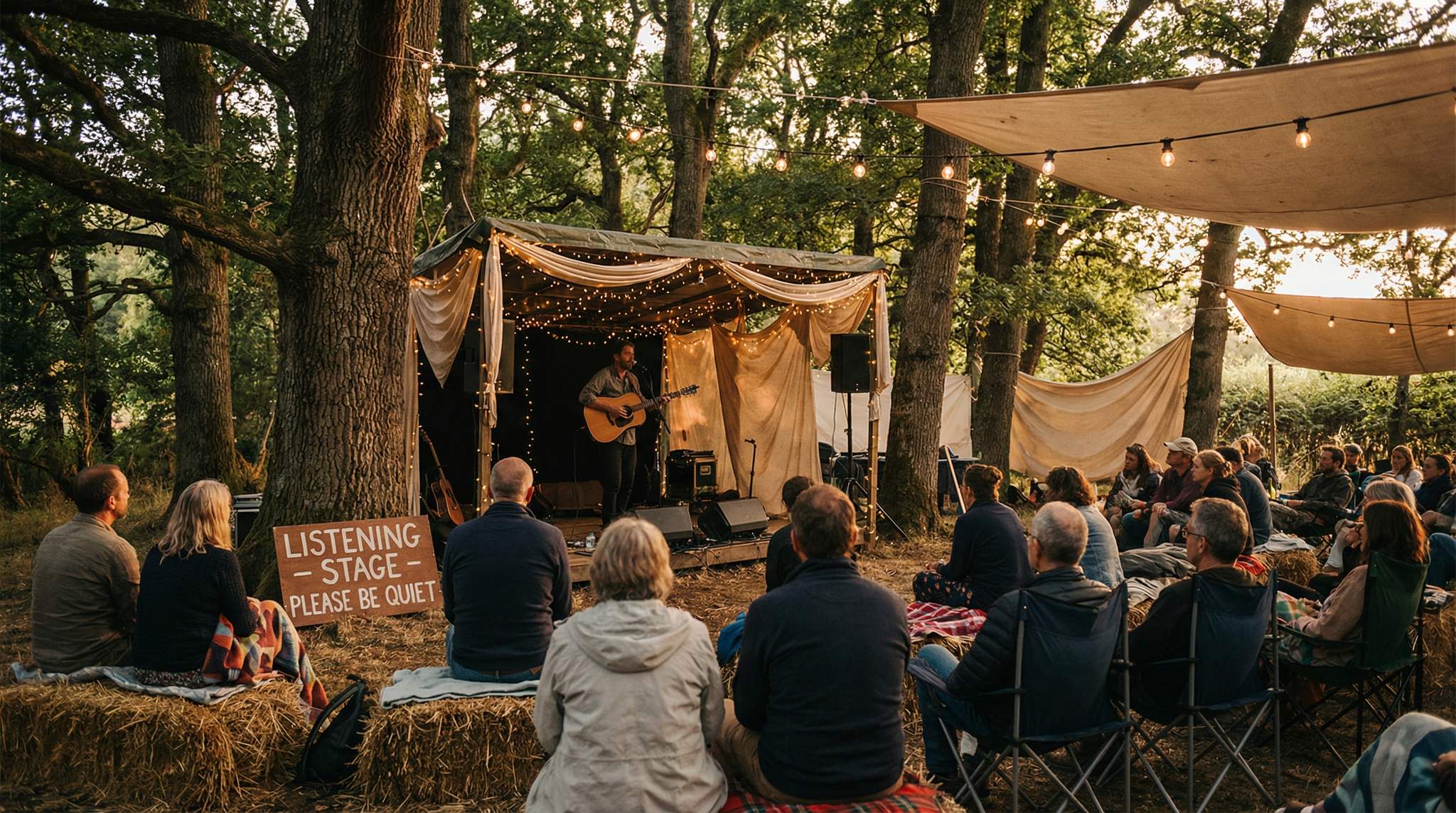
An outdoor “listening-room” stage starts with intentional design. Seating and shade are non-negotiable – if you want an audience to remain quiet and attentive, make them comfortable. Provide chairs, benches, ground cushions or even hay bales, and ensure there’s ample cover or natural shade to keep the sun (or light rain) from becoming a distraction. At the Newport Folk Festival, for example, fans stake out spots in any available shade during acoustic sets, showing how valued a cool, seated space is for listening. By setting up a cosy, inviting area, you encourage people to sit down and settle into a mindset of attentive listening rather than milling about.
Next, commit to low sound pressure levels (SPL) for these stages. Resist the urge to crank up the volume; instead, keep the sound just loud enough for those in the seating area. Lower volume creates an intimate atmosphere and actually discourages chatter – if someone talks, everyone (including themselves) can hear it. This expectation of quiet becomes part of the stage’s identity. Of course, positioning the stage in a corner of the venue or scheduling its sets at times that avoid bleed from louder stages is crucial. Many boutique festivals place their listening stage away from main thoroughfares – think a tranquil glade or a tucked-away tent – to naturally insulate it from outside noise.
Consider taking inspiration from folk and jazz festivals: events like the Cambridge Folk Festival (UK) and Pickathon (USA) have long understood the value of thoughtful stage environments for acoustic acts. Pickathon’s intimate Lucky Barn stage, for instance, is a small barn venue on their site that hosts quiet sessions and interviews, complete with close seating and controlled sound. By consciously designing a stage for pin-drop moments, festival producers can programme delicate singer-songwriter sets, classical ensembles, spoken-word artists, or any performance that shines in a silent, attentive setting. The result is often a magical feeling – artists and audiences connecting deeply, free from distractions.
Grow Your Social Following With Every Sale
Require social media follows, shares, or playlist adds to unlock presale access or special pricing. Turn every ticket purchase into audience growth.
- Choose the right spot: Locate the quiet stage away from noisy areas (far from main stages, generators, or loud vendors). Natural barriers like tree lines or buildings can act as sound shields.
- Provide comfortable seating: Arrange seating in a semi-circle or intimate layout so everyone feels close to the performance. Comfy seating keeps attendees still and focused.
- Offer shade and weather cover: Use tents, canopies, or tree cover to protect the audience. A cool, shaded audience is less likely to get restless in the heat, and light rain won’t send people running.
- Set a low SPL limit: Work with your audio engineer to cap the volume. Aim for clarity at close range rather than throwing sound across the whole site. This creates a bubble of sound that draws the audience in.
- Mind the schedule: Plan quiet sets during daytime lull periods or late nights when other stages pause. Alternatively, coordinate with other stages to avoid high-conflict timeslots.
Kind Etiquette: Training MCs and Setting Expectations
Creating a pin-drop atmosphere isn’t just about the physical setup – it’s also about setting audience expectations. This is where a well-trained stage MC (Master of Ceremonies) or host becomes invaluable. In a gentle, upbeat manner, the MC should introduce each act and kindly remind the crowd of the special nature of the stage. For example, they might say “Welcome to our listening stage, where we invite everyone to really soak in the music. Please turn off your phones and hold your conversations until after the set, so we can all fully enjoy this unique performance.” Delivered warmly (and not like a scolding), such a message primes the audience to cooperate.
Training your MCs to enforce concert etiquette politely is key. The tone should be encouraging rather than scolding – think “we’re all in this together” vibes. Humour can help too: some MCs share a light joke about noisy beer cups or gently celebrate an audience member for using a whisper. The goal is to make etiquette feel positive and communal, not like a strict rulebook. Remember, silence at a show is essentially a gift the audience gives the artist, creating a unique bond of dedication and talent. Even mega pop stars sometimes plead for quiet during an intimate song – as Justin Bieber once told a stadium crowd, “Try and stay as quiet as possible… you can scream as much as you want afterwards”. If global superstars need a moment of hush, your festival’s singer-songwriters and poets certainly deserve that respect too.
Planning a Festival?
Ticket Fairy's festival ticketing platform handles multi-day passes, RFID wristbands, and complex festival operations.
Consider visual cues as well: signage at the entrance of the stage area can remind attendees this is a quiet zone. Festival volunteers or staff can be stationed to softly shush persistent talkers or redirect loud groups to other areas. However, most of the time, peer pressure and the atmosphere do the work – when everyone else is attentive, new arrivals will quickly get the hint. Community building plays a role here: many festivals build a culture of respect by highlighting that these quiet performances are a special experience that everyone contributes to. Over time, attendees come to cherish the listening-room stage as a festival highlight precisely because of its respectful etiquette and the deep focus it allows.
Focusing on the Music: Cameras on Hands, Not Crowds
If your festival uses IMAG screens (image magnification video screens) or plans to film the performances, adapt your video direction to suit the listening-room vibe. Instead of cutting to sweeping crowd shots – which might show people chatting or distract from the music – keep the camera trained on the performers. Close-ups of musicians’ hands on guitar strings, piano keys, or percussion instruments can be mesmerizing on a big screen. It not only helps those in the back see the artistry up close, but also reinforces that the focus is on the music itself.
This approach has been used in classical concerts and jazz festivals where the audience is seated and attentive. For instance, at large symphony performances in parks, video directors often zoom in on the violinist’s bow or the pianist’s fingers rather than panning to the picnic crowds. By following suit at your boutique festival’s quiet stage, you maintain an immersive atmosphere. It subtly signals to the audience that watching the performance is the entertainment – not crowd surfing or dancing. In fact, seeing the intensity or delicate touch of an artist’s technique can deepen respect and attention; viewers become engrossed in the details of the craft.
Additionally, avoid overly frenetic light shows or visuals on a quiet stage. Soft, minimal lighting that spotlights the performers is ideal. If you have a backdrop screen, consider displaying gentle ambient visuals or simply the live feed of the performance rather than flashy graphics. The idea is to strip away distractions. You want an environment where someone might close their eyes and just listen – or watch every movement of the musicians’ hands – and feel completely absorbed. By aligning the visual production with the listening-room concept, you further curate the crowd’s behaviour: when there’s nothing to do but listen and watch the artist intimately, that’s exactly what your audience will do.
Capturing the Magic: Recording Sets for Post-Festival Content
One of the joys of a well-executed quiet stage is that it produces recordings of exceptional clarity and emotional weight. With performers and audiences in tune with each other, these sessions often become legendary – the kind of sets people talk about for years. Savvy festival producers capitalize on this by recording multi-track audio (and even video) of the performances for later release. If you plan to do this, be sure to obtain artists’ consent in advance. Many artists will be thrilled at the idea of a professionally recorded live session they can share, especially if it’s done respectfully and for non-commercial or revenue-shared releases (like a festival podcast or live compilation album).
Technically, you’ll want to capture a clean multi-track feed from the soundboard, and possibly use ambient mics to catch the subtle crowd atmosphere (the collective hushed applause is a beautiful sound on a live recording!). Having a dedicated recording engineer at the stage is ideal. Also, coordinate with artists about any mixing or post-production plans – some may want to approve the final mix, and it’s good practice to honour that.
Need Festival Funding?
Get the capital you need to book headliners, secure venues, and scale your festival production.
Once you have these recordings, you can extend the life of the festival by releasing them. Consider creating a podcast series or YouTube playlist featuring “Live from [Your Festival] – Listening Room Sessions.” This not only provides great content for your marketing channels but also gives artists extra exposure. For example, Pickathon releases special recordings from its intimate stages, which has boosted the festival’s reputation globally among music aficionados. As long as you have the legal clearances sorted, these recordings can be a win-win: fans who couldn’t attend get to experience a taste of the magic, and those who were there can relive it. From a promoter’s perspective, this is also a fantastic promotional tool for future editions – showcasing the uniqueness of your boutique festival’s experience to prospective attendees. And if you’re using an advanced ticketing platform like Ticket Fairy, you can even directly share these post-festival content pieces with all your ticket holders through integrated emails and updates.
Embracing Stillness: Quiet Acts as Headliners
Perhaps the boldest idea in listening-room stagecraft is this: stillness itself can be the headline attraction. In a festival world that often races toward bigger drops, louder bands, and flashier spectacles, a quiet, transcendent performance can actually stand out more than any pyrotechnics. Boutique festivals have the freedom to experiment with this. Imagine closing a night with a revered folk legend performing an all-acoustic set under the stars, or a minimalist ambient music act enveloping the crowd in gentle soundscapes. With the right setup, these still moments become not the side stage, but the talk of the festival.
Real-world examples abound. At End of the Road Festival in the UK, audiences have been entranced by hushed late-night woodland performances, to the point where thousands of people stayed pin-drop silent for a surprise unamplified encore. In India, the Jodhpur RIFF festival’s dawn concerts at Mehrangarh Fort see listeners sitting quietly at 6 AM, completely absorbed in classical and folk melodies as the sun rises – a headline-worthy experience in its own right. And consider pop culture crossovers: iconic artists like Leonard Cohen or Adele have commanded festival crowds with sparse arrangements and voice alone; their ability to draw silence from tens of thousands is legendary. These instances prove that if you give audiences something truly special and create the conditions for deep listening, they will embrace it wholeheartedly.
To position a quiet act as a headliner, you must set the stage (literally and figuratively) for success. Schedule them in a slot that doesn’t fight noise from elsewhere – late nights or very early sets can work, as can designated “quiet hours” programming. Build anticipation: market it as a once-in-a-lifetime intimate performance. You might even provide wireless headphones to the audience for a silent concert experience if absolute silence can’t be guaranteed – an approach some experimental festivals have tried. But often, if you’ve cultivated a listening culture on that stage throughout the event, the audience will be ready to give the headliner the gift of silence naturally. The result? A spine-tingling, memorable climax to your festival that leaves attendees in awe – the kind of moment that trends on social media for its beauty, not its loudness.