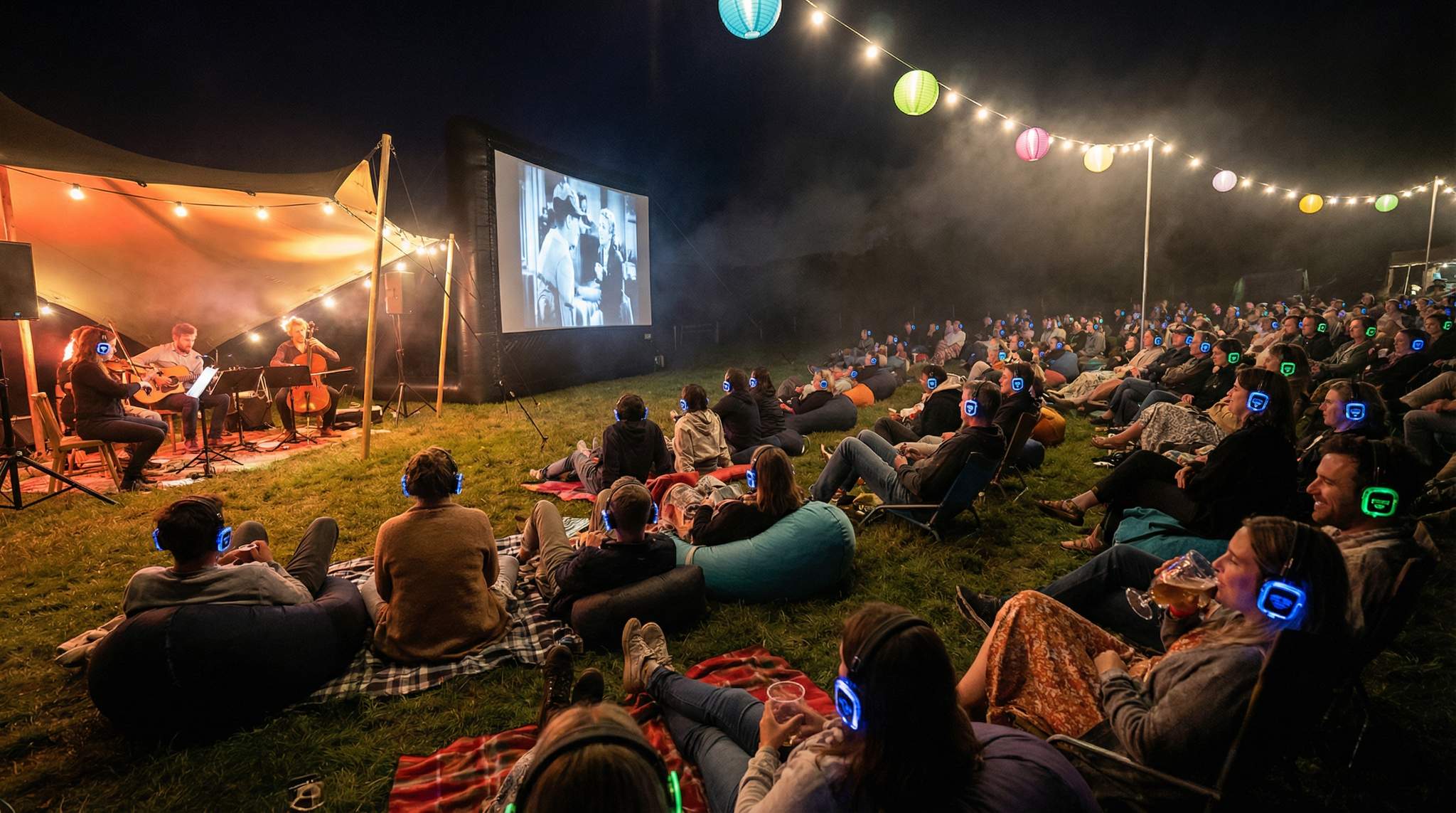
Imagine a starlit evening at a small festival, where attendees are nestled on blankets, eyes glued to a screen as a classic film plays. Instead of booming speakers, each person wears a pair of wireless headphones, hearing every note of a live musical score performed by musicians beside the screen. Not a peep escapes into the night air – the surrounding neighbourhood is undisturbed, and yet the audience is utterly immersed. Welcome to silent cinema with a live score, an innovative experience perfectly suited for boutique festival nights.
Why Silent Cinema at a Festival?
Silent cinema (much like a silent disco, but for films) is a clever solution for festivals that want to offer film screenings or multimedia experiences without violating noise curfews or disturbing neighbours. Boutique festivals often take place in intimate settings – perhaps a countryside village, a city rooftop, or a beachside town – where sound ordinances can limit loud music or amplified audio after a certain hour. By transmitting the movie’s audio via wireless headphones, festivals can extend programming into the night with zero sound bleed beyond the audience. This keeps local communities happy and authorities satisfied, while giving festival-goers something novel and memorable to do after the main stage acts.
Beyond the practical noise considerations, silent cinema adds a unique charm to a festival’s offerings. It creates a personal and immersive environment: each viewer hears high-fidelity sound directly in their ears, as if the film is speaking just to them. Meanwhile, the sight of a crowd silently engrossed in a movie under the stars – headphones aglow with LED lights – can be quite magical. Festivals from Croatia to California have embraced this concept. For example, the large INmusic Festival in Croatia introduced a multi-channel silent cinema program in 2025, allowing attendees to watch curated short films with headphones on, right on the festival grounds, without any conflict with live music stages or local noise restrictions. Even at smaller community festivals in the UK and Australia, organisers have reported enthusiastic responses to late-night headphone movie screenings, often noting that “not a single noise complaint” was received from neighbours.
Creating an Intimate Atmosphere
One of the joys of a boutique festival is the cosy, community vibe, and a silent cinema session can enhance that feeling. To set the stage for a comfortable, inviting movie night:
- Seating and Comfort: Arrange comfortable seating options such as picnic blankets, bean bags, inflatable loungers, or low-backed chairs. Many festivals hand out blankets or encourage guests to bring their own, creating a snug “outdoor living room” feel. Since the area will be darker than a typical festival stage, ensure walkways are safe and maybe provide small ambient lighting (like fairy lights or lanterns) around the perimeter to prevent trips without spoiling the cinematic darkness.
- Lighting and Mood: Keep lighting low and gentle. You might use a big screen or an inflatable screen for the projection; frame it with subtle backlighting or candles (safely placed) to create a serene environment. The goal is to avoid bright lights that could wash out the screen or jar the audience – it’s all about that cinema calm.
- Weather Preparedness: If it’s an open-air screening, be prepared for evening chill or dew. Provide or sell throw blankets and have a contingency for rain (even if it’s just handing out ponchos or having a nearby barn or tent as backup). A boutique festival in New Zealand learned this the hard way when an unexpected drizzle interrupted their silent cinema; luckily they had a stretch tent nearby, and quick-thinking staff ushered everyone under cover to resume the film seamlessly. That preparedness turned a potential failure into another memorable chapter of the night.
This intimate setup not only keeps the audience comfortable but also encourages them to stay respectful and quiet – though with everyone wearing headphones, they’ll naturally be focused on the film. A gentle reminder before the show starts (via an on-screen message or a brief announcement through the headphones) can request attendees to keep chatter to a minimum and phones dimmed, preserving the ambience for all.
Wireless Headphones: Technology and Logistics
At the heart of any silent cinema is the wireless headphone system. Here’s what festival organisers need to consider to make it work smoothly:
Planning a Festival?
Ticket Fairy's festival ticketing platform handles multi-day passes, RFID wristbands, and complex festival operations.
- Sufficient Quantity: Ensure you have enough headphones for your expected audience, plus a few extras (at least 5-10% more) in case of last-minute demand or technical issues. Boutique festivals might have a few dozen to a few hundred people at a screening – plan your headphone stock accordingly.
- Quality and Comfort: Use high-quality, over-ear wireless headphones that are comfortable for long wear. Many silent event providers offer headphones with built-in LED lights (often changing colour with channels) – useful if you plan to run multi-channel audio or just as a fun visual cue. Comfort is key: soft padding and adjustable headbands will keep the audience happy through a full-length movie.
- Transmission and Range: Set up a reliable transmitter to broadcast the film audio (and live music mix) to the headphones. Test the range in advance – typically festival headphones use RF or UHF transmitters with a range of 100-300 metres. This should cover most small festival sites, but check for any signal dead zones (structures or terrain can block signals). Conduct sound checks by walking the furthest edges of the viewing area with a headset to ensure consistent reception.
- Audio Channels: If you have multiple films or audio streams, many headphone systems allow 2-3 channels. This is an advanced option – for instance, a festival could screen different films simultaneously in the same area (as INmusic did, with three screens and channels), or offer multiple audio options for the same film (e.g., different languages, or one channel with the live musical score amplified versus another with just the original soundtrack). If you use multiple channels, clearly tell the audience how to switch channels on their headsets and which channel corresponds to which content. Colour-coded LEDs on the headphones can help indicate channel selection at a glance.
- Captions and Subtitles: Always consider adding subtitles or captions on the screen if feasible. Captions are a thoughtful addition – they make the film accessible to any viewers who are hearing-impaired or if someone’s headphones malfunction. They also help when live music is playing alongside dialogue; even though attendees have headphones, captions ensure nothing is missed if the music swells or if someone prefers a lower volume. Plus, in an outdoor setting, ambient distractions can happen – captions keep everyone on track with the story.
- Battery Life and Charging: Confirm that headphone batteries are fully charged before the screening. Most wireless event headphones can last 8-10 hours, which covers a movie easily, but it’s wise to charge them fully and even have charging stations or power banks on hand just in case. If you’re running multiple screenings over a weekend festival, establish a system to collect and recharge headphones between sessions (having a dedicated “headphone crew” is very helpful).
- Distribution and Collection: Plan how to hand out and take back the headsets efficiently. A check-out table or booth at the cinema entrance works well – you could even require a ticket stub or a small refundable deposit in exchange for a headset to ensure they all come back. Many festivals give a brief “how-to” as they hand out headphones (showing volume controls and channel switches). After the movie, have staff stationed at exits with bins or racks to collect the units. Numbering each headphone can help track any that go missing. At one festival in Singapore, the organisers attached RFID tags to each headset and scanned them out and in, integrated with their ticketing system – a high-tech solution that virtually eliminated losses.
- Audio Safety: Remember that with everyone isolated in their own audio bubble, attendees won’t hear external sounds or verbal announcements. Coordinate with your security team to have visible signage or staff ready to get people’s attention in an emergency. It’s wise to have an emergency message capability – some headphone systems let you override channels with an announcement. Alternatively, having a visible strobe light system or arena lights you can flash for attention can work if something urgent needs to be communicated (like a fire alarm or severe weather alert). Safety first!
Blending Live Music into the Movie
What truly elevates this experience is the live score aspect – having musicians perform along with the film. This can transform an ordinary screening into a one-of-a-kind event. To pull it off:
- Right Film, Right Music: Choose a film that benefits from live musical enhancement. Classic silent films (like Charlie Chaplin comedies or Metropolis) traditionally were shown with live pianists or orchestras, so those are natural fits – you can reinvent that tradition with headphones. Modern films can work too, especially if they have rich soundtracks. For example, a boutique festival in Scotland screened a nature documentary and had a live ambient music ensemble improvise a gentle score over the scenes of forests and oceans. It added a mesmerising layer to the experience. When selecting your title, consider the tone – introspective dramas, artsy films, or nostalgic classics often suit boutique events better than, say, a loud blockbuster action movie.
- Audio Mixing: Work closely with your sound engineer to blend the live music with the film’s original audio track. Some screenings with live score will lower or mute the original soundtrack (particularly if it’s primarily music) and let the musicians take over those parts. Dialogue and sound effects can remain from the film so the story stays clear, while the band or orchestra performs the musical score. This requires preparation: the audio technician should receive either a version of the film without music or be ready to EQ and duck the film’s audio when needed. A sound check rehearsal is essential – run through key scenes to balance levels between the live instruments and the dialogue coming from the film. The goal is a seamless mix, where the live elements enrich the soundtrack without overpowering important audio from the movie.
- Musician Setup: Treat your live musicians almost like another stage act – they’ll need space, light (dimly lit so as not to distract from the screen), and monitors. In this case, the “monitors” might be a special feed: the performers themselves may wear a set of headphones or in-ear monitors with the film audio (and a click track if precise timing is needed) so they can stay in sync with the movie. Ensure the performers are comfortable with the unusual setting: playing to an audience that’s mostly quiet and wearing headphones can feel odd for them at first! A quick introduction of the musicians to the audience before the film starts can also give credit and context (“Tonight’s film will feature a live score performed by the talented XYZ quartet, mixed into your headphones”), which audiences appreciate.
- Volume and Tone: In a silent cinema, attendees can control their own volume on the headphones. However, you should still instruct your sound engineer to output a mix that’s balanced and not too jarring. Keep the live music on the gentle side unless the scene truly calls for a swell. Remember, people can’t physically feel the bass or volume as they would with big speakers, so too much loudness in headphones can be fatiguing. Aim for richness and clarity rather than sheer volume.
- Creative Collaboration: Involve the musicians in planning – perhaps they want to compose an original score or put a unique twist on the film’s existing music themes. This collaboration can be a big marketing point too (“World premiere of an original live score to [Film Name]”). Some festivals even bring local bands or orchestras as part of community engagement – for instance, a boutique arts festival in France partnered with a local music school; student musicians got to score a short silent film live, delighting both the young performers and the audience.
Content and Licensing Considerations
Don’t forget the practical side of screening a film. Just like any public movie screening, festival producers must secure the rights to show the film. Research the licensing requirements in your country: you may need to contact the distributor or a licensing agency (such as Swank Motion Pictures in the US, or Filmbankmedia in the UK) to get a public performance licence. Budget for this expense, which can vary based on the film’s age and popularity. Some classic silent-era films might be in the public domain (making them free to screen), but many films – even old ones – still require permission.
Additionally, test your projection and screen setup ahead of time. An outdoor cinema at a festival will need a bright projector (at least 5000+ lumens, often more if the screen is large) and ideally a good screen surface (inflatable screens work great for pop-up cinemas). If your festival is somewhere with ambient light pollution (say, an urban setting or near bright festival installations), consider using LED screens which are visible even with some background light – though those can be costly. In a boutique festival context, a high-quality projector after dusk usually does the trick.
Finally, plan the content length appropriately. Festival-goers might be willing to watch a two-hour feature, but if it’s late and they’ve been on their feet all day, consider something shorter or more dynamic (like a series of short films, or a feature under 90 minutes). The INmusic Festival’s silent cinema ran from 5–9 PM with short film blocks – for a late-night screening, you might opt for a single feature around 8–10 PM so people can head to sleep afterward. Know your audience’s energy level.
Community Engagement and Curfew Compliance
One of the biggest advantages of a silent cinema at a boutique festival is how community-friendly it is. Festivals often struggle with local residents concerned about noise, especially at night. By demonstrating that you’re willing to invest in a silent headphone system to keep the peace, you earn goodwill. Many organisers even invite the neighbours or local community leaders to attend the silent cinema as a gesture of inclusion – a way of saying, “We’ve designed this event with you in mind too.”
For example, a small festival in rural England added a headphone cinema night specifically to appease village residents who were wary of loud concerts. They screened a family-friendly film and offered free entry to local families that evening. The result? The locals not only had no complaints – they became fans of the festival, with some even volunteering the next year. This kind of community engagement turns a potential conflict (noise) into an opportunity. It showcases the festival’s innovative spirit and respect for its environment.
Need Festival Funding?
Get the capital you need to book headliners, secure venues, and scale your festival production.
From a curfew standpoint, check your venue’s rules: if amplified sound must end by 10 PM, you could start the silent film at 10:15 and go until midnight with no rule broken. Always coordinate with local officials or permits to ensure that a headphone event is indeed allowed as “quiet hours” entertainment (in most cases it is, since there’s minimal external sound). Position the silent cinema area away from any remaining sources of noise (e.g., not too close to a late-night generator or a busy camping zone where people might be partying loudly without headphones). The idea is to create a peaceful pocket within the festival.
Marketing a Silent Cinema Experience
For boutique festivals looking to stand out, a silent cinema with live score is a great marketing hook. When promoting it, highlight the uniqueness and what attendees will get from it:
– Emphasise the novelty: Many people have tried silent discos, but silent cinema – especially with live musicians – is still a fresh experience. Use phrases like “experience a movie like never before – in full sound under the stars, without a single outdoor speaker”.
– Visual Appeal: Post photos or teaser videos of the setup: cosy blankets, the glowing headphones, musicians silhouetted against the screen. These imagery can entice potential festival-goers who are looking for a chilled, romantic, or unique evening activity at the festival.
– Highlight the Live Music: Make sure your marketing mentions the performers who will be scoring the film live. This can attract music fans and film buffs alike. For instance, if you have a known artist or ensemble providing the score, that’s a draw on its own (“Featuring a live soundtrack by [Artist/Band] as you watch the film!”).
– Stress the Comfort: Boutique festivals are often about a more upscale or mindful experience (compared to rowdy mega-fests). So, talk about the comfortable seating, blankets, perhaps hot cocoa or wine available during the movie. Paint the picture of a relaxing nightcap to a day of festival excitement.
– Ticketing & Capacity: If your silent cinema has limited capacity (say you only have 100 headphones available), use a ticketing system to manage this. You might require an RSVP or a separate ticket (even if free for festival pass-holders) to ensure the space doesn’t overcrowd. Platforms like Ticket Fairy allow festival organisers to set up add-on event tickets or reservations easily, so you can smoothly handle the sign-ups for the movie night. Communicate clearly in advance if festival-goers need to sign up for the screening. If space allows, you could also let folks drop in until you run out of headsets – just be ready to politely turn away extras once you’re full, and perhaps encourage them to come early next time.
Learning from Successes and Missteps
Even with the best planning, live events always bring surprises. Here are a few lessons learned from festivals that have done silent cinema nights:
– Success Story – Blending Artforms: At a boutique festival in Mexico, organisers paired a screening of a classic silent film “Laurel & Hardy” shorts with a live mariachi trio performing a newly composed score. The cultural fusion was a hit – attendees raved about the creativity, and the festival gained press coverage for the innovation. The key takeaway was that embracing local culture in the programming (in this case, marrying an old Hollywood silent comedy with traditional Mexican music) created a truly standout moment.
– Overcoming a Glitch: During one silent cinema event in California, the wireless transmitter lost power halfway through the film, plunging the headphones into silence. The audience removed their headsets in confusion. Thinking fast, the festival’s audio tech switched to the back-up transmitter within a minute and got things back on track. The musicians filled the gap by continuing to play softly, keeping the mood intact. The lesson: always have a backup transmitter or audio source ready, and brief your musicians on how to handle an unexpected silence. Audiences are surprisingly forgiving when they see a quick recovery.
– Avoiding Competing Distractions: An issue reported at one festival was that they scheduled the silent movie at the same time as a nearby late-night DJ set (which wasn’t on headphones). Even though the cinema audience couldn’t hear the DJ, they could feel the bass vibrations and see bright lights, which broke the immersion. The organisers adjusted the next night by moving the screening further away and providing a backdrop behind the screen to block out distant stage lights. Moral: try to locate your silent cinema in a tranquil corner of the festival, or time it so there’s minimal overlap with other noisy activities.
– Engaging the Audience: Remember that watching a film is a more passive activity than dancing at a concert. Some festivals found success by adding a brief introduction or Q&A before/after the film with the director (if present) or the band performing the score. This gives a bit of context and makes the audience feel more involved. However, keep it concise to maintain the relaxed vibe – this is meant to be a laid-back treat at the end of the day.
– Feedback and Iteration: After your silent cinema night, gather feedback. Did people enjoy the headphone experience? How was the audio quality? Did they like the movie choice? Boutique festival audiences are often very willing to share thoughts in a polite way. Use that input to refine future editions. Perhaps you’ll find the audience wants more of it (maybe a double-feature next year), or that many found the headphones novel and enjoyed the respite from loud concerts for a while.