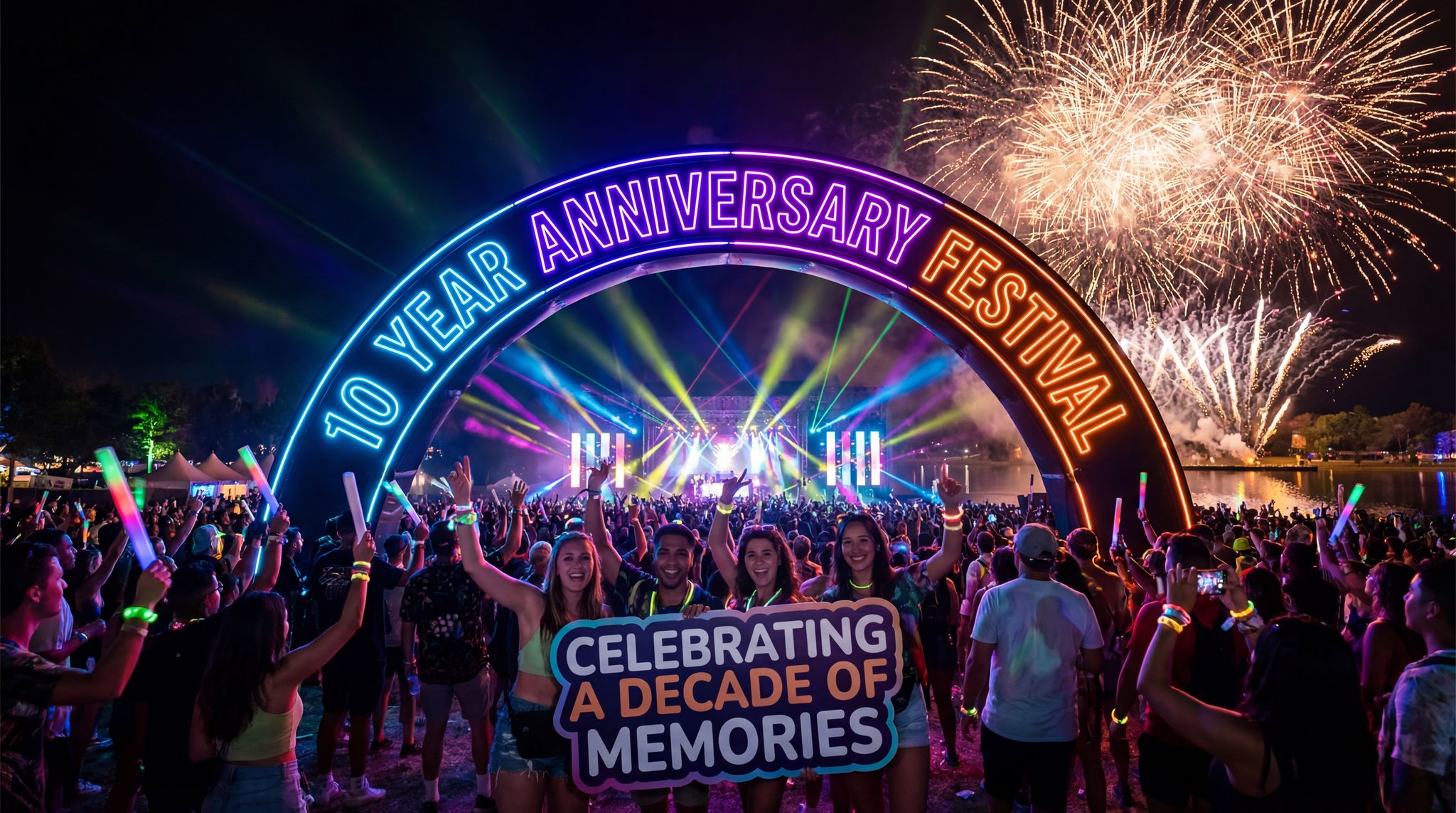
Every festival has a magic number – a capacity that defines its scale and atmosphere. For boutique festivals, that number might be around 1,500 attendees. Rather than viewing this as a limitation, successful festival organizers treat capacity as a creative constraint that can spark innovation. Around the world, boutique festivals are intentionally small-scale, with curated lineups and intimate atmospheres that prioritize quality of experience over quantity. By designing an event for human scale, a festival can offer something mega-events can’t: a close-knit community vibe and a premium experience born of deliberate choices.
Capacity as a Creative Constraint (Not a Ceiling to Fight)
In the rush of planning, it’s easy to equate growth with success – selling more tickets, expanding to bigger venues. But for a boutique festival, bigger isn’t always better. Embracing a 1,500-cap mindset means recognizing that your attendance cap is a feature, not a flaw. This mindset turns a fixed capacity into a fertile ground for creativity. Instead of asking “How can we squeeze in more people?”, ask “How can we make an unforgettable experience for this number of people?”
Many seasoned festival producers have found that intentionally capping attendance can enhance the atmosphere. For example, the organizers of Treeline Music Fest in Missouri deliberately aim for about 12,500 attendees on grounds that could fit 15,000. Their reason? They “want there to be space; we want that family environment,” a sentiment they emphasized when discussing the beauty of boutique festivals. In other words, they resist the urge to pack the venue to its limit, prioritizing comfort and community over sheer headcount. This principle holds even more true at the 1,500 scale – preserving elbow room, breathing space, and a relaxed crowd density.
Treating capacity as a design constraint also guides budgeting and planning. With a set number of tickets, you can calculate realistic revenue and plan accordingly. Allocate resources to the things that matter most to an intimate crowd: great sound in a smaller venue, tasteful lighting that creates atmosphere without overwhelming, and comfortable facilities (from camping areas to bathrooms). It might mean you can’t afford five stages or a superstar headliner, but that’s okay – invest in a tightly curated lineup and unique programming that will resonate with your specific audience. In fact, having a modest budget can spur creative solutions. Local talent or rising artists might fit the vibe (and budget) better than expensive arena acts. Simple but thoughtful decor can transform a small venue, and clever use of space can make a limited site feel magical.
Turn Fans Into Your Marketing Team
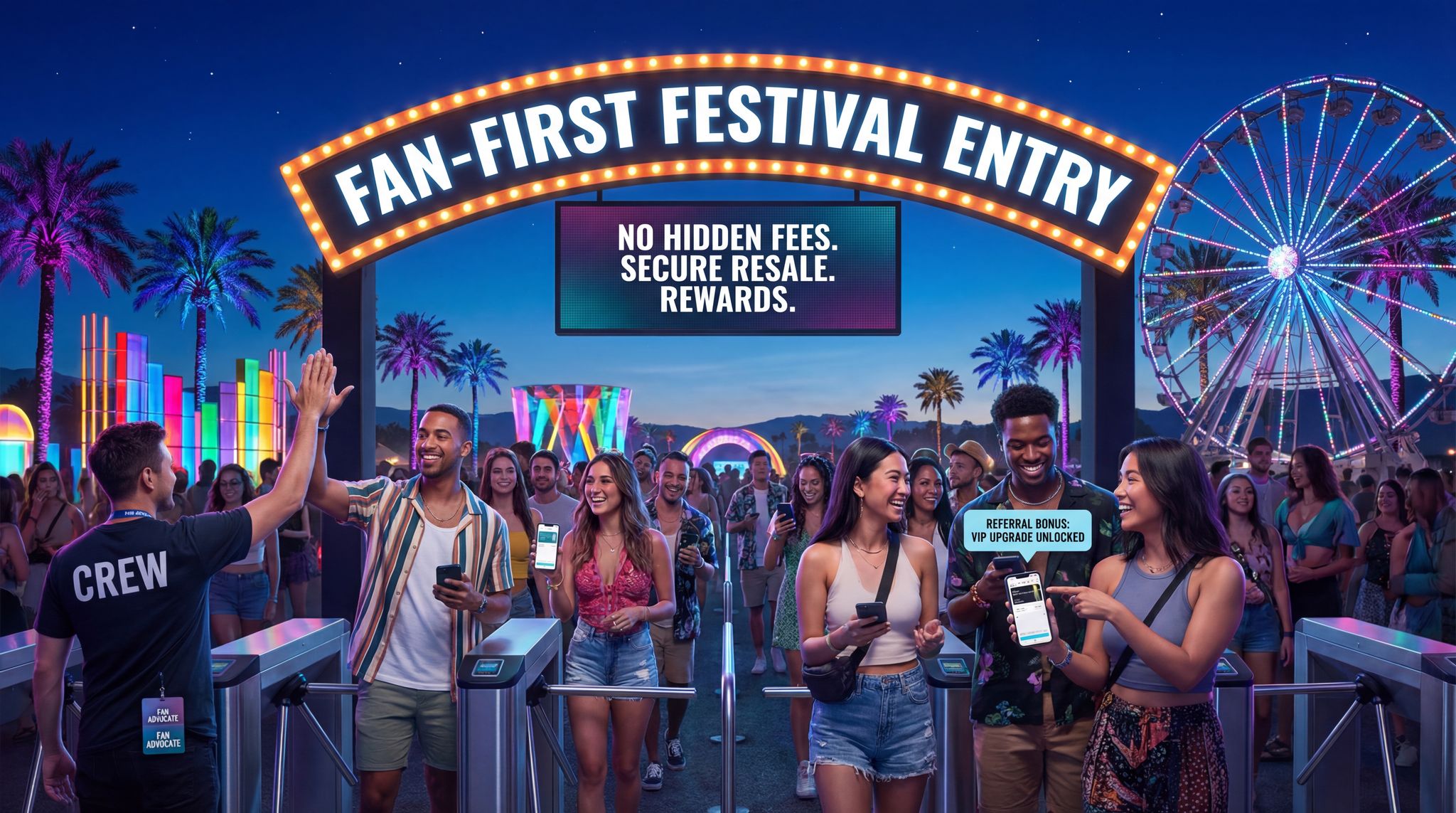
Ticket Fairy's built-in referral rewards system incentivizes attendees to share your event, delivering 15-25% sales boosts and 30x ROI vs paid ads.
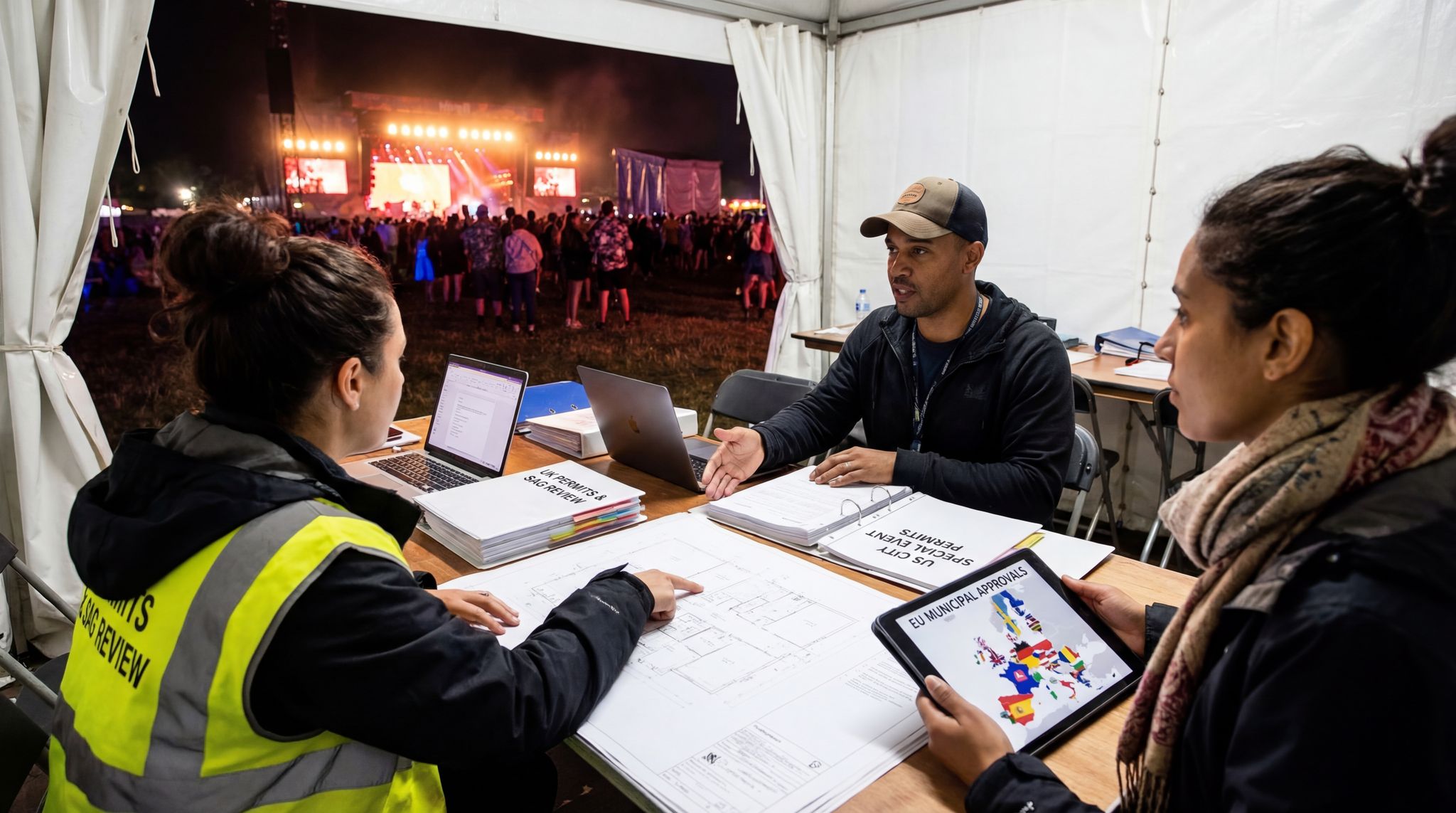
There’s also a risk management benefit to staying within an intentional capacity. Smaller numbers are easier to evacuate or shelter in case of sudden weather or emergencies, and you’re less likely to strain local infrastructure. Ensure your ticketing platform is configured to cap sales exactly at your limit – no “extra” tickets sold beyond capacity. Resist the temptation to oversell, even if demand is high. In the long run, maintaining that intimate scale will build your festival’s reputation as a premium, exclusive event. (Some festivals even create waitlists or pre-registration for loyal fans, turning the limited tickets into a hot commodity rather than a shortfall.)
Intimate Layout and Sightlines
Design your festival site with intimacy in mind. A 1,500-person crowd should feel together rather than scattered. That starts with venue selection: choose a site that comfortably fits your attendees without vast empty areas. It might be a section of a park, a farm, a small island, or a cluster of boutique venues – whatever the locale, it shouldn’t swallow a small crowd or conversely feel too cramped. Aim for a layout where wherever people stand, they can see and feel connected to the action and to each other. Clear sightlines to the main stage (or any focal point) are crucial – nobody at an intimate festival should be stuck watching a distant jumbotron or peering over heads without actually seeing the performers. Consider 360-degree stage setups or natural amphitheaters (hillsides, terraced terrain) that allow even those in the back to catch the show. When every face in the crowd is visible and the performers can see the audience too, it creates a two-way energy that large festivals struggle to achieve.
Planning a Festival?
Ticket Fairy's festival ticketing platform handles multi-day passes, RFID wristbands, and complex festival operations.
Beyond the stage, design the flow of your site so that attendees naturally cross paths and gather. With a smaller footprint, you can direct foot traffic through central hubs – a cozy food court, a bonfire pit, a shaded hangout area – rather than losing people down endless sprawl. This increases the chances of serendipitous run-ins and group conversations. You want your crowd to feel like they’re all at the same party, not fragmented. If you’re using multiple areas or rooms, keep them close together or visually connected so the festival feels like one coherent space. Avoid physical barriers that isolate pockets of attendees; instead use open fencing or creative landscaping so people can spot sights and sounds across the venue, sparking curiosity (“I can see the neon art installation from here, let’s go check it out after this act”).
Logistics are equally important to intimate design. One advantage of a smaller festival is the ability to virtually eliminate the misery of long lines. Plan for short queue lengths at entry gates, food stalls, bars, and restrooms – these should be proportional to your attendance so that waits are minimal. For instance, a boutique festival in India, Magnetic Fields, caps its audience (around a few thousand) and in return attendees enjoy no hassles of a queue at the bars, no hustling to get front row, and even clean restrooms readily available, a level of comfort highlighted in Vogue India’s review of the festival. That kind of comfort leaves a strong impression. To achieve this, crunch the numbers on service ratio: if 1,500 people are onsite, how many bar staff and food vendors do you need to keep lines moving? It might be fewer than a big fest would need, but don’t underestimate – a couple of understaffed beer taps can still create a bottleneck that frustrates 10% of your whole crowd. Use the small scale to your advantage by spacing out amenities: for example, position two smaller bar points on opposite ends of the grounds rather than one big bar, so that no one has to trek far or stand waiting.
Likewise, facilities like toilets and water stations should overshoot the demand. Fewer people means it’s actually affordable to provide a very comfortable ratio of toilets-to-attendees – do it, and tout it. Nothing says “premium experience” like never having to stress about basic needs. And when people aren’t spending time in lines or walking long distances, they have more time and energy to enjoy the festival itself.
Talkable moments can also be a part of your site design. Create visual or interactive focal points that invite conversation. This could be a piece of art so striking that people gather around and chat about it, or a small courtyard stage where surprise pop-up performances happen. Because your crowd is limited, if something cool happens in one corner of the site, word of mouth will spread fast and everyone who’s interested can come experience it. Think of these as “Easter eggs” in your festival layout – a hidden speakeasy bar in a barn, a mural that live-paints over the weekend, a giant puppet that roams at a set time – little elements that delight people and give them stories to tell. These moments don’t have to be expensive; they just have to be creative and suited to the scale.
Data-Driven Event Marketing
Track ticket sales, demographics, marketing ROI, and social reach in real time. Exportable reports give you the insights to make smarter decisions.
Fostering a Close-Knit Community
One of the greatest strengths of a boutique festival is the ability to turn a crowd of strangers into a community. At 1,500 people, attendees will naturally recognize familiar faces by day two – and you can encourage that dynamic intentionally. Many small festivals find that they start to feel like a family gathering of sorts, where attendees bond deeply with the experience and with each other. In fact, research backs this up: one industry study found that 78% of people at smaller festivals felt a stronger sense of community compared to large-scale events, according to insights on the rise of boutique music festivals. That sense of belonging not only keeps people happy on-site, it often turns first-timers into loyal returnees year after year.
To nurture this atmosphere, pay attention to the human touches. Your staff and volunteers are not just workers; at a boutique event they’re part of the experience and culture. Train your crew to greet attendees in a personable way – ideally by introducing themselves by name and role. For example, a security staffer might say “Hi, I’m Alex, part of the security team – hope you’re having a great time!” instead of just barking orders. Front gate teams can welcome people with a smile, maybe even handing out a program while saying “Welcome to [Your Festival Name], we’re glad you’re here.” These small acknowledgements make each guest feel seen as an individual, not an anonymous face in a sea of thousands. It’s much easier to do when your crowd is in the hundreds, so make it a hallmark of your event’s hospitality.
Need Festival Funding?
Get the capital you need to book headliners, secure venues, and scale your festival production.
Another approach is to create spaces and activities that bring people together. Communal seating areas, family-style dining tables in the food court, or morning group yoga sessions can get attendees mingling organically. Some niche festivals even organize ice-breakers like costume days, scavenger hunts, or camp-wide games that get people talking to those outside their friend group. The idea is to break down social barriers and encourage new connections. At small capacity, attendees will keep bumping into the same folks at the main stage, in workshops, and by the coffee stand – eventually faces turn into friends. The people who come will be like-minded, which reinforces the camaraderie.
Your role as a festival organizer is also to model the community vibe. Be accessible – perhaps host a welcome toast or an opening ceremony where you (the festival team) address the attendees directly, setting a warm, inclusive tone. At boutique festivals, it’s not uncommon for the organizers or artists to walk among the crowd, watch shows from the audience side, or join the after-party. This leveling of hierarchy (as opposed to big festivals where staff and headliners stay behind velvet ropes) makes the event feel special. Attendees might be thrilled to find themselves dancing next to a band member who played earlier, or chatting with the festival director by the food truck. Those personal interactions become cherished memories for fans.
Remember to also be inclusive and culturally sensitive. Intimacy at scale works best when everyone – from various countries, cultures, and backgrounds – feels welcome in the “family.” Train staff to be respectful and aware of different customs or needs (especially if your festival draws an international crowd). Smaller scale means you can afford to pay attention to individual needs: for example, one U.S. festival even added courtesy shuttle carts for attendees with mobility challenges and a dedicated nursing mothers’ tent for young families – thoughtful amenities that are rarely seen at large festivals. By thinking of the crowd as a small community, you naturally plan things like accessibility, comfort, and personal safety with greater care. This might include designating a quiet camping area for those who need rest, or having volunteers act as “community hosts” checking on people and keeping the vibe positive.
At the end of the day, the goal is for attendees to leave feeling like they were part of something. When someone can say “That festival felt like home – strangers treated me like a friend,” you’ve succeeded. As one enthusiastic small-festival attendee described it: “for that one weekend, you truly feel like you’re part of a family of like-minded people… It’s near impossible to feel that way when you’re 1 in 20,000,” a sentiment echoed in articles listing reasons why smaller festivals are better. That emotional resonance is the ultimate payoff of designing for intimacy at scale.
Streamlined Programming (No FOMO Allowed)
With limited capacity and a tight-knit crowd, how you program your festival events (music stages, workshops, screenings, etc.) will significantly impact the experience. A key principle for the 1,500-cap mindset is to limit parallel programming – in other words, don’t schedule so many things at once that your attendees are constantly split up or plagued by FOMO (Fear of Missing Out). At a giant festival, having eight stages running at the same time is standard, but in a boutique festival it can backfire. If half your audience is watching one act on a small stage and the other half is across the venue at another, you dilute the energy and people feel they’ve “missed half the festival.”
Instead, consider a streamlined schedule where each performance or activity has its moment without major competition from elsewhere. Many successful small festivals operate with just one or two stages precisely to avoid those painful choices. For instance, some intimate music festivals have no overlapping sets for headliners – every attendee can see the big acts if they want, and those become collective, unifying moments. Australia’s Meredith Music Festival (albeit a bit larger than 1,500 capacity) is famous for its single-stage format, meaning the entire crowd experiences each act together, day or night. Attendees often rave about the cohesion this creates: you’re never torn between two favorite bands, and you share the exact same musical highlights as everyone else around you.
If multiple stages or areas are necessary (for example, different genres or a workshop tent versus a main stage), stagger the schedule to minimize direct conflicts. Perhaps the acoustic stage only runs in the afternoon before the EDM stage kicks off late evening, or your film screenings happen in the morning and don’t overlap with headline concerts at night. The aim is that an enthusiastic guest never has to choose between two “must-see” attractions at the same time. Not only does this reduce FOMO, it also encourages fuller audiences at each activity – a win-win for performers and attendees alike.
Keeping the choices deliberate and limited can actually enhance discovery and relaxation. At massive festivals, attendees often run around with a spreadsheet-like agenda, trying to catch half of one set and half of another, feeling anxious about missing things. You want the opposite: a laid-back pace where people can stumble upon new experiences without stress. Having dozens of acts on multiple stages sounds exciting in theory, but in practice it often forces attendees to make painful choices and endure marathon hikes between stages, which diminishes the fun. A small festival spares your fans that exhaustion and decision fatigue. Use that to your advantage in marketing: frame your festival as an escape from the constraints of big events – a place where nobody has to run from stage to stage or stand in mile-long lines for a brief set. Instead, everyone can slow down and savor the moment.
Moreover, an intimate schedule allows you to orchestrate special moments that everyone can attend. For example, schedule a camp-wide toast or a midnight surprise show when nothing else is going on, so the whole festival comes together. Some boutique festivals end the weekend with a single grand finale – like all musicians coming together for a jam, or a farewell ceremony – creating a memory the entire audience shares. If you had stages running independently, you’d never gather everyone like that.
Finally, curate your content with the small audience in mind. Gauge the interests and demographics of your 1,500 attendees and tailor the programming mix to them. You might not need genre diversity as broad as a huge festival – sometimes a strong theme or niche focus works better for a boutique event (for example, a 3-day folk and blues festival that attracts a passionate folk music community, or a comic convention purely for indie comic artists and 1,000 devoted fans). The people who come will be like-minded, which reinforces the camaraderie. And if you do mix genres or types of activities, provide a balance rather than an overload. Think of your festival schedule as a carefully designed menu at an intimate restaurant – a few excellent choices for each “course” of the day, not an all-you-can-eat buffet.
Deliberate Choices Make Small Feels Premium
When every decision is mindful of maintaining intimacy, a small festival can deliver a premium experience that rivals or even surpasses larger events. “Small” should never mean lesser quality – in fact, it can mean the opposite: exclusive, high-touch, and attention to detail at every turn. By being deliberate with choices, festival organizers can turn a modest capacity into a selling point that attendees are willing to pay top dollar for.
One way to achieve this is by upgrading the amenities and perks to a level that would be financially or logistically impossible at scale. At a 1,500-person festival, you could feasibly offer things like real ceramic plates in the VIP dining area (since you only have 100 VIPs, for example), or free water refill bottles for all attendees without breaking the bank. You might have the budget to splurge on nicer restroom trailers and showers, knowing they’ll stay clean with fewer users. These touches get noticed. At a boutique event in a Rajasthani palace, for example, Magnetic Fields Festival markets itself as a luxury music festival – it started with only 500 guests and, even as it grew to a few thousand, it kept ticket quantities limited and amenities lavish. That exclusivity ensures the event never feels overcrowded; attendees enjoy plenty of space, easy stage access, and an elevated comfort level.
Deliberate programming choices also contribute to a premium feel. Focus on quality partnerships and content rather than sheer volume. This might mean hand-picking food vendors that offer gourmet or local specialty cuisine instead of generic festival fare. It could mean scheduling fewer but longer sets so artists can really connect with the audience (perhaps even doing Q&A or storytelling during the set). If it’s a food or wine festival, perhaps limit the number of vendors and give each a spotlight session or chef’s demo stage, so attendees can truly savor each offering without rush. When choices are curated thoughtfully, attendees perceive the event as well-organized and purpose-built for their enjoyment, rather than a chaotic fairground.
Exclusivity can be a powerful tool as well. Knowing that tickets are limited and that the experience is carefully crafted makes people value it more. Use this to your advantage in marketing: highlight the intimate capacity (“Only 1,500 tickets available” or “An exclusive gathering of music lovers”) and emphasize elements like direct artist engagement, beautiful boutique venues, or community vibe – things mega-festivals cannot deliver at scale. Many boutique festivals around the world have loyal fanbases willing to travel internationally for that special small-festival charm – whether it’s a secluded beach festival in Indonesia with 500 people dancing barefoot, or a mountain town film festival in Colorado where attendees and filmmakers rub shoulders at local cafes. These events feel premium because they are inherently limited, curated, and authentic.
Remember, making small feel premium isn’t about adding unnecessary luxury for the sake of it – it’s about being intentional. Every aspect, from the schedule to the spatial design to the customer service, is done with care. There’s no filler, no “that’s just the way we always do it” – each element exists because it enhances the experience for a festival of your scale and character. When attendees notice that thoughtfulness, they respond with appreciation (and often, great online reviews and word-of-mouth praise). They’ll say things like “Every detail was attended to” or “You can tell this festival’s organizers really care about the community.”
Finally, learn from both successes and setbacks. The boutique festival approach is still evolving, and even the most experienced producers encounter challenges. Maybe you tried an ambitious art installation one year that fell flat because it didn’t engage people as expected – use that as a lesson to design more interactive or accessible experiences next time. Or perhaps a cost-cutting measure (like fewer toilets or cheaper sound equipment) led to complaints; that’s a sign that in a small setting, every shortfall is more noticeable, so quality must come first. On the flip side, take note of what delights your attendees the most. Do they rave about the venue’s natural beauty? The personal touch from staff? The lack of crowds at the barrier for their favorite band? Whatever it is, double down on those strengths. Over the years, a boutique festival can develop its own traditions and unique identity – those “talkable moments” that people eagerly share – by consciously iterating and refining the intimate experience.
In summary, designing for intimacy at scale means always considering the human scale of your event. Capabilities that might be afterthoughts at a giant festival (like sightlines, queue times, personal hellos, or schedule conflicts) become central design elements when your crowd is small enough to care about each one. The reward is an event where everyone in attendance feels like a VIP of sorts – known, appreciated, and fully engaged. Small feels premium when every choice is deliberate and centered on creating a one-of-a-kind atmosphere.
Frequently Asked Questions
Why is limiting festival capacity to 1,500 attendees beneficial?
Limiting capacity to around 1,500 attendees acts as a creative constraint that enhances atmosphere and community. This scale allows organizers to prioritize quality over quantity, ensuring comfortable crowd density and easier risk management. It enables a premium experience where resources focus on amenities like better sound and facilities rather than costly headliners.
How should organizers design a boutique festival site for intimacy?
Organizers should select venues that fit the crowd size without vast empty spaces, ensuring clear sightlines to the stage from all angles. The layout must direct foot traffic through central hubs like food courts to encourage serendipitous encounters. Positioning amenities to minimize queue lengths helps attendees feel connected rather than fragmented.
How can boutique festivals foster a close-knit community vibe?
Boutique festivals foster community by encouraging staff to introduce themselves by name and creating communal spaces like shared dining tables. Organizers and artists often walk among the crowd, breaking down social barriers. Research indicates that 78% of attendees at smaller events feel a stronger sense of belonging compared to large-scale festivals.
What is the best programming strategy for intimate festivals?
A streamlined schedule with limited parallel programming works best for intimate festivals to prevent FOMO (Fear of Missing Out). Using a single-stage format or staggering set times ensures attendees never have to choose between major acts. This approach allows the entire crowd to share the same musical highlights and reduces decision fatigue.
How does a limited capacity create a premium festival experience?
A limited capacity allows organizers to invest in high-touch details like ceramic plates in VIP areas, clean restroom trailers, and curated food vendors. By capping ticket sales, festivals can offer exclusive perks and ample personal space that mega-events cannot provide. This deliberate attention to detail transforms a small scale into a luxury asset.
What are the logistical benefits of capping festival attendance?
Capping attendance significantly reduces wait times for entry, bars, and restrooms, eliminating the misery of long lines found at large events. Smaller crowds are easier to evacuate during emergencies and put less strain on local infrastructure. This scale allows for a comfortable ratio of staff to attendees, ensuring efficient service and a relaxed atmosphere.