

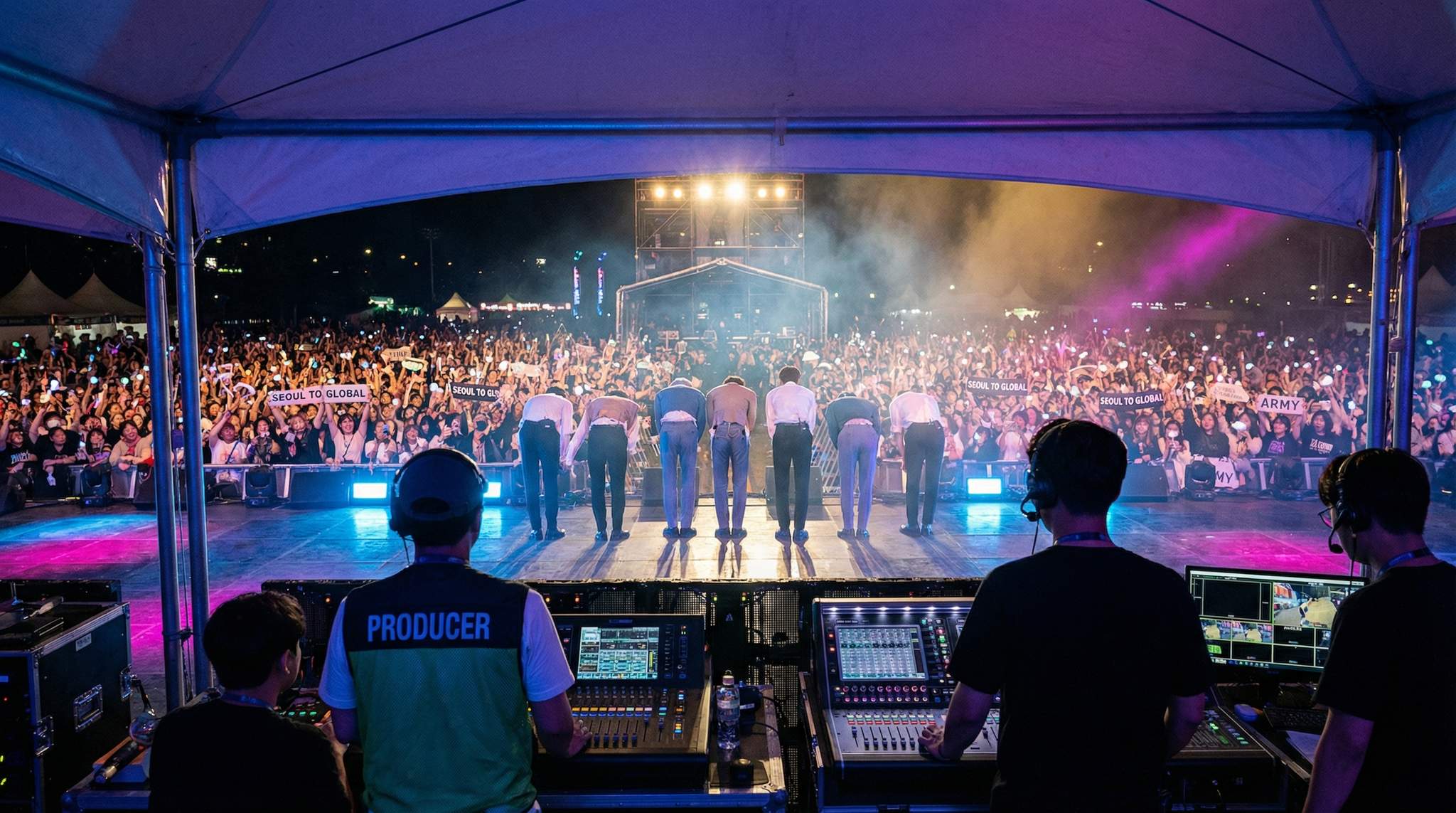
The Global Rise of K-Pop Festivals
The Global Fan Army Phenomenon
K-pop has transformed from a Korean subculture into a worldwide movement, and festival producers are taking notice. Major music events around the globe now feature K-pop acts alongside Western headliners (www.koreatimes.co.kr), and dedicated K-pop festivals have exploded in popularity. Global fan “armies” – like BTS’s ARMY or BLACKPINK’s Blinks – are renowned for their intense devotion. These fans travel internationally for their idols, camping overnight for prime spots and flooding social media with every moment. For example, KCON in Los Angeles drew 140,000 attendees from around the world in 2023 (www.ajupress.com), up from 90,000 the year prior, while streaming the event to millions more online. And in a historic milestone, BLACKPINK became the first K-pop group to headline Coachella in 2023 (cnalifestyle.channelnewsasia.com), proving that K-pop fandom is a global force even on Western festival stages.
Understanding this phenomenon is critical. K-pop fans are highly organized, tech-savvy, and passionate – they’re known to form fan clubs that coordinate travel, line up days in advance with numbered queue systems, and even coordinate fan projects (like synchronized banner displays or charity drives) during shows. Unlike casual festival-goers, K-pop fanbases treat these events as once-in-a-lifetime pilgrimages. This means a K-pop festival experience must meet sky-high expectations for both spectacle and personal connection.
K-Pop Festivals vs. Traditional Music Festivals
K-pop festivals differ significantly from typical multi-genre events. A traditional rock or EDM festival might have fans wandering between stages, but K-pop events tend to revolve around a single main stage schedule with multiple idol groups performing full showcase sets. Timing and transitions are tightly scripted – there’s often less downtime and more emphasis on produced segments (talks, games, encores) tailored to fan interaction. Production value is paramount: K-pop shows feature intricate choreography, elaborate costumes, and precision staging comparable to Broadway productions. This means festival producers must deliver flawless sound, lighting, and staging to match what fans see in arena tours.
The audience profile also sets K-pop festivals apart. Attendees skew younger (teens and 20s), predominantly female, and extremely active on social media. They often bring official light sticks, wear fandom merchandise, and know coordinated fan chants for each song by heart. By contrast, a typical music festival might have a mix of casual listeners – K-pop festival-goers are deeply invested in every act on the lineup. Fan behavior can be intense yet orderly: expect ear-splitting screams, unified singing in Korean, and waves of coordinated neon light sticks. On the flip side, younger audiences mean producers must plan for minors on-site – implementing measures like clearly marked meeting points for lost teens and guardians, and adjusting security and medical plans accordingly (www.ticketfairy.com). Experienced festival organizers note that anything from lost-child protocols to stricter ID checks for 18+ areas must be in place when catering to an all-ages K-pop crowd (www.ticketfairy.com).
Authenticity and Cultural Immersion
One key to success in this niche is delivering an authentic K-pop experience no matter where your festival is held. K-pop fans are incredibly savvy – they watch Korean music shows, follow idol vlogs, and know when something feels “off-brand.” The most successful K-pop festivals outside Korea embrace Korean culture and language as part of the event. This might mean incorporating Korean signage and greetings, hiring bilingual MCs to banter on stage in both the local language and Korean, and offering Korean food and pop-culture booths on-site. At KCON and similar events, daytime convention programming showcases Korean cuisine, K-beauty tutorials, K-drama screenings, and dance workshops. These touches celebrate the broader Hallyu (Korean Wave) culture and make fans feel like they’re stepping into the heart of Seoul’s music scene.
Authenticity extends to how artists are presented. Fans want the festival to treat their idols with the same reverence and production quality as a Korean concert. This might involve following Korean concert traditions – for instance, having a formal red carpet event where idols greet fans and media, or ensuring each group gets a proper encore and group bow at the end of their set. Even small details matter: using honorifics when introducing artists (e.g., calling them “Sunbaenim” or respected seniors if appropriate), respecting cultural norms like not bringing artists on stage before the audience is ready, and avoiding scheduling mishaps (like overlapping performances) that are unheard of in idol concerts. Producers who prioritize these nuances show both fans and Korean partners that they “get it,” building trust through cultural respect. In short, don’t treat a K-pop festival like just another EDM night – immerse attendees in the full K-pop universe.
Partnering with Korean Entertainment Agencies and Labels
Navigating Talent Booking and Idol Agency Contracts
Booking K-pop artists is a fundamentally different process than hiring typical festival acts. Korean entertainment agencies (like HYBE, SM, YG, JYP, etc.) tightly manage their idol groups’ schedules, image, and technical requirements. To secure artists, festival producers often must work through these agencies or their international partners. Start the booking process 12–18 months in advance – far earlier than a domestic act – to accommodate lengthy discussions and the agencies’ internal decision-making. Keep in mind that many top K-pop acts plan world tours and comebacks (album release promotions) well ahead; your festival might need to fit between those commitments.
When approaching an agency, come prepared with a professional proposal that highlights your festival’s credibility, audience size, and how it will benefit the artist’s exposure. Expect detailed contracts covering not just fees, but also travel arrangements, promotional obligations, and production specs. Korean labels are known to provide extremely detailed riders – for instance, specifying the exact stage dimensions needed for choreography, the number of rehearsals, catering (often including Korean meals or specific dietary requirements for the group), and even what languages the MC should use on stage. It’s common for agencies to request final approval on promotional materials that use the artist’s name or image.
Be ready to negotiate in a culturally sensitive way. In Korea, business interactions may be more formal – use titles and last names unless invited otherwise, and show great respect for their artists’ “brand.” Some agencies might offer package deals (e.g., a headliner idol group plus a rookie group from their roster) which can be cost-effective. Others will insist on their group being the final act of the night if they are the senior artists. Be aware of any inter-agency dynamics – for example, if you plan to invite two groups whose agencies are direct competitors, schedule carefully to avoid conflicts or perceived slights. Above all, maintain a reputation for integrity: word travels fast in the K-pop industry. If you promise VIP treatment or specific technical capabilities, deliver on it. The barriers between Western promoters and K-pop labels have come down in recent years as high-level agents broker more deals (www.koreatimes.co.kr), but trust is still earned one successful show at a time.
Cultural Etiquette and Communication with Korean Partners
Cultural nuance can make or break these agency relationships. In Korean business culture, hierarchy and respect are paramount. When meeting label executives or idol managers, it’s customary to exchange business cards with two hands, address people by official titles, and show deference to senior figures. Seemingly small gestures – like learning a few greetings in Korean (annyeonghaseyo for hello, kamsahamnida for thank you) – go a long way in building rapport. Many international festival producers hire a Korean cultural consultant or liaison to navigate these expectations smoothly.
Language barriers are an obvious challenge. Always have professional interpreters for meetings and on-site for show days. This includes translation for technical discussions: your production team and the group’s choreographers or stage director must understand each other perfectly when adjusting lighting cues or stage blocking. Translate key documents (schedules, stage diagrams, safety protocols) into Korean for the crews. During showtime, consider having a bilingual stage MC who can address Korean staff or artists in their language when needed (e.g. explaining a delay or technical issue). Miscommunication can lead to serious mishaps – one anecdote veteran producers share is a K-pop group nearly walking onstage early because a local stage manager’s cue in English wasn’t understood by the Korean crew. Prevent mistakes by double-confirming everything in both languages.
Another aspect of etiquette is how you handle the idols and their entourage on site. K-pop groups often travel with large teams – managers, label reps, hair and makeup stylists, security, etc. Show respect to these staff as extensions of the artist. For example, it’s polite to offer the group’s managers a quiet workspace and quick access to decision-makers on your team (they will be relaying any issues from the idols). Avoid any behavior that could be seen as disrespectful or invasive to the idols’ privacy – no impromptu backstage selfies or bringing unvetted people into the green room, for instance. Some agencies have strict rules that festival staff should not directly approach or touch the artists without permission (especially important around all those hi-touch events – more on that later). By demonstrating cultural awareness and professional decorum, you build a reputation as a trusted partner, increasing the likelihood that Korean agencies will work with you repeatedly.
Strategic Early Planning and Timelines
Because of the complexities involved, organizing a K-pop festival requires meticulous long-term planning. Industry veterans recommend laying out a detailed timeline for all critical milestones. Below is an example of a high-level planning timeline for a K-pop festival involving multiple idol groups:
| Timeline | Key Planning Milestones |
|---|---|
| 12–18 Months Out | • Secure venue and dates (avoid clashing with big K-pop tours or Korean holidays). • Begin conversations with Korean agencies – send proposals and gauge artist availability. • Draft budget including artist fees, production, travel, insurance, and contingencies. |
| 9–12 Months Out | • Finalize headline artists and sign contracts with agencies. • Initiate visa application process for artists and crew (build in extra time for approvals). • Outline production needs from each artist’s rider – start sourcing special equipment or staff (e.g., bilingual show caller, Korean catering). |
| 6 Months Out | • Announce festival and lineup teaser to begin marketing hype, especially through K-pop fan channels. • Open early-bird ticket sales or fan club pre-sales (coordinate with artist fan clubs for verified access if applicable). • Confirm key suppliers: stage and AV companies that can meet K-pop specs, interpretation services, security firms experienced with high-energy crowds. |
| 3 Months Out | • Release full schedule and set times; communicate any VIP programs (hi-touch, meet-and-greet) and how to obtain passes. • Lock in travel logistics: flights from Seoul or other origins, local ground transportation, hotel room blocks (ensure hotels understand any special needs, like late-night meals for jet-lagged performers). • Conduct safety planning meetings with local authorities (discuss crowd control for expected fan lining up, emergency plans, etc.). |
| 1 Month Out | • Double-check all visa statuses and work permits; have contingency plans for any delays. • Final production run-through: share stage plots and cue sheets with each artist’s team, schedule technical rehearsals and soundchecks for each act (often idols will want a run-through of at least one or two songs). • Train staff and volunteers on cultural protocols and fan management. Distribute a festival handbook including basic Korean phrases, etiquette, and specific do’s/don’ts from the agencies. |
| Festival Week | • Welcome artists upon arrival – assign bilingual liaisons to each group to assist 24/7. • Execute a full dress rehearsal if possible, especially for complex collaborative stages or finale involving multiple groups. • Monitor social media for fan feedback or rumors (e.g., queue issues, program changes) and address promptly via official channels to keep information clear and accurate. |
This timeline underscores the need to start early and stay adaptable. K-pop festivals involve more moving parts than most events – from international paperwork to syncing multiple teams from different cultures – so padding the schedule is critical. For instance, if visas are delayed or an agency wants to push an announcement date, a well-planned timeline ensures you have the flexibility to adjust without derailing the entire project.
High-Tech Staging and Production Design for Idols
Designing Stages for Choreography and Spectacle
K-pop idols are famous for their tightly synchronized choreography and visually stunning performances, so your stage design must accommodate these demands. Stage layout is crucial: most K-pop concerts feature a wide main stage with a long protruding runway or extended “T” stage that allows artists to walk out closer to fans. If your venue can support it, consider installing a thrust stage or catwalk – idol groups will use it extensively for dance breaks and to engage different sections of the crowd. Also ensure the stage is spacious and uncluttered by cables or obstructions. With 7, 9, or even 13 members dancing in formation, there’s no room for tripping hazards. All pyrotechnics, monitor wedges, and camera tracks should be positioned with choreography in mind, often recessed or off to the wings. It’s wise to get each group’s choreographer or stage director to sign off on your stage dimensions and layout during advance so there are no surprises show day.
Invest in a professional stage floor that can handle intense dancing. Idols often perform in sync on slick surfaces, dropping to their knees or doing slides; a high-quality dance floor (like Marley or similarly smooth surfaces) laid on the stage can prevent injuries and improve their performance. Additionally, plan for quick set changes – K-pop groups may bring their own backdrops or props for their set. Design modular stage elements that can be swiftly moved by stagehands in the dark (rehearse these transitions). Some festivals use rolling risers so one group’s band gear or props are set up backstage and rolled on as soon as the previous act finishes. The goal is to minimize downtime, keeping the energy flowing while ensuring each act’s staging needs are met.
Advanced Audio-Visual Tech and Effects
High production value is a hallmark of K-pop. Fans expect huge LED screens, dynamic lighting, special effects and maybe even augmented reality visuals. Many K-pop acts travel with custom LED content – intricate videos timed to their songs – so your production team should coordinate to display those on the big screens. LED backdrops and IMAG (live camera feeds) need to be high-definition and lag-free; fans will notice if the video sync is off by even a fraction during a dance move. Work closely with each artist’s creative directors: request their video content well in advance and test it on your systems. Some idol groups also use unique aspect ratios or screen shapes in their solo concerts (for example, a vertical screen for a dramatic effect). While you might not replicate every detail, try to accommodate their signature elements where feasible to maintain authenticity.
Lighting is another area where K-pop shows shine. Be ready for rapid-fire cues, bold color themes, and lots of moving lights. Programmable intelligent lighting systems are a must – it’s common to have dozens of moving head fixtures, strobes, and even laser lights choreographed to the music. If you can, bring on a lighting designer who has experience with K-pop or similar pop spectacles; they will know how to highlight choreography formations and execute those breathtaking moments (like the sudden blackout before a dance break or the member spotlights during ballads). Also, allocate time for each act’s lighting programmer to do a focus and cue check during soundcheck – many will come with a show file or specific lighting requests from their tour.
Consider integrating cutting-edge effects to wow the crowd. For instance, some high-end K-pop productions have used augmented reality (AR) or mixed reality on screen – like giant virtual creatures or effects appearing on the broadcast/stream or screens for the audience (kevzhu.com). While AR requires specialized systems (and possibly fans using an app), even simpler tech can delight fans: think confetti cannons, CO? jets during dance drops, and flame pyrotechnics for dramatic final choruses. Just ensure all special effects are safe, permitted, and rehearsed – nothing should surprise your artists on stage. If you plan something like fireworks or drone lights, clear it with the agencies and brief the performers so they know to expect it.
One unique element in K-pop concerts is the use of synchronized light sticks. Nearly every group has an official Bluetooth-enabled light stick that fans bring, which can be centrally controlled to flash or change color in sync with music. Implementing this at a festival where multiple groups perform is complex (each fandom’s device is keyed to their own group’s app). Some festivals like KCON distribute their own event-light sticks or wristbands to all attendees to achieve unified effects. If budget allows, partnering with a company to provide synced LED wristbands or coordinating with the groups’ light stick control systems can create magical moments – imagine an entire arena pulsing pink for one group and switching to blue for the next. If that’s not feasible, at minimum liaise with each artist’s team about their light stick – they might want to trigger certain colors during their set. Make sure your RF environment (radio frequencies) is managed so that those devices don’t interfere with your communications or vice versa.
Sound, Live Music, and Backline Considerations
Quality sound is non-negotiable – pop music with heavy bass, layered backing tracks, and live vocals needs a top-tier audio system. Use a renowned audio vendor and specify a line-array PA system capable of full-range sound for large venues, with additional front-fill speakers for the extended stage if you have one (so fans at the runway hear clearly). K-pop often uses backing tracks with guide vocals plus live singing on top. Ensure your monitor engineer is ready to provide in-ear monitor mixes for each performer; most idols use in-ear monitors (IEMs) instead of floor wedges to hear themselves and backing tracks. Have spare IEM packs and batteries on hand in case of sweat-out or frequency issues. It’s common for K-pop acts to travel with their own music director who will hand over the show’s audio files or even a ProTools session. Have the capability to run click tracks and backing tracks in sync with video cues if needed.
While many K-pop groups sing to track, some will have live musicians or at least live percussion for festival sets to hype the energy. Check in advance if any band members or instruments are coming. If a group has a live band component, you’ll need to provide backline (drums, keyboards, amps) per the rider or allow time for them to set up theirs. Quick line-checks between acts are vital – you might have only 15 minutes turnover. Plan to mic drum kits and instrument amps for one act, then strike them swiftly if the next act doesn’t need them. A capable audio crew with festival experience (who can patch and de-patch on the fly) is worth its weight in gold here. Also, consider the vocal mix: with multi-member groups often singing and rapping in tight unison, mixing their vocals can be tricky. If possible, use the same monitor and FOH engineers throughout the event, but invite each group’s sound director to sit in at FOH during their set to guide how vocals should sound (for example, balancing main vs. backing vocals, or applying vocal effects used in their tour).
Lastly, prepare for multiple language moments on the mic. Your MCs or artists may address the audience in English and Korean (and sometimes other languages if members are from e.g. China or Thailand). Ensure your audio team knows this is normal – don’t assume a sudden switch to Korean is a technical problem; it’s part of the show. If you’re recording or streaming, consider providing translations or captions for those at home, but in-venue, let the natural flow happen. Many international fans actually enjoy when idols speak their native tongue on stage – it adds to the authenticity – and the local attendees often learn common phrases. Embrace it by making sure every thank-you speech and fan shout-out is heard clearly, regardless of language.
Fan Engagement: Hi-Touch, Meet & Greets, and More
Hi-Touch and Meet-and-Greet Logistics
One signature feature that sets K-pop events apart is the hi-touch session – a meet-and-greet where lucky fans get to high-five or briefly greet their idols. Organizing a hi-touch (or its variation like a “high-wave” during pandemic times) requires precision and strong security. Typically, hi-touch events are ticketed as VIP upgrades or prizes for contest winners. To execute one smoothly, designate a specific controlled area, such as a sectioned-off room or tent adjacent to the main stage, ideally backstage but accessible without disrupting the main crowd. Only fans with the proper credentials (wristbands or numbered passes) should be allowed in this area, and they should be queued well in advance.
Coordinate closely with the artists’ management on the format and timing. Hi-touch sessions usually happen immediately after a group’s performance or at a scheduled time during the day before the main concert. Idols may be sweating and tired post-performance, so allot a few minutes for them to towel off and hydrate before rushing into a meet-and-greet. Security staff and translators must be on hand. A best practice is having two queues of fans funneling past either side of a long table where the artists stand or sit – each fan gets a few seconds to high-five each member. Enforce a strict no-photos, no-autograph rule (unless the event is explicitly a photo op or signing) to keep the line moving. It’s also wise to prohibit gifts or personal items in hand; fans should place bags aside to avoid delays or security risks. As an example, HallyuPopFest in London escorted VIPs from a red-carpet event straight to a hi-touch (“Hi-Wave”) with artists before the evening concert (viewofthearts.com), illustrating how scheduling these interactions requires choreographing fan and artist movement seamlessly.
Safety is paramount: ultra-passionate fans might get emotional or try to linger. Cheerful but firm staff should be positioned to gently usher each fan along after their quick interaction. Have water and maybe a chair ready for any fan who feels faint (it happens more often than you’d expect due to excitement). Also brief the idols on what to expect – some might be new to hi-touch events, so explain they should simply smile, greet, and keep the pace. Time allocation is critical; if 200 fans have hi-touch passes and each spends ~3 seconds per member of a 5-person group, that’s around 10 minutes total, but factor in transition time and breaks, you might schedule a 20-30 minute window. Always have a backstage manager with a stopwatch ensuring things run on time, because delays here can cascade into the main show schedule. Done right, hi-touch events create lifelong memories for fans and deepen their loyalty to both the artists and your festival.
Fan Activities, Contests and “Convention” Elements
Beyond the performances and meet-and-greets, K-pop festivals often incorporate daytime fan engagement activities – essentially blending in a fan convention vibe. These can include dance workshops, talent contests, panel discussions, and immersive exhibits. For instance, at KCON and other K-culture festivals, organizers set up cover dance competitions where fan crews perform K-pop choreographies on a side stage, with winners sometimes earning small prizes or even a shoutout from idols. Such contests energize the crowd and give fans their own moment of glory (openr.co) (openr.co). Other popular activations are fan art or fan merchandise contests (where fans design swag and the best designs get produced), K-pop trivia quizzes, and random dance play events (where a DJ plays K-pop songs and the crowd spontaneously dances the choreography together – a huge hit for engagement!).
Consider also “fan club booths” or zones. Many established K-pop fan communities will jump at the chance to host a booth where they can distribute free swag (like banners or ribbons in their fandom’s color) and recruit new members. You might coordinate with fan club admins to run these booths, creating a community feeling. It’s important to manage this process – have an application for fan groups to ensure they adhere to safety and content guidelines. But empowering fan communities on-site turns attendees into active participants rather than just spectators.
Another beloved feature is the red carpet or artist engagement panel. For example, some festivals hold short Q&A sessions or game segments with the idols earlier in the day for select audiences. This could be on a small stage where the group plays a simple game (like charades or answering fun questions about each other). Fans absolutely eat up these candid moments. If you include this, treat it like a mini-show: have a good bilingual MC, prep a few questions or games in advance (agencies will often vet these to ensure they’re appropriate), and mind the time. A 15-minute appearance can be more precious to fans than an extra song, because it shows the idols’ personalities.
Finally, cultural exhibits and vendors can round out the fan experience. Think of adding Korean street food stalls, K-beauty product demos, or even a try-on hanbok (traditional clothing) photo booth. Not only do these elements enrich the festival’s atmosphere, they also open sponsorship opportunities (local Korean restaurants or product brands might sponsor areas). KCON, for instance, hosts hundreds of booths from Korean companies, from cosmetics to tech, making the daytime expo as much a draw as the concerts (cjenm.com) (cjenm.com). For a festival producer, this means additional logistics – you’ll be essentially running a mini trade-show – but it can significantly enhance fan satisfaction and engagement time on-site. It also helps stagger arrival times; fans who come early for daytime activities will alleviate the rush later at main gates.
Managing Fan Merchandise and Memorabilia
Merchandise is a cornerstone of K-pop fandom. Fans are eager to buy official goods from their favorite groups as well as festival-branded memorabilia. Plan for robust merch operations to avoid chaos. This often means dedicating multiple merch booths – ideally at least one per major artist plus a general festival merch booth – or a centralized megastore with different sections. Large K-pop concerts in Asia sometimes even sell merchandise a day in advance or online pre-orders for pickup, to manage demand. While that may not always be feasible, do anticipate long lines and consider a ticketed system (e.g., giving out numbered tickets or time-slot assignments for the merch tent) so that fans aren’t spending the whole festival waiting to purchase a light stick or T-shirt.
Coordinate with each artist’s agency on merchandise sales rights. Some agencies will run their own merch stand with official tour goods, which can simplify things for you if they handle staffing and cash collection – but be clear on whether you take a revenue cut or if it’s purely their operation. Other times, you as the organizer might be responsible for staffing and selling the artist’s merch on a consignment basis. In either case, inventory management is critical. Have a secure storage area for stock, and implement a POS system that can handle fast transactions (including mobile payments common in Asia, like QR code pay, in addition to local payment methods). Ensure prices are clearly displayed in local currency and any relevant currency (many fans travel internationally and will appreciate a quick conversion reference).
Also, think about unique festival merchandise that doubles as great souvenirs: perhaps a limited-edition poster featuring all the groups, event-branded light sticks or glow bracelets, or even a commemorative photobook of the festival. These can become additional revenue streams. However, be mindful that idol merchandise will outsell everything – glow sticks, photocards, albums, and apparel of the artists are gold. Use insights from how other festivals manage artist merchandise booths (openr.co) to make this smooth: for example, have separate lines for people paying cash vs. card to speed things up, and staff who can answer questions about sizes or track inventory in real time (openr.co). Nothing’s more deflating for a fan than waiting an hour only to find the item they wanted is sold out, so update signage or queue workers if items run out.
One more tip: K-pop fans love collectibles. If you can, integrate something like random draw photocards or raffle tickets for spending a certain amount at merch. This not only encourages sales but adds an element of gamification. Some festivals also allow fan artists to sell unofficial merch in a controlled way (like an “Artists’ Alley” for fan-made posters or accessories), which can celebrate fan creativity. If doing so, set clear guidelines to avoid IP infringements and ensure content is appropriate. Overall, a well-managed merch operation not only boosts income but also becomes part of the event’s allure – fans will brag about their haul and thus promote your festival’s reputation.
Logistics for International Idol Groups
Travel, Visas, and Immigration
When your lineup features groups flying in from Korea (or other countries), logistical planning starts at the airport. As soon as artists are confirmed, begin the visa process. Arrange for O-2 or P-1 entertainment visas (in the US) or analogous work permits elsewhere, and use experienced immigration lawyers or visa processing agents. A cautionary tale: the KAMP LA festival in 2022 lost half its K-pop lineup just days before the event due to visa denials (www.nme.com), forcing a frantic reorganization and leaving thousands of fans disappointed. The lesson is clear – start visa applications early (several months in advance) and double-check every detail (correct paperwork, invitation letters, proof of return, etc.). It’s wise to have a contingency plan for each act in case of visa issues: maybe a local K-pop cover act to fill a slot, or extended sets by other performers, so the show can go on even if someone’s paperwork falls through.
Plan travel with comfort and punctuality in mind. Many idol groups have grueling schedules; they might land from a 12-hour flight just a day before performing. Whenever budget allows, book business class or premium economy for the artists and key staff – they’ll arrive far more rested (and you’ll get better performances) than if they’re cramped in coach. Coordinate with the agency on baggage: elaborate stage outfits, props, or fan gifts may be part of their luggage. If equipment needs to be shipped (say the group is bringing specialized LED costumes or instruments), factor in customs clearance time. Some festivals choose to charter a flight or at least a dedicated bus from a nearby hub airport to ensure the whole entourage travels together and arrives at the venue city smoothly.
Upon arrival, airport pickups should be discreet and secure. K-pop idols can attract huge crowds at airports if fans know their flight details. Work with local authorities for a private exit plan – this might mean meeting the group at the aircraft or tarmac with vehicles, or using a VIP lounge route, to avoid a possible fan mob in the arrivals hall. Professional security or police escorts are recommended from the airport to the hotel. A well-briefed security team can prevent incidents and also politely handle any fans who do appear (ensure they focus on safety, not roughness – an incident of overzealous security shoving fans can blow up online and reflect poorly on the festival). Remember to schedule jet lag recovery time if possible. If artists arrive only one day prior, try not to book extensive press or rehearsal that same day – let them rest. If multiple groups are coming, stagger their arrivals if you can, so you as a producer can personally greet each (Korean custom often involves a formal greeting with promoters). Making the artists feel welcome and cared for from the moment they land sets a positive tone for the entire event.
Accommodation and Hospitality
Choosing the right hotel and hospitality setup is another piece of the puzzle. Opt for a high-quality hotel that is accustomed to VIP guests, ideally with a private entrance or good security protocols. You may need entire floors or sections reserved to keep idols away from prying fans and paparazzi. K-pop groups usually travel with a team that can fill 10–20 rooms easily when you include members, managers, stylists, etc. Work out rooming lists in advance (some agencies have specific requirements like separating male and female staff, or needing suites for group practice or hair/makeup setups). It’s standard to provide a hospitality room or suite where makeup and hair can be done if the venue backstage is not sufficient – coordinate if the hotel can convert a conference room for this purpose.
Catering and meals should account for both Korean tastes and the practical schedule. Jet-lagged performers might want meals at odd hours. Consider hiring a Korean caterer or arranging meal deliveries from a local Korean restaurant so that at least one hot Korean meal a day is available – this small touch can greatly comfort a touring crew far from home. During the festival day, have plenty of familiar snacks and drinks in the green rooms (Korean brands of instant noodles, rice dishes, etc., alongside local options). And ensure bottled water and green tea are abundant. Assigning a hospitality liaison who speaks Korean to each group is an excellent practice. This person can handle any ad-hoc needs – whether it’s running out to get a preferred brand of coffee or coordinating a laundry pickup – and thus free the artists to focus on performing.
Don’t forget health and wellness logistics. Touring can be physically taxing. Have a medical professional or nurse on call (or at least on site) who can attend to artists if they feel unwell. Quiet, private spaces at the hotel or venue for relaxation are appreciated – maybe set up a private lounge with comfortable seating, dim lighting, and no access by anyone except that group. Some top groups travel with their own physical therapist or trainer; if not, offer massage services or a local gym access if they request it. During one festival, producers learned that providing a simple stretching and warm-up area backstage (with yoga mats and privacy screens) was a hit with one idol dance team – it showed you understand their routine and care for their preparation.
Finally, meticulously plan the daily schedule for each group: from wake-up call to soundcheck to performance to post-show meet-and-greet. Share this itinerary with their management well in advance for approval. Any local transport between hotel, press events, and venue should be timetabled with buffer time (traffic in many cities can be an unpredictable risk – always have a traffic escort or alternate route in mind). On show day, dedicate a staff member to each group (“artist handler”) armed with the schedule to escort them and keep things on track. The smoother their day, the better their mindset on stage – which ultimately makes for a better show for the fans.
Scheduling Rehearsals, Soundchecks, and Press
In a multi-act festival, carving out rehearsal and soundcheck slots can be challenging – but K-pop groups will likely insist on them. These idols are perfectionists about their staging and sound. Plan the festival day (or the day before, if possible) to allow each act a window on the main stage to do at least a partial run-through. Top headliners may want a full closed rehearsal of one or two songs with all effects. Work this into your production schedule and coordinate it with secrecy if needed (you might have to cover windows or clear the venue so fans don’t spy choreo or outfits). Schedule rehearsals in reverse order of performance if using the same stage, so the opening act rehearses first and the headliner last – that way the headliner’s gear can stay in place. However, be mindful that if an early act is inexperienced internationally, giving them a bit of extra tech time can be helpful too.
Simultaneously, you might juggle press events or fan engagements like hi-touch sessions as mentioned. Create a master grid of where each group needs to be hour-by-hour, and ensure you have enough personnel to guide them. Language interpreters should be present not only for the show but also for press conferences or interviews you arrange. If you’re holding a press conference, do it early in the day or the day prior, so it doesn’t interfere with show prep. Keep press commitments reasonable – agencies will pull their artists if they feel schedules are too tight or the artists look tired. Often for K-pop, press may consist of a short Q&A with approved media outlets, with all idol groups together or in a couple of separate sessions. Ensure the press area is secure and only authorized journalists (preferably those familiar with K-pop etiquette) are allowed; nothing derails a press conference like an off-putting question that upsets the idols.
One more thing: time discipline. K-pop events in Korea are famously punctual – if it says the concert starts at 7:00 PM, it starts at 7:00 PM. Emulate this precision. Communicate clearly to each act’s manager the exact minute they need to be ready side-stage. Have stage managers give a 5-minute warning in Korean if possible (“5 bun jeon!”, meaning 5 minutes before). If an artist is delayed (maybe a wardrobe malfunction or makeup taking longer), have a filler plan – perhaps an MC can engage the audience or play a teaser video – but try to avoid delays as the crowd will get anxious knowing how things should run. By planning rehearsals and movements rigorously, you set everyone up for an on-schedule, smooth show.
Local Crew, Vendors, and Transport Coordination
Transporting multiple artists and their teams through an unfamiliar city requires a tight ship. Whenever possible, hire drivers who have experience with VIP transport or tour buses. Ensure each vehicle (whether it’s sprinter vans, SUVs, or a tour bus) is assigned to a specific group and labeled discreetly (perhaps a code name) to avoid mix-ups. Have translators or bilingual guides ride with the idols’ vehicles to facilitate any immediate needs or reroutes. In cities with known traffic challenges, consider using police escorts or motorcade-style movement for the artist caravan – shaving off minutes stuck in traffic can be crucial for making that live broadcast slot or start time.
Now, working in a foreign country (from the perspective of Korean teams) means you as the festival producer need to bridge any infrastructure gaps. If your festival is in an area with limited production infrastructure (for example, a new market or developing country), plan early for equipment rentals and backups. Power is a prime concern: K-pop stages draw a lot of power for massive LED screens and lighting rigs. If the local grid is unreliable, bring in generators and voltage regulators, and have an electrical engineer on standby. In some cases, the performing groups might request their own technical rehearsals on critical equipment – e.g., testing the lifting platform or pyrotechnic sequence. Be prepared to accommodate these, even if it means overtime costs.
Engage local crew that understand both festival operations and have a bit of cultural briefing. A translator embedded with the stage crew and security teams during the show can prevent confusion if a Korean stage manager is urgently trying to get a message across. For example, if an idol shouts “jamkkanman!” (which means “one moment!”) into their comms, your crew should know they’re saying hold on, perhaps due to an in-ear issue. These fine touches can make collaboration smoother. Provide all crew a cheat sheet of common Korean phrases and honorifics, and encourage an atmosphere of mutual respect – the artists’ teams will likely show up with a very professional demeanor and expect the same.
Finally, consider freight and gear logistics. If you have multiple stops (say your festival is part of a tour, or you plan to do it annually in different countries), look into freight consolidation. Flying equipment from Seoul can be expensive; maybe you can rent regionally. Some enterprising festivals form alliances to share gear when K-pop acts tour through (e.g., one set of stage props can be shipped to serve two festival dates a week apart). This kind of resource-sharing not only saves money but also builds goodwill among promoters (k-popped.com). Even if it’s a one-off event, maintain an inventory list of all equipment and who provided it. K-pop agencies will sometimes bring their own cameramen or effects gear – make sure it goes home with them. Having a dedicated logistics coordinator to track all shipments (inbound and outbound), carnets for gear crossing borders, and transport schedules will keep the post-event breakdown as smooth as setup. Remember, how you handle the send-off (ensuring everyone catches flights, all gear is returned, all payments settled promptly) will determine the final impression you leave on these international partners.
Safety and Crowd Management for Fan Armies
Security Planning for High-Energy Fandom
Every festival needs good security, but K-pop events face unique crowd dynamics. You’ll be dealing with extremely enthusiastic, emotional, and predominantly young crowds. They aren’t generally aggressive or looking for trouble – on the contrary, K-pop fan crowds often police each other to behave out of respect for the idols – but their sheer excitement can lead to dangerous surges or inadvertent rule-breaking. A common scenario: when the gates open, fans sprint to get close to the stage (even if they have assigned seats, some will rush for a better view or to place banners). To manage this, consider a staged entry. For example, allow VIP ticket holders early entry in small groups, then general admission in waves, rather than a single mad rush. Utilize robust barriers (mojo barriers) at the front of stage and any thrust to prevent crushing. Given how fans often push forward when an idol comes to the stage edge, invest in extra barrier reinforcement and have security and medics positioned along the front ready to pull out anyone feeling unwell.
Brief your security team that these fans may burst into tears, hyperventilate, or attempt impulsive acts like jumping a barricade to hug an idol. The security response must be calm and trained – any heavy-handedness could not only cause injuries but also spark outrage in the community. Incidents spread quickly on social media; a video of security roughly handling a fan can tarnish your festival’s name in minutes. Instead, emphasize a soft approach: many festivals now hire some security staff specifically for their ability to communicate with young crowds (often younger, friendly-looking personnel who can relate to teens). These staff serve as a bridge – firm in enforcing rules but doing so in a kind manner. Additionally, consider hiring or training female security officers for sections where many young women will be (for instance, at barricades where fans may need assistance or checks). This can make fans feel more comfortable and diffuse tensions.
An often under-appreciated tactic is working with the fan community itself on security measures. Some festivals have experimented with fan ambassadors or volunteer marshals who help guide their peers (www.ticketfairy.com). For example, you might recruit trusted fan club members (with the blessing of the community) to act as liaisons – they won’t do physical security’s job, but they can help communicate in fan forums about do’s and don’ts, and even assist on-site by gently reminding fans to stay hydrated or not push. Empowering passionate attendees as on-site “fan ambassadors” not only aids crowd management but also builds a positive community vibe (www.ticketfairy.com). These ambassadors can wear special T-shirts and you can acknowledge them from the stage, turning safety into part of the fan experience rather than something adversarial.
Managing Queues, Camping, and Entry
K-pop fans are known for queuing early – very early. It’s not uncommon for fans to start camping outside a venue a day or two in advance to secure a spot in line for general admission floor access. While this shows dedication, it can lead to security and community headaches. Work with your venue and local authorities on a queue management system. Some festivals issue numbered wristbands or tickets to fans in the order they arrive, then allow them to leave and come back at a designated time, to prevent overnight camping. If camping is allowed or inevitable, provide the basics: security patrols, portable restrooms, water stations, and maybe a wristband system to let campers leave for short breaks without losing their place. Clearly communicate all these procedures on your website and social channels well ahead of the event so fans know what to expect.
On the festival day, have separate lines for different ticket types: VIP, general admission floor, seated sections, etc. This ensures, for example, that hi-touch VIPs can be processed quickly to get to their sessions, or that those with assigned seats don’t bottleneck with the floor crowd. Use plenty of signage in multiple languages (at least English and Korean, and local language if different) so everyone understands where to go. Staff each line with volunteers or staff who can answer questions – K-pop fans might have complex questions like “Where do I redeem my fan club early entry perk?” or “How do I get to the soundcheck event entrance?” (Some VIP packages include attending the artist’s soundcheck as an extra perk – if you offer this, be sure to corral those fans separately and escort them in and out before general doors open.)
When it’s time to enter, do so gradually. Consider using a holding area inside where fans can be staged before the final rush to the front. For example, let 500 fans into an outer concourse, then at show time allow them through inner gates in an orderly way to the floor. If the venue is seated, enforce the seating – have ushers helping fans find their seats because some will inevitably try to scoot closer to the stage. Have a robust plan for bag check and prohibited items: K-pop fans often bring large gift bags or banners, which could be an issue. Most festivals disallow large backpacks, professional cameras, and of course weapons, but you might add to the list things like megaphones (some fan clubs use them to chant – could disrupt audio) or large tripods. Check with the agencies too – some K-pop acts have rules like no oversized photo banners or no flash photography. Communicate any special rules in advance (“no DSLR cameras,” “no gifts to artists,” etc.) to avoid confusion at the gate.
Another critical aspect is access control for different activities. If your event has convention-style happenings by day and a concert at night, you might issue separate wristbands or tickets for each zone. Ensure that fans with concert tickets don’t sneak into VIP areas or backstage by tailgating the hi-touch lines. Physical barriers and vigilant but polite staff are your friends here. A particularly sensitive moment is when artists move through any public areas (for example, walking from a panel on a side stage back to the green room). Use decoy routes or cover when possible (e.g., black umbrellas or screens to shield them) and have security form a tight circle to prevent anyone from breaking through. There have been incidents in the past where overzealous fans tried to grab or hug an idol in transit – you want to avoid both the risk to safety and the bad press of a breach.
Health, Medical and Emotional Well-Being
With such high emotion and often physically taxing conditions (hours of standing, summer heat or winter cold depending on venue), medical support needs to be top-notch. On-site medical tents should be equipped to handle everything from dehydration and fainting (most common) to panic attacks or hyperventilation. Train medical staff that some fans might experience intense emotional reactions – it’s not just a physical health issue but sometimes a case of being overwhelmed at seeing their idol. Having a quiet recovery area where fans can cool down, get water, and calm their nerves after being pulled from a crush or crowd is very helpful. In fact, consider distributing free water to the front sections periodically, as those fans often don’t want to lose their spot to get a drink. Some festivals recruit volunteers to pass water cups over the barricade or have water stations that security can use to hand out water to the crowd, preventing heat stress. (cnalifestyle.channelnewsasia.com) Wearable tech like smart wristbands that monitor heart rate aren’t mainstream yet at fan events, but simply encouraging everyone to take care goes a long way.
It’s also important to implement hearing protection measures. K-pop shows can be very loud with all the screaming and amplified music. Offering (or selling cheaply) earplugs at the info booth or entry can show you care about attendee safety. Remind fans via signage or MC announcements to take breaks from the noise if needed – perhaps set up a designated “quiet corner” or relaxation zone far from the stage where overstimulated attendees can decompress. Younger fans and those not used to concerts might underestimate the sensory impact; providing guidance can prevent headaches or more serious issues. As a festival organizer, integrating hearing protection and wellness services doesn’t detract from the fun – it ensures everyone can enjoy the full show without incident (viewofthearts.com) .
Emergency preparedness is another vital aspect. Develop a comprehensive crowd management plan in consultation with professionals (and in line with guidance from bodies like the Event Safety Alliance and local regulations). Identify the highest risk moments – for example, when the headliner first appears, you might get a surge, or when the show ends, a rush to the exits or the artist merchandise booths. Have extra security and clear pathways at these pinch points. Conduct drills with your staff so they know how to handle scenarios like crowd crush, fire alarm, severe weather (if outdoor), or an unplanned artist interaction (such as if an idol jumps off stage to greet fans unexpectedly – it’s rare but has happened, and security needs to manage that safely). Technology can assist: some festivals implement panic button apps for staff and attendees (38.ilmc.com), to report incidents instantly. While ultra-passionate K-pop crowds are generally cooperative (they want the event to succeed as much as you do), never become complacent about safety. The trust you build by keeping everyone safe is immeasurable – it’s the foundation for your festival’s reputation.
Post-Show Crowd Control and Community Relations
After the encore confetti has fallen and the idols have left the stage, your job isn’t done – getting everyone home safe is the final challenge. Young audiences often linger, hoping to see a glimpse of artists departing or just unwilling to end the magical night. Plan for extended egress time as many fans will hang around the venue, take photos, and sing fan chants even after the show. Keep some lights on and gentle music playing to indicate the event is over but in a friendly way. Venue staff and security should politely encourage attendees to start moving out without making them feel harshly kicked out. One effective strategy is to announce something like “The artists have left the venue – thank you for coming! Please travel home safely.” in both English and Korean (and other local languages). Hearing that idols are no longer around can disperse those waiting by stage doors. Still, ensure you have a secure path for artists to actually leave – preferably a backstage exit that fans cannot access. If necessary, route artists out in decoy vehicles if large crowds are waiting (some high-profile groups use multiple vans leaving simultaneously so fans don’t know which one has the idols).
Outside the venue, coordinate with local police on crowd dispersal. If public transport is involved, liaise with transit authorities to maybe extend last train times or increase capacity, since thousands of teens might be catching the subway or buses at once. Communicate clearly where parents can pick up their kids. A designated pickup zone away from the main exit can prevent traffic jams and safety hazards from cars randomly stopping. Have staff or volunteers with bright vests guiding people to taxis, rideshare pickup points, and parking shuttles if provided. The end of the night is when accidents can happen out of fatigue – a fan fainting on the sidewalk, or running across a street – so keep some medical and security presence until the crowd thins out.
Engaging with the community (both the fan community and the local neighborhood) after the festival is often overlooked but very beneficial. Consider a post-event survey to the ticket buyers, many of whom will eagerly give feedback on what they loved and what could improve. This not only provides you insights for next time but also shows fans that you value their opinion, enhancing trust. For the local community, especially if your festival drew travelers, highlight the positive impact: perhaps share that hotels were filled and local businesses saw a boost. If there were any issues (noise complaints, litter), address them proactively – maybe organize a volunteer fan clean-up crew the next morning to pick up trash (K-pop fans in some cities have done this spontaneously, bringing communities a very positive impression of the fandom). By being an organizer who cares about the broader picture, you turn a one-day concert into a legacy of goodwill that will make the next edition easier to get permitted and supported.
Marketing and Ticketing for a Global K-Pop Audience
Reaching Global Fan Communities Online
Marketing a K-pop festival is a unique exercise because the fanbase is digital-native and globally interconnected. Traditional ads won’t cut it – you need to be on the platforms and in the communities where K-pop fans breathe. Social media marketing is king: Twitter (X), Instagram, TikTok, YouTube, and specialized forums like Amino or Weverse are crucial. When crafting your marketing plan, think of it as rallying an online fandom. Create shareable content like teaser videos that fans will repost. Embrace the fandom culture of hashtags – a good hashtag (e.g., #KPopFestCity2025) can trend if you mobilize fan clubs to use it. Many successful festival promoters will partner with fan influencers or popular fan accounts to spread the word. For example, if there’s a well-known fan YouTuber or TikToker who does K-pop event vlogs, inviting them to be an “official content creator” for your festival can organically boost reach. Gen Z audiences respond to authenticity, so designing festival promotions that resonate with digital-native habits – like interactive challenges or meme-able moments – will supercharge buzz (www.ticketfairy.com).
Don’t ignore traditional K-pop promotion channels either. Korean entertainment companies often have their own platforms (like fan cafés or the Weverse app for certain labels) – negotiate if your event can be promoted there, especially if you’ve booked their artists. A mention on an idol’s official fan café or on Weverse can directly reach the hardcore fans. Also, look at local Korean media or community organizations in your region. For instance, in cities with a Korean diaspora, partnering with the Korean Cultural Center or Korea Tourism Organization for cross-promotion can lend credibility. They might help advertise your festival as a cultural event, not just a concert, bringing in not only fans but also those curious about Korean culture.
Internationally, consider that your announcements might need multi-language support. At minimum, prepare key marketing materials in English and Korean. If you’re targeting attendees in specific countries (say you hope to attract fans from Japan, China, or Latin America to a U.S. festival), translate some promo posts or have a volunteer fan ambassador translate and share them in those markets’ fan forums. It shows inclusivity and broadens your reach. K-pop fans often take it upon themselves to translate and disseminate news; if you facilitate this with official info that’s easy to share, you maintain control of the messaging. For example, provide press releases in multiple languages on your site, or have subtitles for any promo video featuring a greeting from an idol.
Another powerful tool is fan engagement campaigns before the event. Think of creative ways fans can participate in the lead-up: perhaps a global dance cover contest where winners get free tickets or a chance to perform on a side stage (virtual submissions from anywhere), or fan art contests that could end up displayed at the festival. KCON has done fan voting for special awards (openr.co) – you could let fans vote on aspects like which songs they want to hear as encores or which fan project (like banner messages) the festival should support. These tactics make fans feel like stakeholders in the event. The more they emotionally invest, the more likely they are to travel, buy tickets early, and promote the festival themselves.
Ticket Sales Strategies and Platforms
Ticketing for a K-pop festival can be a rollercoaster. These events often sell out within minutes due to high demand, which means you need a robust ticketing platform and a fair sales strategy. First decision: tiered ticket releases or one-time drop? Many producers opt for a pre-sale (for fan club members or previous attendees) and then a general sale. Pre-sales reward the core fans and also act as a gauge for demand. If you see an overwhelming response, you might adjust production (adding more space or amenities) or trigger a second show if possible. However, keep it fair – use unique codes or verified fan systems to prevent scalper bots from hoarding tickets. As a case in point, BTS’s world tour ticket sales famously implemented a fan verification system to ensure real fans got access, reducing bots and resellers. Festival organizers can adopt similar tactics by partnering with ticket platforms that support queueing, anti-bot measures, and global payment options (www.koreatimes.co.kr).
Because your audience is international, payment flexibility is key. Fans in different countries have different preferred payment methods – some may not have international credit cards. Embracing platforms like Alipay, WeChat Pay, PayPal, or other global wallets in your ticket checkout can unlock a segment of buyers who might otherwise be unable to purchase (www.koreatimes.co.kr). Additionally, ensure your ticketing site is stable under heavy traffic. Nothing infuriates K-pop fans more than website crashes and long queues (just look at the social media meltdowns when a big tour’s tickets go on sale). It’s worth stress-testing your ticketing system beforehand or using a reputable ticketing partner known to handle high volume. An advanced platform (like Ticket Fairy’s ticketing system) can also handle multi-currency pricing, which improves the buying experience for overseas fans by letting them see costs in their own currency.
Ticket tiers and packages for K-pop festivals often go beyond the usual GA and VIP. Consider offering add-ons like hi-touch passes, soundcheck entry, early entry for a spot by the stage, or exclusive merchandise bundles. For instance, a VIP package might include premium seating or pit access, a hi-touch with one group of the fan’s choice, a swag bag with official merch, and a commemorative lanyard. These can be priced at a premium and tend to sell out quickly for in-demand groups. Just be very clear on what each package includes and cap the quantities to what you can realistically fulfill. Overselling a meet-and-greet package and then failing to deliver the promised experience would be a disaster – so plan the capacity of those events first, then match ticket quantities to that.
Scalping and resale need proactive management, as K-pop tickets can fetch many times face value on secondary markets. Use strategies to ensure fair local access and minimize scalping. This might involve personalized tickets (requiring ID checks at entry to match the ticket), though that can slow entry. Another approach is partnering with an official resale platform or allowing fan-to-fan transfer at face value, so if someone can’t attend they resell through your system rather than via scalpers. Some festivals reserve a small batch of tickets for local purchase only (e.g., a local box office sale for residents, one per person) . Communicate anti-scalping measures clearly to deter black-market buyers. Fans generally appreciate knowing the organizer is trying to ensure real fans get the tickets at a fair price .
Lastly, given K-pop fans’ notorious last-minute travel plans, be prepared for late surges in ticket interest if a particular performance goes viral. For example, if one idol’s solo stage at your festival becomes a hot topic online, fans from neighboring countries might suddenly decide to fly in. Keep some tickets or capacity in reserve if possible, or use dynamic marketing to capture those late buyers – for instance, push a social campaign “It’s not too late to join the epic experience!” a few weeks out. Unlike some events where last-minute buyers are price-sensitive, K-pop fans will find a way if they’re motivated, even if it means buying a resale or a distant seat. Cater to this by ensuring your ticketing remains open and friendly to international buyers up to the last moment (with mobile e-tickets for easy delivery). And if you do sell out early, maintain a waitlist or exchange forum for fans – that engagement keeps excitement high and might justify expanding the event or planning another edition.
Sponsorships and Partnerships (Local and Global)
K-pop festivals can be expensive to produce (flights, five-star production, etc.), but the good news is they attract attractive sponsorships. The young, engaged demographic is a magnet for brands in tech, fashion, beauty, and food & beverage. When building your festival’s sponsorship strategy, highlight the brand exposure and activation opportunities unique to K-pop events. For instance, a tech sponsor might underwrite a high-tech fan experience (like an AR photo booth with idols’ holograms) showing they’re on the cutting edge. A beauty sponsor could host a K-beauty zone giving makeovers. At KCON LA 2025, the title sponsor was Olive Young (a Korean beauty retailer) and they benefited from the direct connection to fans on-site (cjenm.com), with booths and sampling that fit naturally into the event’s theme.
Offer tiered sponsorship packages with clear benefits: e.g., Presenting Sponsor gets naming rights (“XYZ presents Idols on Tour”), a main stage logo, and maybe an on-stage mention by the MC; Gold Sponsors get booths and signage; Official Product Sponsors provide in-kind support (like an “official drink” or “official smartphone” that all idols use on stage to take a selfie with the crowd as part of the show). Be creative: K-pop idols are often open to small interactions that double as brand placements if done cleverly. Perhaps your festival’s MC can have the artists play a quick game that involves the sponsor’s product (nothing too cringe-worthy, but something fun like using a new smartphone’s camera to do a live selfie giveaway, etc.). Always run these ideas by the agencies – they will protect the idols from anything seen as too commercial – but if the sponsor is a good fit (and many brands like Samsung, LG, Hyundai, etc. have a history with K-pop), these integrations can feel organic.
Don’t forget local partnerships and community engagement as part of your strategy. Aligning with local entities can provide not just extra resources but also goodwill. For example, partnering with the city’s tourism board might bring support in the form of marketing or even grants, since you’re driving youth tourism. Local Korean restaurants or cultural groups might become partners to enhance food offerings or cultural content (as non-profit or paid sponsors). Involving the local community like this makes your festival feel less like an outside entity and more a part of the city’s cultural fabric . It’s a win-win: you get authentic local flavor and possibly material support, they get visibility and foot traffic.
One more modern angle: consider global partnerships via technology, like streaming deals. K-pop is global, and not every fan can fly to your festival. If you can secure a deal to live stream the festival (as KCON did with Amazon Prime and Twitch in 2025 (cjenm.com)), that opens up sponsorship from media or tech companies and extends your festival’s reach massively. Streaming also forces you to up your production game – multiple camera shoots, possibly subtitles or multiple audio channels – but it creates an inclusive experience for international fans who can’t be there in person. Some sponsors, like telecom companies or streaming platforms, love this because it showcases their service. If streaming, ensure you sync it with fan engagement (e.g., a hashtag for stream watchers, or giveaways for those who tweet during the live broadcast). But even without a full live stream, you can involve global fans via social media: do polls, real-time behind-the-scenes on Instagram Live, etc., possibly sponsored by a brand (“this fan-cam brought to you by XYZ”). The more you engage the global fan army, the more your festival’s brand grows beyond the physical venue.
Key Takeaways for K-Pop Festival Producers
- Know Your Audience Deeply: K-pop fan “armies” are young, ultra-passionate, and globally connected. Cater to their digital habits, high energy, and cultural expectations at every step – from social media engagement to on-site amenities.
- Build Cultural Fluency: Work closely with Korean entertainment agencies and respect cultural norms. Hire interpreters, learn basic Korean etiquette, and align with how K-pop concerts operate in Korea to deliver an authentic experience.
- Start Planning Early: Securing idol groups, visas, and high-tech production requires long lead times. Develop a 12–18 month timeline with key milestones (venue, artist booking, visas, marketing) to avoid last-minute crises.
- Invest in High-Tech Production: K-pop stages demand top-notch LED screens, lighting, sound, and even AR or synchronized light stick effects. Design stages for choreography (clear spaces, thrust stages) and rehearse technical cues with each artist’s team to meet world-class standards.
- Fan Engagement is Paramount: Incorporate hi-touch sessions, fan contests, dance workshops, and cultural exhibits. These interactive elements turn your festival into a full K-pop convention and deepen fan loyalty.
- Robust Logistics & Safety: Manage international travel and visas meticulously (learn from events where visa issues derailed lineups). Provide secure transport and hospitality for artists, and implement rigorous crowd safety measures – thorough security training, queue management, medical readiness, and clear communication – to handle the most excited crowds on earth.
- Global Marketing & Fair Ticketing: Use fan-centric marketing through social media, fan influencers, and fan club partnerships to generate buzz worldwide. When ticketing, choose platforms with anti-bot, multi-currency support and consider pre-sales for fan clubs to ensure real fans get access. Avoid practices (like surge pricing) that alienate fans; focus on fair access and transparent, tiered offerings.
- Collaborate and Adapt: Partner with local communities, sponsors, and even other festivals to share resources and knowledge. Be ready to adapt – if an issue arises (weather, artist cancellation, etc.), have backup plans that keep fans informed and maintain trust. A successful K-pop festival is as much about agility and empathy as it is about planning.
By combining meticulous planning, cultural respect, innovative production, and fan-first thinking, festival producers can create an authentic and exhilarating K-pop festival experience anywhere in the world. When done right, your festival becomes more than an event – it becomes a cherished memory and an annual pilgrimage for global fan armies, reinforcing the incredible connection between idols and their international fans.
 28th December 2025