Why Scandal-Proofing Your Lineup Matters
Reputation and Trust at Stake
Even a single artist scandal can cast a long shadow over an entire festival. Attendees and communities invest a lot of trust in festivals to uphold certain values. When a headliner’s misconduct or offensive behavior comes to light, that trust is jeopardized. Major festivals have learned this the hard way – Lollapalooza 2021 removed a headliner on short notice after a public outcry over homophobic remarks, with organizers emphasizing that their event “was founded on diversity, inclusivity, respect, and love,” as reported in Pitchfork’s coverage of DaBaby’s removal. Such decisive action signals to fans that the festival’s reputation and values come before any one artist. On the flip side, failing to act swiftly can lead to outrage, boycotts, and a damaged brand image that’s hard to repair.
Financial and Legal Risks
Beyond reputational damage, artist controversies carry tangible financial risks. Sponsors may pull funding rather than be associated with a scandal. For instance, when protests erupted over a controversial headliner, a local radio station sponsor withdrew its support from the event. Ticket sales can stall or even reverse if fans decide to boycott. In extreme cases, festivals might face demands for refunds if a beloved artist is dropped (even if tickets are sold “lineup subject to change”). While insurance policies cover many accidents and cancellations, they rarely cover the fallout from a scandal. Festival producers also need to consider legal implications – if an artist is under contract, dropping them without a solid contractual moral clause could lead to disputes or payout obligations. Weighing these costs against the cost of keeping a tarnished act is a delicate balance.
Community Values and Expectations
Modern festival audiences increasingly expect events to reflect community values. Festivals aren’t just concerts; they’re cultural gatherings that often stand for inclusion, diversity, and respect. Booking an artist who blatantly contradicts those ideals can trigger community backlash. Fans, local residents, and advocacy groups will speak out if they feel a performer’s presence makes the space unsafe or unwelcome. For example, Australian festival Bluesfest initially defended booking a rock band accused of past racist and violent behavior, but growing boycotts by other artists and public criticism forced the festival to reverse course and drop the band, according to The Guardian. The incident showed that ignoring community sentiment can quickly become untenable. Established events that survive long-term typically nurture strong community trust – some of the most enduring festivals succeed by putting community and values first, even if it means difficult lineup decisions. By proactively aligning lineups with the values of your audience – like creating safe and welcoming spaces for all attendees – a festival can avoid clashes that undermine its mission and appeal. (See also how LGBTQ+-inclusive festivals prioritize attendee safety and respect as part of their core values.)
Vetting Artists for Red Flags
Background Checks and Industry Intel
The best way to handle an artist scandal is to avoid booking problematic artists in the first place. That starts with thorough vetting during the talent booking phase. Savvy festival organizers run background checks well beyond an artist’s hit songs and ticket sales – they dig into news archives, past interviews, and public records for any red flags. It’s important to verify whether an artist has a history of legal troubles, violence, hate speech, sexual misconduct allegations, or other controversies. Many veteran talent bookers maintain an informal “whisper network” in the industry: before sending an offer, they quietly ask agents, promoters, or venue bookers if an artist has any troubling reputation or incidents on tour. This kind of industry intel can reveal patterns (like habitual no-shows, backstage misbehavior, or a toxic entourage) that wouldn’t be obvious from a press kit. Experience has taught festival producers that due diligence on artists can save enormous headaches later. If anything concerning turns up – an arrest record, a notorious onstage incident, a trail of lawsuits – it’s time to pause and reconsider that booking. Often, a quick background check can flag that an artist is not worth the risk to your festival’s integrity.
Grow Your Social Following With Every Sale
Require social media follows, shares, or playlist adds to unlock presale access or special pricing. Turn every ticket purchase into audience growth.
Social Media and Public Perception Audit
In the digital age, an artist’s social media presence is a window into their behavior and beliefs. Scour recent (and not-so-recent) social media posts, tweets, and public statements of prospective lineup artists. What kind of opinions do they voice? How do they interact with fans? Are there any inflammatory comments or patterns of derogatory language? Artists have been “canceled” virtually overnight for offensive tweets or Instagram live rants that suddenly went viral. Festival teams now routinely perform social media audits as part of vetting – looking for any history of racist, sexist, homophobic, or otherwise problematic content. Public perception matters: an artist might have one controversial song lyric or an old interview that could resurface and ignite criticism. It’s wise to evaluate how the public (and press) perceive an artist before you lock them into your lineup. If an artist has been at the center of public controversies before, research how those were resolved. Did they apologize and change, or double down and develop a toxic fandom? Understanding an artist’s public image trajectory helps predict whether they might pose a reputation risk. As an example, some festivals quietly passed on booking a popular rapper after noticing years of troubling comments on his social media – a storm waiting to happen. A thorough public perception audit can help you avoid booking someone who’s one headline away from a scandal.
Cultural and Local Sensitivities
What counts as a “controversy” can also depend on your festival’s cultural and local context. A behavior or lyric acceptable in one country might be offensive in another. Experienced international festival organizers do their homework on local sensitivities and laws. For instance, a death metal band using anti-religious imagery might be unremarkable in one market but could trigger protests or even legal issues in a more conservative region. Likewise, comedians or speakers with edgy political content might cross lines depending on local sentiments. Always examine whether any artist’s act clashes with the local community’s values or the festival host city’s standards. This could involve consulting community leaders or cultural advisors. It also means checking practical issues like visa eligibility – artists with certain criminal records may be denied entry to some countries, causing last-minute lineup holes. By vetting for local compatibility, you’re not only respecting your host community but also avoiding booking someone who could become a flashpoint for controversy on site. In 2019, a European festival faced massive backlash for booking an act known for Nazi-related stage antics – something the organizers hadn’t realized would strike a raw nerve locally until it was too late. The lesson: adjust your vetting lens to include cultural context, and don’t hesitate to drop an artist from consideration if they are likely to offend the very audience you aim to entertain.
Planning a Festival?
Ticket Fairy's festival ticketing platform handles multi-day passes, RFID wristbands, and complex festival operations.
Vetting Checklist for Performers
To systematize the vetting process, create a checklist of red flags and research tasks for every artist you consider. This ensures no stone is left unturned before contracts are signed:
| Vetting Category | What to Check | Tools & Sources |
|---|---|---|
| Criminal and legal history | Past arrests, charges, or lawsuits involving the artist. | News databases, public court records, industry news. |
| Prior controversies | Any incidents of onstage misconduct, hate speech, etc. | Google search (“Artist name + controversy”), fan forums. |
| Reputation in industry | Reliability, professionalism, or problematic behavior on tour. | Informal calls to promoters, venues, agents who worked with them. |
| Social media conduct | Offensive posts, extremist views, or troubling patterns online. | Audit of Twitter, Instagram, Facebook posts; use social media monitoring tools. |
| Lyric/content themes | Songs or art that could be considered hateful or overly obscene. | Review lyrics, music videos, press interviews for content red flags. |
| Fanbase behavior | Does the artist’s fanbase have a history of unruly or toxic behavior? | Talk to security from past shows; check news of fan incidents at concerts. |
| Local cultural fit | Any aspect of the act that might clash with local customs or laws. | Consult local cultural advisors; check recent local news or similar events’ issues. |
By ticking through such a checklist, you greatly reduce the chances of an unpleasant surprise later. It’s about doing your homework upfront so you’re not scrambling to respond to an outrage that could have been predicted.
Aligning Lineup Selection with Festival Values
Defining Your Festival’s Core Values
Every festival should clearly define the core values that guide its programming and curation. These might include statements like “We celebrate diversity and inclusivity,” “We foster a safe, family-friendly environment,” or “We champion artistic freedom but not hate.” By establishing what your event stands for, you create a framework to judge whether a potential act aligns with that identity. Festivals renowned for their strong ethos – from community-driven events to eco-conscious gatherings – often articulate their values publicly. This not only attracts like-minded attendees, but also sets expectations for artists. When curating your lineup, refer back to these values: does booking this artist support or contradict our principles? For example, a festival that prides itself on being family-friendly and safe would likely exclude performers known for extremely explicit or harmful behavior. Some music festivals have mission statements or codes of conduct published on their websites, making it easier to justify dropping an act if they violate those tenets. The key is consistency – if you claim certain values, your lineup choices should consistently reflect them. This value-based approach simplifies tough decisions; you’re not censoring art, you’re curating in line with your festival’s character.
Diversity, Inclusion, and Representation
Lineup curation isn’t just about avoiding the negative – it’s also about proactively reflecting positive values like diversity and inclusion. Ensuring a mix of artists across genders, ethnic backgrounds, and genres can help prevent controversies of omission (like being called out for an all-male or non-diverse lineup) and fosters goodwill. More importantly, if an artist in consideration has a history of prejudice or exclusionary statements, they likely don’t belong on a festival striving to be inclusive. The industry is seeing a growing trend of festivals being called out for booking artists with misogynistic or homophobic track records because it directly undercuts efforts to create a welcoming space for all fans. To avoid this, some festival organizers involve diversity and inclusion officers or advisory boards in the talent booking stage. These advisors can flag if a certain act might alienate portions of the audience or contradict initiatives like creating safe and welcoming spaces for LGBT+ attendees. Additionally, balancing your lineup with underrepresented voices (e.g., female headliners, LGBTQ+ artists, artists of color) not only strengthens your festival’s cultural richness, it can also preempt accusations of bias or tone-deafness. In short, book with inclusion in mind – it’s both the right thing to do and a wise strategy to scandal-proof your event’s image.
Free Tool: Size Your Festival Site
Zoned capacity planning for arena, campsite, parking and entry lanes — against UK Purple Guide and NFPA density standards. Finds your bottleneck zone.
Zero-Tolerance Policy for Hate and Harassment
It’s important to set clear boundaries for artist conduct that will not be tolerated. Many festivals now have zero-tolerance policies for hate speech, harassment, and incitements of violence – applicable to not just attendees and staff, but also performers. This means if an artist uses the stage as a platform for a hateful rant or behaves in an abusive way at the event, the festival will intervene or ban them from future editions. Some events include these expectations in artist advance packets or even in contract riders (e.g., a clause stating the artist agrees to abide by festival conduct policies while on site). While you can’t script what an artist will do in the moment, setting expectations makes it easier to respond decisively if something goes wrong. For example, when a punk band made an extremely insensitive on-stage joke about a recent tragedy, the festival’s sponsors and organizers immediately condemned it and cut ties with the band, according to ABC News. Festivals that have publicly embraced a zero-tolerance stance – for instance against racism, sexism, or harassment – find that most artists will self-regulate, and those who don’t are swiftly dealt with. This consistency reinforces your integrity. It also sends a message to ticket buyers that they won’t have to worry about facing hateful behavior from the stage. In practice, “zero tolerance” could mean an artist gets dropped mid-event for crossing a line, or that they’re quietly not invited back in future. Either way, having a pre-set policy helps you act with confidence and integrity under pressure.
Getting Artist Buy-In on Values
Another proactive tactic is to communicate your festival’s values to artists during the booking process. Seasoned promoters sometimes include a cover letter with artist offers that outlines what the festival is about – “We’re proud to be an eco-friendly, community-centric festival, and we seek artists who support our vibe of positivity and respect.” This subtly signals the kind of behaviors and attitudes expected. Some festivals even ask artists to sign a simple code of conduct or include a morality clause (more on that later) in contracts which explicitly forbids conduct that would harm the festival’s image or attendees. While superstar headliners might balk at extra paperwork, most artists won’t object to a basic clause about agreeing to behave professionally and respectfully. Framing it as “we ask all our participants to help us create a safe, inclusive atmosphere” encourages buy-in. When artists feel like partners in upholding the festival’s ethos, they’re less likely to do something out-of-line. It also paves the way for easier conversations if an issue does arise (“you remember the values we talked about…”). In one real-world example, a folk festival known for its family atmosphere briefs every performer on expected language on stage (no explicit profanity directed at the crowd) – artists appreciate the heads-up and the event has avoided past issues where a comedian’s crude joke upset parents. Integrating values into artist relations sets a positive tone from the start and can filter out those who might be a bad fit.
Need Festival Funding?
Get the capital you need to book headliners, secure venues, and scale your festival production.
Contracts and Legal Safeguards for Artist Controversies
Morality Clauses and Performance Agreements
One of the strongest tools a festival can have in its pocket is a well-written morality clause in artist contracts. Sometimes called a “morals clause” or “behavior clause,” this provision gives the festival the right to cancel an artist’s performance (potentially without payment or with reduced fees) if the artist engages in behavior that could bring the event into disrepute. In practice, a morality clause might state that if an artist is involved in scandalous, illegal, or unethical activity – or even makes public statements that outrage the community – the festival can drop them from the lineup. Seasoned entertainment attorneys advise tailoring the clause to be as specific as possible: for example, you might list offenses like “commission of a felony, acts of racism, hate speech, sexual misconduct allegations, etc., that become public.” Some clauses allow for termination if the artist “becomes the subject of widespread public disrepute” even without a criminal conviction. Having this in writing provides a legal safety net – it means if you need to pull the plug on a controversial artist, you can do so without breaching the contract. It also can protect the festival from having to pay the artist’s full fee upon cancellation (many contracts otherwise guarantee the fee even if the show is canceled). Keep in mind, these clauses need careful wording and negotiation; top artists might push back or water them down. However, post-#MeToo and other industry reckonings, morality clauses are increasingly standard. They send a message that your festival won’t compromise its integrity and gives you leverage to act swiftly if needed without ending up in court later.
Flexible Cancellation and Replacement Terms
In addition to morality clauses, ensure your artist agreements have flexible cancellation terms that account for lineup changes. Festivals typically include language that the lineup is subject to change and that artists are not guaranteed to perform until the event (this helps on the ticketing side to ward off refund claims). But from the festival’s perspective, you also want provisions that allow you to replace an artist if necessary. One approach is inserting a clause that if an artist’s status changes due to circumstances beyond the festival’s control (like a scandal, or even illness/visa issues), the festival can substitute a comparable artist for the slot. While an artist’s team will primarily care about getting paid or not, including language about replacements signals that the festival has the right to adjust the lineup at its discretion. Additionally, clarify any compensation or penalties in a cancellation scenario. For example, a contract might stipulate that if the festival cancels the performance for reasons of artist misconduct or force majeure (like an arrest or major controversy), the artist only receives a fraction of the fee or no fee at all. Working these details out in advance with legal counsel is critical. It might feel pessimistic to plan for the worst-case scenario during the excitement of booking artists, but it’s part of protecting your event. As many veteran producers will attest, contracts that anticipate trouble make it far easier to manage artist cancellations and replacements smoothly when the unexpected occurs.
Insurance and Contingency Funds
From a financial standpoint, consider insurance or contingency budgeting to cushion the blow of a lineup scandal. Event cancellation insurance generally won’t cover “reputation damage” or an artist suddenly becoming politically toxic – those are tricky to claim. However, some insurance policies might cover non-appearance of an artist due to arrest or serious criminal allegations, treating it similar to illness or death (it varies by insurer and policy riders). For example, if a headliner gets formally charged with a crime days before the festival and must cancel all shows, a robust non-appearance insurance policy could reimburse some costs so you can afford a replacement. These policies have very specific definitions, so work with insurers to understand what scenarios are covered. More commonly, festivals set aside a contingency fund in their budget for emergencies – often 5-15% of the budget. This fund can help absorb the cost of booking a last-minute replacement artist (who may charge a premium), additional marketing to manage PR, or freebies to appease ticket holders. Another financial safeguard is structuring artist payments in installments (e.g., 50% deposit, 50% after performance). If you do have to cancel an artist for cause, you might save the remaining balance. Remember, money issues and integrity issues intertwine; having a financial backup plan ensures doing the right thing (dropping a problematic act) doesn’t sink your festival financially. As one festival CFO put it, “We treat reputational crises in our risk matrix just like weather – unlikely but potentially devastating – and we budget for it.” That kind of foresight can be a festival-saver.
Communication Clauses and NDAs
It’s worth considering clauses about communication in the event of a controversy. Some artist contracts include language that if a performance is canceled due to certain reasons, both parties will agree on the wording of any public statements (or at least not disparage each other). This can prevent a messy war of words where, say, the artist goes on Instagram Live blasting the festival for dropping them, while the festival is trying to be diplomatic. A mutual non-disparagement agreement for post-cancellation can be very useful. Additionally, Non-Disclosure Agreements (NDAs) might be employed in sensitive situations – for example, if you settle with an artist to step down quietly, you may have them sign an NDA about the terms. While transparency is generally the best policy with your audience, behind the scenes you sometimes need confidentiality to resolve issues quickly. Having a standard NDA on hand is helpful if you’re offering an artist a private deal (like paying a reduced fee to walk away without fanfare). Remember that if an incident occurs on site (like an artist does something outrageous during their set), your staff and crew should be briefed on internal confidentiality – ensure your team knows to direct all media inquiries to the official spokesperson and not give unauthorized quotes. You can’t contractually gag every witness, of course, but cultivating a professional culture where internal matters aren’t immediately spilled on social media by staff helps control the narrative. Clarity in artist agreements about who speaks for the event can reinforce that the festival will handle communications in a unified way when crises arise.
Free Tool: Project Your Bar Revenue
Per-head spend benchmarks by event type turned into projected bar and food revenue, with a stock-mix estimate and gross-margin line. Free calculator.
Crisis Planning: Be Ready Before Scandal Strikes
Early Warning Systems
Spotting trouble early can make all the difference. Establish an early warning system for potential artist controversies in the lead-up to your festival. This might involve assigning someone on the team (often a PR or social media manager) to monitor news and social feeds related to all booked artists. Set up Google Alerts on your lineup artists’ names plus keywords like “controversy” or “allegations.” Keep an ear on industry gossip – often agents or managers will hint if their artist is going through something that might blow up. The sooner you know, the more options you have. In some cases, you might quietly prepare a backup plan before a scandal goes public. For example, if an artist’s ex-employee is hinting on Twitter about exposing misconduct, you might start checking who could replace that artist just in case. Early warnings also allow for discreet conversations: reaching out to an artist’s management saying “We’ve noticed this situation – what’s the status? Is the artist addressing it?” Their response (or lack thereof) will inform your next steps. The goal is to avoid being blindsided. Many festival directors keep a crisis notebook with various scenarios, and a tab for “artist issue” is increasingly common. It can include a checklist: monitor media, verify facts, consult legal, etc. By treating a possible scandal like the brewing storm that it is, you’ll be ready to act or pivot lineup plans before it makes landfall on your festival.
Crisis Response Team & Protocol
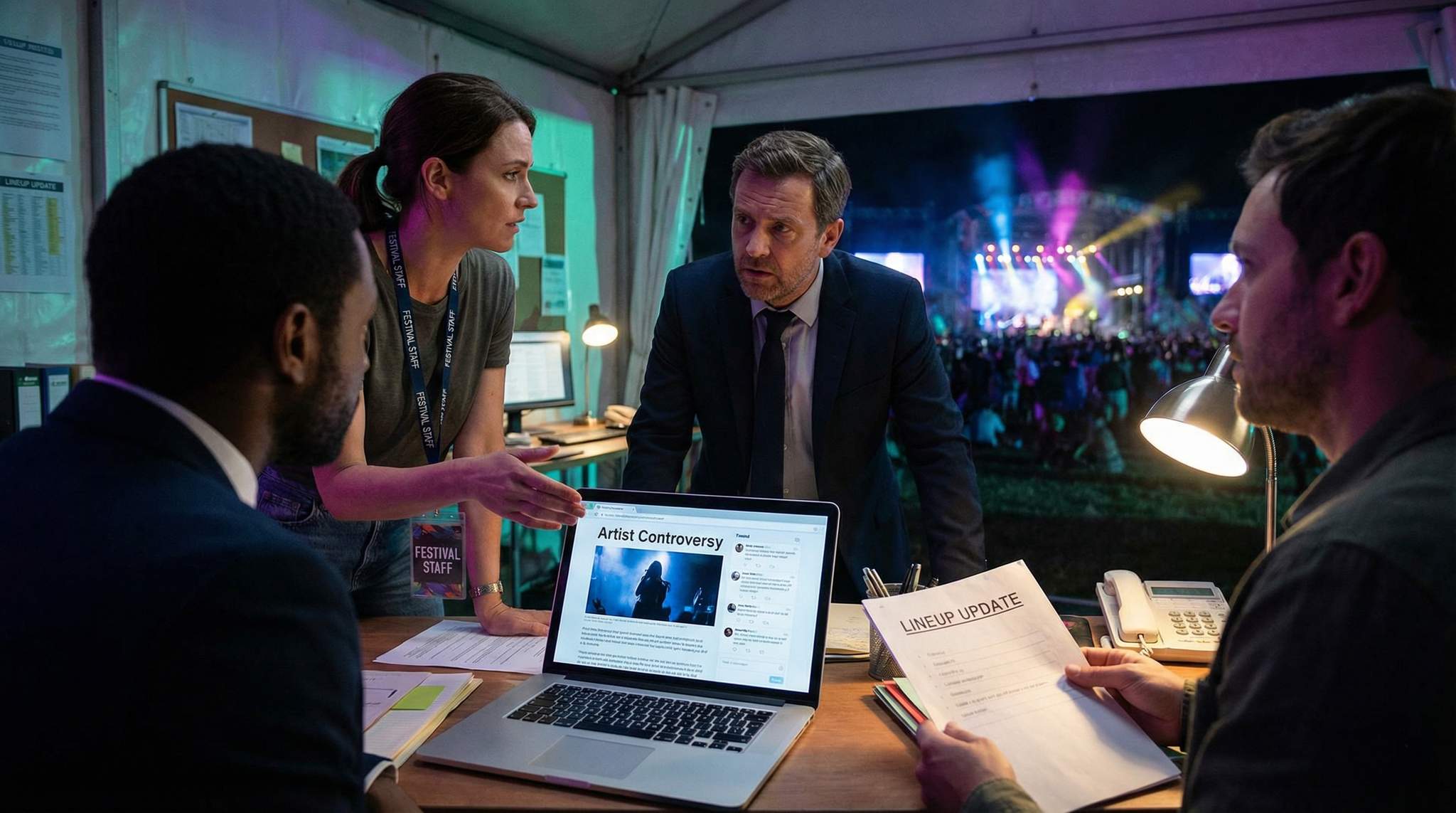
No festival organizer likes to imagine a PR crisis, but having a crisis response team designated in advance is a mark of a prepared organization. Identify a small group of key personnel who will huddle if a major artist controversy erupts. Typically, this includes the festival director, talent booking lead, the head of PR/communications, and legal counsel. Make sure everyone knows their role: for instance, the talent lead gathers the facts (talks to the artist’s agent/manager for their side of the story), the PR head drafts potential public statements, legal reviews contractual options, and the festival director or executive makes the final go/no-go decision. Document a step-by-step protocol. It could be as simple as: 1) Verify facts from reliable sources; 2) Immediately notify sponsors and stakeholders if the issue is severe; 3) Convene internal meeting within X hours to decide action; 4) Prepare an announcement or media statement; 5) Deploy replacement plan if dropping the artist. Having a written plan means when emotions are running high (and Twitter is running wild), your team can follow a steady process. Some festivals even do mini “fire drills” internally, discussing hypotheticals like, “What if our Saturday headliner was just accused of a crime the week before the show – what would we do?” Such exercises make the real thing far less chaotic. Remember, time is of the essence in crisis management. As festival crisis communication experts advise, a fast and transparent response can contain a situation before it escalates. Having a team and plan ready ensures you’re not scrambling to figure out who should do what while the world is watching.
Decision Triggers and Criteria
A critical part of advance planning is defining the triggers that would prompt dropping an artist. Not every controversy is black-and-white, so outline criteria that the team will consider in making the call. For example:
– Legal status – Has the artist been formally charged or convicted of something, or is it an allegation? (e.g. an arrest or indictment is more serious than an unverified accusation on social media).
– Severity of offense – What is the nature of the controversy? Hate speech, sexual misconduct, violence, drug trafficking, etc., all have different weights. Define which types of issues are zero-tolerance for your festival.
– Evidence and credibility – Is there credible evidence (video, multiple reliable reports) or is it hearsay? If an issue is murky, you may opt for a wait-and-see approach with conditions.
– Public reaction – Gauge the public outcry or media attention. Is the incident trending in mainstream news or just a minor Twitter thread? A viral outrage may force quicker action.
– Time before festival – Timing matters. A scandal that breaks the day before an event leaves little choice but to proceed (maybe with a statement), whereas one that emerges months out affords more options to replace the artist.
– Artist response – Did the artist apologize, deny, show remorse, or act defiant? An artist who immediately takes responsibility and makes amends might avert being dropped if the offense was minor.
By discussing these factors in advance, you create a sort of decision matrix. Some festivals formalize this into an internal policy document. For instance, it might say “Any act of physical or sexual assault by an artist, if supported by credible evidence, will result in immediate removal from the lineup.” Another line might cover speech: “Artists who use hate speech or slurs in a public forum will be asked to apologize; failure to appropriately address it will lead to cancellation.” Clarity on these triggers helps ensure decisions are consistent (and not influenced by, say, how popular or expensive the artist is). It also means that in the heat of the moment, the team isn’t deciding from scratch – they’re measuring the situation against pre-set criteria. As one industry veteran notes, “having drop thresholds established beforehand turns an emotional reaction into a strategic action.”
Scenario Planning and Rehearsals
Just as festivals conduct safety drills for weather or medical emergencies, it’s wise to rehearse scenario plans for an artist scandal. This can be as simple as a tabletop exercise where the crisis team walks through a fake scenario. For example: “Our Friday headliner was caught on video last night using a racial slur. It’s trending and sponsors are calling. What do we do in the next 2, 6, and 24 hours?” Each person outlines their moves, and the team discusses the best course of action. Another scenario could involve mid-festival issues: “On Day 2, an artist went on an offensive rant on stage this afternoon – attendees are upset, media is asking for comment.” Practicing these helps uncover gaps in your plans. Maybe you realize no one thought about who drafts the apology or how to get it approved quickly, or that you don’t have a media-trained spokesperson identified. By simulating the crisis, you can tighten up those procedures. Some festivals have pre-written template statements for various scenarios (much like an airline has templates for different incidents). You might draft a generic “Artist X will no longer be performing” notice with blanks to fill in reasons, which can save precious time. While you can’t anticipate every twist, scenario rehearsals build muscle memory that pays off when a real incident hits. In short, plan it, then practice it – it’s the hallmark of festivals that weather storms with composure.
The Drop-or-Keep Dilemma: Making the Call
Evaluating Severity and Evidence
When a real controversy presents itself, festival organizers face the tough question: Should we drop this artist, or keep them and manage the backlash? The first step is objectively evaluating how severe the situation is. Gather all available facts swiftly. If it’s an allegation of serious misconduct (assault, hate crime, etc.) backed by strong evidence or multiple sources, that tilts heavily toward cutting ties for the sake of attendee safety and festival values. On the other hand, if the issue is a less clear-cut personal controversy – say a messy public breakup or an old offensive joke resurfacing – you might gauge if it’s something that can be addressed without dropping the act. Consider the context as well: Is this a first-time offense or a pattern of behavior? Did it happen years ago or is it ongoing? An isolated incident followed by genuine contrition might be “redeemable” in the festival’s eyes, whereas a pattern of harmful behavior is not. It’s also important to assess how closely the controversy intersects with the festival experience. For example, if an artist is accused of defrauding investors in a side business, fans might not care much; but if they’re accused of harming fans or spewing bigotry, it directly impacts the festival community. Some festivals use a “severity matrix” approach – essentially rating the incident on factors like legal risk, moral repugnance, and fan impact to guide the decision. Ultimately, if there’s any doubt, lean on your festival’s core values: if keeping the artist would make your staff, other artists, or attendees feel unsafe or deeply offended, the integrity move is to drop them.
Free Tool: How Many Tickets to Break Even?
Enter your venue, artist, production and marketing costs with your ticket price. See how many tickets cover your costs and how many you still need to sell.
Consulting Stakeholders (Sponsors, Artists, Community)
A festival doesn’t operate in a vacuum. Before making a final call, it’s wise to quietly consult key stakeholders to understand potential repercussions. Sponsors are a big one – as they often have brand images to protect. If you have a good relationship with major sponsors, informally let them know the situation and see if they have strong concerns or would withdraw support if the artist stays. (In some cases, sponsors have morality clauses in their agreements with the festival, requiring you to take action against offensive situations.) Likewise, consider your other artists on the lineup. Are any threatening to cancel their appearance in protest? This has happened: in 2023, several artists announced they would drop out of a festival if a problematic band remained, pressuring the festival to remove that band, a situation covered by The Guardian. The prospect of a talent exodus or a fractured lineup unity is a serious factor. Community leaders or local authorities might also chime in – if the controversy could spark protests at the festival or negative local media coverage, the city officials might prefer the artist not appear. While stakeholders shouldn’t dictate your principles, their input can illuminate the wider impact of the decision. Often, a consensus emerges. If nearly everyone from sponsors to crew feels uneasy about proceeding with the artist, that’s a sign. Conversely, if it’s a polarizing issue where stakeholders are split, you may need to make a principled stand one way or the other and be prepared to defend it. Engaging stakeholders also prepares you for the fallout: if you decide to keep the artist, you’ll know which partners need extra reassurance; if you drop them, you can line up support from those partners publicly. These conversations should be handled sensitively and swiftly—usually behind closed doors and within hours of the controversy breaking. It’s about taking the temperature of your festival’s ecosystem so you’re not blindsided by reactions after you act.
Balancing Artistic Freedom vs. Festival Values
One complex aspect of the drop/keep decision is the philosophical stance on artistic freedom. Festivals are about creativity and expression, and sometimes artists are controversial because they push boundaries. So where do you draw the line without becoming overly censorious? Each festival might answer differently, but you should articulate that line clearly for yourself. For example, some event organizers vow to stand by artists’ free expression unless it crosses into hate speech or endangers attendees. In practice, this means a political or anti-establishment statement from an artist might be tolerated even if it angers some, whereas an overtly racist rant would not. Think about historical cases: when rapper Tyler, The Creator faced criticism and even UK bans for past lyrics deemed homophobic, some festivals continued to book him after he evolved and showed growth in his content – weighing artistic evolution into the equation. On the other hand, multiple festivals dropped rapper DaBaby immediately after his hateful onstage comments, because it was a fresh incident that directly contradicted values of inclusion. Both scenarios involve a judgment call about whether the artist’s expression falls within acceptable bounds. Engaging in this balancing act means considering context (was it a one-time shocking art performance, or a genuine display of bigotry?), and potential for dialogue (can the artist make amends or clarify meaning?). Some festivals have taken the route of facilitating an apology onstage or a mediated conversation rather than dropping an artist outright, especially if the artist is important to the community or genre. However, that approach can be risky if it appears the festival is endorsing or excusing bad behavior. Ultimately, protecting your festival’s environment and values comes first. As one independent festival promoter put it, “We support free speech, but our festival isn’t obligated to give a megaphone to speech that attacks or harms parts of our audience.” In sum, respect artistic freedom in your curation, but remember that freedom comes with consequences and doesn’t exempt someone from being un-invited if they cross your festival’s red lines.
Documenting and Justifying the Decision
Whatever you decide – to drop the artist or keep them on – document the rationale clearly for internal records (and possibly external messaging). In the heat of a crisis, decisions can be hasty; writing down why you made the call ensures there’s a unified understanding later. This is useful for learning lessons post-event and for explaining to partners or boards. If you drop the artist, list the key factors: e.g., “Artist made X remarks on date, which violates our inclusivity policy; significant fan and sponsor backlash; decided removal is best to uphold festival values.” If you keep the artist, you should still note why: e.g., “Allegation is unverified, artist has apologized, minimal impact expected, will proceed with added monitoring.” Having this documented can help if media or public question you later – you have talking points grounded in a thoughtful process. It also helps maintain consistency for future cases. If another controversy arises next year, you can refer back: did we act similarly? Many big festivals formalize this into an internal memo or report for each major incident. From an ethical standpoint, documenting your decision process keeps you accountable to your principles rather than making arbitrary calls. And if there’s any legal aftermath (say the artist’s team is unhappy about being dropped), your written justification might become evidence that you acted reasonably under the circumstances. In short, treat your decision like a professional ruling: back it up with facts and reasons. This habit not only protects you in the moment but also builds institutional knowledge for your team on handling controversial situations with integrity.
Swift and Smart Replacement Strategies
Having Backup Artists and Plans
A hallmark of a scandal-proof festival is preparedness with backup options. Once you decide to drop an artist (or if the artist withdraws themselves amid controversy), the show must go on – and ideally with minimal disappointment to attendees. Smart festivals curate their lineup with a bit of cushion: perhaps a well-loved local band or a versatile DJ is kept on standby or given a flexible slot that can be expanded if needed. Some even quietly line up a “backup headliner” who is on tour nearby during the festival dates – an artist who can fly in last-minute if any headliner falls through. Building relationships with booking agencies and other festivals can pay off here; for example, if you urgently need a replacement, an agent might re-route an artist to you or a fellow festival might share an artist who is free a particular day (strategic alliances in the festival circuit can be invaluable – akin to resource-sharing alliances that help events support each other). Create a replacement plan as part of your advance work: list the acts in your lineup by priority and brainstorm at least one replacement for each that could realistically step in. If your Saturday headliner is a top-40 pop star, have in mind a couple of other pop acts or popular DJs who could fill that spot on short notice. If you can’t get a comparable star, another tactic is combining talent – perhaps extending the sets of other performers and adding a special guest collaboration to create a unique experience that softens the loss of the dropped artist. The key is to act swiftly: when a controversial artist was pulled hours before his set at Lollapalooza, organizers within the same day slotted in two performers (one moved into the headliner slot and another added earlier). Attendees appreciated that the schedule stayed full, and it became more of a line-up shuffle than a cancellation. Fans will be far more forgiving about an artist’s removal if you can deliver a satisfying alternative rather than silence.
Flexible Scheduling and Production
When replacing an artist last-minute, flexibility is your friend. Work closely with your production and stage management teams to see how you can adjust set times, stage production, and logistics to accommodate changes. Sometimes a replacement artist might have simpler production needs (e.g., fewer stage pieces or a standard backline) which can actually ease changeovers. In other cases, if a highly produced act is gone, you might free up budget and resources to allocate elsewhere – maybe upgrade the lighting for the new closer, or add a fireworks display to amplify the finale. Be creative: if you lose a controversial comedian who was supposed to do a 30-minute set, maybe you fill that with a popular podcast host doing a live session or a super-jam with musicians from various bands on the bill. The goal is maintaining the festival’s energy and flow. From an attendee’s perspective, a schedule tweak or surprise addition can even be exciting if framed well. Ensure your stage crews have contingency plans, like a generic lighting design that can fit an unexpected artist, or a multi-purpose backdrop if the dropped artist’s branding was all over the stage. It’s also wise to rehearse quick changeovers if possible – some festivals practice the scenario of one act not showing up, to see how fast they can reset for an alternate. Technology helps too; using event management software, you can update digital schedule boards and app notifications in real-time to inform fans of changes (for more on real-time updates, see our guide on staged announcements and communications which can apply here). A nimble, well-coordinated production can turn a potentially chaotic last-minute change into just another thrilling part of the show.
Communicating the New Lineup
Swift replacement is only half the battle – you must also communicate the change effectively to your audience. As soon as a replacement artist or plan is confirmed, announce it through all channels: your festival app, text alerts, social media, emails, and onsite signage. Fans will accept a change more easily if they know about it before they’re standing at the stage expecting the original artist. Keep the tone positive: “We’re excited to announce that [New Artist] will be performing in the 9 PM headline slot, bringing an epic [genre]finale to the night!” rather than focusing on the negative. If appropriate, frame it as an upgrade or special treat – even if it’s simply the best salvage option, a bit of hype goes a long way. Remember to update any online schedules, lineup graphics, and notify media partners so they relay correct info. If time permits, brief your on-site MCs and staff so they can answer attendee questions about the switch. Transparency is key too: if the dropped artist’s scandal is public knowledge, you can mention briefly why they won’t appear (“due to unforeseen circumstances” is a common neutral phrasing, or more direct if you’ve issued a formal statement already). But then pivot quickly to highlighting the new act. Attendees who were fans of the canceled artist may still be upset, so consider gestures to mitigate disappointment – maybe a meet-and-greet contest with the replacement artist or a small merchandise voucher for everyone at that stage. Such gestures show you care about the fan experience even amid changes. In summary, deliver the news widely, clearly, and with an optimistic spin: you want people to walk away remembering the awesome set your replacement threw down, not just the artist they missed.
Free Tool: Will the Money Be There in Time?
Map your deposits and balances against when ticket money reaches you. See your lowest balance and how much you need to find before it arrives.
Learning from Replacement Successes
It’s worth noting that some festivals have managed last-minute lineup swaps so well that they became legendary. Think of it as turning a potential failure into a story of triumph. A classic example: when a certain R&B headliner was dropped due to protests, the festival swiftly brought in a different high-profile artist who ended up delivering a standout performance and earning praise for saving the day. Attendees still talk about “remember in 2014 when they swapped X for Y – what a night!” In another case, a European festival that lost a controversial extreme metal band replaced them with two local favorite bands playing back-to-back – giving local talent a spotlight and satisfying fans with extra music. Those festivals not only protected their integrity by removing problematic acts, but also built goodwill by handling the recovery expertly. After your event, debrief on how the replacement process went. Document what worked (e.g., “Agent A was very helpful finding a substitute quickly” or “our stage crew turned over in 20 minutes – impressive”) and what could improve (maybe the announcement could have been faster, or you needed more social media managers to answer fan inquiries). These lessons will refine your future contingency plans. Publicly, don’t shy away from celebrating the positive outcome: thank the replacement artists and the fans for their flexibility. This can slightly rewrite the narrative from “Festival drops artist due to scandal” to “Festival triumphs over last-minute challenge.” The more you manage to delight or at least satisfy fans despite a lineup hiccup, the more scandal-proof your festival’s reputation becomes in the long run.
Transparent Communication with Attendees, Media, and Sponsors
Crafting a Unified Message
When an artist controversy hits, controlling the narrative through clear communication is paramount. The worst thing a festival can do is go silent or issue mixed messages while rumors swirl. Instead, craft a unified, carefully worded statement that addresses the situation head-on. Ideally, this message explains what action is being taken and why, in line with your festival’s values, without veering into speculative or defamatory territory. For example, when dropping an artist, it can be as straightforward as: “Due to recent events involving [Artist], we have decided that [Artist] will no longer perform at [Festival]. [Festival] was founded on principles of inclusivity and respect, and we stand by those values. We have updated our lineup accordingly.” This kind of statement, which Lollapalooza exemplified in 2021, keeps it factual and value-oriented. It avoids rehashing the scandal in detail (which can invite argument or legal issues) and instead re-centers the focus on the festival’s stance. Make sure all festival spokespersons and team members are on the same page with this core message – from your social media manager answering comments to your on-site staff and volunteers who might get questions. A unified message prevents confusion and signals professionalism. Also, consider the tone: empathetic and firm is a good balance (“We understand some fans will be disappointed, but we believe this is the right decision for our community”). Draft the message in collaboration with your PR team and legal advisors, then disseminate it simultaneously across channels so there’s no lag in information. By speaking with one voice, you build trust that the festival is handling things responsibly.
Communication Channels and Timing
Speed and reach are critical in communications during a controversy. As soon as your decision is made (or even as you’re in the process of making it, if word is already out that something’s wrong), use every communication channel at your disposal to inform your audience. Post on all major social platforms (Facebook, Twitter/X, Instagram, etc.) and your official website. If you have a festival mobile app, send a push notification with the key news (e.g., “Lineup Update: [Artist] will not perform. See statement on our site.”). For attendees already on site or arriving soon, utilize venue tools: digital signboards, announcements from stages or MCs, and info booths should all relay the update. Timing matters immensely – the longer an information vacuum persists, the more rumors and anger can fester. It’s often recommended to get a basic announcement out within an hour or two of a breaking scandal if it’s close to the event, and within the same day if the event is still weeks away (in the latter case you might take a few extra hours to coordinate with the artist’s team on wording). Additionally, don’t forget direct communication to ticket holders: send an email explaining the lineup change and, if applicable, how you’re handling things like schedule adjustments or any potential refunds (even if you’re not offering refunds, it’s good to acknowledge the question proactively). When attendees get clear info directly from you, they’re less likely to be swayed by third-party chatter. Lastly, coordinate the release so that stakeholders like sponsors and media partners are informed just before the public announcement, not after. They’ll appreciate being kept in the loop (and not blindsided by media calls). In crisis comms, minutes count – by promptly broadcasting a consistent message, you fill the narrative gap and demonstrate leadership.
Talking to the Media
Media attention is inevitable in a high-profile artist scandal, so plan to engage with it constructively. Start by releasing an official press statement (which may be the same as your public statement) and distribute it to all relevant media outlets and journalists on your press list. Then, decide if you will take questions or do interviews, and who will serve as the festival’s spokesperson. It’s often wise to have a single, trained media spokesperson (like the festival director or communications head) to avoid contradictory soundbites. Anticipate the tough questions reporters might ask: “Did you know about the artist’s history when booking them?” “Are you responding to sponsor pressure?” “What do you say to fans who bought tickets to see that artist?” Prepare clear, honest answers to each. Stick to your core talking points: emphasize attendee experience and festival values, note that lineup changes are always possible, and highlight any positive next steps (like replacements or policies you’re putting in place). Avoid getting dragged into the specifics of the scandal beyond what’s necessary – for example, do not speculate on the artist’s guilt or give details that aren’t public. Keep bringing the conversation back to what your festival is doing about it. Also, monitor media coverage as it unfolds; if any inaccuracies appear (e.g., a reporter prints a wrong reason for the cancellation), be proactive in gently correcting it through a follow-up statement or direct communication to that outlet. In the age of 24-hour news and viral stories, your prompt and factual engagement with the press can prevent misinformation. Maintaining a cooperative stance with journalists (even if you’re not able to answer everything) will yield more balanced coverage. Many festivals also hold a short press briefing if the issue breaks during the event, where the spokesperson delivers a statement and answers a few questions on the record. This can humanize your response and show transparency. Remember, while the media’s job is to probe, yours is to convincingly convey that the festival is managing the situation with integrity and care for its community.
Direct Outreach to Sponsors & Partners
Your sponsors, vendors, and partners invest in the festival’s success and reputation, so it’s crucial to communicate with them directly and rapidly in a crisis. Ideally, as soon as you’ve decided on action (or concurrently with your public announcement), have your sponsorship team personally contact each major sponsor. A phone call or individualized email from a high-ranking festival official is best. In this outreach, go beyond the public statement: reassure sponsors that you value the partnership and are handling the situation responsibly. A sponsor will want to know: Is the festival doing enough to protect the audience and, by extension, the sponsor’s brand? Emphasize the steps you’re taking (dropping the artist, replacing them, making a values-based stand). If any sponsors have expressed concern or threatened action, address that – for instance, “We heard your worries and we took them seriously in our decision-making.” You might also offer sponsors a chance to give input on any planned messaging that involves them or to co-sign support for the decision. Keep in mind that sponsors might get media inquiries too – provide them with bullet points or a copy of your statement so they can stay consistent if asked. For smaller partners or community stakeholders, an email blast or group briefing can suffice, but make sure it’s not generic. Show that you understand how the scandal might affect their objectives and that you’re committed to minimizing any fallout. For example, if a beer sponsor was tied to the dropped artist’s stage, you might reassure them that you’re reallocating their presence effectively and the stage will still draw a big crowd with the new lineup. Transparency and proactiveness here go a long way: sponsors almost always prefer to hear bad news directly and promptly rather than via social media. Your honest communication can turn a potentially relationship-threatening incident into a moment that actually builds trust, as sponsors see that the festival doesn’t shy away from tough issues and keeps its partners in the loop.
Handling Attendee Reactions and Questions
When you remove or replace an artist, expect a flood of attendee reactions – ranging from supportive messages to angry disappointment to confusion. It’s essential to manage this dialogue with empathy and clarity. Dedicate staff or trained volunteers to monitor your social media and customer service channels (email, hotline, etc.) for at least 24-48 hours after the announcement. Prepare a FAQ or a few stock responses for common questions: “Why did you drop the artist?”, “Are tickets refundable since I mainly came to see X?”, “Who’s the replacement?”, “What are you doing to prevent this in future?”. Make sure the tone of all responses is understanding and appreciative – thank people for their feedback, apologize for any inconvenience or disappointment, and reiterate the festival’s commitment to its values and to delivering a great experience. If you faced this scenario, by now you likely have a ticketing plan that is fair to fans – even if your policy is no refunds for lineup changes (which is standard), you might offer something like a small credit for merchandise or a heartfelt invite to enjoy the rest of the festival which has lots more to offer. The key is not to appear dismissive. Highlight the exciting things still in store at the event. If some fans were particularly irate, you can take the conversation off public channels by inviting them to DM or email for a more personal dialogue. Often, fans just want to be heard. By taking the time to respond kindly, you can turn some critics around, or at least prevent the discontent from snowballing. Internally, keep track of the sentiment – are the majority understanding or is there a serious backlash? If it’s the latter, you might need to do a bit more damage control like a public Q&A or additional statements. But in many cases, once the initial wave passes and especially once the festival is underway with great performances, most attendees move on. Still, how you handle those crucial first communications will be remembered. Show your audience that even amid a controversy, you care about their experience and opinions – that can actually deepen loyalty in the long run.
Free Tool: How Many Staff Do You Need?
Get a starting headcount for security, stewards, scanners, bar staff and first aid from your crowd size, event type and risk level.
Stakeholder Communication Plan (Cheat Sheet)
It helps to break down your communication strategy by stakeholder group, each requiring a tailored approach:
| Stakeholder | Primary Concerns | Communication Approach | Tone/Content |
|---|---|---|---|
| Attendees & Ticket Holders | Might feel upset, betrayed, or worried about the festival experience. May demand refunds or info on replacements. | – Public announcements on social media, website, app as soon as decision is made. – Email all ticket buyers with a brief explanation and what to expect next (replacement, schedule change). – On-site signage/announcements if event is in progress. |
Empathetic and transparent. Acknowledge disappointment (“We know many of you were excited to see [Artist]”), but affirm why the decision is for the best. Emphasize festival’s values and commitment to a great experience (highlight replacement or other attractions). |
| Media | Seeking facts, quotes, and possibly a narrative (how festival is handling controversy). | – Issue a press release stating the facts and festival statement. – Offer a brief press conference or spokesperson availability for key outlets. – Provide press with a Q&A or talking points to prevent speculation. |
Clear, factual, and principle-driven. Stick to key points – what action was taken and why – and avoid libelous details. If appropriate, express responsibility (“As organizers, we have to…”) to frame the festival as proactive. |
| Sponsors/Partners | Concerned about brand association and event success. May fear negative publicity by association. | – Immediate personal outreach (calls/emails) to major sponsors explaining the situation and decision. – Assure them their brand will be protected and align with festival’s positive stance. – Update them on how the festival is handling attendee messaging to ease any worries. |
Reassuring and appreciative. Emphasize shared values (“We know you invest in us because you care about inclusivity too”). Provide confidence that the festival is on top of it. Thank them for understanding and offer to collaborate on any public messaging if needed. |
| Other Artists & Crew | Other performers might wonder if the festival is in chaos or if they could be affected. Crew might be dealing with schedule changes. | – Internal communication (email or meeting) outlining what happened and reaffirming that the festival environment is safe and values artists’ and staff’s well-being. – Encourage artists to reach out with any concerns; keep an open dialogue. |
Supportive and unifying. Let them know the decision was made to protect the festival community (which includes them). Express that the show is continuing strongly and their contribution is valued. For crew, be instructive about any logistical changes while showing appreciation for their flexibility. |
Coordinating these parallel communications ensures everyone hears a consistent message that the festival is acting responsibly. Transparent communication, done right, is not just damage control – it’s an opportunity to show what your festival stands for and strengthen relationships across the board.
Aftermath: Upholding Integrity and Learning Lessons
Reaffirming Your Values Publicly
In the wake of an artist controversy, once the immediate fires are put out, it’s important to reaffirm the festival’s values publicly. This helps mend any loss of faith and reminds your community why they support the festival. In practice, this could mean a follow-up message or blog post from the festival organizers a few days or weeks later, reflecting on the situation. You might say, for example, “While we regret that circumstances forced a change in our lineup, we stand by our decision to prioritize creating a safe and respectful environment. [Festival Name] has always been about [your core values], and we’ll continue to uphold those values in every decision.” By doing this, you kind of close the narrative loop – the story isn’t just “Festival drops artist amid scandal,” it becomes “Festival affirms commitment to community values.” It’s wise to highlight any positive outcomes or actions: did the replacement artist deliver an incredible set that fans loved? Mention it. Did you observe a better atmosphere as a result of the change? Note that. If appropriate, you can also thank the community for their understanding and input, e.g. “We heard from many of you about this, and your voices reinforce why these values matter.” Some festivals take it a step further and launch a new initiative after a controversy – for instance, starting a diversity task force or partnering with a charity related to the issue – turning a negative into momentum for positive change. Whatever you do, make sure it aligns with sincerity. Audiences can sense lip service; they respond better if you show genuine commitment. And by publicly standing by your principles even after the dust has settled, you bolster trust and credibility for the future.
Internal Debrief and Policy Updates
Every controversy is a learning opportunity for your team. Once the festival is over (or once things calm down if it happened mid-event), conduct a thorough internal debrief. Gather the key people – talent bookers, PR, legal, operations, sponsor liaison – and dissect how the situation was handled. What went well? Perhaps your rapid response team mobilized in minutes and the replacement show was a hit. What could have been better? Maybe the vetting process missed a warning sign, or initial communications were a bit slow. Analyze the timeline of events and decisions. It can be helpful to create a post-mortem report documenting the incident and response. Use this to update your policies and plans. For example, you might decide to strengthen your vetting procedure: “From now on, we will conduct social media background checks on all headliners up to one year prior to the event,” or add a step: “Include a morals clause in all artist contracts going forward, not just headliners.” You may also refine the crisis communication plan – maybe assigning an additional backup spokesperson or subscribing to a better media monitoring service. If the controversy revealed any gaps in your values framework, address them: for instance, if you got caught off-guard by an artist’s political stance, you might create guidelines about artists whose public ideologies conflict with the festival’s ethos. It’s also possible you realize the need for more staff training, like media training for spokespeople or scenario drills for the team (if you hadn’t done those before). Make these improvements concrete: update manuals, checklists, contracts, and run the team through them well before the next edition. By institutionalizing the lessons learned, you’re actively scandal-proofing future festivals even more. Essentially, close the feedback loop – let the experience inform better practice. Festivals that endure for decades do so because they evolve and adapt from each challenge thrown their way.
Restoring and Enhancing Public Image
After handling a controversy, you’ll want to proactively rebuild any dent in your festival’s public image. Fortunately, if managed with integrity, a controversy need not leave a lasting scar – in fact, it can showcase your festival’s values in action. Still, plan some positive PR and community engagement following the incident. Highlight the successful parts of the festival: share photos and stories of great performances, fan testimonials, and any milestones (like sell-out attendance or records recycled if you have green initiatives, etc.). This helps shift the media narrative from the controversy to the overall success of the event. You might also engage fans with a survey or forum to discuss the festival, which shows you’re listening. If the scandal raised broader issues (e.g., artist conduct, safety, inclusivity), consider hosting a panel or publishing content about how festivals can do better – positioning your brand as a thought leader in solving the very problem you encountered. For instance, if your situation revolved around an artist with misogynistic behavior, you could partner with a music industry group to promote safe environments or gender equality in festival lineups. Demonstrating that you’re part of the solution elevates your credibility. It’s also smart to directly address any remaining skeptics: if some fans were really upset and said “I’m never coming back,” reach out (perhaps via a personalized email or social comment) and express that you hope to regain their trust and will work hard to do so. Highlight new measures in place (“Next year, we’ll be implementing X to ensure we live up to our community values”). And of course, continue to be transparent – if media does follow-ups, answer how you’ve grown from it. Over time, a well-handled scandal can fade into a footnote of your festival’s history, overshadowed by years of positive experiences. By consciously working to restore goodwill and even improving the festival as a result, you convert a momentary setback into a platform for long-term loyalty and respect from both fans and industry peers.
Examples: How Festivals Turned Controversy into Lessons
It’s instructive to look at a few real-world cases of festivals navigating artist controversies and what they learned:
| Festival & Year | Controversy | Action Taken | Outcome & Lesson |
|---|---|---|---|
| Lollapalooza (USA, 2021) | Headliner DaBaby made homophobic comments on stage at a prior event, sparking public outrage. | Dropped the artist one day before his set; issued a statement reinforcing inclusivity and replaced him with Young Thug on the lineup, as reported by ABC7 Chicago. | Fans largely supported the decision, sponsors praised the swift response. Lesson: Act fast and uphold values; a quick replacement kept attendees satisfied and demonstrated zero tolerance for hate speech. |
| Fashion Meets Music Festival (USA, 2014) | Booked R. Kelly despite long-standing sexual abuse allegations, causing sponsor backlash and other artists to protest. | Reached a “mutual decision” with R. Kelly’s team to cancel his headlining slot amid the outcry, according to Pitchfork. Publicly acknowledged discomfort with the association, as noted by The Guardian. | Some ticket holders were upset, but many applauded the move. Sponsor (WCBE radio) reinstated support after he was dropped. Lesson: Don’t ignore red flags during booking; community and co-artist values matter. The festival learned to prioritize women’s safety and has avoided similarly controversial bookings since. |
| Bluesfest (Australia, 2023) | Included band Sticky Fingers, known for past racist remarks and altercations, leading to other artists and fans boycotting. | Initially defended the booking on grounds of forgiveness, but after multiple acts pulled out, the festival removed the band and issued an apology stressing that they “cannot continue to support” them, The Guardian reported. | The U-turn likely saved the festival from further artist exodus and PR damage. However, initial hesitation drew criticism. Lesson: Gauge artist reputations carefully against current social climate. The organizer pledged to consult community perspectives more in the future and reinforced commitment to an inclusive lineup. |
| Movement Festival (USA, 2022) (Detroit) | Booked Russian DJ Nina Kraviz during the Ukraine invasion controversy; she faced criticism for silence on the war. | Dropped Nina Kraviz from the lineup after open dialogue and public pressure, according to Mixmag and EDM Tunes. Issued a brief statement via social media that she “is unable to play,” without deep elaboration. | The decision was met with support from the local Ukrainian community and most fans. Some debate occurred about politicizing lineups, but the festival maintained a neutral tone publicly. Lesson: In geopolitically sensitive matters, consider optics and moral stance of artist – silence can be perceived as complicity. Being proactive protected the festival’s international image. |
| Punk Rock Bowling (USA, 2018) | Band NOFX joked onstage about the Vegas mass shooting victims, causing immediate sponsor and fan outrage. | Though this happened during the festival, organizers condemned the remarks and the affiliated sponsor (a brewery) cut ties with the band, ABC News reported. NOFX was effectively banned from future editions. | Fans and industry applauded how swiftly it was handled; the festival invited the brewery to continue sponsoring once the band was removed. Lesson: Even during an event, enforce zero-tolerance when a performer crosses a clear line. Quick public disapproval by organizers can contain fallout. |
These cases show a common thread: festivals that responded with integrity – aligning actions with their stated values – generally managed to maintain or even strengthen their reputation among those that matter (fans, artists, sponsors). Each also adjusted their future approach, whether it was vetting more thoroughly or setting clearer policies. For up-and-coming festival organizers, these examples underscore that transparency, consistency, and values-based decisions are the pillars of scandal management.