The Human Magic at the Heart of Festivals
Community and Connection Over Everything
Festivals have always been about community and human connection. Long before cashless wristbands and festival apps, people gathered in fields and streets to celebrate music, art, and culture together. That sense of shared experience – singing in unison with thousands of strangers, or bonding over a spontaneous moment – is the soul of any festival. Industry veterans stress that technology should enhance these moments, not replace them. The most enduring festivals put community first in their ethos, creating a family-like atmosphere where attendees feel they belong. When the crowd feels united, even the fanciest tech innovations fade into the background of human togetherness.
Rituals, Traditions, and Authenticity
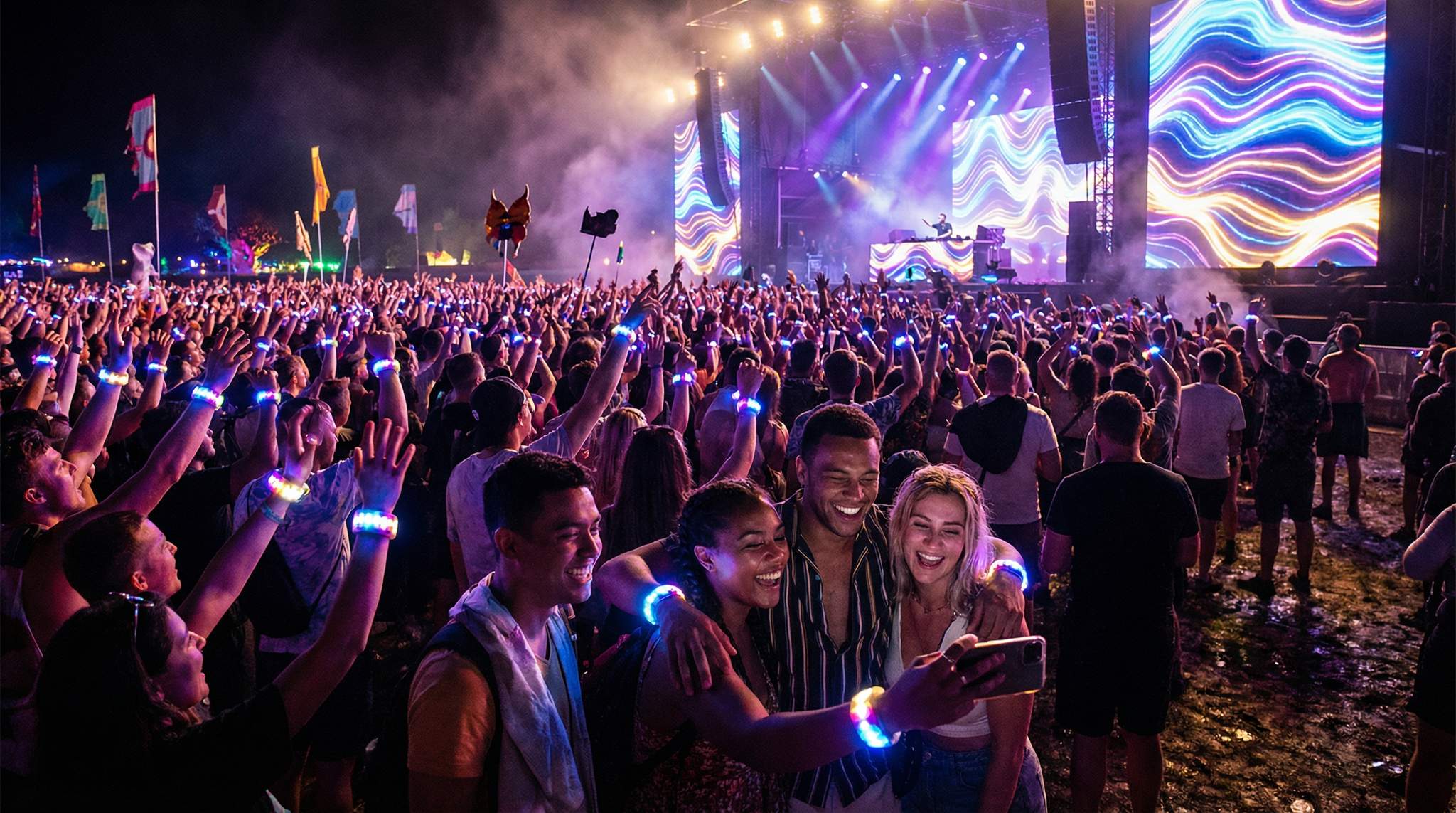
Every great festival develops its own rituals and traditions that give it character. Think of the annual group sing-along to “Hey Jude” at Glastonbury’s finale or the ritual of toasting at Oktoberfest. These are human traditions that technology can help facilitate (like displaying lyrics on a big screen) but must never overshadow. Authenticity is key – attendees value the realness of a festival’s culture. Overuse of slick tech gimmicks can come across as corporate or inauthentic, especially if it interrupts cherished traditions. Savvy festival producers know to introduce innovations in a way that respects the event’s cultural roots. For example, when Tomorrowland introduced high-tech LED wristbands that light up in sync with the music, it was framed as enhancing a communal ritual (everyone joining in a coordinated light show) rather than just a tech trick. By keeping innovations aligned with festival traditions and values, organizers preserve that authentic vibe attendees love.
For heritage events, the stakes are even higher. When looking at how cultural festival organizers balance tradition and innovation, the secret lies in introducing modern touches that remain invisible until needed. For example, operators of historic street fairs or regional ferias are increasingly adopting new technologies—such as discreet RFID ticketing or localized mesh networks—to solve crowd flow issues without disrupting the historic ambiance. By ensuring that any new technology at a traditional fair directly supports the comfort of the attendee rather than altering the core ritual, producers protect the event’s legacy.
Finding the right equilibrium requires a delicate touch. When exploring how cultural festival organizers balance tradition and innovation, the most successful strategies often involve introducing modern touches that enhance accessibility without overshadowing the main attraction. For instance, a heritage folk festival might implement a custom mobile app that offers historical context and artist interviews via audio guides, replacing bulky printed pamphlets. These modern touches streamline the guest experience while actively deepening the audience’s connection to the cultural roots being celebrated.
Go Cashless With RFID Technology
Enable contactless payments, faster entry, and real-time spending analytics with RFID wristbands and NFC-enabled ticketing for your events.
The Personal Touch from Staff and Volunteers
Behind every seamless festival experience is an army of dedicated staff and volunteers adding the human touch. From the volunteer greeters at the gate who share a smile and warm welcome, to the stage crew and artist liaisons handling last-minute surprises, people are the ultimate problem-solvers. Veteran production managers often say, “technology is a tool, but people make the festival.” For instance, Glastonbury Festival in the UK famously relies on thousands of volunteers each year to run everything from recycling teams to information booths – creating a friendly, community-driven atmosphere even as the event quietly uses advanced ticket scanning and communications tech in the background. Attendees remember the helpful staff who went above and beyond, far more than they remember an app menu or a fancy cashless system. The lesson for modern producers is clear: keep investing in staff training, volunteer programmes, and fan ambassador teams, even as you automate operations. A well-trained volunteer offering directions or a security guard sharing a friendly joke can turn a high-tech event into a human-centric experience.
The Festival Tech Revolution: Embracing Innovation
Automation and Smart Operations Behind the Scenes
Modern festivals are adopting automation and smart technologies to streamline operations. Drones survey massive festival grounds for security monitoring, AI tools optimize scheduling, and robots even help pick up trash at night. In an era of staff shortages, some events are using automation to address labour shortages by deploying self-serve ticket kiosks and automated bar systems. These innovations can fill gaps in manpower and make the festival run more efficiently, as noted in reports on cashless payment transformations. For example, festivals in 2026 have trialed automated ID scanning gates to speed up entry when human staff is limited. However, producers must ensure these systems are reliable and user-friendly – nothing kills the vibe like a ticket kiosk that keeps erroring out with a long queue waiting. The trick is to use automation to handle the boring or heavy tasks (like credential checks or repetitive info requests) so that your human staff can focus on the personal touches. A great practice is to pair automation with human oversight: have staff or volunteers stationed near self-service kiosks or info chatbots, ready to jump in and assist with a smile if anything goes wrong. This way you get the efficiency boost without losing the human safety net.
Planning a Festival?
Ticket Fairy's festival ticketing platform handles multi-day passes, RFID wristbands, and complex festival operations.
Selecting the Right Festival Event Technology Partners
As the landscape of festival event technology expands, choosing the right vendor becomes a critical operational decision. Today’s producers aren’t just buying software; they are investing in an ecosystem. When sourcing platforms for ticketing, streaming, or cashless deployments, organizers often look to comprehensive providers (for instance, evaluating solutions found on sites like godreamcast.com) that can handle multiple touchpoints seamlessly. The goal is to avoid a fragmented tech stack where the entry scanners can’t talk to the POS terminals. A unified approach to your event’s digital infrastructure reduces on-site friction, lowers training time for your staff, and ultimately protects the attendee experience from backend integration failures.
When auditing your festival tech stack, it is highly recommended to request live stress-test data from potential vendors. Event promoters should ask how a platform handles offline syncing during sudden network drops, a common reality in remote outdoor venues. Building a resilient digital ecosystem means prioritizing event management software that offers robust API integrations, allowing your ticketing, access control, and cashless systems to communicate flawlessly without requiring manual data exports.
Cashless Payments and RFID Systems
Over the past decade, festivals worldwide have rapidly moved toward cashless payment systems. RFID-equipped wristbands and mobile wallet apps allow attendees to tap and pay for food, drinks, and merch in seconds. The appeal is clear – shorter lines, higher spending per head, and less risk of theft or loss. Major events like Coachella (USA) and Tomorrowland (Belgium) were early adopters; they implemented RFID wristband payments to speed up transactions and improve security. For festival organizers, the ROI is compelling: one case study of large festivals in 2023-24 found that adopting dematerialized (cashless) payments led to a 119% increase in the number of transactions and boosted total sales revenue by 22%. When fans aren’t digging for bills or waiting on card authorizations, they buy more, and they’re happier doing it.
That said, going fully cashless can backfire if not done thoughtfully. Organizers must consider attendees across generations and comfort levels. Some folk and community festivals have wisely opted for hybrid payment models, combining cashless convenience with options for those who still prefer cash. For example, event producers have learned how to go cashless without leaving cash-loving attendees behind – using hybrid systems, offline payment backup, and plenty of on-site signage and support to ease the transition for everyone. Clear communication is crucial: let attendees know ahead of time how to load money onto wristbands or apps, what fees (if any) are involved, and how unused balances will be refunded. By embracing cashless tech and keeping a human-centric approach (like roaming “top-up tutors” to help guests with wristband reloads), festivals can have the best of both worlds: fast, easy transactions and an inclusive, stress-free experience for all attendees.
Data-Driven Event Marketing
Track ticket sales, demographics, marketing ROI, and social reach in real time. Exportable reports give you the insights to make smarter decisions.
Mobile Apps and Digital Engagement
An official festival mobile app is now as common as a printed programme used to be. The best apps put a wealth of info and interactivity in fans’ hands – schedules with customizable reminders, interactive maps to find stages and water stations, artist bios, and often fun features like photo filters or scavenger hunt games. A well-designed app can significantly enhance the festival experience by reducing confusion and fostering engagement. Importantly, it should be inclusive by design. Veterans in the industry emphasize making apps accessible for all users, including those with disabilities. That means features like scalable text, high-contrast modes, and compatibility with screen readers for visually impaired users. By designing festival mobile apps that everyone can use, organizers ensure no fan is left out of the digital experience.
Beyond information, apps offer new ways to connect. Some festivals integrate chat functions or friend-finder features so attendees can locate each other (especially helpful at camping festivals where phone service might be spotty). Others have experimented with augmented reality (AR) via the app – for instance, Coachella encouraged fans to view the Sahara Tent through their phone camera to see space-themed AR art between sets. These features can add a layer of fun and wonder, effectively creating mini shared experiences as groups of friends marvel at AR animations only visible through their screens. The key is to implement digital engagement that complements the live event. An app’s push notifications, for example, should be used sparingly and strategically – reminding users of a secret set about to start or a weather alert, not bombarding them with ads that pull them out of the moment. The goal is a digital concierge that makes the attendees’ journey smoother and more interactive, while always pointing them back into the real-world action happening around them.
Need Festival Funding?
Get the capital you need to book headliners, secure venues, and scale your festival production.
AR, VR and the Metaverse: Blending Realities
In recent years, augmented reality (AR) and virtual reality (VR) have moved from sci-fi ideas into practical festival applications. AR, which overlays digital content on the real world via smartphones or AR glasses, has been used to create interactive art installations and games on festival grounds. For example, at EDC Las Vegas, fans using the festival app could unlock 3D creatures dancing on stage when viewed through their phone – a high-tech visual Easter egg. These AR moments can spark delight and give attendees something novel to share, without replacing the actual live performance. The trick is to use AR to augment – perhaps a treasure hunt that encourages exploring the venue or digital info plaques that appear when you point your camera at an art piece – rather than pulling people away from the physical festival.
Meanwhile, VR and the metaverse have opened the door for festivals to extend beyond their physical location. During the pandemic shutdowns, many festivals experimented with virtual editions. Tomorrowland, for instance, built a rich 3D virtual world for its online “Around the World” festival in 2020, complete with digital stages and attendee avatars. Now with live events back, some are integrating festivals with virtual worlds to reach global audiences who can’t attend in person. Hybrid festival models are emerging: a limited in-person crowd enjoy the show on-site while potentially millions join via live stream or VR platform. Glastonbury 2022 offered a virtual reality experience of its iconic Shangri-La area, letting remote fans explore interactive art from home. These efforts can democratize access and build global community – a fan in New Zealand can “attend” a festival in Belgium virtually – but they also underscore how special the real thing is. Most producers agree that virtual experiences work best as a supplement, not a substitute. The energy of a live crowd, the goosebumps when everyone cheers in unison – no VR headset can fully replicate that. Still, embracing VR and streaming tech wisely allows festivals to grow their brand and involve audiences worldwide, all while keeping the live experience front and center.
Data and AI-Driven Insights
It’s not just front-of-house where innovation is happening – data and AI are transforming how festivals are planned and managed. Festivals now gather a trove of data from ticket sales, RFID scans, mobile app usage, social media and more. With proper analysis, this data can yield insights to improve everything from lineup choices to layout design. Many large festivals use data analytics to understand what their attendees want. For example, streaming data and social media trends help predict which emerging artists are popular in a region, informing booking decisions. Some events are experimenting with algorithmic lineup scheduling, using software to avoid time conflicts and optimize flow across stages. As explored in Data-Driven Festival Scheduling, tools can crunch thousands of possibilities to craft a timetable that minimizes genre overlap and maximizes attendee satisfaction.
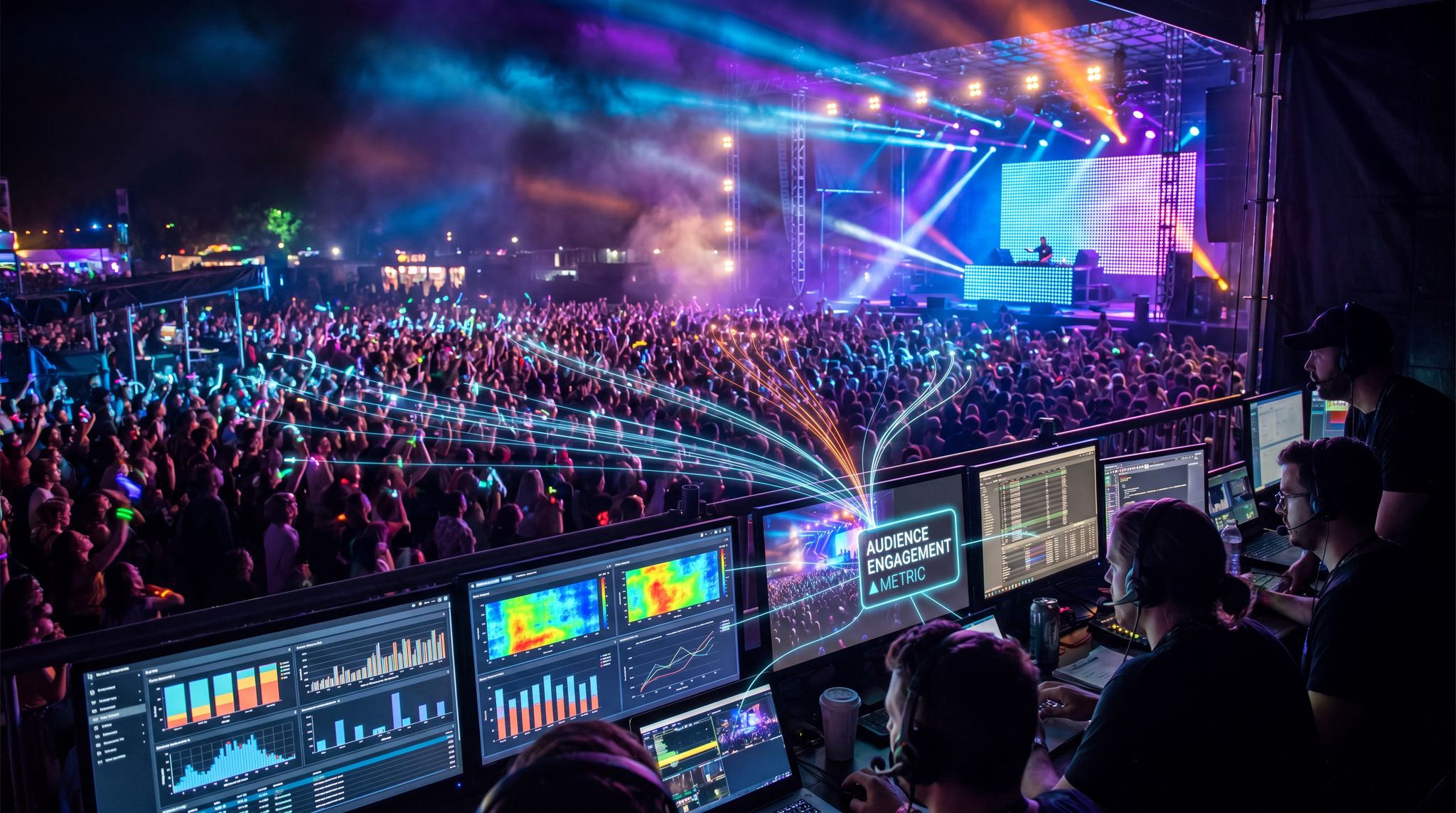
Crucially, savvy organizers combine data power with human judgment. Experienced festival directors know an algorithm might suggest a mathematically optimal schedule that still doesn’t feel right on the ground. Numbers can’t (yet) fully grasp emotional factors like giving a late-night slot to a legendary act for the nostalgia factor. A great example of balancing data with human touch comes from Europe’s giant Sziget Festival. Sziget actively polls its audience on which artists they most want to see each year, and these fan survey results directly influence their lineup choices. This is data-driven booking with a human face: fans feel heard and organisers still apply their expertise to curate a diverse, coherent festival experience. Data is also used for operational tweaks – monitoring crowd densities via heat maps to dispatch more staff to busy areas, or predicting peak demand at food stalls to adjust vendor placement. AI chatbots are appearing as well, handling common attendee questions through websites and apps at all hours. By leveraging AI for simple Q&A, festivals can provide instant info (“What time does parking open?”) while freeing up human customer service reps to handle more complex or sensitive inquiries. The bottom line is that data and AI are powerful tools to enhance decision-making. But when it comes to preserving “soul,” producers must enforce strict data privacy practices and remember that people, not algorithms, ultimately define a festival’s character.
Run Your Events From Your AI Assistant
Ticket Fairy exposes a Model Context Protocol server, so the assistant you already work in can read your events, orders and check-in numbers and act on them. By default a refund or a deletion stops and asks you to approve it first.
As the global market expands, regional data strategies are becoming highly specialized. For instance, producers evaluating the best platforms for cultural festival consumer insights in Brazil for 2025 are prioritizing tools that integrate seamlessly with local payment ecosystems like PIX and popular social messaging apps. Gathering localized consumer insights allows organizers of heritage events to understand shifting demographic preferences without relying on generic data models. This targeted approach ensures that when modern tech is applied, it resonates authentically with the regional audience.
Tech Enhancing the Attendee Experience (When Done Right)
Faster, Seamless Experiences with Tech
One of the biggest wins of festival technology is eliminating pain points so fans can spend more time enjoying the event. High-tech ticketing and entry systems, for instance, mean no more hour-long waits at the gate. Many festivals now send out RFID wristbands in advance, allowing immediate tap-and-go entry. Even on-site, mobile scanning apps for tickets have sped up entry lines dramatically compared to manual barcode readers of old. When tens of thousands of excited people are arriving, these incremental time savings add up – everyone gets inside faster, stages start on schedule, and the crowd’s mood stays upbeat. Similarly, cashless payments and self-service kiosks keep bar and merch lines moving swiftly. At Rock in Rio in Brazil, organizers noted significantly shorter concession wait times after introducing RFID wristbands linked to prepaid accounts. Fans appreciate when they can grab a drink or use the restroom quickly and get back to the music.
To ensure these advantages truly serve the attendee, the tech must be robust under real-world conditions. That means load-testing your systems to handle peak demand (e.g., the exact moment a headliner set ends and 20,000 people hit the food court simultaneously). It also means backup plans: if network connectivity falters, can transactions fall back to offline mode or will you hand out bottled water until it’s fixed? Veteran producers recount cautionary tales of tech hiccups – like a payment system outage that forced vendors at one festival to briefly give away food on the honour system. The festivals that handled these situations best had human contingency plans in place. For example, when a wi-fi cash register network failed at a major food festival, organizers swiftly deployed staff with portable radio terminals and even pen-and-paper receipts to keep business going. These examples highlight an important principle: use technology to make the experience seamless, but design your operations assuming something will go wrong. Having trained people ready to step in ensures a minor tech blip won’t ruin a fan’s day. Done correctly, tech-driven efficiency simply fades into the background – attendees just perceive that everything at the festival “worked like clockwork,” letting them immerse in the fun.
Personalization and Interactive Engagement
Technology allows festivals to tailor and enhance the experience for each attendee like never before. Mobile apps can deliver personalized schedules based on the artists a user has marked as favorites, complete with alerts so they don’t miss a set. Some apps even use algorithms to recommend acts (“You liked X, you may enjoy Y on the smaller stage at 6 PM”). For attendees, this can be a blessing – especially at multi-stage events where no one can see everything, a nudge toward a cool up-and-coming artist can lead to a delightful discovery. Organizers have seen success with features like “create your own schedule” planners, which not only help fans plan their day but also provide the festival with data on which acts are most in demand (allowing real-time tweaks like adding more staff or amenities near a stage that’s likely to overflow). Gamification is another engagement tool: festivals have built photo scavenger hunts into their apps, encouraging fans to explore the whole venue and interact with art installations or sponsor booths in a playful way. In return, fans might earn points redeemable for merch or VIP upgrades, deepening their participation.
Importantly, personalization should never cross into creepiness or isolation. Attendees go to festivals to feel togetherness, not to be stuck in personalized bubbles. Seasoned marketers caution against over-reliance on algorithmic recommendations that could pigeonhole fans. A festival is a place to venture outside one’s usual tastes too. So while suggestions are great, they shouldn’t limit what a fan sees. Some events strike a balance by using personal data to inform broad improvements (like curating diverse food vendors because data showed many vegan attendees) rather than micro-targeting individuals with nonstop notifications. And any personalized tech must be opt-in and transparent. Building trust is critical; let users decide if they want the AI recommendations or if they prefer to explore on their own. When done right, tech-enabled personalization can feel like a thoughtful concierge – enhancing the festival’s hospitality. Attendees might think, “This festival really understands me,” when they get a useful tip or a birthday shout-out via the app. But even here, human tone matters. Push notifications or bot messages should be written in the festival’s friendly voice, not as sterile system alerts. A little bit of human-style warmth – even if automated – goes a long way to keep the technology feeling like an extension of the festival’s personality, rather than an impersonal intrusion.
Beyond the festival grounds, organizers must also consider how external digital ecosystems drive attendance to specific on-site activations. For instance, when curating specialized zones, a producer might need to evaluate the event management company, The Nudge, on art exhibit discovery and local engagement. Partnering with these lifestyle and city-exploration platforms allows festivals to tap into pre-existing communities of culture-seekers. By integrating your festival’s unique art installations or boutique experiences into broader discovery networks, you attract a highly engaged demographic that values the exact human-centric, creative elements your event champions.
Free Tool: Size Your Festival Site
Zoned capacity planning for arena, campsite, parking and entry lanes — against UK Purple Guide and NFPA density standards. Finds your bottleneck zone.
Integrating Tech into Festival Programming
When exploring how technology can be integrated into festival programming to captivate attendees, producers must look beyond operational tools and focus on the creative curation itself. In regions with strong digital arts funding, such as Canada, organizers are pioneering ways to weave interactive tech directly into the lineup. For example, Canadian festival producers frequently collaborate with multimedia studios to deploy reactive LED installations, drone light shows synchronized with headliner sets, and interactive soundscapes that respond to crowd movement. By treating festival technology as a co-headliner rather than just a backend utility, promoters can craft deeply immersive environments. The key to captivating an audience lies in ensuring these digital programming elements feel organic to the performance, encouraging fans to actively participate in the art rather than passively consuming it.
The “Invisible Tech” Approach to Festival Design
For producers aiming to maintain a deeply immersive atmosphere, the concept of “invisible tech” has become a guiding philosophy. This method embeds advanced event technology so seamlessly into the environment that attendees only notice the magic, not the machinery. When evaluating the pros and cons of working with specialized production studios like PHNTM for music festival design, organizers must weigh the impact of this invisible tech approach against its inherent limitations and challenges. On the plus side, collaborating with high-end experiential design firms allows promoters to deliver mind-bending visual narratives—such as spatial audio, hidden projection mapping, and reactive lighting—without cluttering the stage with visible trusses or obtrusive screens. The primary advantage is absolute immersion; the technology serves the art completely.
However, there are distinct challenges to consider. The limitations of an invisible tech approach often center around budget and technical fragility. Custom-built, concealed infrastructure requires significant upfront investment and highly specialized crew members to operate and troubleshoot. If a hidden sensor fails or a proprietary software system crashes mid-set, diagnosing and fixing the issue on the fly is much harder than swapping out a standard LED panel. Furthermore, integrating these bespoke designs with touring artists’ existing stage plots can cause logistical friction. Festival operators must decide if the breathtaking aesthetic payoff justifies the increased technical risk and production costs.
Inclusivity and Accessibility for All
One of the most powerful ways technology can serve the festival experience is by making it more accessible and inclusive. Festivals should be welcoming to people of all ages, abilities, and backgrounds, and modern tech can help achieve that goal. For attendees with disabilities, innovations like accessible festival apps have been a game changer. A well-designed app can provide on-demand captioning or lyrics for deaf and hard-of-hearing fans during shows, or audio descriptions of visual elements for blind attendees on a live stream, a feature highlighted in coverage of Electric Zoo’s accessibility efforts. Some festivals now offer closed captioning and American Sign Language (ASL) interpretation on their live streaming feeds, greatly expanding remote access for those who can’t be there in person. On the ground, AR navigation features can help wheelchair users find accessible routes across the venue by highlighting them on a map when viewed through a phone camera.
Inclusivity also extends to age and culture. Senior attendees, for instance, may have different needs – larger text on an app, or simply the option of a phone hotline to get information if they aren’t comfortable with smartphone apps and cashless systems. Festivals that succeed in broadening their audience use tech as one avenue of service, not the only one. For example, while younger fans might happily use a chatbot for FAQs, older fans might prefer talking to a person at an info tent. Providing both options is ideal. Additionally, global or multicultural audiences appreciate technological accommodations too. Offering multi-language support in apps or on cashless terminals (with instructions in Spanish, French, Chinese, etc.) can make international visitors feel included. Some events in Asia have integrated popular local mobile wallets like Alipay or WeChat Pay for Chinese tourist convenience – a tech upgrade that says “we see you, and we want you here.” Ultimately, the test for any technology should be: does this make the festival more welcoming and enjoyable for a diverse range of people? If the answer is yes – for example, a new festival app feature helps people with visual impairments navigate more easily – then the tech is definitely serving the festival’s soul.
Safety, Health, and Comfort through Tech
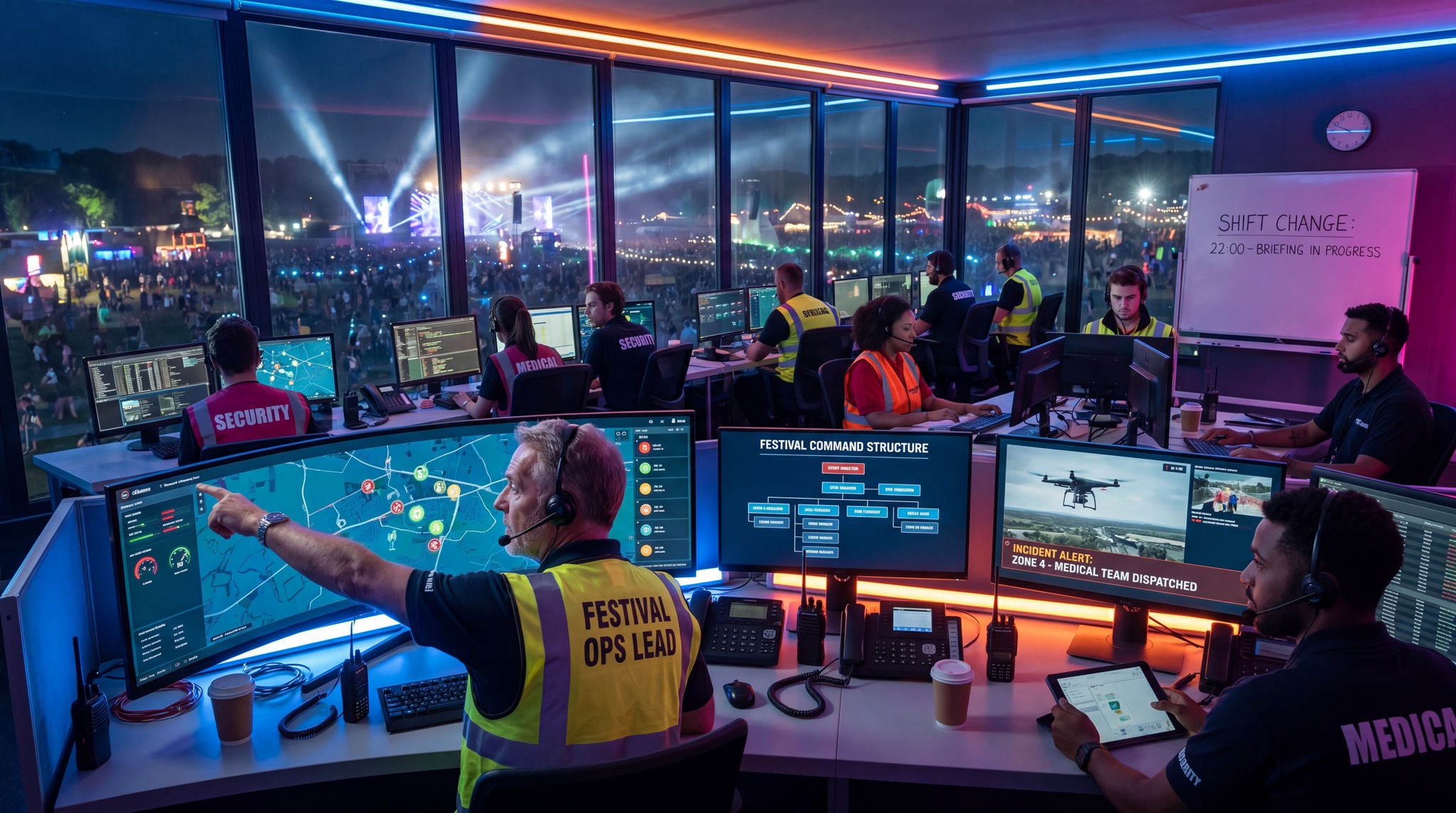
Nothing is more fundamental to the festival experience than attendee safety and well-being. Here, technology has been a true blessing – enabling real-time monitoring and faster emergency response that simply wasn’t possible in the past. Many events now equip their security and medical teams with live dashboards showing data from throughout the venue. This might include crowd density sensors to prevent dangerous overcrowding, or weather tracking systems that give early warning of incoming storms so organizers can pause shows and direct people to shelter in time. One especially exciting development is the use of wearable health tech on attendees. In pilot programs, festivals have tried offering smart wristbands or patches that monitor vital signs like heart rate and body temperature, a potential breakthrough for the future of festival transactions and safety. If someone is showing signs of heat stress or dehydration in the crowd, on-site medics can be alerted to intervene before it becomes a medical emergency. By catching early warning signs, these wearables have the potential to literally save lives at events prone to extreme heat, as discussed in articles on cashless society and safety.
Free Tool: Project Your Bar Revenue
Per-head spend benchmarks by event type turned into projected bar and food revenue, with a stock-mix estimate and gross-margin line. Free calculator.
Another innovation focused on safety is the advent of panic-button apps for festivals. These are simple features in a festival’s app (or a separate app entirely) that let an attendee in distress summon help with one discreet tap. For example, if someone feels threatened or sees a medical issue, tapping the panic button sends an alert with their location to security or first aid teams, effectively bridging generations at festival POS. This empowers fans to get help without fumbling for a phone number or leaving to find a staff member. The human impact is huge: at one European festival, a trial of a panic-button app led to dozens of people quietly requesting assistance over the weekend – from medical help to reporting altercations – where otherwise they might not have known how to get aid quickly, as noted in reports on festival safety tech. It’s a perfect example of tech serving the festival community by making it safer, in a way that’s easy and respectful.
Comfort is also a part of well-being. Technology helps here in subtler ways, like connectivity solutions to keep everyone’s devices powered and online. Attendees today carry their phones everywhere (partly for those digital tickets and cashless payments we’ve discussed), so festivals have stepped up with amenities like mobile charging stations, locker rentals with USB ports, and even portable battery swap kiosks. Providing ample charging and reliable Wi-Fi or cellular boosters isn’t just a luxury – it reduces anxiety (“How will I find my friends if my phone dies?”) and keeps people connected to both festival updates and their life back home if needed. Some forward-thinking events in remote areas deploy satellite internet and mesh networking to guarantee connectivity when local networks are overloaded. All these tech comforts essentially say to attendees: relax, we’ve got you. When fans trust that their basic needs – safety, water, connectivity, toilets – are well-managed, they can focus fully on dancing, laughing, and soaking in the festival magic.
Real-World Examples of Tech and Human Balance
Tomorrowland: Tech Spectacle with a Human Heart
Tomorrowland in Belgium is often cited as one of the most technologically advanced music festivals on the planet. Its massive stages are engineering marvels festooned with LED screens, advanced lighting, pyrotechnics, and even augmented reality effects for live stream viewers. Tomorrowland’s production team embraces innovation each year – from interactive mobile apps to world-class live streamed broadcasts in HD and 360° video that reach millions of fans worldwide. In fact, Tomorrowland’s 2022 live stream reportedly attracted over 7 million viewers across 200 countries over its two weekends. Yet, with all this high-tech grandeur, Tomorrowland maintains an emphasis on unity and human connection. Every attendee receives a themed RFID wristband not just for cashless payments and entry, but as a symbolic token of belonging to the “People of Tomorrow.” These wristbands famously light up in sync during certain songs, casting waves of color across the crowd – a beautiful blending of technology and human participation that gives everyone goosebumps. Tomorrowland also uses its platforms to foster community: the festival’s app and forums encourage fans to meet up, trade festival stories, and even arrange flag exchanges (it’s tradition to bring your country’s flag and swap with someone from elsewhere). By combining cutting-edge show production with gestures that connect people, Tomorrowland demonstrates that high-tech can amplify the emotional impact when guided by a human-centric vision. Attendees leave not just raving about the unbelievable stage visuals, but about the friendships formed and the collective euphoria they experienced.
Glastonbury: Tradition Meets Modern Innovation
Glastonbury Festival in the UK is a prime example of a long-running cultural institution carefully integrating tech without losing its character. With roots in the 1970s counterculture, Glastonbury has a homespun, grassroots spirit – think hand-painted signs, quirky art areas, and a deep connection to charity and environmental causes. As the festival grew to over 200,000 attendees, organizers gradually adopted technologies to manage the scale. For instance, Glastonbury introduced an online registration and photo ID ticket system in the 2010s to combat ticket touting (scalping) and ensure fairness. This was a significant tech upgrade for ticketing security and virtually eliminated fake tickets and scalpers exploiting the community. However, the process was rolled out with clear communication and a focus on fair access – reinforcing trust that the system was there to protect the fans and the festival’s inclusive ethos.
On-site, Glastonbury has tested cashless payments and high-speed connectivity in recent years, but always keeps contingency plans. Many vendors still accept cash as a fallback, and the festival famously printed a mini newspaper every morning (the Glastonbury Free Press) to share daily schedules and stories – a delightfully analog touch in the smartphone era. While the festival has a mobile app and robust social media, you’ll still see huge chalkboards at popular stages listing surprise set times or signposts with maps for those who prefer the physical world. Glastonbury’s extensive use of volunteers – from the Green Police (who help with recycling and environmental awareness) to Oxfam stewards – further roots the event in human interaction. These volunteers are equipped with radios and some digital tools, but their main role is personal engagement: helping lost campers or dancing with the crowd to lift spirits when it rains. When tech does take the spotlight at Glasto, it’s in service of art and message. In 2023, the festival’s iconic Arcadia spider stage featured a new kinetic fire show controlled by AI – but the spectacle was narrated by live performers and set to music that brought people together in awe. Glastonbury’s approach shows that even a legendary, old-school festival can embrace innovation (for safety, efficiency, creativity) so long as it stays true to the personality and principles that define it. The result is a modern festival that still feels wonderfully authentic and human.
Niche Festivals and Grassroots Tech Approaches
It’s not only mega-festivals that are finding this balance. Many smaller or niche festivals around the world are punching above their weight in tech while keeping a fiercely loyal, community vibe. Take Burning Man in Nevada, USA – not a traditional “festival” in the commercial sense, but a huge arts gathering known for its off-grid ethos. Here, digital tech is intentionally sparse: there’s no cash allowed (it’s a gift economy), no sponsorship logos, and often no cell service on the remote desert playa. And yet, Burning Man isn’t anti-technology on principle; it’s just pro-human. Attendees actually leverage plenty of tech to make the event happen – from online forums and mapping tools that help theme camps organize ahead of time, to solar panels powering elaborate art installations on site. But once you arrive, the experience forces face-to-face interaction and analog creativity (think giant art sculptures, communal cooking, and spontaneous performances). Interestingly, Burning Man’s organization uses advanced ticketing lotteries and data analysis for planning infrastructure like roads and emergency services, but all that is kept behind the scenes to preserve the “wild”, human-driven feel for participants. The message to festival producers is clear: you can dial technology usage up or down to fit your event’s cultural goals. In Burning Man’s case, minimal front-end tech is actually on brand to maximize human spontaneity.
Free Tool: How Many Staff Do You Need?
Get a starting headcount for security, stewards, scanners, bar staff and first aid from your crowd size, event type and risk level.
Another example is Sónar Festival in Barcelona, Spain. Sónar is an electronic music and arts festival with a reputation for embracing technology and innovation – it even has a parallel conference about music tech and creativity. At Sónar, festival-goers might encounter experimental AR art exhibits or AI-composed music pieces. The festival partnered with tech startups to showcase new interactive installations, literally turning parts of the venue into a live innovation lab. Crucially, these high-tech elements are curated as art and experiences that invite participation. One year, Sónar had an installation where your movement would trigger music and visuals via motion sensors – high tech, but highly human in that it was about your bodily interaction creating art in real time. And while Sónar fully utilizes social media and streaming (reaching online audiences when big DJs perform), the on-site atmosphere remains one of creative community. You see veteran artists mentoring young producers in backroom workshops and crowds of diverse nationalities bonding over the love of music. By keeping the focus on creativity and interaction, even a tech-forward festival like Sónar ensures the gadgets and code serve the artistic human vision.
These examples – from Tomorrowland’s global tech unity, Glastonbury’s measured innovation, Burning Man’s intentional low-tech vibe, to Sónar’s interactive art tech – show that there’s no one-size-fits-all approach. What they share is a clear understanding of their identity and their audience. Each event chose how to implement modern tools in a way that amplifies their unique spirit. As a festival organizer, being inspired by others is great, but the real art is to tailor technology to fit your festival’s soul. Use tech to bring out the best in what makes your festival special, whether that’s jaw-dropping spectacle, radical community, artistic experimentation, or anything else.
Cautionary Tales: When Tech Oversteps at Festivals
When Automation Feels Impersonal
Not every shiny new technology lands well with festival audiences. There have been instances where an over eagerness to automate and digitize caused backlash. One common pitfall is deploying tech in a way that removes the human element people expect. For example, some festivals tried replacing physical tickets and on-site staff entirely with apps and kiosks, only to find attendees frustrated at the lack of human assistance. A case in point: a mid-sized US festival a few years ago introduced unmanned self-serve beer taps that scanned IDs and took payment. In theory it cut lines; in practice many guests struggled with the interface, and without bartenders to chat and ask for recommendations, the experience fell flat (not to mention fewer memorable bartender stories for fans). The festival ended up bringing back human bartenders alongside the machines the next year.
Even something as simple as customer service can go awry if over-automated. Festival call centers and social media DMs now often use chatbots for common questions. But if those bots are poorly programmed or make it impossible to reach a human for urgent issues, fans can feel like the festival doesn’t care. Attendees will forgive a lot if they feel heard; conversely, being stuck in an endless loop with a chatbot when you have a pressing ticket problem can sour someone’s whole outlook on an event. Industry veterans recommend using AI chatbots as helpful first-line support, but always providing an easy “talk to a human” option or having roaming info staff on-site. In other words, don’t let automation become a wall between you and your community.
Tech Glitches and System Failures
Technological failure at a critical moment can be more than just embarrassing – it can jeopardize safety and trust. A stark example is the saga of Electric Zoo 2023 in New York City. The festival’s new management leaned heavily on tech-driven planning and ticketing, but things went very wrong: day one had to be canceled because stage construction fell behind (a logistics tech scheduling issue), and on the final day the festival reached “capacity” early due to apparent ticket overselling or scanning problems. Thousands of valid ticket-holders were locked out, leading to chaos at the gates as frustrated fans tried to storm in. The post-mortem pointed to mismanagement and poor planning. Electric Zoo’s organizers faced severe backlash, and city officials publicly condemned their poor planning. Even venue owners Avant Gardner faced scrutiny. The lesson for every other festival is clear: don’t let your tech promises outpace your team’s ability to deliver. Overselling because you trusted data projections, or failing to have a backup when your new entry scanning system chokes, are unforced errors. Reputations built over years can be damaged in one bad weekend if technology failures lead to angry or endangered attendees.
Even less dramatic tech issues can hurt the attendee experience. Think of a festival app that crashes repeatedly on show day, leaving fans without schedules and maps. Or RFID wristbands that fail at the turnstiles, causing long delays at entry gates. These may not make headlines, but they do chip away at attendee goodwill. People have a threshold for tech frustration, and it’s lower during a festival when they’re hot, tired, or in a hurry to catch a show. Thus, thorough testing and redundancy are the watchwords. If you launch a new festival app, have a simplified mobile web page as a backup for schedules. If you go cashless, keep a small float of physical drink tokens or vouchers in reserve in case the system goes down. One festival in Australia learned this the hard way when a sudden network outage rendered their cashless payment system unusable for two hours – many vendors couldn’t sell food or drink. Quick-thinking organizers luckily had old paper drink tokens from a past year and distributed them to keep the party going until the network was restored. Planning for failure modes isn’t pessimistic; it’s professional. And if the worst doesn’t happen, all the better – attendees will simply experience a smooth festival not realizing how close to chaos things might have been without those precautions.
Privacy and Trust Concerns
As festivals collect more data and use more surveillance tech, attendees have become wary of invasions of privacy. Facial recognition is a prime example of a technology that crossed the line for many. A few years ago, there were proposals to implement facial recognition cameras at big festival gates to automatically verify ticket holders or catch troublemakers. The fan and artist communities responded with a loud “No, thanks.” Privacy advocacy groups teamed up with musicians to pressure festivals not to use facial recognition. The result: by late 2019, dozens of major festivals (including Coachella, Bonnaroo, and SXSW) publicly pledged not to implement facial recognition, prioritizing attendee privacy and comfort, as reported by Engadget’s coverage of the campaign. Fans simply did not want Orwellian surveillance at an event that’s supposed to be about freedom and fun. The takeaway is that just because a technology exists doesn’t mean it’s welcome. Festivals must gauge attendee sentiment and ethics before adopting tools that could be seen as intrusive. It’s wise to stick to a privacy-by-design approach – only collect data you truly need and be transparent about how you use it.
Data breaches are another risk that can erode trust. If your festival collects personal information (and with online ticketing, you certainly do), safeguarding that data is part of preserving your festival’s integrity. A leak of attendee emails, payment info, or worse, can make fans feel betrayed. In the digital age, robust cybersecurity and compliance with data protection laws (like GDPR in Europe or CCPA in California) are table stakes for any reputable event. Seasoned promoters invest in protecting attendee data in the digital age because they know trust is hard to earn and easy to lose. Being upfront about privacy policies, giving attendees control over how their data is used (say, for marketing emails), and securing all systems are not just IT checklist items – they are core to keeping the festival’s relationship with its community healthy.
The Hype Trap: Tech for Tech’s Sake
Finally, a caution against chasing every new tech trend without a clear benefit to the attendee. In recent years, buzzwords like NFTs, crypto tokens, and AI-generated content have made their way into festival business discussions. While these can hold promise, they can also become empty gimmicks if not executed thoughtfully. For instance, during the peak of NFT hype, some festivals launched NFT collectibles or “limited edition” digital art for their events. A few found success by tying NFTs to tangible perks (like lifetime VIP passes or exclusive merch drops). But others rolled out expensive NFT programmes that left many fans scratching their heads – the value to the average attendee just wasn’t there, and the whole exercise felt like a cash grab. The general rule is to avoid technology gimmicks that don’t authentically align with your festival experience. Fans can smell inauthentic marketing ploys a mile away. On the other hand, if there’s a clear fan engagement win – say you want to explore NFTs or fan tokens to actually give loyal attendees ownership stakes or special access – then do it in a transparent, inclusive way with plenty of education and opt-in.
Similarly, augmented reality and VR can wow people, but if overused they might distract more than delight. Imagine if a festival encouraged attendees to stay glued to an AR game throughout the grounds; sure it’s interactive, but if it pulls their attention away from dancing to the live band right in front of them, it’s counterproductive. Some techno-optimists have mused about festivals entirely in VR or lineups featuring virtual AI-driven performers. These concepts can be fun novelties (e.g., hologram or virtual cameos as a single attraction), but an event that leans too heavily on virtual entertainment might struggle to deliver the visceral thrills of a real show. The “soul” of a festival lives in the real interactions – whether it’s the energy of a crowd or the immediacy of a live artist-fan connection. So any foray into high-tech territory should be evaluated by how it serves that core experience. As one industry saying goes, tech should be the servant, not the star. When in doubt, festival producers ask: will this new tech make the event more enjoyable, more inclusive, or more memorable for attendees? If the honest answer is no or it’s mainly for hype, it’s probably wise to rethink or skip it.
Strategies to Balance Efficiency with Authenticity
Align Tech with Your Festival’s Values
The first step to innovating without losing your festival’s soul is intention. Be crystal clear on why you’re considering each technology. Does it solve a real problem or enhance a core value of your event? The most successful festivals approach tech with their mission in mind. For example, if sustainability is a pillar of your festival’s identity, focus on tech that supports eco-friendly goals (like solar-powered stages or apps that reduce paper waste) rather than, say, flashy holograms. If community and local culture are your pride, lean into technologies that amplify attendee participation or highlight local artists (for instance, an interactive mural wall where attendees contribute digitally). By aligning innovations with your festival’s values, you ensure that tech serves a purpose the audience will immediately recognise as on-brand. This prevents that jarring feeling of “Why on earth did they add this?” which can arise if a festival introduces a trend du jour that doesn’t fit their vibe. A practical exercise many veteran producers use: create a simple value statement or a few guiding principles and run every tech idea through that filter. If your festival’s mantra is something like “We celebrate community, creativity, and adventure,” evaluate how a new app feature or gadget lines up. If it doesn’t hit at least one of those marks (e.g., it isolates people rather than building community), either tweak the approach or reconsider it. This values-check will keep your implementations meaningful and authentic.
Involve the Community in Decisions
One often overlooked strategy is to involve your festival community in the innovation process. Your attendees, crew, and artists are a rich source of feedback and ideas on what tech would genuinely improve the experience. Consider conducting surveys or hosting a town-hall style Q&A online when contemplating a major tech change. For instance, if you’re thinking of switching to all-digital app-based ticketing, ask your attendees beforehand – do they feel comfortable with that? What concerns do they have? You might discover many international fans worry about internet access at the gate for app tickets, leading you to ensure an offline QR code option. Some festivals even form attendee advisory boards or online forums where superfans can beta test new features. Giving your core audience a say not only yields valuable insight, it earns trust. People feel respected when their input is sought, and they’ll be more patient and helpful during the rollout of changes they had a voice in.
Another angle is partnering with artists and local community when introducing tech. If you want to showcase AR art, why not commission a piece from a beloved local visual artist and incorporate their story? Or if implementing a new cashless system, collaborate with your food vendors early to make sure it works for their needs (maybe they’ll suggest a nifty feature like splitting bills among friends, which you can integrate). The more stakeholders you involve, the more “human intelligence” guides your tech rollout. This approach resembles turning your festival into an innovation lab by partnering with startups on-site. For example, Exit Festival in Serbia once partnered with a local tech startup to pilot a smart recycling bin that gamified recycling for attendees – because it fit their fan community’s eco-conscious values and the fans helped shape how it was used on-site. By treating technology initiatives as collaborative projects with your community, you ensure they are driven by actual needs and desires, not just what the tech vendors say is cool.
Maintain Human Touchpoints Deliberately
As you introduce more technology, plan specific ways to keep the human touch. This can be as simple as maintaining staffed info booths and box offices even if you have an app that “does it all.” Those points of human contact are safety valves for when people have unique issues or just crave personal interaction. Train your staff and volunteers to be visible, proactive, and tech-savvy. If you launch an advanced festival app, make sure your ground crew knows its features inside out – they should be able to help a confused guest navigate the app or find an artist set time quickly. Many festivals deploy “Digital Ambassadors” on-site – essentially friendly staff whose job is to roam popular areas (entrances, main stages) and assist attendees with the new tech, whether that’s helping scan a wristband or showing how to use the AR filter. These ambassadors turn potentially alienating tech moments into opportunities for positive personal interaction.
It’s also smart to design technology to augment human interaction rather than replace it entirely. For instance, if you use a cashless RFID system, you might still keep a few traditional bartenders and cashier points in operation – not as a full alternative, but to serve those who really need human help (or just a friendly chat while ordering). Another idea is to combine tech with human-driven content: one U.S. festival’s app had an “Ask a Festival Veteran” live chat run by long-time fan volunteers, so instead of a bot answering questions, you got genuine personal tips from someone who loves the event. It used a digital platform, but maintained a person-to-person connection. Even something like automated stage lighting can have a human element – some festivals involve lighting operators who improvise with the music, rather than a fully pre-sequenced robot show, to preserve that organic feel. In short, be intentional that at every major guest touchpoint, there is either a helpful human in the loop or a humanizing element present. That ensures no attendee ever feels like they’re at the mercy of machines with no recourse.
Prepare, Test, and Train for Rollout
A critical strategy for successfully integrating new tech (while avoiding disasters) is thorough preparation and training. Before a new system ever faces a live audience, it should go through rigorous testing and staff training scenarios. Many top festival production teams simulate “game day” for their tech. If you have a new RFID entry gate, set it up in a warehouse or parking lot and have staff or friends do a mock entry of hundreds of “attendees” to spot bottlenecks or errors. Time how long it really takes and have the team practice various failure scenarios (What if the scanner fails? What if someone’s wristband isn’t activated properly?). Do the same for your mobile app – a soft launch or beta testing with a small user group can identify bugs or confusing UI elements that you can fix before tens of thousands of people download it. Some festivals quietly introduce a new tech feature at a smaller affiliated event as a pilot run.
Also, train your team for both normal operations and contingencies. Every crew member should know the plan if, say, the power goes out at a stage or if the Wi-Fi goes down. That way the response is quick and coordinated, not panicked. Develop a culture of cross-training: your tech specialists (like the IT crew or app developers) should brief the customer-facing staff on how things work, and vice versa, the staff can inform techies about common attendee behaviors. This ensures empathy on both sides – the IT team might create a more user-friendly process after hearing feedback from ground staff who know attendee habits, and the customer service team will feel more confident handling tech issues after a walkthrough with developers. Festivals that handle technology transitions best often schedule all-hands orientation sessions where every department experiences the new system (scanning tickets, making a cashless purchase, using the radio backup, etc.). When staff and volunteers are comfortable with the tech, they exude confidence and can guide attendees calmly, which preserves a sense of order and care even if hiccups occur.
Finally, always have a Plan B and C. In military terms, “two is one, one is none” – meaning if you have one line of defense, assume it might fail. So have backup generators, printed lists for ticketing, manual credit card imprint slips or cash on hand, extra handheld radios if the app messaging fails, etc. This isn’t overkill; it’s what keeps the festival’s heart beating when the fancy stuff faints. Look at it this way: having contingency plans is itself a way to honour the attendee experience. You’re ensuring that no matter what, the show will go on and the fans will be taken care of. Nothing is more human and reassuring than that promise.
To summarise these strategies and steps, here’s a handy timeline for rolling out new tech in a human-centric way:
| Timeline Stage | Tech Implementation Tasks | Human-Focused Considerations |
|---|---|---|
| 12+ Months Before | Identify needs and research tech solutions. Draft a budget and ROI estimate for new tech. |
Involve stakeholders early – survey attendees and staff about pain points and wish lists. Ensure solutions align with core festival values. |
| 6–12 Months Before | Select vendors/partners for new tech. Pilot test at a small event or at a single festival area if possible. |
Gather feedback from pilot users (fans, crew). Iterate technology based on real-world input to improve usability. |
| 3–6 Months Before | Finalize tech integration plans (infrastructure, software, etc.). Begin developing training materials and how-to guides for staff and attendees. |
Communicate upcoming changes to ticket holders (emails, social media) focusing on benefits for them. Address common concerns (privacy, ease of use) in FAQs and updates. |
| 0–3 Months Before | Conduct full-system tests and simulations with staff. Load test apps and online systems under near-real conditions. |
Train all staff and volunteers on both normal use and fallback procedures. Set up in-person help desks or “tech help” teams for attendees. |
| During Festival (Live) | Monitor tech performance in real time (dedicated IT crew on-site or on-call). Quickly address any issues or outages with pre-planned responses. |
Keep humans visible: roaming support staff at RFID gates, info booths staffed despite having an app. Communicate any issues transparently to attendees (e.g., PA announcements or app alerts with apologies and guidance). |
| Post-Festival | Collect data on tech usage, performance metrics, and any incidents. Gather attendee feedback via surveys about the tech experience. |
Debrief with staff: what worked, what felt awkward? Be honest about any tech shortcomings in post-festival communications, and thank attendees for adapting. Use feedback to improve next time. |
This structured approach ensures innovation is rolled out thoughtfully, with attendee experience as the guiding star at every phase.
Foster Connection and Culture at Every Turn
Finally, never lose sight of why people flock to festivals: to connect, to celebrate creativity, and to feel part of a community. Make it an explicit strategy to keep fostering these elements even as you modernize. For example, if you introduce an AI-powered art installation, maybe pair it with a human-led workshop nearby where attendees can learn to create something hands-on, balancing high-tech with DIY creativity. If your festival boasts a state-of-the-art stage design, also consider having a small unplugged stage or campfire jam sessions – places where technology pauses and pure human connection takes over. Many festivals find success in designating certain tech-free zones where attendees are encouraged to put away their devices and be present (some events have a no-phone policy for certain intimate performances, which attendees often appreciate as a refreshing experience). You can also run programmes like fan ambassador teams – recruiting veteran attendees to act as guides, greeters, and community-builders on-site. By empowering passionate attendees as on-site fan ambassadors, festivals inject a personal touch that technology simply can’t replicate. These ambassadors can welcome newcomers, host meetups, or lead theme days, reinforcing the festival’s community spirit.
Culture-building can extend into the digital realm in positive ways too. Encourage user-generated content and shout out attendee stories on your official channels. Maybe your festival app has a feature where people can share their favorite festival memory or a message that gets displayed on the big screen – leveraging tech to celebrate the people who make the festival. And consider the off-season: keep the community alive year-round with moderated forums, social media groups, or local meetups, which can be coordinated through digital platforms. This shows that while the festival uses cutting-edge tools, at its core it’s about human relationships and creativity that persist beyond the event itself. In essence, every technological addition should have a counterpart plan for maintaining or enhancing human connection. When both grow in concert, your festival’s soul not only remains intact – it thrives.
The Future: Innovation on the Horizon with a Human Focus
AI and Personalization Without Alienation
Looking ahead, artificial intelligence is poised to play an even larger role in festivals – from predictive crowd control to hyper-personalized content. We can expect AI to help with things like dynamic scheduling (adapting set times if data shows many people are stuck in traffic, for instance) or personalized recommendations delivered via wearable tech or smart glasses. AI-driven personalization might one day create individual audio mixes for attendees based on where they are dancing in the crowd, or suggest a nearby open restroom with the shortest line at the moment. The challenge for tomorrow’s producers will be implementing these AI solutions in ways that feel like magic, not manipulation. Transparency will be key: if algorithms are deciding aspects of the experience, smart organizers will explain the benefits to attendees (“This AI feature is here to help you have a better time”) and provide opt-outs for those who prefer a simple, less-curated adventure. Human oversight remains crucial – a future festival might have an “AI concierge,” but it should be supervised by human staff who can step in if the AI gets it wrong or if an attendee is uncomfortable. Essentially, AI should be a tool for enhancing convenience and delight while organizers safeguard the spontaneity and freedom that make festivals special.
The Hybrid Experience and Virtual Extensions
The next frontier is likely a blending of physical and digital festival experiences in ever more creative ways. We foresee more festivals building hybrid models – robust in-person events augmented by rich virtual content. This doesn’t mean turning into virtual concerts, but rather extending the story and community. Imagine a future where attending a festival gives you access to an exclusive online platform year-round: virtual jam sessions with artists, metaverse spaces to explore new art inspired by the festival, or engaging in a DAO (decentralized autonomous organization) where the most loyal fans actually vote on certain festival decisions. Some pioneering events are already exploring NFTs, fan tokens, and even DAOs to engage their fanbase beyond the physical event. However, as the industry evolves, it must also learn from operational failures like when Electric Zoo ticket holders rushed gates due to capacity issues. The key here is to use these digital tools to deepen community and co-creation, not to replace the main event. We might see festivals where digital ticket holders (who attend virtually) can contribute something that’s showcased on-site – for example, sending in video art or voting on a secondary lineup that gets streamed. Augmented reality will likely become more seamless too, perhaps via AR glasses – but even then, the festivals that succeed will design AR content that brings people together. One can imagine a shared AR moment where everyone wearing AR glasses sees a giant phoenix soar over the crowd at the climax of a headliner’s set – those without glasses just see fireworks, those with get an extra layer, but everyone still feels that collective awe.
From a human perspective, the future should make festivals more accessible. Virtual extensions mean someone across the world or with a disability that prevents attendance can still join the community from home in a meaningful way. Technologies like real-time translation (perhaps via AR subtitles hovering in your view) could break language barriers on international festival streams, making it a more global shared experience. Even as technology knits the globe closer, festivals will need to maintain local flavour and on-site authenticity. The balance of future innovation will revolve around expanding reach and convenience without diluting the here and now magic for those on the ground. It’s a challenging tightrope but also an exciting one – the best ideas will come from festival teams that are as diverse and passionate as their audiences, keeping the human element front and center in all tech endeavors.
Sustainable Tech and Ethical Innovation
The coming years will also demand that festivals innovate not just for experience, but for sustainability and ethics. With climate change and social responsibility on everyone’s mind, technology will be crucial in making festivals greener and fairer. For example, festivals are already adopting smart power management systems – IoT devices that monitor energy usage in real time to optimize generator fuel consumption or switch to solar/battery power when possible. This kind of tech can drastically cut a festival’s carbon footprint. In the near future, we might see AI predicting the most efficient schedule for energy use (like staggering stage times to even out power draw) or apps that encourage attendees to offset their carbon emissions when buying tickets. The key is to integrate these eco-tech solutions in a way that fans embrace. Many attendees, especially younger generations, actively support sustainability moves – as long as the festival communicates the impact (e.g., “Thanks to our new smart grid, we cut diesel use by 30% this year – equivalent to X tons of CO2 avoided!”). Green tech can actually become part of the festival narrative and culture, as much as any art installation.
On the ethical front, festivals will likely leverage technology to ensure safer, more inclusive spaces. Expect improved tools for accessibility, as discussed, and also for harassment prevention and response. There’s development, for instance, in AI video analytics that can detect crowd crush conditions or fights breaking out and alert security faster than a human eye might catch. While those raise privacy questions, the ethical approach will be using them narrowly and carefully to protect attendees. Another example is improving ticketing fairness using blockchain or advanced lotteries to combat scalpers – tech that ensures true fans get access at fair prices. We may even see more festivals adopt transparent DAO-like governance for certain decisions, giving the community a verifiable say (for instance, a portion of lineup choices or charity budget allocations could be voted on through secure digital platforms). The guiding star here will be trust. Festivals that champion ethical tech – that is, tech which clearly benefits the social good of the event and society – will strengthen their bond with audiences. As one festival CEO recently put it, “Innovation has to have a heart.” The future won’t just be about having fancier stages or bigger apps, but about using innovation to do right by the people and the planet. Those who strike that balance will lead the industry into its next golden era, proving that progress and soul can indeed go hand in hand.
Frequently Asked Questions About Festival Tech
How should organizers evaluate the ROI of new festival tech?
Promoters should look beyond direct ticket sales and measure operational efficiency, reduced staffing costs, and overall attendee satisfaction. A robust festival tech stack—encompassing access control, cashless POS, and crowd monitoring—often pays for itself by minimizing gate friction, preventing revenue leakage, and boosting per-head spending.
What are the most critical event technology platforms to integrate first?
For most event producers, the foundational digital infrastructure includes a reliable ticketing system and a unified cashless payment solution. Once these core operational tools are stable and fully integrated, organizers can confidently explore experiential additions like AR activations, gamified mobile apps, or advanced data analytics.
How can venue operators ensure their infrastructure supports high-tech festival demands?
Venue managers must prioritize high-bandwidth connectivity, such as deploying mesh networks or satellite internet backups, to support the massive data loads of modern event management software. Without a resilient network, even the most advanced festival event technology will struggle under peak crowd density.
How do cultural festival organizers balance tradition and innovation?
Cultural festival organizers balance tradition and innovation by implementing modern touches that solve logistical friction—like digital ticketing or crowd-flow analytics—while keeping the attendee-facing experience rooted in heritage. The goal is to use new technologies at a fair or event to protect the authentic atmosphere, ensuring tech acts as a silent facilitator rather than a distraction.
What are the best platforms for cultural festival consumer insights?
The best platforms for cultural festival consumer insights combine ticketing data, RFID spending habits, and localized social engagement metrics. For emerging markets like Brazil in 2025, top-tier event management software must also integrate with regional payment systems and communication channels to provide organizers with an accurate, holistic view of attendee behavior.
What are the pros and cons of the invisible tech approach in music festival design?
Working with specialized experiential studios (like PHNTM) for an invisible tech approach offers the major pro of unparalleled attendee immersion, as hardware is hidden to let art and lighting take center stage. However, the cons include higher production costs, complex troubleshooting if concealed systems fail, and potential logistical challenges when integrating with touring artists’ standard technical riders.
How can technology be integrated into festival programming to captivate attendees?
Producers can integrate technology into festival programming by treating digital tools as creative assets. This includes deploying interactive art installations, synchronized drone shows, and reactive stage lighting that responds to crowd energy. By collaborating with multimedia artists—a strategy highly successful in tech-forward markets like Canada—organizers transform passive viewing into active, captivating participation.