Understanding Your Festival’s Key Stakeholders
The Local Community & Neighbors
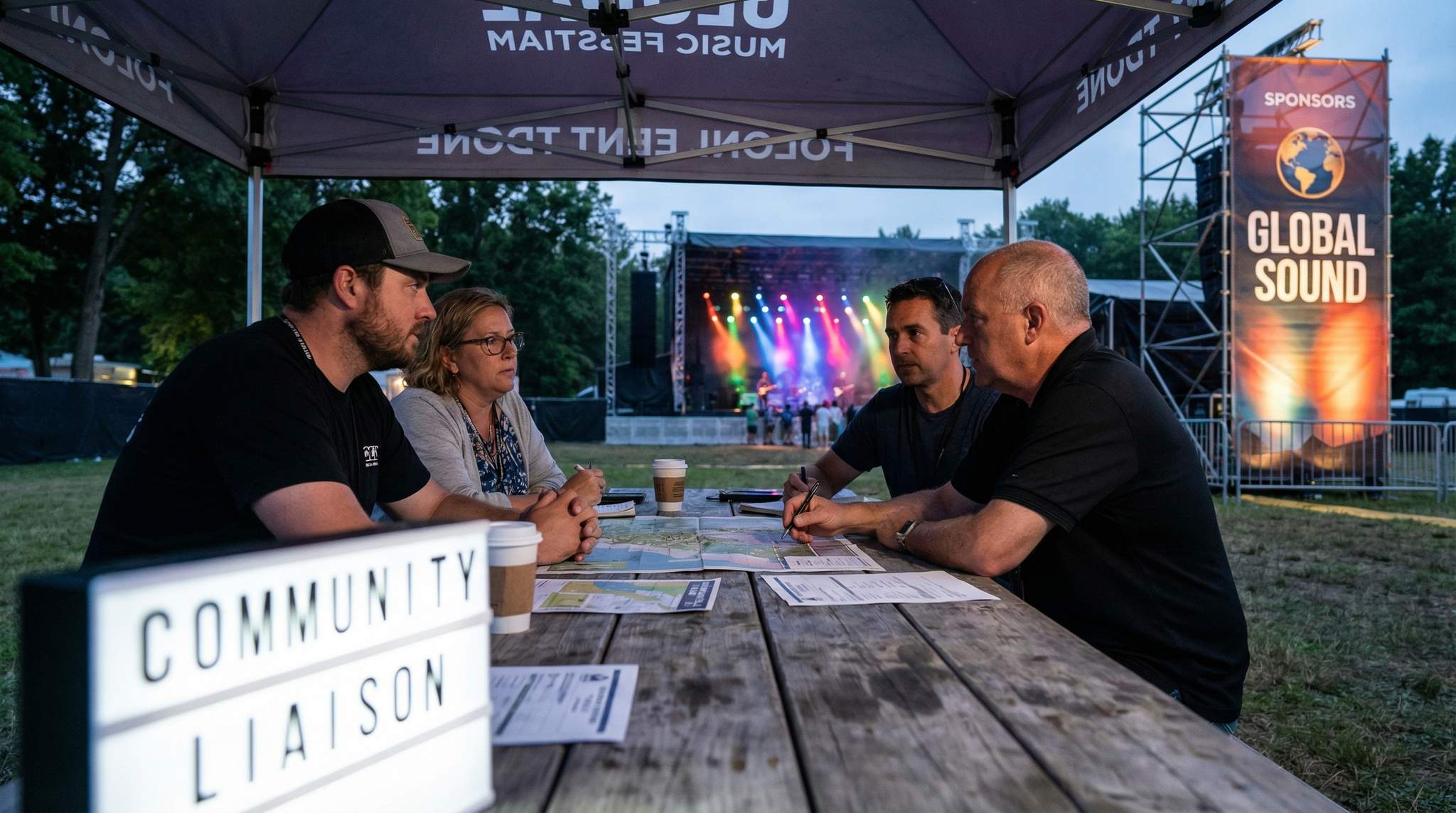
Every festival is a guest in its host community. Neighbors near the venue will experience noise, traffic, and other impacts – making them critical stakeholders. Local residents want assurance that their daily lives won’t be upended by your event. Festival producers who ignore community concerns risk petitions, complaints, or even permit denials. Conversely, a supportive neighborhood can become an event’s greatest ally, advocating for the festival at council meetings and welcoming it back each year. In short, neighbors can make or break a festival’s future success, so treating them with respect and transparency is non-negotiable.
Government & Regulatory Authorities
From city councils and county boards to park departments and police, local authorities hold the keys to your festival’s survival. They issue permits, enforce noise ordinances, oversee safety compliance, and can shut down an event that doesn’t play by the rules. These officials are tasked with protecting public interest – they care about safety, noise control, public health, and the festival’s economic or cultural contributions. Winning their trust through diplomacy and data is essential. A festival that demonstrates responsibility (like meeting safety regulations and honouring curfews) will find officials more willing to collaborate and grant flexibility. On the other hand, a history of surprise problems or community conflict can lead to strict permit conditions or rejections. Building a positive relationship with regulators – treating them as partners rather than adversaries – is a cornerstone of stakeholder diplomacy.
Sponsors and Brand Partners
Major sponsors provide the financial lifeblood for many festivals, often contributing as much revenue as ticket sales. In fact, sponsorship has become the second-largest income stream for global promoters (Live Nation’s sponsorship earnings hit a record $1.2 billion in 2024, up 9% from 2023 according to Pollstar’s analysis of live music sponsorship trends). But sponsors have their own goals: brand visibility, attendee engagement, and return on investment. They are stakeholders with high expectations – yet if their demands clash with your festival’s character, you risk alienating fans or “selling out” your vision. Managing sponsors as true partners (not just checkbooks) requires tactful negotiation. The goal is win-win partnerships where sponsors shine and the festival vibe stays authentic. Achieve that, and sponsors will remain loyal year after year.
Fans and Attendees
Last but never least, your fan community is the heart of the festival. These are the ticket buyers, passionate followers, and online evangelists who can turn an event into a cultural phenomenon – or, if disappointed, erode your reputation with astonishing speed. Fans crave an amazing experience, fair treatment, and alignment with the festival’s values. They’ll notice if a beloved festival changes tone or if decisions feel purely profit-driven. Treating fans as stakeholders means maintaining open communication, soliciting their feedback, and even involving them in the festival’s evolution. When fans feel heard and valued, they become powerful ambassadors who amplify your marketing via word-of-mouth. But if they feel betrayed (for example, by sudden rule changes, poor transparency, or a mismatch between the festival’s branding and its actions), the backlash can be intense on social media and beyond. Savvy festival producers know that earning fan trust and loyalty is an ongoing dialogue, not a one-time transaction.
Turn Fans Into Your Marketing Team
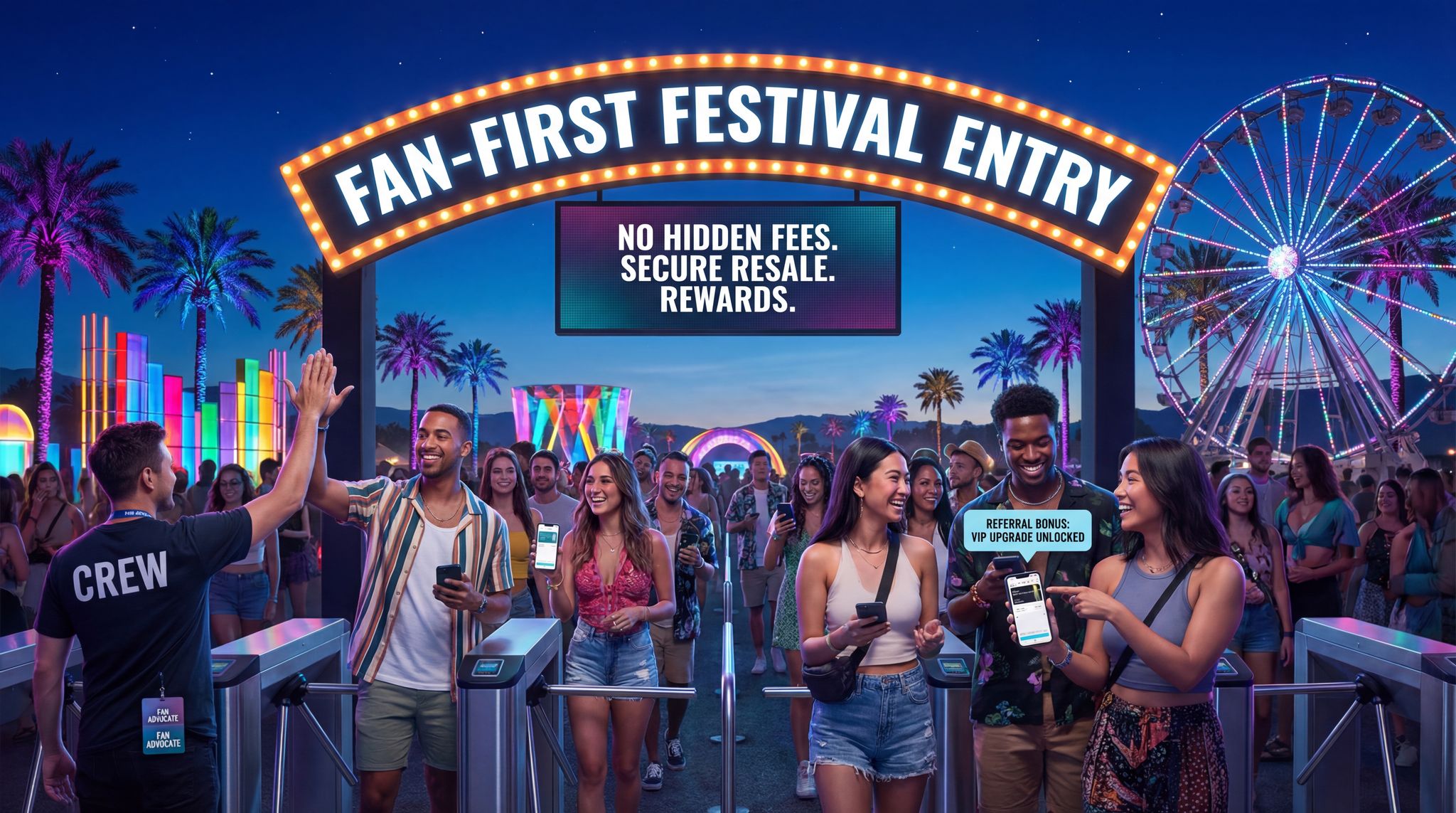
Ticket Fairy's built-in referral rewards system incentivizes attendees to share your event, delivering 15-25% sales boosts and 30x ROI vs paid ads.
Real-World Lesson: A veteran producer recalls a 15,000-capacity city festival where ignoring stakeholder balance nearly proved fatal. Early on, they focused only on artists and ticket sales. By opening night, local residents were flooding city hotlines with noise complaints, police were on edge due to inadequate briefing, and a major sponsor felt snubbed by lack of agreed signage. The fallout? A threat from the city to revoke the permit mid-event, and a sponsor reluctant to return. The festival team scrambled into damage control – hand-delivering apology letters and free earplugs to neighbors, holding emergency meetings with officials, and granting the sponsor extra promo on-site – just to survive the weekend. It was a hard lesson that a festival’s success isn’t just about fans and music; it hinges on the goodwill of everyone around it.
Below is a quick snapshot of key stakeholder groups, their priorities, and how addressing each creates a foundation for long-term festival success:
Planning a Festival?
Ticket Fairy's festival ticketing platform handles multi-day passes, RFID wristbands, and complex festival operations.
| Stakeholder Group | Key Concerns & Needs | Engagement Strategies | Benefits of Good Relations |
|---|---|---|---|
| Local Community & Neighbors | Noise, traffic, disruption, local impact | – Advance communication (town halls, leaflets) – Noise control measures (curfews, soundproofing) – Community benefits (local hiring, free tickets, donations) |
Fewer complaints; neighbors become allies who support permit renewals and champion the festival. |
| Government & Officials | Safety compliance, crowd control, environmental impact, economic benefit | – Early permitting discussions & transparency – Detailed event plans (safety, traffic, noise mitigation) – Data on economic/cultural benefits to locality |
Smoother approvals; willingness to grant variances or resources because the festival proves its value to the region. |
| Sponsors & Partners | Brand visibility, ROI, audience fit, protection of brand image | – Tailored activations that enhance the fan experience – Clear contracts on deliverables & reporting – Align sponsor integrations with festival ethos |
Multi-year sponsorships; sponsors publicly proud to be associated with the event (leading to new sponsor interest). |
| Fans & Attendees | Great experience, authenticity, fairness, inclusion | – Transparent communication (timely updates, honest FAQ) – Fan engagement (polls, ambassador programs, community groups) – Consistent festival identity (no sudden “sell-out” moves) |
Loyal fan base that markets the festival for free via word-of-mouth and defends it in tough times. |
Building Community Relations and Goodwill
Early Engagement and Transparency with Locals
Start the conversation early with your host community – well before any stages go up. Experienced festival organizers often hold town hall meetings or meet-and-greets with residents as soon as an event is announced or a permit is sought. The goal is to introduce the festival’s vision, address concerns, and most importantly listen. Provide a clear channel for locals to ask questions or air worries (a dedicated community email, phone hotline, or even dropping by local council offices). By engaging early, you show respect and can nip emerging opposition in the bud. For example, when a new 5,000-capacity boutique festival in a small UK town was proposed, the organizers mailed out info packs to all residents within a 2-mile radius and hosted a Q&A at the village hall. This proactive transparency turned many skeptics into cautious supporters – they appreciated being informed rather than blindsided by road closures and noise. A head start in communication also lets you incorporate community feedback into your planning, demonstrating that the festival isn’t just parachuting in to make noise and leave; it wants to be a good neighbor from day one.
Equally vital is managing expectations. Clearly outline what locals should expect on festival days: noise levels, curfew times, road closures, peak traffic hours, and any community perks (like resident discount codes or free entry windows). Never overpromise (“noise will be minimal” is unrealistic for a music festival and erodes trust). Instead, be honest about impacts and highlight mitigation efforts: e.g. “We will have professional traffic management to keep your street clear” or “Sound checks won’t start before 10 AM.” When people know you’re not hiding the downsides, they’re more likely to give you the benefit of the doubt. Surprises are great on stage – not in community relations.
Mitigating Noise, Traffic, and Other Impacts
Nothing turns neighbors against a festival faster than feeling that their comfort and safety come second to the event. Smart mitigation can address the biggest pain points: noise and traffic. On the noise front, invest in technology and scheduling to contain sound. That means using directional speaker arrays and low-frequency noise control like cardioid subwoofers aimed away from homes. Top festivals in noise-sensitive sites also deploy real-time monitoring – placing sound meters at the nearest houses or property lines and watching levels continuously. For instance, Glastonbury Festival in England (surrounded by small villages) engages acoustic consultants to monitor off-site decibel levels throughout the show. If a nearby village approaches the noise limit, they immediately radio the stage engineers to tweak volume or EQ immediately. Glastonbury also staggers its programming to naturally quiet down at night: major stages end by midnight, with only a few low-volume areas running very late, a strategy that demonstrates transparency to the local council. The result is a massive event that still (mostly) lets the locals sleep – and a long-standing permit because the organizers proved they take noise rules seriously.
Traffic and crowd congestion are another local headache. A solid traffic management plan – developed with local authorities – is essential. This can include shuttle buses from town to the site, clearly signposted detours, temporary parking zones, and plenty of staff or volunteers directing attendees. Communicate these plans to residents: knowing that “Main Street will be one-way 3–11 PM on festival Saturday” or that Uber/Lyft drop-offs are confined to a designated area prevents frustration. It’s also wise to coordinate with public transit providers for extra trains or buses if needed, reducing car volume on local roads. At a California street festival that drew 20,000 people, organizers worked with city transit to extend light rail service by an hour and ran a free neighborhood shuttle – steps that significantly reduced traffic jams and earned praise from the community (and police). For rural festivals, managing dust, litter, and trespassing on farmlands can be issues to solve by watering roads, hiring cleanup crews, and fencing off private property with clear signage.
Data-Driven Event Marketing
Track ticket sales, demographics, marketing ROI, and social reach in real time. Exportable reports give you the insights to make smarter decisions.
The little gestures matter too. Simple measures like scheduling pyrotechnics or particularly loud performances earlier in the evening can show goodwill. Tomorrowland in Belgium even switched to low-noise fireworks and alerts nearby residents before any big bangs, so pet owners can keep animals safe during fireworks. By adjusting its operations (including ending the opening night earlier than past years), Tomorrowland secured local approval to expand to three weekends in 2022 without major neighbor backlash, proving that proactively modifying operations secures approval. The takeaway: a festival willing to self-impose limits or invest in solutions will find communities and councils far more accommodating.
Community Benefit Programs & Local Integration
Want to turn a NIMBY (“Not In My Back Yard”) critic into a fan? Show them how your festival benefits the community. Many successful festivals run community benefit programs that share the upside of the event with locals. One common approach is donating a portion of ticket revenue or profits to local charities, schools, or neighborhood projects. For example, since its inception Glastonbury has donated millions of pounds to charities and local causes each year – so locals know that some of the festival’s success directly improves their town. Another strategy is hiring locally: staffing your festival with area residents (for paid roles or volunteer positions) puts money in local pockets and gives the community a sense of ownership. Local vendors should also be part of the mix – from food stalls to art installations, spotlighting regional businesses and talent can turn the festival into a point of pride. The New Orleans Jazz & Heritage Festival famously features almost 100% local food vendors, ensuring a huge economic boost to the community and reinforcing the cultural connection.
Need Festival Funding?
Get the capital you need to book headliners, secure venues, and scale your festival production.
Consider implementing a neighbors’ perk program. This might include free or discounted tickets for residents of the immediate area, exclusive “neighbors only” event hours, or a special viewing area set aside for the community on show day. Many venues and events institute neighbor appreciation programs – a small token like an invite to a pre-festival walkthrough, or merchandise bundles – that go a long way. Remember, these are the people dealing with road closures and noise; a bit of VIP treatment can convert begrudging tolerance into genuine support. When residents feel like they are part of the festival, they’re more likely to advocate for it.
Finally, integrate the festival into the community fabric. This could mean partnering with local cultural institutions (museums, arts councils) or aligning the festival with a city celebration so it feels less “outsider.” Some events set up community advisory boards, bringing residents and local leaders into the planning process formally. By sharing decision-making, you build trust and gain valuable local insights (like which park trail needs protection or which youth group might love a backstage tour). True community buy-in comes when the festival isn’t just seen as an invasion, but as an eagerly anticipated highlight of the local calendar. That happens by making locals collaborators in your success.
Listening and Responding to Feedback & Complaints
No matter how well you plan, some neighbors will inevitably have complaints – maybe a fence was damaged, or a street was louder than expected, or an attendee littered in their yard. The key is how you handle these complaints. Savvy festival teams treat every resident concern as legitimate and urgent. Set up easy ways for locals to reach you during the event: a 24/7 community hotline is a gold standard. Glastonbury’s famous “Village Hotline” lets residents call at any hour if noise or other issues arise, and a dedicated team is on standby to respond. If a call comes in about excessive noise, for instance, sound monitors can be dispatched to the person’s location to measure and, if needed, adjustments to stage volumes are made on the fly. Importantly, log every complaint and resolution – not only to ensure follow-up, but also to share data with local authorities afterward. Transparency in how you addressed issues builds council confidence that you take community relations seriously.
Approach community complaints with a customer-service mindset. Train your staff to respond politely and helpfully, not defensively. Something as simple as, “We hear you, and we’ll do our best to fix this ASAP – thank you for letting us know,” can diffuse tension. After the festival, consider sending a follow-up letter or survey to residents: acknowledge any known problems (“Saturday night ran later than planned due to weather delays, we apologize for the inconvenience”) and highlight fixes you’ll implement next time. This kind of debrief shows accountability. In cases where the festival did cause a significant disruption – say an emergency vehicle was blocked or a neighborhood was left messy – go the extra mile in amends: professional cleaning crews in the area, small gift cards to affected homes, or a community forum to publicly discuss what went wrong and how you’ll prevent it in the future. These gestures can turn anger into understanding. As one seasoned producer puts it, “Leave the neighbors feeling better after the festival than they did before it.” That’s the standard to aim for.
Navigating Government and Permitting
Treating Officials as Partners, Not Obstacles
Successful festival production means working hand-in-hand with local government, police, fire departments, health inspectors, and other regulators. It’s easy for inexperienced organisers to fall into an “us vs. them” mindset – viewing officials as red-tape bureaucrats or adversaries who just want to say “no.” In reality, most officials want events to succeed because festivals can enrich communities culturally and economically. Your job is to give them confidence that success won’t come at the cost of public safety or neighborhood peace. The best way to do that is by establishing a collaborative relationship early and often.
Start by identifying all the permits and approvals your event requires: public assembly permits, park use agreements, noise variances, health department certificates for food vendors, alcohol licences, fire safety checks – the list can be long. Once you know the agencies involved, reach out proactively. Rather than waiting for a council hearing, request a preliminary meeting with key officials (city events coordinators, police liaison, etc.) to walk through your festival concept. Come prepared with a high-level summary of your plan and be ready to ask, “What can we do to make this easy for you and safe for the community?” This question can pleasantly surprise officials! It signals that you’re not trying to push limits, but rather to align the event with their requirements. As one city events manager said, the festivals that succeed are the ones where “the organisers treat us like partners from day one – looping us in on plans, asking for input, and respecting our concerns.”
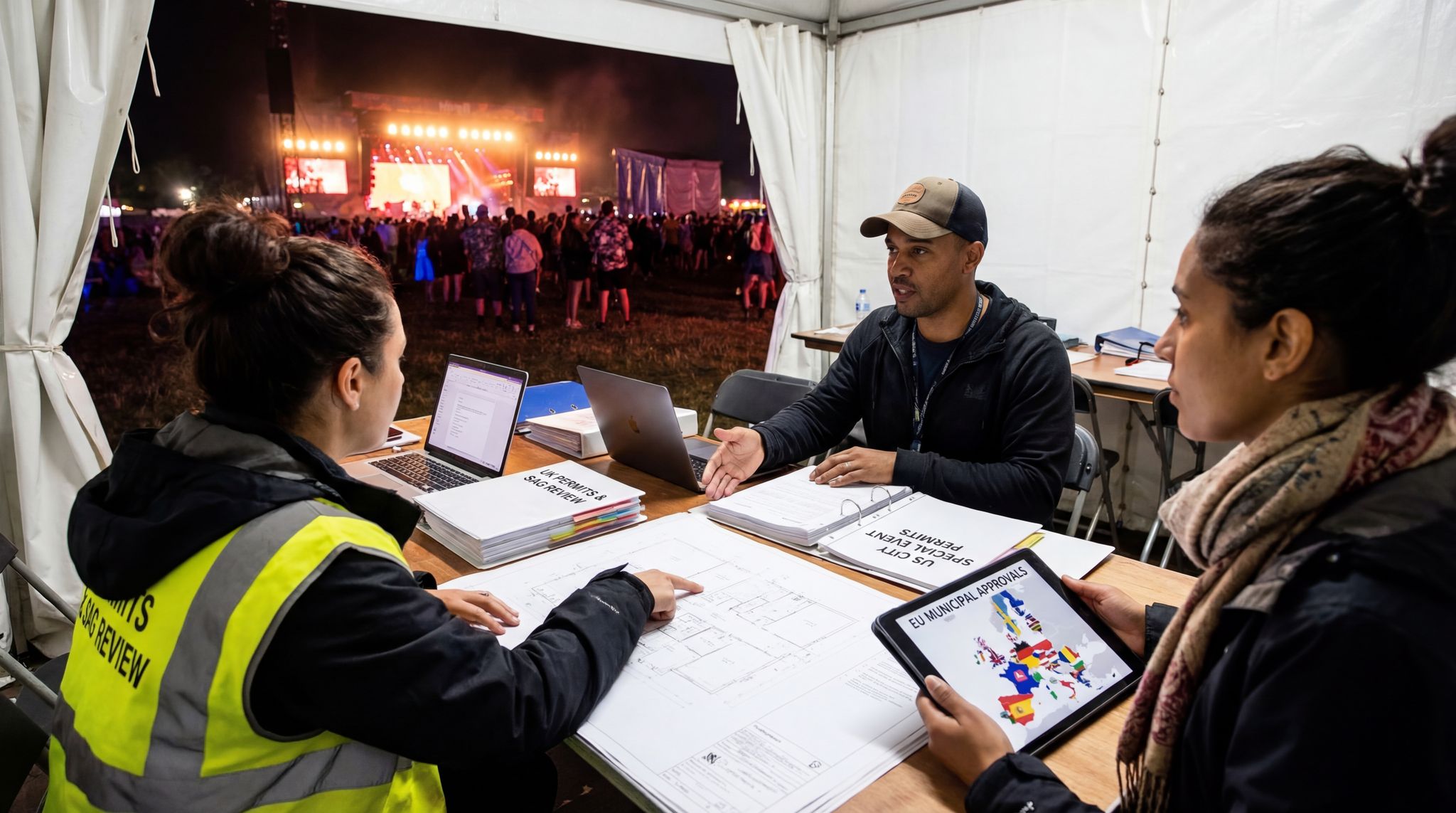
During these interactions, listen carefully to any worries officials voice. Perhaps the police chief is concerned about traffic snarl-ups on a key highway, or the fire marshal had an issue with a different event’s crowd control previously – take note and adapt your planning to address those specific points. Not only does this improve your festival’s safety, it demonstrates responsiveness. Many jurisdictions set up multi-agency safety meetings (in the UK, these are often called Safety Advisory Group meetings) where organisers present their plans to a panel of city officials. Treat these not as interrogations, but as invaluable brainstorming sessions. Bring detailed drafts of your security, medical, and evacuation plans. Show that you’ve hired reputable vendors for staging, sound, and fencing. When officials see you’ve done your homework and are open to their guidance, you turn them into allies. In some cases, officials will even go to bat for you – convincing skeptical council members or residents – once they personally trust the festival team.
Remember that government stakeholders are people, too. Basic diplomacy can build goodwill: be on time and prepared for all meetings, say thank you, and give credit where it’s due (“The Sheriff’s office helped us develop an even better traffic flow plan – we’re grateful for their input”). If your festival has a successful year, consider writing a brief letter of thanks to the city or county board, acknowledging the support of specific departments. These gestures cost nothing but help cement a positive long-term relationship. When officials feel respected, they’re more inclined to help you navigate bureaucratic hurdles swiftly. The goal is to reach a point where local authorities see your festival as a responsibly run annual highlight, not a risky headache. Getting there takes patience, humility, and seeing regulators as crucial partners in the production process.
Mastering the Permit Process (With Patience and Accuracy)
Permitting can be one of the most intimidating aspects of festival planning. There are typically dozens of forms and formalities to juggle – each with deadlines and detailed requirements. The key is to approach permits like a project of its own, with a timeline and checklist. Start as early as possible; many major festivals begin the permit process 12–18 months in advance, especially if an environmental impact study or multi-agency review is needed. Breaking it down, you’ll likely need at minimum:
- Venue and Land Use Permits: Permission to use the site (park, field, stadium). Often involves city councils or parks departments and may require a site plan.
- Health and Safety Permits: Everything from food vending permits (health department) to tent and stage building permits (building department) to fire safety plans (fire marshal).
- Noise Permits/Variances: If your event will exceed local noise ordinances (e.g. play past 10 PM or above certain decibel limits), you must apply for a variance in many locales. Provide justification and mitigation steps – e.g. “requesting extension to 11 PM on Saturday with agreement to keep dB under X and fund extra police for traffic control.” Showing you’ll mitigate noise and benefit the community can sway approval for noise variances.
- Alcohol Licence: If serving alcohol, a whole separate approval (often involving state/provincial agencies and local hearings) is needed. Plan for extra time here, as public objections can delay these.
- Public Gathering Permit: Many places have a catch-all special event permit that ensures you’ve coordinated with all relevant agencies. This might require proof of insurance, a detailed operations plan, emergency plans, and sign-offs from police, fire, EMS, etc.
Approach filling out permit applications with meticulous care. Double-check every detail – officials often view sloppy or incomplete applications as a red flag that the organiser is inexperienced. It can help to learn from seasoned festival organisers on navigating complex permits effectively – for example, keeping a master calendar of all permit due dates and required documents ensures nothing slips through the cracks. If possible, get a local “permit expeditor” or consultant who knows the ins and outs of the city’s processes, especially for large urban festivals. They can advise on the unwritten rules and political landscape that might affect your application.
Crucially, be transparent and thorough in the documentation you submit. Attach site maps, sanitation plans, proof of neighbour notifications – anything that preempts questions. A comprehensive application package might impress officials so much that approval becomes a formality. And if they do come back with questions or requests for modifications, respond promptly and positively. It’s common for authorities to ask for tweaks (e.g. “increase the number of toilets” or “add another exit gate for safety”). Embrace these as collaborative improvements rather than burdens. Every iteration of your permit documents that incorporates official feedback is another building block of trust.
Negotiating Reasonable Conditions and Curfews
In many cases, permits are granted with conditions attached – perhaps a strict noise curfew, a cap on attendance lower than you hoped, or requirements for specific measures like on-site ambulance presence or free water stations. When faced with restrictions that feel painful, it’s time for tactful negotiation. First, pick your battles: identify which conditions truly threaten your festival’s vision or financial viability, and which ones you can live with. For example, a curfew of 11 PM might be workable with schedule adjustments, but a hard cap of 5,000 attendees when you budgeted for 7,000 would require a serious conversation.
Approach negotiations with data and a cooperative tone. If you need a later curfew on weekends, come prepared with a proposal: “How about we end at midnight on Friday and Saturday, and in exchange we’ll enforce 10 PM on weeknights and invest in extra sound buffering?” Point to how similar events handled it, or the economic boost of an extra hour of programming. Emphasize safety and community: “Allowing an extra 30 minutes for egress after the music stops will actually reduce sudden crowd surges and noise, making it safer and quieter for the neighborhood.” Offer mitigations for every request: want a higher attendance cap? Promise additional security personnel and shuttle buses to handle the larger crowd responsibly. Officials appreciate when you solve their problems while asking for what you need.
Sometimes you can propose trial conditions. For instance, “If we prove this year that we can keep noise under 85 dB at the boundary at 11 PM, can we revisit extending the curfew by 30 minutes next year?” This shows long-term commitment to compliance. Always get any agreed changes in writing on the permit, so everyone’s on the same page. And once a compromise is struck, honor it to the letter. If you secure a variance to run past normal hours, absolutely make sure you meet every condition attached (like distributing neighbor notifications or having a set cutoff time with fines if violated). Falling short on a negotiated compromise not only risks immediate shutdown (many cities will pull the plug if you break curfew), but it also guarantees officials won’t be lenient in the future.
It’s worth noting that the best negotiation is prevention: build such a strong track record of responsibility that officials themselves become more flexible. Often, after a few years of flawless operations, councils will ease restrictions on their own. For example, one Midwest USA city initially required a festival to end by 10 PM and cap at 8,000 people. The promoters complied diligently and invested heavily in community outreach for three years. Seeing minimal complaints and positive local press, the city council unanimously approved a request to extend the curfew to 11 PM and raised the cap to 10,000 for year four – a direct result of trust built over time. In short, play the long game. Accept reasonable limits as you prove yourself; greater latitude often comes as a reward for good behavior and professionalism.
Demonstrating Economic and Social Benefits
Facts and figures can be powerful allies in stakeholder diplomacy. While passion for your festival’s art or music is great, local officials and residents are often more swayed by tangible economic and social benefits you’ll bring. Come armed with projections and real examples of positive impact. How many jobs will the festival create for the weekend (staff, vendors, contractors)? How many hotel rooms will it fill? What’s the estimated direct spending at local businesses? For instance, a major festival like Coachella generates over $400 million of local economic activity in its region and millions in tax revenue for its host city, according to economic insights on Coachella’s impact. If your festival is smaller, maybe the impact is $1 million – still significant to a small town – or maybe it’s the single busiest day of the year for area restaurants. Quantify this and communicate it: “This event could bring an estimated 3,000 visitors spending roughly $100 each in our town – about $300,000 injected into local shops and hotels over two days.” Hearing these numbers, even skeptical council members may warm up when they realise the festival isn’t just noise – it’s also dollars and cents that can support local livelihoods.
Beyond economics, highlight cultural and social benefits. Is your festival bringing diversity or spotlighting local artists? Are you offering free admission to underprivileged community members or supporting a charity cause? Tie the festival into the community’s values. A family-friendly cultural festival might emphasize how it provides wholesome entertainment and educational workshops for local youth. A music festival could underscore partnerships with local arts nonprofits or eco-initiatives (e.g. beach clean-ups, tree planting) that leave a positive legacy. When stakeholders see the festival as aligned with community interests – not just an outside entity looking to profit – they’ll be far more inclined to support it.
A great tactic is to invite officials and community leaders into the vision. Maybe the town’s mayor can be given a small speaking role at the opening ceremony, or the council members get a guided tour of the site build to see the professionalism firsthand. One festival producer always arranges a VIP viewing area for local dignitaries and business leaders; after experiencing the event and the joyous crowd energy, these people become its champions. They’ll remember the festival brought smiling families to their city center or new tourists to their hotels. In practical terms, this meant smoother permit renewals and even city co-sponsorship in subsequent years. As an industry veteran quipped, “Data gives you credibility, but a great experience gives you advocates.” You should strive to deliver both to your government stakeholders.
Sometimes, aligning different stakeholder groups can solve complex permitting challenges. Take the example of a proposed beach concert where government officials were hesitant to issue permits due to concerns over coastal litter and habitat disruption. The organizers brought a major eco-conscious brand to the table. The brand funded a massive, gamified beach cleanup activation where fans earned VIP upgrades for collecting recycling. By uniting the beach concert, government officials, and the brand around a shared environmental goal, the organizers not only secured their permits but also generated positive PR for the sponsor and the city.
Handling Crises and Maintaining Official Trust
Even with all the best planning, unexpected crises can occur – severe weather, an artist cancellation that upsets fans, a security scare, or a logistical meltdown. How you handle these in the eyes of officials will heavily influence your ability to get permits the next time. Always prioritize safety and clear communication in a crisis. If you need to evacuate due to weather, involve the police and emergency managers immediately and follow their guidance on messaging and crowd management. Afterwards, conduct a debrief with all agencies – be honest about what went wrong and what you’ll improve. Officials will appreciate your transparency and commitment to learning.
Never try to cover up incidents from authorities. If there was an injury, an overnight noise breach, or any notable issue, inform the relevant officials as soon as possible (they will likely hear about it anyway). It’s far better that they learn it from you along with an explanation of the response, than via a negative news article or complaint. Proactively filing an “after action” report to the city – summarising the festival’s outcomes, attendance, any incidents, and resolutions – shows professionalism and keeps the narrative in your control. One festival organiser recounts how after a night where noise briefly exceeded the permitted level, they emailed the city’s event liaison first thing in the morning with an apology and data printouts from their sound monitors, noting the adjustment made. The official was impressed by the candor and the fact the team took responsibility without being prompted, and no citation was issued. Trust is reinforced when you own mistakes and fix them.
Finally, build political goodwill beyond the minimum. Get to know the local political landscape – which council members or legislators support events and culture? Attend community meetings or civic events not directly related to your festival to show you’re invested in the community year-round. Supporting others’ causes (like sponsoring a little league team or joining the chamber of commerce) can earn goodwill that helps when you need a favour – such as a quick permit amendment or tolerance for a one-time extension. It’s all part of being viewed as a community stakeholder yourself, not an outsider. When councils, mayors, and departments view your festival as bringing net positive value and being run by trustworthy professionals, you pave the way for a smooth path forward in years to come.
Sponsor Partnerships Without Compromise
Aligning Sponsors with Your Festival’s Values and Audience
Choosing sponsors is about more than chasing the biggest cheques – it’s about finding brands that genuinely fit your festival’s identity and audience. A misaligned sponsor can feel jarring or inauthentic, both to attendees and in terms of the festival’s mission. Industry veterans stress doing due diligence on potential partners. Ask: Does this sponsor’s image and product appeal to my attendee demographic? Does it contradict any of our core values? For example, a hip-hop street culture festival might seamlessly partner with a sportswear brand, but a wellness-oriented yoga retreat would likely avoid big alcohol sponsors. There’s some leeway – you can get creative (a beer company might sponsor a chill-out lounge at a wellness fest with non-alcoholic offerings) – but tread carefully. Fans have strong radar for a “sell-out” moment when a sponsor feels completely out of place or is seen as unethical. A notorious cautionary tale came in 2024, when SXSW Festival faced backlash for signing the U.S. Army and a defense contractor as major sponsors; dozens of artists and speakers withdrew in protest of that partnership, as reported in Time’s coverage of the SXSW backlash. The lesson is clear: a sponsorship that undermines your festival’s values or alienates your community can do far more harm than the money is worth.
To secure aligned sponsors, craft a clear festival brand profile and share it with potential partners. This profile should outline your attendee demographics, what the audience cares about, and the tone of the event. Many sponsors appreciate when organisers are up front about what will and won’t fly. For instance, stating “Our festival is plastic-free and eco-conscious, so we’re seeking partners who can activate in a sustainable way” helps filter in companies with the right mindset. Likewise, if your crowd skews under 21, you’ll emphasize ID restrictions on any alcohol marketing and avoid anything that feels predatory or out-of-place. It can be tempting, especially for newer festivals, to take any sponsor willing to pay – but maintaining a short list of “ideal sponsor attributes” (and red flags) will guide you toward partnerships that enhance rather than detract from your festival’s character.
Designing Win-Win Sponsor Activations (Not Just Logos Everywhere)
One of the biggest mistakes in festival sponsorship is treating the deal as pure advertisement: slapping logos on every surface and calling it a day. Today’s sponsors and festival-goers both expect more. Brands seek engagement and experiential marketing, and attendees will respond far more positively to creative activations than to banner overload. In practice, this means working with sponsors to design on-site experiences or services that add value for festival fans. Think in terms of “What would make the festival more fun or convenient for attendees, that a sponsor could provide?”
For example, instead of a boring logo tower, a beverage sponsor could host a themed chill-out lounge or a branded water refill station (promoting sustainability and hydration). At many large festivals, tech and phone companies sponsor charging stations – a highly appreciated service when everyone’s batteries run low. Some events let a sponsor curate a side stage or tent with its own programming (aligned to the fest’s music style) which can come off as a legitimate addition rather than a commercial break. Interactive booths, giveaways, and photo-op installations are also popular: a glitter makeup station by a cosmetics sponsor, or a surreal photo backdrop by a film/TV sponsor. The key is these activations should be organic to the festival environment. If fans are enjoying them, the sponsor’s presence feels welcome. In fact, roughly 70% of festival-goers say sponsors can enhance their experience when done right.
Work closely with the sponsor’s marketing team to develop these ideas. They know their brand; you know your audience – together you can find the sweet spot. Ensure the sponsor’s messaging complements the festival’s tone. If yours is an indie folk festival with a laid-back vibe, a sponsor activation that’s overly loud, flashy, or sales-y will stick out poorly. But a cozy tent with branded blankets and acoustic surprise sets could be a hit. Always ask, “Would I, as a festival attendee, enjoy or appreciate this?” If the honest answer is no, keep iterating. It’s often useful to offer tiered options in sponsorship packages that explicitly include experience-based assets (e.g. “Gold Sponsor: 1 dedicated 20×20 ft activation space in high-traffic area, 10 VIP tickets, logo on program…” etc.). This frames from the outset that being a sponsor at your festival isn’t just about logos – it’s about meaningful participation.
What about branding on stages and signage? Certainly, sponsors do love seeing their name attached to big festival moments (“Main Stage presented by X”). It’s fine to have some of these placements, but moderation is key. Attendees understand the reality of sponsorship, but no one wants to feel like they walked into a billboard farm. A good rule of thumb is to preserve your most iconic festival symbols from heavy branding. Let the main stage keep its unique art and decor; instead, perhaps allow branding on the second stage or the official festival app and live stream (where it’s less intrusive). This balance ensures your festival’s aesthetic and authenticity remain intact, even while sponsors get visibility. In summary, the best sponsor integrations make the festival experience richer and engage fans in a positive way, so that festival branding and sponsor branding support each other rather than clash.
To truly elevate these partnerships, organizers must focus on delivering a holistic brand experience through sponsorship activation. This means moving beyond static physical footprints and integrating the sponsor into the attendee’s emotional journey. For example, a skincare brand at a summer festival doesn’t just hand out samples; they create a shaded, misted oasis where fans can cool down, reapply SPF, and take stylized photos. The activation solves a real attendee problem (heat and sun exposure) while perfectly aligning with the product’s value proposition. When you design sponsorship activations as immersive brand experiences, the sponsor stops being an interruption and becomes a highly anticipated festival feature. This approach not only guarantees higher engagement metrics for the brand but also enriches the overall festival environment.
Setting Clear Expectations and Delivering Value
Once you’ve selected the right partners and brainstormed great activations, it’s crucial to lock these plans into a clear sponsorship agreement. Many festival producers have learned the hard way that vague promises can lead to disappointment or conflict. Your sponsorship contracts should spell out exactly what each sponsor will receive (number of banners, size and location of their activation space, how many social media mentions, stage naming rights for which days, etc.) and what you expect in return (payment amount and schedule, any in-kind contributions, sponsor promotion of the festival on their channels, etc.). Clarity here ensures there are no unhappy surprises on site – like a sponsor arriving thinking they have a 10m LED wall by the main stage when that wasn’t agreed.
Communication with sponsors should be maintained regularly from signing through festival delivery. Provide them with updates on festival developments (especially things that affect their activation, such as site layout changes or schedule tweaks). Many veteran organisers set up a sponsor briefing packet a month or two out – containing all logistics info they need: credentials for their staff, set-up/tear-down timelines, rules for activation decor (to maintain safety and aesthetics), and who to contact during the event for any issues. Essentially, treat your sponsors almost like VIP artists or vendors in terms of support; assign a sponsor coordinator on your team to be their point person. This level of care not only helps their activation succeed, it also shows you’re a competent partner.
During the festival, strive to over-deliver on value. Ensure their branding that was promised is visible and correct. If possible, capture data or metrics – e.g. foot traffic to their activation, engagement levels, or get some professional photos of their activation bustling with happy fans. These will be gold when proving ROI later. If a sponsor sees that, say, 2,000 people came through their branded lounge and 500 posted photos from it with the sponsor hashtag, they’ll be far more likely to renew. Some festivals now provide sponsors with real-time reports or dashboards (via RFID wristbands or app interactions) to quantify impressions and engagements. Whether high-tech or manual, measuring outcomes is key.
Post-event, do a thorough recap with each sponsor. Thank them, share the success stats, and yes, address anything that could improve. If a promised element was missed (maybe a logo placement was accidentally left out or a last-minute schedule change reduced their stage time), own it and propose a “make-good” – perhaps a discount or bonus benefit for next year, or extra inclusion in off-season fan newsletters. This transparency builds trust. The worst thing is a sponsor feeling they didn’t get what was paid for; the best outcome is them feeling they got even more than promised. That’s how you build long-term sponsor relationships. As an example, a regional festival in Australia had a beer sponsor who initially signed on for one year; after the organisers diligently delivered on every promise and showed the sponsor a highlight reel of festival-goers enjoying the beer garden activation, that sponsor not only renewed but upped their fee by 30% for a multi-year deal, saying the festival “felt like a natural home for our brand.” That is the outcome of treating sponsors as valued partners from start to finish.
Balancing Sponsor Visibility with Authentic Festival Experience
A constant tension is how to give sponsors the exposure they crave without compromising the look, feel, and soul of your event. The mantra to keep in mind is quality over quantity: one well-integrated, memorable sponsorship is worth more than a dozen out-of-place logos. Festival-goers have become savvy; they’ll accept and even appreciate sponsorship that clearly contributes to the event, but they will bristle at anything overwhelmingly commercial that detracts from their experience. Keep an eye on fan feedback (online comments, post-event surveys) about sponsors. If you hear grumblings like “Festival X has gotten too corporate” or jokes about it being the “Brand Y Fest,” take that as a warning sign to dial back.
Strategies to maintain authenticity include curating where branding lives. Let the art installations, stages, and natural elements of your festival shine without corporate logos cluttering them. Instead, concentrate branding at logical points: entry gates (“Welcome to Festival X – presented by Sponsor Y”), on the festival map and app, and of course in the dedicated activations and sponsor zones. Some festivals create a “sponsor village” area where all major brand booths live, leaving the main grounds relatively ad-free except for low-key presence. You can also cap the number of main sponsors to avoid logo overload. Many independent festivals deliberately limit to a handful of key sponsors and turn down smaller deals to preserve aesthetic consistency. It might mean sacrificing some short-term revenue, but it pays off in maintaining the festival’s image and long-term fan loyalty.
Be mindful of announcements and content. It’s okay to have a MC thank sponsors over the mic a couple of times, but don’t make constant ad reads that interrupt performances. On the flipside, you might incorporate a clever interactive plug – e.g. a live contest presented by a sponsor that’s fun for attendees. For digital audiences via live stream, you might display sponsor messages between sets, which spares the on-site audience. In any case, keep the focus on the music, art, and community that people came for. Sponsors should feel like part of the celebration, not a distraction from it. If you design things right, attendees will remember the cool experience they had (which happened to be sponsored by Brand X) rather than just a barrage of ads.
One more aspect of balance is crisis management with sponsors. If something doesn’t go as planned – say a sponsor’s activation malfunctions or a promised artist shout-out doesn’t happen – handle it diplomatically. Sometimes sponsors themselves do something tone-deaf (like a social media post that fans criticize). As the festival host, you may need to act as a mediator. This could mean working with the sponsor on a quick reparation (an apology, a fixed post, a small goodwill gesture to fans). Keeping sponsors happy is important, but protecting your festival’s integrity comes first. If a sponsor activation triggers unexpected fan backlash (perhaps it was perceived as insensitive or just annoying), be ready to adjust or even shut it down if necessary. It’s better to have a tough conversation with a sponsor about why you need to tweak their presence than to let fan sentiment tank. Most sponsors will understand if you frame it as making sure their brand is seen positively by the audience. In fact, many will appreciate your expertise in reading the crowd. Ultimately, if you’ve chosen your sponsors well, you’ll rarely face this issue. Those who truly align with your vision won’t want to compromise it any more than you do – because your festival’s credibility will be boosting their brand in return. Strive for that sweet spot where attendees, organizers, and sponsors all feel like they got value without anything essential being lost.
Long-Term Sponsor Relationship Management
Landing a sponsor is just the start; nurturing that relationship over multiple editions is where the real payoff lies. Treat sponsor retention as a core strategy – it’s always easier to renew an existing partner than to find and educate a new one. One approach is to host a post-festival sponsor summit or personal debrief meeting. Invite key sponsors to an informal session where you recap successes, exchange feedback, and even brainstorm ideas for next year. This inclusion makes sponsors feel they’re truly part of the festival’s evolution, rather than just an ATM. Share your vision for the future and how they might fit into it: “Next year we’re considering a second stage focused on emerging artists – perhaps your brand could title it, since it aligns with your support of new talent?” These discussions often lead to early verbal commitments.
Keep in touch during the off-season. Send sponsors updates on major festival developments (secured a new venue? dates announced? a cool theme being planned?) before they hit the press. It makes sponsors feel like insiders. Also share any media coverage or video recaps highlighting the event – especially where their sponsorship had an impact. Seeing their logo in a Billboard or IQ Magazine photo of the festival, or hearing attendees praise an activation on social media, reinforces the value. Some organisers send an end-of-year thank you gift or note, perhaps around the holidays, to show appreciation beyond the contract.
Another tactic is to help sponsors network with each other or with your other stakeholders. For example, at artist meet-and-greet sessions, include a sponsor representative to snap a photo with a headliner (they’ll love that). Or host a local partners mixer where sponsors, community leaders, and festival team can mingle – building a family vibe around the event. Sponsors who form personal connections with you and the community are far more likely to stay invested emotionally, not just financially. One festival director recounts how their long-time beverage sponsor became such a close friend of the festival that they offered refrigeration trucks for free one year when budgets were tight – an act of goodwill that went beyond any contract. That’s the power of genuine relationship-building.
Finally, always be thinking a step ahead for mutual growth. If your festival is expanding to a new city or adding a second weekend, discuss it first with your loyal sponsors, essentially giving them first right of refusal to come along for the bigger ride. Often they will jump at the chance to deepen the partnership. At the same time, if a sponsor’s needs change or they struggle one year, be understanding. Perhaps they can only afford half their usual contribution; consider accommodating a short-term downgrade rather than losing them entirely. Loyalty is a two-way street – by showing flexibility and sticking with a sponsor through tough times, you encourage them to do the same for you. In sum, invest in your sponsors’ success as if you’re on the same team (because you are). When sponsors feel valued and see consistent returns, and when fans accept and even enjoy sponsor involvement, you’ve achieved the delicate balance of festival sponsorship diplomacy.
Engaging Fan Communities as Stakeholders
Cultivating an Involved and Empowered Fan Base
Your ticket buyers and hardcore fans might not have formal power like officials or sponsors, but their collective voice can massively influence your festival’s trajectory. Smart festival producers treat fans as a community to nurture, not just customers. This starts with creating avenues for fans to engage beyond purchasing a ticket. Social media is the obvious one – maintain active festival profiles that don’t just broadcast marketing but also interact with fans (answer questions, repost user photos, run polls). Show that there are real people behind the brand who care about the attendees’ experience. Many festivals now have official Facebook groups or Discord/Reddit communities where fans can mingle, share excitement, and give feedback. Having a presence there (light-touch moderation and occasional input) helps you take the pulse of fan sentiment year-round.
Consider formal fan ambassador or street team programs. Fans can become amazing evangelists when given the opportunity. By empowering your most passionate attendees as ambassadors, you tap into organic enthusiasm to spread the word about your event. Referral programs, where fans get rewards (like merch or VIP upgrades) for bringing in new ticket buyers, not only boost sales but also make fans feel like they’re contributing to the festival’s success. For example, a New Zealand festival recruited 50 “fan reps” who each got a unique discount code to share; the top referrers earned backstage meet-and-greets. The initiative drove hundreds of ticket sales and deepened those fans’ loyalty – they wore their ambassador status as a badge of honour. Fan involvement breeds ownership, which in turn breeds longevity.
Offline, you can involve fans in the creative side. Some festivals hold contests for fans to design a poster, vote on a theme, or even submit ideas for a small stage lineup. When fans see their input realized on-site (“This year’s art installation was an idea from our attendee contest!”), it reinforces that the festival is as much theirs as it is the organizers’. One caution: manage expectations. If you solicit fan ideas, make sure to acknowledge them and implement something, even if not every idea can be used. Feeling ignored after giving input can sour goodwill quickly. Transparency helps (“We loved many ideas but due to budget we picked one winner; however, we plan to incorporate other suggestions like XYZ in the future.”).
An often underappreciated stakeholder group within your fan community are the local attendees and longtime loyalists. These people are not only repeat customers but often vocal advocates in online forums and at local pubs. Identify them and treat them extra well. Acknowledge familiar faces, maybe create a loyalty program (for example, people who’ve attended 5 years get a special pin or a discount on year 6). These gestures cost little but can turn fans into fanatics – the kind who bring ten friends along or defend your festival when it faces criticism. All of this comes down to a core principle: fans want to be seen and valued, not just as an entry in a ticketing database, but as a living part of the festival family. Cultivate that feeling and you’ll have a community that supports you through thick and thin.
Transparent Communication and Expectation Management
Trust is the currency with fan communities. The more transparent and timely your communication, the more trust you bank for when you really need it. Make a habit of keeping fans in the loop on all important aspects: ticket on-sale dates, lineup announcements, schedule changes, venue improvements, safety policies, and so forth. When you communicate, do it clearly and honestly. Avoid the trap of over-hyping or misleading – it might boost short-term buzz, but it damages credibility long-term. For instance, if there’s a delay in announcing the lineup due to contract negotiations, it’s better to tell fans “Hang tight, we’re finalizing some amazing acts and will announce two weeks later than planned” rather than leaving an informational void which breeds rumours or frustration. Fans greatly appreciate when festivals “level” with them.
Social media is often the frontline for these updates, but don’t underestimate the value of more personal messages too. A heartfelt email or blog post from the festival director addressing the community can resonate. Some organisers even do live Q&A streams (“Ask the Festival Anything”) a couple of times per year. This can be nerve-wracking, but it shows you aren’t afraid of tough questions. When fans see organisers candidly address concerns – say, why ticket prices went up or what you’re doing to improve entry lines – it humanises the event and dispels the notion that it’s all faceless business. Naturally, you can’t divulge every detail (some information is sensitive or not finalized), but even a partial answer with context is better than silence.
Crucial moments for transparency include if/when things go wrong. Perhaps an expected headliner falls through, or new regulations force a change (like suddenly having to implement vaccine checks or an age restriction). Communicate these changes as soon as possible, explain the why behind them, and empathise with fans’ perspective. If it’s bad news (like a beloved artist cancellation), acknowledge disappointment (“We know many of you were excited to see X, and we’re as gutted as you are”), then follow up with how you’re addressing it (announcing a replacement, issuing partial refunds, etc.). In 2022, when a European festival had to cut a day from its schedule due to extreme heat, the organisers quickly notified ticket-holders of the decision, explained the safety rationale, and offered compensation options – resulting in largely positive fan feedback despite the letdown, because the community felt respected and informed.
Expectation management also extends to the on-site experience. Be clear in advance about what the festival will be like. If it’s a rain-or-shine event in a muddy field with camping, prepare first-timers with practical tips (what to pack, wellies recommended!). If there are strict rules (no outside food, etc.), say so upfront and often, to avoid clashes at the gate. Surprises in this domain are usually not fun for attendees. Many festivals now use mobile app push notifications for real-time info during the event (“Storm approaching, seek shelter” or “Parking lot A is full, go to lot B”). This immediacy is great, but also ensure you have visible info points or bulletin boards for those less glued to tech.
One more subtle point: the tone of your communication matters. Keep it consistent with your festival’s personality – whether that’s playful, conscious and caring, or straight-shooting professional. If your festival has a quirky, friendly brand voice on Twitter all year and suddenly issues a very stiff, legalistic policy update, it can throw fans off. You can communicate serious information in a human way. For example, instead of “Festival not responsible for lost items, no re-entry,” frame it as, “We’d hate for you to lose your stuff or miss part of the show, so please only bring what you need each day – note that re-entry isn’t allowed, and unfortunately we can’t easily track lost items in the festival rush.” It’s saying the same thing, but the tone is festival-friendly. Consistent, authentic communication builds a rapport with your fan base. They’ll come to trust announcements as if hearing from a reliable friend. That trust is invaluable if you have to ask patience of them in a crisis or need their support for a new initiative.
Handling Fan Feedback, Criticism, and Backlash
In the age of social media, fan feedback is immediate and very public. You’ll likely hear both praise and complaints in real-time as you market and produce the festival. Having a plan for how to handle negative feedback is as important as promoting the positive. The first rule is don’t get defensive. If an attendee tweets that a stage sound was poor or ventilation was lacking, respond with an apology and a commitment to look into it – not an excuse or argument. Often, simply being heard is what an upset fan wants. By publicly responding politely (“We’re sorry to hear that – our production team is addressing the sound issue right now, thank you for letting us know!”), you not only possibly win that person back, but you also show thousands of lurking onlookers that your festival cares and reacts. Many events hire or assign a social media/customer service team during the show whose sole job is to monitor and triage attendee postings and messages.
For more complex or serious criticisms, a personal touch helps. If someone pens a blog post or long complaint email about how your festival failed them, consider reaching out directly. It could be a direct message or an invitation to chat one-on-one about their experience. Turning a disgruntled customer into a heard-and-satisfied one is sometimes called “service recovery” in hospitality – and it can create an even more loyal fan than one who never had an issue. Obviously, you can’t please the truly trolls or unreasonable demands, so use judgment. But the act of trying sincerely is visible to the wider community. One festival in the Pacific Northwest had a PR crisis when long lines and water shortages angered attendees during a heat wave; the founder wrote an open letter taking full responsibility, detailing immediate fixes (like investing in more water stations and entry gates next year), and offered a partial refund to that year’s attendees. That gesture turned a potential backlash into an outpouring of support – many fans commented that they appreciated the honesty and would give the fest another chance, with some even declining the refund because they wanted to support the event financially. Humility and accountability go a long way with fans.
If you implement changes based on fan feedback, let them know! Did dozens of people ask for more shade structures or a specific genre of artist? Announce proudly when you deliver it: “You spoke, we listened – this year we’re adding…”. It makes fans feel a genuine part of shaping the festival, and encourages continued constructive feedback. Conversely, if you have to make a decision you know some fans won’t like (like discontinuing an old tradition or raising ticket prices), try to explain the reasoning in a respectful way. Not everyone will agree, but many will accept necessary changes if you’re transparent (e.g. “To improve safety, we can no longer allow BYOB alcohol – we know this is a change, but here’s how we’ll ensure drink prices remain fair so you can still enjoy affordably”). Often the ire comes when a change feels sudden and unexplained, rather than from the change itself.
Finally, galvanize your core fan community to be your ambassadors in squashing misinformation or negativity. Provide them with facts and positive stories they can share. Sometimes a single social media rumor (even false) can catch fire – like “I heard the festival isn’t providing any toilets!” If you’ve built a loyal fan base, you’ll see them jump in to correct falsehoods before your team even has to. Reward this kind of positive advocacy with simple recognition – a shoutout to superfans or a “fan of the month” highlight can celebrate those who consistently uplift the community vibe. In essence, aim to turn fans into an extended part of your communications team. When missteps occur, as they inevitably do, a reservoir of goodwill and a cadre of supportive voices can prevent a full-on backlash and instead foster a problem-solving atmosphere among your attendees.
Balancing Fan Desires with Festival Practicalities
Fans often have strong opinions about what the festival should be – from lineup and programming to on-site facilities and policies. While it’s important to listen, producers must also balance these desires with practical constraints (budget, logistics, safety) and the festival’s vision. This is a delicate form of diplomacy: you can’t give every fan everything they want, but you can usually find middle ground that honors the spirit of their requests.
For example, fans might demand a particular headliner or genre. Perhaps that artist is out of reach financially or unavailable. Rather than simply saying “no”, think of how to satisfy the underlying desire. If people want more of a certain genre, book a couple of upcoming acts from that scene or host a themed stage – even if the megastar isn’t there. Communicate that you’ve expanded that part of the lineup in response to interest. If attendees express they want more interactive art or free activities, but you lack budget, consider inexpensive additions like a community jam session area or a costume parade. It shows you’re trying to enrich the experience within your means.
Sometimes fans want less of something – e.g. fewer sponsorship shoutouts or less crowded camping. While you may not be able to cut sponsor messages needed for revenue or magically increase the campground size overnight, incremental improvements can be made. Limit on-stage sponsor mentions to only the start and end of each day (fans will notice the reduction). Introduce a new camping layout or an overflow area to ease crowding a bit. Then let fans know about these tweaks. It signals that you hear them and value their comfort and enjoyment, even if you can’t fully eliminate all pain points.
An important aspect of balancing fan expectations is holding true to your festival’s core identity. Fans will have diverging wishes – you can’t chase every trend without possibly diluting what makes your event unique. As a producer you must occasionally say no for the greater good of the festival’s character. If your festival is known for being an intimate boutique experience, expanding the site or booking too many mainstream acts due to some fan pressure might degrade the magic that drew your core audience. In such cases, explain your reasoning: “We surveyed about expanding to 3 days, and while some of you were excited, many love the special atmosphere of our 2-day format. We’ve decided to keep it intimate – quality over quantity – to preserve the experience you fell in love with.” Fans often respond well when they see a decision is made to protect the integrity of the event for their benefit, even if it’s not exactly what they asked for.
Lastly, manage the culture of your fan community itself. Encourage positivity, inclusivity, and respect among attendees by embodying those values in your messaging. Set the tone that your festival is a family and everyone has a role in making it great. When fans feel a sense of collective ownership and pride, they tend to moderate their own expectations, understanding that compromises are sometimes needed to keep the festival healthy. In summary, balancing fan desires with practical needs is about finding creative compromises and communicating openly. By staying true to your vision while adapting to reasonable requests, you maintain credibility and keep the crowd on your side, even if they don’t get everything on their wish list.
Even hyper-specific fan behaviors require thoughtful management and balancing. Consider the intense dedication of fans railing at festivals—the practice of sprinting to the front barrier and staying there all day to secure the best view of a headliner. While this shows incredible passion, it presents logistical challenges regarding hydration, crowd crush, and bathroom access. Savvy organizers address this cultural phenomenon by implementing robust front-of-stage safety protocols, such as passing out free water to the rail, utilizing specialized barrier designs, and training pit security to monitor fan health. By acknowledging and safely accommodating these hardcore attendees, you validate their dedication while maintaining the strict safety standards required by your operational team.
Balancing Vision with Stakeholder Needs
Defining Your Non-Negotiables (Know Your “North Star”)
In the swirling sea of stakeholder demands, a festival producer must know their “north star” – the core vision and values of the festival that should not be compromised. Before you ever sit at a negotiating table with a sponsor, council, or partner, clarify internally what aspects of your event are mission-critical. Is it the musical curation and artistic integrity? A commitment to sustainability? An inclusive community vibe? These are the elements that make your festival your festival. By identifying them clearly, you’ll know where to draw the line even as you make accommodations elsewhere. Industry veterans often create a festival mission statement or brand guide as a touchstone. According to seasoned co-producers, agreeing on a unified vision document helps keep every decision aligned with the event’s identity when co-producing a festival with partners. For example, if your mission statement says the festival “celebrates cutting-edge underground music in an eco-friendly environment,” then any stakeholder request that would violate that – say a sponsor wanting to impose a pop headline act or use excessive single-use plastics – can be confidently declined or redirected, because it conflicts with the agreed DNA of the festival.
Communicate these non-negotiables to key stakeholders early. Let the city know if certain artistic expressions (within legal bounds) are fundamental to the festival, so they aren’t surprised when you have, say, avant-garde performers. Make it clear to sponsors what lines you won’t cross: e.g. no stage naming that overrides the festival’s theme, or no marketing that is exclusionary or offensive. When you set these expectations upfront, stakeholders are usually respectful – they might push back initially, but if you stand firm and explain how the festival’s soul is at stake, many will understand (after all, they invested in or approved your event because of what makes it special). One festival promoter recounts a negotiation where a major beer sponsor wanted to exclusively sell their product on-site. The festival refused because a core tenet was supporting local craft brews. Instead, they offered a compromise (the big brand could have a prominent bar area, but other vendors would also be present). By reminding the sponsor that the festival’s ethos was about local culture – which attracted the audience in the first place – the promoter convinced them that a compromise actually benefited everyone. Authenticity was protected.
Knowing your non-negotiables also guides you in tough moments. When pressed by financial or political pressures, having a strong compass prevents knee-jerk decisions that could derail your brand. During the lean pandemic years, some festivals were tempted by any and all revenue opportunities, but those that had clarity about their vision avoided damaging moves. For instance, an EDM festival declined a last-minute offer from a payday loan company for title sponsorship – even though the money could have filled a budget gap – because the predatory image clashed with their community-driven values. It was a gamble that paid off when normal times returned and fans remained loyal, not turned off by a one-time sellout. The bottom line: decide what remains sacred, and let stakeholders know those are off the table. You may be surprised how much respect you earn for sticking to your guns on the important stuff.
Creative Solutions to Stakeholder Demands
“Diplomacy” often means finding a third way when two sides have opposing needs. In festival terms, this means using creativity to satisfy a stakeholder’s underlying concern without sacrificing your vision. When faced with a demand that seems to conflict with your festival’s style, ask yourself: Is there an alternative way to address this that still keeps everyone happy? This is where festival producers truly earn their stripes – by inventing solutions that aren’t immediately obvious.
Noise curfews are a classic example. The community and officials demand quiet by a certain hour; your fans want to party until late. The straightforward solution might be “cut the music at 10 PM,” pleasing officials but disappointing attendees. A creative solution would be to switch formats after curfew: for instance, implement a silent disco or headphone party that can run later with zero external noise. Many festivals have done this to extend nightlife past sound curfew – the city sees compliance, neighbors hear crickets, and the attendees are still dancing, just with glowing headsets on. Similarly, if bass vibrations are the issue, using tactile transducers (vibrating floor panels) in certain zones can let fans “feel” the bass without blasting it through massive subs late at night. These kinds of innovations show stakeholders you’re committed to meeting their goals and delivering for your audience.
Another common friction is branding and aesthetic. Perhaps a sponsor really wants more logo placement, but you’re worried about visual clutter. One workaround is to offer digital branding in your festival livestream or videos in exchange for keeping on-site branding subtle. The sponsor gets millions of online impressions (even beyond the festival’s physical attendees), and your festival grounds stay beautiful and authentic for those on-site. Or if a sponsor insists on physical presence, integrate it into art – commission a mural or installation that incorporates their logo in an artistic way, rather than a plain banner. That way fans might actually appreciate it as part of the decor. In one case, a tech sponsor wanted to dominate a festival entrance with branding; the organisers instead worked with them to create an interactive LED archway that displayed attendee tweets and photos along with gentle sponsor mentions. It became a beloved festival feature and satisfied the sponsor’s visibility goals. Think outside the box: often the demand is for a result (e.g. “we want exposure” or “we need quiet”), and there are multiple means to reach that result.
Then there’s the issue of budget versus experience – e.g. council insists on costly compliance measures or a local vendor is more expensive but politically correct to hire. These can strain finances which in turn threaten the festival’s content quality. Creative diplomacy here might involve seeking sponsorship or grants specifically to cover community-related costs (some local governments have event funding programs for economic/cultural benefits, or you might approach a sponsor to underwrite the extra environmental measures required). By securing designated funds for those purposes, you free your core budget to maintain the fan experience. It’s like solving a puzzle: if policing costs are huge, maybe a local business association can subsidize it in exchange for a “community partner” title, since you’re bringing customers to town.
One real-world case: a festival in Asia faced government pressure to reduce waste. Banning single-use plastics was going to increase water provision costs (more water stations, biodegradable cups, etc.) significantly. Instead of cutting other areas to afford this, the organisers struck a deal with an eco-friendly consumer goods brand to sponsor the new water program – the brand got credit for green initiative and marketing on reusable bottles, the festival met the government’s sustainability requirement and kept its budget intact for programming. Everybody won in the end. This kind of solution-oriented mindset, where you turn challenges into opportunities, is the essence of stakeholder diplomacy. Not every standoff will have a perfect win-win, but if you approach each with a flexible and inventive attitude, you’ll find compromise options that maintain your festival’s soul while meeting stakeholder needs more often than not.
Case Study: Preserving Vision Under Pressure
To see these principles in action, let’s examine a scenario many festival producers face. Imagine a successful 10,000-capacity independent festival known for its underground ethos and community vibe. After a few sold-out years, a major corporate sponsor and a large concert promoter approach with partnership offers that could inject big money – but also threaten the festival’s DNA. The sponsor, a telecom company, wants naming rights (“XYZ Festival Powered by BigTel”) and extensive branding. The promoter offers to help expand attendance to 30,000 and bring A-list headliners, but they’d take control of booking and production decisions. It’s a classic vision-versus-growth dilemma.
The festival organizers in this real case (an amalgam of a few true stories) chose a diplomatic path to partner up without losing their vision. First, they made their non-negotiables clear to both interested parties: the festival’s name would not change, the core lineup curation would remain with the original team, and the intimate attendee experience had to be preserved (no VIP-only areas smack in the middle of the crowd, for example). To the surprise of some, this transparency did not scare away the big players – in fact, it earned respect. The telecom sponsor still wanted in, even without renaming the event, because the festival’s brand had such loyal fans. A compromise was reached where the sponsor got a present “official technology partner” tag, a branded charging lounge and app integration, but the festival kept its beloved name. The large promoter was more tricky – generally they want control if they invest. The solution was a co-production agreement: the promoter came on board in a limited capacity, providing marketing support and some capital in exchange for a share of profits, but not creative control. The festival founders maintained final say on lineup and on-site experience. Agreement in hand, the promoter helped scale the event to 15,000 then 20,000 over two years, while the festival maintained its underground cred by booking rising artists and keeping community art installations (something the indie fans cherished that a mainstream promoter might not normally prioritize). It was the best of both worlds – growth and financing happened on the festival’s own terms.
This example highlights a few key tactics: negotiating partnerships that explicitly protect the festival’s “soul”, choosing allies who value your vision, and saying “here’s what we can do” rather than outright “no”. By articulating what made the festival unique and drawing that boundary, the organisers attracted those stakeholders who saw value in the authentic brand – not just the raw numbers. They turned down some offers outright (the ones that would clearly derail their concept) but found others willing to flex. Not every festival will have the clout to negotiate so firmly, but even small ones can assert their identity. One smaller case: a local folk festival had a chance to book a very popular pop act that would have sold many tickets, but it would have been off-genre and felt like a betrayal to their folk purist audience. They declined, sticking to their niche. Instead they found an alternative headliner who, while slightly less known, fit perfectly. Sure enough, their core fans applauded the move, and that loyalty paid off in sustained support (and tickets) for years after – arguably more value than a one-time sellout crowd that might not return.
The moral is that compromises must have limits. As one festival director put it, “Bend, don’t break.” Stakeholder diplomacy is not about caving to every request – it’s the art of finding a workable balance while keeping your festival’s spirit intact. When faced with crossroad decisions, revisit your founding vision statement, recall why you started the festival, and consider how different choices honor or stray from it. Then engage stakeholders with solutions that aim to honor that vision. Many will be more flexible than you expect, especially if you’ve built up goodwill and credibility. And when a stance is non-negotiable, explain the why – even a disappointed sponsor or official will often accept a firm “no” if you justify it in terms of keeping the event genuine or safe. By staying true to what matters most, you ensure that any growth or changes actually strengthen the festival in the long run, rather than turning it into something unrecognizable.
Educating Stakeholders on Your Mission
A big part of balancing vision with demands is bringing stakeholders into your world – educating them on why your festival does things a certain way. When stakeholders understand the “why,” they’re more likely to respect the boundaries you set. Start by sharing your festival’s story and mission proactively. For instance, when meeting with city officials or potential sponsors for the first time, don’t dive straight into logistics and numbers – take a few minutes to paint the picture of the festival’s ethos, its community impact, its cultural significance. Show photos or videos of the most magical moments from past editions. Explain traditions that are important (like a closing drum circle, or zero-waste philosophy, or how you always involve local indigenous groups in opening ceremonies). By doing this, you’re essentially onboarding stakeholders as fans of the festival’s identity before they become critics or meddlers.
Many organisers even create a short “festival manifesto” document that they distribute to partners, contractors, and staff. It’s not hokey – it’s practical. It ensures everyone is on the same page about the values guiding decision-making. If sustainability is a core value, your vendors and sponsors should know that from day one (so the food vendor doesn’t show up with Styrofoam containers, and the sponsor doesn’t plan on handing out non-recyclable freebies). If artistic freedom and risk-taking is a pillar, local officials should know your lineup might include edgy performances – but that you consider it vital to the festival’s purpose of artistic innovation. This could head off conflicts by setting context.
Education is also crucial when you do have to push back on a stakeholder. Instead of just saying “We can’t do that,” explain the reasoning in relation to your mission. For example, if a council asks you to switch the festival to a different weekend to avoid clashing with another event, but that weekend change would kill your volunteer base because it’s a religious holiday or such – tell them that. Or maybe sponsors want more VIP segregation and you push back by describing how your festival prides itself on equality and everyone dancing shoulder-to-shoulder. When they see that these aren’t arbitrary stances but principled ones that contribute to the festival’s success (and by extension, the stakeholder’s success with the festival), they may soften their position or help brainstorm alternatives.
Sometimes it’s as simple as inviting stakeholders to experience your mission firsthand. We touched on inviting city folks to the festival, but consider doing the same for potential sponsors or press or even skeptical community members. A backstage tour or even a casual hangout at the event can flip a switch in someone’s mind. They go from viewing it as a noise-making gathering to understanding it as a vibrant cultural celebration that means something to people. One city council member was initially hostile to a local EDM festival, seeing it as a nuisance – until the organisers convinced him to stop by. He ended up dancing (briefly!), talking to young attendees, and seeing the passionate positive energy. Post-event, he became one of its most ardent defenders in council debates, literally saying “I didn’t realize what an amazing thing this was for our youth and our city.” All because the festival team took the time to educate and share the experience.
In summary, make stakeholders part of your festival’s story. Don’t assume they know why you care so deeply about that art installation, or why you don’t allow a particular sponsor category, or why you keep attendance capped even with demand. Tell them. Bring them along on the journey of your festival’s mission. When they buy into the “why,” they’ll be much more supportive of the “how.” This turns potentially contentious relationships into cooperative ones – which is exactly what stakeholder diplomacy is all about.
Communication, Transparency, and Trust-Building
Open Lines of Communication for All Stakeholders
Clear and open communication is the glue that holds all stakeholder relationships together. The more accessible and forthcoming you are with each stakeholder group, the more trust you build – and trust is your buffer when challenges arise. Establish designated communication channels for each segment:
-
Community/Residents: Maintain a community hotline and email address, as discussed, and ensure it’s well-publicized. Consider a quarterly newsletter (digital or hand-delivered) to neighbors with festival updates, especially in the months leading up to the event. Some festivals create a Community Liaison role – a person whose job is to interface with residents and local businesses regularly. Having a known point-person gives the community confidence that they can reach someone who actually listens. Also utilize town Facebook groups or local notice boards to post updates (if appropriate) – go where the community already communicates.
-
Officials/Agencies: Set up regular check-in calls or meetings with key officials in the lead-up. For example, a monthly briefing email to city departments summarizing progress and any issues can keep everyone aligned (and gives them a chance to raise concerns early). During the festival, daily briefing meetings or calls with police, medics, and city reps on-site help catch any developing issues. Show that you’re not hiding anything – invite them to the production office to observe operations if they like. An open-door policy demonstrates confidence and transparency, which officials deeply appreciate.
-
Sponsors/Partners: Beyond the sponsor coordinator we mentioned, consider a communication plan for sponsors that might include a pre-event webinar or walkthrough of the site to get them comfortable, a WhatsApp group for sponsor representatives during the event to handle any questions in real time, and a post-event survey or call to get their feedback. Prompt, professional communication here signals that you’re a reliable partner. If a sponsor emails with a query, try to respond within 24 hours – even if just to say “We’re looking into it.” These small courtesies add up to a reputation of trustworthiness.
-
Vendors and Crew: Though not the main focus of this article, remember that your contractors, vendors, and staff are stakeholders too – their performance and satisfaction hugely affect the festival. Keep communication with them clear and respectful. Provide thorough advance briefs, and have channels (like a crew hotline or WhatsApp group) for quick problem solving on-site. A well-informed crew will in turn communicate better with attendees and officials, reducing misunderstandings across the board.
One guiding principle: over-communicate rather than under-communicate – especially about issues. If there’s a development that impacts stakeholders (say, a major change in entry policy due to security updates, or a new stage that might affect a different neighborhood with noise), don’t wait for them to find out by accident. Get ahead of it with an announcement or direct outreach. People are much more forgiving of bad news or inconveniences when they feel they were looped in and not deceived by omission. And if nothing has changed, sometimes just a periodic “all is on track” note to stakeholders can reassure them that you haven’t gone dark.
Finally, tailor your style to the audience without changing the message. What we mean is: the tone and detail level for a communication to government officials will differ from that of a fan social post, even if conveying similar info (like weather precautions). For officials, you might say “We have enacted our severe weather protocol and have on-site shelters and evacuation routes prepared per the Emergency Operations Plan filed with the city.” To fans, you’d tweet “We’re keeping an eye on the storm forecast ?? – don’t worry, we’ve got shelter and safety plans ready if needed! Stay tuned here for updates and remember to bring a poncho.” Both essentially say “we’re prepared for weather,” but in a way appropriate to the stakeholder. Mastering these nuances ensures each group feels you’re speaking to them, not at them, further solidifying trust.
Consistency and Honesty in Messaging
Consistency is a cornerstone of trust. Stakeholders talk to each other – council members hear what you say on the news, fans read council meeting notes, sponsors see fan reactions online. If everyone’s hearing a consistent message from you, it builds credibility; if your statements vary wildly by audience, people will sense spin or duplicity. That doesn’t mean using one generic tone for all, but the facts and core stance must align. For instance, if you’re asked about your festival’s environmental impact by a journalist and you claim strong sustainability, but the local community saw your cleanup fall short last year, that inconsistency will hurt you. Better to be honest across the board: acknowledge shortcomings and emphasize improvements everywhere.
Honesty is truly the best policy, even when it’s uncomfortable. Did you have a financial loss? If sponsors or partners ask, don’t fudge – be frank and explain the plan to bounce back (so they feel secure continuing to support). Did something go awry that attendees noticed? Own up to it before misinformation fills the vacuum. A transparent culture makes stakeholders more forgiving and even supportive. We’ve mentioned examples of festivals publicly apologizing or explaining issues; time and again, it shows that an authentic apology or clear rationale can turn a flood of criticism into a wave of sympathy. People recognize that events are complex and that producers are human – they just need to see that you know when something isn’t right and are addressing it.
Consistency also applies to actions matching words. If you tout that you’re “listening to the community,” but then ignore all their feedback, trust evaporates. If you promise sponsors “we expect 15,000 attendees” and only 5,000 show up, they’ll feel misled even if your contract protected you – far better to have given conservative, evidence-based estimates. Avoid making promises unless you’re confident you can keep them. In marketing, it’s tempting to hype every feature as the best ever; experienced festival marketers have learned to set expectations realistically, then aim to pleasantly surprise. For example, instead of guaranteeing “virtually no wait times at bars” (risky, as any hiccup breaks that promise), you’d say “we’ve doubled the number of bar staff to serve you faster than ever.” Stakeholders notice this difference in tone – one is boastful and potentially under-delivers, the other is confident yet measured.
If you do have different scenarios for different stakeholders (say ticket buyers don’t need the nitty-gritty that city inspectors do), that’s fine – just ensure nothing directly contradicts. One method is to prepare a single source-of-truth document (like an FAQ or fact sheet) each year covering all key points (dates, times, policies, plans, benefits). Use that internally to ensure all outward messaging by any team member stays consistent. Many a festival has been burned by a well-meaning staff or volunteer giving wrong info (e.g. “Oh, there will be shuttles from X” when actually there won’t – causing public confusion). Consistent messaging requires internal communication too: brief your entire team on the talking points and give them guidance on who speaks publicly on what. This way, whether a neighbor chats with a stage manager in the grocery store or a sponsor’s friend asks a volunteer on site, they’ll hopefully hear a coherent narrative.
In summary, treat honesty and consistency as non-negotiable, even if that means sometimes delivering less glowing news. A unified, truthful voice builds the kind of trust that will cushion your festival when it faces storms (literal or figurative). Over years, stakeholders will come to know that they can believe what you say. And that, in an industry littered with vaporware promises and the ghost of Fyre Festival-level deceptions, is a major competitive advantage. It attracts support, it earns patience, and it solidifies a positive reputation that precedes you.
Proactive Crisis Communication
During crises or sensitive situations, speed and candor in communication become even more critical. Before an event, it’s wise to have a crisis comms plan that identifies potential scenarios (extreme weather, major injury, crime incident, artist scandal, etc.) and outlines how you’ll inform stakeholders in each case. When something happens, follow the plan: communicate early, even if all details aren’t known yet, and update often. Stakeholders would much rather hear “We are aware of X situation and are investigating – here’s what we know so far” than silence or, worse, rumors. By being the primary source of information, you maintain control of the narrative and demonstrate leadership.
For example, if a sudden severe storm forces an evacuation, immediately use all channels to broadcast safety instructions to fans. Simultaneously, have a team member notify city officials and your sponsor contacts of what’s happening before they see it on the news. A quick email or text like “FYI, we’re evacuating due to lightning per our safety plan, all attendees are moving to shelter. We’ll keep you posted – thanks for your support.” goes a long way to keep them confident in you. After the initial response, give periodic updates (“All attendees are safe and accounted for, show will resume at 8pm if weather clears, police and fire are on site assisting”). Such transparency leaves little room for misinformation and shows everyone – from the mayor to the ticket-holder – that the organisers are competent and caring.
Another delicate area is when your festival is at fault for something. Maybe a power outage stops the show for an hour, or there’s a security lapse that gets publicity. It’s tempting to downplay or hide issues, but stakeholders will appreciate forthrightness. Issue a public statement owning the problem as soon as you have accurate info. Internally, urgently inform sponsors/partners of what happened and how you’re remedying it. They should never be blindsided by bad press related to your event. Often they can even help – sponsors might lend resources, officials might pitch solutions – but not if you keep them in the dark or in denial. A classic example: when a festival’s water supply ran low in hot weather, organisers tweeted acknowledgements and solutions (free water being delivered) within minutes, and informed the health department and press proactively. The narrative turned from “festival endangers attendees” to “festival responds swiftly to fix water issue,” which stakeholders could support. It’s not about spinning positive, it’s about demonstrating responsibility.
Once the dust settles, a transparent post-mortem communication is valuable. Send a recap to officials and partners detailing the incident, the response, and what you learned/improvements for next time. For fans, a heartfelt recap via email or social media can also outline any make-goods (discounts for next year, etc.) and gratitude for their patience. People have remarkable capacity to forgive if they feel they’re getting the full story and that you genuinely care about doing better. In contrast, trying to quietly sweep things under the rug tends to backfire – leaks happen, and nothing erodes trust faster than the sense of a cover-up.
In practice, effective crisis comms mean you as the festival leader might have to be highly visible and accessible in tough moments. Be ready to give that on-camera interview or stage announcement acknowledging an issue. It can be uncomfortable, but disappearing is worse. If media are involved, stick to facts, avoid speculation, and convey empathy for those affected by any issue. Fans and communities are amazingly resilient and understanding when the communication is human and transparent. Many veteran festival producers will tell you that a well-handled crisis, oddly enough, increases stakeholder loyalty – because it proves the organisers can be trusted when it counts most. So view crisis communication not as damage control, but as an opportunity to showcase your festival’s values in action: accountability, safety, and respect for your audience and partners.
Building Lasting Trust Through Transparency
Transparency isn’t a one-time act – it’s a culture you cultivate that yields trust dividends over the long term. This means consistently sharing information, rationale, and even uncertainties with stakeholders year after year. One approach is to institute annual debriefs or reports for stakeholders. For example, some festivals publish an annual Impact Report summarizing attendance, economic impact, charity contributions, sustainability metrics, and upcoming goals. Distributing this to city officials, sponsors, and even the public shows that you’re not hiding the state of the festival. It frames the narrative of your festival’s value and progress. A local council might love seeing concrete numbers like “Festival X produced 150 jobs and donated $20,000 to local nonprofits this year,” which makes them more enthusiastic to approve future editions.
Financial transparency (to a reasonable degree) can also engender trust. Private companies aren’t expected to open their books fully, but giving stakeholders a sense of where money goes demonstrates that you’re a good steward. For instance, a community might bristle at ticket price increases until you explain, “Our costs for policing, medical, and sanitation have doubled in the past five years (from $100k to $200k), and artist fees are up 30%. To keep the event safe and high-quality, we had to adjust pricing.” Pairing that with how you still invest in local community (like continuing to fund certain initiatives) can turn resentment into understanding. One independent festival famously publishes a pie-chart breakdown of its expenditures to fans – a bold move that actually increased fan support when they saw how much went into things like facilities and paying staff fairly. It changed the conversation from “the tickets are expensive” to “wow, they’re providing a lot and fairly barely breaking even.”
With sponsors and partners, share post-event data transparently, even the not-so-great parts. If a certain activation didn’t drive as much engagement as hoped, discuss why and how to improve, rather than glossing over it. This signals that you’re interested in truth and mutual improvement, not just salesmanship. It builds a collaborative atmosphere for future planning. The same with officials: if any permit condition was hard to meet, address it openly in the after-action review (“Our decibel limit was exceeded briefly at 9pm – we have identified the cause (subwoofer direction on Stage 2) and will fix this by doing X next year”). Officials appreciate this level of detail and proactive approach, making them more comfortable trusting you with perhaps even more leeway next time.
One of the strongest trust-builders is consistency over time. When stakeholders see you year after year, delivering on promises and openly addressing any issues, trust compounds. Community members start to speak up in support of your event automatically at council meetings because they recall you kept your word last time about cleanup or noise. Sponsors sign multi-year deals because they know you won’t drop unpleasant surprises on them and that you’ll work hard to deliver ROI. City officials start cutting you slack – perhaps fast-tracking a permit or granting a variance – because your name has become synonymous with reliability. Essentially, transparency in the present creates a positive reputation that precedes you in the future.
If things go well, your festival becomes an institution in stakeholders’ eyes – something they want to protect and nurture too. That’s the endgame of stakeholder diplomacy: transforming relationships from transactional to partnership. The festival is no longer a nuisance to the town, it’s their festival that they brag about. The sponsors don’t see it as just an advertising opportunity, but as a brand partnership they’re proud of aligning with. The fans no longer doubt or question your decisions at every turn, because history has shown you generally make good ones and own the bad ones. Achieving this requires persistent transparency and communication. There are no shortcuts to trust – but invest in it sincerely, and your festival will reap the benefits of loyal stakeholders who stand by your side through every twist and turn.
Long-Term Stakeholder Relationships and Festival Growth
Nurturing Year-Round Relationships
A festival might take place on one weekend, but stakeholder relationships are a 365-day endeavour. The off-season (or the time between festival editions) is golden for strengthening bonds without the pressure of an imminent event. Use this time to continue engaging each stakeholder group in ways appropriate to them. For the local community, this could mean participating in neighborhood events or supporting local causes. Some festival teams volunteer in community clean-ups or sponsor a holiday event in the town – demonstrating that they’re part of the community even when the stages are packed away. Little things, like sending a New Year’s card or festival poster to nearby residents, thanking them for their support, keep goodwill alive year-round.
For officials and local businesses, keep lines of dialogue open. Share any key updates (venue changes, date changes) with them before it’s public. If you’re planning changes that require their buy-in, the earlier you loop them in the better – it makes them feel like co-creators rather than rubber stampers. You might host an annual stakeholders meeting or luncheon where you present the festival’s outcomes and plans; this can be a simple gathering at a community center with a slideshow and Q&A. It shows respect and invites input in a collaborative spirit. One UK festival holds a yearly “town hall forum” even when nothing’s wrong – it’s just a chance for anyone (residents, councillors, etc.) to come hear what’s next and give suggestions. This consistency of engagement has turned many former critics into allies over time, simply because they feel heard continuously, not only when crises emerge.
For sponsors, consider how you can deliver value outside the event itself. Perhaps you can promote them occasionally on your social media during off-season (“Shoutout to our partner ACME Corp – check out their new album releases we’re loving this month”). Or involve them in off-season mini-events if you do any (workshops, launch parties). Invite them to industry networking events or share relevant market research with them. The message is: we think of you as a partner always, not just on festival day. This also sets you apart from other properties that may only communicate when they need a cheque – making your festival a preferred partner as sponsors plan long-term budgets.
Staying connected with fans in the off-season is equally important, though typically through content and community rather than formal check-ins. Keep social media alive with throwbacks, artist news, or interactive posts (“Tell us your favorite memory” or “Who should we book next year?”). Maybe organise a smaller winter or spring meetup, even at a local pub or via a live streamed DJ set, to keep the community vibe going. Many thriving festivals now essentially operate year-round fan communities (via forums, Discords, etc.), which not only primes the pump for next year’s ticket sales but also fosters a loyal identity around the festival. The key is not to go silent for months and then suddenly bombard everyone when tickets go on sale – that can feel too transactional. Instead, offer genuine content and interactions regularly. Fans will feel like the festival is an ongoing part of their life, not an isolated transaction.
Remember that memories fade, but relationships should deepen. A month after the event, the hype dies down and stakeholders return to business as usual. If you ignore them until next year, you start from scratch (or from a lower point if issues lingered). If you actively nurture relationships, each year’s starting point is stronger than the last. Over time, you build institutional memory: City departments know the drill and trust your team, residents remember how you solved a problem last time and give you benefit of doubt this time, sponsors integrate the festival into their annual strategy, and fans treat the festival date like a family reunion circled on their calendar. Achieving this continuous engagement does require effort and perhaps dedicated team roles (like a community manager or sponsor account manager), but it’s an investment in social capital that yields stability and growth potential far more valuable than any one-off marketing blitz.
Adapting to Changing Stakeholder Expectations Over Time
As years pass, stakeholder expectations evolve, and a festival must adapt to remain in harmony. Community demographics shift – maybe new residents move in who aren’t as familiar with the event’s legacy, or perhaps the local government’s attitude changes with new leadership. Sponsors’ marketing goals can change with industry trends; what a brand wanted five years ago (say, logo banners) might shift to something new (like data capture or ESG alignment now). Fan demographics also change – new generations come, with different values or preferences. The upshot is that what kept stakeholders happy in the past might not suffice for the future. The best festival producers stay ahead by continuously gathering feedback and observing trends, then proactively adjusting their strategy.
For community relations, this might mean ramping up outreach if, for example, a wave of new home development happens near your site. Those new neighbors may not have the goodwill that longtime residents built up; you might need to earn it from scratch with extra meetings, welcome gestures, or even revisiting some of your operations to address their fresh concerns. Or, if local political winds turn against events (say there’s a noise crackdown citywide), you may need to invest in new technology or site design to meet heightened standards – demonstrating to officials that your festival is keeping pace with community expectations. It’s wise to maintain a close watch on local policy proposals or election platforms that could impact you, and engage early. If a candidate runs on “cleaning up partying in our city,” it might be prudent to reach out and show them the positive side of your well-run festival, potentially averting blanket opposition.
Sponsor expectations in the 2020s have increasingly included things like measurable returns (hence the importance of data), integration with digital campaigns, and alignment with social causes. If you notice sponsors asking more about, say, your sustainability or diversity efforts, take that as a cue. By embracing meaningful initiatives – like reducing carbon footprint or highlighting minority-owned vendors – you not only do good but also make the festival more attractive to value-conscious sponsors. This can create a virtuous cycle where what you do for mission aligns with what sponsors want to support, creating partnerships that keep your festival’s soul. Also, be prepared to refresh sponsorship inventory. Maybe a few years ago you didn’t offer AR/VR experiences or in-app advertisements, but now that might be a hot ticket. Evolve the partnership opportunities and keep dialogue with sponsors about what they want to try next – you may find a cutting-edge idea that excites attendees too.
Fans will tell you through their behavior if their expectations change. Perhaps you see a drop in attendance from an older cohort and an influx of younger fans. That could imply changes needed in amenities (more charging stations for devices, different food preferences, etc.) or programming (maybe that legacy rock stage could give way to an electronic stage if that’s where tastes are going). Or fans might start caring more about issues like inclusivity and safety (a very common shift in recent years). Ensuring your festival remains a welcoming space – via measures like improved harassment policies, diverse lineup booking, gender-neutral facilities – becomes essential stakeholder management for your audience. Listen to online chatter and survey results. If “more shade please” is the top comment for three years, invest in those shade structures already! Meeting evolving fan needs shows you’re not resting on laurels.
Crucially, maintain flexibility. A festival that survives decades is likely one that has reinvented aspects of itself multiple times while still staying true to its core. Change can be scary – especially if you’ve finally got things running smoothly. But a static approach is riskier in the long run. By innovating and adjusting in response to stakeholder input, you stay ahead of tensions. It’s far better for instance to gradually extend your curfew over years as the city grows around you and work out new noise solutions, than to one day face an ultimatum because you ignored complaints until they exploded. Likewise, rotating in new sponsors or programming keeps the festival fresh and stakeholders engaged.
Think of stakeholder diplomacy as an evergreen process – there’s no fixed end point where you’ve “completed” balancing interests. Instead, you are continually balancing on a board that shifts slightly underfoot with time. By being observant, communicative, and willing to course-correct, you’ll maintain equilibrium (or regain it when wobbles occur). Stakeholders will notice that you’re not taking them for granted, which in turn makes them more likely to stick with you as the festival grows and changes.
Rewarding and Recognising Stakeholder Contributions
People and organisations tend to support those who appreciate them. A savvy festival producer makes stakeholders feel valued, not just managed. This means actively recognising contributions and saying thank you in authentic ways. For community and officials, a little appreciation can break through the usual complaints they hear. Publicly thanking the town and authorities from the main stage at the end of the festival (or in a social post after) shows attendees and the media that you attribute success partly to the community. Some festivals publish a “thank you to the community” ad in the local newspaper listing all the agencies and departments that helped – it’s old-school, but city staff certainly notice and feel proud. Internally, sending personalised thank-you letters to key city officials or neighbourhood leaders after the event, possibly along with a small token (like festival merch or a photo of the crowd with a note “This wouldn’t be possible without you”), can strengthen goodwill. It’s amazing how far genuine gratitude travels in bureaucratic circles; it’s rarer than you think, and it makes your event stand out as one they like to work with.
Sponsors also deserve love beyond the contractual obligations. During the festival, treat sponsor reps as VIPs: invite them to backstage hospitality, shout them out in moderation (with sincere enthusiasm) onstage, and maybe present them with a commemorative plaque or framed festival poster signed by artists as a keepsake. Little hospitality gestures – a dedicated liaison to make sure they have everything they need, a comfortable lounge – make them feel like true partners. After the event, aside from standard ROI reports, a thank-you dinner or a simple gift (e.g., a photo album of their activation at the festival with fan smiles) can make a lasting impression. Highlight their contribution in your communications (“Huge thanks to X for powering our new second stage – you helped us bring 10 more artists to the fest!”) because everyone likes acknowledgment. Some festivals hold an annual partners party months before the next event – a fun night out for sponsors, vendors, and key staff to bond, which builds a sense of camaraderie and loyalty.
When it comes to fans, recognition might be more symbolic but still powerful. Social media shoutouts of superfans, or featuring fan testimonials in your marketing (“Sarah has attended 7 years straight – here’s what she loves…”) give individual fans a moment in the spotlight and show the community you care about them. Implementing fan-voted awards (like best campsite decorations or a fan Hall of Fame) can also be fun. And of course, loyalty perks – perhaps a discounted renewal for returning attendees, or an exclusive early lineup sneak peek for subscribers – make long-time fans feel appreciated. Some festivals send personal thank-you emails to those who fill out surveys, acknowledging their input and maybe offering a small raffle prize draw to say thanks.
Don’t forget your team and volunteers: they’re stakeholders too, and their satisfaction affects everything. Publicly credit the crew whenever appropriate. A mention in press releases or final speeches – “I want to applaud our 200 volunteers and staff who worked tirelessly” – costs nothing and boosts morale. A happy crew treats attendees better and speaks well of the festival to others, feeding a virtuous cycle of goodwill.
The end goal is cultivating a community of stakeholders who feel personally connected to the festival’s mission and success. When people feel valued and recognized, they often go from passive participants to active champions. A neighbor who was thanked might defend the festival to a complaining newcomer. A sponsor who feels celebrated may increase their investment (or refer another sponsor). A city official who got a genuine thank you might prioritize your permit among many. And a fan who feels seen will shout from rooftops about how great the event is. These human elements of diplomacy – respect, gratitude, recognition – turn your stakeholder management from a box-ticking exercise into a vibrant support network. In essence, you’re not just managing stakeholders, you’re building a festival family that grows every year and collectively pushes the event forward.
Continuous Learning and Improvement
The best festival producers treat each year as a learning experience in stakeholder relations. After every festival, do a thorough debrief focused not only on operations, but on stakeholder feedback. What did the council feedback letter say? How many community complaints logged versus last year? What did sponsors highlight as positives or negatives in post-event meetings? What are fans saying in surveys and online? Compile these insights and analyse trends. Maybe you notice community noise complaints dropped by 50% after new measures – great, that’s a win to repeat and even communicate to officials (“our noise hotline logged only 10 complaints this year, down from 20 last year”). Or perhaps sponsors consistently comment that they want better data on engagement – note that and plan to beef up analytics or hire an RFID/cashless system that can provide richer reports. If fans fretted about security, plan a visible awareness campaign next year on what you’re doing (and actually do more, e.g., better lighting or security patrols). Closing the feedback loop each year ensures stakeholders see progress on their concerns, which builds trust.
Stay abreast of industry best practices in stakeholder management. Festivals are innovating all the time – from community programs to new sponsor activation tech to fan engagement tactics. Reading industry publications (Pollstar, IQ, etc.), attending conferences (like IFEA conventions or regional event meetups), and networking with other festival pros can spark ideas. You might learn how another festival negotiated an unprecedented 4 AM curfew through a creative city partnership, or how a major event turned a protest by locals into a collaboration. Perhaps other festival producers share strategies about partnering up without losing vision that you can apply if you ever consider joint ventures. Continuous learning keeps you from stagnating and helps you anticipate stakeholder expectations before they become demands.
Be willing to make structural changes to your festival strategy if needed. Sometimes minor tweaks aren’t enough and a bigger pivot is necessary to keep stakeholders happy and the festival healthy. This could be scaling down or pausing a year intentionally to regroup and come back stronger – which some savvy producers have done to ultimately save their festivals by taking time to realign before it is too late. It could be moving the venue to a more community-friendly location after recognising that battles at the current site can’t be won (several urban festivals have relocated just outside city limits to avoid resident conflicts, trading convenience for longevity). It might even be changing dates to avoid clashing with important community times or sponsor calendars. These are big decisions, but if the data and feedback support them as the way to ensure long-term support, they’re worth considering. Always loop back to: will this change advance the festival’s mission and stakeholder harmony in the long run? If yes, it may be the strategic sacrifice that leads to greater stability.
Finally, keep an eye on the broader societal context. Festivals exist within the currents of culture, economy, and politics. Fan attitudes can shift with generational changes, as can public tolerance for large gatherings (the pandemic was a stark reminder of that). Environmental concerns are rising – expect more scrutiny on sustainability from all angles. Being proactive (e.g., joining green festival alliances to cut carbon and costs as noted in industry trends) not only addresses concerns before they’re raised, but also positions your festival as a leader, earning respect. The more you demonstrate that you’re not just reacting but actively improving and innovating, the more all your stakeholders will give you the benefit of the doubt and their enthusiastic partnership. In essence, never stop improving the festival and how it engages those around it – stagnation is the enemy of sustainability. If you strive each year to top yourself not just in attendance, but in stakeholder satisfaction, chances are your festival will thrive for many years to come.