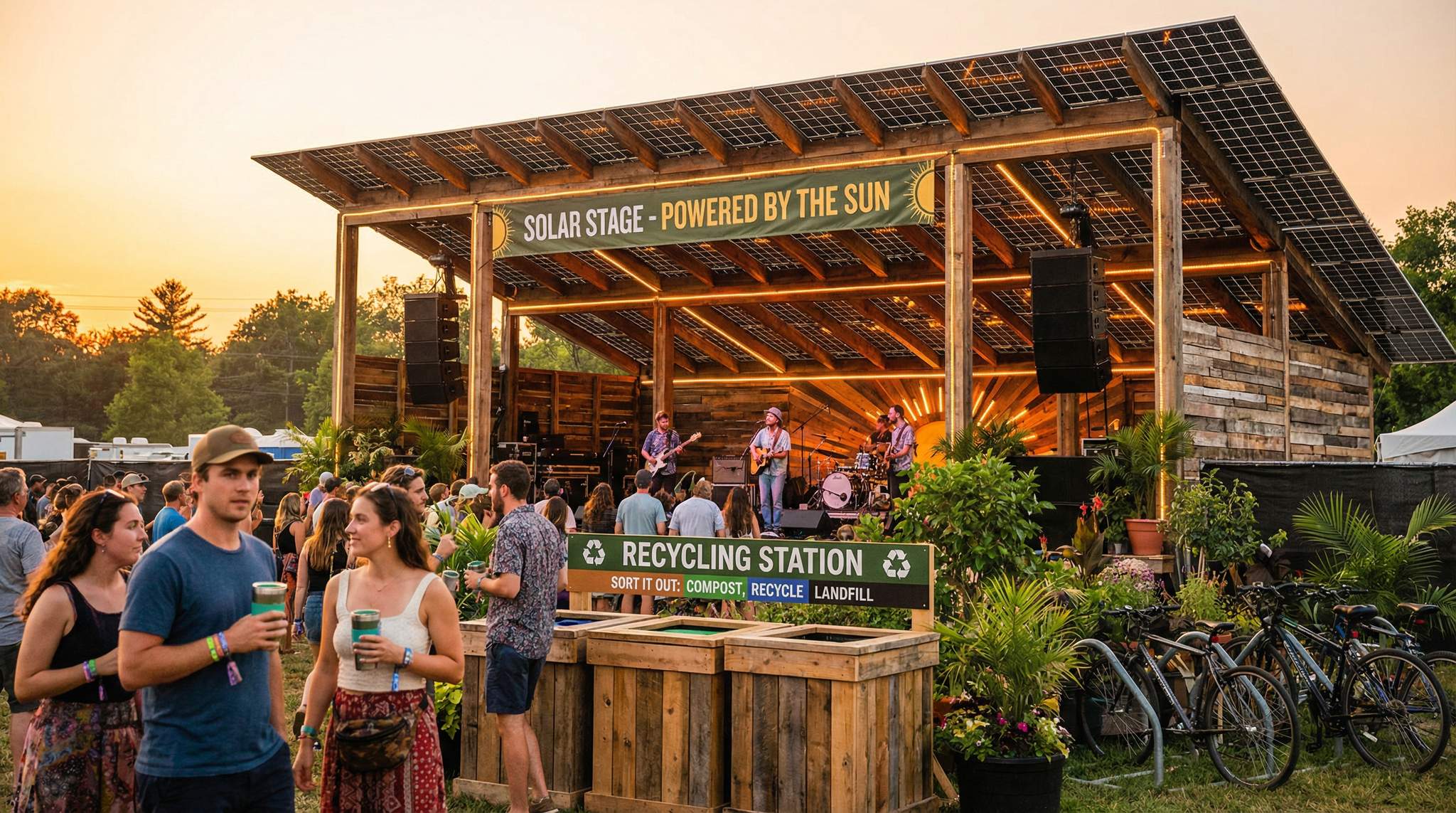
Music events are all about creating unforgettable experiences. But as we step into 2026, organizers and fans alike expect those experiences to come with a smaller ecological footprint. From boutique indie concerts to massive multi-stage festivals, the industry is embracing sustainability as more than just a buzzword – it’s now a core part of event planning. There’s good reason for this shift: a typical music festival emits around 500 tons of CO? (about the weight of three houses), as noted in reports on how music fests are improving their sustainability scores, and research indicates that music festivals generate roughly 25,800 tonnes of waste each year in just one country. Facing these staggering impacts, event creators are finding innovative ways to throw amazing shows while also caring for the planet.
For event-goers, seeing genuine green initiatives – whether it’s recycling stations or solar-powered stages – can actually boost their enjoyment and loyalty. Attendees increasingly want to party without trashing the environment. Festivals have caught on: many now advertise their sustainability efforts alongside their artist lineups, recognizing that an eco-friendly reputation can attract sponsors, media attention, and eco-conscious fans. By picking an eco-friendly theme, you send a message that your event stands for something bigger, turning the music experience into an opportunity to inspire positive change.
Importantly, choosing a sustainability-driven theme doesn’t mean sacrificing fun or production quality. On the contrary, it can elevate the whole vibe of your event. Imagine a festival where the lights and sound are powered by the sun, or a concert that doubles as a tree-planting day. These unique touches not only shrink the carbon footprint but also create memorable, Instagram-worthy moments of their own. Done right, a green theme can seamlessly blend entertainment with education – all while giving your marketing a compelling story to tell. In fact, eco-conscious festivals are one of the major live music event trends of the mid-2020s, with nearly every big festival now rolling out climate initiatives from composting at Coachella to renewable energy at Glastonbury. One standout example is the We Love Green festival in Paris, which even dropped a DJ who insisted on arriving by private jet, underlining how serious some events are about their climate commitments and energy caps. Communities are embracing these changes too – sustainable events often gain strong local support by contributing positively to their environment and economy. As one case study shows, a festival’s eco-initiatives can boost local economies and win community support, proving that going green can make business sense too.
So if you’re looking to combine great tunes with sustainability, here are 25 eco-friendly themes to consider for your next music event.
Free Tool: How Much Will Your Gala Raise?
Add tables, sponsors, auctions and your paddle raise, subtract costs, and see your net against your goal and your cost per dollar raised.
To understand the broader impact of theming, it is helpful to learn how creating event themes can help drive your promotion and production.
When brainstorming music festival theme ideas for the upcoming season, remember that the most popular festival themes do more than just dictate the decor—they define your event’s core identity. As we look toward music festivals in 2026, integrating sustainability into your core concept is no longer just a niche trend; it is a primary driver for ticket sales and sponsor acquisition. Whether you are planning intimate outdoor gatherings or massive summer festivals, themes that prioritize the environment resonate deeply with modern attendees and stakeholders alike.
Ready to Sell Tickets?
Create professional event pages with built-in payment processing, marketing tools, and real-time analytics.
Evaluating Eco-Friendly Festival Ideas for Your Production
When shortlisting eco-friendly festival ideas, promoters must balance creative vision with logistical reality. The most successful eco festivals do not just look green; they operate efficiently from the ground up. Assess your site’s infrastructure—such as access to grid power versus reliance on diesel generators—before committing to a specific concept. A well-executed eco-friendly music festival requires buy-in from all stakeholders, meaning your chosen theme should naturally align with your vendors’ capabilities and your sponsors’ corporate social responsibility (CSR) goals.
How to Select Popular Festival Themes for Your Target Demographic
Choosing the right concept is a critical business decision. The most successful and popular festival themes align directly with your target audience’s values while offering scalable production options. When evaluating trending concepts—whether you are leaning toward a wellness-focused retreat or a high-energy electronic dance music event—analyze your attendee demographic data. Look at past ticket purchasing behavior, social media engagement, and post-event surveys to gauge what resonates. A theme that feels authentic to your brand will naturally drive stronger marketing campaigns, attract aligned sponsors, and ultimately boost ticket sales.
Brainstorming Environmental Theme Ideas for Your Event
When generating ideas for themes, it helps to look at your venue’s existing infrastructure and your local community’s sustainability goals. The most successful environmental theme ideas often stem from practical operational shifts rather than purely aesthetic choices. For instance, if your site has abundant sunshine, a solar-powered concept naturally aligns with your production capabilities. If you are situated near agricultural hubs, a farm-to-stage culinary focus becomes highly authentic. By tying your creative concepts directly to measurable ecological benefits, you ensure that your chosen motif resonates with sponsors, satisfies local municipal licensing requirements, and provides a genuine marketing narrative.
When developing concert theme ideas, venue operators and independent promoters should consider scalability. While a massive multi-day festival might support a sprawling ‘Green Village,’ single-evening concert themes need to be tightly focused. A targeted motif—like a zero-waste dance floor or an acoustic nature set—allows you to execute the concept flawlessly without overwhelming your production budget or timeline.
Let Fans Pay Over Time
Offer flexible payment plans that split ticket costs into manageable installments, making higher-priced events accessible and boosting conversions.
The ROI of Transitioning to a Sustainable Music Festival Model
Transitioning your operations to a sustainable music festival model is no longer just an ethical choice; it is a strategic business maneuver. Promoters who adopt an eco-friendly festival framework often see a reduction in long-term waste management fees and diesel fuel costs. Furthermore, unique music festival themes centered around environmental stewardship open doors to exclusive grant funding and green-focused corporate sponsorships. By integrating these eco-conscious motifs into your core production strategy, you create a compelling narrative that differentiates your event in a crowded market.
1. Solar-Powered Soundstage

Grow Your Events
Leverage referral marketing, social sharing incentives, and audience insights to sell more tickets.
Harness the power of the sun by hosting a music event that runs on solar energy. Set up portable solar panels or solar generators to power your sound systems, stage lights, and even phone charging stations for attendees. This renewable energy solution slashes carbon emissions and sets a visible example of sustainability from the moment fans arrive. In recent years, even major festivals have begun using solar and battery systems on their stages – following a battery-powered main stage at Lollapalooza, the 2024 Austin City Limits festival ran an entire stage on a hybrid battery system to cut down on diesel generator use. By going solar, you not only reduce pollution but also give your event a unique high-tech vibe that attendees will remember.
Warning: Plan for energy storage and backup. Solar power output can vary with weather and time of day, so include battery arrays or a secondary renewable generator to ensure the music never stops if clouds roll in.
2. Green Music Festival

Build your entire festival around environmental sustainability. This theme goes beyond a single gimmick – it means every aspect of the event is planned with the planet in mind. Set up clearly marked recycling and composting stations throughout the grounds and make sure they are serviced by volunteers who help attendees sort correctly. Replace all single-use plastics with biodegradable or reusable alternatives (from cups and straws to wristbands and decor). Work with food vendors to offer locally sourced, organic menus and plenty of plant-based options. Encourage ticket holders to carpool or use public transit, perhaps by offering discounts on parking or partnering with transit agencies. You can even incentivize eco-behavior: for instance, give out tokens for free merch or drinks to those who bring bags of recycling to your eco-stations.
Collect Any Attendee Data at Checkout
Add custom registration fields to your checkout — dietary needs, t-shirt sizes, company names, and more. Conditional logic and per-ticket-type fields.
To truly embrace the green festival concept, integrate sustainability into the entertainment and messaging. Book musicians and artists who are outspoken about environmental causes, or include short informational segments between sets highlighting what the festival is doing to be eco-friendly. Some organizers pursue official green event certifications (like the A Greener Festival award or ISO 20121) to showcase their commitment. Major events in 2025 and 2026 have set precedents here – all big festivals now boast climate initiatives, from composting and car-pooling programs at Coachella to running stages on renewable energy at Glastonbury. One standout example is the U.K.’s Shambala Festival, which has been meat-and-fish free since 2016; thanks to that change, food now accounts for only around 6% of its total carbon emissions. In 2025 Shambala even introduced on-site biogas fuel for cooking and hot showers (a U.K. festival first) to further cut down on fossil fuels. By designing a festival that practices what it preaches, you’ll transport attendees to a vision of a sustainable world – and show the music industry that eco-responsibility and good times can go hand in hand.
When evaluating summer festivals themes, an overarching green concept works exceptionally well. The warmer months naturally encourage outdoor engagement, making an eco-friendly festival setup—complete with sunshine-dependent solar activations and open-air recycling workshops—highly effective for both operational efficiency and attendee participation.
3. Recycled Instruments Showcase

Put the spotlight on creativity and sustainability by featuring performances with instruments made from recycled or upcycled materials. It’s one thing to talk about recycling, but quite another to hear a guitar made from old wood or a drum kit fashioned from plastic barrels roar to life on stage. This theme celebrates the message that great music can come from ingenuity and reused resources instead of brand-new gear. Consider booking artists or bands known for this eco-friendly approach – there are “junkyard” bands that build their own instruments, and even classical ensembles like Paraguay’s famous Recycled Orchestra of Cateura who craft violins and cellos from landfill scraps. You can also make it interactive: host a workshop for attendees (or local music students) to build simple instruments out of materials like metal cans, bottles, and discarded wood, then let them perform a song at the event.
By showcasing recycled instruments, you’re weaving sustainability directly into the art of the performance. The visuals and sounds of homemade instruments spark conversations about waste and reuse in a way that lectures can’t. Attendees walk away impressed by the creativity and, perhaps, inspired to DIY their own upcycled projects. This theme proves that eco-consciousness and musical innovation can go hand in hand, enhancing the overall experience while educating the crowd in a memorable way.
4. Plastic Waste-Free Concert

Free Tool: Model Promoter Payouts
Flat-percentage, flat-per-ticket, or tiered-bonus commission structures — get per-promoter payouts and total commission as % of gross. Free calculator.
Take a stand against single-use plastic by making your concert completely plastic-free. This means no disposable plastic cups, bottles, straws, or utensils anywhere on site. Instead, serve beverages in either reusable cups (with a return deposit system) or fully compostable drinkware. Many forward-thinking events have adopted reusable cup programs – for example, a major Danish festival in 2025 achieved a 97% return rate on its recyclable plastic cups by incentivizing attendees with a deposit. Provide plenty of water refill stations so fans can top up reusable bottles rather than buying new bottles each time. If you sell drinks, consider aluminum cans (which are highly recyclable) over plastic, or partner with a sponsor to offer free refillable water canisters branded for your event.
Beyond drinks, look at every element: use fabric wristbands instead of plastic ones, avoid plastic confetti or balloons (try biodegradable confetti or light shows for spectacle), and ensure any merchandise packaging is eco-friendly. Glastonbury Festival famously banned the sale of single-use plastic bottles in 2019 after discovering attendees went through 1.3 million plastic bottles in just one event. Following that lead, dozens of festivals worldwide have eliminated plastics, drastically reducing cleanup costs and litter. A plastic waste-free concert not only shrinks your event’s environmental footprint – it also sets an example in the music industry and gives your audience a tangible way to be part of the solution.
5. Acoustic Nature Jam

Unplug the amps and let nature be your stage backdrop. An acoustic nature jam is an intimate music event set in a natural environment – whether it’s a clearing in the woods, a tranquil park, or a sunset beach. By using minimal amplification or none at all, you drastically cut down power usage and noise pollution. Musicians can perform stripped-down sets, and the audience gets to experience the music mingling with the sounds of the environment (think chirping birds or waves in the background). The atmosphere becomes serene and almost magical, far different from a typical loud concert. This theme is not only eco-friendly (since you’re using very little electricity), but it also reminds attendees of our connection to the outdoors.
Planning an acoustic outdoor show involves some extra care. First, choose a location that can handle a small crowd without ecological damage – avoid sensitive habitats, and obtain any necessary permits for public lands. Keep the production simple: perhaps a small solar-powered PA system for the vocals, or even none at all if the space is intimate enough. Schedule the performance during daylight or early evening so you won’t need energy-intensive lighting. Pro Tip: Work with the natural acoustics of your venue – for example, a rocky canyon or grove of trees can naturally amplify sound. Also, remind attendees to respect the surroundings (carry out all trash, stay on paths) so the event leaves no trace. An acoustic jam in nature offers a peaceful, memorable experience that aligns perfectly with sustainability values.
6. Farm-to-Stage Concert

Boost Revenue With Smart Upsells
Sell merchandise, VIP upgrades, parking passes, and add-ons during checkout and via post-purchase emails. Increase average order value by up to 220%.
Bring the farmers’ market to your music event by making it a farm-to-stage concert. This theme focuses on local, organic food and drink at the heart of the event experience. Partner with nearby farms, orchards, and artisanal producers to source everything from the food truck menus to the backstage catering. Imagine concert-goers savoring farm-fresh strawberries from a local stand or enjoying craft beer brewed just down the road – it creates a unique sense of place and reduces the carbon emissions associated with transporting food long distances. Emphasize seasonal ingredients and plant-based dishes: not only are they eco-friendly, but they’ll often be the tastiest options available. You can even involve the farmers in the event (for example, short introductions or signage that tells the story of where the food comes from), turning a meal into an educational moment about sustainable agriculture.
The farm-to-stage concept enhances sustainability by cutting down on packaging and food waste too. Work with vendors to serve food in biodegradable or reusable dishware (perhaps even a “dish deposit” system like some green festivals use, where attendees return a plate or cup for a refund). Any food scraps can go to compost, possibly even back to the farms that supplied the produce. This closed-loop approach shows participants what a circular food economy looks like in action. Pro Tip: Collaborate with a local community-supported agriculture (CSA) group or farmers’ cooperative for your supplies – they might offer bulk rates or help co-promote the event among the local community. A farm-to-stage concert delights the senses and conscience alike, proving that delicious festival fare and sustainability can go hand in hand.
7. Zero-Waste Dance Party

Host a high-energy dance party where nothing goes to the landfill at the end of the night. A zero-waste dance event means planning every detail to minimize or eliminate trash. Start with digital tickets (no paper printouts) and encourage guests to bring their own reusable water bottles or cups. Provide clearly labeled recycling and compost bins around the venue, and have a Green Team of volunteers or staff help party-goers sort their waste properly. For decorations and staging, use reusable props, LED lights (which not only save energy – LEDs use around 80% less power than incandescent stage lighting – but also last longer), and upcycled materials instead of single-use streamers or confetti. If you’re offering food, serve it on compostable plates or edible containers (yes, that’s a thing now at some innovative events!). The goal is that by the time the final song plays, the venue has produced little to no garbage – everything is reused, recycled, or organically composted.
Achieving zero waste requires setting expectations with both vendors and attendees. Communicate your waste-free goal in pre-event emails and on social media so everyone knows to cooperate (for example, vendors shouldn’t bring items with lots of disposable packaging, and attendees might carry out any personal wrappers they brought). Take inspiration from festivals like Burning Man, which operate on a strict “leave no trace” policy where participants pack out all their trash. You can even gamify the cleanup: offer a prize or shout-out to the dance crew that picks up the most litter or to sections of the crowd keeping their area spotless. By combining a pumping dance atmosphere with eco-conscious practices, you prove that sustainability and nightlife can groove together. Partygoers will leave not just exhilarated by the music, but proud that they were part of a truly green party.
8. Eco-Friendly Vinyl Night

Turn Fans Into Your Marketing Team
Ticket Fairy's built-in referral rewards system incentivizes attendees to share your event, helping events sell 20% more tickets and 30x ROI vs paid ads.
Host a throwback night dedicated to the warm, analog sounds of vinyl – with an eco-friendly twist. Vinyl records are making a comeback among music lovers, and this theme leverages that nostalgia while promoting sustainability. How? First, encourage attendees to bring their own favorite records instead of relying solely on new pressings or digital playlists. Set up turntables and let part of the event be an open-decks session where people from the crowd (or local vinyl DJs) can spin songs from their personal record collections. You could also organize a second-hand vinyl exchange or pop-up record fair at the venue, inviting local indie record shops or collectors to sell and trade pre-loved records. This highlights the idea of reusing music media rather than always buying new – giving old records new life and keeping them out of landfills.
Since traditional vinyl production isn’t very eco-friendly (it uses PVC plastic and lots of energy), focus on reuse and creative repurposing. Offer merchandise that fits the vinyl vibe: for example, tote bags or t-shirts printed with classic album art on organic cotton, or upcycled coasters made from damaged vinyl LPs. Use recyclable paper for any flyers or, better yet, go fully digital with your event promotion. You can even decorate the space with old vinyls or album covers sourced from thrift stores – then collect them afterward to reuse for future events or donate to art projects. By the end of an Eco-Friendly Vinyl Night, guests will have enjoyed a unique musical journey and hopefully be inspired to appreciate music in a more sustainable, collectible way (instead of instant disposable streams). It’s all about celebrating music’s past while caring for the future.
9. Sustainable Fashion Show

Blend the worlds of music and eco-conscious style by hosting a sustainable fashion show as part of your event. This could be a runway show during intermission at a concert or a dedicated section of a festival where models (or even attendees) showcase clothing that’s ethical and earth-friendly. Consider featuring local designers who work with organic fabrics, recycled materials, or upcycle vintage clothing into new outfits. You might also include a “trashion” show segment – a playful contest where participants create outrageous festival costumes using trash or reclaimed materials (think dresses made of reclaimed tent fabric or jackets patched from old band t-shirts). With a DJ or live band providing the soundtrack for the catwalk, you’ll keep the energy high and the crowd engaged.
Sustainable fashion is not just a niche concern; the fashion industry is estimated to be responsible for about 10% of annual global carbon emissions, so tying it into your event’s theme is both relevant and impactful. By highlighting creative, eco-friendly fashion, you encourage attendees to think twice about fast fashion and festival outfits they might normally wear once and toss. Instead, they’ll see that style can be achieved through thrifted, handmade, or responsibly produced clothing. Pro Tip: When recruiting designers or brands for the show, vet their sustainability claims – look for certifications or tangible examples of how their production is greener (e.g., using organic cotton, natural dyes, or fair-trade labor). A sustainable fashion show paired with music not only entertains the crowd with eye-catching designs, but also spreads a message about conscious consumerism in a fun, approachable way.
10. Green Soundtrack Cinema

Combine film, music, and environmental awareness with a green soundtrack cinema night. The idea is to host a movie screening – perhaps a cult classic concert film or a documentary with an environmental message – and run the event as sustainably as possible. Choose a film that resonates with your eco-theme: it could be a music documentary that highlights activism (for example, a film about a festival that championed environmental causes) or an inspiring environmental documentary that features a great soundtrack. Set up your screening outdoors if weather permits, or in a venue where you can control waste (no single-use popcorn tubs here!). Power the projector and sound system using renewable energy sources: a solar-powered generator or battery pack can handle an evening screening. For a really interactive twist, consider using bicycle-powered generators – attendees can volunteer to pedal stationary bikes that provide electricity for the film, turning the viewing into a participatory eco-experience.
Running a green cinema event means sweating the details to avoid waste and excess. Use digital tickets and at-door check-ins instead of paper. Encourage guests to bring picnic blankets or their own camp chairs, and maybe offer a discount to anyone who arrives by bike or public transport. Vendors can serve snacks in compostable packaging (or think creatively: popcorn in reusable tins, or no packaging at all for certain items). You might also invite an environmental speaker or local nonprofit to do a short talk or Q&A before the film, giving the audience insight into the issues highlighted on screen. By the time the credits roll, you’ll have provided entertainment and education in equal measure – showing that even a movie night can align with sustainable values.
For instance, screening a critically acclaimed documentary or a popular film about a festival released in 2020 or 2022 can draw significant crowds while providing a perfect platform to discuss the evolution of sustainable event production.
When licensing a film about a festival from 2022 or similar recent documentaries, promoters should work directly with distributors to secure the proper public performance rights. Pairing these screenings with panel discussions featuring local environmental experts or production veterans can transform a simple movie night into a high-value networking and educational event for your community.
11. Eco-Festival Featuring Green Music

Turn sustainability into the headliner by curating a festival lineup of artists who are as eco-conscious as you are. An eco-festival theme means you collaborate with musicians and performers who incorporate sustainability into their music or touring practices. Seek out bands that run their tours on biodiesel buses, DJs who advocate for climate action, or singers who use their platform to support environmental causes. You could even challenge each act on the bill to do something “green” as part of their set – whether that’s performing an unplugged song to save power, giving a short shout-out about a favorite environmental charity, or using only LED lighting for their stage design.
There are more artists now than ever taking a stand for the planet. For example, singer Billie Eilish famously incorporated eco-villages and free water refill stations on her world tour to educate fans, and groups like Music Declares Emergency have rallied artists to pledge more sustainable practices in the industry. For your event, you might have an artist introduce a tree-planting initiative tied to their performance, or have a portion of ticket sales go to an environmental non-profit in the name of the headliner. Also, consider the content of the music – you can highlight songs with nature themes or protest lyrics about ecological issues. Supporting acts could include local bands who write songs about the environment or use reclaimed materials for their instruments (tying in with theme #3 above). By making sustainability part of the artistic identity of the festival, you create a cohesive message: every guitar riff and lyric becomes a reminder of why caring for the Earth matters. Fans will appreciate that the ethos of the event runs deep, and it might even introduce them to some new favorite artists who share their values.
12. Upcycled Music Merch Market

Merchandise is a big part of music events – fans love taking home a piece of the experience. With this theme, you turn merch into a showcase for sustainability by offering only upcycled or eco-friendly products. Instead of printing a fresh batch of shirts on new fabric, work with a vendor who can create t-shirts from recycled materials or rework vintage clothing with your event’s logo. Sell reusable tote bags or hats made from repurposed textiles (for example, fabrics from previous events’ banners or even discarded tents). You can also offer quirky items like jewelry made from retired guitar strings, keychains made of broken drum cymbals, or artwork printed on reclaimed wood. The key is that every merch item has a story – it used to be something else and has been creatively transformed rather than manufactured from scratch.
To set up an upcycled merch market, reach out to crafty entrepreneurs and sustainable brands. Maybe there’s a local designer who turns old vinyl records into decorative bowls, or a team that sews handbags from festival tent material left behind. Invite them to be vendors at your event as part of a “green marketplace” area. Encourage attendees to bring in an old band tee in exchange for a discount on a refreshed one, promoting the idea of reuse. Pro Tip: Highlight the limited-edition nature of upcycled merch – since items are often one-of-a-kind or small batch, festival-goers will feel like they’re getting something truly special. Not only does this approach reduce waste, it also educates fans on sustainable consumer habits. When they proudly wear that upcycled tour hoodie or carry that repurposed banner tote bag, they’ll spread the message of creative reuse beyond the event itself.
For promoters brainstorming scalable music festival merchandise ideas, consider on-site print-on-demand stations. This operational shift eliminates the financial risk of over-ordering inventory that eventually ends up in landfills. Offering digital merchandise, such as exclusive artist audio tracks, behind-the-scenes content, or VIP experience upgrades, also serves as a highly profitable, zero-waste revenue stream that appeals to modern eco-conscious attendees.
Additionally, when exploring new music festival merchandise ideas, organizers should vet their supply chains for ethical manufacturing practices. Partnering with wholesale suppliers who use certified organic cotton or recycled polyester not only reduces the ecological footprint of your apparel but also provides a strong marketing angle for your retail operations.
13. Mindful Music Meditation

Not all music events have to be go-go-go energy. Embrace a quieter, reflective side of sustainability by hosting a mindful music meditation session. Think of a tranquil gathering where attendees sit on yoga mats or blankets in a natural setting, guided by gentle live music – maybe acoustic guitar, handpan, soft drumming, or ambient electronic soundscapes. The idea is to use music as a tool for mindfulness and connection with nature. Choose an outdoor spot (under trees or at a scenic overlook) or create a calming space within your venue with plants, dim lighting, and natural aromas. Encourage everyone to unplug (no phones, minimal talking) and be present in the moment as they listen.
To keep this meditation event eco-friendly, provide or ask participants to bring sustainable yoga mats or cushions (such as those made from cork, jute, or recycled rubber) instead of cheap foam ones. Remind folks to bring reusable water bottles and maybe their own blankets or shawls if it’s chilly. If you offer any refreshments like herbal tea, serve them in reusable or compostable cups. The entire vibe should be about simplicity and respect for the environment – for instance, if it’s held outdoors, make it clear that everyone should leave the area as they found it. You could begin the session with a short gratitude for nature or end it by inviting participants to help pick up any stray litter nearby as an act of service. Many modern events are adding wellness components – there’s a wellness revolution in the festival scene where 2026 festivals are embracing mental health – because it strengthens the community and aligns entertainment with well-being. A music meditation is a perfect example: it not only gives attendees a peaceful, introspective experience (a nice balance to the usual excitement of concerts and festivals), but it also subtly reinforces the values of sustainability and caring for our surroundings.
14. Electric Vehicle Roadshow

Combine music with the future of transportation by featuring an Electric Vehicle (EV) roadshow at your event. In practical terms, this means you have a section of your venue or festival grounds where electric cars, e-bikes, and maybe even solar-powered vehicles are on display for attendees to explore. You could partner with automakers or local EV enthusiast clubs to bring the latest electric car models for people to check out, sit in, or even test drive if space permits. Imagine a test drive track on the outskirts of your festival where fans can take a spin in a Tesla, Nissan Leaf, or Rivian truck in between catching their favorite bands. Not only is this fun and interactive, it directly promotes sustainable transportation choices.
Transportation to and from events is often one of the biggest sources of emissions for the music industry (all those cars, buses, and flights add up), so highlighting EVs ties into the broader sustainability mission. Use the opportunity to encourage fans to carpool or take electric shuttles to your event. If you have the infrastructure, offer on-site charging stations for electric cars, or special parking perks for EV drivers (like closer spots or a discount). To really integrate it with the music, you could have a small stage or DJ booth powered by an EV’s battery – some modern electric cars can actually supply power back out, enough to run a sound system for a demo. Throughout the event, have MCs or signage that draw the connection: by transitioning to electric vehicles and greener transport, the music scene can significantly shrink its carbon footprint. The EV roadshow theme turns a concert into a mini auto expo for good, and your attendees might leave not only humming the headliner’s tunes but also considering an electric car for their next ride.
15. Green Camping Festival

If your music event includes camping, make it eco-friendly by using sustainable practices in the campground. A green camping theme means you encourage (or even require) campers to use sustainable gear and behaviors. Start by promoting reusable, durable camping equipment: discourage cheap single-use tents that often get abandoned. Work with partners to offer rentable tents or “pack-in, pack-out” incentives – for example, attendees who take their tent home (or return a rented tent) could get a discount on tickets or merch. Provide on-site facilities that make green camping easier: set up solar-powered charging stations for devices so people don’t rely on gas generators, install composting or biodegradable toilets to handle waste without chemicals, and place plenty of recycling and trash bags (or bins) in the camping area so campers can easily sort their waste. Lighting around the campsite can be solar or LED-powered, maybe even motion-sensor so it only comes on when needed.
It’s also about setting the tone with campers from the get-go. Communicate a clear “leave no trace” policy: everything you carry in, you carry out. You might give every camper a biodegradable trash bag upon entry and challenge them to fill it with any waste they produce. Some festivals even run “eco bond” programs, where attendees pay a small deposit that they get back only if they return a bag of sorted recycling at the end. Another idea is to have a dedicated Green Team in the campgrounds – volunteers who educate campers on site about things like properly disposing of graywater (from washing up), keeping nature areas undisturbed, and so on. By making the camping experience sustainable – from equipment to behavior – you significantly cut down the environmental footprint of the festival. Plus, many campers will appreciate the cleaner, trash-free environment and carry those habits to future events (and back home to their daily lives).
16. Sustainable Sound System

Make the technical heart of your event – the sound system – as green as possible. A sustainable sound system theme focuses on using audio equipment that is energy-efficient, responsibly manufactured, and even powered by renewables. Start with the power source: can you run your DJ booth or stage amps on solar energy or via a biofuel generator instead of a diesel generator? Even partially powering your PA with solar (for daytime shows) helps cut emissions. Next, look at the gear itself. Modern professional sound equipment often uses Class D amplifiers, which are much more energy-efficient than older amp designs (wasting less energy as heat). High-quality speakers with efficient drivers can deliver big sound with less wattage. Work with audio engineers or sound rental companies who have a green initiative – some firms now offer solar-powered speaker setups for small-to-medium events, or battery banks that charge from renewable sources.
Also consider the materials and life cycle of your sound gear. Does the speaker casing use recycled plastic or sustainably sourced wood for its cabinets? Are the cables durable and meant to be reused for years (instead of cheap ones that fray and get tossed each season)? If you’re building staging or truss structures, use modular designs that can be reassembled at future shows to avoid single-use builds. Little operational tweaks help too: for instance, avoid running the whole sound system at full power during soundcheck or downtime – throttle it down or shut off some amps when not needed to save energy. Not only does a sustainable sound system reduce your event’s carbon footprint, it can also be a great talking point for tech-minded music fans. Imagine being able to announce that the funky bass they’re dancing to is being delivered by speakers sipping power from the sun. It’s a strong statement that every part of your event, down to the thumping sound, is aligned with your eco-friendly mission. For more technical insights, consider reading tips for organizing an environmentally sustainable music festival, which highlights how LEDs and efficient tech make a difference.
17. Music and Tree-Planting Event

Mix direct environmental action with live tunes by organizing a music event that includes a tree-planting initiative. The schedule could look something like this: during the daytime, artists and attendees join forces to plant trees in a designated area (it could be a park, around the venue, or a local reforestation project site), and then as evening falls, everyone comes together for a concert to celebrate. You might structure it as a volunteer afternoon followed by a thank-you show for those who got their hands dirty. For every ticket sold, you can also pledge to donate a portion of proceeds or coordinate with a charity to plant additional trees elsewhere, amplifying the impact beyond the event itself. This theme makes the idea of “offsetting carbon” very tangible – people can literally see and participate in the act of improving the environment.
Executing a music-and-tree-planting event takes coordination. Partner with local environmental groups or forestry services who can provide the saplings, tools, and guidance on what to plant and where. (It’s crucial to plant native species and in appropriate locations so the trees thrive.) Provide gloves and have water stations to keep planters hydrated. You can have an acoustic band or drum circle play in the background during the planting to keep energy up, or even have artists rotate between performing and planting alongside fans. When it’s time for the main music performance, consider continuing the nature theme – maybe the stage decor is done with potted plants (which can be donated or planted afterwards rather than thrown away). Festivals and tours around the world are picking up on this concept: some pledge to plant a tree for every ticket sold (often through organizations like One Tree Planted), and others, like your event, take it a step further by involving fans directly. By the end of the day, attendees will not only have enjoyed great music but also leave a living legacy in the form of new trees – that’s an experience far more powerful than a typical gig.
18. Vegan Music Feast

Show that great music and great food can both be compassionate to the planet. A Vegan Music Feast theme centers your event around plant-based cuisine paired with live performances. Instead of the usual carnival food stall selling burgers and chicken strips, you curate food vendors that offer delicious vegan and vegetarian meals – think gourmet veggie burgers, vegan tacos, plant-based curries, and dairy-free ice creams. Partner with vegan chefs, food trucks, or local restaurants known for sustainable sourcing. Many will likely use organic, locally grown produce, which means a lower carbon footprint and support for local farmers. To complement the dining experience, schedule intimate music sets (acoustic acts, jazz trios, soulful singers) in the dining areas so people can savor tunes along with their tofu.
Emphasizing plant-based food isn’t just a trendy choice; it makes a significant environmental difference. Producing meat and dairy has a high carbon and water cost, so offering mostly or entirely vegan fare can greatly shrink your event’s footprint. One UK festival that went fully meat-free found that their average meal’s carbon emissions dropped to about 0.45 kg of CO? compared to 2 kg for a typical UK meat-based dish. That’s a huge reduction. You can share fun facts like this on signage (“Did you know choosing veggie saves X emissions?”) to educate attendees while they dine. Make it easy for skeptics to try the options – perhaps a “first vegan meal” discount coupon or free samples of tasty plant-based snacks. You might even incorporate a live cooking demonstration stage where chefs show how to make quick eco-friendly meals, with a DJ or band underscoring the demo with music. The vibe of a vegan music feast is usually warm and communal; people bond over trying new foods and discovering new artists. By the end, guests will remember not only the songs they heard but also how incredible a burger can taste when it’s made from plants – and they might carry those diet changes into their everyday lives.
19. Circular Economy Concert

Design a music event where nothing truly goes “to waste” – everything gets reused, repurposed, or recycled in a continuous loop. This Circular Economy Concert theme challenges you to apply the principles of the circular economy to your event planning. Start with your vendors and suppliers: choose food vendors who serve on reusable or compostable dishes and have a plan for food scraps (like sending them to a local compost farm or turning them into biogas). Opt for merchandise that’s designed to be repairable or upcycled – for instance, apparel made from 100% recycled material that can be returned and remade when worn out. You could even have a setup where attendees can bring old band t-shirts to be screen-printed with your event logo or swapped for other second-hand merch, keeping the merchandise cycle going.
In a circular event, one person’s “trash” becomes another’s resource. Decor might be crafted from reclaimed items (old pallets turned into stage backdrops, retired festival banners sewn into bunting). After the show, instead of trashing your signage and props, store them or donate them to other organizers or art collectives. Think about inputs and outputs: for example, the cooking oil your food vendors use could be collected and sent to be refined into biofuel, rather than dumped. Encourage attendees to partake in the philosophy: maybe host a “festival gear swap” tent where people can trade items (like that extra poncho or pair of sunglasses) instead of buying new. Pro Tip: Plan for end-of-life at the beginning – when you’re sourcing anything (wristbands, posters, stage materials), ask “what will happen to this after the event?” and choose options that have a next life, whether through reuse, recycling, or composting. By running a circular economy concert, you create a self-sustaining vibe that not only slashes waste but also educates everyone involved on how a waste-free world might function, one concert at a time.
20. Eco-Friendly Music Awards

Roll out the green carpet for an awards night that honors not just musical talent, but eco-conscious leadership in the music industry. An Eco-Friendly Music Awards event can be a standalone ceremony or part of a festival, where you hand out accolades for achievements like “Most Sustainable Tour of the Year,” “Green Pioneer Artist,” or “Eco-Innovative Venue of the Year.” This shines a spotlight on artists, promoters, venues, or festivals that are making a difference with their environmental efforts. Imagine inviting popular musicians to accept awards for their charity work planting trees, or recognizing a festival that achieved a zero-waste milestone. The key is that the event itself also walks the talk: production should be as sustainable as possible. Use digital programs or a dedicated website/app instead of printed booklets to list nominees and schedules. Design the trophies or plaques from recycled materials – maybe wood from reclaimed stage flooring or glass from recycled bottles, etched beautifully with the award details.
The ceremony logistics can all follow green practices. Encourage attendees (who might include industry execs and artists) to wear sustainable or vintage fashion on the red carpet to showcase eco-style. Serve plant-based catering during the reception or after-party, and choose a venue that runs on renewable energy or has strong eco-certifications. Even the stage could be decorated with living plants (which can be donated or replanted later) rather than elaborate one-time sets. You might partner with organizations like Julie’s Bicycle or A Greener Festival to help judge the awards, leveraging their expertise in assessing sustainability in entertainment. By celebrating environmental excellence in music, you not only give well-deserved credit to those leading the way, but also inspire others in the industry to step up. And for the audience, it’s a refreshing twist on the usual award show – one where everyone wins if the planet wins.
21. Eco-Friendly Pop-Up Concert

Who says you need a massive venue for a great show? An eco-friendly pop-up concert brings live music to an unexpected urban space or park, with sustainability at the core. The charm of a pop-up is its spontaneity and intimacy – you might transform a downtown plaza, a rooftop, or a public square into a temporary concert venue for an afternoon or evening. To keep it green, everything about the setup is portable and low-impact. Use a small solar-powered sound system or battery-operated amps to avoid running noisy generators or pulling lots of grid power. Set up a modest stage (even a flatbed truck or just a cleared area) with decorations made from recycled or local materials. For seating, encourage people to bring their own blankets or use hay bales or benches borrowed from the community (instead of renting plastic chairs). A pop-up event inherently avoids a lot of infrastructure waste because it appears for a short time and then leaves no trace.
To engage the audience in the sustainability aspect, make a few simple requests: ask attendees to bring their own reusable water bottles and food containers, or perhaps make the event cup-free by providing a water refill station and selling reusable cups if people don’t have one. Partner with a couple of local eco-conscious food vendors or food trucks that operate with minimal packaging and local ingredients. Since it’s a community-centric event, consider involving local environmental organizations to set up a tiny info booth or kids’ activity corner (like seed planting or DIY upcycled crafts) alongside the music. The beauty of the pop-up concert is it feels like a community block party – casual, engaging, and personal. By weaving sustainability throughout, you ensure that this little musical oasis in the city also becomes a learning example of how easy it can be to host an event without generating a pile of waste. When the show’s over, you pack everything up and leave the spot as clean (or cleaner) than you found it, demonstrating the true spirit of “leave no trace” in an urban setting.
22. Sustainable Beat Festival

Electronic dance music festivals are known for dazzling lights and booming sound – and with a sustainable twist, they can be known for environmental innovation too. A Sustainable Beat Festival takes all the excitement of an EDM or electronic music event and infuses it with green practices. For visuals, rely on energy-efficient tech like LED and laser light shows (LEDs use around 80% less energy than standard lighting and generate less heat). You can program epic lighting effects that wow the crowd without drawing ridiculous power. If your festival runs into the night, consider powering the DJ stages or some lighting rigs with renewable energy sources – for example, a combination of solar-charged batteries and biodiesel generators can keep the bass pumping with a much smaller carbon footprint than diesel alone. Some cutting-edge events have even tested energy-harvesting dance floors that generate electricity from the crowd’s movement (imagine the dance floor itself helping to power the DJ booth – a few events have done this on a small scale). Encourage VJs and visual artists to incorporate nature or sustainability themes into the projections for an added layer of meaning behind the neon and lasers.
For the attendees, weave sustainability into the typical rave culture. Prohibit single-use glow sticks (which become plastic trash) and instead offer LED wristbands or biodegradable alternatives. Encourage festival-goers to express themselves with eco-friendly festival fashion – perhaps even host a costume contest for outfits made of upcycled materials. Make hydration stations a centerpiece: EDM fans dance hard, so provide water refill points and maybe sell collapsible reusable water pouches with the festival logo. As with any green event, have recycling and compost bins readily available, and maybe partner with eco-conscious brands to give out sample products (like organic energy snacks or sustainable glitter) instead of the usual swag. The message to send is that high-tech, high-energy fun doesn’t have to come at the Earth’s expense. When ravers leave a Sustainable Beat Festival, they’ll have memories of an incredible party and the knowledge that it was thrown in a forward-thinking, responsible way.
23. Carbon-Neutral Concert Tour

If you’re organizing a concert tour (multiple shows in different cities), why not make it a carbon-neutral tour? This theme involves calculating the carbon emissions of your tour (from flights, tour bus travel, venue energy use, etc.) and taking steps to reduce and offset those emissions so that the net impact on the climate is zero. It’s ambitious, but the payoff is huge in terms of leadership and example-setting. Start with reduction: use efficient transportation (maybe an electric tour bus or switching some legs to trains), plan tour routes smartly to minimize zig-zagging travel distances (maybe even sync up with other events on the circuit – some festivals are forming green touring alliances to share resources and cut carbon). Opt for venues that use green energy or have energy-saving infrastructure. Power some of your stage show with renewables – perhaps carry portable solar panels or battery units for outdoor gigs, or request venues to purchase green power credits when you plug into their grid. Many artists are getting creative here: Coldplay, for example, reported cutting CO? emissions by 59% on their 2022–23 world tour compared to their 2016–17 tour by using a mix of renewable energy, electric transport, and even a kinetic dance floor that generated electricity from fans dancing.
After doing everything you can to reduce emissions, you address the remainder with offsets. Work with reputable carbon offset programs – for instance, planting trees, investing in renewable energy projects, or restoring wetlands that capture carbon – to counteract the emissions you can’t eliminate. (Make sure to choose verified projects so the offsets are credible, avoiding the greenwashing trap.) Be transparent with your audience: promote this initiative on social media and during the shows. Encourage fans to participate by offering tips or incentives for them to travel to the concert in low-carbon ways (some bands have offered free merch or early entry to fans who show a train or carpool ticket). The theme becomes part of the tour’s identity – you could even make tour merch with a carbon-neutral logo or info about the eco-projects supported. A carbon-neutral concert tour doesn’t just entertain across cities; it spreads a powerful message that the music community is taking responsibility for its footprint and leading by example.
24. Woodland Sound Experience

Take your audience on a sonic journey deep into nature with a Woodland Sound Experience. This theme involves setting up an immersive music event right in the heart of a forest or woodland, allowing guests to experience live music surrounded by trees, fresh air, and the natural soundscape of the wild. Think about keeping the performances in harmony with the environment: you might have ambient, acoustic, or instrumental music that complements the rustling leaves and birdsong around you. Some creative touches could include hanging wind chimes that tinkle gently in the breeze, or positioning the musicians in a circle so that the audience can sit around and feel fully enveloped by sound and nature (almost like a modern campfire concert, but with a magical forest twist).
Executing a forest event responsibly is paramount. You must coordinate with local park authorities or landowners to get permission and adhere to guidelines – some areas have strict rules to protect wildlife and vegetation. Leave no trace should be your mantra: use only biodegradable decor (for example, banners made from natural fabrics or art installations using fallen branches). Avoid anything that could litter or harm the ecosystem (no plastic confetti, no non-biodegradable stage materials). It’s wise to keep the audience relatively small and intimate for this type of experience, both for safety and to minimize impact. Provide clearly marked paths so people don’t trample sensitive undergrowth, and maybe use solar lanterns to light the way as dusk falls. Sound-wise, maintain a reasonable volume – you want the music to blend with nature, not overpower it (plus loud noises can stress wildlife). Schedule the event timing thoughtfully; an afternoon into early evening might be ideal so people can enjoy daylight in the woods and wrap up before it gets too late (and dark). Perhaps end the event with a group moment of silence to just listen to the forest itself. Attendees will walk away from a woodland sound experience feeling not only musically fulfilled but also deeply connected to the natural world – a powerful reminder of why protecting these places is so important.
25. Green Glamour Gala

Who says environmentalism can’t be chic? The Green Glamour Gala is a high-end music event that proves luxury and sustainability can harmonize. Picture a classy evening concert or fundraiser featuring big-name artists, but every element of the night is planned with an eco-friendly ethos. The venue might be an elegant theater or hall that has green certifications (like LEED for sustainable architecture) or at least a strong recycling program and energy-efficient lighting. Guests arrive dressed to the nines – and you encourage a sustainable dress code, meaning attendees are urged to wear vintage couture, rent their tux or gown instead of buying new, or choose designers known for ethical fashion. Roll out a “green carpet” (literally or figuratively) where media can interview artists not just about their music, but about the eco-friendly choices in their attire and lifestyle.
For the event production, maintain a sophisticated atmosphere without excess waste. Use real china, glassware, and cloth linens for any dining so that nothing is thrown away. Decorate with living plants or flowers from local growers (and donate them afterwards or let guests take home centerpieces to replant). Lighting can be gorgeous LED mood lighting – which saves energy and offers incredible color options for a glamorous look. The menu should be a highlight: serve gourmet plant-based dishes and organic wines or cocktails. Show that a plant-based fine dining experience can be every bit as indulgent and delicious as a traditional menu. You might have waitstaff in uniforms made of sustainable fabrics, and print absolutely nothing – invitations, programs, seating charts can all be digital or elegantly displayed on screens. Consider partnering with a charity for the gala, such as an ocean cleanup fund or a climate action group, and perhaps hold a silent auction of eco-themed items or experiences to raise funds during the event.
Throughout the night, intersperse the musical performances with short, inspiring notes about what makes the event sustainable (“This piano’s on a stage powered by renewable energy” or “Tonight’s event is carbon-neutral thanks to XYZ initiative”). The Green Glamour Gala delivers on entertainment and style, while leaving everyone talking about how stunning and meaningful a sustainable event can be. It’s the perfect finale to show that going green is an upgrade, not a sacrifice, in the world of event planning.
With these 25 eco-friendly themes, you can create a music event that not only celebrates great music but also promotes sustainability. Whether you’re organizing a one-night concert, a multi-day festival, or a more intimate gathering, there are countless ways to make your event eco-conscious without compromising on fun or quality. By implementing some of these ideas, you set a positive example for the music industry and inspire your audience to live more sustainably – one note at a time.
Additional Resources for Music Festivals

Eco-Friendly Practices for Festival Organizers
Producing impactful events related to eco-friendly choices requires a holistic approach to site operations, vendor management, and audience engagement. When promoters commit to these operational shifts, they build a resilient, future-proof brand.
Organizing impactful events related to eco-friendly choices also provides a measurable advantage during the permitting process. Municipalities and local councils are increasingly favoring event applications that include comprehensive waste diversion and carbon reduction plans, making sustainability a critical component of your compliance and risk management strategy.
Festival organizers have a pivotal role in making music festivals greener. By implementing smart, eco-friendly practices from the planning phase through to cleanup, they can dramatically reduce the event’s environmental impact. Here are some effective strategies for organizers:
-
Comprehensive Waste Management: Develop a robust waste plan before the festival begins. Set up clearly marked recycling, composting, and landfill bins throughout the festival grounds and in backstage areas. Hire or train “Green Team” staff to help attendees sort their waste properly (think of them as recycling educators, not just janitors). Aim for a high waste diversion rate – many events now divert 80%+ of waste from landfills by recycling and composting. Tracking and publicly sharing your results (e.g., “We recycled 5 tons of material and sent only 0.5 tons to landfill”) can motivate even better behavior from everyone on site.
-
Incentivize Sustainable Transport: Audience travel is often the largest portion of a festival’s carbon footprint, so make it easier (and rewarding) for attendees to get there green. Encourage carpooling by offering discounted parking to high-occupancy vehicles, or set up a shuttle bus service from key city centers or transit hubs. Provide bike racks and even a safe biking route if feasible, and shout out those who arrive by bicycle or bus. Not only does this cut down on emissions, it also reduces traffic congestion around your event and fosters a sense of community among attendees.
-
Harness Renewable Energy: Power your event with clean energy wherever possible. This could mean renting solar tower lights, using biodiesel or renewable diesel in generators instead of fossil fuels, or even hooking into the grid where the utility provides green power. Every stage or attraction that runs on solar or wind is one less powered by polluting fuel. As one guide on sustainable festivals emphasizes, even swapping conventional light bulbs for LEDs can reduce energy use by around 80%. Investing in energy efficiency – from efficient sound systems to timed lighting – not only lowers emissions but can also save money on fuel or electricity in the long run. (For a deeper dive into powering events sustainably, check out Ticket Fairy’s guide on 5 Key Tips for Organizing an Environmentally Sustainable Music Festival.)
-
Sustainable Food and Beverage: Work with vendors who offer locally sourced and organic food and drink options (more on this in the next section). By choosing local suppliers, you cut down on “food miles” and support regional agriculture. Also, require food vendors to use minimal packaging – for example, serve condiments in bulk dispensers rather than individual packets, and avoid Styrofoam at all costs. Provide water refill stations to curb the sale of single-use water bottles (consider selling or giving away branded reusable bottles or cups). The result will be less trash and a lower carbon footprint from food operations.
-
Eco-Friendly Operations: Look at every operational aspect – there are always greener alternatives. Reduce water usage by installing low-flow faucets or reusing graywater (for instance, water from hand-washing stations can be used to flush toilets). Use energy-efficient lighting (LEDs and motion sensors) and turn off equipment and lights when they’re not needed. Go digital with your communications and schedules: utilize a festival app or SMS updates instead of paper handouts. Even small choices like using biodegradable zip ties for setup, or reusing stage decor and signage year after year, help lower the environmental impact. These little changes can add up to a significant difference in the festival’s overall footprint.
-
Ecological Event Furnishings: When designing VIP areas, backstage lounges, or glamping sites, prioritize ecological event furnishings. Renting upcycled furniture, bamboo seating, or decor crafted from reclaimed materials drastically reduces reliance on cheap, single-use plastics. This approach not only minimizes post-event waste but also provides a premium, earthy aesthetic that aligns perfectly with the branding of eco-friendly festivals.
(By adopting these eco-friendly practices, festival organizers set the tone for sustainability – not only cutting environmental impact, but also often saving money and cultivating a positive reputation that attracts environmentally conscious fans and sponsors.)
Beyond basic infrastructure, sourcing high-quality event ecological furnishings for artist green rooms and sponsor activations demonstrates a top-down commitment to your environmental goals. Venue operators should build relationships with specialized rental companies that supply sustainable decor, ensuring that every touchpoint—from the main stage to the VIP lounges—reflects the overarching green narrative.
The Role of Festival-Goers in Creating Positive Change
Festival-goers are crucial in driving positive change and reducing the environmental impact of music festivals. The good news is that most attendees want to help – surveys show that nearly 90% of festival-goers want to be more responsible with the waste they create. By tapping into that enthusiasm and guiding it, organizers can amplify their green efforts. Here are some ways attendees can contribute:
-
Reduce, Reuse, Recycle: Come prepared with reusables to minimize waste. Bring a sturdy reusable water bottle (and refill it at free water stations instead of buying bottled water), a reusable cup for any drinks, and perhaps a personal set of utensils if you plan to enjoy the food vendors. Many festivals allow empty reusable containers through security for this purpose. Be mindful about trash: use the proper recycling and compost bins on site. If every attendee commits to picking up after themselves and maybe even snagging a few stray pieces of litter, the festival grounds stay cleaner and less waste ends up in landfills.
-
Opt for Public or Shared Transport: How you get to the festival matters. Whenever possible, take advantage of public transportation, shuttles, or festival-organized coaches. If you have to drive, carpool with friends – splitting the ride cuts emissions per person and makes parking easier. Some events reward green travelers with perks like closer parking for cars with 4+ people, or merch discounts for those who show a bus or train ticket. Plus, traveling together is part of the fun and yields great camaraderie before the show even starts.
-
Choose Sustainable Food Options: Support the food vendors who are doing things right. Look for stalls that advertise local ingredients, organic produce, or plant-based menus. Even if you’re not strictly vegetarian or vegan, consider trying the veggie options – they often have a much lower ecological footprint. By purchasing that jackfruit taco or veggie burrito instead of a beef burger, you’re reducing water and carbon impacts. And when vendors see the popularity of sustainable options, it encourages them and others to keep expanding those offerings.
-
Support Eco-Friendly Vendors: Similarly, when shopping for merchandise or at artisan stalls, give preference to vendors with sustainable products. Maybe there’s a stand selling jewelry made from recycled metals, or festival clothing upcycled from vintage fabrics – those are the kinds of places to check out. Voting with your wallet sends a powerful message. The more that festival-goers buy eco-conscious products (be it a reusable LED glow stick or a bamboo sunglasses), the more festivals will lean toward booking those kinds of vendors in the future. It creates a market demand for greener goods.
-
Engage in Eco-Friendly Activities: Many festivals now include environmental or community activities as part of the experience. This might be a morning yoga and park cleanup session, a tree-planting workshop, or a booth where you can learn about local environmental initiatives (and maybe sign up to volunteer). Participating in these not only helps the cause but also enriches your festival experience. You meet like-minded people and often get a deeper connection to the event. Also, consider giving feedback to festival organizers – if you loved their green initiatives (or have ideas to improve), let them know through post-event surveys or social media. Attendees’ voices are influential, and your encouragement can lead to even bigger sustainability efforts next year.
(When festival-goers embrace these habits, they become part of the solution. Small actions multiplied by tens of thousands of people make a huge difference. Just as importantly, attendees who prioritize sustainability show organizers that these efforts are valued, which helps keep green initiatives at the forefront of festival planning.)
Sustainable Food and Beverage Options
Offering sustainable food and beverage options is key to creating a greener festival experience. Festivals feed thousands of people, so the sourcing and serving choices have a significant environmental impact. Here are some ideas for organizers (and vendors) to make festival food and drinks more sustainable:
-
Locally Sourced Produce: Partner with local farmers and suppliers to provide fresh, locally grown produce. Local fruits, vegetables, and meats (if you serve meat) have a smaller carbon footprint since they don’t travel far. They also support the local economy. Consider featuring a “farmers market” stall or farm-to-table food court where attendees know the ingredients come from nearby farms. Posting signs like “Tomatoes from Smith Family Farms, 20 miles away” connects people to the source and reinforces the local focus.
-
Organic and Seasonal Ingredients: Choose organic ingredients whenever feasible to avoid synthetic pesticides and fertilizers, which can harm ecosystems. Seasonal menus – serving what’s in season when your event takes place – typically mean ingredients are at peak availability (often lower cost and better flavor) and haven’t been grown in energy-intensive greenhouses or shipped from the other side of the world. For example, if your festival is in late summer, feature things like corn, tomatoes, and berries that are abundant in your region then.
-
Plant-Based Menu Options: Providing robust vegetarian and vegan options is one of the most impactful moves for sustainability. Even if your event isn’t fully vegan, offering a majority plant-based menu or at least several star vegan dishes can significantly cut greenhouse gas emissions and water use. Perhaps encourage vendors to make at least one signature dish vegan – you could even have a friendly competition for the best plant-based festival dish. When attendees see mouth-watering choices like BBQ jackfruit sliders or vegan gourmet pizza, they might opt for those over higher-footprint meats. The cumulative effect is a big environmental win.
-
Compostable Serveware & Waste Reduction: Ensure all food vendors use compostable or reusable serveware. For instance, plates made of bagasse (sugarcane fiber), compostable bioplastic cups, wooden cutlery, and paper or reusable cloth napkins. Avoid single-use plastics entirely. Set up eco-stations in eating areas with bins for compostables, recyclables (for any cans/bottles), and landfill waste, along with signage that shows an example of what goes where. Also, plan what happens to unsold food – coordinate a donation to a local shelter or food bank for safe items, and compost the rest. Reducing portion sizes slightly or offering half portions can also curb food waste (people can come back for seconds if they’re still hungry, rather than throwing away a big half-eaten meal).
-
Sustainable Drinks and Water: Drinks can generate a lot of waste, so get ahead of that. Serve beer and other beverages in reusable cups if possible – many festivals implement a cup deposit system as mentioned earlier (it’s very effective). If using disposables, make sure they’re compostable cups or aluminum cans that can be recycled. Encourage vendors to avoid individual plastic soda bottles; instead, have soda on tap or large dispensers for lemonade, iced tea, etc. Emphasize water refills – it should be easy and free for attendees to get potable water. Some festivals sell a souvenir reusable bottle as part of the ticket package to nudge people toward refilling. And when it comes to coffee or tea, offer discounts for bringing a reusable mug, and use fair-trade, sustainably grown coffee/tea to align with your values. By hydrating and caffeinating the crowd sustainably, you’ll slash the plastic bottle count (remember 1.3 million plastic bottles used at one festival – a figure you can avoid) and set a standard other events will hopefully follow.
(By prioritizing sustainable food and drink, festivals can dramatically reduce waste and emissions while also delighting attendees with fresh, local, and ethical fare. It turns meal time into another aspect of the festival that guests can feel good about – nourishing them and the planet at the same time.)
Pro Tip: When promoting your eco-friendly event, highlight these green initiatives at every opportunity. Modern audiences respond well to authenticity – if you’ve made real efforts to be sustainable, make sure potential ticket-buyers know! Optimize your event website and social media with keywords like “eco-friendly festival” and details of your green programs. Leveraging some SEO best practices for event organizers will help boost your online visibility so that environmentally conscious fans discover your event. By aligning your outreach with your values, you’ll attract an audience that genuinely appreciates the experience you’re creating.
Frequently Asked Questions
Why are eco-friendly themes important for music festivals?
Music festivals adopt eco-friendly themes to mitigate their environmental impact, as a typical event emits around 500 tons of CO2. Embracing sustainability attracts eco-conscious fans and sponsors while creating a unique brand identity. This shift aligns with industry trends where major festivals now integrate climate initiatives like renewable energy and waste reduction.
How does a solar-powered music stage operate?
A solar-powered soundstage utilizes portable solar panels or generators to run sound systems, lighting, and charging stations. To ensure uninterrupted performance despite weather changes, organizers incorporate battery storage systems or hybrid setups. This renewable approach slashes carbon emissions and provides a visible example of sustainability to attendees.
What steps create a plastic waste-free concert?
A plastic waste-free concert eliminates single-use items like cups and bottles in favor of reusable or compostable alternatives. Organizers often implement reusable cup deposit systems, which can achieve high return rates, and provide water refill stations. This practice drastically reduces cleanup costs and prevents thousands of plastic items from entering landfills.
How can a music tour become carbon neutral?
A carbon-neutral concert tour calculates total emissions from travel and energy use, then reduces them through efficient transport like electric buses. Remaining emissions are balanced through verified carbon offset programs, such as tree planting or renewable energy investments, ensuring the tour’s net climate impact is zero.
What features define a sustainable sound system?
Sustainable sound systems prioritize energy efficiency by using modern Class D amplifiers and high-quality speakers that require less wattage. These systems can be powered by renewable sources like solar energy or biofuel generators. Additionally, organizers reduce waste by using durable, reusable cables and equipment casings made from recycled or sustainably sourced materials.
How much energy do LED stage lights save?
LED lighting significantly improves festival sustainability by using approximately 80% less power than traditional incandescent stage lighting. This efficiency reduces the load on generators and lowers overall energy consumption. Furthermore, LEDs generate less heat and offer versatile color options, allowing for spectacular visual effects without the high environmental cost of older lighting technologies.
What are some popular music festival theme ideas for summer events in 2026?
Popular festival themes for summer 2026 heavily emphasize sustainability and immersive nature experiences. Organizers are moving beyond basic recycling to integrate concepts like zero-waste dance parties, solar-powered soundstages, and farm-to-stage culinary experiences. These eco-friendly festival concepts not only reduce environmental impact but also serve as powerful marketing tools to attract conscious consumers and green-minded sponsors.
How do you select the best summer festivals themes for outdoor events?
Selecting the right summer festivals themes involves looking at your outdoor venue’s natural assets and climate. For warm-weather events, organizers should prioritize concepts that leverage abundant sunlight and open spaces, such as solar-powered stages or woodland sound experiences. An eco-friendly festival approach not only suits the summer vibe but also helps mitigate the environmental impact of peak-season touring.
How do organizers identify the most popular festival themes for their target audience?
Event producers identify trending and popular festival themes by analyzing attendee demographic data, monitoring broader cultural shifts, and reviewing post-event feedback. Successful organizers also look at sponsor alignment and social media engagement to ensure the chosen concept will drive ticket sales and enhance the overall event experience.
What are the most effective environmental theme ideas for a first-time green festival?
For organizers transitioning to sustainable production, the most effective environmental theme ideas focus on single, high-impact operational changes. Concepts like a ‘Plastic Waste-Free Concert’ or a ‘Zero-Waste Dance Party’ are excellent starting points because they provide clear, actionable guidelines for both vendors and attendees. These ideas for themes simplify the messaging and allow production teams to concentrate on mastering one major ecological initiative before scaling up to a fully carbon-neutral event.
How do promoters evaluate the best concert theme ideas for single-day events?
When brainstorming concert theme ideas for a single-day or evening event, promoters should focus on concepts that require minimal structural build-out but deliver high visual impact. Effective concert themes for shorter durations often rely on strategic lighting, sustainable vendor curation, and targeted digital marketing rather than massive physical installations. This ensures the event remains profitable while still delivering a cohesive, memorable experience.
What are the most profitable music festival merchandise ideas for green events?
The most profitable and sustainable music festival merchandise ideas focus on eliminating dead stock. Promoters are increasingly utilizing on-site print-on-demand apparel stations, selling upcycled vintage clothing branded with the event logo, and offering digital perks like exclusive audio downloads or VIP upgrades. These strategies maximize revenue while maintaining a zero-waste commitment.
What is the financial ROI of running a sustainable music festival?
Operating a sustainable music festival can significantly improve long-term ROI by reducing waste disposal fees, lowering fuel costs through renewable energy use, and unlocking access to green-focused corporate sponsorships and municipal grants.
How do event ecological furnishings improve VIP experiences?
Integrating event ecological furnishings—such as upcycled lounge seating or bamboo structures—into VIP and backstage areas provides a premium, bespoke aesthetic. This not only reduces reliance on single-use plastics but also visually reinforces the event’s commitment to sustainability for high-ticket buyers and sponsors.