The New Normal: Why Future-Proofing Your Festival Is Essential
Unexpected turmoil has become the norm for festivals in recent years. From sudden weather shutdowns to global pandemics halting entire seasons, organisers have learned that a future proof festival strategy isn’t a luxury – it’s a necessity. In 2023, for instance, Bonnaroo (an 80,000-capacity U.S. festival) had to cancel mid-event due to flooding, one of three cancellations in six years reported by Axios. Likewise, 2020 saw virtually all major festivals worldwide wiped off the calendar. Events like Coachella were cancelled three times in 2020–2021 due to COVID-19, and some iconic gatherings nearly went bankrupt. These examples underline why building resilience against crises and change is now central to long-term festival success.
Experienced festival producers know that no event is immune to disruption. Economic recessions can tighten sponsor budgets and fan spending; extreme weather can strike with little warning; public health emergencies or geopolitical events can upend plans overnight. The key insight is that resilient festivals plan for the unexpected. By implementing robust contingency plans and festival resilience strategies well in advance, your team can respond calmly and effectively when challenges arise, rather than scrambling in panic. In the sections below, we’ll draw on 35+ years of hard-won lessons to outline a practical blueprint for future-proofing your festival – covering financial safeguards, insurance and contracts, operational crisis management, community engagement, and adapting to industry shifts.
Financial Fortifications: Contingency Planning and Diversified Revenue
One of the most important festival resilience strategies is shoring up your event’s financial foundation. Money issues are a leading cause of festival failures, especially in a crisis. Financial contingency planning acts as a shock absorber when revenue suddenly dips or unexpected costs hit. Veteran producers recommend building a dedicated emergency fund – often 5–15% of your total budget – that remains untouched except for true crises. For example, after massive storm damage forced a cancellation, one UK festival’s contingency reserve (roughly 10% of budget) covered refunds and critical vendor bills, allowing the event to survive the year.
Another tactic is adjusting budget allocations with conservative assumptions. When preparing your festival’s business continuity plan, run worst-case scenarios (e.g. 50% ticket sales, or a last-minute headliner drop-out) and identify which expenses you could trim or defer. Prioritise costs that directly impact attendee safety and experience, and earmark non-essentials that can be cut under duress. By proactively triaging your budget, you ensure the show can go on – even scaled-down – rather than risking a total collapse if revenue falls short.
Free Tool: Size Your Festival Site
Zoned capacity planning for arena, campsite, parking and entry lanes — against UK Purple Guide and NFPA density standards. Finds your bottleneck zone.
Diversified revenue streams are equally crucial to future-proof finances. Relying solely on ticket sales or a single weekend event leaves you vulnerable if those sales vanish. Many resilient festivals cultivate multiple income sources year-round:
– Sponsorships & Partnerships: Secure a mix of sponsors across industries (beverage, tech, local businesses) so you’re not overexposed to one partner’s budget cuts. Long-term sponsorship deals that span several years can provide guaranteed income even during economic downturns. During the 2008 recession, events with multi-year sponsorship contracts (e.g. beverage companies or tourism boards) were able to weather the dip better than those chasing last-minute one-off deals.
– Merchandise & Media: Develop festival merchandise lines (apparel, posters, NFTs) and online media content. In a crisis year with no physical event, exclusive merch drops or streamed performances can generate cash flow. For example, when Glastonbury 2020 was canceled, the organizers launched special 50th anniversary merchandise and a global streaming event (“Live at Worthy Farm”) to engage fans and sell tickets online, recouping some losses.
– Year-Round Events & Experiences: Don’t be just a one-weekend-a-year brand. Organise off-season shows, tours, or mini-festivals under your banner. Many major festivals (Tomorrowland, Lollapalooza, etc.) have spun off international editions or city pop-ups. Even on a smaller scale, hosting quarterly club nights or virtual experiences keeps revenue coming in and maintains fan engagement. This proved vital in 2020 when virtual festivals and drive-in concerts popped up as innovative alternative event formats during the pandemic.
– Food, Beverage & Campsite Upsells: If your festival has camping or F&B components, these can be revenue streams of their own. Some festivals have introduced premium camping packages, parking passes, or curated food experiences that fans purchase in advance. These prepaid add-ons bolster cash flow and can be delivered even if the main program changes (e.g. converting a multi-day pass into a food & music local block party if audiences can’t travel).
– Grants and Funding Programs: Explore government grants, tourism board funding, or industry initiatives. In some regions, cultural events qualify for public funds or emergency relief. For instance, several European festivals secured government-backed insurance schemes and relief grants in 2021 when commercial insurers wouldn’t cover pandemic cancellations – a lifesaver that underwrote financial risk when resuming events.
Table: Example Resilience Budget Allocation
Planning a Festival?
Ticket Fairy's festival ticketing platform handles multi-day passes, RFID wristbands, and complex festival operations.
| Budget Category | Purpose & Use | Suggested Allocation |
|---|---|---|
| Emergency Reserve Fund | Cash set aside for refunds, cancellations or unplanned expenses. Allows the festival to meet obligations during a crisis without external bailouts. | 10% of total budget |
| Event Cancellation Insurance | Coverage for lost revenue or increased costs if event is shut down due to weather, illness, etc. Transfers financial risk to insurer (especially important for extreme weather or key artist no-show). | ~2–4% of budget (premium) |
| Diversified Revenue Initiatives | Investments in off-season events, merch production, and digital content that can generate income even if main event is impacted. | 5% of total budget |
| Contingency Line in Each Dept. | Padding within individual department budgets (production, security, etc.) to handle scope changes. Unused funds roll into next year’s contingency. | 5–10% padding per dept. |
| Flexible Contracts/Force Majeure | (Not a budget item, but a cost-saving measure) Negotiate artist and vendor deals that reduce payment or rollover services if event is disrupted. This lowers potential expenses in a worst-case scenario. | N/A (legal planning) |
While the exact percentages will vary, the principle is clear: allocate funds to absorb shocks. It’s tempting for new producers to pour every dollar into the show, but discipline here separates festivals that survive downturns from those that go under. Industry veterans know that banking a modest profit in good years (instead of overspending) creates a war chest for bad years.
Finally, secure access to additional capital before you need it. Establish lines of credit with a bank, or relationships with investors who believe in your event. Even ticketing partners can be allies – for example, Ticket Fairy’s capital advance program for festivals offers upfront funding against future ticket sales, giving organisers cash to cover artist deposits or venue fees when reserves are low. Having a financing option in your back pocket ensures that even if pre-sale revenue lags or a crisis forces new expenses (like extra sanitation measures or a last-minute date change), you can bridge the gap without derailing the festival. The goal is to avoid one cash-flow hiccup from spiraling into a full-blown disaster. With strong financial fortifications, your festival can take a punch and come back swinging.
Insurance and Contracts: Transferring Risk Before It Hits
When unpredictable crises loom, robust insurance coverage and airtight contracts act as your festival’s safety net. They transfer or mitigate risks that could otherwise be fatal to your business. As the saying goes, “hope for the best, plan for the worst” – and plan in writing.
Event cancellation insurance is a cornerstone of future-proofing larger festivals, and even smaller events should strongly consider it. These policies reimburse lost revenues or sunk costs if your event is canceled or significantly disrupted by unforeseen events (often specific perils like severe weather, earthquakes, terrorism – and optionally communicable disease). For example, Wimbledon famously had pandemic insurance and reportedly received a ~$140 million payout when the 2020 tournament was canceled, whereas many music festivals had no such coverage and suffered huge losses. Industry data from 2020 showed that lack of insurance was a top factor in 92% of independent festival cancellation losses (as reported by the Association of Independent Festivals) – essentially, most had no financial backup when forced to pull the plug. If a full policy is too expensive, explore narrower coverage like weather insurance (triggered by say, rainfall over X inches or winds above Y mph on show day) to at least protect against the most likely local threat. The premium, typically a few percent of your budget, can save you from bankruptcy if lightning strikes (literally).
Equally critical is liability insurance. Festivals are essentially temporary cities, with all the risks of accidents, injuries, or property damage that come with large crowds and complex infrastructure. A robust general liability policy (often $1–5 million coverage for mid-size festivals, more for mega-fests) shields you if an attendee or staff member is injured and sues, or if you inadvertently damage a venue. In some jurisdictions, you’ll need proof of liability insurance to get council permits. Don’t skimp here – medical claims or lawsuits can reach into the millions, and without insurance one ugly incident can sink your entire organisation.
Beyond insurance, contractual protections are a make-or-break factor in crisis resilience. All key agreements – artists, vendors, venues, ticket buyers – should include carefully crafted clauses for force majeure, cancellation, and postponement. As covered in our guide to essential contract clauses that save festivals, modern force majeure clauses must explicitly cover contemporary threats. Old boilerplate phrasing (acts of God, etc.) might not clearly include pandemics or cyberattacks. Post-2020, smart festivals updated contracts to name “epidemic, pandemic, public health emergency, or government shutdown” as explicitly defined force majeure events. This ensures if authorities pull the plug for say, a virus outbreak, you can lawfully cancel without breaching contracts.
Need Festival Funding?
Get the capital you need to book headliners, secure venues, and scale your festival production.
Artist contracts in particular need attention. Negotiate terms for what happens if the festival cancels or changes dates. Ideally, artists keep only a portion of their fee (or just the deposit) if the cancellation is beyond your control, rather than demanding full payment. Unfortunately, some promoters learned this the hard way – one high-profile case saw a headliner’s team successfully argue in court that they could keep a $5 million deposit when a 2020 festival was shut down, because the contract didn’t mandate refunding deposits for pandemic cancellations. Don’t leave such ambiguity. If an artist insists on non-refundable deposits, weigh that cost seriously (or insure against it). Also include clauses requiring artists to reschedule for a new date if possible, or to give you first option on a future booking to fulfill the agreement later.
Likewise, tighten up vendor and venue agreements. Include flexibility to adjust services or delivery dates if the event is postponed. A solid contract might state that a deposit can roll over to a rescheduled date or that the vendor will make good on services at a later event if this one is nixed. Also add “failure to deliver” or performance clauses that free you from payment if a vendor doesn’t uphold their end (e.g., staging not completed by deadline). Crucially, require vendors to have their own liability insurance and name your festival as additional insured – this way, if their equipment causes an incident (say a lighting truss collapse), their insurance, not yours, handles the claim, which is why requiring vendor indemnity and insurance is so critical.
Don’t forget the ticketing terms with your audience. Check the fine print on your tickets or booking platform for refund and cancellation policies. In many jurisdictions, consumer law requires refunds if an event is canceled outright, but policies for postponements or partial cancellations can vary. Make sure your ticket terms cover whether you’ll honor tickets at a rescheduled date, offer automatic rollover to the next edition, or provide refunds on request. Transparency here not only protects you legally, it also maintains goodwill – unclear or unfair policies (like not offering refunds for a date change) can trigger backlash that damages your brand. Many festivals in 2020 offered ticketholders the choice of a refund or rollover plus added perks (e.g. extra guest vouchers for next year) to encourage long-term attendee loyalty. This flexibility kept cash in the bank and fans happy, a win-win for resilience.
In summary, think like a risk manager. Identify the biggest threats to your event (weather, public health, talent issues, etc.) and ensure there’s an insurance policy or contract clause addressing each one. Be detailed: specify weather thresholds for evacuation or cancellation in agreements, list out force majeure events, and set clear obligations for all parties if plans change. By transferring financial and legal risk off your plate, you give your festival a fighting chance to survive storms – literal and figurative – without ending up in court or in the red.
Boost Revenue With Smart Upsells
Sell merchandise, VIP upgrades, parking passes, and add-ons during checkout and via post-purchase emails. Increase average order value by up to 220%.
Operational Flexibility: Crisis Management & Adaptive Planning
No matter how strong your finances and contracts are, when a crisis hits on the ground you need a razor-sharp festival crisis management strategy. Future-proofing means developing operational agility – the ability to make quick, sound decisions and rework plans under pressure. This comes down to planning, practice, and the right tools.
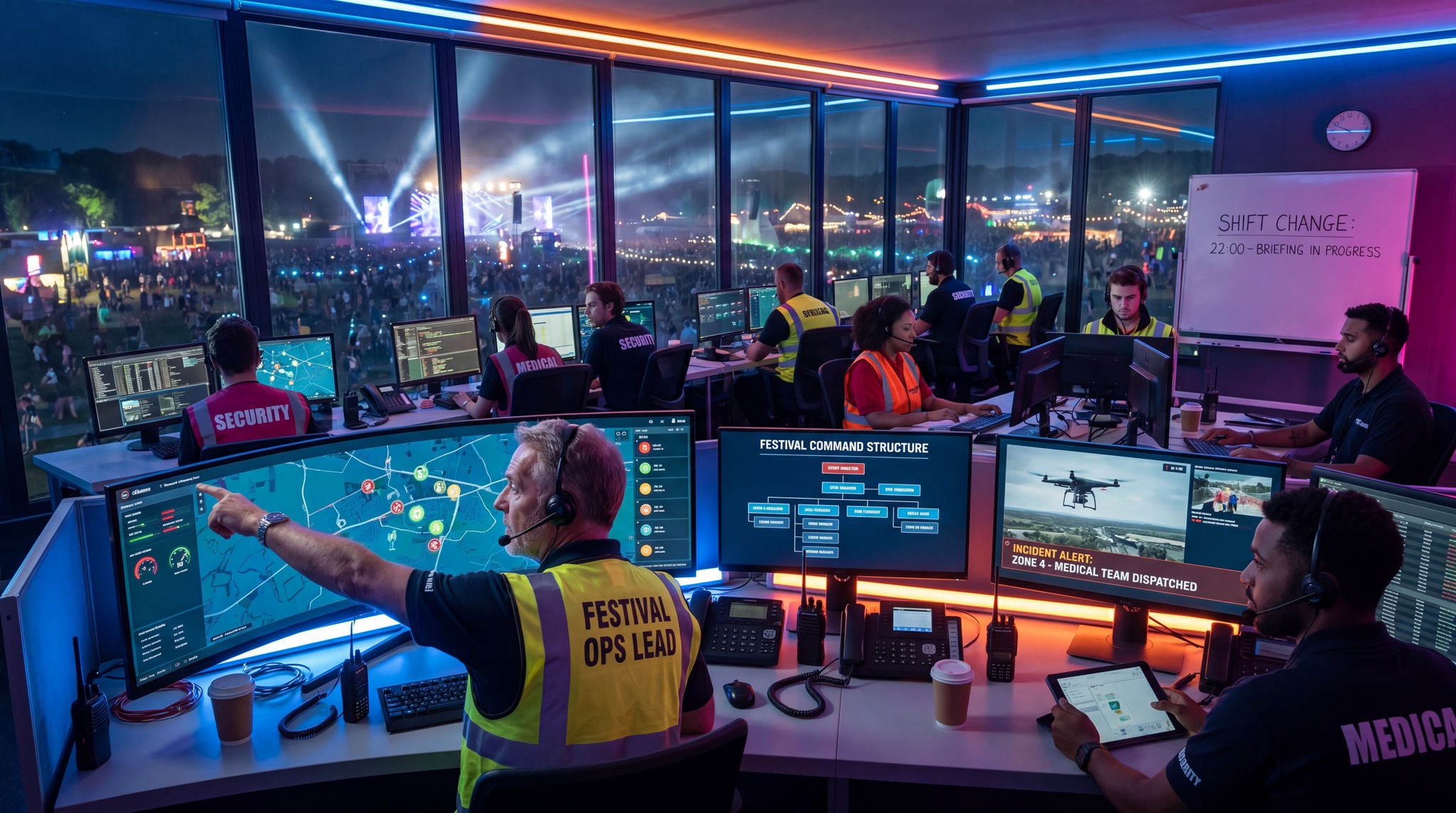
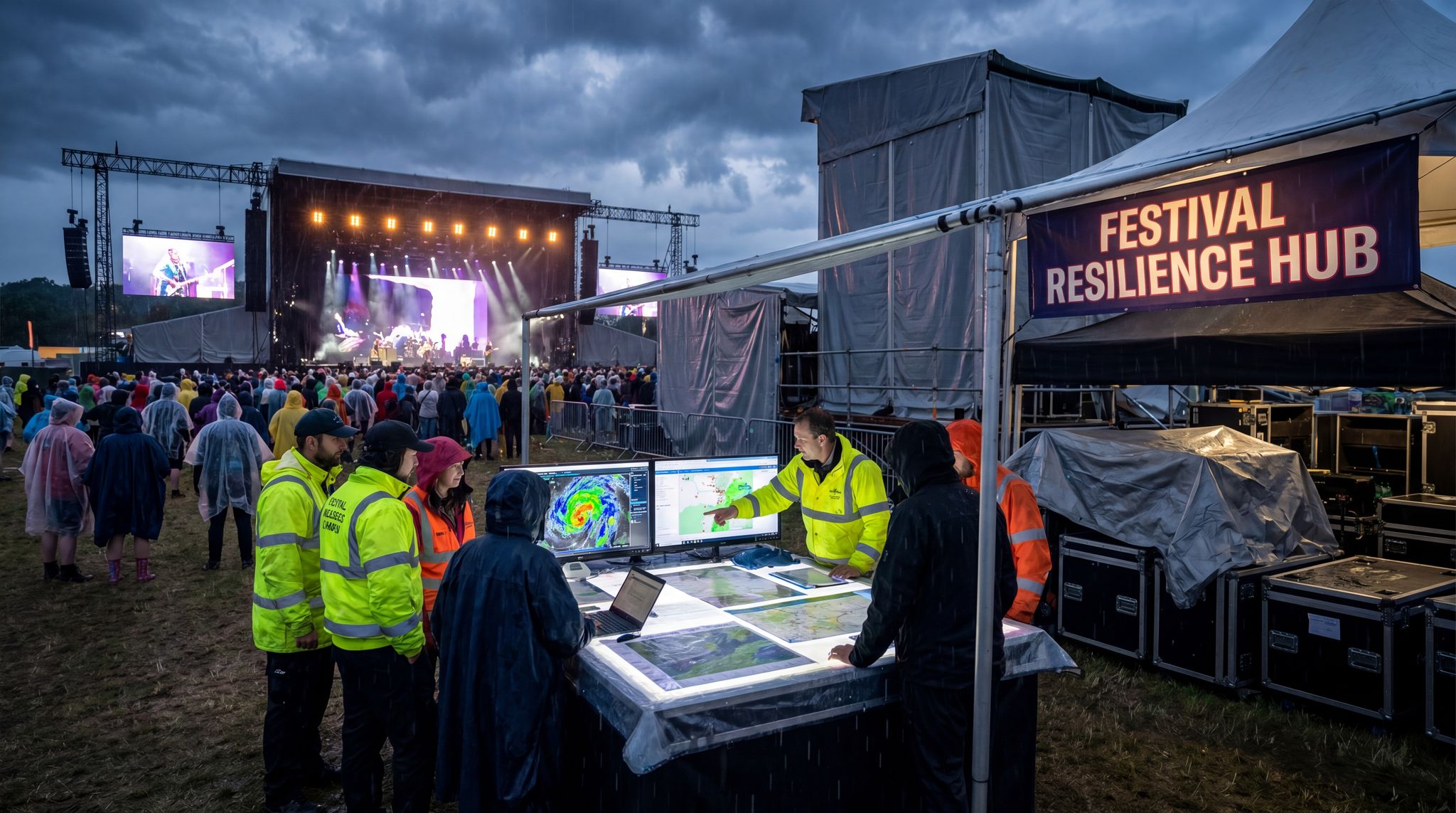
Start by creating a comprehensive Festival Business Continuity Plan (FBCP). This is essentially a playbook for how to make a festival survive a crisis with minimal damage. Identify key risk scenarios and spell out responses for each. For example, have a severe weather protocol: designate a weather monitoring team (often using services like WeatherOps or local meteorologists), set specific weather conditions that trigger cancellation (e.g. lightning within 8 miles = clear open-air stages; sustained 40 mph winds = pause performances), and assign roles for who stops the show, who coordinates evac, etc. Major festivals now often empower a safety officer or show-stop committee to halt performances if thresholds are met, acting as a crucial buffer between you and disaster – this “stop the show” protocol can save lives by not leaving decisions solely to artists or fragmented staff. As an example of good planning, at a 2017 Tomorrowland event in Barcelona, a sudden stage fire forced evacuation of 22,000 people. Thanks to clear procedures and training, the venue was cleared quickly with zero injuries during the evacuation of the massive music festival. Contrast that with poorly managed scenarios like the 2022 Medusa Festival in Spain, where high winds caused a stage collapse and fatalities – investigations alleged organizers failed to heed weather warnings, a stark reminder that hesitation or denial in a crisis can be deadly.
Your continuity plan should also cover health emergencies. As we learned in 2020, festivals must be ready to implement public health measures (or pivot format entirely). Prepare protocols for disease outbreaks: have sanitization supplies, isolation tents for sick attendees, rapid communication plans if an illness is reported. In parts of Asia, some events adopted temperature screening and health declarations post-pandemic, which can be deployed if needed. While we hope to never see another global shutdown, even local outbreaks (like food poisoning or norovirus at a campsite) require readiness.
Another scenario: artist no-shows or last-minute cancellations. This could be due to illness, travel issues, or an artist “going rogue.” A resilient festival has a backup plan for talent. Keep a shortlist of local or up-and-coming artists who can fill an empty slot on short notice, and budget a little extra for surprise guests or extended DJ sets if a headliner falls through. Communicate honestly with fans when a lineup change happens – most will understand if you’re transparent and have a decent replacement ready. For deeper guidance on handling these tough moments, exploring strategies for managing last-minute lineup changes can provide real-world tactics to soften the blow.
Key to operational resilience is drilling your team. In the military they say “train like you fight,” and it applies to festivals too. Conduct tabletop exercises and on-site drills for emergencies: run an evacuation drill with your security staff, practice a box office system outage scenario, rehearse the chain of command if there’s a serious injury or fatality (who contacts authorities, who speaks to media, etc.). Some organisers even use simulation training – for instance, VR scenario training for crowd management, similar to innovative crisis preparation methods used by arts organizations – to prepare their crew for any scenario. If you’ve walked through the motions of an emergency in advance, your team will respond faster and more confidently when it’s real. A well-managed crisis can actually enhance your festival’s reputation for professionalism and safety, whereas chaos or confusion will do the opposite.
Being operationally flexible also means embracing technology that enables quick adaptation. Communication tech is a prime example. Have a way to instantly reach all attendees with critical updates – ideally via multiple channels. Use a combination of:
– Text Alerts / Push Notifications: Encourage attendees to download the festival app or opt into SMS alerts for emergency updates. Modern mass-notification systems let you broadcast messages in seconds. Implementing emergency mass notification technology for attendees is essential reading for choosing the right tools. If weather is forcing an evacuation, a one-minute head start via a text alert can prevent injuries.
– On-Site Audio & Screens: Don’t rely solely on phones – use stage PA systems, loudspeakers around the venue, and video screens to announce urgent messages. At one 40,000-person festival, when severe winds hit, the producer cut power to the sound systems as a precaution – but had neglected an alternate communication plan. The result was confusion on the grounds until staff with bullhorns fanned out. Lesson learned: always have a backup way to guide the crowd if your main systems fail.
– Ticketing/Email Systems: Your ticketing platform should allow targeted emails or texts to ticket holders. Many festival ticketing software solutions (including dedicated festival ticketing software platforms) have built-in communication features for this. Organizers who could email all attendees in real-time about a last-minute entry delay or a schedule change have fared much better in crisis PR than those who let fans find out on social media rumors. If your system lacks this, plan alternative methods (like an emergency email service or even social media alerts, though those are scattershot).
Beyond communications, leverage tech for operational flexibility: cloud-based project management and inventory tools let your team work from anywhere if a crisis prevents on-site meetings; RFID access systems can be reprogrammed remotely to extend tickets to a new day if the event is paused; robust festival planning software solutions can integrate scheduling, vendor management, and even evacuation maps in one place. The right festival tech stack can be the glue that holds everything together when normal routines are disrupted. Just beware of tech overload – choose reliable systems that your team is trained on (an unused app is worthless in an emergency).
Finally, maintain flexibility in your event operations themselves. Build your site layout and schedules with Plan B options: Is there a second stage or indoor area that could host an act if the main stage goes down? Could you shift some Friday performances to Saturday if opening day is rained out? Design overlapping crew shifts so you have fresh staff to extend hours if needed (or cover for sick team members). When booking vendors, ask if they have backup inventory or generators in case of equipment failure. Little contingencies like these make your festival less fragile. As a seasoned production manager would say, “redundancy is resilience” – a backup plan for power, lighting, staffing, etc., can single-handedly save an event from total failure.
Community and Communication: The Trust Bank That Buoys You
Festivals are not just one-off transactions; the successful ones build a community over years. That community – your fans, your local supporters, your staff, and your partners – is perhaps the most important factor in bouncing back from tough times. By nurturing trust and goodwill consistently, you create a reservoir of support to draw on when crises strike.
Start with open, proactive communication as a core strategy. In a crisis or major change, keeping your audience informed will make or break their trust. Be transparent and timely with news about cancellations, postponements, or safety measures. Experienced organizers emphasize honesty: if you need to postpone due to a storm or safety concern, explain the situation frankly and outline next steps (new dates, refund options) immediately, a strategy that helps stabilize events on shaky ground due to cancellations. It’s tempting to delay bad news or sugar-coat, but fans value being treated like stakeholders rather than customers. When New Orleans Jazz Fest had to evacuate one day in 2019 for a hurricane warning, the team promptly sent emails, social posts, and app alerts explaining the decision and reminding attendees of the festival’s rain check policy. The feedback from fans was overwhelmingly supportive – they understood the choice was for safety, and many said the clear communication made them even more loyal to the festival.
A major aspect of community resilience is fan engagement during downtimes. If your festival goes on hiatus or faces a gap year, don’t go silent. Keep fans engaged with creative content: host livestream “home versions” of your event, run contests or Q&As with artists on your social channels, share throwback performances or behind-the-scenes peeks. This was critical during the pandemic – festivals that maintained an online presence (streaming past sets, running “virtual festivals” with interactive chats, etc.) kept their communities intact, whereas those that went dark struggled to regain momentum when they returned. Even simple gestures like a thank-you video from your team or an update on planning for next year can reassure your audience that the festival family is still together.
Also consider crowd support initiatives. Your superfans often want to help the festival survive. In 2020–21, many festivals offered ticket rollover programs and were amazed as 80–90% of ticket holders chose to keep their tickets for the rescheduled dates, with many events seeing the majority of ticket holders keep their passes rather than ask for refunds, essentially giving the festival an interest-free loan for another year. This only happens when fans believe in your brand and feel respected. Some independent festivals even launched crowdfunding or “festival bonds” where fans could invest or donate to support the event’s return – and many hit their targets. For example, when a beloved regional festival in Australia faced a cancellation, the organizers sold special edition merchandise and lifetime VIP passes, generating enough cash to pay creditors and come back the next year. The fans felt pride in “saving” the festival. These efforts succeed if you’ve built emotional equity with your base.
Local community and authorities are another pillar. Future-proofing means being seen as a positive force in your host community. Engage with local residents and businesses well before your event – attend town hall meetings, offer community tickets or fundraising partnerships, hire local vendors and crew. If you’re viewed as an integral part of the local culture and economy, you’ll find more support when seeking permits or leniency in tough situations. For instance, after a festival in California had to evacuate due to wildfires, the local city helped fast-track the permit for a makeup show the next month, and nearby venues offered discounts to host displaced artists – a direct result of years spent building good relationships. On the flip side, festivals that ignore community impact can face hostility: cite the example of a major EDM festival in 2019 that lost its venue after residents petitioned against it due to noise and traffic complaints. Community goodwill is like insurance – hope you never need it, but you’ll be grateful it’s there.
The same goes for sponsors and partners: communicate with them candidly and show appreciation. If you must cancel or alter an event, loop in sponsors immediately and propose how you’ll make good on exposure (maybe carry over their package to the next festival, or feature them in interim digital content). Most sponsors are understanding if kept in the loop. The key is to avoid a transactional view; treat sponsors as long-term partners invested in your mutual success. This attitude can secure financial lifelines – we’ve seen cases where a title sponsor advanced extra funds to a festival to help with a shortfall, purely out of trust that it would be repaid or worked out in future deals.
In summary, invest in the “trust bank” of your festival. Every timely update, act of transparency, fan-centric policy, and community benefit builds a reserve of goodwill. Then, when a crisis hits, you can make a “withdrawal” – asking fans to stick with you, asking the city for flexibility, asking sponsors for patience. If you’ve been a reliable, communicative, and community-minded organiser, you’ll likely be met with empathy instead of ire. That goodwill may be the difference between an event that rebounds stronger and one that fades away.
Embracing Change: Innovate and Adapt for Long-Term Survival
Beyond acute crises, industry shifts and evolving trends can pose subtler challenges to a festival’s longevity. Future-proofing means not only handling one-off disasters, but also continuously adapting to changes in technology, audience preferences, regulations, and the competitive landscape. The festivals that thrive over decades are those that innovate and iterate while staying true to their core mission.
One big shift is in audience expectations and demographics. A new generation of festivalgoers (Gen Z and beyond) brings different values – they demand more immersive experiences, social media-worthy moments, and often higher transparency around issues like sustainability and social impact. Successful festivals have pivoted to meet these expectations, incorporating things like interactive art installations, wellness workshops, and robust sustainability programs (recycling, carbon offsets) into their offerings. These aren’t just nice add-ons; they future-proof your relevance. A case in point: Lightning in a Bottle (USA) transformed from a niche music event into a multi-faceted “transformational festival” with yoga, learning modules, and eco-initiatives, which broadened its appeal and community loyalty. Similarly, accessibility and inclusivity have become non-negotiable – festivals that fail to accommodate audiences of all abilities or backgrounds may find themselves falling out of favor. Regularly solicit feedback and keep an eye on cultural trends to ensure your festival’s positioning isn’t stuck in the past. Keeping an eye on upcoming festival industry trends and shifts highlights emerging expectations for cashless convenience and personalized experiences. Adaptation is an ongoing process, not a one-time fix.
Technology is another area where future-focused festivals invest. The right tech can unlock new revenue and resilience. For example, many large events have adopted cashless payment systems (RFID wristbands or app-based) to improve spend per head and reduce theft, which is why utilizing a comprehensive festival ticketing platform with RFID integration is highly recommended. But beyond on-site tech, think of digital engagement: hybrid festival models (physical + virtual components) can open your event to global audiences and hedge against local disruptions. During the pandemic we saw renowned festivals like Tomorrowland host virtual festivals with hundreds of thousands of paid online attendees, a trend that might stay as a complementary offering. Even post-pandemic, some festivals stream select performances to fans worldwide for a fee or free with sponsor support – reaching millions online and providing sponsors extra ROI. Offering a digital window also builds resilience: if a portion of your festival must go audience-free (say, severe storms on day 2), could you livestream the artists from a shelter or studio to ticket-holders? Having the infrastructure and rights in place to pivot to streaming or content-on-demand is a forward-thinking move. Consider filming your festival and repackaging content for post-event monetisation (e.g., a documentary, live album, or exclusive content for ticket buyers). This turns a one-time event into a year-round asset and revenue stream.
Also stay adaptable with event format and size. Sometimes future-proofing means the courage to scale down or switch formats if the market changes. We’ve seen massive festivals decide to split into smaller regional events after noticing fans favor intimate experiences, or city festivals adding a camping option as younger audiences show interest in multi-day immersion. In the early 2010s, some festivals chasing ever-bigger crowds collapsed under debt; the ones that survived often right-sized their ambitions. There’s no shame in evolving your model – it’s better than clinging to a formula that no longer works. For example, a long-running country music festival found that attendance was dipping as new competition emerged. Instead of continuing to copy the same playbook, they reimagined the event as a boutique, VIP-focused experience with capped attendance, which allowed them to charge premium prices and differentiate from competitors, a tactic often used to attract and retain dedicated music fans. The pivot restored profitability and set them up for a stable future in a different niche.
Regulatory changes are another “industry shift” to keep ahead of. Noise ordinances, environmental regulations, security requirements – these can tighten over time. Proactively work with local authorities and stay updated on laws (e.g. drone usage restrictions, new health & safety mandates). After some high-profile safety incidents, many regions passed stricter crowd management regulations. A future-proof festival stays ahead by implementing best practices before they become law. For instance, post-2021 saw emphasis on improved crowd flow after some overcrowding tragedies; enlightened festivals followed guidance from groups like the Event Safety Alliance to redesign their layouts and training without waiting for mandated rules. This not only averts potential compliance issues but also signals to stakeholders that your event is professional and safe (which in turn protects your brand). If you operate internationally, be prepared to adapt to cultural and regulatory differences – what works in one country might need tweaking in another, a common challenge for international event promoters and organizers.
Finally, recognize that your team is part of future-proofing too. The live events labor landscape is changing – crew are unionizing in some markets, specialized skills are in high demand, and burnout is a real concern after intense pandemic years. Take care of your people and institutional knowledge. Cross-train staff so you’re not reliant on one irreplaceable person, document your processes, and cultivate the next generation of leaders from within. When crew know you have their back (through fair pay, rest schedules, and inclusive culture), they stick around. High retention means when a crisis hits, you have an experienced crew that can execute plan B smoothly, rather than a revolving door of newbies. Also embrace fresh ideas: integrate tech-savvy younger team members and empower them to innovate, while preserving veteran wisdom – a strategy top festivals use to stay dynamic and mitigate the significant impact of unexpected cancellations. A resilient festival organisation learns and improves continuously, treating every challenge as a lesson for the future.
In essence, future-proofing is an ongoing mindset. It’s about building an organisation that’s agile, well-informed, and not afraid to change course when the context demands. Whether it’s embracing new tech, reorganising your format, or evolving your brand identity through rebranding campaigns that help venues and events successfully reopen, stay proactive. The only constant in the festival world is change – lean into it, and your festival will not only survive through crises, it will thrive in the new realities that follow.
Frequently Asked Questions
What is a festival business continuity plan?
A festival business continuity plan is a comprehensive operational playbook designed to help an event survive a crisis with minimal damage. It identifies key risk scenarios, such as severe weather or health emergencies, and outlines specific response protocols, decision triggers, and staff roles to ensure attendee safety.
How do you financially future-proof a music festival?
You financially future-proof a music festival by building a dedicated emergency reserve fund of 5 to 15 percent of your total budget. Additionally, organizers should diversify revenue streams through year-round events, merchandise sales, and multi-year sponsorships to ensure cash flow continues even if ticket sales drop.
What does event cancellation insurance cover for festivals?
Event cancellation insurance reimburses lost revenues and sunk costs if a festival is shut down or significantly disrupted by unforeseen perils. Standard policies typically cover specific threats like severe weather, earthquakes, and terrorism, while specialized coverage can include communicable diseases or key artist no-shows.
How should festival contracts handle force majeure events?
Festival contracts must explicitly define modern force majeure events, such as epidemics, public health emergencies, or government shutdowns, rather than relying on outdated boilerplate language. This specific wording ensures organizers can lawfully cancel or postpone events without breaching agreements or losing massive artist deposits.
What weather conditions trigger a music festival cancellation?
Festival cancellations are triggered by specific severe weather thresholds outlined in an event’s safety protocol. Common examples include lightning strikes within an eight-mile radius, which require clearing open-air stages, or sustained winds exceeding 40 miles per hour, which typically mandate pausing performances and initiating evacuation procedures.
Why is transparent communication important during a festival crisis?
Transparent communication during a festival crisis builds essential community trust and prevents attendee panic. When organizers promptly explain safety decisions and outline refund or postponement options via mass notifications, fans are more likely to support the event, with many choosing ticket rollovers instead of demanding immediate refunds.
How do hybrid festival models increase event resilience?
Hybrid festival models increase resilience by combining physical attendance with virtual streaming components, hedging against local disruptions. If severe weather or health mandates force an audience-free event, organizers can pivot to livestreaming performances to global ticket-holders, maintaining sponsor ROI and generating digital revenue.
What happens to festival tickets if an event is postponed?
When a festival is postponed, organizers typically offer ticketholders the choice between a full refund or an automatic ticket rollover to the rescheduled dates. Providing flexible rollover options often results in 80 to 90 percent of fans keeping their passes, which helps stabilize the festival’s financial standing.