The Dark Side of Ticketing: Fraud and Scalping
Ticket fraud and scalping represent the dark side of the festival experience, threatening both revenue and attendee trust. Scammers and opportunistic resellers exploit high demand by any means necessary – from bots snatching up tickets in seconds, to counterfeit passes sold at exorbitant prices. The scope of the problem is huge – studies estimate nearly 5 million people buy fake tickets each year, resulting in millions in lost revenue and untold heartbreak for fans stripped of their money and excitement. The result? Genuine fans are left frustrated or locked out, and those who do get tickets may pay far above face value for the privilege. No region or genre is immune: whether it’s an EDM festival in Las Vegas or a boutique cultural fest in Singapore, the risk is real. Every festival organizer must take this threat seriously; failing to combat fraud and scalping can lead to unhappy attendees, negative press, and long-term damage to your event’s reputation.
Impact on Festivals and Fans
When scalpers and fraudsters interfere with ticket sales, festivals suffer in multiple ways:
- Priced-Out Fans: True supporters can be shut out when resale prices skyrocket or bulk buyers hoard inventory. This undercuts the inclusive spirit of festivals and means some events might technically sell out, yet end up with empty spots because real fans were priced out.
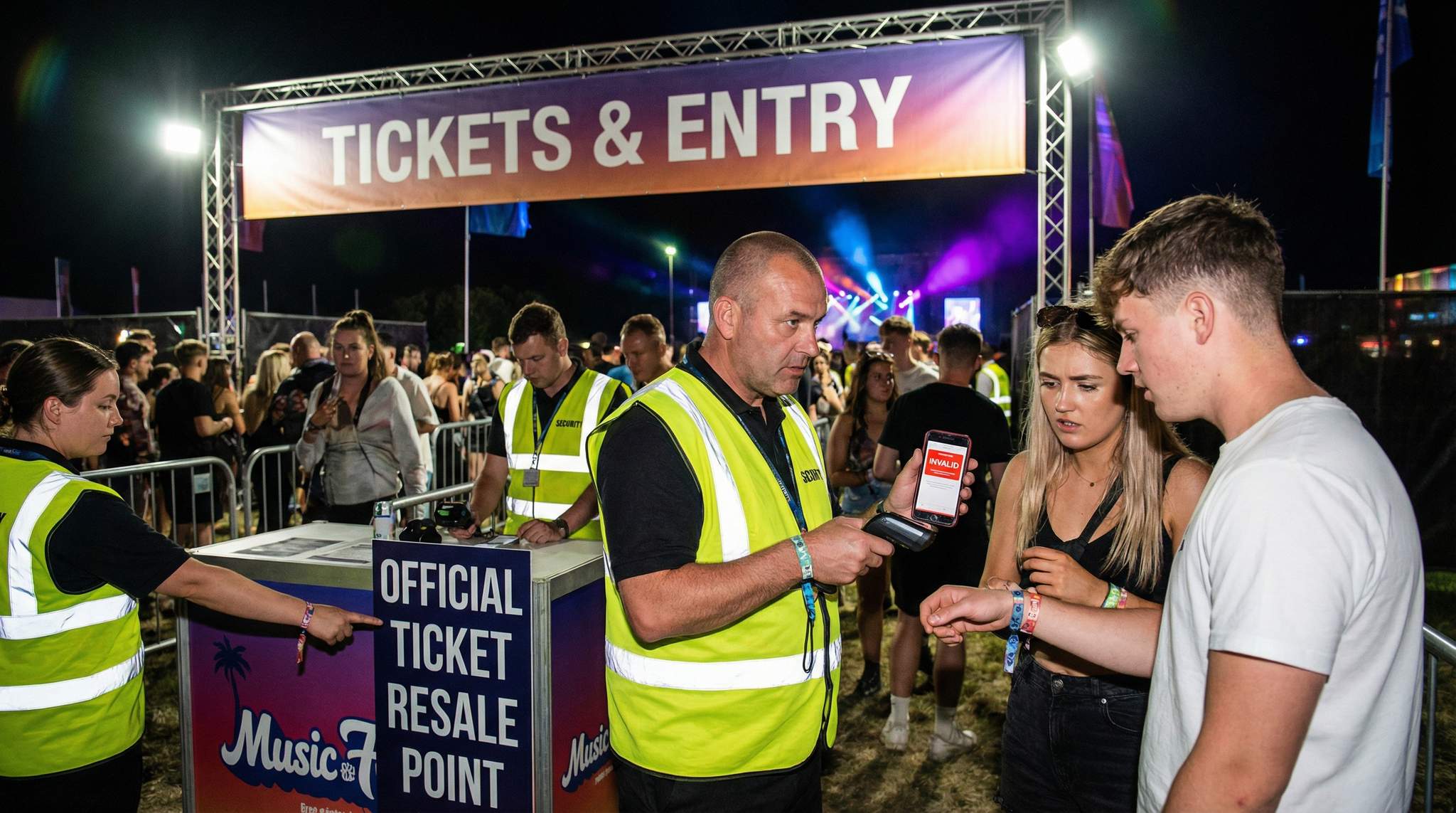
- Fraud Victims at the Gate: Counterfeit or invalid tickets leave would-be attendees stranded and upset on event day. Fans who fall victim to fake tickets lose their money and miss the show – and their disappointment often turns into anger directed at the festival organizers. Entry staff then have to handle these emotional confrontations, which can create chaos at the gates.
- Reputation Damage: News of widespread ticket scams or blatant scalping can seriously hurt a festival’s brand. An event known for unfair ticket access might see fans hesitate to buy tickets in the future, fearing they’ll either be outbid by bots or ripped off by fakes. Trust, once lost, is hard to regain.
For example, high-profile concert tours have been marred by scalping bots flooding the system, leaving thousands of loyal fans empty-handed. These scenarios illustrate how vital it is for organizers to be proactive in preventing ticket fraud and scalping. Some unlucky fans even showed up with counterfeit tickets purchased via secondary markets, only to be denied entry. These scenarios illustrate how vital it is for organizers to be proactive in preventing fraud and scalping.
Core Pillars of Event Ticketing Fraud Prevention
As a festival producer, implementing a comprehensive event ticketing fraud prevention strategy is no longer optional—it is a critical operational requirement. A robust defense relies on three main pillars: securing the primary point of sale against automated bot networks, enforcing strict access control at the gates using dynamic or biometric credentials, and controlling the aftermarket. By actively managing how inventory changes hands, organizers can effectively prevent counterfeit tickets in secondary marketplaces and ensure that every attendee walking through the gates holds a valid, supplier-verified pass.
Keep Tickets in Fans' Hands
Our secure resale marketplace lets attendees exchange tickets at face value, eliminating scalping while keeping you in control of the secondary market.
When examining how event organizers prevent ticket scalping and fake tickets, the foundation always rests on choosing the right technology partner. Modern ticketing software provides the necessary infrastructure to block unauthorized resellers before they can hoard inventory. For promoters operating in the United States, leveraging ticketing software to prevent ticket fraud and scalping also means ensuring compliance with regional regulations like the BOTS Act, while utilizing dynamic inventory management to keep passes in the hands of genuine fans.
A crucial element of this technological defense is proactive ticketing fraud detection. Rather than simply reacting to chargebacks or gate disputes after the fact, modern platforms utilize machine learning algorithms to analyze transaction data in real-time. Effective fraud detection systems evaluate hundreds of data points—such as billing address mismatches, rapid successive purchase attempts, and proxy IP usage—to assign a risk score to every order. By identifying and blocking high-risk transactions before the payment clears, organizers protect their merchant accounts and ensure inventory remains available for legitimate attendees.
Planning a Festival?
Ticket Fairy's festival ticketing platform handles multi-day passes, RFID wristbands, and complex festival operations.
Use Secure, Hard-to-Fake Tickets
One of the most effective defenses is to make your tickets as secure and tamper-proof as possible. Modern ticketing technology offers several tools to ensure only legitimate tickets can gain entry:
- Unique Barcodes/QR Codes: Each ticket should carry a one-of-a-kind barcode or QR code that gets electronically validated at entry. Once scanned, the code is marked as used so it cannot be reused. Advanced ticketing systems even generate dynamic QR codes that refresh periodically or become invalid after one scan, making it nearly impossible for anyone to copy or share a ticket illegally (a static screenshot, for instance, would be useless once the code updates).
- RFID Wristbands or Smart Tickets: Many festivals now issue RFID-enabled wristbands or smart tickets. RFID chips embedded in wristbands carry encrypted ticket data and are extremely hard to clone. At the gate, attendees simply tap their wristband on a scanner for instant verification. Each wristband’s chip is linked to the original buyer’s account, ensuring authenticity. If someone tries to copy a wristband, the system will flag it as invalid. RFID also prevents “pass-back” fraud (one person trying to sneak in multiple people with one pass) because the system can deactivate a wristband once it’s scanned for entry.
- Secure Physical Tickets & Credentials: If your festival uses physical tickets or paper credentials (for VIP passes, staff badges, etc.), incorporate hard-to-forge elements: holographic foils, special inks, watermarks, or microprinting. These features make it obvious when a ticket is a cheap copy. While physical tickets are less common today for general admission, don’t overlook security for any printed materials you do use.
Furthermore, transitioning to smart access event tickets fundamentally shifts your gate operations from simple barcode scanning to comprehensive identity verification. When your entry infrastructure communicates in real-time with your ticketing database, you create a closed-loop system. This supplier-backed approach to safe resale and access control means that even if a bad actor attempts to duplicate a credential, the system instantly recognizes the mismatch, protecting your event’s capacity and revenue.
By deploying secure ticket technology, you not only thwart basic scams (like photocopying tickets or sharing QR screenshots) but also speed up admissions. Fans appreciate a smooth, secure check-in that ensures everyone inside legitimately paid to be there. It shows the festival cares about protecting their investment and experience.
Anti-Bot Protection for Online Sales
Most scalping schemes start long before the festival gates open – they begin online, the moment tickets go on sale. Scalpers deploy automated bots to snap up large quantities of tickets in seconds, aiming to resell them at a markup. To fight back, festival producers need robust anti-bot protections in their ticket sales process:
Go Cashless With RFID Technology
Enable contactless payments, faster entry, and real-time spending analytics with cashless RFID wristbands for your events.
- CAPTCHAs and Human Verification: Implement tests like CAPTCHAs, puzzles, or click-to-confirm prompts at checkout to ensure a human is behind each purchase. This simple step trips up many basic bots. Some advanced systems also analyze mouse movements or keystroke patterns to distinguish bots from real fans.
- Virtual Queues & Throttling: For high-demand on-sales, use a virtual waiting room or queue system to control traffic. A queue prevents bots from overwhelming your website by giving each prospective buyer a fair place in line. Modern queue tools can detect and filter out known bot behavior, keeping the process more orderly and human-scaled.
- Purchase Limits and Account Requirements: Limit the number of tickets that can be bought per transaction or per customer (for example, no more than 4–6 tickets per person). Also consider requiring customers to create an account and sign in to buy tickets, possibly even with a verified email or SMS code. This adds a layer of friction that slows down mass bot purchases. Sophisticated scalpers might create many fake accounts, but combining account login with other checks (like one purchase per credit card or IP address) can weed out a lot of bad actors.
- Anti-Bot Detection Software: Work with a ticketing platform that invests in bot-detection and fraud analytics. For instance, some platforms monitor real-time purchasing patterns and automatically block suspicious activity – such as dozens of tickets bought within milliseconds, or multiple transactions coming from one IP address. These systems often maintain databases of known scalper IPs, credit card numbers, and other red flags to proactively bar them. Ticket Fairy’s own ticketing platform, for example, employs such measures to ensure tickets go to real fans and not automated scripts.
This battle against automated scalping is a global challenge. I frequently consult with European promoters who ask, “hoe voorkom je fraude en bots bij ticketing voor events?” (how do you prevent fraud and bots in event ticketing?). The fundamental strategy remains consistent across borders: operators must combine aggressive front-end friction—like dynamic CAPTCHAs and strict purchase limits—with deep back-end analytics that flag suspicious IP addresses and irregular buying patterns before a transaction completes. By layering these defenses, international organizers can protect their inventory from sophisticated botnets.
Beyond automated bots, organizers frequently ask how event platforms handle spammers or fake guests who manually attempt to manipulate inventory. The most effective systems utilize dynamic risk scoring during the checkout flow. By analyzing account creation velocity, email domain reputation, and historical purchase behavior, ticketing platforms can quarantine suspicious users before they acquire passes. For European promoters focused on scalping voorkomen (preventing scalping) with their tickets, this means stopping bad actors at the account level rather than just blocking IP addresses.
Need Festival Funding?
Get the capital you need to book headliners, secure venues, and scale your festival production.
Real-world lesson: Even major ticketing companies have faced public outrage when bots nabbed a huge share of tickets for coveted events, leaving genuine fans empty-handed. This highlights the importance of preventing fraud and scalping and ensuring that leaving would-be attendees stranded doesn’t happen to your event. Without anti-bot protections, no event is too big to be immune. By prioritizing bot defense, you safeguard your festival’s integrity and ensure more tickets end up in the hands of true fans rather than resellers.
Consider Personalized Tickets and ID Checks
A more stringent (but powerful) tactic to combat scalping is to issue personalized tickets – i.e. print the buyer’s name on each ticket (or encode it in the RFID) and require matching ID at entry. This approach, used by some of the world’s most in-demand festivals and concerts, can virtually eliminate third-party scalping because a ticket becomes non-transferable without the organizer’s approval.
- Scalping Deterrent: When each ticket is tied to a specific person’s identity (and sometimes even their photograph, as done by a few legendary festivals in Europe), it’s extremely hard for scalpers to profit. Even if touts manage to buy tickets in bulk, they can’t resell them unless they also somehow fake or transfer the original buyer’s identity – essentially impossible. Knowing that IDs will be checked at the gate discourages scalpers from even trying, since any ticket that doesn’t match a valid ID will be refused entry.
- Logistical Considerations: The downside is that ID checks take time and coordination. Verifying each person’s name against their ticket can slow down entry lines, especially at a large festival. Attendees must be informed well in advance to bring proper ID and expect this procedure. To keep lines moving, you’ll likely need extra staff and clearly marked lanes (for example, dedicated lanes for people with personalized tickets to get their IDs checked efficiently). Technology can help here too – handheld scanners that display the ticket holder’s name, or even photo, to the staff can streamline verifications.
- Flexible Transfer Policy for Fans: Life happens – what if someone buys a ticket and then can’t attend due to an emergency or change of plans? Strict “no transfer at all” rules can backfire by angering genuine fans who have a legitimate reason to give their ticket to a friend or sell it. To balance security with compassion, offer a controlled way to transfer tickets ahead of the event. For instance, you might allow a one-time name change service up to a certain date (perhaps for a small admin fee or under specific conditions), or provide an official mechanism for fans to return tickets for a refund or exchange (more on that in the next section). By having a formal process, you maintain the deterrent against illicit resale while giving real ticket buyers a safety valve for unforeseen circumstances.
To execute this strategy at scale, promoters are increasingly turning to a live music events platform capable of issuing identity-locked ticket assets. Instead of relying solely on manual gate checks, these advanced systems bind the digital entry credential directly to the purchaser’s verified mobile device and user profile. Because the asset is cryptographically locked to that specific identity, it cannot be screenshotted, forwarded via email, or sold on unauthorized third-party sites. If a fan needs to transfer their pass, the platform facilitates a secure, biometric-verified exchange that revokes the original asset and issues a newly locked token to the recipient, ensuring the chain of custody remains unbroken.
Personalized ticketing is best suited for high-demand events where scalping has been a major problem and where your community of fans is likely to appreciate the fairness trade-off. A famous example is Glastonbury Festival (UK) – since the mid-2000s, Glastonbury has required fans to pre-register with a photo ID before buying tickets, and each ticket comes printed with the buyer’s name and photograph. A turning point came in 2007 when they decided to ensure the rightful ticket owner is present. It’s a drastic measure, but it virtually wiped out scalping for that event and fans ultimately supported it to stop ticket touting and embrace Glastonbury’s photo ID registration system. Other festivals like Tomorrowland in Belgium have also adopted personalized, non-transferable tickets, and many concerts in Asia now use real-name ticketing as well to combat touts. If you decide to go this route, be prepared to communicate clearly with your audience about why you’re doing it and how it works – and be ready to invest in the customer service support needed to manage ID checks and ticket transfers smoothly.
Smooth Entry With Mobile Check-In
Scan tickets and manage entry with our mobile check-in app. Supports photo ID verification, real-time capacity tracking, and multi-gate coordination.
Official Resale and Transfer Options
No matter what anti-scalping measures you put in place during the initial sale, there will always be cases where fans legitimately need to sell or transfer their tickets later (due to illness, travel issues, etc.). If you don’t provide a safe, official channel for this, those transactions will likely move to the black market, which opens the door for scalpers and fraudsters to step in. Offering an official resale or ticket transfer system is a win-win for organizers and fans alike:
- Fan-to-Fan Resale Marketplace: Set up a platform (or use a ticketing service that has one built-in) where ticket holders can resell their tickets to other fans under your oversight. The key is to control the price and authenticity. Ideally, resales should be allowed only at face value or with a very modest markup cap (to account for fees or minor price increases). By capping resale prices – say, no more than 10-15% above the original price – you remove the profit motive for scalpers. If nobody can make a huge profit reselling a ticket, there’s little incentive for professional touts to hoard them in the first place.
- Verified Ticket Transfers: Ensure that any approved resale or transfer goes through your official system so that a brand-new ticket (with a new unique barcode/QR code or re-encoded RFID) is issued directly to the new owner. Simultaneously, the original ticket should be cancelled and marked invalid. This way, the person receiving the ticket gets a fresh, valid ticket in their own name or account, and the original copy can’t be used anymore. Many modern ticketing platforms support one-click transfers – for example, the original buyer just hits “Transfer Ticket” and enters the new recipient’s email, and the system handles reissuing the ticket seamlessly. This ensures the chain of custody for each ticket is always tracked and under your control, which prevents situations like one ticket being sold to multiple people.
- Waitlists for Sold-Out Events: Another fan-friendly approach is to offer a waitlist for interested buyers once tickets sell out. Fans who missed the initial sale can sign up for a waitlist, and if tickets become available (perhaps due to cancellations or refunds), those fans are notified and given the first opportunity to purchase the returned tickets at face value. Some ticketing systems (including Ticket Fairy) even automate this process: when a ticket gets refunded or returned, the next person on the waitlist receives an alert and a limited-time window to buy the ticket at the standard price. This not only rewards patient fans, but also undercuts scalpers by providing an official route to satisfy late demand.
- Implementing Buyer Protection Policies: Establishing clear policies protecting buyers from fake resale tickets is crucial for maintaining trust. When you mandate that all aftermarket transactions occur on your official exchange, you can guarantee valid entry for the purchaser. This supplier-backed guarantee removes the risk of fans buying voided or duplicate passes on unauthorized third-party sites, ensuring a secure, fraud-proof ticketing experience.
By facilitating official resales and transfers, you show your audience that you care about fair access and you’re actively keeping the ticket exchange above-board. Fans will be less tempted to turn to sketchy unofficial sellers if they know there’s a trustworthy way to buy or sell a spare ticket. Plus, it helps you maintain an accurate handle on who is attending the event, since you’ll know the rightful owner of each ticket even if it changed hands. Ticketing platforms like Ticket Fairy include built-in resale and transfer features that ensure any resold ticket is authenticated and traceable within the system – ensuring late buyers get genuine tickets and protecting fans from fake tickets when they didn’t get a ticket initially – giving peace of mind to both organizers and fans that no fake or price-gouged tickets are circulating.
Tip: Resist the temptation to combat scalpers by simply raising your own ticket prices drastically (so-called dynamic pricing). While surging prices to match demand might squeeze scalpers’ margins, it often alienates your fanbase, who feel they’re being gouged by the event itself. It’s usually better to keep prices fair and stable, and use the methods above to manage resales, rather than resorting to pricing gimmicks that can erode trust.
Deciding exactly how to price tickets and structure your on-sale phases is a critical component of your overall defense. When promoters ask how to prevent scalping without alienating their core audience, the answer often lies in transparent, tiered pricing combined with a robust, capped-price official exchange. This ensures that even if an event sells out instantly, the aftermarket remains fair and controlled.
Strategic Inventory Management
When considering how to prevent scalping at the highest level, experienced producers look beyond just software and examine their overall inventory release strategy. Releasing passes in staggered tiers or utilizing pre-sale registration phases allows organizers to gauge true fan demand while keeping bulk buyers guessing. By holding back a percentage of inventory for localized marketing or verified community members, you disrupt the predictable supply chains that professional touts rely on. This operational tactic, combined with strict transfer rules, forms a comprehensive barrier against unauthorized resale.
How Platforms Verify Authenticity in Secondary Ticketing
For festival producers, understanding the mechanics of secondary market fraud-proof ticketing is essential when selecting a vendor. When fans use an official exchange, how do platforms verify authenticity in secondary ticketing? The most secure systems integrate directly with the primary inventory database. When a ticket is listed for resale, the platform cross-references the original purchase data to confirm the seller actually owns the asset. Upon a successful transaction, the system utilizes identity verification and dynamic barcode regeneration—canceling the original seller’s QR code and issuing a completely new, unique token to the buyer. This supplier-safe resale process ensures smart access control at the gates, effectively neutralizing the risk of duplicate or canceled passes. By enforcing strict policies protecting buyers from fake resale tickets, such as holding seller funds until after the event or requiring verified fan profiles, organizers can confidently prevent counterfeit tickets in secondary marketplaces while maintaining total control over their event’s ticketing ecosystem.
Free Tool: When Should You Announce?
Pick your event date and genre — the free planner outputs a recommended announce, presale, on-sale and reminder schedule anchored to how your audience actually buys.
Achieving true secondary market fraud-proof ticketing requires organizers to mandate that all aftermarket exchanges happen within a controlled, primary-linked ecosystem. When a festival producer restricts transfers to a supplier-safe resale environment, they effectively close the loop on unauthorized scalping. This architecture relies on smart access event tickets that require identity verification at the point of transfer, not just at the gate. By ensuring the digital credential dynamically updates and binds to the new attendee’s profile, operators can guarantee that every pass scanned on-site is legitimate, completely eliminating the anxiety of counterfeit passes for both the gate staff and the fans.
Educate Attendees and Communicate Policies
Technology and strict policies are crucial, but there’s another powerful tool in the fight against ticket fraud: education. An informed fan is much less likely to be swindled by a scammer or to inadvertently support scalpers. Festival organizers should communicate clearly, early, and often about their ticketing policies and anti-fraud measures:
- “Buy Tickets Only From Official Sources”: Make it absolutely clear who your authorized ticketing partners or outlets are. Plaster this message on your website’s ticket page, in email newsletters, and across social media: for example, “The only valid tickets are those purchased through [Your Festival’s Official Site] or via our official resale platform.” Encourage attendees not to trust any deals that seem too good to be true on unofficial marketplaces. When fans know exactly where to get legitimate tickets (and where not to), scammers have a much harder time deceiving them.
- Explain How to Spot Fakes: Give your ticket buyers tips on verifying ticket authenticity. If you use physical tickets or printable PDFs, tell fans about the security features (holograms, special inks, unique QR codes, etc.) so they know what a real ticket looks like. If you use e-tickets or mobile app tickets, clarify whether screenshots or printouts are accepted – many festivals using dynamic QR codes will not accept a static screenshot, and fans should know that. By educating your audience on what a legitimate ticket should look like and how the entry process works, you empower them to steer clear of anything that doesn’t fit the mold.
- State Your Resale Policy Up Front: Whatever rules you’ve set – whether tickets are non-transferable, or transferable only through the official resale platform by a certain date – make sure these are well advertised before and after purchase. On the ticket purchase page, in confirmation emails, and on your FAQ section, be crystal clear: e.g. “Tickets are non-transferable except via our official resale exchange. Any ticket sold elsewhere may be voided.” This not only deters would-be scalpers (who know their listings could be cancelled), but also warns fans that if they buy off an unauthorized seller, they risk being denied entry. No one likes surprises at the gate.
- Regular Warnings and Updates: As the event approaches, use your communication channels to remind fans about potential scams. For instance, post on social media like: “? Watch out for fake tickets – recently we’ve seen bogus offers on Facebook. Remember, only tickets bought through our site or officially transferred are valid.” Many scams prey on last-minute desperation, so a week or two before the festival, send a reminder email and social posts about staying safe from ticket fraud. By keeping the topic on people’s radar, you reduce the chance of fans being duped.
- Fan Support and Reporting: Encourage your community to report any suspicious ticket offers or counterfeit activity they come across. Set up a quick-response help channel for ticketing issues where fans can ask, “Is this site legitimate?” or report scalpers. If a fan tries to sell a ticket on your official Facebook event page, for example, politely remind them and everyone else of the rules (and delete such posts if they violate policy). Having a visible stance against scalping – and backing it up with action – will signal to everyone that you’re serious about protecting fans.
Finally, ensure your own team is well-versed in these policies. Train your customer service and on-site staff on how to advise attendees regarding ticket authenticity and what to do if they encounter a suspected fake. When your whole organization is aligned and communicating the same anti-fraud message, fans will get the picture loud and clear.
Stay Vigilant: Monitor and Enforce
Implementing anti-fraud measures isn’t a “set and forget” task. Ongoing vigilance is required to keep tickets in the hands of real fans. Even after your primary sale is done, keep an eye on secondary markets and be prepared to enforce your policies:
- Monitor Resale Platforms and Social Media: Regularly scout popular resale websites and social media groups for any mention of your festival’s tickets. If you find people reselling passes at jacked-up prices or see an influx of sketchy listings (“100 tickets available!”), take action. Many major resale sites will cooperate with event organizers to remove listings that violate your terms of sale or local laws (for example, some countries prohibit reselling above face value). Likewise, if you spot scalpers or scammers trying to prey on fans in comment threads or fan forums, issue a public warning. A quick post like “We’re aware of fake tickets being sold on XYZ site – avoid them and only trust our official resale page” can prevent fans from getting burned.
- Invalidate Illicit Tickets: If your ticketing system allows, you can preemptively void tickets that are being sold improperly. Some advanced platforms can flag and automatically cancel tickets that appear on unauthorized resale sites for inflated prices. By invalidating a scalped ticket, you make it impossible for the scalper’s buyer to use it – effectively rendering the scalper’s “product” worthless and discouraging the practice. (If you do this, be sure to publicize that you’re doing it! The fear of buying a ticket that turns out canceled is often enough to drive fans back to official channels.)
- Enlist Authorities When Needed: Large-scale, organized ticket fraud isn’t just an internal problem – it can be illegal. Don’t hesitate to involve law enforcement or pursue legal action for serious cases. Many countries have begun cracking down on ticketing fraud and bot usage. In the US, the BOTS Act makes it unlawful to use automated bots to buy tickets, and regulators have prosecuted offenders. In the UK, dedicated trading standards teams have even secured jail sentences for professional ticket touts who sold tickets for millions of pounds. While you may not need to go this route for small infractions, knowing that you can and will escalate serious fraud sends a strong message.
Staying vigilant post-onsale protects your festival’s community. The faster you can shut down a scam or scalping attempt, the fewer fans will be affected. In one recent instance, a major anticipated reunion tour saw hundreds of fake tickets pop up online within hours of the ticket release – proving that speed is essential to stop fraud – a nightmare scenario for any organizer. Swift action, like getting those listings removed and warning your fans, is essential. By actively policing the secondary market and enforcing your rules, you not only protect fans and your festival’s revenue, but also broadcast a clear warning to would-be scammers: this festival takes fraud seriously, and we will stop you.
Conclusion: A Fair Festival for All
Preventing ticket fraud and scalping requires a multi-layered approach – there’s no single magic solution, but rather a combination of technology, smart policy, and proactive communication. By plugging the holes at every step of the ticket’s journey – from the moment of purchase to the scan at the gate – you drastically reduce the chances of bad actors exploiting your event. The good news is that fans will notice and appreciate these efforts. When true music lovers have a fair chance to buy tickets at a reasonable price, it builds goodwill that money can’t buy. On the flip side, taking a hard stance against scalpers and scammers preserves your festival’s long-term reputation and viability. Attendees remember when an event looks out for them.
Free Tool: Size Your Festival Site
Zoned capacity planning for arena, campsite, parking and entry lanes — against UK Purple Guide and NFPA density standards. Finds your bottleneck zone.
From Los Angeles to London to Sydney, festival organizers around the world are innovating to stay one step ahead of fraudsters. Secure ticketing tech, anti-bot measures, personalized tickets where appropriate, official resale channels, and strong fan education all work in concert to keep ticket sales fair. While you may never eliminate 100% of scams, by using every tool available you’ll mitigate the risks to a minimum. That means fewer headaches on show day, no massive crowds of duped ticket-holders at the gate, and maximum trust from your community. In the end, a fair and secure ticketing process isn’t just good ethics – it’s good business. Protect your ticket revenue, protect your fans, and set the stage for a successful festival where the only thing your attendees have to worry about is having an amazing time.
Frequently Asked Questions About Event Ticketing Fraud Prevention
How do organizers prevent scalping and fake tickets effectively?
Organizers prevent scalping and fake tickets by utilizing a combination of dynamic QR codes, strict anti-bot software during the primary on-sale, and requiring identity verification at the gates. Funneling all transfers through an official, price-capped resale exchange is the most reliable method to eliminate the financial incentive for scalpers.
What makes secondary market fraud-proof ticketing possible?
Fraud-proof secondary ticketing relies on closed-loop systems where the primary ticketing provider also manages the resale environment. This allows the platform to invalidate the original ticket barcode upon resale and instantly generate a new, secure credential tied directly to the new buyer’s verified account.
What role does identity verification play in event ticketing fraud prevention?
For modern festival producers, integrating identity verification is the cornerstone of comprehensive event ticketing fraud prevention. When a ticketing supplier provides a safe resale environment, it typically pairs buyer profiles with smart access event tickets—such as dynamic QR codes or RFID wristbands. This ensures that the person scanning in at the gate matches the verified owner in the system, completely neutralizing the threat of counterfeit passes and unauthorized secondary market transfers.
How can organizers prevent counterfeit tickets in secondary marketplaces?
To prevent counterfeit tickets in secondary marketplaces, organizers must establish official, closed-loop exchange platforms. By enforcing policies protecting buyers from fake resale tickets—such as capping markup prices, requiring seller identity verification, and dynamically reissuing barcodes upon transfer—producers can eliminate the financial incentives for scalpers while guaranteeing secure, smart access for genuine fans.
How do smart access event tickets improve supplier-safe resale?
Smart access event tickets improve supplier-safe resale by linking digital credentials directly to a fan’s verified profile. During an authorized transfer, the system uses identity verification to void the original barcode and issue a new, unique token to the buyer. This ensures the secondary market remains entirely fraud-proof and under the organizer’s control.
What are the best methods to prevent fraud and bots in event ticketing?
To effectively prevent fraud and bots during the ticketing process, organizers should implement a multi-tiered defense strategy. This includes utilizing virtual waiting rooms to throttle high-traffic on-sales, enforcing strict ticket limits per user, and deploying advanced bot-detection algorithms that analyze purchasing behavior in real-time. Coupling these front-end protections with secure, identity-linked digital credentials ensures that even if a bot bypasses initial security, the resulting passes cannot be easily transferred or resold on unauthorized secondary marketplaces.
How do event platforms handle spammers or fake guests?
Modern event platforms handle spammers and fake guests by implementing dynamic risk scoring, email domain verification, and behavioral analytics during the checkout process. By identifying irregular account creation patterns and quarantining suspicious users before a transaction completes, organizers can effectively block malicious actors from hoarding inventory or manipulating the secondary market.
How can promoters prevent ticket fraud and scalping using ticketing software?
Organizers can leverage advanced ticketing software to prevent scalping by activating features like dynamic QR codes, automated bot-detection algorithms, and integrated fan-to-fan resale exchanges. For events based in the United States, utilizing a compliant platform ensures that anti-bot measures align with federal regulations, automatically blocking suspicious IP addresses and enforcing strict ticket limits during high-demand on-sales.
How does proactive ticketing fraud detection protect event organizers?
Proactive ticketing fraud detection protects organizers by analyzing transaction data in real-time to identify suspicious behavior before a purchase is completed. By evaluating risk factors like IP address proxies, billing mismatches, and rapid purchasing velocity, advanced detection systems block malicious transactions, reducing costly chargebacks and keeping inventory available for genuine fans.
How do live music event platforms use identity-locked ticket assets?
A modern live music events platform uses identity-locked ticket assets by cryptographically binding the digital entry credential to a fan’s verified user profile and mobile device. This prevents unauthorized transfers and screenshots, ensuring that the ticket can only be used by the legitimate owner or transferred through the organizer’s official, secure exchange.
How to prevent scalping using staggered ticket releases?
To prevent scalping through inventory management, organizers can utilize staggered ticket releases and pre-sale registration phases. This strategy obscures the total available inventory from automated bots and professional touts. By releasing passes in controlled batches to verified community members first, promoters ensure that the majority of tickets go directly to genuine fans, significantly reducing the volume of passes that end up on unauthorized secondary markets.