Multi-genre festivals – whether they span diverse music styles, art forms, or multi-stage extravaganzas – offer a thrilling mix of sounds and experiences. But without careful planning, a festival that jumps from rock to EDM to folk can feel disjointed. The challenge is to blend these different genres under one unified festival identity so that attendees feel they’re at one intentionally crafted event, not a series of unrelated shows. The challenge of the big tent involves holding the entire event together. The world’s most seasoned festival producers have learned through decades of trial and error how to create that cohesive vibe. The following guide distills their wisdom into practical strategies for programming diverse genres, designing a unifying theme, and fostering an inclusive atmosphere that brings all fan communities together.
Define a Unifying Mission and Identity
A successful multi-genre festival starts with a clear mission or theme that ties everything together. This mission is the cultural glue that gives meaning to a broad lineup, as jazz and beyond face a similar challenge of holding the entire event together. Why are you mixing genres? Perhaps it’s to celebrate your city’s diverse culture, showcase “music without borders,” or promote unity through art. For example, Glastonbury Festival in the UK was founded by Michael Eavis with a mission to celebrate youth culture “in all its forms,” from pop and rock to dance, theatre, and circus. Every festival organizer should start with this clarity, perhaps centering on themes like innovation. Because Glastonbury explicitly set out to bring diverse arts together, its legendary mash-up of genres feels natural and authentic. Similarly, Sziget Festival in Hungary brands itself as the “Island of Freedom,” centering the event on themes of creativity and community – an ethos broad enough to encompass rock, electronic, world music and more under one banner. As seen with Glastonbury Festival’s original mission, by articulating a big-picture purpose (e.g. “unity through music” or “a global cultural crossroads”), festival organisers give attendees and artists a common thread to rally around.
For highly experimental events, such as a sound art festival, conceptual clashes between avant-garde installations and traditional performances can easily disorient attendees. One effective strategy to bridge this gap is adopting a single-word theme. Distilling the event’s core identity into a solitary, powerful concept—like “Resonance,” “Convergence,” or “Flux”—provides a definitive anchor. This single-word theme acts as a creative constraint for stage designers and booking agents alike, ensuring that even the most jarring sonic transitions feel like deliberate explorations of a shared central idea rather than accidental programming errors.
Authenticity is key: The mission must be genuine, not just a marketing ploy. Savvy audiences can tell if genres are thrown together arbitrarily to sell tickets. Being credible and cohesive is essential for the event’s identity. Instead, find a truthful connection between the styles you’re blending. This could be a shared value or story. For instance, a festival in Singapore might adopt an “East meets West” mission to credibly blend Asian and Western artists in one event, avoiding the appearance of purely trying to sell tickets. A city festival in Mexico City could rally around “urban art and sound,” naturally fitting rock, hip-hop, and electronic acts in one programme. This approach ensures the lineup isn’t built purely to sell tickets, but rather earns trust from audiences. These unifying concepts make a diverse lineup feel intentional. Montreal’s International Jazz Festival offers a great case study: founded by Claude Nobs to celebrate the spirit of jazz improvisation, it developed a mission so broad and inclusive that today the festival comfortably hosts funk, blues, rock, and hip-hop artists alongside traditional jazz – all without alienating its core fans. Learning from case studies shows the power of a clear vision. Likewise, WOMAD (World of Music, Arts and Dance), co-founded by Peter Gabriel, promises an “intercultural party” where you “get to know the world through the arts.” That clear vision makes WOMAD’s eclectic mix of folk, electronic, and indigenous music feel on-brand and cohesive. When mixing funk, blues, rock, and hip-hop, ensuring all genre choices are viewed through the lens of the mission is vital. The lesson is clear: a strong mission becomes the festival’s “big tent pole”, holding the whole event together, as jazz and beyond face a similar challenge and guiding every decision from bookings to decor.
Free Tool: Size Your Festival Site
Zoned capacity planning for arena, campsite, parking and entry lanes — against UK Purple Guide and NFPA density standards. Finds your bottleneck zone.
To effectively define your mission, gather your core team and answer: What experience do we want everyone to share, regardless of genre? A mission can be as simple as “celebrating creativity” or as specific as “showcasing the cultural mash-up of our city’s identity.” Once you’ve pinpointed it, communicate that mission constantly – in your branding, your website, press releases, and on-site signage. Attendees should know “what this festival stands for”. Avoid building a lineup purely to sell tickets; instead, focus on what the festival stands for. When a multi-genre festival has a credible, clearly stated purpose, fans and artists alike buy into the vision. They trust that the diverse lineup isn’t random – it’s part of a bigger story that they’re excited to be a part of.
Smart Scheduling to Avoid Genre Clashes
Programming multiple genres is a balancing act. A thoughtful schedule can mean the difference between a harmonious day of discovery and a fragmented experience. Avoiding jarring genre clashes – both in timing and in sequence – is a top priority for veteran festival organisers. This starts with the golden rule of no painful lineup conflicts: identify moments where a large portion of your audience might want to see two big acts at once, and don’t make them choose. Balancing diverse content streams is one of the biggest challenges, as you don’t want fans to choose one over the other. For example, if you’ve booked a superstar EDM DJ and a legendary rock band as dual headliners, don’t schedule them in the same time slot on different stages. Fans who appreciate both (and many will, in a multi-genre crowd) would be torn. As the Ticket Fairy promoter blog points out, if a world-famous filmmaker’s Q&A is happening at a multi-arts festival, you wouldn’t put a top-billed concert opposite it. In a scenario with a film premiere, you don’t want attendees to choose one over the other. The same logic applies within music genres: staggering headline-caliber acts ensures everyone can catch the marquee moments without frustration.
Planning a Festival?
Ticket Fairy's festival ticketing platform handles multi-day passes, RFID wristbands, and complex festival operations.
Stagger content by time of day: Many multi-genre events find success by aligning certain genres or activities with particular times. Daytime might be best for mellower or more family-friendly fare, while evenings amplify the energy. Staggered scheduling helps ease crowd flow and allows attendees to enjoy diverse acts. For instance, you could schedule acoustic, indie, or world music acts in the afternoon when people are relaxing on the grass, then ramp up to high-energy hip-hop or electronic DJs after sunset when the party crew is ready to dance. This approach was perfected by festivals like SXSW in Austin: by day the city’s venues host tech talks and film screenings, and by night the focus shifts entirely to live music showcases. Staggered scheduling allows venues to come alive with music showcases after the daytime events conclude. Even within a music-only festival, consider day vs. night tone – perhaps your noon slots go to soulful singer-songwriters or upbeat reggae that suits all ages, while the late-night slots belong to bass-heavy producers or rock bands once the general crowd is primed for a high-energy finale. Matching daytime versus late-night energy is crucial, as is balancing community vibes with high-energy acts. By staggering genres thoughtfully, you minimize direct competitions and let attendees sample across styles in a logical flow. Staggering schedules also eases operations, reducing everyone rushing one stage at the same time and giving each genre a moment to shine in the spotlight.
Group complementary genres and avoid whiplash: Think about how different musical styles feel back-to-back. Abrupt transitions can be off-putting – for example, a tranquil folk trio followed immediately by a death metal act on the same stage might be too harsh a switch in vibe. Wherever possible, sequence performances to gradually transition. Some festivals achieve this by dedicating stages to certain general genres (more on that below), but even on a single stage, you can curate the running order to step audiences through genres smoothly. Many experienced festival programmers use a kind of “set choreography”: maybe a funk band plays just before the big hip-hop artist, bridging groove-oriented styles, or an electronic-leaning pop act plays in the lead-up to the out-and-out EDM set. If you must program starkly different genres sequentially (say, a classical ensemble followed by a rock band), consider inserting a short neutral interlude – a DJ or host playing universally liked tracks – to reset the mood gradually.
Balance your genre spread: In a multi-genre lineup, it’s easy for one popular style to unintentionally dominate. Prevent this by proactively allocating slots or budget to each genre in line with your festival’s mission. For example, if your event promises an even mix of genres, make sure you’re not booking 20 rock acts and only 2 electronic artists – that would skew the experience. Some veteran producers literally create a genre spreadsheet during booking, tracking how many acts of each type are booked versus targets. Many organizers use spreadsheets to track genre balance to ensure diversity. If your mission is “music without borders” and you want roughly 25% rock, 25% electronic, 25% hip-hop/R&B, 25% world/other, then stick to those ratios when curating. Ensure you still pepper the lineup with variety to maintain interest. Conversely, if your festival has a primary focus (e.g. mostly jazz but with some modern genres sprinkled in), allocate a majority to the core genre and a minority to the rest – enough to add diversity without diluting your identity. This prevents drift in booking strategy and ensures the lineup breadth stays true to your vision.
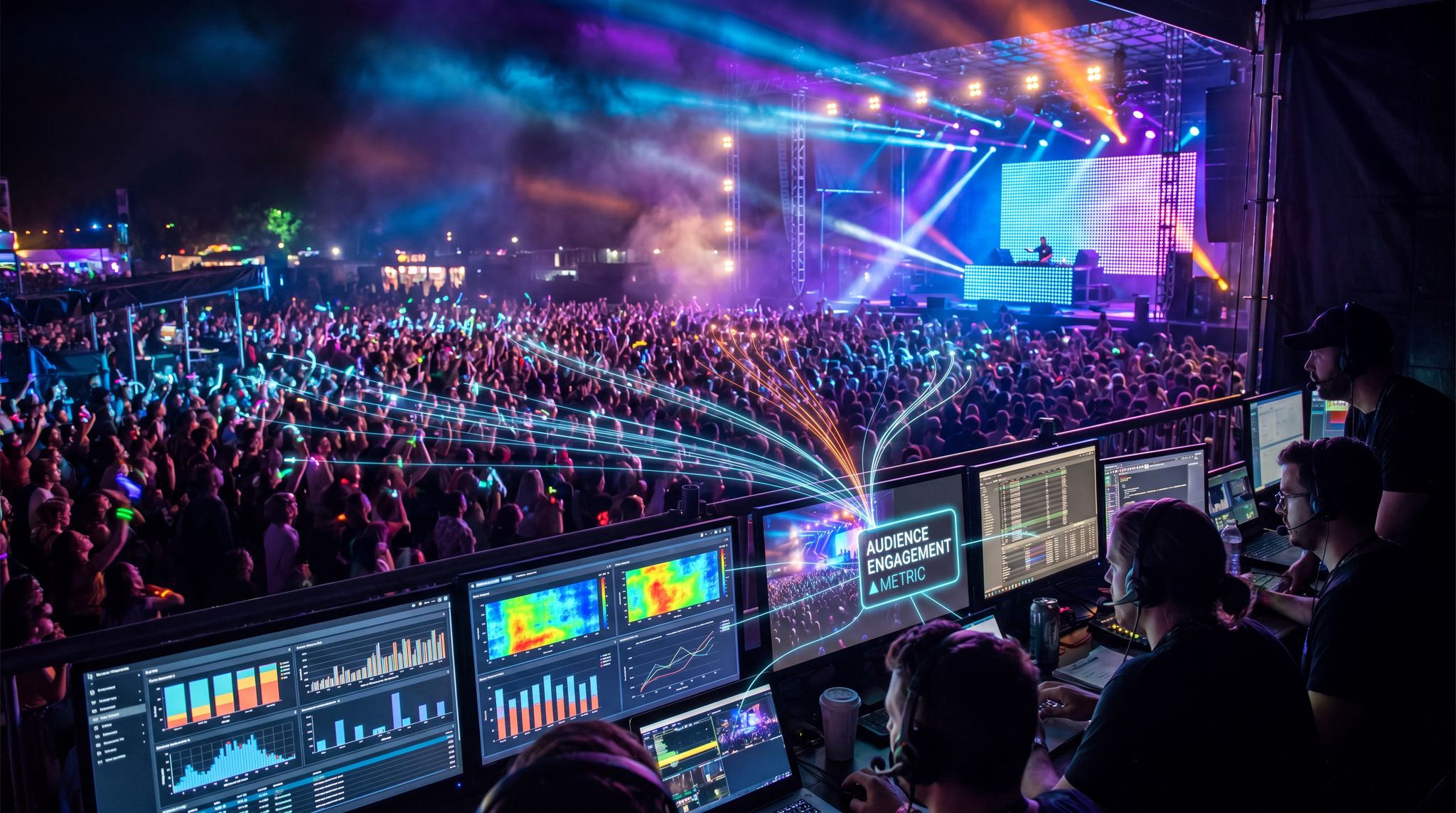
Use data to anticipate overlaps: To identify where audience interests might overlap or clash, use data from past festivals or music platforms. Look at your ticket buyer survey or social media engagement to see if fans are interested in multiple genres or primarily coming for one thing. Modern tools like Spotify or YouTube statistics can show music taste correlations – for instance, if fans of your headliner DJ also tend to listen to indie rock, that’s a clue that scheduling those genres apart could benefit attendees. This approach allows for a diverse experience reflecting the evolving landscape of music. You can even poll your community (“Which two acts would you hate to miss at our festival?”) to pinpoint potential conflicts. Armed with this insight, design the schedule to maximize fans’ ability to enjoy all the genres they care about.
Grow Your Social Following With Every Sale
Require social media follows, shares, or playlist adds to unlock presale access or special pricing. Turn every ticket purchase into audience growth.
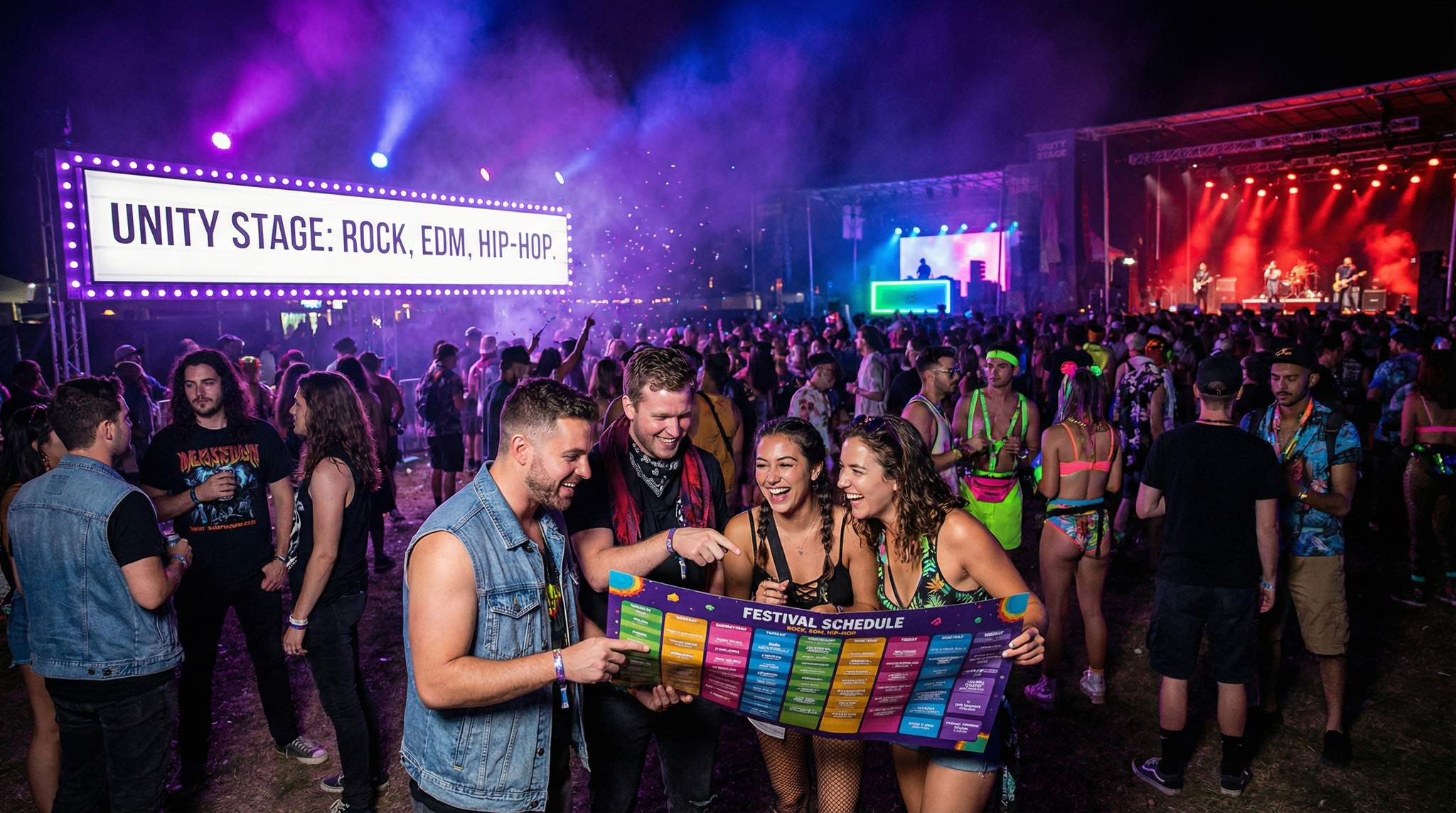
Finally, embrace scheduling tools to help attendees navigate a complex lineup. Providing a well-designed festival app or online schedule with filters (by genre, stage, or mood) can turn potential chaos into a personalized adventure. Unified but flexible scheduling helps attendees navigate the event. For example, festivals like SXSW offer robust apps that let users create a personal agenda out of hundreds of events. These tools help organizers build the schedule intuitively. Even if your event is smaller, consider offering a printable planner or an interactive website schedule. Help people find “their path” through the festival – and encourage them to explore beyond their usual tastes by highlighting unique must-see sets (e.g. “Don’t miss the Afrobeat jam at 3pm on the Global Stage!”). The easier it is to discover and plan, the more cohesive each individual’s experience will feel.
Stage Zoning and Site Layout for Harmony
The physical layout of your festival grounds can either divide audiences or bring them together. Smart venue design is crucial in multi-stage, multi-genre events. One approach is to use stage zoning: group stages or areas by genre or vibe in a logical way. For example, at a large festival you might position all the heavy rock/metal acts on a far-end stage and the electronic dance tent on the opposite side, with a neutral buffer in between. This prevents sound bleed and culture clashes – mosh pits and trance dancers each have space to do their thing without disturbing one another. At the same time, create inviting common areas between or central to these zones where everyone mingles: food courts, art installations, marketplaces, and chill-out lounges where it doesn’t matter what music someone likes, they can still share the fun.
Need Festival Funding?
Get the capital you need to book headliners, secure venues, and scale your festival production.
In designing the site, think like an attendee who wants to sample a bit of everything. Is it easy to drift from the reggae beach stage to the techno warehouse and then to the main pop arena? Well-planned circulation, clear signposting, and sensible scheduling (as discussed) will encourage fans to roam rather than stay siloed. Avoid putting two stages with clashing genres right next to each other at the same time – unless one is significantly quieter or meant for pauses (e.g. don’t station the acoustic café directly beside the drum and bass stage). Instead, use natural sound buffers: a row of trees, a hill, or vendor booths can help separate sonic zones. Many festival producers conduct sound checks and walkthroughs during planning to gauge how music from different stages might overlap and adjust accordingly. The goal is a layout where transitions from one area to another feel like stepping into a new chapter of the same story, not walking into a different event entirely.
Signage and navigation play a big role here. A cohesive festival uses consistent, festival-branded signage everywhere on site. Even if you have distinct zones (say a “Chill Garden” stage and a “Bass Arena”), the signboards, maps and banners should all clearly belong to the same event design language. Use a unified colour palette or design motif across stages, with slight variations for each genre area. Building a master festival brand with stage sub-brands ensures consistency. For instance, your overall festival colours might be black and neon green, and you give each stage its own accent colour or icon – the key is that it’s all within one visual family. A unified palette for each stage keeps things coherent while still helping each area stand out. On maps and directional signs, maintain a common style and font so attendees instinctively know it’s all one festival guiding them. These subtle touches – maybe the festival logo appears on every stage entrance and every info kiosk – continually remind people “you’re at OurFest,” even as they explore wildly different genres. Even with directional signage looking distinct, the core identity remains.
Case in point: The massive Electric Daisy Carnival (EDC) in Las Vegas caters to multiple sub-genres of electronic music by using creative stage sub-brands, all unified by the main EDC theme. Attendees wander from the neon-lit “Basspod” stage (home of dubstep and bass music) over to the lush “Neon Garden” (serving house and techno) and onward to other areas, each with its own look. Festival-goers can gravitate to the stage that fits their vibe, ensuring a personalized experience. Every zone has a distinct name and decor, but because Insomniac (EDC’s producer, Pasquale Rotella) maintains a consistent overarching theme – a colourful, Alice-in-Wonderland-like rave wonderland – it all feels like one cohesive playground. The stage names and designs act as sub-brands that help communities of fans find “their” spot, yet the overall branding (in EDC’s case, an electric carnival aesthetic) is front-and-center. At the top of the hierarchy is the main festival brand, ensuring the event feels more personal and organized. The lesson for multi-genre festivals: you can let each stage have its own flavour, but tie them back into a master festival brand. Whether it’s through a common art style, a narrative thread, or simply your logo and name repeated throughout, make sure nothing feels completely out of place in the festival’s “world.”
Thematic Decor and Cohesive Atmosphere
Beyond layout, the ambience and decor of your festival can do wonders to unify disparate elements. Great festivals craft an immersive atmosphere that transcends any single stage, giving attendees a strong sense of place and shared experience. One technique is to choose an overarching theme or story each year. For example, Boomtown Fair in the UK transforms its grounds into an elaborate fictional city with themed districts each hosting different music genres (reggae in one area, techno in another, punk in a third, etc.). Each district has unique set designs and even actors to bring it to life. What makes it cohesive is an overarching narrative tying all those districts together – one year the story might be a revolution in the city, another year a utopian dream. The festival’s success can be attributed to this immersion and its growing popularity. Attendees become citizens of Boomtown, participating in interactive storylines that weave through the entire site. This immersive theming, led by festival producers Lak Mitchell and Chris Rutherford, has been so successful that Boomtown is renowned for its “vibe” – attendees with vastly different music tastes all feel like part of one community because they’re literally playing roles in the same story. Nestled in the picturesque countryside, Boomtown fosters a vibrant, inclusive community spirit. While not every festival can be a full-on theatrical experience, the principle stands: a unifying theme, even a loose one, creates a sense of shared journey.
Free Tool: Project Your Bar Revenue
Per-head spend benchmarks by event type turned into projected bar and food revenue, with a stock-mix estimate and gross-margin line. Free calculator.
If an actual story is not your style, focus on visual branding to knit the event together. Consistency is key: design a visual identity (colour schemes, typography, symbols, stage designs) that reflects your festival’s personality and use it everywhere. Building a cohesive festival identity relies on consistent visual elements. Many organisers develop a festival style guide so that every stage’s signage, every piece of decor, and every poster or social media graphic feels like part of the same family. A style guide ensures consistency across the board, but allowing each stage a distinct flavor is also important. For instance, you might give each stage its own icon (like a little guitar symbol for a rock stage, a turntable for the EDM stage, etc.), but all those icons appear in the same style and color context next to your festival name. If you produce video screen content or lighting designs, maintain a core style across stages while allowing each some unique accent. One practical approach is colour-coding stages or genres in a cohesive way: maybe Stage A’s theme colour is blue and Stage B’s is red, but your overall palette is unified so those accents complement each other rather than clash. A shared palette across each stage keeps things coherent. Attendees will subconsciously register that while the techno tent is bathed in green lasers and the indie stage has warm vintage decor, both still feel like parts of the same universe.
Don’t overlook the small details: flags, bunting, art installations, and even staff uniforms contribute to one festival vibe. Many top festivals commission site-wide art installations or iconic landmarks that act as gathering points for all attendees. For example, Coachella in California complements its multi-genre lineup (from pop to hip-hop to rock) with massive art sculptures and a signature Ferris wheel that dominates the skyline. The cohesive art direction – creative, colorful, and a bit surreal against the desert backdrop – gives Coachella a distinct atmosphere year after year that everyone, no matter which stage they come from, can appreciate together. Tomorrowland (Belgium) is another famous example: although it’s primarily an EDM festival, its level of thematic decor offers inspiration for any multi-genre event. Each year has a theme (e.g. Book of Wisdom, The Reflection of Love) with fantastical stage designs all built around that concept, making the whole festival feel like an immersive fairy tale world. A multi-genre festival could apply a similar idea, even at a lower budget: choose a broad theme (say “Carnival of Cultures” or “Urban Jungle” or “Future meets Past”) and let each stage interpret it in their own way, while still clearly being chapters of one story.
When dealing with avant-garde or highly experimental programming, such as a sound art festival, visual decor becomes the primary tool to smooth over conceptual clashes. If your lineup features jarring sonic transitions, anchoring the physical space with a single-word theme—like “Echo” or “Synthesis”—gives attendees a visual through-line. Promoters can mandate that all stage builders and lighting directors interpret this solitary concept, ensuring the environment feels unified even when the festival music genres being showcased are radically different.
Most importantly, ensure festival branding remains front-and-centre. The decor and design should always include reminders of the festival’s name and identity, reinforcing that all these different experiences are under one roof (or sky!). Use your logo and theme in creative ways on site – projected onto buildings at night, on official merch, on entrance arches to each zone. By saturating the environment with a cohesive look and feel, you make it easy for attendees to mentally connect a drum & bass rave at one end with a folk singalong at the other as all part of “[Your Festival Name] experience.” It becomes a holistic atmosphere, one that people will recall years later as the unique character of your festival.
Cross-Genre Activities and Shared Experiences
One of the most powerful ways to unite different fan communities is to create interactive, cross-genre activities that everyone can enjoy together. Think beyond the scheduled performances – what else can attendees do at your festival that bridges genres? Many seasoned festival producers intentionally program moments of convergence, where the usual genre silos blur and people mingle through a common experience.
A proven idea is hosting collaborative performances or “supergroups.” For example, Bonnaroo Music & Arts Festival in Tennessee (which features rock, pop, electronic, and more) has its famous “SuperJam” tradition. Each year, the Bonnaroo team (led by co-founder Ashley Capps and festival director Brad Parker) curates a one-time supergroup of artists from across genres to jam on stage together. They’ve had iconic SuperJams featuring combinations like R&B singer D’Angelo performing with EDM star Skrillex, or bluegrass musicians jamming with rappers – unexpected collaborations you won’t see anywhere else. The SuperJam is something that’s really unique to the event. This special set is all about the spirit of collaboration, and Bonnaroo considers it a highlight that brings the whole community together. This year’s lineup is one of the most diverse, reinforcing that spirit. Pulling off such cross-genre performances takes extra planning (sometimes months of rehearsal to get different artists in sync). It requires coordination with other artists who’ll be performing, but the payoff is huge: fans from different musical tribes all pack the tent to witness a unique musical moment, shoulder to shoulder. It’s the kind of memory that bonds the crowd and embodies the festival’s unity.
Free Tool: Model Promoter Payouts
Flat-percentage, flat-per-ticket, or tiered-bonus commission structures — get per-promoter payouts and total commission as % of gross. Free calculator.
You don’t need superstar jams to create crossover magic. Even on a smaller scale, you can encourage artists to collaborate or guest-appear in each other’s sets. Perhaps the folk singer from the afternoon set returns during the EDM headliner’s performance for an acoustic bridge, or two bands from different genres agree to do a fun cover song together. These surprises delight fans and send a clear message: this festival is about connecting genres, not keeping them apart. Many multi-genre festivals also curate genre-blending artists – performers whose style already fuses genres – as natural bridges. Booking acts like Billie Eilish (who mixes pop, electronic, and indie influences) or genre-blending DJs and bands can organically attract diverse audiences into one set. This approach allows for a diverse lineup reflecting the evolving landscape of music. The New Orleans Jazz & Heritage Festival often brings in modern artists who blend jazz with hip-hop or rock, helping younger audiences appreciate the jazz roots while older fans enjoy the fresh take. These artists become “connectors” that make the overall lineup feel less segmented.
When curating a multi genre music festival, promoters should actively seek out cross-genre fusion examples to serve as anchor performances. Booking artists who naturally blend disparate styles—such as a DJ incorporating live bluegrass instrumentation or a classical ensemble performing alongside a heavy metal band—provides a built-in bridge for divided audiences. These fusion acts demonstrate to attendees that exploring different festival music genres isn’t just encouraged; it’s the core of the event’s creative vision.
Beyond the music, think of activities and spaces that cut across genres. Festivals aren’t just about watching acts; they’re about the atmosphere and community. Provide interactive experiences that any attendee can join, regardless of musical preference:
- Workshops and Classes: Offer workshops where people can try something new – a drumming circle, a dance class, a graffiti art wall, or yoga session in the morning. For example, at New Orleans Jazz Fest, organizers hold educational sessions where festivalgoers can learn about Cajun cooking or try out instruments between watching performances. Events often feature collaborations between artists like those seen at the New Orleans Jazz & Heritage Festival. Such activities let a metalhead, a pop fan, and a techno lover all sit together learning a West African drum rhythm. It’s a shared learning experience that transcends genre.
- Art Installations & Zones: Install interactive art pieces (think along the lines of Burning Man-style sculptures or colorful LED installations) that attract everyone to come take a look or a photo. Coachella’s big art structures are a prime example – whether you came for rap or rock, you’ll likely wander over to see the giant astronaut or moving origami tower and end up chatting with strangers there. Immersive art or game zones (a mini arcade, a silent disco, a Ferris wheel, a photo booth) give people common fun grounds beyond the music.
- Community Spaces: Set up chill-out lounges, tea houses, or community campfires where folks from any stage can relax and mingle. Some festivals create a “World Café” tent featuring food and live casual music from different cultures throughout the day – you might see EDM fans and indie rockers all grabbing international snacks and enjoying a spontaneous unplugged set together. Providing comfortable communal areas encourages cross-genre socialising.
- Themed Costume or Parade Events: Encourage attendees to dress up or participate in theme days that aren’t genre-specific (like a “Glow Day” where everyone wears neon, or a costume parade that winds through all areas). Splendour in the Grass festival in Australia, for instance, often sees attendees in wild outfits roaming between stages, creating a sense of one big playful party rather than segregated crowds. A shared costume theme or a site-wide flash mob dance can unite everyone in a lighthearted way.
- Competitions and Games: Host festival-wide contests that require mixed participation. A scavenger hunt that sends people to all corners of the festival (e.g. “get a stamp from each stage’s unique stamp station”) encourages genre-hopping. Or run a daily trivia quiz on the festival app with questions about the artists from every genre – fans will have to talk to new friends or pay attention throughout the grounds to know all the answers. Prizes could be meet-and-greets or merch, incentivising engagement across the board.
The idea is to create touchpoints where the diverse crowd converges. When done well, these become hallmark moments that define the festival. Remember that attendees often report that their favourite memories aren’t just a particular performance, but the random connections and experiences they had onsite – dancing with strangers, discovering a new genre by accident, joining a parade, etc. Your role as a festival producer is to facilitate those cross-genre connections. Encourage artists to wander the grounds and interact with fans (some festivals have artists do fan meetups or pop-up performances at unexpected stages). Highlight any cultural or community activities in your schedule so people notice them. And foster an environment of openness: use signage or MC announcements to invite people to “Explore a new genre!” or “Meet your fellow festivalgoers at the drum circle at 4 PM.” By actively bridging gaps, you’ll turn a potentially segmented event into a unified community celebration.
Engaging Diverse Audiences Under One Banner
When you’re marketing and communicating about a multi-genre festival, it’s crucial to present a unified identity while respecting the distinct audiences you’re bringing together. Striking this balance in messaging will set attendee expectations and build excitement for the whole experience, not just one part of it.
Branding and outreach: Lead with your festival’s unifying mission or theme in external communications. Instead of promoting it as a bunch of separate attractions (“We have rock and EDM and hip-hop!”), craft a narrative about how these elements come together. For instance, SXSW doesn’t advertise itself simply as a music + film + tech festival – it sells the idea of a citywide celebration of creativity and innovation. Similarly, position your festival as one event with many dimensions; emphasize phrases like “experience it all” or “one festival, many genres” in taglines. Using consistent branding (logo, tone, visuals) across all genre-specific promotions is important. Even if you run targeted ads to different fan bases (say, an EDM site ad highlighting the DJ lineup and a rock magazine ad highlighting the bands), make sure the overall look and festival name are identical. This avoids any impression that it’s effectively multiple festivals. Every promo should clearly say, This is [Festival Name] – and here’s all the cool variety it contains.
Boost Revenue With Smart Upsells
Sell merchandise, VIP upgrades, parking passes, and add-ons during checkout and via post-purchase emails. Increase average order value by up to 220%.
Social media and content: Social channels are great for showing the festival’s diversity in action. Share photos and videos that capture crossover moments: a clip of a crowd of all kinds of fans singing together, or an artist from one genre checking out another’s show. Leading up to the festival, you might post playlists that mix genres (so fans of one artist might discover another on the lineup). Showcase behind-the-scenes content that highlights the festival personality – maybe interviews asking a hip-hop artist which rock act they’re excited to see, or chefs talking about the cultural food fusion on site. By creating content that celebrates diversity, you subtly educate your audience to be as excited for the experience as they are for “their” act. Some festivals run “genre explorer” challenges on social media: e.g. encouraging attendees to post a photo from each stage or to use a special hashtag when they try a new genre at the festival. This gamification makes inclusivity fun and shareable.
Importantly, be mindful and inclusive in your marketing language. If the festival spans multiple age groups or subcultures, ensure your messaging speaks to all respectfully. Avoid insider jargon from one genre that might alienate others – or if you use it, explain it playfully. Also, highlight the festival’s values (like respect, open-mindedness, community) in your code of conduct and on-site signage. This sets expectations that all attendees, whether die-hard metalheads or K-pop fans or jazz aficionados, are part of one family for the weekend and should treat each other as such. Many festivals establish shared etiquette and safety messaging (e.g. reminding moshers and dancers alike to watch out for each other, or encouraging everyone to check out the accessibility tent, etc.) which fosters a sense of collective responsibility.
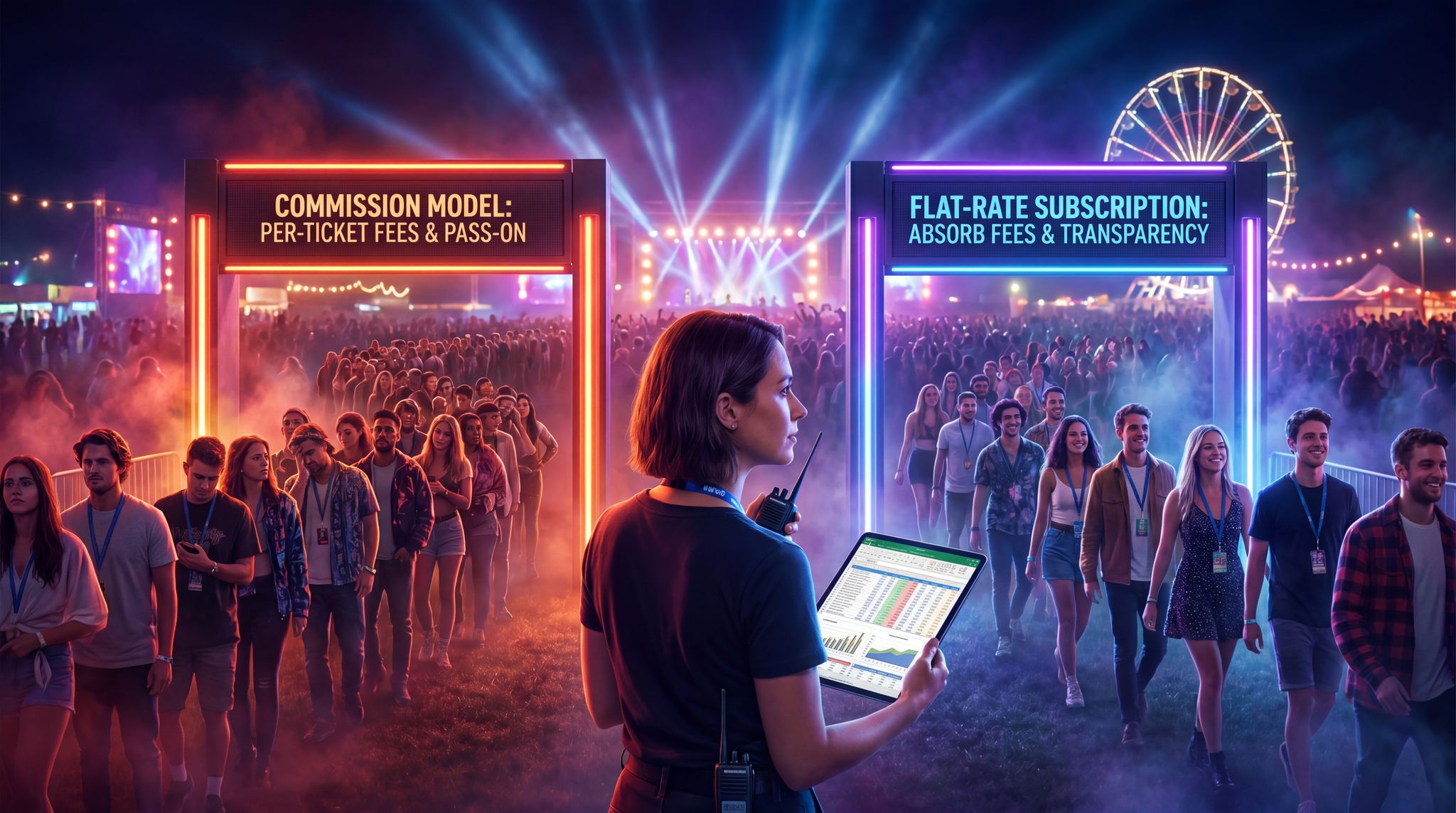
Ticketing strategy can also influence cohesiveness. Simpler is often better: having one general admission ticket that grants access to all genres reinforces the idea that it’s one event. If you offer genre-specific day tickets or VIP areas, be careful that those perks don’t segregate people too much. For example, instead of a “rock stage VIP only” viewing area that might keep groups apart, you could offer a general VIP that gives access across stages (or VIP lounges that mix fans from all stages). Early on, communicate that tickets cover the full festival experience – attendees might come for a favourite act, but they’re getting so much more. Consider using a robust ticketing platform that can handle complex passes (multi-day, group packages, add-ons for special experiences) without confusion. This is where a platform like Ticket Fairy shines: it’s built for multi-day, multi-genre festivals, allowing organisers to easily set up various ticket tiers or packages while keeping the purchase process clear and cohesive. The right ticketing system can also include integrated marketing tools – for instance, prompting buyers to also check out other days or stages – helping to cross-promote genres and prevent the event from splintering into separate audiences.
Lastly, engage the local community and stakeholders with your unified vision. If your festival takes place in a city or town, involve local arts groups from multiple genres (a local jazz ensemble, a hip-hop dance crew, a classical kids’ choir, etc.) in pre-festival events or opening performances. By doing so, you demonstrate that the festival is inclusive and culturally relevant, not just parachuting a big commercial lineup in. Some festivals set up outreach programs or volunteer opportunities that bring different fan groups together for a common cause (for example, a beach clean-up or a community mural painting before the event). This kind of community engagement not only earns goodwill (and can feed some ego – people love being credited for good work) but also bonds attendees with a shared sense of pride. Roskilde Festival in Denmark, for instance, is powered by thousands of volunteers and all its profits go to charity, giving everyone involved a unifying purpose beyond the music. That contributes hugely to what Roskilde calls “The Orange Feeling” – an infamous cohesive vibe rooted in communal joy and generosity. An academic study once noted that a “culture of laughter” and a spirit of togetherness were the atmospheric glue that maintains unity at Roskilde. Studies focus on this particular ambiance and The Orange Feeling as key success factors. The takeaway: when people feel like they’re part of a positive, inclusive community, they embrace the festival’s diversity with open arms.
Scaling Up or Down: Size Doesn’t Matter, Vibe Does
Whether you’re organising a boutique 1,000-person art and music fair or a 100,000-strong mega-festival, the principles of cohesiveness apply – but the tactics might scale differently. Here are some considerations by festival size:
- Smaller Festivals: With limited stages and a tight-knit crowd, you have the advantage of intimacy. Lean into it. A single-stage multi-genre festival can still feel congruent if you sequence the lineup cleverly (as discussed) and have a strong MC or host guiding the day, acting as the through-line. Use personal touches: maybe a charismatic host comes on between sets to explain what’s special about the next act and how it fits the festival’s theme (“Next up, we have a blues band that’s going to bring everyone together for a sunset groove – remember, this day is all about unity through music!”). In small events, one unified décor scheme is easier to maintain – a few well-placed banners, a consistent stage backdrop, and cohesive staff clothing can set the vibe without huge expense. Also, capitalize on community: at a small multi-genre festival, attendees will bump into the same people at different acts, so encourage camaraderie (perhaps a kickoff ice-breaker activity or a closing ceremony that everyone attends). When resources are limited, focus on quality over quantity of genres: it’s better to do a great job blending 2-3 genres that resonate with each other than to book one act from 10 genres and have it feel random. As one Ticket Fairy writer noted, new festivals are wise not to overload the first edition with too many disparate elements – start with a few and do them well, then expand gradually. Determining which content streams fit is crucial for growth.
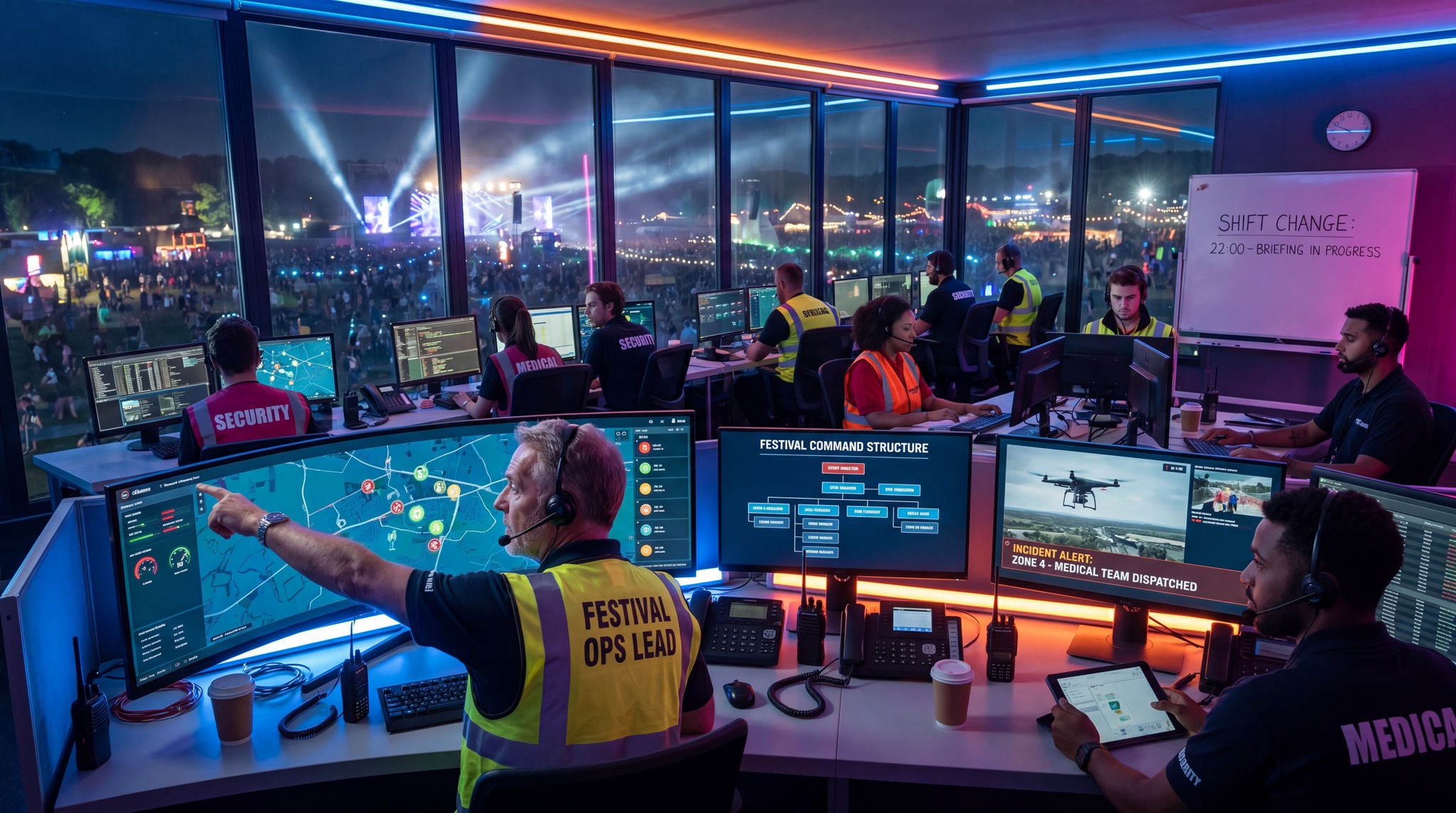
- Large Festivals: Big multi-stage events have more moving parts, but also more opportunities to create a rich tapestry. You might have dedicated teams curating each genre stage – just be sure they communicate with each other and with a central creative director to uphold the overall vision. Treat interactive media tracks as integral to the foundation. Large scale allows for themed districts or extensive art like the examples we covered (EDC, Boomtown, etc.). It’s worth investing in high-impact communal features – e.g. a spectacular central art piece, a major parade, or a giant unified finale (some festivals end with a grand firework show or all-star jam that everyone watches together, which is a beautiful unifier). Logistics are trickier at scale, so detailed planning for schedule and layout is paramount to avoid genre crowd bottlenecks. Also, bigger festivals tend to draw more diverse demographics; consider their needs so no group feels left out. Provide a mix of amenities – from quiet corners to recharge (appealing to older or chill attendees) to 24/7 dance areas (for the party crowd) – but still brand those spaces cohesively. A large event can also capitalise on technology: festival apps, interactive maps, even AR experiences that guide people through the grounds. Use those tools to reinforce your theme (a festival app might have a map where each stage is illustrated in theme style, and maybe a fun AR creature that appears at each stage to tie them together – the sky’s the limit!). The motto for large festivals is “organised diversity” – expansive offerings held together by strong organisation and branding so that the attendee’s journey feels curated, not chaotic.
Learning from Successes and Stumbles
It’s worth looking at how other festivals have succeeded or failed in crafting a cohesive multi-genre vibe. History offers lessons learned from the front lines of festival production:
Free Tool: Split Tickets for Max Gross
Given capacity and a target price, the optimizer proposes Early Bird / GA / VIP allocations and prices — with projected gross at 100%, 80% and 60% sell-through.
- Crossover Success Stories: Events like Lollapalooza (originally founded by Perry Farrell in 1991) paved the way for blending genres – it brought alternative rock, hip-hop, and dance music together under an alt-culture banner. Lollapalooza managed to keep a consistent “alternative youth” identity even as its musical scope widened, in part by fostering an inclusive, slightly rebellious atmosphere that all attendees bought into. Coachella evolved in the 2000s from an indie/rock festival to a multi-genre trendsetter by carefully incorporating new genres each year (electronic, then hip-hop, then even Latin and K-pop) while maintaining high production values and its iconic avant-garde art displays. The producers (Paul Tollett and the Goldenvoice team) ensured that every addition felt like it belonged at Coachella – for instance, when they added K-pop megastars BLACKPINK, they embraced it fully with special stage visuals and promotional content that merged that act’s flair with Coachella’s vibe. Fans responded positively because the festival’s core vibe (a place for discovery and big cultural moments in a desert utopia) stayed consistent.
- Cross-Genre Mixing Case Studies: Analyzing specific cross-genre collaboration case studies reveals how top-tier promoters execute these blends technically and culturally. For instance, when a major multi-genre music festival pairs a classical orchestra with a techno producer, the success relies on specific cross-genre mixing techniques. Promoters must facilitate advance studio time for the artists, ensure front-of-house (FOH) audio engineers have unified stage plots, and design acoustic environments that support both heavy bass and delicate strings. Documented case studies of these collaborations show that treating the crossover as a bespoke, co-produced headline set—rather than a spontaneous jam—mitigates technical risks and delivers a polished, unforgettable experience for fans of all festival music genres.
- Community-Centric Festivals: Some festivals achieve cohesiveness through community and cause. Roskilde (Denmark) and Rifflandia (Canada) for example, invite local communities and hundreds of volunteers to actively shape the event. Roskilde’s four-decade legacy is steeped in charity and volunteering, which fosters an incredible shared spirit no matter if Metallica or Kendrick Lamar is headlining. The “Orange Feeling” is partly that sense of “we’re all in this together for a good cause”. Similarly, Rock in Rio (Brazil, founded by Roberto Medina) brands itself “For a Better World” – alongside its multi-genre lineup, it runs social projects like planting trees and funding education. That mission permeates the festival, uniting attendees in pride for the positive impact even as they enjoy everything from rock to EDM to Brazilian samba. The take-away: giving your festival a heart, through philanthropy or local engagement, can align people’s values and produce a cohesive atmosphere that transcends the music.
- Cautionary Tales: Not every attempt at mixing genres lands well. Organisers have learned to know your audience’s limits. For example, the long-running Reading & Leeds Festivals in the UK were traditionally rock/punk-focused. When they began adding more hip-hop and dance acts in recent years to broaden appeal, some core fans pushed back, accusing the festival of losing identity. The organisers had to work hard to communicate a renewed mission (celebrating the best of youth music culture overall) and curate lineups that still honoured the festival’s rock heritage while introducing new styles. The lesson here is to bring your core audience along whenever you expand genres – frame changes in a way that they feel like an evolution of the festival’s story, not a betrayal. Another pitfall is booking genres that clash in ethos without a plan to manage their audiences. If you have an extreme metal stage and a family folk stage sharing a venue, you need clear separation and guidelines so that, say, profanity or aggressive moshing in one area doesn’t spoil the vibe for families in another. One infamous example is the touring punk festival Warped Tour: in one edition, they booked a viral hip-hop artist whose fan culture and show style did not mesh with the punk/skate crowd. The result was uncomfortable for both the artist and the audience. The takeaway: it’s fine to mix unusual genres, but only if it serves your mission and you prepare the audience for it. Otherwise, certain combinations can feel forced.
Frequently Asked Questions About Multi-Genre Festival Production
How do promoters successfully program a multi genre music festival?
Successful programming requires a unifying theme, staggered scheduling to prevent audience clashes, and strategic stage zoning. Promoters must ensure that the transition between different festival music genres feels intentional rather than chaotic, often using transitional acts or shared communal spaces to bridge the gap.
What are some effective cross-genre fusion examples for live events?
Effective cross-genre fusion examples include booking “supergroups” that combine artists from different backgrounds, curating collaborative headline sets (like a techno producer performing with a live symphony), and hiring genre-fluid artists who naturally blend styles like jazz, hip-hop, and electronic music. These performances act as cultural bridges for diverse fan bases.
How can a single-word theme resolve conceptual clashes at a sound art festival?
For highly experimental events, contrasting audio installations and live performances can create jarring transitions. By adopting a single-word festival theme—such as “Resonance” or “Flux”—promoters provide a unified creative constraint. This approach ensures that even extreme sonic differences feel like deliberate explorations of one core concept, effectively turning potential conceptual clashes into a cohesive, multi-genre music festival experience.