About Presidential Palace of the UAE – Abu Dhabi
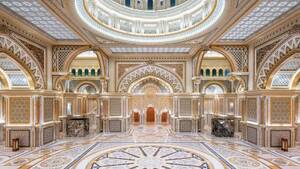
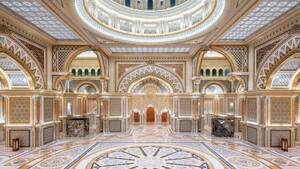
Qasr Al Watan (the “Palace of the Nation”) is the UAE’s official presidential palace in Abu Dhabi. Opened to the public on 10 March 2019 , it serves both as a working seat of government and a cultural landmark. The palace spans roughly 380,000 m² and embodies traditional Arabian architecture with modern craftsmanship. Its most striking feature is the Great Hall – a 100 m × 100 m chamber crowned by one of the world’s largest domes (37 m in diameter and soaring to 60 m high) . Entering this hall is described as “simply breathtaking,” with glistening marble, elaborate mosaics and giant pillars that offer visitors “a rare glimpse into Arabian heritage and history” on a grand scale . Signature design touches include 5,000+ unique geometric and floral patterns and hand-carved solid maple doors overlaid with 23 carat gold . The palace uses three symbolic colors – blue (the Gulf), white (purity) and ochre (desert sands) – throughout its decor . Inside are ornate _majlis_ (gathering halls) and galleries, a library of 50,000+ books , and displays of Islamic manuscripts, Arab scientific contributions and rare diplomatic gifts (e.g. samurai armor and a piece of the Kaaba’s Kiswah) never before shown to the public . These exhibits trace the UAE’s founding values, governance traditions and future vision, reflecting the goals of the UAE’s Vision 2021 to share national heritage and cultural knowledge with the world . The Presidential Palace’s grandeur, public access, and immersive storytelling make it a unique “living museum” that’s become an iconic attraction in Abu Dhabi’s cultural landscape.
Events and Programming
Qasr Al Watan offers more than museum exhibits – it hosts daily and seasonal cultural events. Every evening at dusk the palace façade is animated by Palace in Motion , a spectacular 14-15 minute sound-and-light show. Projected in three acts, it tells the UAE’s journey from past to future and runs nightly (set about 7:15–7:30 pm) . Seasonal events are common: for example, during Eid Al Fitr 2025 the palace grounds came alive with heritage entertainment – a daily “Horse Marshal” equestrian display (4:30 pm) showcasing traditional mounted skills, a “Military Music Show” with band performances on Mon/Wed/Fri at 4 pm, and cultural dances (Al-Ayyala and “sea dance”) from late morning to 5 pm each day . Ramadan evenings often feature special lighting: visitors enjoyed the Palace in Motion show at 7:15 pm throughout Ramadan 2023 . Aside from that, no regular pop or rock concerts take place here – the focus is on cultural presentations and official ceremonies. The palace’s calendar may also include book fairs and Eid festivities, especially around July–December. Regardless of the date, most successful visits coordinate an afternoon tour of the halls with prime viewing of the evening light show, effectively combining history lessons with entertainment.
Tickets and Booking
General admission tickets grant full access to all public palace zones and the Palace in Motion show . As of early 2026, adult tickets are about AED 65 and children (4–17) AED 30; under-4s enter free . People of determination (visitors with disabilities) and one companion receive free entry . Guided tours (hour-long, in English/Arabic) cost an additional AED 30 per person . Audio guides in multiple languages (incl. a fun “kids’ adventure” headset with games and completion certificate) can also be rented for about AED 20 each . Tickets can be purchased at the on-site visitor center, but slots are limited per hour – advance online booking is strongly recommended to secure popular date/times . Arrive early or book in advance (the Palace sells a fixed number of tickets each hour) to avoid missing out . There are no official “presales” via fan clubs or third-party sites to bypass this, so stick to the official channels. Note that the ticket covers one-time entry (no re-entry if you leave), and includes a free shuttle bus ride from the visitor center to the palace itself and complimentary Wi-Fi .
Seating and Layout
The palace is not a seated theatre but a free-flowing exhibition space. Guests enter through a ceremonial gate into the Great Hall – an open-plan space with no fixed seating. You can wander in any direction, using mirrored glass cubes to observe the 37 m dome from unique angles . From the Great Hall visitors spill into several wings: one displays governance history, another the collection of diplomatic gifts, the Presidential Banquet Hall with its 149,000-piece silver/china table setting, the “Spirit of Collaboration” hall (used for Cabinet summits, under a 12-tonne crystal chandelier ), the House of Knowledge (knowledge artifacts and rare manuscripts ), and the Qasr Al Watan Library (50,000+ volumes ). There is a courtyard/garden area, though this is more for strolling than seating. The Palace in Motion show is viewed from the outdoor plaza in front of the building; there is standing-room only, so some visitors bring their own collapsible chairs to secure a good spot. Aside from informal rest areas in the visitor center/library, VIP or reserved seating does not exist. The best viewing positions depend on what you want: the mirrored cubeshape is great for the dome, while columns at the main entrance line offer symmetry shots, and outdoor near the fountain gives the full facade for the light show.
Getting There and Parking
Qasr Al Watan is located in the Al Ras Al Akhdar neighborhood of Abu Dhabi (off Corniche Road, just west of Emirates Palace). The official address is **Presidential Palace, Al Ras Al Akhdar, Abu Dhabi**. Public transportation includes several RTA bus routes; buses 9, 34 and 69 stop at the Visitor Centre (stop code 00102B) . From downtown or hotels, taking an Abu Dhabi taxi or ride-share (Careem/Uber) to the Visitor Centre is usually easiest – ask to be dropped at “Qasr Al Watan Visitor Center.” Private cars are welcome: a large free visitor parking lot is at the Visitor Centre . Valet service is available there for about AED 35 . Note that from the Visitor Centre a shuttle bus (included free with admission) ferries guests to the palace entrance. If arriving by bus 9/34/69, disembark at “Qasr Al Watan” stop and walk ~100 m to the Visitor Centre entrance. Abu Dhabi lacks a metro, so buses, taxis and shuttles are the main access. Plan extra time for road traffic – the palace is a 20–30 minute drive from central Abu Dhabi or ~1.5 hours from Dubai via Sheikh Zayed Road .
Inside the Venue
After parking or drop-off, all guests pass through security screening (airport-style metal detectors). Large bags beyond a personal daypack are discouraged, and prohibited items include outside food/drink (except sealed bottled water) , alcohol, weapons, tripods (over ~15″), dolls or hazardous items . Cell phones should be set to silent . Once inside, the atmosphere is solemn and educational – quiet wandering among grand halls. English signage guides you through major exhibits, and audio guides (with headsets) are available. There is free Wi-Fi throughout and occasional staff/volunteers can answer questions. Restrooms are conveniently located in the Visitor Centre, Ceremonial Gate, and inside the palace . Prayer rooms for men and women are also provided at the Visitor Centre and Zayed Gate . A “Diyafa” café near the exit offers drinks and light snacks , and a gift shop sells books, souvenirs and abaya/Kandura dress-up kits. Wheelchairs are available at no charge and strollers can be rented (about AED 20) . There is no cloakroom – large coats/bags should be stored in your car if possible. Overall the palace interior is air-conditioned and family-friendly; many visitors spend 1–2 hours on a round-trip tour through all halls . For photography, hand-held cameras are fine (no flash in dark exhibits); tripod use (bigger than ~15 in) or drones is expressly forbidden . Note that during peak summer or midday, it can be uncomfortably warm outside, so most touring happens indoors or in the covered halls.
Nearby Amenities
Surrounding Qasr Al Watan are a handful of notable hotels and dining options. Directly adjacent is the Emirates Palace – a sprawling luxury hotel with multiple high-end restaurants (e.g., Italian, Middle Eastern) and a famous Gold Café. This has become an easy post-visit stop for lunch/tea. A short drive away is the five-star Mandarin Oriental, whose restaurants and bars (e.g. Zuma, plums) offer upscale dining and city skyline views. Further out, the Corniche area houses casual cafes and family restaurants, though local dining around Ras Al Akhdar is limited. On the mainland 10–15 minutes’ drive are malls and downtown dining clusters (e.g. Yas Mall, Al Raha Mall, or Al Maryah Island outlets) for more variety. Late-night transport: RTA buses run until about 1:00 am, but night service is infrequent, so most visitors rely on taxis or ride-shares to return to hotels after sunset. Daytime parking is free, but nearby paid lots or underground parking at hotels start at ~AED 10/hour if needed. For overnight stays, recommended hotels within 2–3 km include Emirates Palace Mandarin Oriental, the Rosewood, or Hilton Capital Grand – all within easy taxi distance. If you plan to arrive early or stay late, note that the Visitor Centre has a small cafe and restroom, but few shops outside the palace complex itself; it’s best to eat and shop before or after your tour in the city.
What Makes This Venue Special
Qasr Al Watan stands out in Abu Dhabi’s scene as a fusion of palace, museum and educational center. Architecturally, its design is a contemporary ode to Arab heritage: it combines traditional Islamic motifs (calligraphy, arabesque patterns) with soaring modern engineering. Every detail – from its 12-tonne crystal chandelier in the Cabinet hall to the artworks like the “Power of Words” installation quoting Sheikh Zayed – is imbued with cultural symbolism. The palace also occupies a unique role in national history. It is an active meeting place for the UAE Cabinet and the Federal Supreme Council, and has hosted world leaders. Yet visitors are invited inside, a break from royal tradition; this openness aligns with the UAE’s push for public education and knowledge-sharing . Its library (50,000 books plus digital archives ) and galleries spotlight regional contributions to science, literature and governance. The Palace in Motion show is another crowd-pleaser: an immersive projection mapping piece that connects guests to the UAE’s narrative in a way few venues do . Because of all this, Qasr Al Watan has quickly become a must-see: it received a Travellers’ Choice “Best of the Best 2026” rating (4.8/5) on TripAdvisor for its inspirational experience. In short, both visitors and dignitaries admire it for blending grand architecture with cultural storytelling – making it a jewel of Abu Dhabi rather than just another concrete structure.
Visitor Tips and Information
To make the most of a visit to Qasr Al Watan, plan carefully. Allow at least 1½–2 hours for the palace tour; most travelers find this ideal (tripadvisor data suggests 1–2 hrs as typical ). Aim to arrive mid-afternoon if you want to stay until after dark – that way you can stroll the halls in cooler light and then enjoy the Palace in Motion show (the lights come on around 7:15 pm in winter, 7:30 pm in summer ). Check the official schedule ahead, as hours vary on Mondays and Ramadan days. Dress conservatively: shoulders and knees must be covered at all times . Comfortable shoes are a must since there’s much walking. Leave large bags or valuables in your car; the palace has no cloakroom and only small bags fit through security . You’re encouraged to carry bottled water but no other outside food/drink. Cameras and phones are fine: shooting photos for personal use is allowed (tripods and commercial filming are not) . Download the palace’s digital guide or pick up an audio guide if you like narration – children can even use a fun headset with games. Remember to silence your phone signals inside. If you miss arriving early, avoid the busiest times (weekend afternoons) to skip lines. During your visit, note Qasr Al Watan is an operational government site; be respectful and keep noise low. Check the weather: the complex can be hot in summer afternoons (since outdoor waiting areas are exposed), so plan hydration accordingly. Finally, double-check any special holiday schedules – for example, during Eid the palace runs extra cultural shows (as noted above), and during Ramadan the light show may not run at all nights . By following these tips—covering dress code, timing, and booking—it’s easy to have a smooth, enriching experience at the UAE’s Presidential Palace.
Frequently Asked Questions
What are Qasr Al Watan’s opening hours?
The palace is generally open daily to visitors during daylight hours. As of 2023–2025, typical hours have been roughly 10:00 am–6:00 pm (last entry about 45 min before closing) . It is closed Monday for official business, though this can change. Always check the latest schedule online, since hours shorten on Ramadan days or holidays. Arrive early enough to complete the tour before closing and to catch the Palace in Motion light show after sunset (around 7–7:30 pm).
How much do tickets to Qasr Al Watan cost?
A single general admission ticket is around AED 65 for adults, and about AED 30 for children (age 4–17) . Kids under 4 enter free. These prices include access to all exhibit halls and the Palace in Motion show . People of determination (visitors with disabilities) enter free with one companion . Additional guided tours (60 min) cost about AED 30 per person . All ticket and tour rates are uniform; there is no matinee discount or separate “VIP” rate.
Where can I buy tickets?
Tickets are available online or at the on-site ticket counter in the Visitor Centre. Online booking (via the official Qasr Al Watan site or authorized agents) is recommended, as daily entries are capped by hour . If you arrive without a reservation, you can purchase admission at the counter until slots fill. Either way, have your photo ID ready. Children must have child tickets, and note that Eid and holiday periods sell out fast, so book ahead.
Are guided tours available?
Yes. Regular English and Arabic guided tours run every 30 minutes and last about 1 hour . These cost an extra ~AED 30 per person on top of admission. Private group tours (up to 20 people) are also offered for a flat fee (around AED 600) . Self-guided audio headsets (in multiple languages, including a kid-friendly version with games) can be rented (~AED 20) to explore on your own . Reservations for private or school tours are advised but walk-ups can often join the public tour at the next departure.
What types of performances or shows are held here?
The main regular performance is the nightly “Palace in Motion” light and sound show: a 15-minute audio-visual presentation on the palace facade about the UAE’s story . Beyond that, special seasonal shows are common – for instance, during Eid 2025 the palace hosted a daily “Horse Marshal” equestrian display and the “Military Music Show” on certain weekdays , plus traditional dances like Al-Ayyala in the afternoons . New Year’s or cultural festival events may bring additional concerts or exhibitions. Check the official website or local news around major holidays for any planned cultural performances.
How is Qasr Al Watan laid out? Are there seats or special viewing areas?
The palace complex is arranged as an indoor exhibition with several grand halls, not as an arena or theater. There are no permanent seats in the Great Hall or exhibition areas – visitors walk freely through displays. The Great Hall has mirrored glass cubes you can step into for a unique view under the dome . Exhibit zones (e.g. Gifts Hall, Library) are entered in sequence. For the evening light show, guests stand outside facing the main facade; some people bring portable folding chairs to set up in the plaza. In short, it’s a wandering tour: roam where you like in public spaces, but note that certain halls (like meeting rooms) may have restricted benches or sofas meant only for show and not for general sitting.
What should I wear or bring?
Modest attire is required: both men and women must cover shoulders and knees at a minimum . Shorts, sleeveless tops, and “see-through” clothing are not allowed. Comfortable walking shoes are important since you’ll be on your feet a long time. You may bring bottled water (no armed security guards will confiscate sealed plastic water), but no outside food or alcohol . Cameras and phones are fine (set phones to silent) . Do not bring large bags; any item that won’t pass through a security scanner (over ~15 in) will be restricted . Also carry your ID; you may need to show it if requested at the entrance. Aside from that, tourists often bring hats or sunscreen for the outdoor walk to the shuttle, and small cash or card if they want gifts or refreshments.
Is Qasr Al Watan wheelchair accessible?
Yes. Qasr Al Watan provides complimentary wheelchairs on a first-come basis for visitors and older guests . The entire route through the palace is step-free and air-conditioned. Restrooms and prayer rooms are equipped for wheelchair access. A free shuttle bus connects the parking lot with the palace entrance, which has a ramp. Moreover, in recognition of accessibility, people of determination (those with disabilities) are granted free admission plus a guest . Just take a wheelchair if needed and a companion and you will be well-accommodated.
Can I bring a camera or video recorder inside?
Yes. Personal photography and videography are allowed throughout almost all public areas . Many visitors stop for photos under the dome or near exhibits. Professional filming (e.g. using drones or hired cameras) is not allowed without prior permission. Small tripods under ~15 inches tall may be used, but anything larger or single-legged is prohibited . You can even rent traditional Emirati costume outfits and have souvenir photos taken on the grounds (for a fee of AED 250–350) . Just do not photograph any security staff or equipment inside.
Is there parking at Qasr Al Watan, and how much does it cost?
Yes. The Visitor Centre (entrance to the palace) has a large free parking lot . Simply park in any unmarked spot at the Visitor Centre – there is no charge. If you prefer valet service, it’s available for around AED 35 . After parking, you hop on the provided shuttle bus to the palace itself (no extra fee). If these spaces fill up, overflow parking is available nearby, but in practice it’s very rare to run out. Note: You cannot drive directly to the palace gate; use the Visitor Centre lot instead.
How long does it take to visit Qasr Al Watan?
Most guests spend about 1–2 hours touring the palace . This includes strolling through the main halls and a quick look at exhibits. If you add the Palace in Motion show at dusk, tack on an extra 15–20 minutes. Families or culture buffs often spend the full two hours to read displays and perhaps use an audio guide. In general, plan for at least 90 minutes. Arrive early enough to complete the interior tour well before closing time.
Are any food or drinks available inside?
No outside food or drinks (other than bottled water) are permitted inside the palace . However, there is a small café called “Diyafa” near the exit where you can purchase snacks, coffee, and refreshments after your tour . The Visitor Centre has vending and restrooms in case you need a break before entry. Al-Fresco dining or picnic is not allowed on the palace grounds.
What is the Palace in Motion show?
The “Palace in Motion” show is a nightly outdoor multimedia light-and-sound performance projected onto Qasr Al Watan’s facade. It lasts about 15 minutes and is divided into three acts that celebrate the UAE’s past, present and future . The palace comes alive as a canvas of vibrant graphics and Emirati music. It starts soon after sunset (around 7:15–7:30 pm, depending on the season). Tickets include this show, and you can watch from the palace courtyard or the gardens around it. It’s very popular, so arriving early can secure a good viewing spot.
Is special attire required or recommended?
Yes. Visitors must dress modestly out of respect for local customs . This means covering shoulders and knees at minimum; long pants or skirts and tops with sleeves are expected. (Men in kandura or long trousers and women in abaya or long skirts are common.) Avoid sleeveless shirts, miniskirts, and tight or transparent fabrics. Also, no hats or revealing swimwear indoors. Taxis to the site often require you to show you meet this dress code before entry. In short, treat it like any public cultural site – conservative dress is mandatory.