Current Status and Event Listings
Etica was a short-lived house-music nightclub at 213 W. 4th Street in downtown Austin. It opened in February 2024, but current 2026 public listings identify the same address with a different operation, The One, also associated with the name TOATS. No verified Etica-branded events or 2026 announcements were found, so this is a retrospective venue guide rather than a current ticket-buying page. ticketfairy.com
The available event record is concentrated in 2024. It shows a club aimed at house, tech-house and related electronic dance music, with a mixture of touring DJs, Austin selectors, themed parties and LGBTQ+-oriented nightlife programming. The record is substantial enough to establish Etica’s character, but not broad enough to support claims of a long-running residency calendar or a multi-year programming history.
Events and Programming
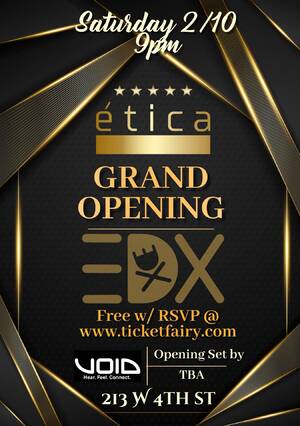
Etica’s documented opening event was the grand-opening party with Swiss DJ and producer EDX on February 10, 2024. The listing described the night as a 21-and-over event and offered free admission with RSVP alongside a paid guaranteed-entry option. This set the tone for Etica as a dance-first venue rather than a conventional concert hall or seated theater. ticketfairy.com
The early booking pattern was notably international. Verified listings include Hector Couto on February 23, Sharam on March 9, Eelke Kleijn on March 14, Gene Ferris with Doorly and Ardalan on March 15, and Pablo Ceballos on March 16. These bookings span house, tech-house and melodic electronic styles, with local and touring artists sharing the same calendar. ticketfairy.com
Etica also hosted event concepts that were broader than a standard touring-DJ night. The venue was used for Rising Tide, the opening party of Haus of Slut’s Tidal Wave Memorial Day Weekend in May 2024. That program combined house DJs, LGBTQ+ nightlife, themed presentation and late-night dancing, showing that the room could support promoter-led special events as well as artist-focused club bookings. ticketfairy.com
A July 2024 listing brought German producer Einmusik to the venue. The event was promoted as part of his international tour, with doors scheduled for 9 p.m. The booking reinforced Etica’s emphasis on contemporary electronic music and touring talent rather than live bands, acoustic concerts or traditional theater productions. ticketfairy.com
Other documented uses included a St. Patrick’s Day event advertised as “Might Be Magic,” with Domo Supreme, the Point, Acclimated Assassin, Soupmakesitbetter, Tony Dark, JKay, K Like the Letter, Nothingisreal, Tarif, Tommy Fuego and others. A Saltburn-themed party produced by Zest & Co. in April 2024 used elaborate decor, local DJs and a theatrical dress-up concept. These events suggest a programming model built around atmosphere, nightlife identity and visual presentation as much as the headline DJ.
There is no reliable public evidence of Etica programming in 2021, 2022 or 2023. Those years belong mainly to the address’s transition after Sellers Underground and to wider redevelopment discussions affecting the Warehouse District. There are also no verified Etica announcements for 2025, 2026 or beyond. The current event identity at 213 W. 4th Street belongs to the successor operation, not to Etica.
Tickets and Booking
Etica used online event listings and promoter-led presales rather than a traditional theater-style box office. Historical ticket pages show a mixture of RSVP admission, early-release pricing, general admission tiers and VIP entry. For the EDX opening, free RSVP admission was advertised, while another paid entry option was listed at $22 including fees. ticketfairy.com
The Sharam event provides a clearer example of the pricing structure. Its archived listing showed a general-admission ticket at $22 including fees, while lounge and VIP tables were offered at substantially higher minimums of approximately $1,000 and $2,000. Those figures were event-specific and should not be treated as a standard Etica price list. They do show the venue’s split between ordinary dance-floor admission and premium table service. ticketfairy.com
Across the available listings, historical admission ranged from free RSVP offers to the low-$20s for featured touring-DJ nights. Smaller promoter parties could have different covers, and door pricing was likely dependent on the event, guest list and arrival time. Because Etica no longer has a verified current ticket calendar, there is no meaningful present-day price range to quote.
For popular events, the practical strategy was to reserve early, use any available RSVP or early-bird allocation and arrive close to doors. The venue’s late-night format meant that headline sets could begin well after the advertised opening time. Buyers should also have checked the individual event’s age rule, entry window, table minimum and refund terms, since these were controlled by the promoter rather than by a permanent venue box office.
About Etica
Etica was an upscale nightclub and house-music lounge in Austin’s Warehouse District. Its identity centered on electronic dance music, a dark club atmosphere and high-production DJ nights. Promotional descriptions positioned it as a dedicated house-music destination, making it distinct from downtown bars where DJs function mainly as background entertainment. ticketfairy.com
The venue occupied 213 W. 4th Street, near the corner of West 4th and Congress Avenue. The building’s public records are inconsistent on its original construction date, placing it between approximately 1927 and 1936. Property records list about 11,776 square feet on a 5,846-square-foot lot, while event material described the venue as roughly 11,500 square feet. These figures describe the building or property, not a confirmed audience capacity.
No authoritative Etica fire-code capacity has been published. Online estimates suggesting several hundred guests are not supported by an official capacity certificate or seating chart, so they should not be relied on when planning an event. The only dependable conclusion is that Etica was an intimate-to-mid-sized nightclub rather than an arena, theater or large concert hall.
Venue History
The address has a longer nightlife history than Etica itself. Austin’s Historic Landmark Commission records identify the original owner as the Southland Red Ball Motor Bus Company and describe the building as part of the Warehouse District’s changing commercial landscape. Earlier uses were connected to transportation, wholesale and other industrial activity before the property became a nightlife address.
The building began its modern nightlife chapter in the early 1990s with Kansas, a gay bar. It later housed Boyz Cellar, followed by Qua beginning in 2007. In the 2010s, the address was associated with Castro’s Warehouse and then Sellers Underground. Sellers opened in December 2016 with a retro cocktail-lounge concept, a dance floor, live-music programming and a design influenced by a 1970s basement lounge. It closed during the pandemic period in 2020.
Etica reopened the address as a dance venue in February 2024 after renovations. Its arrival preserved the building’s nightlife function while changing the musical emphasis toward house and electronic dance music. The venue was also part of a historically important stretch of West 4th Street associated with Austin’s LGBTQ+ bars, gathering spaces and community life.
Seating, Layout and Viewing
Etica was primarily a standing-room nightclub. Archived event material used general-admission tiers rather than reserved concert seating, and VIP or lounge tables were offered for selected nights. The practical layout was therefore a dance floor with perimeter bar and lounge areas rather than rows of seats, balconies or numbered sections.
For the most immersive sound and closest view of the DJ, the center-front portion of the dance floor would have been the natural choice. Guests wanting more room, easier conversation or faster access to the bar would have preferred the sides and rear. VIP tables provided a more private experience but were not equivalent to theater seating or a guaranteed unobstructed concert sightline.
No official floor plan, seat map, room-by-room dimensions or published stage measurements were located. The building’s total property size should not be confused with the usable dance floor, and the absence of a public capacity chart means that event layouts may have varied according to bars, tables, production equipment and promoter requirements.
Architecture, Design and Technical Capabilities
The building is a low-rise brick commercial structure with a historic street presence. Preservation documents describe changes to its window and door patterns, a rooftop addition and a moderate degree of retained historic integrity. Proposals for the surrounding block called for retaining or reconstructing brickwork, openings, transoms and storefront elements, reflecting the architectural importance of the Warehouse District even though the property was not individually designated as a landmark.
Etica’s interior was presented as a polished modern club inserted into an older downtown shell. Public descriptions emphasized a Void sound system and immersive lighting. No verified equipment list identifies the exact Void models, amplifier configuration, subwoofer count, lighting fixtures, control consoles, video-wall dimensions, rigging points or maximum production power. Those technical details should be requested directly from any future operator or promoter rather than inferred from promotional language. ticketfairy.com
The available descriptions support three safe conclusions about the room’s production profile: it was designed for loud electronic music, it invested in dedicated club audio rather than relying on a basic bar system, and lighting was treated as a central part of the experience. There is not enough verified information to claim a particular decibel limit, acoustic treatment, broadcast capability, livestream setup or concert-grade backstage infrastructure.
Getting There and Parking
The former Etica address was 213 W. 4th Street, Austin, Texas 78701, in the downtown Warehouse District. It is close to Congress Avenue, the West 4th Street nightlife corridor and the Red Line’s Downtown Station at 4th and Neches Streets. From the station, the walk is approximately one block west along 4th Street toward Congress. ticketfairy.com
CapMetro’s Downtown Station connects to Red Line commuter rail, Route 2 on Cesar Chavez Street, Route 4 on 7th Street, bike-share and electric scooters. Route 801 also serves the downtown Congress Avenue corridor. Service levels and late-night schedules vary, so anyone visiting another business at the address should check the current timetable rather than relying on Etica-era event information.
Downtown street parking is metered during much of the week. The city’s current schedule lists downtown enforcement from 8 a.m. to 6 p.m. on Monday and Tuesday, 8 a.m. to midnight Wednesday through Friday, and 11 a.m. to midnight Saturday. The posted hourly structure starts at $2 for the first hour, $2 for the second, then rises through the later hours to a $5 maximum for a single session. Special-event restrictions can change availability.
Public garages are the more predictable option for a long evening. The City Hall Garage is a public facility with entry from Guadalupe Street; its current rate schedule lists 30 minutes free, $6 for 31 minutes to one hour, $3 for each additional 30 minutes and a $35 daily maximum. Private garages in the central business district may use different prices or special-event rates.
Rideshare drop-off was most practical on West 4th Street or a nearby cross street rather than directly in a busy intersection. Late-night pickups can be affected by pedestrian traffic, street closures and downtown event controls. Because Etica itself is no longer the operating venue at this address, visitors should confirm the current entrance and drop-off instructions for the business or event they are actually attending.
Inside the Venue
Etica’s documented experience was club-oriented: late doors, standing and dancing, a bar-led interior and electronic music continuing into the early morning. Event listings commonly placed doors around 9 or 10 p.m., with music scheduled late into the night. The venue’s social center was the dance floor rather than a lobby, auditorium or seated performance room.
The bar served as a major part of the experience, while VIP and lounge packages were promoted for selected events. There is no sufficiently authoritative source confirming a full kitchen, regular food menu, coat check, customer Wi-Fi, merchandise counter or permanent outdoor seating during Etica’s operating period. Those features should therefore not be assumed.
Historical event pages confirm 21-and-over admission. Guests would have needed valid identification, and some nights used RSVP or guest-list systems. No verified Etica policy page was located for bag size, professional cameras, re-entry, smoking, dress code, outside food, weapons or refund procedures. Those rules may have varied by promoter and event.
Accessibility and Inclusive Facilities
No Etica-specific accessibility statement, ADA seating map or published facilities schedule was found. Public sources do not reliably confirm the entrance threshold, step-free route, accessible restroom, wheelchair viewing position, captioning, American Sign Language interpretation, assistive listening, service-animal procedure or accessible rideshare location for the venue’s 2024 operation.
The building’s historic construction and later alterations mean that accessibility should not be inferred from its street-level appearance or from information about the current successor business. Anyone who needs step-free entry, a wheelchair location, seating away from the loudest speakers, accessible restrooms or other accommodations should verify those details with the current operator before purchasing admission to any event at the address.
Etica’s location was culturally connected to Austin’s LGBTQ+ nightlife corridor. The address sat beside long-running LGBTQ+ venues on West 4th Street, and its programming included queer nightlife and themed dance events. That inclusive context is well documented, but it should not be confused with a published list of formal accessibility services.
Nearby Amenities
The address sits in one of downtown Austin’s most concentrated nightlife areas. Oilcan Harry’s is next door at 211 W. 4th Street, and Rain on 4th is nearby at 217 W. 4th Street. The surrounding Warehouse District also places visitors within walking distance of restaurants, hotel bars, coffee shops, cocktail lounges and the broader Congress Avenue and 2nd Street entertainment areas.
For a future visit to another operator at 213 W. 4th Street, allow extra time for downtown traffic, parking and door procedures. Dinner before a late club event is sensible because Etica’s published identity was centered on drinks and dancing rather than a full dining service. Hotels in the downtown core make the area convenient for visitors who prefer to walk back after a late night, while rideshare remains the most dependable option after rail service ends.
What Made Etica Special
Etica’s significance came from the combination of a historic nightlife address and a clearly defined musical brief. Austin has many bars with DJs, but Etica presented itself as a house-music room with dedicated production, touring electronic artists and a dance-floor-first layout. Its 2024 bookings showed an attempt to connect Austin audiences with internationally recognized house and techno-adjacent names.
The venue also continued the address’s tradition of reinvention. A former transportation and commercial building became a queer nightlife space, then a cocktail lounge, then a house-music club. That succession reflects the Warehouse District’s broader evolution from industrial downtown to entertainment neighborhood and, increasingly, contested redevelopment zone. Preservation discussions around the block highlighted the cultural value of its LGBTQ+ businesses and gathering spaces.
There is no published economic-impact study isolating Etica’s contribution. Its likely impact was qualitative: paid work for DJs, bartenders, security, sound and lighting crews; additional nighttime spending in nearby businesses; and another home for Austin’s electronic-music community. The venue’s short operating period makes larger claims about jobs, tourism or neighborhood revenue impossible to verify.
Visitor Tips and Information
The most important tip is to check the name of the current business before traveling. Etica’s archived event history should not be treated as evidence that an Etica show is still scheduled. Current public listings place a different operation at 213 W. 4th Street, and the address may host changing nightlife, membership, private-event or hospitality concepts.
For historical Etica-style events, expect a 21-plus club environment, general admission on the main floor, loud bass, standing for most of the night and event-specific ticket rules. Bring valid photo identification, keep belongings compact and plan transportation before arriving. Since no comprehensive Etica policy sheet survives in the public record, avoid presenting any unverified bag, dress, camera or re-entry rule as permanent venue policy.
Frequently Asked Questions
Is Etica Austin still open?
Etica is not currently listed as the operating name at 213 W. 4th Street. Current public listings identify the address with The One and related successor concepts, while the surviving Etica event record ends in 2024. Visitors should not assume that an old Etica ticket, schedule or venue description applies to the present occupant.
When did Etica open?
Etica’s documented grand opening took place on February 10, 2024, with EDX. The event was advertised as a 21-and-over house-music night at 213 W. 4th Street. Public sources do not establish an earlier soft opening, construction completion date or separate preview period, so February 2024 is the reliable opening point for the venue’s public programming. ticketfairy.com
What kind of music did Etica book?
Etica focused on house, tech-house and related electronic dance styles. Its documented artists included EDX, Hector Couto, Sharam, Eelke Kleijn, Doorly, Ardalan, Gene Ferris, Pablo Ceballos and Einmusik. The calendar suggests a mix of melodic, deep and club-oriented sounds rather than rock bands, acoustic acts, comedy, theater or conventional seated concerts. ticketfairy.com
Did Etica host live bands?
The available Etica listings do not establish a regular live-band program. The venue’s public identity was a DJ-led house-music lounge, and the named events centered on electronic artists and promoters. Special parties included performers and themed entertainment, but there is not enough evidence to describe Etica as a general-purpose concert venue booking touring bands or singer-songwriters.
Which notable artists performed at Etica?
Verified listings name EDX at the grand opening, followed by Hector Couto, Sharam, Eelke Kleijn, Gene Ferris, Doorly, Ardalan, Pablo Ceballos and Einmusik. Additional themed events featured local DJs and queer nightlife performers. These bookings show that Etica pursued recognizable electronic artists while also leaving room for Austin-based selectors and promoter-created parties. ticketfairy.com
Are there Etica events announced for 2026?
No verified Etica-branded 2026 events or future announcements were found. Current event information for 213 W. 4th Street belongs to a successor operation using a different name. If a listing still labels an event as Etica, check its date, organizer, address and venue identity carefully because older event pages remain searchable after a venue changes operators.
How much did Etica tickets cost?
Historical prices varied by event. The EDX opening offered free admission with RSVP and a paid guaranteed-entry option listed at $22. The Sharam event listed general admission at $22 including fees. Other event descriptions indicated lower covers for some parties, while VIP and table packages could reach roughly $1,000 to $2,000 in minimum spend. ticketfairy.com
Did Etica have VIP tables?
Yes, at least some Etica events offered VIP or lounge tables. The archived Sharam listing showed separate table packages with much higher minimums than general admission. These were event-specific reservations, not evidence of permanent numbered seating or a fixed VIP section. Table location, inclusions, deposits and minimum spend could change with the promoter and night.
Was Etica seated or standing-room?
Etica was primarily a standing nightclub. Archived ticket listings used general-admission categories, while VIP and lounge tables were sold separately for selected events. Guests attending a typical night should have expected to stand or dance, with limited lounge-style seating around the edges rather than theater seats, assigned rows or guaranteed sightlines.
What was Etica’s official capacity?
No official Etica capacity figure has been located. Property records list the building at approximately 11,776 square feet, but that number includes the structure rather than the usable audience area. Because capacity changes with bars, tables, production equipment and exits, online estimates should not be treated as a fire-code limit or event-planning specification.
How large was the Etica building?
Public property records list approximately 11,776 square feet on a 5,846-square-foot lot. Other event descriptions rounded the venue to roughly 11,500 square feet. The discrepancy likely reflects different measurement or marketing conventions. No authoritative room-by-room dimensions, dance-floor dimensions or stage measurements were published for Etica.
What sound system did Etica use?
Promotional descriptions identified a Void sound system and emphasized immersive audio. No public technical sheet confirms the specific speakers, subwoofers, amplifiers, processing, sound-pressure limits or tuning approach. It is accurate to describe the venue as a production-focused electronic club, but not to claim a particular Void model or detailed audio specification without documentation. ticketfairy.com
Did Etica have a lighting or video system?
Public descriptions emphasized immersive lighting as part of the Etica experience. They do not provide a verified inventory of fixtures, lasers, strobes, LED panels, consoles, rigging or video-processing equipment. Lighting was clearly marketed as an important element of the club’s atmosphere, but technical production details were not published in a dependable specification sheet.
Was Etica wheelchair accessible?
Etica-specific accessibility information is not reliably documented. No verified public source confirms step-free entry, accessible seating, an ADA restroom, assisted listening, interpretation or a service-animal policy for the 2024 venue. Visitors with access needs should not rely on assumptions based on the historic building or information about the current occupant at the address.
Was Etica 21 and over?
Yes. The surviving Etica event listings identify the venue’s events as 21 and over. Guests would have needed valid photo identification at entry. Because Etica is no longer operating under that name, any current event at 213 W. 4th Street may use different age rules, so the event-specific policy remains the controlling information.
Did Etica publish a bag policy?
No comprehensive Etica bag policy was located. Public event pages confirm ticketing and age information but do not establish permanent rules for backpacks, purses, cameras, outside food, re-entry or prohibited items. The safest historical practice was to bring only identification, phone, payment method and small personal essentials, while checking the individual event’s instructions.
How do you get to 213 W. 4th Street by transit?
The nearest major transit connection is CapMetro’s Downtown Station at 4th and Neches Streets, served by the Red Line and connected bus routes. From the station, walk west along 4th Street toward Congress Avenue. Route 2, Route 4 and downtown Rapid service provide additional connections, though schedules and stop patterns can change.
What parking was available near Etica?
Downtown metered street parking and public or private garages served the area. The city’s current street schedule lists rates beginning at $2 for the first hour and rising to a $5 maximum for a single session, while City Hall Garage lists a $35 daily maximum. Special-event pricing and temporary closures may apply, so parking should be checked for the specific date.
Why was Etica important to Austin’s nightlife?
Etica gave Austin’s electronic-music community a downtown room explicitly centered on house music and club production. It also occupied an address with a long LGBTQ+ nightlife history, linking a new musical identity to an established West 4th Street cultural corridor. Its impact was mainly local and qualitative, with no published study isolating its economic contribution.