Events and Programming
Vaquero Taquero – Downtown is permanently closed, so there are no current tickets, 2026 performances or future events at the former venue. The 603 Sabine Street space was taken over by Taco N Maíz, which opened its Austin location in November 2025. Any listing that presents Vaquero Taquero Downtown as an active venue should therefore be treated as historical rather than current.
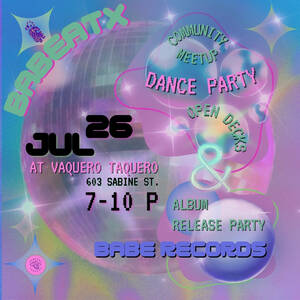
During its four-year run, the restaurant operated as a hybrid taquería, cantina and small live-music room rather than as a conventional concert hall. Its programming centered on local and touring music, late-night dance parties, cultural showcases and festival spillover from Austin’s major music weeks. The room’s position just off East Sixth Street made it particularly suited to post-bar crowds, short showcase sets and informal patio events.
The opening celebration on September 18, 2021, established the venue’s musical direction. The bill included Austin ska band Los Kurados, alt-hip-hop duo Los Kid Brothers, McAllen producer and loop artist Dr. Loops, and country group Texas Textbooks. The owners described the programming as an effort to showcase border music, reflecting the brothers’ Rio Grande Valley and Monterrey backgrounds.
Publicly documented programming from 2022 through 2025 included:
SXSW and unofficial showcase programming: the venue hosted free daytime and nighttime sets during SXSW 2022, including Pavel Demon & The Revenant, Ricky Mendoza & The Screaming Heads, Chacho & Brance, and Oddcast. Later SXSW schedules documented hip-hop, R&B, Latin, pop, rock and DJ performances at the address in 2023, 2024 and 2025.Latin and border-influenced music: events included Cumbia Night with Plan Sonidero, a Noche de Cumbia Festival featuring Jhonivan y Su Cumbia Con Loop, Perreo Club and Son Bayou, and the 2022 “Tacos, Cervezas y Soda Stereo” event.Electronic and dance events: the patio hosted Ubiyu parties with local DJs, a drum-and-bass event led by Makoto, BCee’s Spearhead Records anniversary show, and NGHTLGHT’s Hardgroove Summer.Rock, indie and alternative bills: event notices documented Halloween-themed live-music nights, a November 2024 indie and psych-rock show, and a Valentine’s Day rock bill.District festivals: the address appeared in Free Week and Hot Summer Nights programming. In 2023, the venue was listed for Hot Summer Nights performances by Los Kurados, Gran Moreno and Meridian Buda; in 2025 it was again included among the festival’s participating locations.
This is a verified selection of publicly documented events rather than a complete show-by-show archive. No single surviving calendar records every performance between 2021 and the venue’s closure. Taken together, the listings show a room willing to book hip-hop, R&B, cumbia, Latin alternative, rock, punk-adjacent acts, DJs, drum and bass, techno and community-oriented cultural events.
Tickets and Booking
There is no active box office or ticket inventory for Vaquero Taquero Downtown. Historically, admission depended on the promoter and event. Documented examples ranged from free entry for SXSW and Ubiyu-related parties to a $10 door price for NGHTLGHT’s Hardgroove Summer, $20 for the BCee drum-and-bass show, and $20 for the Noche de Cumbia Festival. Some events were all ages, while others were listed as 18+ or 21+.
The venue did not follow the pricing structure of a large theater. Shows were generally advertised as free community programming, low-cost door events or small-capacity ticketed parties. Presale arrangements, when used, were controlled by individual promoters rather than by a permanent venue box office. The most practical historical strategy for popular events was to arrive early, because the space was classified as small and some events were explicitly described as limited capacity.
The former business also maintained a music-booking intake page while the location was active, indicating that artists could seek bookings directly through the restaurant’s music program. No current booking route exists for the Downtown address.
About Vaquero Taquero – Downtown
The Downtown location opened at 603 Sabine Street in September 2021, with service beginning around September 2 and a formal opening celebration on September 18. It occupied a building previously used by Waller Creek Pub House, which had closed during the COVID-19 pandemic. The Cobos brothers renovated the space themselves, including furniture work, plumbing, electrical repairs and the restoration of an espresso machine.
Vaquero Taquero began in 2016 as a modified paleta cart outside the Mexic-Arte Museum in Downtown Austin. In March 2017, the business expanded into a Hyde Park food truck, followed by its first brick-and-mortar operation in the late 2010s. Contemporary coverage places the North Campus restaurant opening in June 2019. The concept was built around South Texas and northern Mexican food traditions, including al pastor cooked on a trompo, carne asada, handmade tortillas and breakfast tacos.
Downtown was designed as a more expansive and nightlife-oriented version of the concept. Compared with the North Campus restaurant, it offered indoor and outdoor seating, a full drinks program with cocktails, beer, wine and coffee, late-night service, weekend charcoal-grilled carne asada and a larger setting for music. The location closed before the November 2025 opening of Taco N Maíz. A precise public closure date has not been verified.
Capacity, Seating and Layout
No authoritative public source gives the former Downtown restaurant’s exact capacity, floor dimensions, ceiling height or approved standing-room limit. SXSW classified the address simply as a “small” venue. That description is more reliable than unofficial online estimates, which vary and should not be treated as a published capacity figure.
The documented layout included an indoor dining area, outdoor seating and a movable stage that the owners welded during the renovation. The outdoor area was important to the venue’s identity: the owners planned weekend charcoal grilling and an outdoor trompo as part of the late-night South Texas taquería experience. During concerts and dance parties, tables and dining areas could function as informal standing-room space.
There were no published reserved-seat maps, numbered sections or permanent VIP areas. Historical event listings suggest a general-admission format, with the best viewing position depending on whether the promoter used the indoor stage, outdoor patio or a two-area setup. Because the venue combined food service with music, sightlines, table availability and standing space likely changed from event to event.
Sound, Lighting and Production
The venue’s production specifications were not published in the manner expected of a dedicated concert hall. There is no verified public equipment list naming loudspeaker models, console type, amplifier inventory, stage dimensions, lighting fixtures, power capacity or backstage facilities.
A 2024 musician-recruitment listing described a professional sound and lighting system managed by a sound engineer and stage manager. The Austin Chronicle also reported that the owners built a movable stage during the 2021 renovation. These details confirm that the location supported amplified performances, but they do not establish a fixed technical specification or guarantee that every event used the same equipment.
Historically, the room’s strongest production advantage was flexibility rather than scale. It could accommodate intimate bands, solo performers, DJs and short showcase sets while keeping food and drinks central to the experience. Promoters supplied or arranged additional production for some parties, including events advertised with separate sound providers or multiple stages.
Getting There and Parking
The former venue was located at 603 Sabine Street, Austin, Texas 78701, in the East Sixth Street entertainment area. Sabine runs through the district between East Fifth and East Seventh streets, close to the bars, clubs and late-night businesses associated with Dirty Sixth and the Red River corridor.
There was no documented venue-owned parking lot or dedicated event garage. Historical visitors relied on curbside parking, nearby private lots and downtown garages. Street parking rules and prices varied by block, time of day and special-event conditions, and festival periods could bring road closures, pedestrian restrictions and higher parking rates. A nearby covered garage at Symphony Square had entrances on Red River and Sabine, although it was not operated by Vaquero Taquero and should not be considered venue parking.
Public transportation was generally the most practical way to reach the address during SXSW, Free Week, Hot Summer Nights and busy weekend nights. The location was within the downtown walking network served by Capital Metro buses and rail connections, but no venue-specific shuttle, transit stop or rideshare loading zone was published. Rideshare passengers historically would have needed to use a nearby cross street when Sixth Street or Sabine became congested.
Inside the Former Venue
Vaquero Taquero Downtown was a counter-service restaurant first and an event space second. Customers could order in person, through a digital kiosk, by QR code or through online ordering. The menu included South Texas-style tacos, quesadillas, rice, beans, guacamole, chips, salsas and a nopales salad, while the Downtown location added coffee, cocktails, beer and wine.
The room’s atmosphere changed significantly depending on the night. A normal meal could feel like a casual taco stop near Sixth Street; a showcase or festival night could turn the dining room and patio into a crowded, music-led gathering. Weekend grilling, the visible trompo and the smell of carne asada reinforced the restaurant’s late-night taquería character.
Published information does not confirm a coat check, merchandise counter, permanent cloakroom, dedicated greenroom, formal guest-services desk or venue-wide photography policy. Those details were likely promoter-specific where they existed. The same caution applies to bag rules, re-entry, camera equipment and prohibited items: no stable, venue-wide policy was found.
Nearby Amenities
The location’s main attraction was its proximity to East Sixth Street nightlife. It was positioned for visitors who wanted food before or after bars, clubs and live-music rooms rather than for audiences attending a self-contained theater complex. The Red River Cultural District and other downtown entertainment areas were within walking distance, making the taquería a convenient late-night stop during citywide festivals.
Downtown hotels, restaurants, bars, convenience stores and transit connections were all more useful than venue-specific amenities because the restaurant sat in a dense urban district. During major festivals, visitors were advised to allow extra time for pedestrian traffic, event closures and long food-service lines. Since the building now has a different tenant, nearby dining and late-night advice should be checked against current conditions rather than historical Vaquero Taquero listings.
What Made This Venue Special
Vaquero Taquero Downtown stood out because it treated food culture and music culture as parts of the same experience. The owners did not present the location as a polished theater or a conventional nightclub. Instead, they adapted a working taquería into a flexible room where tacos, handmade tortillas, drinks, DJs and live bands could share the same evening.
The business’s cultural identity came from the Cobos brothers’ connections to the Rio Grande Valley and Monterrey. They emphasized flour tortillas, al pastor, carne asada and the social atmosphere of a late-night taquería. The owners also talked about preserving the technique of hand-rolled tortillas by teaching employees and answering customer questions. That approach gave the Downtown location a clear regional point of view within Austin’s crowded taco and nightlife scenes.
Its festival role was equally important. The address gave emerging Austin musicians, touring artists, DJs and Latin music promoters a small downtown room close to established nightlife corridors. Inclusion in Free Week, Hot Summer Nights and SXSW-related programming connected the restaurant to broader efforts to keep Austin’s local music economy active during seasonal slow periods. Those appearances helped make the location culturally relevant even though it never developed the capacity or technical infrastructure of a major music venue.
Visitor Experiences and Community Impact
Historical reviews were generally strongest on tacos, handmade tortillas, al pastor, quesadillas, friendly service and the lively atmosphere. Some visitors particularly praised the combination of food and live music, while others criticized inconsistent service, event-night drink promotions or the use of disposable packaging. Reviews also varied on the tacos themselves, with some diners calling the food outstanding and others finding particular dishes less memorable.
No published economic study isolates Vaquero Taquero Downtown’s financial contribution to Austin. Its local impact is better understood qualitatively: it created a small-business workplace, brought late-night food service to an entertainment corridor, paid or hosted local creative workers, and gave independent promoters another small room for culturally varied programming. Its closure also illustrates how quickly a restaurant-venue hybrid can disappear from an event calendar even when its address remains an active nightlife location.
Accessibility, Policies and Practical Advice
No authoritative archival accessibility audit was located confirming the former venue’s entrance measurements, restroom configuration, accessible seating, counter height, hearing assistance or step-free route. Because the business is closed, its former accessibility arrangements are not current operating policies. The replacement business may have different facilities and should not be assumed to share the same layout.
Age rules were event-specific. SXSW listings identified the venue as all ages, while individual parties were advertised as 18+ or 21+. Alcohol service was part of the Downtown concept, so identification requirements applied whenever alcoholic beverages were served. No consistent dress code, bag policy, coat-check policy or photography rule was published.
The most important practical tip is not to travel to 603 Sabine expecting a Vaquero Taquero show. There are no current Vaquero Taquero Downtown tickets or announced 2026 programming. The North Campus branch is a separate location and should not be confused with the former Downtown music room.
Frequently Asked Questions
Is Vaquero Taquero Downtown open in 2026?
No. Vaquero Taquero Downtown at 603 Sabine Street is listed as permanently closed. The property was later occupied by Taco N Maíz, which opened an Austin location there in November 2025. The Downtown Vaquero Taquero name should therefore be treated as historical, and visitors should not rely on older listings for current hours, menus, accessibility information or event access.
Are there any Vaquero Taquero Downtown events in 2026?
No verified 2026 events or future announcements were found for the former venue. Because the location closed and changed tenants, there is no current Vaquero Taquero Downtown event calendar or ticket inventory to consult. Historical pages may continue to display past concerts, festival listings or old business information, but those records do not indicate that the venue is operating today.
What replaced Vaquero Taquero at 603 Sabine Street?
Taco N Maíz replaced Vaquero Taquero at 603 Sabine Street. The new restaurant opened in November 2025 and uses the address for a late-night Mexican taquería concept. Its menu and operating policies are separate from those of Vaquero Taquero, so former reviews, prices, event rules and accessibility details should not be applied automatically to the current tenant.
When did Vaquero Taquero Downtown open?
The Downtown restaurant began serving customers around September 2, 2021, followed by an official opening celebration on September 18. It occupied the former Waller Creek Pub House space on Sabine Street. The owners had spent months securing the lease and personally handled much of the renovation, including furniture, electrical work, plumbing and repairs to the espresso equipment.
What kind of events did the venue host?
Programming included local bands, touring artists, DJs, hip-hop showcases, cumbia nights, Latin music, rock and indie bills, drum and bass, techno parties, Halloween events and festival programming. The room was especially active during SXSW, Free Week and Hot Summer Nights. Its identity was more intimate and flexible than that of a standard concert hall, with food, drinks and music sharing the same space.
What were typical ticket prices?
Historical event prices ranged from free admission to about $20 for documented ticketed shows. SXSW showcases and some daytime or patio parties were free, while other events charged $10 at the door or approximately $20 in advance or at entry. Prices depended on the promoter, lineup, age policy and festival context. There is no current price range because the venue no longer sells tickets.
Did Vaquero Taquero Downtown have a box office?
No permanent public box office was documented. Event admission was handled by individual promoters, door staff or the event’s own registration process. Some parties were free, some used advance tickets and others collected a cover at entry. The restaurant also accepted ordinary food orders through counter service, kiosks, QR codes and online ordering, but those systems were not a replacement for a concert box office.
What was the capacity of Vaquero Taquero Downtown?
An exact capacity was not publicly confirmed. Official SXSW venue information classified the address as a small venue, but no reliable source published a number, floor plan or standing-room limit. Online estimates should not be treated as authoritative. Capacity would also have changed depending on whether an event used the dining room, patio, movable stage, outdoor cooking area or multiple performance zones.
Did the venue have reserved seating?
No reserved-seat chart or numbered seating plan was published. The location operated primarily as a restaurant with tables, counter seating and outdoor seating, while concerts and parties generally used a flexible general-admission arrangement. Seating availability depended on the event setup. Guests attending music programming should have expected a mixture of dining tables, standing space and informal viewing areas rather than theater-style rows.
Was the venue indoor or outdoor?
It used both indoor and outdoor areas. The Downtown restaurant had an indoor dining room and outdoor seating, while weekend programming incorporated an outdoor charcoal grill and trompo. Some parties were promoted as patio events, while others centered on indoor performances. Weather could therefore affect the experience, particularly for events that relied heavily on the outdoor space or moved between areas.
Was Vaquero Taquero Downtown all ages?
Age rules varied by event. SXSW’s venue listing identified the location as all ages, but individual parties included 18+ and 21+ events. Alcohol service was part of the Downtown restaurant concept, so guests purchasing alcoholic drinks needed valid identification. Visitors could not assume that one event’s age policy applied to every concert, party, festival showcase or restaurant night.
Did the venue serve alcohol?
Yes, the Downtown location expanded beyond the original taco menu with beer, cocktails, wine and coffee. Historical coverage specifically described the site as having a full bar, making it different from the more limited North Campus operation. Alcohol rules and drink specials could vary during promoter-run events, and historical reviews included both positive comments about margaritas and complaints about advertised specials not matching the final bill.
Was the venue wheelchair accessible?
No authoritative archival source was found that confirms the former location’s entrance, restroom, seating or stage accessibility in sufficient detail. The restaurant may have had accessible features, but they should not be inferred from generic directory labels. Since the business has closed, any former arrangements are no longer current. The replacement tenant’s layout and accessibility policies must be evaluated separately.
Where did visitors park?
There was no documented Vaquero Taquero-owned parking lot or reserved event garage. Historical visitors used downtown curbside spaces, private lots and nearby public garages. Parking availability was difficult during SXSW, Free Week, Hot Summer Nights and busy weekend nights because of road closures and event demand. Street rules and rates changed by block and time, so older parking information should not be treated as current venue policy.
What public transportation served the location?
The address sat in central Downtown Austin within walking distance of the city’s broader bus and rail network. No dedicated shuttle or venue-specific transit stop was published. During major festivals, public transportation or walking was generally more practical than driving because East Sixth Street and nearby entertainment blocks could become crowded or restricted. Rideshare drop-offs might also have required a short walk from a less congested cross street.
What food was Vaquero Taquero known for?
The menu focused on South Texas and northern Mexican-style tacos, including al pastor, bistec, tinga de pollo, nopales, rajas poblanas and mole. The business also served quesadillas, rice, beans, guacamole, chips, salsas and nopales salad. Its signature identity came from al pastor cooked on a trompo, carne asada from a grill and handmade corn and flour tortillas.
What made the Downtown location different from North Campus?
The Downtown branch was designed for nightlife and late-night service. It had a larger footprint, indoor and outdoor seating, cocktails, beer, wine and coffee, weekend charcoal grilling and a movable stage. North Campus remained the more traditional restaurant setting. The Downtown location also hosted substantially more documented music and festival programming because of its proximity to Sixth Street and the Red River entertainment district.
Did the owners book local artists?
Yes. The owners described the Downtown location as a place to showcase border music, and the documented lineups included Austin bands, DJs, hip-hop artists, cumbia performers, electronic acts and touring musicians. A booking page invited musicians to submit requests, while festival listings show the venue participating in citywide music programs. The programming was broad but consistently rooted in Austin’s independent and multicultural music scene.
Can artists still book the former venue?
No. The former Vaquero Taquero Downtown business is closed, and the address now belongs to a different restaurant. Historical booking information should not be used to submit a current performance request. Any future event activity at 603 Sabine Street would belong to the present tenant or a separate promoter, not to the former Vaquero Taquero music program.
Is the North Campus Vaquero Taquero the same place?
No. The North Campus restaurant is a separate location and should not be confused with the closed Downtown branch. The business began with a Downtown cart, later expanded through a Hyde Park food-truck phase and then opened its first restaurant near the University of Texas. The North Campus operation carries the food identity forward, but it is not the former 603 Sabine music venue.