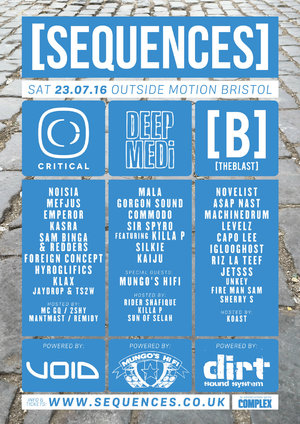
Events and Programming
Motion is best known for bass-heavy electronic music, especially drum and bass, jungle, garage, house and techno. Its programme has also included hip-hop, R&B, disco, indie, rock, live electronic acts, bingo parties, fitness events, corporate hires and outdoor summer sessions. The venue’s event identity has always been broader than a conventional nightclub: promoters have used warehouses, courtyards, terraces and multiple dancefloors to create festival-style bills rather than single-room club nights.
The recent archive shows how varied the booking policy became. During the 2021-22 recovery period, Motion hosted Brooklyn Zoo hip-hop and R&B nights, Bingo Lingo, RUN, free drum-and-bass raves, YARD house and techno parties, outdoor day events and live bookings including De La Soul, Jessie Ware, Groove Armada, José González, Kae Tempest, Viagra Boys, Confidence Man and The Wombats.
In 2023, the emphasis remained on large-format dance events: Born on Road, HE.SHE.THEY., RUN All Day, free-rave nights, garage and UKG parties, YARD, Bingo Lingo and outdoor summer programming. The wider complex also hosted Underworld, Jake Bugg and Patrick Topping’s TRICK show, while the related In:Motion brand began using the 3,000-capacity Document space for larger shows.
The 2024 season included international house, techno, trance and bass bookings such as Sasha, John Digweed, Nick Warren, Paul van Dyk, Joseph Capriati, Eli Brown, Chris Stussy, Hot Since 82, Pete Tong, VTSS, KI/KI, Kettama and deadmau5. The mix suggests that Motion’s core audience is electronic-music focused, but not restricted to one scene or tempo.
Its final months at the original Avon Street site became a concentrated farewell programme. The 2025 Closing Series included house and techno day parties, Partiboi69, X CLUB., X-COAST, Hot Since 82, Dennis Cruz, Dusky, Dimension, Friction and KOVEN. Outdoor events included R&B, old-school anthems, KISStory, Bingo Lingo, Worried About Henry, SuperMotive and a final Just Jack weekend that ran across approximately 36 hours.
After the Avon Street closure, Motion 2.0 launched at Unit 2, Victoria Terrace, with a new Momentum series. The relaunch was promoted around artists including Y U QT, Skeptic, Chloé Robinson, SBTRKT, Sally C, Pangaea, Elkka, Cinthie, DJ AG, Bradley Zero, Friction, KOVEN, Harriet Jaxxon and Booka Shade.
For 2026, the public programme associated with the Motion team has largely appeared at Document rather than the original Motion building. Published examples include drum-and-bass free raves, Bass Jamz, Armand Van Helden, Kolter, KISStory, SuperMotive, Club Opp, Worried About Henry and open-air trance and bass events. As of 17 September 2026, the public calendar shows no upcoming September events, so check the named venue carefully before travelling: a Motion-branded event may be at Motion 2.0 or at Document.
Tickets and Booking
Motion tickets have generally used staged releases: early-bird or first-release tickets, standard releases and higher final-release prices. Recent examples range from roughly £10 to £20 for smaller or community-led events, about £18 to £30 for established club nights and approximately £20 to £40 or more for major headline, multi-room or festival-style bookings. Booking fees and special offers can change the final amount.
Popular shows should be bought as soon as the first release opens. Motion’s past events have used limited early allocations, two-person or group deals, venue presales and occasional door sales. Door entry is not guaranteed, particularly for sold-out nights, and the venue has warned against unofficial resale because cancelled or duplicated tickets may be refused at entry.
There is no reliable general price for a future show because the promoter, artist, running time, age restriction and venue configuration all affect the cost. Read the event information for the exact last-entry time, age rule, named venue and whether the ticket covers more than one room.
About Motion
The original Motion was at 74–78 Avon Street, Bristol, BS2 0PX, beside the River Avon and close to Bristol Temple Meads. It occupied a listed Victorian industrial complex associated with a former gasworks and marble works before becoming a skatepark. Parties began there in 2006, initially with skate ramps still forming part of the dancefloor; the site became a full-time nightclub and music venue in 2015.
The original Avon Street venue closed after its lease expired in July 2025. The final weekend marked the end of almost 20 years at that site, but the Motion brand returned in a new warehouse at Unit 2, Victoria Terrace, Bristol, BS2 0TD. The new venue was presented as Motion 2.0, preserving the industrial character while creating a separate chapter for the brand.
Motion’s importance comes from the combination of scale, late-night licensing, local promoters and a setting that never felt like a conventional auditorium. It provided a place where Bristol-based DJs, MCs, promoters, lighting crews and event brands could work alongside international artists. The club also became a destination for visitors travelling to Bristol specifically for drum and bass, house and techno events.
Seating and Layout
The original Motion was primarily a standing venue. Its published capacity varied by room and event configuration, with the Motion main room listed at 1,650 standing, the Marble Factory at 1,350 and the Old Marble Factory at 600. Smaller areas included an Artist Bar for 100, a Tunnel and Cave combination for up to 765, a Crane Yard for 600 and a Lock Yard terrace for 250. The Container Yard was listed at up to 2,000 standing for open-air events. Across Motion and the Marble Factory, free-flow capacity could range from approximately 200 to 4,000 depending on the layout.
The main room had a mezzanine facing the stage, although it was accessible only by stairs and was opened according to attendance. Small amounts of seating existed in selected areas and smoking spaces, but this was not a seated concert hall. For a clear view, arrive early and avoid assuming that a busy event will have an unrestricted sightline from the rear.
No verified room dimensions or fixed seating plans have been published for Motion 2.0. Do not assume that the capacities or mezzanine arrangements of the Avon Street building transfer to the Victoria Terrace site.
Getting There and Parking
The original Motion was roughly a five- to fifteen-minute walk from Bristol Temple Meads, depending on the exit and route used. The venue’s directions took visitors through the station car park, across the silver footbridge and along Avon Street. Temple Meads is served by trains from London, Cardiff, Birmingham and other UK cities, making rail the simplest option for many visitors.
The old site had no venue car park. The venue identified limited free on-street parking around Silverthorne Lane and Feeder Road, plus paid parking at a nearby car park behind the ATS garage. Availability, restrictions and prices were not guaranteed, particularly during large events. The same advice is sensible for Victoria Terrace: do not rely on finding a space outside the venue, and allow extra time if arriving by car.
Motion 2.0 is also close to Temple Meads, at Unit 2, Victoria Terrace, BS2 0TD. Public information confirms the new address and its short walk from the former site, but a dedicated venue car park, formal rideshare bay and event-night traffic plan have not been consistently published. Use the event’s stated arrival instructions rather than assuming the old entrance or parking arrangements still apply.
Inside the Venue
The original Motion’s appeal came from exposed industrial surfaces, large warehouse volumes, multiple bars, dark smaller rooms, outdoor yards and river-facing areas. The published hire material described a Container Yard with two bars and a burger van, a Lock Yard terrace overlooking the Avon and several spaces that could be used as extra stages, bars or quieter areas.
Motion was built for high-impact production. Its reputation rested on a powerful Funktion-One sound system, large-scale lighting, lasers, haze and the ability to run several rooms at once. A later refurbishment costing more than £1 million added a mezzanine and repositioned the central DJ booth just above crowd level. Industry coverage also described plans for a 360-degree stage and ceiling screens. Exact current equipment lists, fixture schedules and technical dimensions for Motion 2.0 have not been verified.
Visitor reviews of the old venue frequently praised its warehouse atmosphere, spacious dancefloor, outdoor areas, visual production and forceful bass. Other reviews criticised high drink prices, uneven sound positions and the difficulty of hearing clearly away from the main sweet spot. Early reviews of the Victoria Terrace relaunch have been mixed, with some visitors reporting cold conditions, portable-toilet queues and weak or muffled sound at particular events. These are event-specific visitor reports rather than confirmed permanent specifications.
Accessibility, Facilities and Venue Policies
The published accessibility information for the original Motion and Marble Factory stated that all rooms were wheelchair accessible, with two alarmed accessible toilets reached by ramps. Accessible viewing arrangements varied with the stage and capacity, and personal carers or support workers could be admitted free when arranged in advance. Chairs were available on request, assistance dogs could be accommodated with prior notice, and medics were present at events. Motion 2.0 should be checked event by event because the older access information relates to the former complex.
Expect searches, Challenge 25 checks and a requirement for valid physical identification. The published policy accepts a full or provisional driving licence or valid passport; CitizenCards were not accepted. Late-curfew club nights were normally 18+, while some early-curfew gigs admitted younger attendees with an adult. Special 16+ events have also been advertised, so the individual event rule takes priority.
The venue’s stated rules prohibit outside food and drink, professional cameras, tablets used for filming, smoking inside, crowd surfing, throwing drinks and re-entry after leaving. Fancy dress may be refused if considered dangerous, and hen or stag outfits are not permitted. Motion operates cashless, offers free drinking water on request at selected bars, provides earplugs at the bar and warns that loud sound, strobes, haze and smoke effects may be used.
A cloakroom was available at the original venue, with published charges of £3.50 for a coat or jacket and £5 for larger items such as bags, backpacks or bike helmets. Storage arrangements at Motion 2.0 should not be assumed. Bring only what you need, keep medication in its original labelled packaging and discuss medical equipment privately with security or the medical team on arrival.
Nearby Amenities and Visitor Tips
Motion’s former Avon Street setting was close to Temple Meads, Temple Quarter and the edge of Bristol city centre. Cabot Circus and central Bristol were described as approximately a 20-minute walk away, giving visitors access to a wider choice of restaurants, bars, hotels and late-night transport than the immediate warehouse surroundings. For a late finish, plan a taxi, pre-booked pickup or walk to a well-lit transport point rather than relying on a last-minute car journey.
Arrive early for sold-out events, outdoor parties and nights with multiple room changes. Wear comfortable shoes, carry a warm layer for queues and outdoor yards, protect your hearing and bring physical ID even if you do not plan to drink. Check whether the ticket names Motion 2.0 or Document, whether there is a last-entry deadline and whether the event is indoors, open-air or spread across several rooms.
What Makes Motion Special
Motion’s defining feature was its unlikely evolution from a skatepark in an industrial riverside building into one of the UK’s best-known club venues. Early parties retained the illicit, improvised feeling of a warehouse rave, while later years added professional production, multiple spaces and major international bookings. The building’s rough surfaces, low-lit rooms, outdoor yards and proximity to the railway helped create a setting that felt unmistakably Bristol rather than interchangeable with a modern arena.
The venue also became part of Bristol’s planning and nightlife debate. It secured noise protections connected with nearby development, and planning documents described it as an important part of the city’s night-time economy. Motion’s operators said the venue supported jobs, artists, promoters and local suppliers, while the closure campaign argued that losing the site would affect tourism, hospitality and Bristol’s cultural identity.
Frequently Asked Questions
Is Motion Bristol still at the Avon Street address?
No. The original venue at 74–78 Avon Street closed in July 2025 after its lease expired. The Motion brand later returned at Unit 2, Victoria Terrace, Bristol, BS2 0TD, under the Motion 2.0 identity. Some related programming is also staged at Document, so read the venue address on each event listing before travelling.
Where is Motion 2.0 in Bristol?
Motion 2.0 is listed at Unit 2, Victoria Terrace, Bristol, BS2 0TD, in St Philip’s. It is close to the former Avon Street location and within walking distance of Bristol Temple Meads. The new site is not the same building as the former riverside warehouse, so old photographs, layouts and capacity figures should not be treated as current information.
What is the capacity of Motion Bristol?
The former Motion complex had room capacities ranging from intimate 100-person areas to a 1,650-capacity main Motion room, with the wider Motion and Marble Factory complex reaching up to approximately 4,000 depending on layout. No reliable public capacity has been confirmed for Motion 2.0. Do not use the old 4,000 figure when planning a new event unless the specific promoter publishes it.
Does Motion Bristol have seated tickets?
Motion was primarily a standing venue. The former main room had limited seating in selected areas, including some outdoor and smoking spaces, but it was not arranged like a seated theatre. Some live shows may use different layouts, while club nights generally remain standing. Motion 2.0’s seating arrangements have not been published as a permanent feature, so check the individual event details.
What music is usually played at Motion?
Drum and bass is central to Motion’s identity, alongside jungle, UK garage, bass, house, techno, trance and disco. The venue has also booked hip-hop, R&B, indie, rock and live electronic acts. Daytime events often broaden the audience with old-school anthems, outdoor parties, bingo, fitness sessions and multi-genre festival formats rather than strictly late-night club programming.
How much do Motion tickets usually cost?
Recent examples suggest a broad range of roughly £10 to £20 for smaller or early-release events, £18 to £30 for many established club nights and £20 to £40 or more for major headline or multi-room events. Prices rise through staged releases, and booking fees may apply. Always treat the event listing as the final authority because each promoter sets its own price.
Can I buy Motion tickets at the door?
Door sales have sometimes been available when an event was not sold out, but they are not guaranteed. The former venue advised customers to check the event details and warned that unofficial resale tickets could be refused. For popular artists, buy during the first release rather than travelling to Bristol hoping to pay at the door.
What identification does Motion accept?
The published policy accepts a valid passport or full or provisional driving licence. Motion operates Challenge 25, meaning anyone who appears under 25 may be asked for identification when buying alcohol. Photographs of identification and CitizenCards were not accepted under the former policy. Event-specific requirements can change, but a physical photo ID is the safest option.
Is Motion Bristol suitable for under-18s?
It depends on the event. Early-curfew gigs have generally admitted attendees aged 14 and over, with under-18s accompanied by an adult where required. Late-curfew club nights are normally 18+, while occasional events are specifically advertised for 16- to 18-year-olds. Check the age restriction before buying because staff can refuse entry when an attendee cannot prove the required age.
Is Motion wheelchair accessible?
The former Motion and Marble Factory information stated that all rooms were wheelchair accessible and that two accessible alarmed toilets were available via ramps. Accessible viewing areas changed according to stage position and crowd capacity, and carers could be admitted free when arranged in advance. Motion 2.0 may differ, so visitors should request event-specific access information before purchasing tickets.
Does Motion have accessible parking?
The former venue stated that it had no dedicated disabled parking. It was close to Bristol Temple Meads, and staff advised disabled visitors to contact the venue for help with arrival arrangements. No permanent accessible parking provision has been confirmed for Motion 2.0. If you need a drop-off or Blue Badge arrangement, verify it for the specific event rather than relying on the old Avon Street information.
Is there parking at Motion Bristol?
The original Avon Street venue had no dedicated car park. Its published guidance mentioned limited free on-street parking around Silverthorne Lane and Feeder Road, plus paid parking nearby. Victoria Terrace has different access arrangements, and a dedicated Motion 2.0 car park has not been confirmed. Public transport, a pre-booked taxi or a planned pickup is usually safer for late-night events.
How far is Motion from Bristol Temple Meads?
Both the original Avon Street venue and Motion 2.0 are close to Bristol Temple Meads. Published information described the old venue as roughly a five- to fifteen-minute walk, depending on the route and station exit. The new Victoria Terrace site is also a short walk away. Allow more time at night for queues, diversions and finding the correct entrance.
Does Motion have a cloakroom?
The former venue had a cloakroom and published charges of £3.50 for coats or jackets and £5 for larger items such as backpacks, bags and bike helmets. A matching ticket was required for collection. Because this information relates to the Avon Street building, do not assume the same cloakroom, prices or location operate at Motion 2.0.
Can I bring food and drink into Motion?
The former policy prohibited outside food and drink, including sweets and chewing gum, and items could be removed during searches. Food was available on site at some events, and free drinking water could be requested at selected bars. Medical necessities were considered separately by security and medics. Check the event information for current arrangements at Motion 2.0 or Document.
Can I smoke inside Motion?
No. The published policy treated Motion as a non-smoking venue, but provided a designated smoking area at events. Its location could change according to the event and capacity, so ask staff rather than leaving the venue. Smoking inside could lead to ejection without a refund. Vaping and other restrictions may be handled under the event’s current house rules.
Are cameras allowed at Motion Bristol?
Small compact cameras were allowed under the former policy unless an event stated otherwise. Professional cameras with large or detachable lenses, video cameras and tape recorders were not permitted. Tablets and iPads were also restricted for filming performances. Phones are commonly used by visitors, but the promoter may impose a stricter no-recording policy for a particular show.
Does Motion use strobe lighting and haze?
Yes. The venue has warned that strobe lighting, fog and haze machines may be used, alongside loud sound and other production effects. Anyone with photosensitive epilepsy, respiratory sensitivity or another relevant condition should check before attending and tell staff on arrival. Earplugs were available at the former bars, and taking hearing protection remains sensible for bass-heavy events.
Why did Motion close in 2025?
The original Avon Street lease expired in July 2025, and the operators said attempts to extend the lease or buy the property had not succeeded. The site therefore closed after a final series of farewell events. Motion’s team then secured a nearby replacement venue and relaunched the brand as Motion 2.0, while continuing to associate some larger programming with Document.